
Fushimi Inari Taisha Shrine Temple

A spiritual journey through thousands of vermillion torii gates, where tradition and nature weave a tapestry of faith.

ভূমিকা

Step into the enchanting world of Fushimi Inari Taisha, not just a shrine, but a spiritual sanctuary nestled in the heart of Kyoto.

Here, ancient paths lined with countless torii gates invite you on a mesmerizing journey through the sacred forests of Mount Inari.

Imagine wandering through these vibrant corridors, each gate a story, each path a meditation.

ফুশিমি ইনারি তাইশা শ্রীন মন্দিরের মানচিত্র

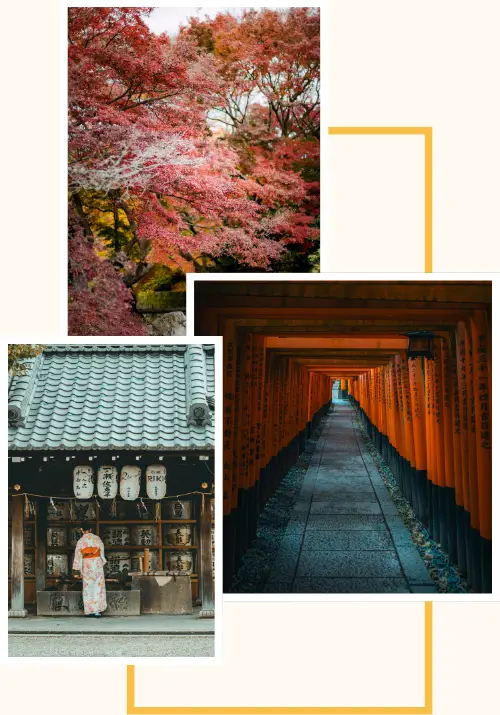
গোলাপী চেরি গাছের পাতার একটি কোলাজ, সাদা ঐতিহ্যবাহী পোশাক পরা একজন মহিলার ছবি, এবং বাম, ডান এবং উপরে টোরি গেটগুলির সিরিজ দ্বারা বেষ্টিত একটি গাঢ় ধূসর পথ।

ভিজিটর তথ্য


খোলা থাকার সময়:

Open year-round, 24 hours a day.

পরিধান রীতি - নীতি:

Casual attire is appropriate, but respectful behavior is expected due to the shrine’s spiritual significance.

দেখার সেরা সময়:

Early morning or late afternoon to avoid crowds. The New Year’s festival and the Inari Matsuri in early February are particularly vibrant times to visit.

কাছাকাছি আকর্ষণ

ফুশিমি ইনারি মন্দির এবং এর আকর্ষণগুলি আবিষ্কার করুন: রহস্যময় সেনবোন তোরি, পবিত্র অভ্যন্তরীণ মন্দির এবং মনোমুগ্ধকর শিয়াল মূর্তি - প্রতিটি এর আকর্ষণ বৃদ্ধি করে।

নীল আকাশের বিপরীতে শরতের উজ্জ্বল পাতাগুলি ল্যান্ডস্কেপকে উজ্জ্বল কমলা রঙে ঢেকে রেখেছে। লাল তোরি গেটের একটি সিরিজ সামনের দিকে অবস্থিত, যা ধূসর পাথরের পথ ধরে পিছনের দিকে প্রসারিত।

সেনবোন তোরি:​

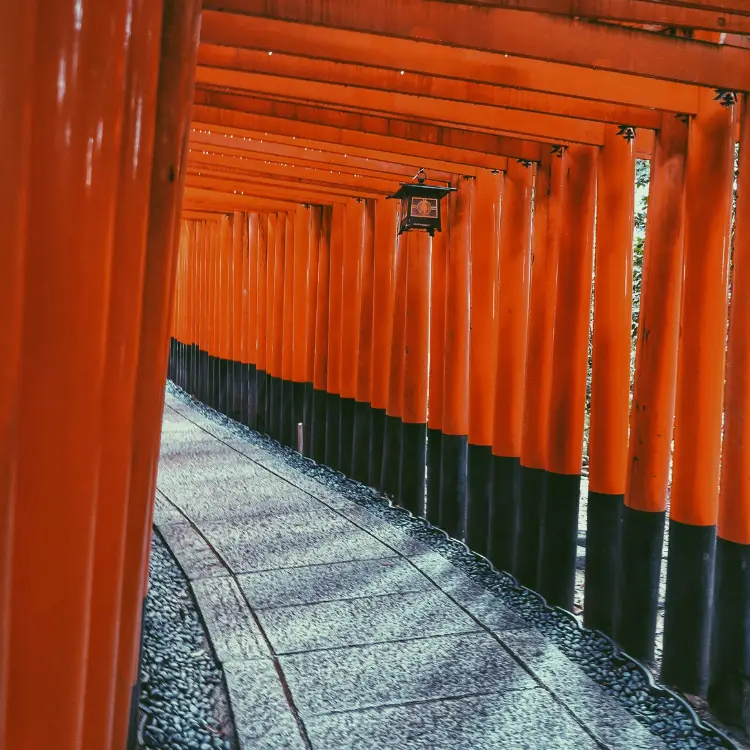
The famous tunnel of thousands of red torii gates, each donated by individuals and businesses praying for prosperity.

ওকুশা হোহাইশো মন্দিরের ভেতরের মন্দির। নীল-ধূসর ঝড়ো আকাশ দৃশ্যটিকে অসাধারণভাবে ছায়া দিয়েছে, অভ্যন্তরীণ মন্দিরের লাল দরজার দুপাশে হলুদ লণ্ঠনগুলির বিপরীতে।

অভ্যন্তরীণ মন্দির (ওকুশা হোহাইশো):

A serene spot at the mountain’s summit, offering panoramic views and a peaceful setting for reflection.

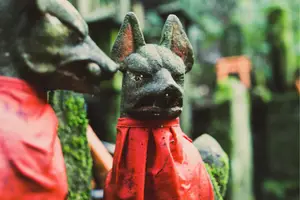
লাল স্কার্ফ পরা দুটি ধূসর পাথরের শিয়াল, পটভূমিতে সবুজ পাতা।

Fox Statues:

Scattered throughout the shrine, these statues honor Inari, the Shinto god of rice, fertility, and industry, believed to use foxes as messengers.

"প্রতিটি মন্দির কেবল কামি (সকল জিনিসে বসবাসকারী আত্মা) এর আবাসস্থল নয় বরং সেখানে সমবেত সম্প্রদায়েরও আবাসস্থল।"
~ মাসাহিকো ওকাদা

মজাদার

তথ্য

১০,০০০ এরও বেশি টোরি গেটের আবাসস্থল,

ফুশিমি ইনারি তাইশা হল ইনারির প্রধান মন্দির।

Origins trace back to the 8th century.

তোরি (শিন্টো) ব্যানারের ছবি

Covers approximately 870,000 square feet (80826 m²).

Includes trails up the mountain lasting 2-3 hours.

The red torii gates are believed to repel evil and attract luck.

Dustin Johnson
Dustin Johnson
“Is it worth it?” The answer is a resounding yes.
হ্যাঁ, আমি জানি এটা সোশ্যাল মিডিয়া জুড়ে ছড়িয়ে আছে, এবং আমি জানি এটা ভিড় করবে। কিন্তু প্রশ্ন হল: "এটা কি মূল্যবান?" উত্তরটি হল হ্যাঁ। জাপানে আমার দুই সপ্তাহের অবস্থানের সময় এটি আমার পরিদর্শন করা সবচেয়ে সুন্দর মন্দিরগুলির মধ্যে একটি। এটি একের পর এক দৃশ্য দেখায়। আমি এপ্রিলের মাঝামাঝি গিয়েছিলাম, অবশ্যই ঋতুর সর্বোচ্চ সময়। যাইহোক, আমরা সকাল ৮টার দিকে গিয়েছিলাম এবং বেশিরভাগ ভিড় এড়িয়ে গিয়েছিলাম। চূড়ায় পৌঁছানোর জন্য এটি একটি হাইকিং, কিন্তু সেখানেই সবচেয়ে ভালো দৃশ্য দেখা যায়। এছাড়াও, আপনি যত উপরে যাবেন, তত কম লোক থাকবে।
Tash Leam
Tash Leam
It's worth it, I promise.
আমি একটি ভ্রমণ দলের অংশ হিসেবে মন্দিরটি পরিদর্শন করেছি। আমাদের দলটি সকাল ৬টার আগে মন্দিরে পৌঁছেছিল, এবং যদিও আমরা চূড়ায় হাইকিং করিনি (ফিরতে কয়েক ঘন্টা সময় লাগতে পারে), আমরা যা দেখেছি তা অবিশ্বাস্য। যদি আপনি ভিড় ছাড়াই ছবি তোলার এবং স্থানটি দেখার সর্বোত্তম সুযোগ পেতে চান, তাহলে ভোরের জন্য নিজেকে প্রস্তুত করুন। ভিড় শুরু হওয়ার আগে ভোর ৫.৩০ থেকে ৭টার মধ্যে মন্দিরে পৌঁছানোর পরামর্শ দিচ্ছি। আমি প্রতিশ্রুতি দিচ্ছি যে এটি মূল্যবান। এছাড়াও, নিশ্চিত করুন যে আপনি ব্যবহারিক এবং আরামদায়ক জুতা পরেছেন এবং পথগুলি ধরে আছেন। এলাকায় (বন্ধুত্বপূর্ণ) বিড়াল রয়েছে তবে আপনি যদি বিড়াল পছন্দ না করেন তবে কিছু মনে রাখবেন। আমরা কেবল একটি দেখেছি কিন্তু বলা হয়েছে যে জায়গাটির চারপাশে আরও কিছু আছে।
Anastasiia Shehenova
An incredible place to visit in Kyoto.
কিয়োটোতে এটি দেখার জন্য একটি অসাধারণ জায়গা। আমি এর একেবারে চূড়ায় যাওয়ার পরামর্শ দেব, যেখানে প্রায় ৪০ মিনিট সময় লাগে, অথবা যদি আপনি ধীরে ধীরে হাঁটেন তবে এক ঘন্টাও সময় লাগে। সেখানেই আপনি কোনও পর্যটক ছাড়াই লাল গেটের ছবি তোলার সুযোগ পেতে পারেন, কারণ নীচের প্রথম কয়েকশ মিটারে এটি সত্যিই ব্যস্ত ছিল। পাহাড়ে ওঠার সময় বেশ কয়েকটি পর্যবেক্ষণ পয়েন্ট, ক্যাফে, পানীয়, ভেন্ডিং মেশিন এবং শৌচাগার রয়েছে।
RH Erie
RH Erie
Endless red Torii gates and winding paths through lush forests.
ভিড় এড়াতে ভোরে এই মন্দির পরিদর্শনের সবচেয়ে ভালো সময়। চেরি ব্লসম মৌসুমের তুঙ্গে থাকাকালীন আমরা ভোর ৫:৩০ মিনিটে আমাদের যাত্রা শুরু করেছিলাম। মন্দিরটিতে রয়েছে অন্তহীন লাল তোরি গেট এবং ঘন বনের মধ্য দিয়ে আঁকাবাঁকা পথ। সিঁড়িগুলি কারও কারও জন্য মাঝারি চ্যালেঞ্জ হতে পারে, তবে সামগ্রিকভাবে, চূড়ায় উঠতে এক ঘন্টার সহজ সময় লাগবে। এটি আপনার কিয়োটো ভ্রমণের অনেক আকর্ষণীয় বিষয়গুলির মধ্যে একটি হবে।
JJ
JJ
Could spend hours here.
Been here twice, once during autumn and another during winter. Both amazing experiences! During autumn the leaves are all red and orange, which really matches the torii gates. In winter, the snow falls and rests on the gates, which gives the place a mythical feeling. The starting area with temples and food carts were quite crowded, but as we hiked up, the crowd started to thin out and we almost had the entire area to ourselves. Highly recommended to hike higher and explore more of this place. Could spend hours here.

সম্পর্কিত পোস্ট

চটুল গল্প

ফুশিমি ইনারি তাইশা মন্দিরের

 In the heart of Kyoto stands the Fushimi Inari Taisha Temple, a serene sanctuary dedicated to Inari, the Shinto god of rice, fertility, and prosperity.

Since its foundation in 711 AD, it has been a place where the spiritual and the earthly realms intertwine.

The temple is renowned for its thousands of vermilion torii gates, which create a mesmerizing path up the sacred Mount Inari.

This path is not just a physical journey but a spiritual voyage, guiding pilgrims through a landscape believed to be brimming with divine spirits.
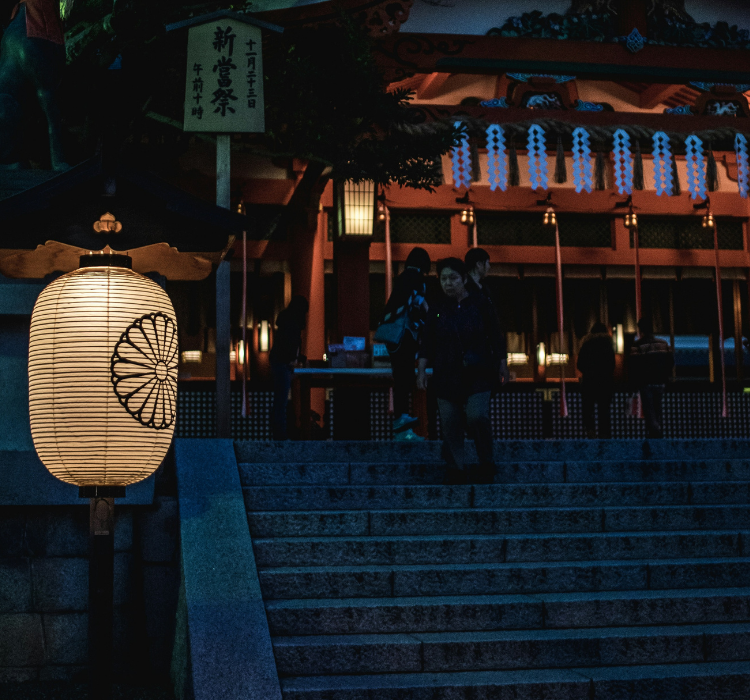
পটভূমিতে, ফুশিমি ইনারি তাইশা মন্দিরের একটি মন্দিরের বাইরে পাথরের সিঁড়ির উপরে একদল দর্শনার্থী বসে আছেন বা দাঁড়িয়ে আছেন। j

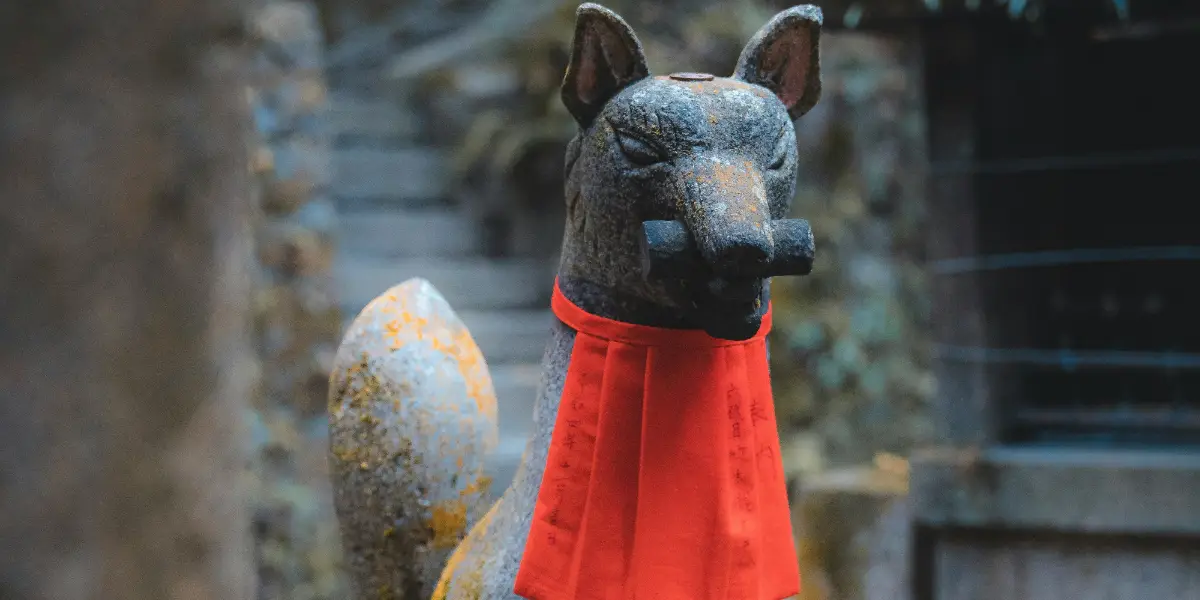
Guarding the temple are countless fox statues, revered as the messengers of Inari.

These mystical creatures are believed to possess the power to ward off evil, bearing keys in their mouths that unlock the granary doors, symbolizing prosperity and success.

The foxes serve as guardians of the temple, watching over the countless visitors and worshippers who seek blessings and make offerings in hope of receiving Inari's favor.

লাল স্কার্ফ পরা, দাঁতে পাথরের স্ক্রোল ধরে থাকা একটি শিয়ালের একটি ধূসর-বাদামি পাথরের মূর্তি। পটভূমিতে কিছু গাছ, বাঁকা লাল ছাদযুক্ত একটি কাঠামো এবং মেঘলা আকাশ দৃশ্যমান।

Each year, the temple is illuminated in the soft glow of thousands of lanterns during the Motomiya-sai festival, transforming the shrine into a captivating spectacle of light.

This event, deeply rooted in tradition, celebrates Inari's benevolence and the temple's enduring significance in the lives of those who believe.

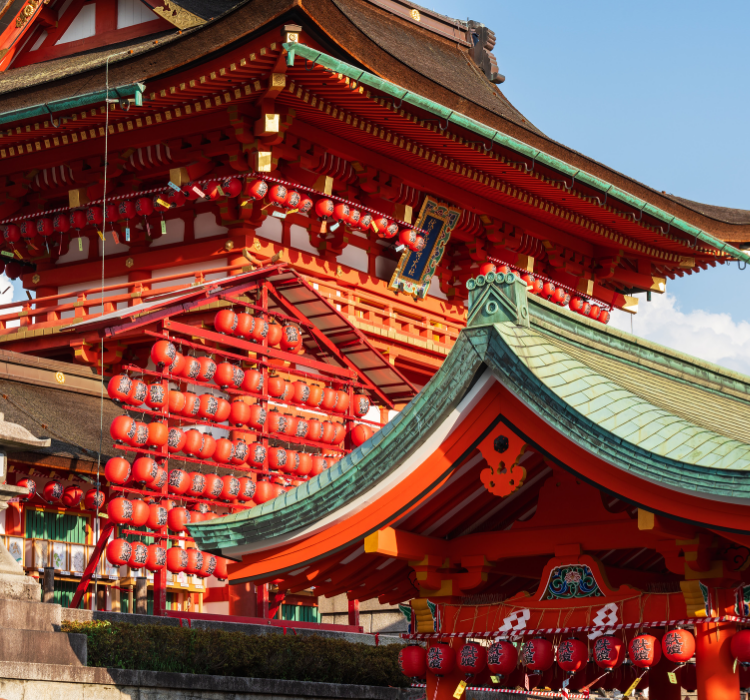
The lanterns, donated by worshippers and businesses alike, symbolize guidance and protection, lighting the way for the faithful through the darkness.দুটি লাল ভবন, যার ছাদে রয়েছে ঐতিহ্যবাহী জাপানি স্থাপত্য। দুটি ভবন থেকে এবং বাম দিকে আরেকটি বৃহৎ লাল কাঠামো থেকে বেশ কয়েকটি লাল কাগজের লণ্ঠন ঝুলছে, যেখানে ফুশিমি ইনারি তাইশা মন্দিরে লণ্ঠন উৎসব অনুষ্ঠিত হয়েছে।
At the entrance of the temple, visitors partake in a purification ritual, cleansing themselves at the chozuya with water before approaching the sacred spaces.

This act of washing hands and mouth is not merely a physical cleansing but a symbolic preparation, allowing one to approach the divine with a pure heart and mind.

It reflects the temple’s emphasis on inner purity and the respect due to the sacred spaces within.
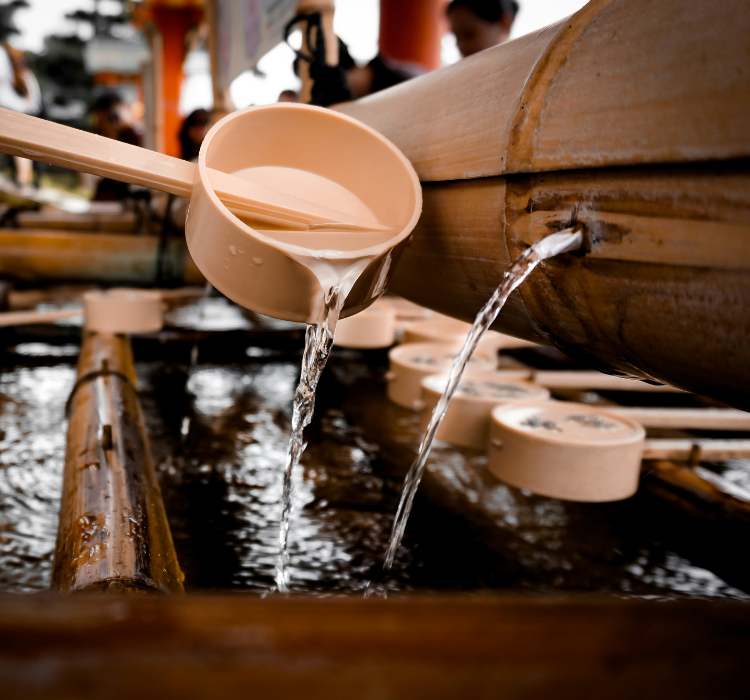
জাপানের কিয়োটোতে ফুশিমি ইনারি তাইশা মন্দিরের কাছে চোজুয়ার পাদদেশে একটি বেসিনে জল ঢালছে একটি গোলাপী-তামাটে রঙের লেডেল।

Fushimi Inari Taisha Temple offers a unique setting for Shinto wedding ceremonies, where couples seek the blessing of Inari for a prosperous and fertile union.

These ceremonies are profound, with traditional attire and rituals that connect the couple not just to each other but to the divine.

The temple, with its serene beauty and spiritual ambiance, becomes a witness to these sacred unions, promising a harmonious life ahead.

ফুশিমি ইনারি তাইশা মন্দিরে শিন্তো বিবাহ অনুষ্ঠানে ঐতিহ্যবাহী পোশাক পরা একজন পুরুষ এবং একজন মহিলা হাত ধরে আছেন।

The Senbon Torii, or thousands of torii gates, are the temple's most iconic feature.

Donated by individuals and businesses hoping to gain Inari's favor, each gate is a testament to faith, gratitude, and hope.

The vermilion paths they create symbolize life’s journey, with each gate a step towards enlightenment.

Walking through these gates, visitors experience a profound sense of peace and transcendence, as if moving through different realms.
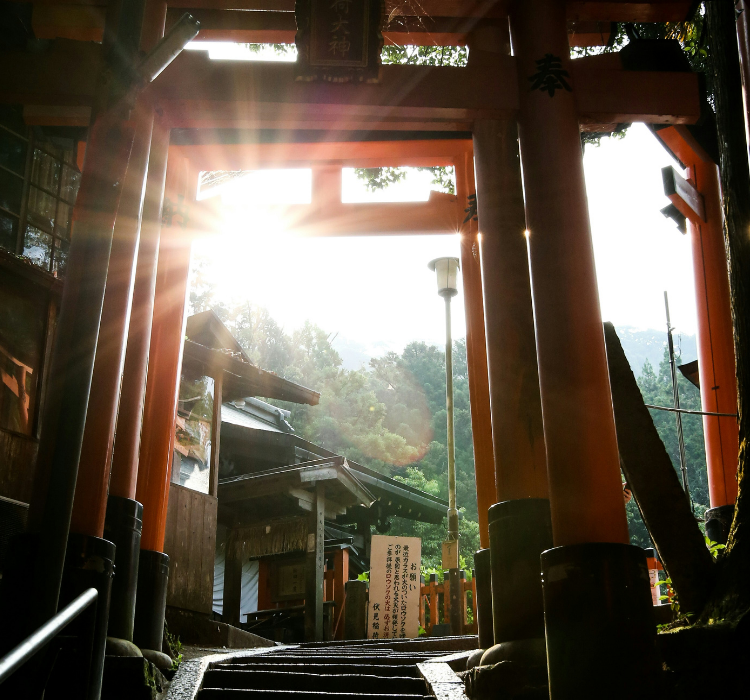
ভোরবেলা সেনবন তোরির ফটক, কয়েকটি তোরির ফটক দিয়ে সূর্যের আলো পড়ছে। পটভূমিতে ফ্যাকাশে নীল আকাশের নীচে লম্বা সবুজ গাছ দেখা যাচ্ছে।

In gratitude for Inari’s blessings on agriculture, the temple hosts an annual rice harvest ceremony.

This vibrant event celebrates the season's yield and prays for a bountiful harvest in the year to come.

Priests perform sacred dances and rituals, offering newly harvested rice to Inari, embodying the deep connection between the temple and the sustenance of life.

Within the temple's quieter corners, one can find delicate scrolls depicting the tales of the fox spirits, known as Fox Emaki.

These artworks are not merely decorative but carry profound meanings, illustrating the foxes’ roles as protectors, messengers, and guides.

They serve as a reminder of the temple's rich mythology and the enduring bond between the divine and those who seek its grace.

Fushimi Inari Taisha Temple stands as a beacon of spiritual guidance and cultural heritage.

Its storied paths and ancient rituals invite visitors to embark on a journey of reflection, renewal, and connection with the divine.

It is a place where history, faith, and natural beauty converge, offering a sanctuary of peace in the bustling world, a temple where every gate, every lantern, and every stone tells a story of devotion and hope.

বাম দিকে টোরি গেটের একটি সিরিজ, ডানদিকে পাতা এবং গাছ।

Timeline Of The Salt Lake City Temple

৭১১ খ্রিস্টাব্দ

The foundation of Fushimi Inari Taisha Temple, dedicated to Inari, the Shinto deity of rice, fertility, and prosperity, is established in Kyoto, marking the beginning of its storied history as a spiritual sanctuary.

লাল এবং পাতার সামনের অংশে ফুশিমি ইনারি তাইশা মন্দির। নীল পাহাড়ের উপরে পটভূমিতে নীল-নীল আকাশ এবং তুলতুলে মেঘ দেখা যাচ্ছে।

794 AD

With the capital’s move to Kyoto during the Heian period, the temple gains prominence, becoming an integral part of the city’s spiritual and cultural landscape.

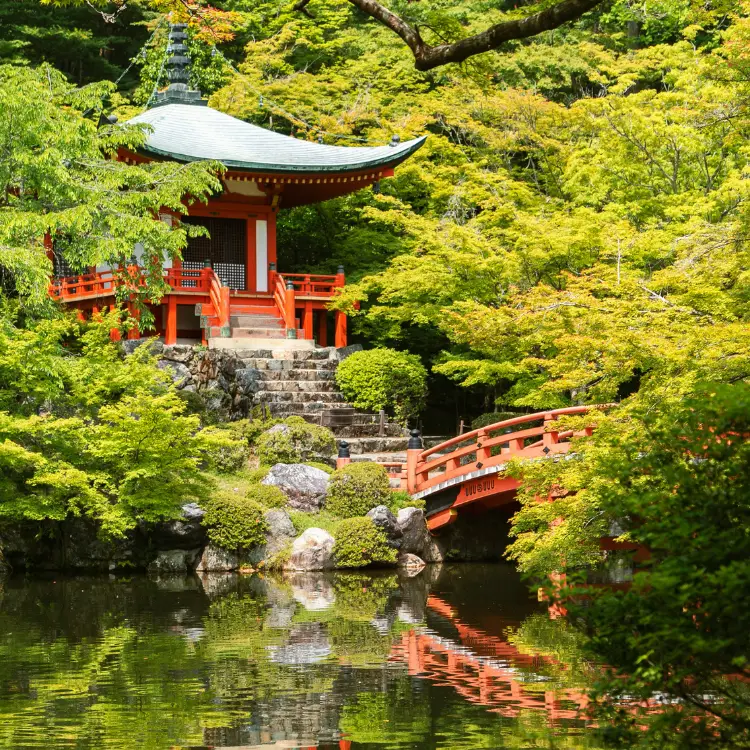
পুকুরে প্রতিফলিত লাল সেতুর পাশে ফুশিমি ইনারি তাইশা মন্দিরের একটি মন্দির। পুকুরের প্রতিচ্ছবিতে পটভূমিতে হলুদ-সবুজ গাছগুলিও দৃশ্যমান।

794 AD

With the capital’s move to Kyoto during the Heian period, the temple gains prominence, becoming an integral part of the city’s spiritual and cultural landscape.

পুকুরে প্রতিফলিত লাল সেতুর পাশে ফুশিমি ইনারি তাইশা মন্দিরের একটি মন্দির। পুকুরের প্রতিচ্ছবিতে পটভূমিতে হলুদ-সবুজ গাছগুলিও দৃশ্যমান।

Late 8th to Early 9th Century

The iconic Senbon Torii gates begin to take shape, with devotees donating vermilion torii gates to express gratitude for blessings received, creating a path that connects the mundane to the divine.

ফুশিমি ইনারি তাইশা মন্দিরের লাল কাঠের তোরি গেটে একটি কালো, আঁকা প্রতীক।

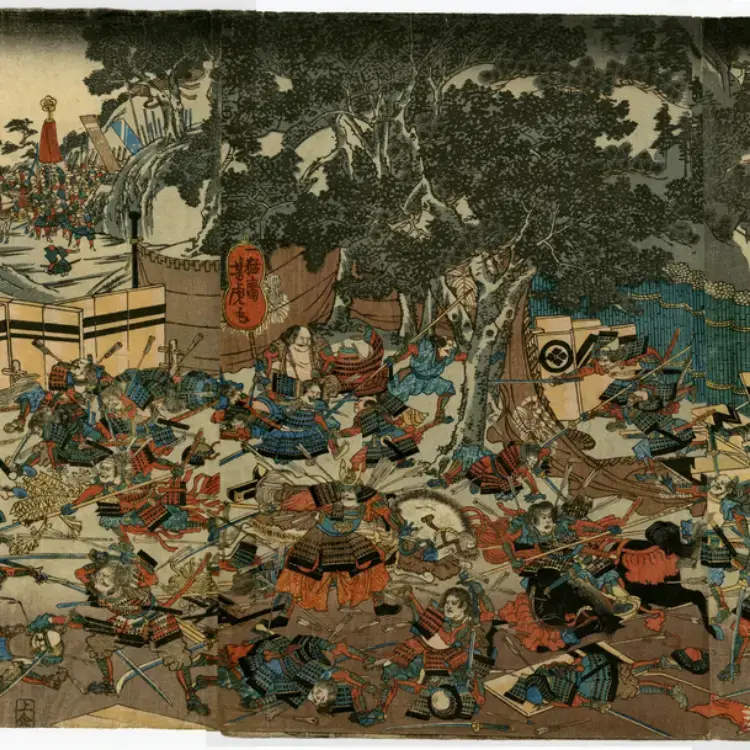
1467-1477

The temple survives the Ōnin War, a testament to its enduring significance and the local community’s dedication to its preservation.

ওনিন যুদ্ধের একটি রঙিন অঙ্কন, যেখানে ডানদিকে একটি গাছের নীচে যুদ্ধরত পুরুষ এবং যুদ্ধের মৃত ব্যক্তিদের দেখা যাচ্ছে।

1467-1477

The temple survives the Ōnin War, a testament to its enduring significance and the local community’s dedication to its preservation.

ওনিন যুদ্ধের একটি রঙিন অঙ্কন, যেখানে ডানদিকে একটি গাছের নীচে যুদ্ধরত পুরুষ এবং যুদ্ধের মৃত ব্যক্তিদের দেখা যাচ্ছে।

1599

Toyotomi Hideyoshi, one of Japan’s great unifiers, contributes significantly to the temple, donating large torii gates after a successful campaign, further embellishing the temple complex.

লাল তোরি গেটের একটি সারি যা পিছনের বাম দিগন্তে প্রসারিত, প্রতিটি বাদামী সাপোর্ট বিম দ্বারা সমর্থিত, সামনের দিকে দৃশ্যমান, এবং পটভূমিতে গাছগুলি দৃশ্যমান।

Early 17th Century

The temple complex expands, adding sub-shrines and further developing the network of torii gates, which come to symbolize the pilgrim’s journey towards enlightenment.

ছবির নীচে ডানদিকে লাল তোরি গেট সহ উপর থেকে সামান্য আলো আসছে এমন একটি ঘন বন।

Early 17th Century

The temple complex expands, adding sub-shrines and further developing the network of torii gates, which come to symbolize the pilgrim’s journey towards enlightenment.

ছবির নীচে ডানদিকে লাল তোরি গেট সহ উপর থেকে সামান্য আলো আসছে এমন একটি ঘন বন।

1868

The Meiji Restoration marks a period of significant change in Japan, yet Fushimi Inari Taisha retains its importance, adapting to the evolving cultural and religious landscape.

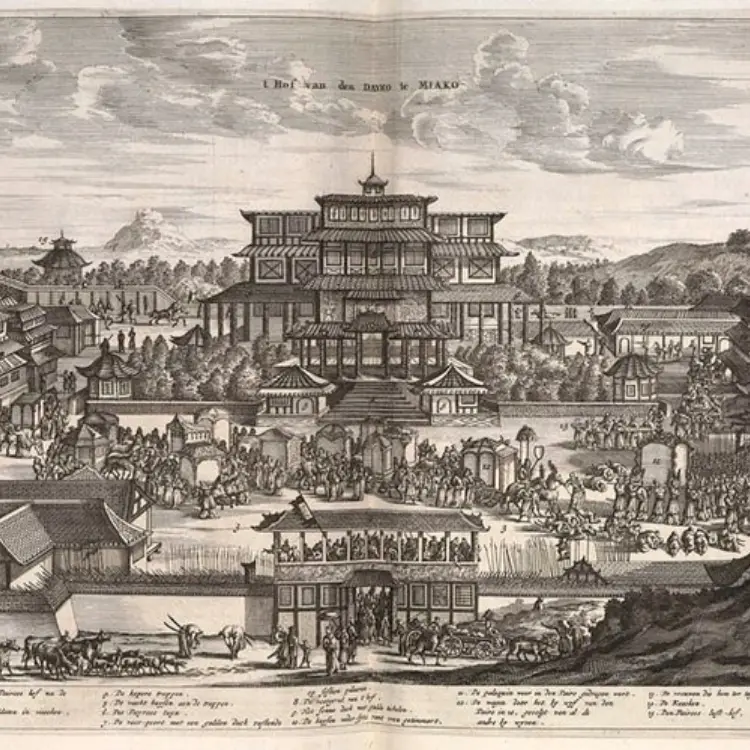
ফুশিমি ইনারি তাইশা মন্দিরের একটি সেপিয়া অঙ্কন, যেখানে পার্ক, মানুষ এবং প্রচুর গাছপালা ছড়িয়ে ছিটিয়ে রয়েছে।

Late 19th to Early 20th Century

The temple undergoes various restoration projects to preserve its ancient structures and accommodate the growing number of pilgrims and visitors.

রাতে ফুশিমি ইনারি তাইশা মন্দির, খোলা আকাশের নীচের কাঠামোর ভিতরে কমলা আলো দেখা যাচ্ছে।

Late 19th to Early 20th Century

The temple undergoes various restoration projects to preserve its ancient structures and accommodate the growing number of pilgrims and visitors.

রাতে ফুশিমি ইনারি তাইশা মন্দির, খোলা আকাশের নীচের কাঠামোর ভিতরে কমলা আলো দেখা যাচ্ছে।

1909

The shrine is protected and designated a national treasure under the National Treasure Preservation Law, solidifying it’s heritage for years to come.

বাম থেকে ডানে বিস্তৃত বেশ কয়েকটি তোরি গেটের সামনে পাতা এবং গাছ।

1945

Despite the devastations of World War II, Fushimi Inari Taisha remains a beacon of hope and resilience, undamaged, continuing to serve as a spiritual haven.

অন্ধকার ঘরে দশটি বাদামী রঙের মোমবাতি এবং কালো প্রতীকগুলি জ্বলছে।

1945

Despite the devastations of World War II, Fushimi Inari Taisha remains a beacon of hope and resilience, undamaged, continuing to serve as a spiritual haven.

অন্ধকার ঘরে দশটি বাদামী রঙের মোমবাতি এবং কালো প্রতীকগুলি জ্বলছে।

1961

The temple celebrates its 1,250th anniversary with ceremonies to commemorate the anniversary of Inari Okami taking up residence on Inariyama, highlighting its central role in Kyoto’s spiritual life and its appeal to visitors worldwide.

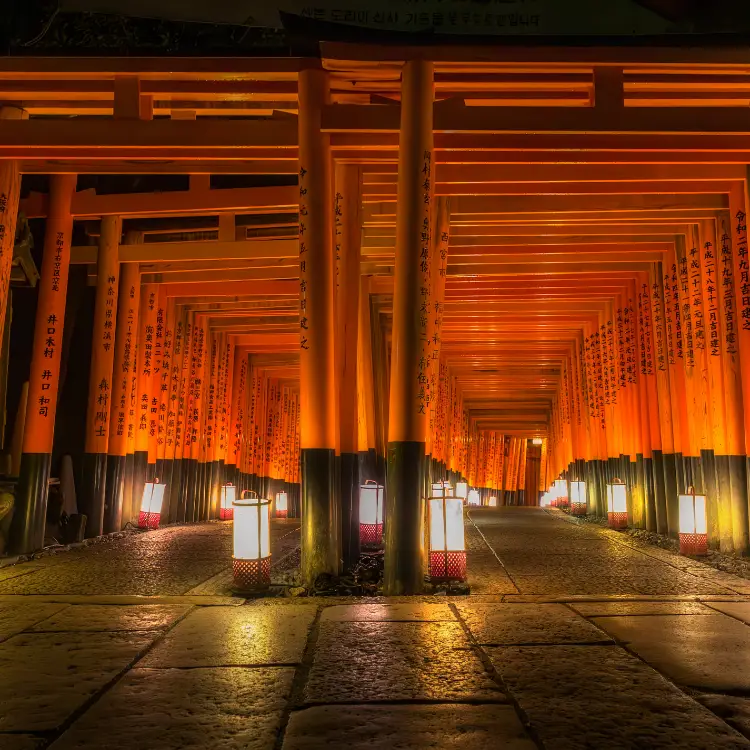
ধূসর পাথরের বিচ্ছিন্ন পথ ধরে হলুদ লণ্ঠন সহ দুটি সারি তোরি গেট। তোরি গেটের লাল আভা উপর থেকে ঐশ্বরিক আত্মদর্শনকে আমন্ত্রণ জানায়।

Early 21st Century

Fushimi Inari Taisha becomes a global icon, recognized for its stunning beauty and spiritual significance, attracting millions of visitors annually from all corners of the globe.

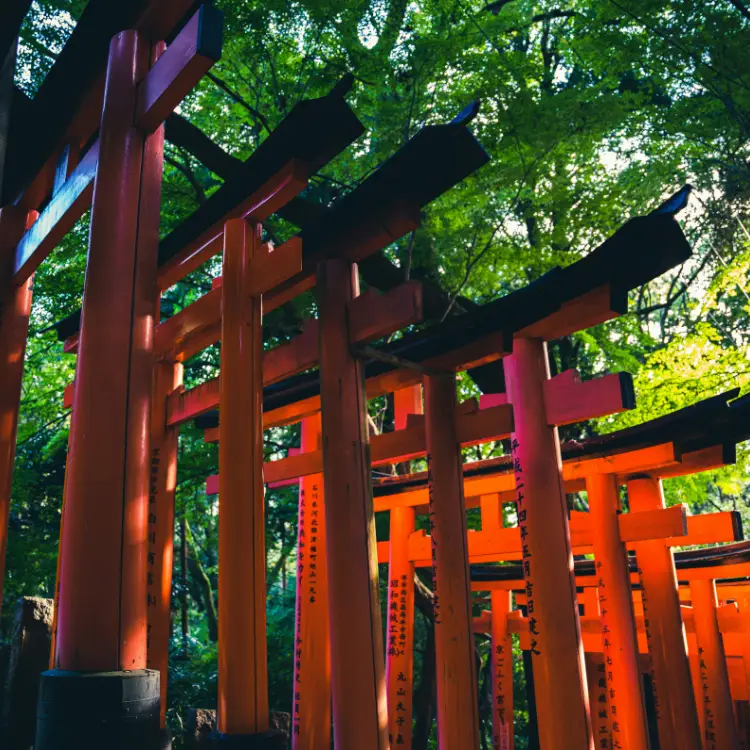
বনের মধ্যে বেশ কয়েকটি তোরি গেট, উপর থেকে পাতার মধ্য দিয়ে আলো আসছে।

Early 21st Century

Fushimi Inari Taisha becomes a global icon, recognized for its stunning beauty and spiritual significance, attracting millions of visitors annually from all corners of the globe.

বনের মধ্যে বেশ কয়েকটি তোরি গেট, উপর থেকে পাতার মধ্য দিয়ে আলো আসছে।

2021

The temple introduces digital preservation projects, including virtual tours, to share its heritage with a broader audience, embracing modern technology while honoring traditional practices.

Throughout its history, Fushimi Inari Taisha Temple has remained a symbol of perseverance, spiritual growth, and the deep connection between humanity and the divine, continuing to inspire and uplift all who walk its sacred paths.

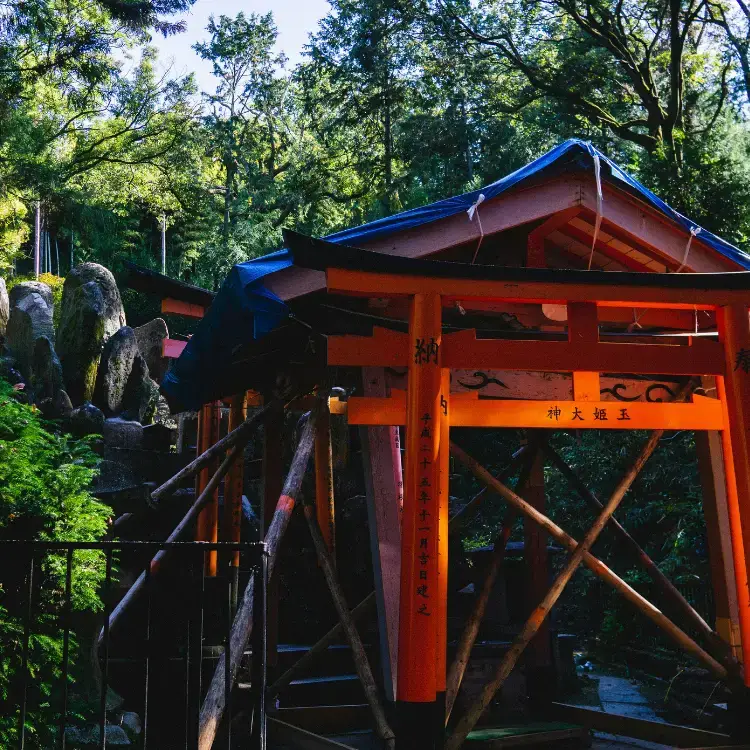
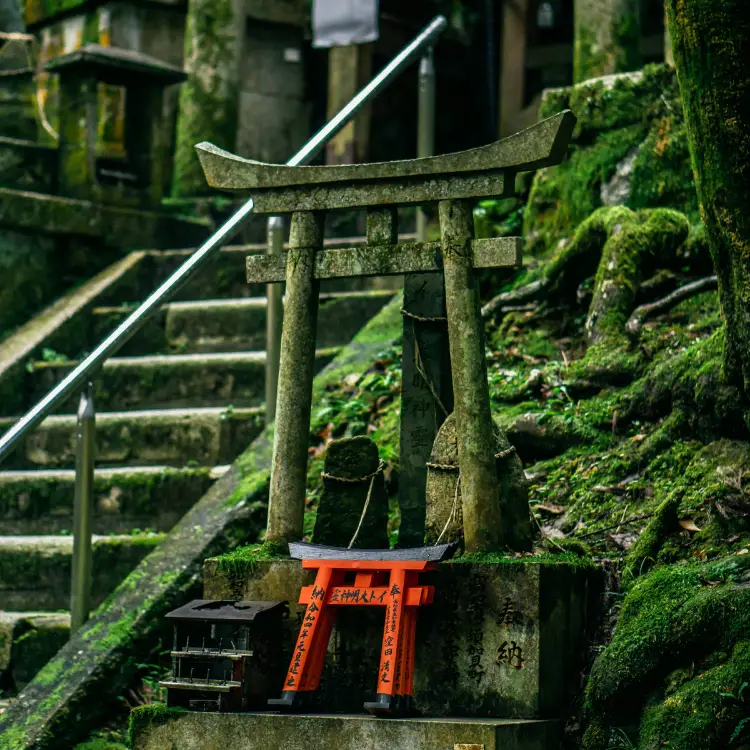
ছোট শ্যাওলা পাথরের তোরি গেটের মন্দির, যার গোড়ায় একটি ছোট কাঠের লাল তোরি গেট রয়েছে। বাম দিকের পটভূমিতে একটি শ্যাওলা পাথরের সিঁড়ি দৃশ্যমান।

2021-Present

Ongoing conservation efforts began in 2010, ensuring the temple’s preservation for future generations, with the Senbon Torii gates receiving regular maintenance and the grounds being enhanced to support the temple’s role as a place of worship and cultural heritage.

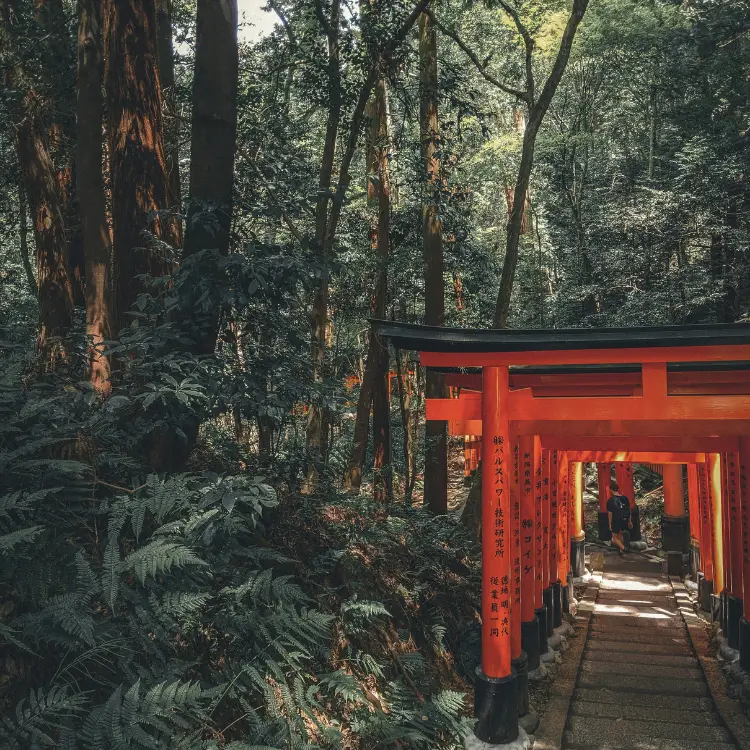
ফুশিমি ইনারি তাইশা মন্দিরের দিকে যাওয়ার জন্য বেশ কয়েকটি ঘনিষ্ঠ তোরি গেটের ভেতরে একটি পাকা ধূসর পাথরের পথ।

2021-Present

Ongoing conservation efforts began in 2010, ensuring the temple’s preservation for future generations, with the Senbon Torii gates receiving regular maintenance and the grounds being enhanced to support the temple’s role as a place of worship and cultural heritage.

ফুশিমি ইনারি তাইশা মন্দিরের দিকে যাওয়ার জন্য বেশ কয়েকটি ঘনিষ্ঠ তোরি গেটের ভেতরে একটি পাকা ধূসর পাথরের পথ।

History of The Fushimi Inari Taisha Temple

তোরি গেটের বাম পাশে একটি বড় গাছের সামনে, যার পাতার ঠিক পিছনে সূর্যের হলুদ আলো জ্বলছে।

The story of Fushimi Inari Taisha Temple begins in 711 AD, when a modest shrine was erected to honor Inari, the deity of rice and prosperity.

This moment marked the inception of a spiritual journey, with the shrine set against the backdrop of Mount Inari’s lush greenery.

The early rituals, imbued with the hopes and prayers for bountiful harvests, forged a sacred bond between the land and its people.

As the sounds of ancient Shinto prayers filled the air, a profound connection to the divine was established, laying the foundation for centuries of worship and pilgrimage.

হাজার দরজার পথ

বনের মধ্যে লাল তোরি গেট, আলোয় ঢাকা। লাল কাঠের গেটের দিকে যাওয়ার পথে লণ্ঠনগুলো উঠে গেছে।

Centuries unfolded, and with them, the temple’s landscape transformed dramatically.

The iconic Senbon Torii, a mesmerizing pathway lined with thousands of vermilion torii gates, was gradually established through the devotion of worshippers.

Each gate, donated as a symbol of gratitude or a wish for prosperity, weaves a vibrant tapestry of faith, creating a journey that transcends the physical realm.

Walking through this corridor, enveloped in a sea of red, pilgrims and visitors alike embark on a spiritual voyage, guided by the legacy of countless generations.

পাহাড়ের অভিভাবকরা

লাল স্কার্ফ পরা একটি ধূসর পাথরের শিয়াল, মুখে পাথরের ইনারি স্ক্রোল।

The temple is also home to the kitsune, foxes revered as messengers of Inari.

These celestial guardians, often depicted with a key in their mouths, symbolize access to the granary—the essence of prosperity and success.

Statues of these sacred foxes stand sentinel throughout the temple grounds, their enigmatic presence a reminder of the divine protection and guidance afforded to those who pay homage at this venerable sanctuary.

Festivals of Light and Hope

ফুশিমি ইনারি তাইশা মন্দিরের তোরি গেটের নীচে লাল বৃত্তাকার কাগজের লণ্ঠনের একটি স্ট্রিং আলোকিত।

Annually, the temple grounds come alive with the vibrancy of festivals, each celebrating the enduring bond between humanity and the divine.

Of these, the Motomiya-sai stands out, a festival that bathes the temple in the soft glow of lanterns, symbolizing guidance, protection, and the illuminating power of faith.

These events are not just cultural showcases but profound communal experiences, drawing people from all walks of life into a collective celebration of spirituality, tradition, and the cycles of nature.

অদেখা আর্কাইভ​

ফুশিমি ইনারি তাইশা মন্দিরের একটি খিলান। এর লাল কাঠ সবুজ গাছপালা এবং পিছনের কুয়াশাচ্ছন্ন আকাশের সাথে অসাধারণভাবে বৈপরীত্যপূর্ণ।

Beneath the visible splendor of Fushimi Inari Taisha lies a rich tapestry of history and mythology, preserved in the temple’s archives.

Ancient texts and artifacts recount the temple’s evolution, its significance in the Shinto faith, and the stories of countless individuals whose lives have been touched by Inari’s benevolence.

These archives are a testament to the temple’s role as a custodian of cultural heritage, offering insights into centuries of spiritual practice and communal life.

A Living Tradition

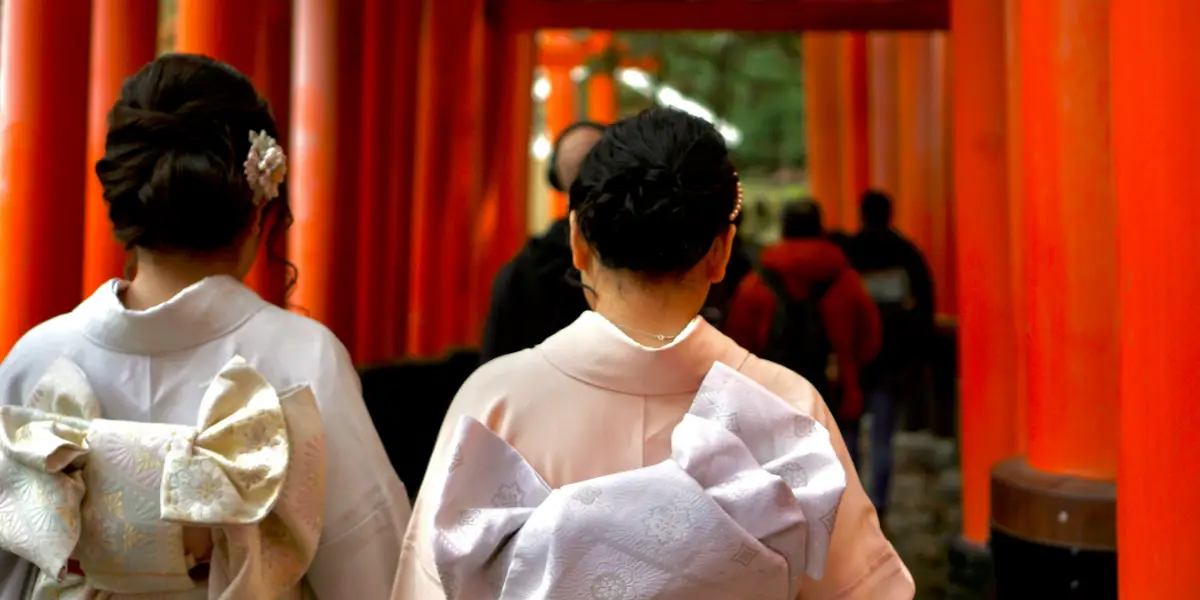
তোরি গেটের নীচে একটি রাস্তা দিয়ে ঐতিহ্যবাহী অলঙ্কৃত পোশাক পরা দুই মহিলা হেঁটে যাচ্ছেন। প্রতিটি মহিলার পিঠে জটিল কাপড় দিয়ে তৈরি একটি বড় ধনুকের আঁচল, তাদের চুলগুলি সুন্দর বিনুনি এবং খোঁপা দিয়ে সাজানো।

Fushimi Inari Taisha is not merely an architectural marvel; it is a vibrant center of worship that continues to play a pivotal role in the spiritual life of its community.

The rituals and ceremonies performed here, from purification rites to prayers for good fortune, are living traditions that connect the present to the ancient past.

They embody a philosophy that sees life and nature as deeply interconnected, with the temple serving as a bridge between the earthly and the divine.

শৈল্পিক ঐতিহ্য

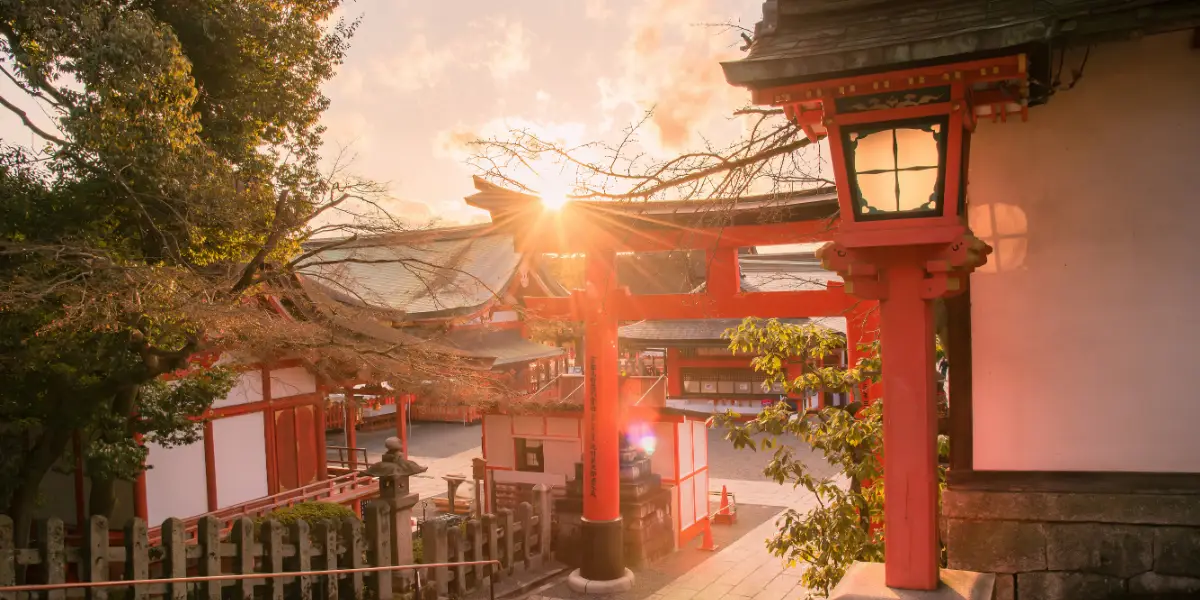
সূর্যাস্তের সময় ফুশিমি ইনারি তাইশা মন্দির। ছবির মাঝখানে একটি লাল কাঠের তোরি গেট রয়েছে, যার বাঁকা উপরের খুঁটির উপর সূর্যের আলো পড়েছে। সাইটের অন্যান্য ভবনগুলি দৃশ্যমান, আকর্ষণীয় লাল এবং বাদামী রঙের। হলুদ লণ্ঠন বহনকারী লাল কাঠের ল্যাম্পস্টগুলি মন্দির প্রাঙ্গণ জুড়ে ছড়িয়ে ছিটিয়ে রয়েছে।

The temple’s aesthetic is characterized by its fusion of natural beauty and artistic expression.

From the intricate carvings that adorn the shrine buildings to the evocative ema (wooden prayer plaques), artistry is infused into every aspect of the temple.

These artistic elements are not mere decorations but are imbued with spiritual significance, serving as expressions of devotion and reflections on the nature of existence.

The Eternal Path

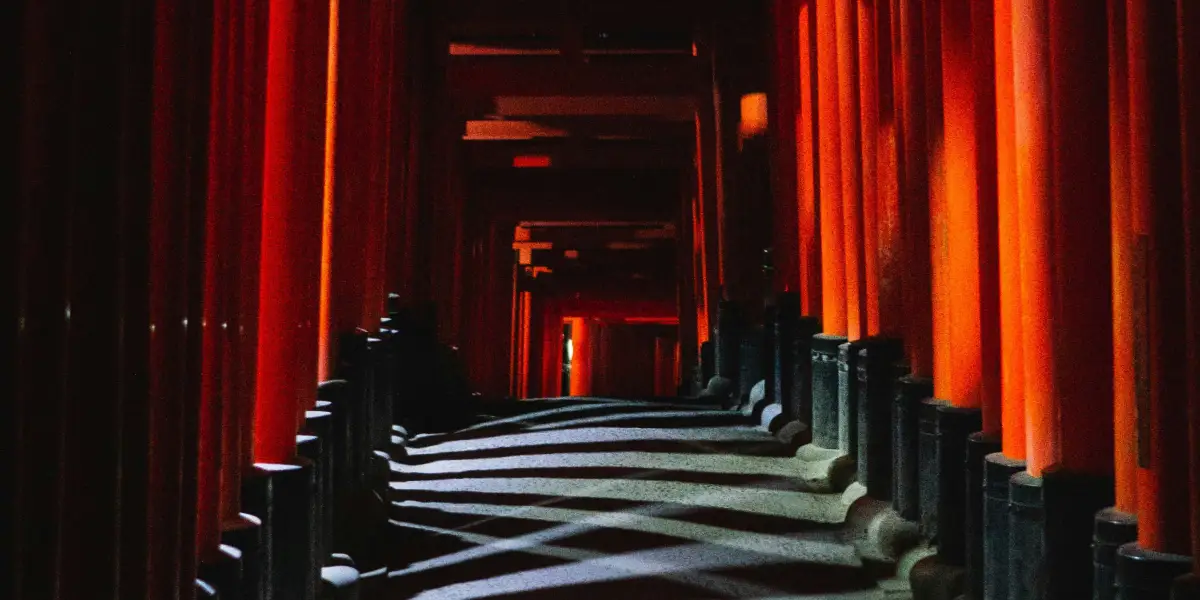
রাতে ফুশিমি ইনার্জু তাইশা মন্দিরের তোরি গেট। তোরি গেটের সিরিজের বাইরে থেকে আসা স্পটলাইট থেকে আলোর স্তম্ভগুলি তোরি গেটের নীচে পাথরের পথে একটি আকর্ষণীয় ক্রস প্যাটার্ন তৈরি করে যার উজ্জ্বলতা এবং প্রস্থ বিভিন্ন।

Fushimi Inari Taisha Temple stands as a beacon of enduring faith and cultural resilience.

Its history is a mosaic of human endeavor, spiritual quest, and the relentless passage of time.

As the temple looks towards the future, it remains a sanctuary where the sacred and the secular merge, where every gate and pathway invites reflection on the profound mysteries of life and the eternal cycle of renewal.

This temple, nestled amidst the verdant slopes of Mount Inari, continues to inspire and uplift, a timeless testament to the spiritual journey of humanity.

ফুশিমি ইনারি তিশা গ্যালারি

বিশ্বব্যাপী মন্দির সম্পর্কে আরও জানুন