מידע למבקרים
ביקור משכן שילה
Tel Shiloh offers visitors a unique opportunity to explore a site of immense historical and religious significance in Judaism. The archaeological site provides a glimpse into the period when Shiloh served as the religious capital of Israel, housing the Tabernacle and the Ark of the Covenant. Visitors can explore the excavated ruins, learn about the site's history at the visitor center, and reflect on the spiritual importance of this ancient location.
דגשים
- Explore the archaeological site and discover remnants of the ancient city.
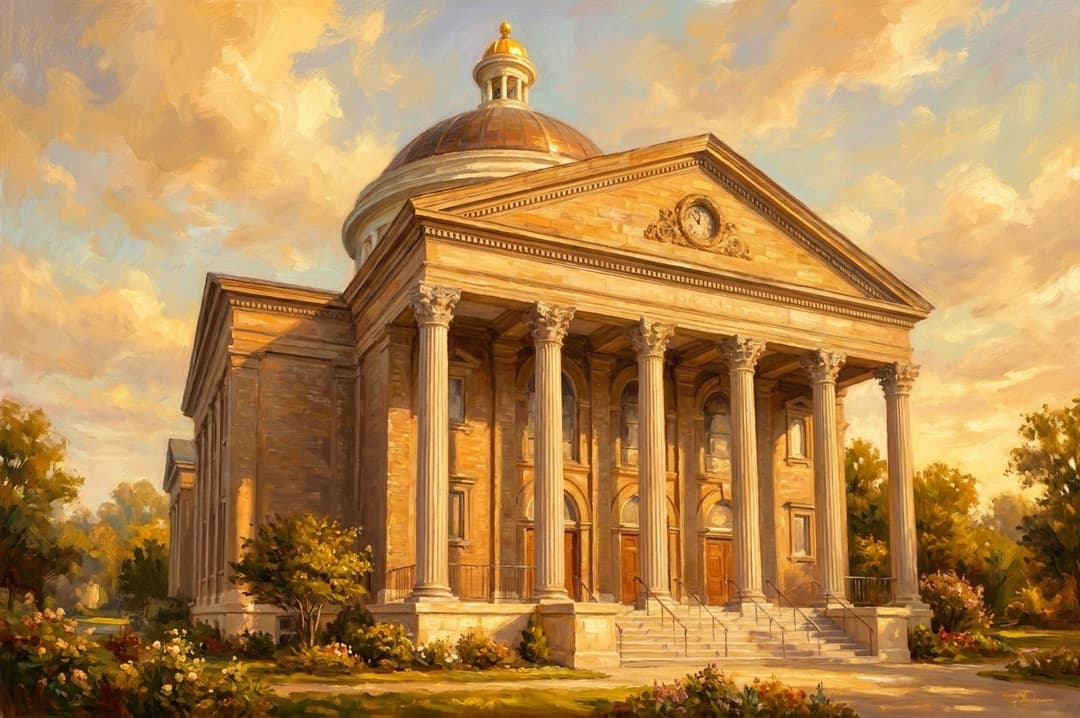
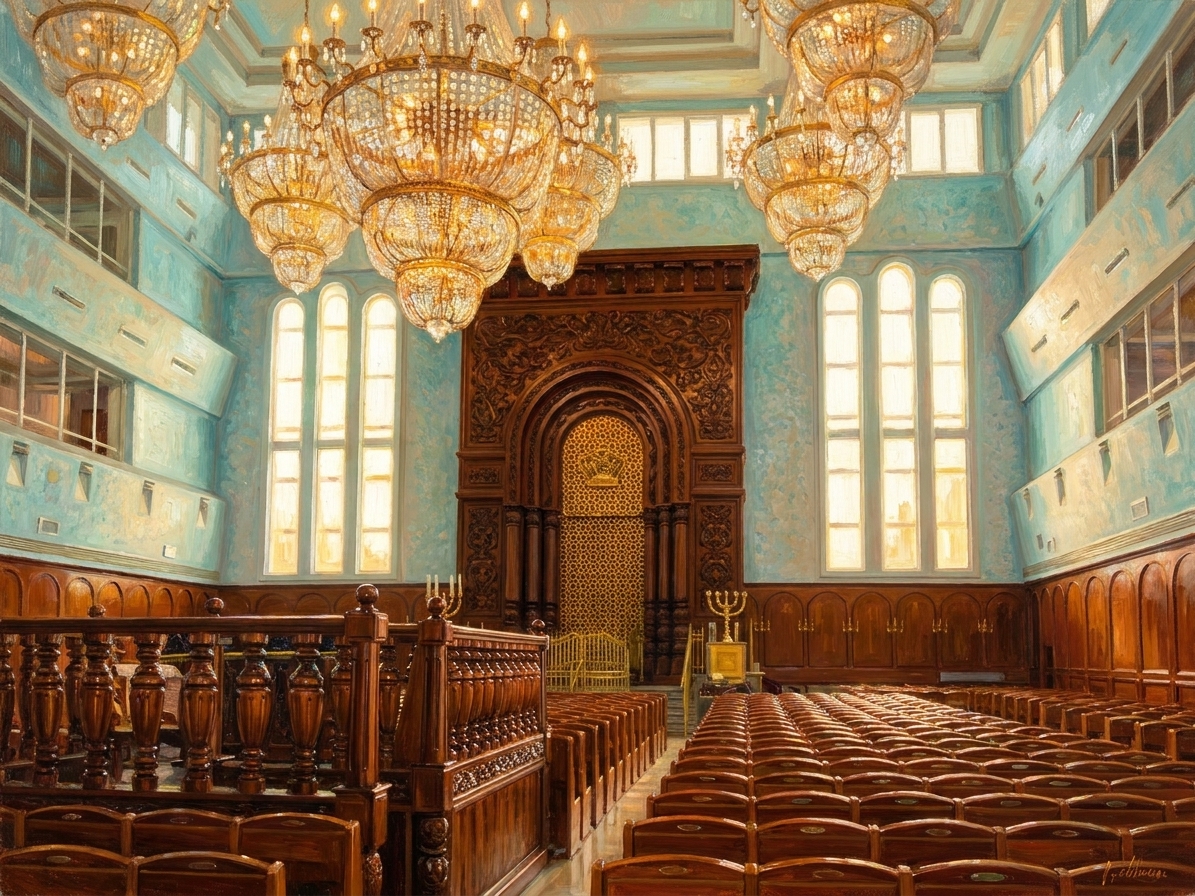
- Visit the modern Mishkan Shiloh synagogue, designed to resemble the original Biblical Tabernacle.
- Learn about the history of Shiloh at the visitor center.
דברים שכדאי לדעת
- Opening hours vary seasonally; check the schedule before visiting.
- The site is located in the Samaria Mountains, approximately 30 miles north of Jerusalem.
מיקום
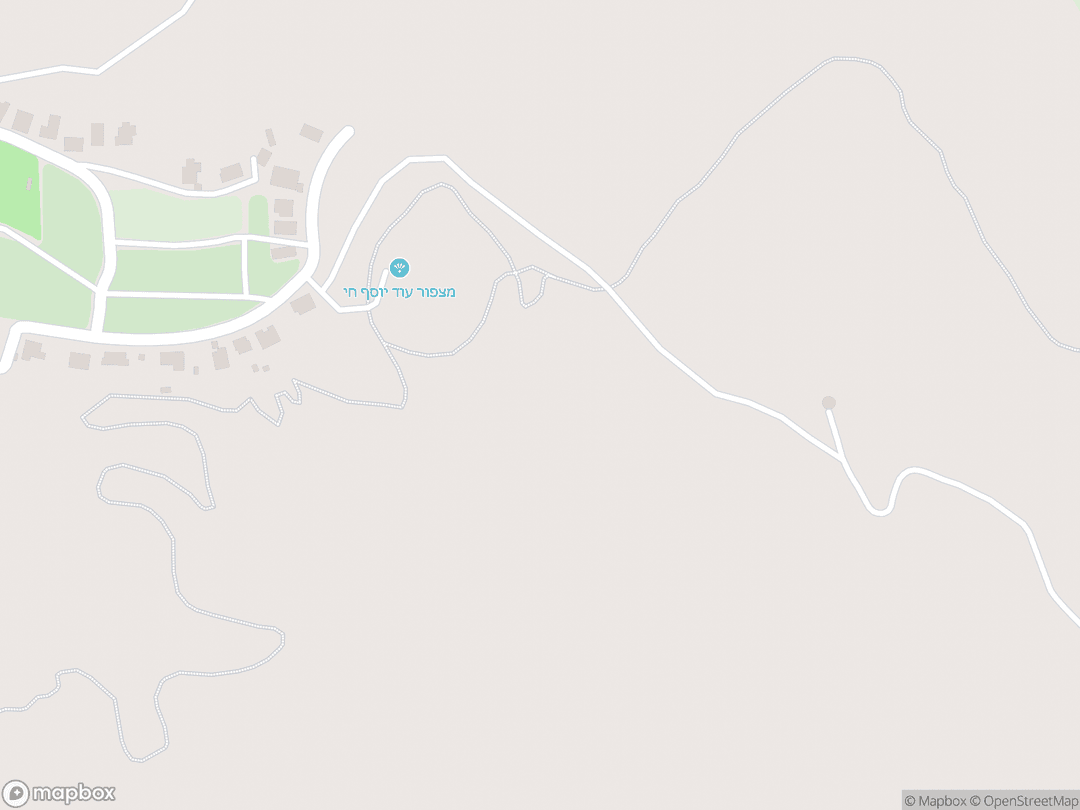
Shiloh, Samaria Mountains, Israel
שעות פתיחה: Vary seasonally; check the visitor center website for current hours.
איך להגיע: Tel Shiloh is located along Road 60, approximately 30 miles north of Jerusalem. Transportation options include car and bus.
הוראות הגעהאודות
The Temple at Shiloh, located in the Samaria Mountains of Israel, holds immense significance in Jewish history and the broader context of Abrahamic traditions. For 369 years, Shiloh served as the religious capital of Israel, housing the Tabernacle and the Ark of the Covenant. This period predates the construction of the First Temple in Jerusalem, making Shiloh a central place of worship and pilgrimage for the ancient Israelites.
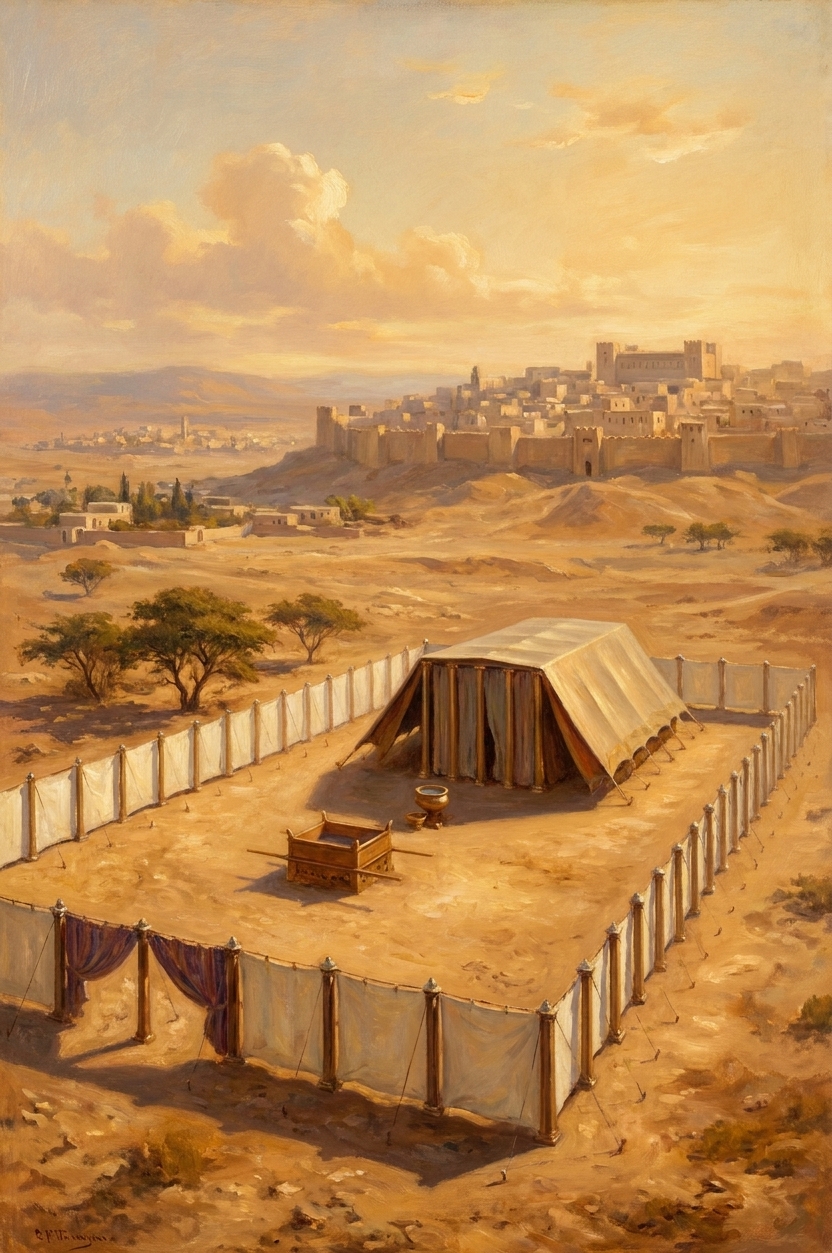
As the site of the Tabernacle, Shiloh was a place where the Israelites gathered annually for the pilgrim feasts and offered sacrifices. Hannah's prayer for a child at Shiloh is a significant event in Jewish tradition, highlighting the personal and spiritual importance of the site. The Tabernacle, initially a tent and later a stone structure, housed the Ark of the Covenant, symbolizing God's presence among the Israelites.
Today, Tel Shiloh is an archaeological site and tourist destination, offering visitors a glimpse into its rich history. Excavations have uncovered significant finds from the early Israelite and Byzantine periods, providing insights into the religious and cultural practices of the time. The modern community of Shiloh exists adjacent to the Tel, maintaining a connection to the ancient site.
גלריה
אלמנטים סמליים
החזית החיצונית של המקדש מציגה גילופים מורכבים, כל אחד עשיר במשמעות רוחנית:
The Tabernacle
The Tabernacle was a portable sanctuary used by the Israelites from the Exodus until the construction of the First Temple in Jerusalem. It housed the Ark of the Covenant and served as a central place of worship and sacrifice.

Ark of the Covenant
The Ark of the Covenant was a sacred chest containing the tablets of the Ten Commandments. It symbolized God's presence among the Israelites and was kept in the innermost part of the Tabernacle, the Holy of Holies.

Sacrificial Altar
The sacrificial altar was used for offering sacrifices to God, including animal sacrifices and grain offerings. It was a central feature of the Tabernacle and a symbol of atonement and reconciliation.
The Menorah
The Menorah was a seven-branched lampstand that stood in the Holy Place of the Tabernacle. It symbolized the light of God's presence and the illumination of the Torah.
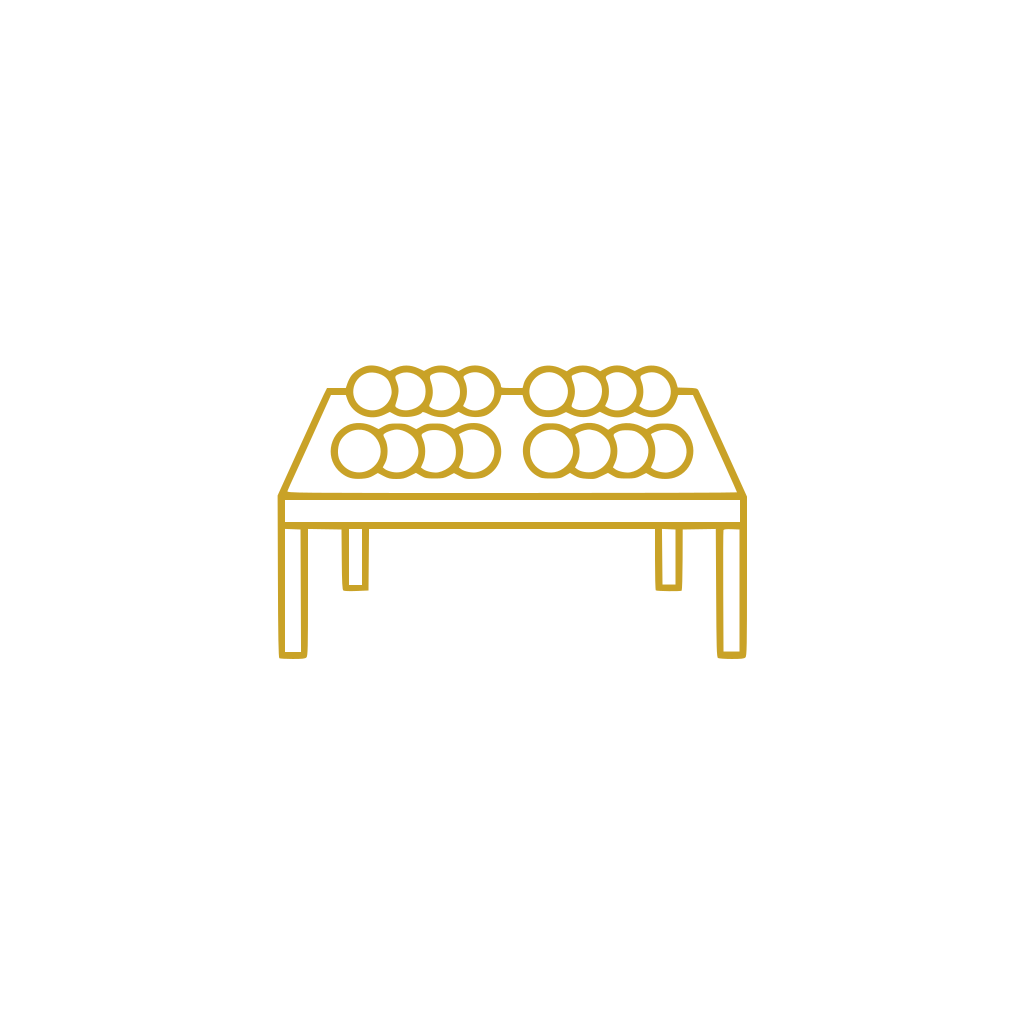
The Table of Showbread
The Table of Showbread held twelve loaves of bread that were offered to God each Sabbath. The bread symbolized God's provision for the Israelites and their dependence on Him.

The Laver
The Laver was a basin of water used by the priests to wash their hands and feet before entering the Tabernacle. It symbolized purification and cleansing.

The Holy of Holies
The Holy of Holies was the innermost part of the Tabernacle, where the Ark of the Covenant was kept. It was considered the most sacred place and was entered only by the High Priest on the Day of Atonement.

The Pillars and Curtains
The Tabernacle was surrounded by an open court formed by pillars and linen curtains. These elements defined the sacred space and separated it from the outside world.
עובדות מעניינות
Shiloh served as Israel's religious capital for 369 years, longer than the United States has been an independent country.
The name 'Shiloh' means 'place of peace'.
Archaeologists have uncovered evidence of a sacrificial system at Shiloh, including animal bones and cultic vessels.
Shiloh is mentioned 33 times in the Old Testament.
A building with a hologram of the Tabernacle is available for viewing.
The modern Mishkan Shiloh synagogue was designed to resemble the original Biblical Tabernacle.
A biblical marathon is organized to reenact the run of 'the man from Benjamin'.
In 1873, archaeologists identified a level, rectangular court on the northern side of the Shiloh site, surrounded by a large wall of fieldstones.
Hannah's prayer for a child at Shiloh is a significant event in Jewish tradition.
Shiloh was destroyed, likely by the Philistines after the battle of Aphek and the capture of the Ark.
שאלות נפוצות
What is the significance of Shiloh in Jewish history?
Shiloh served as the religious capital of Israel for 369 years, housing the Tabernacle and the Ark of the Covenant before the construction of the First Temple in Jerusalem. It was a central place of worship and pilgrimage for the ancient Israelites.
What can visitors see at Tel Shiloh today?
Visitors can explore the archaeological site, which includes remnants of the ancient city, and learn about the site's history at the visitor center. The modern Mishkan Shiloh synagogue, designed to resemble the original Biblical Tabernacle, is also a notable attraction.
What is the historical context of Shiloh within the Abrahamic traditions?
As a site of early Israelite worship and the location of the Tabernacle, Shiloh holds a significant place in the history of Judaism, one of the Abrahamic traditions. Its role as a spiritual center highlights the importance of covenant and divine presence in the development of religious practices.
What is the meaning of the name 'Shiloh'?
The name 'Shiloh' means 'place of peace'.
What archaeological evidence has been found at Shiloh?
Archaeologists have uncovered evidence of a sacrificial system, including animal bones and cultic vessels, as well as a monumental structure matching the dimensions of the Tabernacle.
סיפורים מומלצים
Hannah's Prayer at Shiloh
Ancient Israel
Hannah, a woman longing for a child, visited the Tabernacle at Shiloh with a heavy heart. Barren and distressed, she poured out her soul to God, praying fervently for a son. Her silent, heartfelt plea caught the attention of Eli, the high priest, who initially mistook her for being drunk.
Eli soon realized Hannah's deep sorrow and blessed her, saying, 'Go in peace, and the God of Israel grant your petition that you have made to him.' Hannah's faith and devotion were answered when she conceived and gave birth to a son, Samuel, who would become a great prophet and leader in Israel.
Hannah's story at Shiloh is a testament to the power of prayer and the importance of faith in the face of adversity. Her example continues to inspire those seeking solace and divine intervention.
מקור: https://www.chabad.org/
The Capture of the Ark of the Covenant
Around 1100 BCE
During a time of conflict with the Philistines, the Israelites brought the Ark of the Covenant from Shiloh to the battlefield, believing it would guarantee them victory. However, their faith was misplaced, and the Philistines defeated the Israelites, capturing the Ark.
The loss of the Ark was a devastating blow to the Israelites, symbolizing a loss of divine favor and protection. The Ark remained in Philistine territory for several months, bringing misfortune upon them until they eventually returned it to Israel.
The capture of the Ark highlights the importance of true faith and obedience to God, rather than relying on sacred objects as mere talismans.
מקור: https://dannythedigger.com/
The Destruction of Shiloh
11th Century BCE
Following the capture of the Ark and a period of decline, Shiloh was destroyed, likely by the Philistines. The destruction marked the end of Shiloh's role as the religious capital of Israel and a significant turning point in Israelite history.
The destruction of Shiloh served as a reminder of the consequences of disobedience and the importance of maintaining a close relationship with God. The Ark was not returned to Shiloh, and the religious center shifted to other locations.
Despite its destruction, Shiloh remained a significant site in Jewish memory, symbolizing a time of early Israelite worship and the importance of the Tabernacle.
מקור: https://biblearchaeologyreport.com/
ציר הזמן
Settled by the Amorites
Shiloh was initially settled by the Amorites as an unwalled village.
אבן דרךConstruction of a massive stone wall
A stone wall, up to 5m thick, was built around the village.
אבן דרךJoshua established Shiloh as the spiritual capital
Joshua established Shiloh as the spiritual capital of Israel and erected the Tabernacle.
אבן דרךDestruction of Shiloh
Shiloh was destroyed, likely by the Philistines after the battle of Aphek and the capture of the Ark.
שיפוץResettlement and construction of churches
Shiloh was resettled, and five churches were built during the Byzantine period.
אבן דרךArchaeological excavations
Archaeological excavations have uncovered significant finds from the early Israelite and Byzantine periods.
אירועEstablishment of a visitor center
A visitor center was established to provide an audio-visual presentation of the site's history.
אירועCapture of the Ark of the Covenant
The Ark of the Covenant was carried into war against the Philistines, who captured it.
אירועArchaeological Identification
Archaeologists identified a level, rectangular court on the northern side of the Shiloh site, surrounded by a large wall of fieldstones.
אירועAlleged Resurrection
Reports of the alleged resurrection of Miss Olive A. Mills, highlighting faith-healing practices.
אירועFamily Joins Sect
Captain Smith and his family joined Sandford's sect.
אירועBiblical Marathon
A biblical marathon is organized to reenact the run of 'the man from Benjamin'.
אירועMishkan Shiloh Synagogue
The modern Mishkan Shiloh synagogue was designed to resemble the original Biblical Tabernacle.
אבן דרךTabernacle Construction
A house of stone was built to house the Tabernacle.
אבן דרךAccessible Path
An accessible path leads from the site entrance to the visitor center.
אבן דרךהיסטוריה לפי עשור
Around 1400 BCE
Shiloh was established as the spiritual capital of Israel by Joshua, marking the beginning of its significance as a central place of worship. The Tabernacle, a portable sanctuary housing the Ark of the Covenant, was erected at Shiloh, making it the religious center for the Israelites. This era represents a pivotal moment in Jewish history, solidifying Shiloh's role as a place of pilgrimage and sacrifice.
11th Century BCE
The 11th century BCE brought significant challenges to Shiloh, including the capture of the Ark of the Covenant by the Philistines. This event marked a turning point in Israelite history and had a profound impact on Shiloh's status. The subsequent destruction of Shiloh, likely by the Philistines, brought an end to its role as the religious capital of Israel.
Byzantine Period
During the Byzantine period, Shiloh experienced a period of resettlement and religious diversity. Five churches were built at the site, reflecting the influence of Christianity in the region. One of these churches was later converted into a mosque, indicating a shift in religious dominance.
Modern Era
The modern era has witnessed renewed interest in Shiloh, with archaeological excavations uncovering significant finds from the early Israelite and Byzantine periods. These discoveries have provided valuable insights into the history and culture of the site. A visitor center was established in 2013 to showcase the site's history and attract tourists.
1873
Archaeological investigations in 1873 led to the identification of a level, rectangular court on the northern side of the Shiloh site. This discovery provided further evidence of the site's historical significance and its role as a central place of worship in ancient Israel.
Present Day
Today, Tel Shiloh stands as an archaeological site and tourist destination, offering visitors a glimpse into its rich history. The modern community of Shiloh exists adjacent to the Tel, maintaining a connection to the ancient site. The site continues to be a place of pilgrimage and reflection for those interested in Jewish history and the Abrahamic traditions.
משמעות דתית
The Temple at Shiloh holds profound religious significance within Judaism and the broader context of Abrahamic traditions. As the site of the Tabernacle for 369 years, it served as the primary center of worship and divine connection for the ancient Israelites.
The core spiritual purpose of the Temple at Shiloh was to provide a place for the Israelites to connect with God through prayer, sacrifice, and the observance of religious rituals. The Tabernacle, housing the Ark of the Covenant, symbolized God's presence among the people and served as a focal point for their spiritual lives.
פולחנות קדושים
Sacrifice
Animal sacrifices were offered at the altar of the Tabernacle as a means of atonement and reconciliation with God. These sacrifices symbolized the Israelites' commitment to following God's commandments and seeking forgiveness.
Prayer
Prayer was an essential part of worship at the Temple at Shiloh. Individuals and communities would gather to offer prayers of thanksgiving, supplication, and praise to God. Hannah's prayer for a child at Shiloh is a powerful example of the personal and spiritual importance of prayer.
Pilgrimage
The Israelites made annual pilgrimages to Shiloh for the pilgrim feasts, such as Passover, Shavuot, and Sukkot. These pilgrimages provided opportunities for communal worship, celebration, and renewal of their covenant with God.
The Ark of the Covenant
The Ark of the Covenant, housed in the Holy of Holies within the Tabernacle, was the most sacred object in Israelite worship. It contained the tablets of the Ten Commandments and symbolized God's presence and covenant with the Israelites. The Ark served as a reminder of God's law and the importance of obedience.
The Tabernacle as a Symbol of Divine Presence
The Tabernacle itself was a symbol of God's presence among the Israelites. Its design and construction reflected the divine pattern revealed to Moses on Mount Sinai. The Tabernacle served as a portable sanctuary, allowing the Israelites to maintain their connection with God as they journeyed through the wilderness and settled in the Promised Land.
מקדשים דומים
מקורות ומחקר
כל עובדה ב-Temples.org מגובה על ידי מקורות ומחקר מאומתים. כל פריט מידע מדורג לפי רמת מקור ואמינות.
צפה בכל המקורות (15)
| שדה | מקור | רמה | אוחזר |
|---|---|---|---|
| About & Historical Background | Chabad.org (opens in a new tab) | A | 2024-01-02 |
| About & Historical Background | Sarel Tours (opens in a new tab) | A | 2024-01-02 |
| About & Historical Background | Shalom Israel Tours (opens in a new tab) | A | 2024-01-02 |
| About & Historical Background | Jewish Israel Tours (opens in a new tab) | A | 2024-01-02 |
| About & Historical Background | Danny the Digger (opens in a new tab) | A | 2024-01-02 |
| Architectural Description | Bible Archaeology Report (opens in a new tab) | B | 2024-01-02 |
| Symbolic Elements | Israel My Glory (opens in a new tab) | A | 2024-01-02 |
| Symbolic Elements | Armstrong Institute (opens in a new tab) | A | 2024-01-02 |
| Visitor Information | Rit Meyer (opens in a new tab) | D | 2024-01-02 |
| Visitor Information | a-shiloh.co.il (opens in a new tab) | A | 2024-01-02 |
| Interesting Facts | Israel365 News (opens in a new tab) | A | 2024-01-02 |
| Interesting Facts | Holy Land Site (opens in a new tab) | A | 2024-01-02 |
| Historical Context | Meander Maine (opens in a new tab) | C | 2024-01-02 |
| Historical Context | Brewminate (opens in a new tab) | C | 2024-01-02 |
| Historical Context | Answers in Genesis (opens in a new tab) | C | 2024-01-02 |