מידע למבקרים
ביקור בית המקדש אלבנג פיליפינים
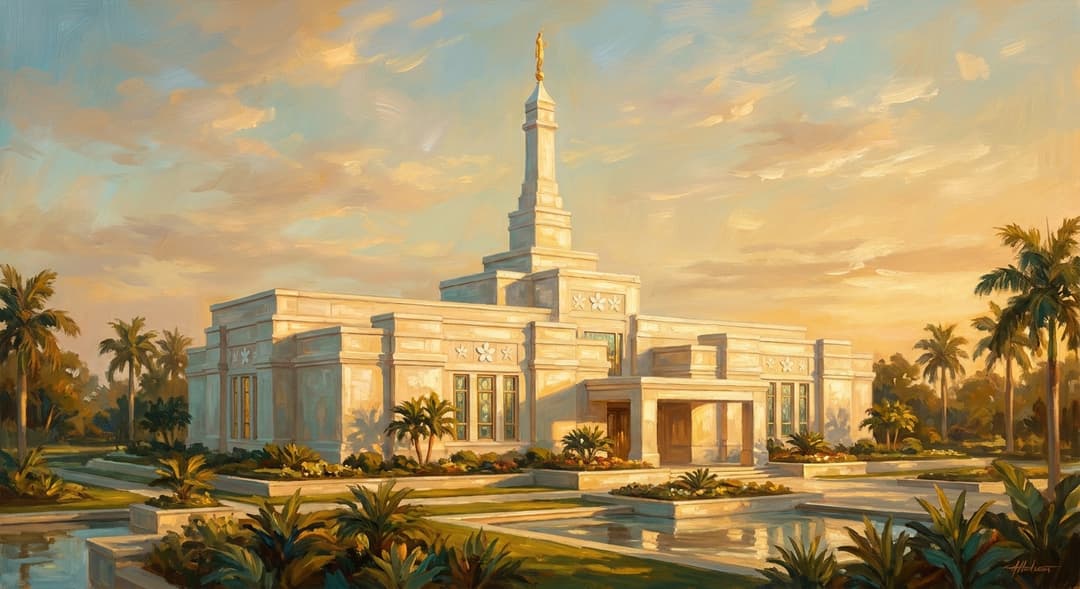
Visitors to the Alabang Philippines Temple can expect a serene and reverent atmosphere. The temple grounds are beautifully landscaped, providing a peaceful environment for reflection. The temple stands as a beacon of faith, inviting all to learn more about Jesus Christ and the eternal blessings available through temple worship. The temple is easily accessible via public transportation and private vehicles, with limited parking available on-site.
דגשים
- Experience the beauty and peace of the temple grounds.
- Learn about the sacred ordinances performed in the temple.
- Feel the spirit of reverence and devotion.
דברים שכדאי לדעת
- Photography is not permitted inside the temple.
- Smoking and drinking are not permitted on temple property.
- Large bags should be left in vehicles.
מיקום

Filinvest Avenue and Corporate Avenue, Filinvest City, Alabang, Muntinlupa City, Philippines
שעות פתיחה: The temple is open to members of The Church of Jesus Christ of Latter-day Saints who hold a valid temple recommend. Contact the temple for specific hours of operation.
איך להגיע: The temple is located in Filinvest City, Alabang, Muntinlupa City. It is accessible by public transportation and private vehicles. Limited parking is available at the temple, with paid parking available at Festival Mall.
הוראות הגעהאודות
The Alabang Philippines Temple is a temple of The Church of Jesus Christ of Latter-day Saints located in Alabang, Muntinlupa, Metro Manila, Philippines. As the fourth operating temple in the Philippines, it serves Latter-day Saints in the southern part of Luzon. The temple's design incorporates elements of Filipino culture, reflecting the beauty and heritage of the region.
Within the Christian tradition, temples of The Church of Jesus Christ of Latter-day Saints hold a unique place. While meetinghouses are used for weekly worship services, temples are considered houses of the Lord, dedicated to performing sacred ordinances that strengthen faith in Jesus Christ and unite families eternally. These ordinances include baptisms for the deceased, endowments, and sealings, which are central to the Latter-day Saint belief in eternal families.
The temple stands as a beacon of faith and a symbol of the Church's growth in the Philippines. It provides a sacred space for members to draw closer to God and participate in ordinances that bless individuals and families, both living and deceased. The Alabang Philippines Temple is a testament to the enduring faith of the Filipino Saints and their commitment to the teachings of Jesus Christ.
עובדות מעניינות
The Alabang Philippines Temple is the fourth temple built in the Philippines.
It is the second temple in the Greater Manila area, along with the Manila Philippines Temple.
The Alabang Philippines Temple was announced in the 33rd anniversary year of the Manila Philippines Temple.
The Philippines has one of the largest populations of Latter-day Saints in the world.
The groundbreaking ceremony was scaled down due to COVID-19 restrictions.
The temple serves members living in the southern part of Luzon.
There are multiple temples announced, under construction, or operating in the Philippines.
The Alabang Philippines Temple is one of the Church's operating temples worldwide.
The temple is seen as a landmark and a symbol of progress in Alabang.
שאלות נפוצות
What is the purpose of temples in The Church of Jesus Christ of Latter-day Saints?
Temples are considered houses of the Lord, dedicated to performing sacred ordinances that strengthen faith in Jesus Christ and unite families eternally. These ordinances include baptisms for the deceased, endowments, and sealings, which are central to the Latter-day Saint belief in eternal families.
Who can enter the Alabang Philippines Temple?
The temple is open to members of The Church of Jesus Christ of Latter-day Saints who hold a valid temple recommend, signifying their worthiness to participate in temple ordinances.
What are some of the cultural elements incorporated into the design of the Alabang Philippines Temple?
The temple's design incorporates elements of Filipino culture, reflecting the beauty and heritage of the region. This includes representations of the white jasmine flower, or sampaguita, the national flower of the Philippines.
How does the Alabang Philippines Temple contribute to the growth of the Church in the Philippines?
The temple provides a sacred space for members to draw closer to God and participate in ordinances that bless individuals and families, both living and deceased. It stands as a beacon of faith and a symbol of the Church's growth in the Philippines.
What are some guidelines for visitors to the Alabang Philippines Temple during the public open house?
During the public open house, visitors are asked to refrain from photography inside the temple, to leave large bags in their vehicles, and to respect the sacred atmosphere of the temple grounds. Smoking and drinking are not permitted on temple property.
סיפורים מומלצים
The Announcement of Hope
April 2, 2017
During the April 2017 General Conference of The Church of Jesus Christ of Latter-day Saints, then-President Thomas S. Monson announced the construction of the Alabang Philippines Temple. This announcement was met with joy and gratitude by Filipino Saints, who had long desired a second temple in the Greater Manila area. The announcement came as a testament to the growing faith and dedication of the members of The Church of Jesus Christ of Latter-day Saints in the Philippines, a nation with a rich spiritual heritage and a deep love for family and God.
The anticipation of a new temple brought renewed hope and excitement to the Filipino Saints, who saw it as a symbol of the Church's continued growth and commitment to the Philippines. The temple would provide greater access to sacred ordinances and blessings, strengthening families and communities throughout the region. The announcement was a moment of profound significance, marking a new chapter in the history of the Church in the Philippines.
מקור: The Church of Jesus Christ of Latter-day Saints Newsroom
Groundbreaking Amidst Challenges
June 4, 2020
The groundbreaking ceremony for the Alabang Philippines Temple was held on June 4, 2020, presided over by Elder Evan A. Schmutz. The ceremony was scaled down due to the COVID-19 pandemic, reflecting the challenges and restrictions faced by the world at that time. Despite the limitations, the groundbreaking was a significant event, symbolizing the beginning of construction on a sacred edifice that would bless countless lives.
The groundbreaking ceremony served as a reminder of the enduring power of faith and the importance of continuing to build God's kingdom, even in the face of adversity. The Filipino Saints demonstrated their resilience and determination by moving forward with the temple project, trusting in the Lord's guidance and protection. The groundbreaking was a testament to their unwavering commitment to the gospel of Jesus Christ.
מקור: The Church of Jesus Christ of Latter-day Saints Newsroom
Dedication and a New Era
January 18, 2026
The Alabang Philippines Temple was dedicated on January 18, 2026, by Elder David A. Bednar of the Quorum of the Twelve Apostles. The dedication marked the culmination of years of planning, preparation, and construction, and ushered in a new era of temple worship in the Philippines. The dedication ceremonies were filled with reverence, gratitude, and a deep sense of spiritual connection.
The dedication of the Alabang Philippines Temple provided a sacred space for Filipino Saints to draw closer to God, strengthen their families, and receive eternal blessings. The temple stands as a beacon of hope and a symbol of the Church's enduring commitment to the Philippines. It is a place where individuals and families can find peace, guidance, and inspiration as they strive to follow Jesus Christ.
מקור: The Church of Jesus Christ of Latter-day Saints Newsroom
ציר הזמן
First Filipino joins the Church
Aniceta Fajardo becomes the first Filipino to join The Church of Jesus Christ of Latter-day Saints after being introduced to the Church by Latter-day Saint servicemen.
אבן דרךMissionary work begins in the Philippines
Missionary work begins in earnest in the Philippines, leading to the rapid growth of the Church.
אבן דרךFirst stake organized in the Philippines
The Philippines organizes its first stake, signaling the maturity of local leadership and the growing strength of the Church.
אבן דרךManila Philippines Temple dedicated
The Manila Philippines Temple is dedicated, becoming the first temple in the country and a symbol of faith for Filipino Saints.
הקדשהPhilippines becomes an administrative area
The Philippines becomes its own administrative area within the Church, reflecting its increasing importance and self-sufficiency.
אבן דרךChurch membership passes 200,000
Church membership in the Philippines passes 200,000, demonstrating the remarkable growth of the Church in the country.
אבן דרךCebu City Philippines Temple dedicated
The Cebu City Philippines Temple is dedicated, providing greater access to temple blessings for members in the Visayas region.
הקדשהAlabang Philippines Temple announced
Thomas S. Monson announces the construction of a second temple in the Greater Manila area during the Church's general conference.
component.timeline.announcementGroundbreaking ceremony held
Groundbreaking ceremony held, presided over by Evan A. Schmutz, marking the beginning of construction for the Alabang Philippines Temple.
component.timeline.groundbreakingPublic open house begins
Public open house begins, allowing the public to tour the temple and learn more about its sacred purpose.
אירועPublic open house ends
Public open house concludes, after welcoming thousands of visitors to experience the beauty and peace of the Alabang Philippines Temple.
אירועAlabang Philippines Temple dedicated
The Alabang Philippines Temple is dedicated by David A. Bednar, becoming the fourth operating temple in the Philippines.
הקדשההיסטוריה לפי עשור
1940s — Early Beginnings
The seeds of the Church in the Philippines were sown in 1946 when Aniceta Fajardo became the first Filipino to embrace the gospel. Her conversion, influenced by Latter-day Saint servicemen stationed in the country after World War II, marked the humble beginnings of a faith that would blossom across the archipelago. This era laid the foundation for future growth and established a connection between the Filipino people and the teachings of Jesus Christ.
1960s — Missionary Efforts
The 1960s witnessed the formal introduction of missionary work in the Philippines, with dedicated missionaries arriving to share the message of the restored gospel. Their efforts resonated deeply with the Filipino people, known for their strong faith and family values. This decade marked a period of significant growth as more and more Filipinos embraced the teachings of The Church of Jesus Christ of Latter-day Saints.
1970s — Strengthening Local Leadership
The 1970s were pivotal in establishing a strong foundation for the Church in the Philippines. In 1973, the first stake was organized, signifying the maturity of local leadership and the growing self-sufficiency of the Church. This milestone demonstrated the commitment of Filipino members to take ownership of their faith and build a thriving community of believers.
1980s — A Temple in the Philippines
The 1980s brought a monumental blessing to the Filipino Saints with the dedication of the Manila Philippines Temple in 1984. This sacred edifice became a symbol of faith and a source of immense joy for members who had previously traveled great distances to attend the temple. The Manila Temple strengthened the Church and provided a place for sacred ordinances.
1990s — Continued Expansion
The 1990s saw continued expansion and growth of the Church in the Philippines. In 1995, Church membership surpassed 200,000, reflecting the enduring appeal of the gospel message and the dedication of Filipino Saints. This decade solidified the Church's presence as a significant religious institution in the Philippines.
2000s — Growth and Development
The Church continued to experience growth and development in the Philippines throughout the 2000s. New meetinghouses were constructed, and programs were implemented to strengthen families and communities. The Church actively participated in humanitarian efforts, providing assistance to those in need and demonstrating its commitment to serving others.
2010s — A Second Temple
The 2010s brought another significant milestone with the dedication of the Cebu City Philippines Temple in 2010. This second temple provided greater access to temple blessings for members in the Visayas region, further strengthening the Church and its presence throughout the Philippines.
2020s — The Alabang Philippines Temple
The 2020s mark a new chapter in the history of the Church in the Philippines with the dedication of the Alabang Philippines Temple in 2026. This fourth temple in the country will serve Latter-day Saints in the southern part of Luzon, providing increased opportunities for temple worship and strengthening families and communities. The Alabang Philippines Temple stands as a testament to the enduring faith of the Filipino Saints and their commitment to the gospel of Jesus Christ.
אדריכלות ומתקנים
The Alabang Philippines Temple features a modern design that incorporates elements of Filipino culture and artistry. The temple's exterior is clad in White Oro Cristal granite, providing a sense of strength and permanence. The design reflects the beauty and cultural heritage of the Philippines, creating a sacred space that is both reverent and welcoming. The temple's architecture is intended to inspire feelings of peace, hope, and connection with God.
חומרי בנייה
Exterior
The exterior of the temple is clad in White Oro Cristal granite, a durable and beautiful material that symbolizes strength, permanence, and the enduring nature of God's love.
Interior
The interior of the temple incorporates woodwork, decorative painting, and granite, reflecting the craftsmanship and artistry of Filipino culture.
מאפיינים פנימיים
Celestial Room
The Celestial Room is a space for quiet contemplation and prayer, representing the peace and glory of God's presence.
Baptistry
The Baptistry is where baptisms for the dead are performed, allowing individuals to connect with their ancestors and offer them the opportunity to receive eternal blessings.
Sealing Rooms
Sealing Rooms are where marriages are performed, uniting couples and families for eternity.
Endowment Rooms
Endowment Rooms are where members receive instruction and make covenants with God, strengthening their faith and commitment to the gospel.
שטח המקדש
The temple grounds are beautifully landscaped with flower beds and palm trees, creating a peaceful and inviting environment for visitors and patrons.
משמעות דתית
Temples of The Church of Jesus Christ of Latter-day Saints are considered sacred houses of the Lord, distinct from meetinghouses where weekly worship services are held. Temples are dedicated to performing sacred ordinances that strengthen faith in Jesus Christ and unite families eternally. These ordinances are central to the Latter-day Saint belief in God's plan for His children.
The primary purpose of the Alabang Philippines Temple is to provide a sacred space where members of The Church of Jesus Christ of Latter-day Saints can participate in ordinances that bless individuals and families, both living and deceased. These ordinances are essential for eternal progression and exaltation.
פולחנות קדושים
Baptism for the Dead
Baptism for the dead is a vicarious ordinance performed in temples, allowing individuals to be baptized on behalf of deceased ancestors who did not have the opportunity to be baptized during their lifetime. This ordinance demonstrates God's love for all His children and His desire for them to receive eternal blessings.
Endowment
The endowment is a sacred ordinance in which members receive instruction, make covenants with God, and are blessed with power from on high. This ordinance prepares individuals to live righteously and to fulfill their divine potential.
Sealing
The sealing ordinance unites couples and families for eternity, ensuring that their relationships will continue beyond this life. This ordinance is essential for the eternal family unit, a core belief of The Church of Jesus Christ of Latter-day Saints.
The Christian Context
Within the broader Christian tradition, temples of The Church of Jesus Christ of Latter-day Saints serve as unique centers of worship and spiritual growth. While rooted in Christian beliefs about Jesus Christ and His Atonement, temples provide a distinct setting for performing ordinances not typically found in other Christian denominations. These ordinances reflect the Latter-day Saint understanding of God's plan for salvation and the eternal nature of families.
מקדשים דומים

מקורות ומחקר
כל עובדה ב-Temples.org מגובה על ידי מקורות ומחקר מאומתים. כל פריט מידע מדורג לפי רמת מקור ואמינות.
צפה בכל המקורות (2)
| שדה | מקור | רמה | אוחזר |
|---|---|---|---|
| Overview & Basic Facts | Church of Jesus Christ Temples (opens in a new tab) | C | 2024-07-03 |
| Historical Context & Church Growth in the Philippines | The Church of Jesus Christ of Latter-day Saints Newsroom (opens in a new tab) | A | 2024-07-03 |