
बोरोबुदुर मंदिर

अनंत भक्ति के साथ निर्मित, कालातीत सुंदरता का एक स्मारक, जहाँ प्राचीन वास्तुकला बौद्ध शिक्षाओं से मिलती है।

परिचय

इंडोनेशिया के मुकुटमणि बोरोबुदुर मंदिर के माध्यम से आध्यात्मिक यात्रा पर निकलें।

यह महज एक वास्तुशिल्पीय उत्कृष्ट कृति नहीं है; यह बौद्ध धर्म का एक प्रकाश स्तंभ है, जो रहस्य और शांति से परिपूर्ण है।

कल्पना कीजिए कि आप ज्ञानोदय की कहानियां बताने वाली पत्थर की नक्काशी के बीच चल रहे हैं, और आपके चारों ओर हरे-भरे जावा परिदृश्य हैं।

बोरोबुदुर मंदिर का मानचित्र

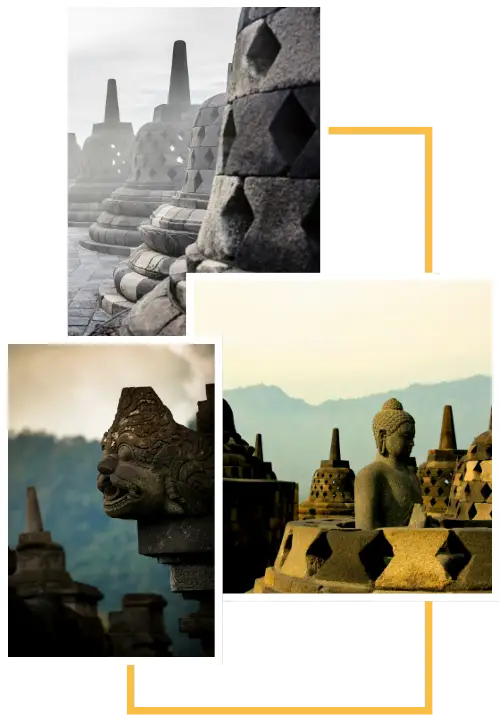
सोने के आयताकार बॉर्डर के सामने तीन छवियों का एक कोलाज। एक मंदिर के शिखरों का है, दूसरा ग्रे रंग की प्रतिमा का है, और आखिरी बोरोबुदुर मंदिर के शिखरों और मूर्तियों दोनों का है।

आगंतुक जानकारी

मिलने के समय:

सूर्योदय से सूर्यास्त तक।

ड्रेस कोड:

शालीन कपड़े पहनना अनिवार्य है। प्रवेश द्वार पर सारोंग और सैश उपलब्ध कराए जाते हैं।

यात्रा के लिए सर्वोत्तम समय:

शुष्क मौसम और साफ़ आसमान के लिए मई से सितंबर तक का समय सबसे अच्छा रहता है। सूर्योदय के लुभावने दृश्य के लिए सुबह जल्दी आना बेहतर रहता है।

आस-पास के आकर्षण

जावा के हृदय में स्थित बोरोबुदुर प्राकृतिक आश्चर्यों और सांस्कृतिक स्थलों से घिरा हुआ है, जो मंदिर परिसर से परे एक समृद्ध अनुभव प्रदान करता है।

माउंट मेरापी

एक रोमांचकारी दिन के लिए इंडोनेशिया के सबसे सक्रिय ज्वालामुखियों में से एक पर जाएँ।


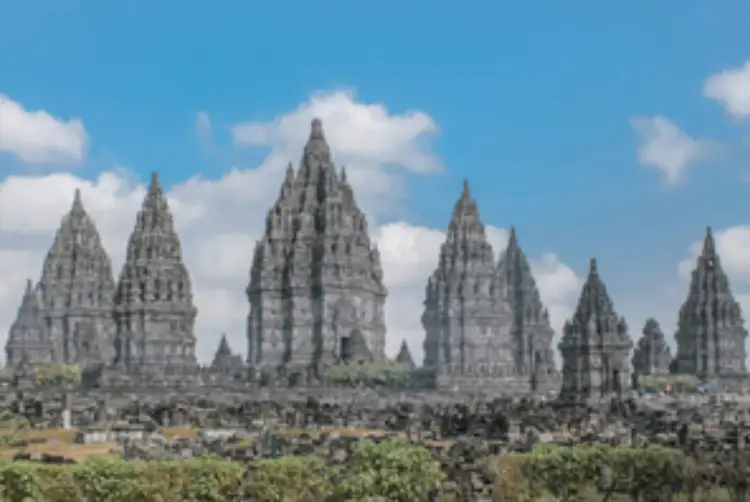
प्रम्बानन मंदिर​ को देखा जा सकता है, जिसके भूरे शिखर स्वर्ग की ओर इशारा करते हैं। अग्रभूमि में कुछ झाड़ियाँ और घास दिखाई देती हैं।

प्रमबानन मंदिर

बोरोबुदुर से थोड़ी दूरी पर स्थित त्रिमूर्ति देवताओं को समर्पित इंडोनेशिया के सबसे बड़े हिंदू मंदिर के दर्शन करें।

योग्याकार्ता शहर

जावा के सांस्कृतिक हृदय में गोता लगाएँ, जो अपनी पारंपरिक कलाओं और शाही विरासत के लिए जाना जाता है, यहाँ से केवल एक घंटे की ड्राइव दूर है।

 
"मंदिर केवल लकड़ी और पत्थर से नहीं बनते, बल्कि वे उन लोगों के सच्चे दिल और दिमाग से बनते हैं जो आत्मज्ञान चाहते हैं।"
~ ह्वेन हुआ

दिलचस्प

तथ्य

8वीं और 9वीं शताब्दी ई. में निर्मित।

Borobudur is the world’s largest Buddhist temple.

504 Buddha statues.

बौद्ध धर्म हॉट-डॉग छवि (1)

72 Buddha statues sit inside perforated stupas.

A UNESCO World Heritage site since 1991.

Adorned with 2,672 relief panels.

डी का मार्ग
डी का मार्ग
दुनिया के सात आश्चर्यों में से एक.
मैं यहां तीसरी बार आया हूं। इस बार बच्चों के साथ आया हूं। यह एक यादगार समय होगा और दुनिया के सात अजूबों में से एक को देखने और उसके बारे में जानने का एक शानदार अवसर होगा। मंदिर क्षेत्र के चारों ओर घूमने के लिए इलेक्ट्रिक बसों और गोल्फ कार्ट जैसी कुछ आधुनिक सुविधाओं के साथ यह क्षेत्र बहुत साफ था। शौचालय भी साफ थे। उम्मीद है कि भविष्य में और अधिक आकर्षण और सुविधाओं के साथ यह और बेहतर होगा।
डैनियल नवारो लोरेंजो
स्टाफ बहुत दोस्ताना और स्वागत करने वाला है।
मेरे पास वास्तव में यह बताने के लिए शब्द नहीं हैं कि वहां जाना कितना प्रभावशाली है। 💯 अनुशंसा करते हैं। और संरचना क्षेत्र में जाना इसके लायक है। इसके बारे में जानने के लिए टूर गाइड की सिफारिश करें! स्टाफ बहुत दोस्ताना और स्वागत करने वाला है।
स्टेला वरगा
स्टेला वरगा
अद्भुत एवं जादुई जगह.
अद्भुत और जादुई जगह। हमने सूर्योदय के समय एक समूह भ्रमण किया, इसलिए हम मंदिर में बहुत जल्दी पहुँच गए, हम मंदिर के मैदान में सबसे पहले पहुँचे। हमने मंदिर और आस-पास के इलाकों में लंबी सैर की। सुबह 9 बजे के आसपास वे हमें मंदिर ले गए। अधिकतम 150 व्यक्ति/घंटा है, और हमें एक स्थानीय गाइड के साथ छोटे समूह में विभाजित किया गया था, जिसने पूरे अनुभव को और भी बेहतर बना दिया।
साइमन फ्लोरेस
साइमन फ्लोरेस
सुंदर जगह।
इंडोनेशिया से आए दयालु लोगों के साथ यह एक सुंदर जगह है। वे अपनी संस्कृति से प्यार करते हैं। पार्क साफ और शांत है।
शिवप्रगाश पेरियानन
शिवप्रगाश पेरियानन
यह योग्याकार्ता में अवश्य देखने योग्य स्थान है।
बोरोबुदुर दुनिया का सबसे बड़ा बौद्ध मंदिर है और दक्षिण पूर्व एशिया के महान पुरातत्व स्थलों में से एक है। इसे 8वीं शताब्दी में शैलेंद्र राजवंश द्वारा बनवाया गया था। योग्याकार्टा में यह एक ऐसी जगह है जहाँ आपको अवश्य जाना चाहिए। यहाँ आने वाले लोगों की संख्या सीमित होने के कारण पहले से बुकिंग करवाना उचित है। टिकट के साथ स्थानीय टूर गाइड और बांस की चप्पल की एक जोड़ी मिलती है। यहाँ आने का सबसे अच्छा समय सूर्यास्त से पहले का होगा, हालाँकि सुबह जल्दी जाना भी अच्छा रहेगा।

संबंधित पोस्ट

आकर्षक कहानियाँ

बोरोबुदुर मंदिर का

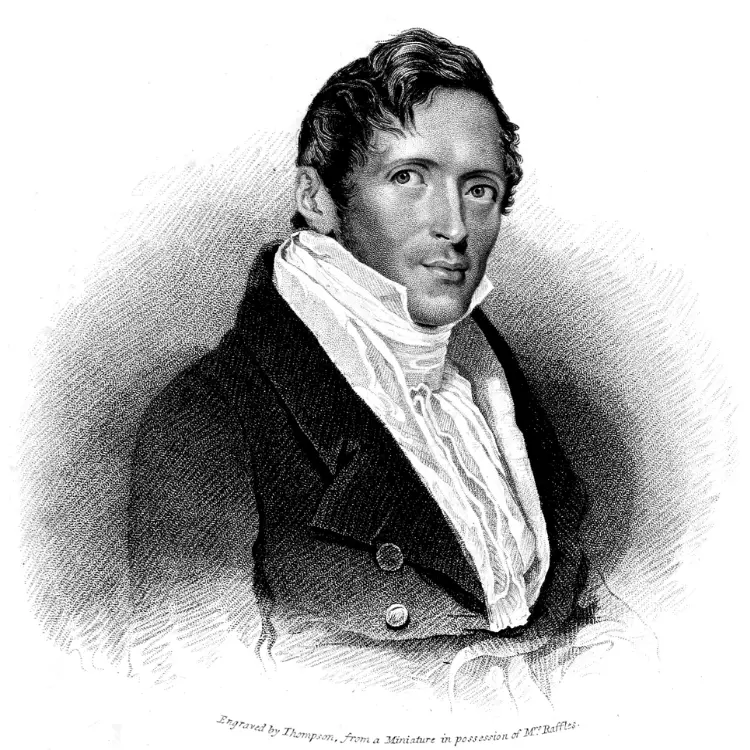
सदियों तक ज्वालामुखीय राख और घने जंगल से ढके रहे बोरोबुदुर को 1814 में जावा के तत्कालीन ब्रिटिश शासक थॉमस स्टैमफोर्ड रैफल्स ने पुनः खोजा था।

इस पुनः खोज ने मंदिर के पुनरुद्धार की यात्रा की शुरुआत की, जिसने इसे एक विस्मृत अवशेष से इंडोनेशिया की समृद्ध सांस्कृतिक विरासत के प्रतीक में बदल दिया।

मंदिर का गुमनामी से पुनः उभरना आध्यात्मिक स्मारकों की स्थायी प्रकृति और उनमें छिपे रहस्यों का प्रमाण है।

9वीं शताब्दी में निर्मित बोरोबुदुर का डिजाइन एक ज्यामितीय चमत्कार है, जिसमें प्राकृतिक तत्वों और बौद्ध ब्रह्माण्ड विज्ञान का सम्मिश्रण है।

यह विशाल संरचना एक बड़े स्तूप के रूप में बनाई गई है और ऊपर से देखने पर यह एक विशाल तांत्रिक बौद्ध मंडल का रूप लेती है, जो ब्रह्मांड का प्रतीक है।

इसके नौ मंच, जिनमें से छह वर्गाकार और तीन गोलाकार हैं, तथा जिनके ऊपर एक केन्द्रीय गुम्बद है, इच्छा के जीवन से लेकर ध्यान के माध्यम से निर्वाण तक के बौद्ध मार्ग का प्रतिनिधित्व करते हैं।

मंदिर की जटिल नक्काशी और मूर्तियां बुद्ध के जीवन का वर्णन करती हैं, जिससे यह पत्थर पर लिखी एक पुस्तक बन जाती है जो बौद्ध धर्म के सिद्धांतों की शिक्षा देती है।

बोरोबुदुर में एक अनोखा रहस्य छिपा है: मंदिर के आधार पर एक छिपा हुआ पैर है, जो पत्थर की एक अतिरिक्त परत से ढका हुआ है।

इस छिपे हुए आधार को, जिसे अक्सर मंदिर का "छिपा हुआ पैर" कहा जाता है, 160 उभरे हुए पैनल हैं जो वास्तविक जीवन के दृश्यों के साथ-साथ विभिन्न आध्यात्मिक शिक्षाओं को दर्शाते हैं।

Its discovery in the late 19th century sparked debates among scholars regarding its purpose and the reason it was covered.

Some suggest it was hidden to correct a design flaw or to align the temple with specific spiritual visions.

The construction of Borobudur was an immense effort requiring the coordination of thousands, showcasing the determination and spiritual dedication of the ancient Javanese people.

With an estimated 2 million stone blocks used in its construction, without the use of mortar, the temple is a testament to the architectural genius and enduring spirit of its creators.

The laborious effort reflects not only a monumental dedication to the divine but also a profound commitment to crafting a legacy of enlightenment.

As the world’s largest Buddhist temple, Borobudur is not merely an architectural wonder but also a pivotal archaeological site that offers invaluable insights into the spiritual and social life of 9th-century Java.

Its status as a UNESCO World Heritage Site underscores its significance, attracting scholars, pilgrims, and tourists from around the globe.

The temple’s design and ornamentation provide a snapshot of a civilization's artistic and religious fervor, making it a crucial site for understanding ancient Buddhist practices.

Over the centuries, Borobudur has withstood natural disasters, including volcanic eruptions, earthquakes, and even terrorist threats, each time emerging as a symbol of resilience.

Restoration efforts, particularly the major campaign led by UNESCO in the 1970s, have been instrumental in preserving its structure and legacy.

These endeavors highlight the global commitment to safeguarding cultural heritage, reflecting the temple's universal appeal and its message of enduring spiritual strength.

Borobudur is the focal point for Vesak Day celebrations, marking the birth, enlightenment, and death of Buddha.

This event attracts Buddhists from Indonesia and around the world, who gather to participate in a solemn ceremony that includes prayers, the release of lanterns, and a procession from Mendut to Borobudur.

The temple, bathed in the glow of thousands of lanterns, becomes a beacon of peace, compassion, and wisdom, showcasing the living tradition of Buddhism in the modern world.

The builders of Borobudur incorporated astronomical knowledge into the temple's design, aligning it with significant celestial events.

The structure is oriented to catch the first rays of the sunrise during the equinox, illuminating the central stupa in a symbolic gesture of enlightenment.

This precise alignment showcases the ancient Javanese's deep understanding of the cosmos, further emphasizing the temple's role as a bridge between the earthly and the divine.

Among Borobudur’s remarkable features are the over 500 Buddha statues in various poses, each conveying a specific aspect of the Buddha's teachings.

The journey through the temple's corridors and stairways, past these serene figures, is a pilgrimage in itself, reflecting the Buddhist path towards enlightenment.

The statues, many of which are encased in intricately carved stupas, invite introspection and meditation, making the temple a sanctuary for spiritual seekers.

Borobudur’s extensive relief panels, totaling over 2,672, illustrate episodes from the Buddha’s life and Jataka tales.

These carvings not only adorn the temple but also serve as a visual scripture for Buddhists, guiding visitors through the spiritual journey of Siddhartha Gautama's path to enlightenment and beyond.

Each relief, intricately carved from volcanic stone, is a sermon in stone, offering insights into the moral and philosophical teachings of Buddhism.

Timeline Of The Borobudur Temple

8वीं शताब्दी

The construction of Borobudur begins under the patronage of the Sailendra Dynasty, marking the emergence of one of the largest Buddhist monuments in the world on the island of Java, Indonesia.

9वीं शताब्दी

The completion of Borobudur, after approximately 75 years of construction, showcases a grand mandala in stone, encapsulating the Buddhist cosmology and the path to enlightenment across its nine stacked platforms.

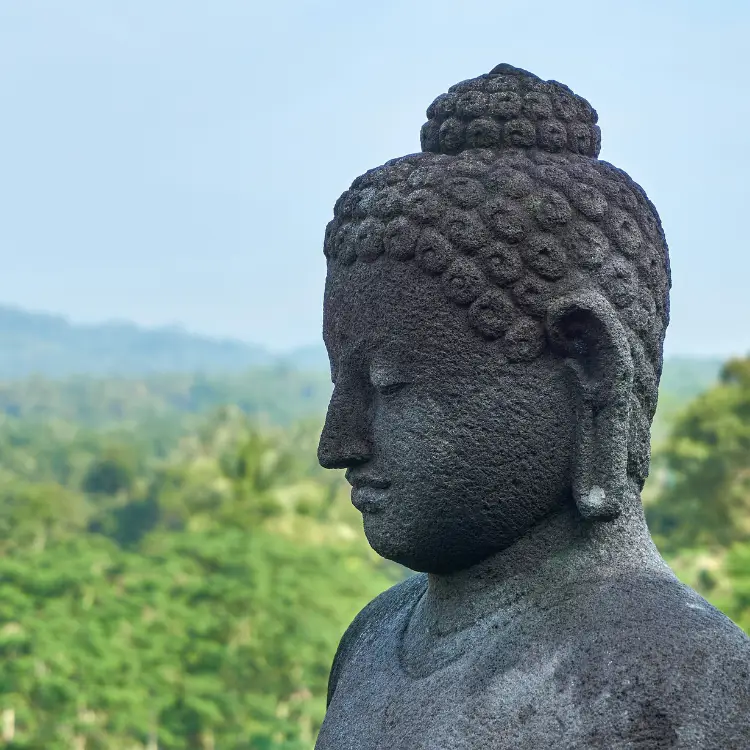
अग्रभूमि में एक भूरे पत्थर की बुद्ध प्रतिमा बैठी हुई दिखाई देती है, तथा पृष्ठभूमि में जंगल और साफ नीला आकाश दिखाई देता है।

9वीं शताब्दी

The completion of Borobudur, after approximately 75 years of construction, showcases a grand mandala in stone, encapsulating the Buddhist cosmology and the path to enlightenment across its nine stacked platforms.

अग्रभूमि में एक भूरे पत्थर की बुद्ध प्रतिमा बैठी हुई दिखाई देती है, तथा पृष्ठभूमि में जंगल और साफ नीला आकाश दिखाई देता है।

15th and 16th centuries

A significant volcanic eruption is believed to contribute to the region’s decline, leading to Borobudur’s gradual abandonment and concealment beneath layers of volcanic ash and jungle growth.

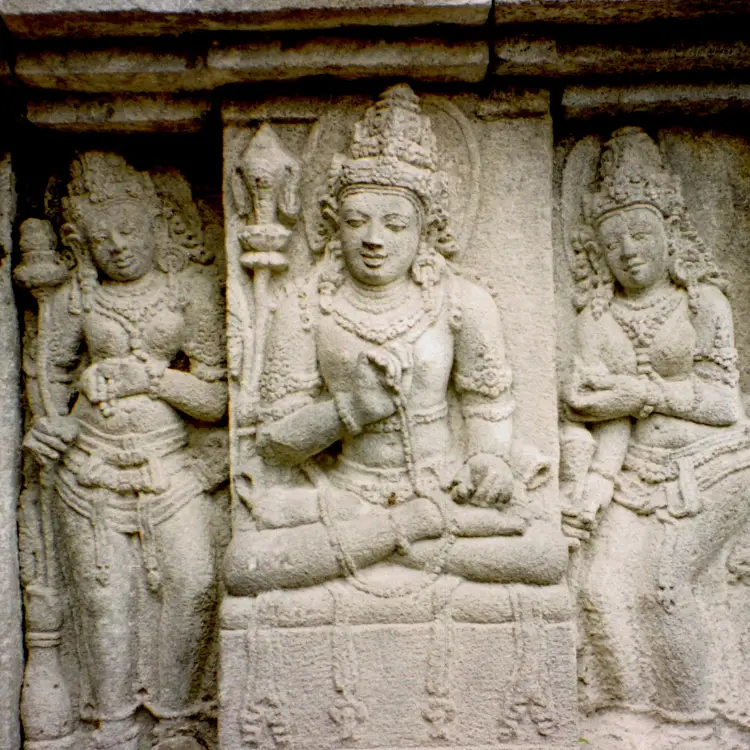
बोरोबुदुर मंदिर में तीन मूर्तियाँ पत्थर पर उकेरी गई हैं, जिनमें से प्रत्येक ने मुकुट पहना हुआ है। बीच वाली मूर्ति अपने पैरों को क्रॉस करके बैठी है, जबकि अन्य दो मूर्तियाँ बीच वाली मूर्ति के दोनों ओर खड़ी हैं।

1814

Thomas Stamford Raffles, the British governor of Java, instigates the rediscovery of Borobudur, hidden under thick forest cover, following local references to its existence.

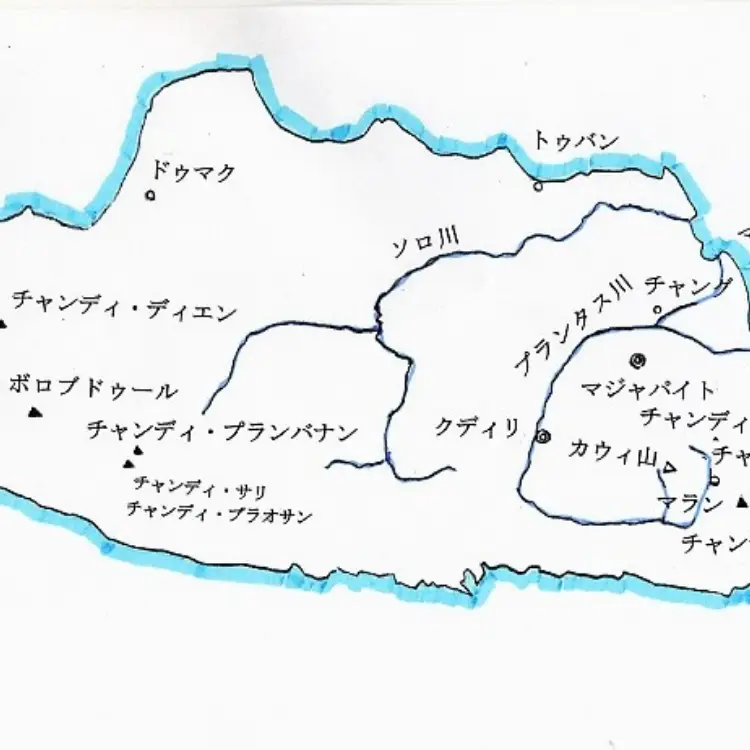
नदियों और ऐतिहासिक स्थलों का मानचित्र.

1814

Thomas Stamford Raffles, the British governor of Java, instigates the rediscovery of Borobudur, hidden under thick forest cover, following local references to its existence.

नदियों और ऐतिहासिक स्थलों का मानचित्र.

1907-1911

A major cleanup operation is undertaken by the Dutch colonial government, revealing the full extent of Borobudur’s majesty for the first time in centuries.

भूरे-भूरे पत्थर की ईंटों से बने बोरोबुदुर मंदिर के आधार के चारों ओर घने हरे पत्ते अग्रभूमि में हैं।

1973

The Indonesian government and UNESCO initiate a comprehensive restoration project to preserve and restore Borobudur, recognizing its immense cultural and historical significance.

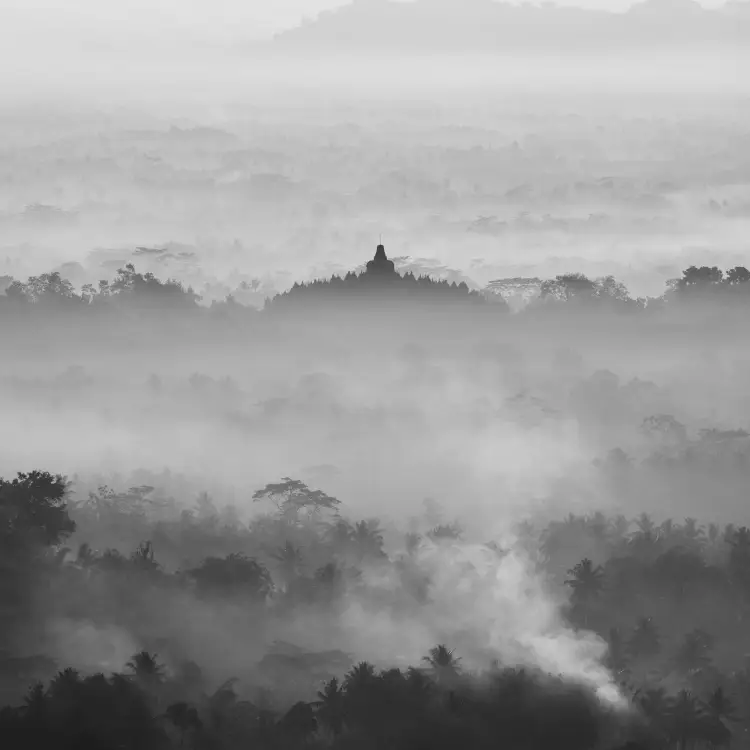
बोरोबुदुर मंदिर के चारों ओर के जंगल में घना कोहरा फैला हुआ है, जिसके सफेद धुंध के कारण दूरी पर स्थित इस विशाल, प्राचीन संरचना को देख पाना कठिन हो रहा है।

1973

The Indonesian government and UNESCO initiate a comprehensive restoration project to preserve and restore Borobudur, recognizing its immense cultural and historical significance.

बोरोबुदुर मंदिर के चारों ओर के जंगल में घना कोहरा फैला हुआ है, जिसके सफेद धुंध के कारण दूरी पर स्थित इस विशाल, प्राचीन संरचना को देख पाना कठिन हो रहा है।

1983

After almost a decade, under the backing of Stamford Raffles, the restoration of Borobudur is completed, reinstating the monument as a key spiritual site and a prime destination for pilgrims and tourists alike.

सर थॉमस स्टैमफोर्ड रैफल्स के चित्र का प्रिंट.

1991

UNESCO officially designates Borobudur as a World Heritage Site, highlighting its outstanding universal value and ensuring ongoing international support for its preservation.

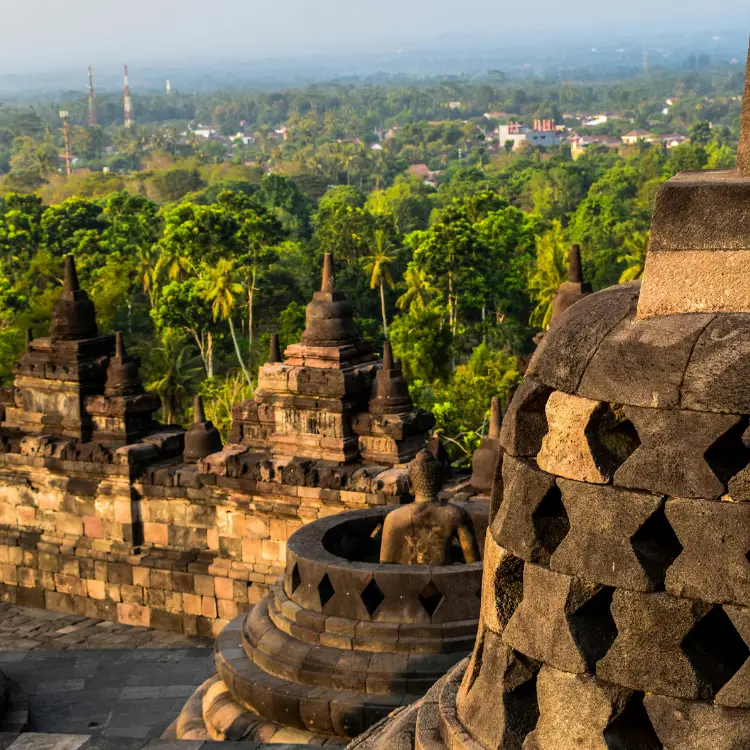
बुद्ध की एक प्रतिमा स्तूप के अंदर स्थापित है, जो दूर तक फैले हरे-भरे जंगल को देखती है। दूर-दूर तक पेड़ों के बीच सफ़ेद इमारतों वाला शहर दिखाई देता है।

1991

UNESCO officially designates Borobudur as a World Heritage Site, highlighting its outstanding universal value and ensuring ongoing international support for its preservation.

बुद्ध की एक प्रतिमा स्तूप के अंदर स्थापित है, जो दूर तक फैले हरे-भरे जंगल को देखती है। दूर-दूर तक पेड़ों के बीच सफ़ेद इमारतों वाला शहर दिखाई देता है।

-2000

Borobudur continues to face challenges, including environmental wear and acts of vandalism, prompting ongoing conservation efforts to protect and maintain its integrity.

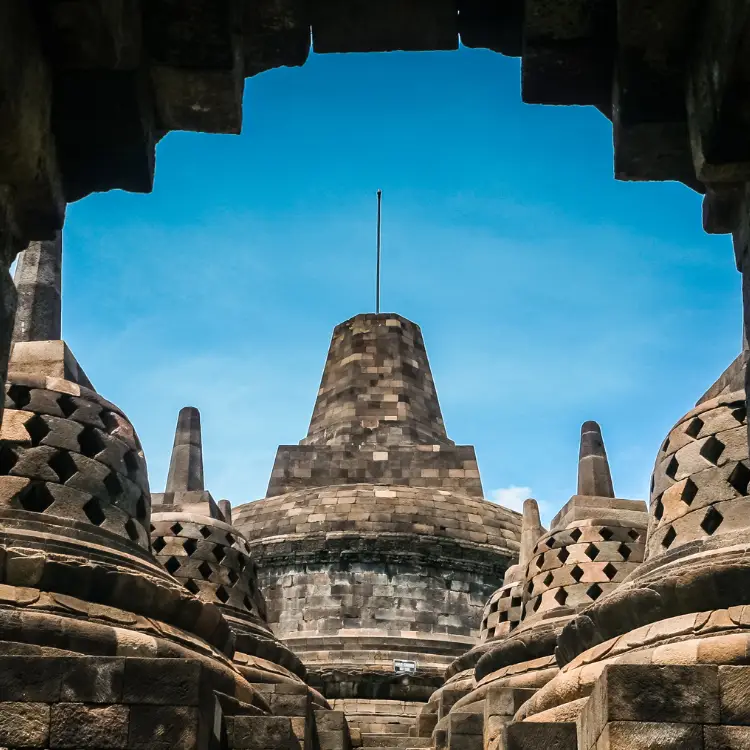
एक मेहराब के नीचे, पाँच स्तूप हैं, जिनमें बोरोबुदुर मंदिर का केंद्रीय स्तूप भी शामिल है, प्रत्येक स्तूप आपस में जुड़े हुए पत्थरों से बना है। केंद्रीय स्तंभ से एक लंबी छड़ बाहर निकली हुई है।

2010

The temple is affected by the eruptions of Mount Merapi, demonstrating the constant threat from natural disasters in the region and the resilience of the monument through centuries.

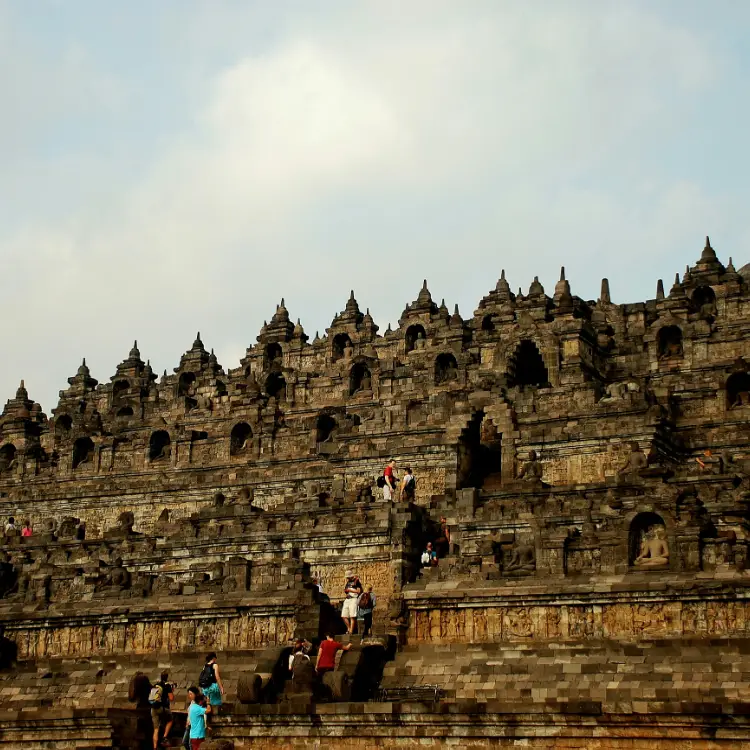
बोरोबुदुर मंदिर की पत्थर की सीढ़ियों पर चढ़ते पर्यटक।

2010

The temple is affected by the eruptions of Mount Merapi, demonstrating the constant threat from natural disasters in the region and the resilience of the monument through centuries.

बोरोबुदुर मंदिर की पत्थर की सीढ़ियों पर चढ़ते पर्यटक।

2012

The implementation of a visitor management system aims to balance conservation efforts with the needs of the increasing number of tourists visiting Borobudur.

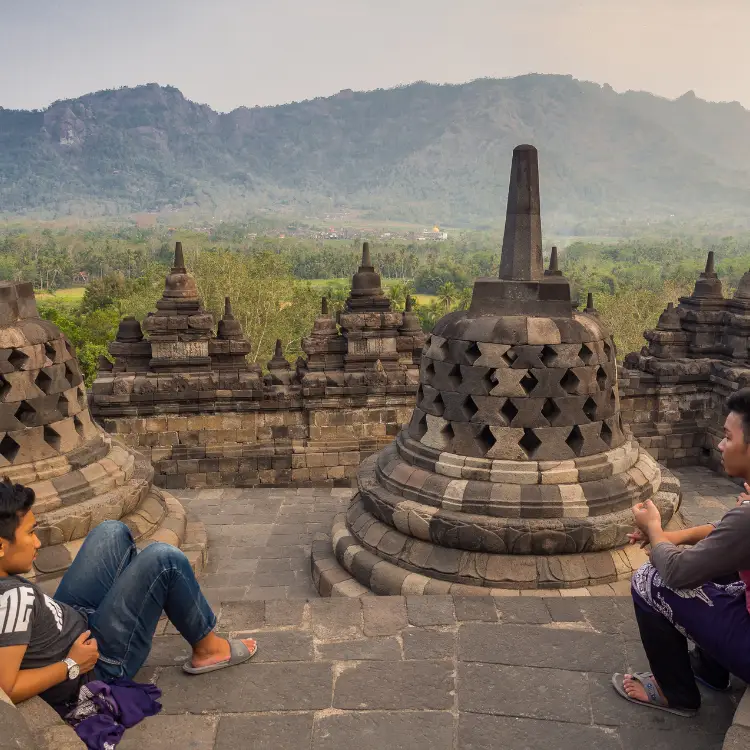
मंदिर के स्तूपों के बीच बोरोबुदुर मंदिर के शिखर पर दो व्यक्ति बैठे हैं।

2020-Present

Borobudur remains a symbol of Indonesia’s cultural heritage, attracting millions of visitors annually. Efforts to preserve the temple continue amidst challenges, ensuring its legacy for future generations.

बोरोबुदुर मंदिर में एक दीवार के पास बैठी बुद्ध प्रतिमा। पृष्ठभूमि में एक जंगल और आंशिक रूप से बादल छाए हुए आकाश दिखाई दे रहे हैं।

2020-Present

Borobudur remains a symbol of Indonesia’s cultural heritage, attracting millions of visitors annually. Efforts to preserve the temple continue amidst challenges, ensuring its legacy for future generations.

बोरोबुदुर मंदिर में एक दीवार के पास बैठी बुद्ध प्रतिमा। पृष्ठभूमि में एक जंगल और आंशिक रूप से बादल छाए हुए आकाश दिखाई दे रहे हैं।

Conclusion

Through its long history, Borobudur has stood as a testament to the architectural genius and spiritual devotion of its creators. It serves as a beacon of Buddhist faith and Javanese heritage, enduring through natural calamities and the passage of time to remain one of the most significant archaeological sites and places of pilgrimage in the world.

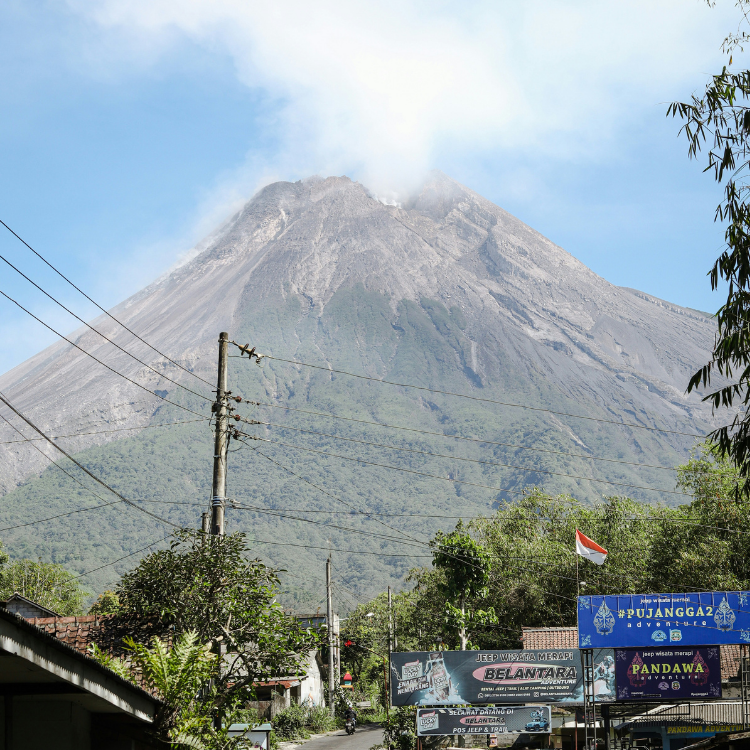
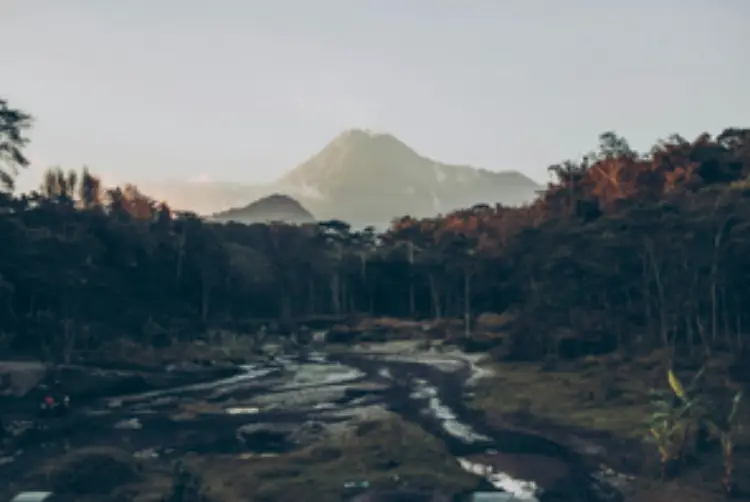
इंडोनेशिया के मध्य जावा में माउंट मेरापी दूर से दिखाई देता है, इसकी चोटी बादलों को छूती हुई प्रतीत होती है। सामने बिजली की लाइनें, एक नीला चिन्ह और कुछ कारों वाली सड़क दिखाई देती है।

History of The Borobudur Temple

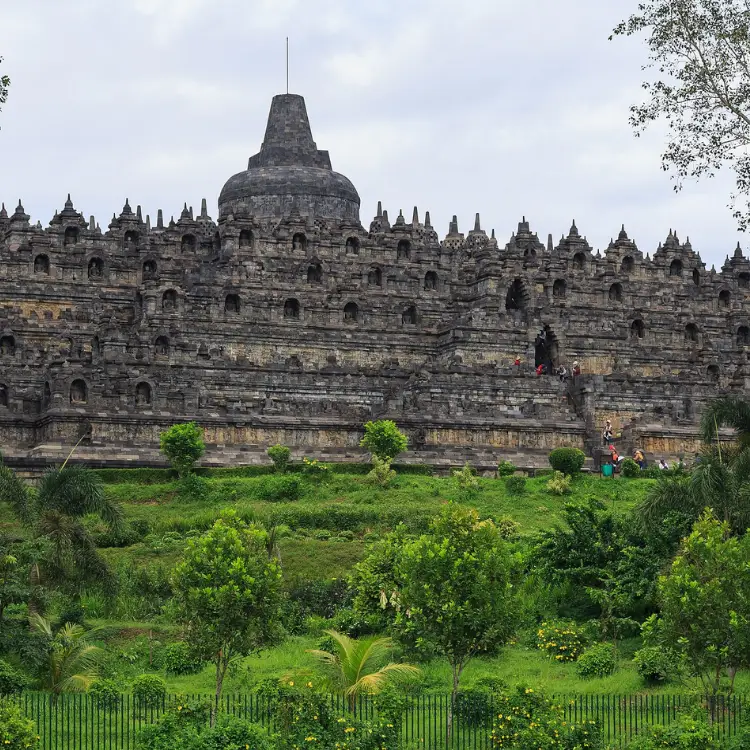
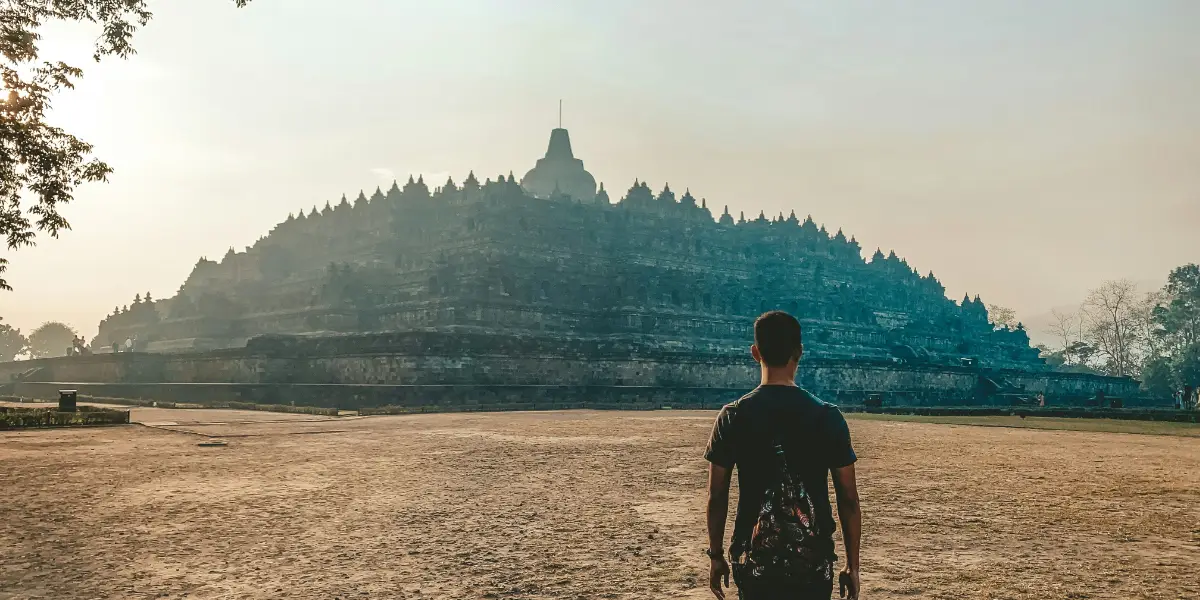
विशाल बोरोबुदुर मंदिर के सामने दाईं ओर थोड़ा दूर खड़ा एक व्यक्ति।

The genesis of the Borobudur Temple is a tale woven with spiritual aspiration and architectural grandeur. Nestled in the lush landscapes of Java, Indonesia, this majestic sanctuary emerged from the verdant earth, a testament to the enduring spirit of Buddhist devotion.

In the 8th century, under the Sailendra Dynasty’s patronage, the construction of Borobudur began, embarking on a journey to become the world’s largest Buddhist monument. This colossal undertaking was not just an architectural feat but a spiritual endeavor, encapsulating the Buddhist cosmology in stone and lava.

As decades passed, artisans and builders meticulously placed each block, crafting the temple’s intricate reliefs and stupas. Borobudur’s design, embodying the path to enlightenment, offered pilgrims a three-dimensional guide through the realms of Buddhist philosophy.

By the 9th century, Borobudur stood complete, a mandala in stone, serving as a spiritual beacon and center of pilgrimage. The temple’s three levels — Kamadhatu, Rupadhatu, and Arupadhatu — represented the Buddhist cosmos, leading the faithful through the world of desire, form, and formlessness.

Centuries of volcanic eruptions, jungle growth, and neglect shrouded Borobudur in mystery until its rediscovery in the 19th century by Sir Thomas Stamford Raffles. This marked the beginning of a new chapter in Borobudur’s history, one of restoration and revival.

The 20th century witnessed significant efforts to restore and preserve the temple’s splendor. UNESCO’s designation of Borobudur as a World Heritage Site in 1991 underscored its global significance, ensuring continued preservation for future generations.

Rediscovery and Restoration

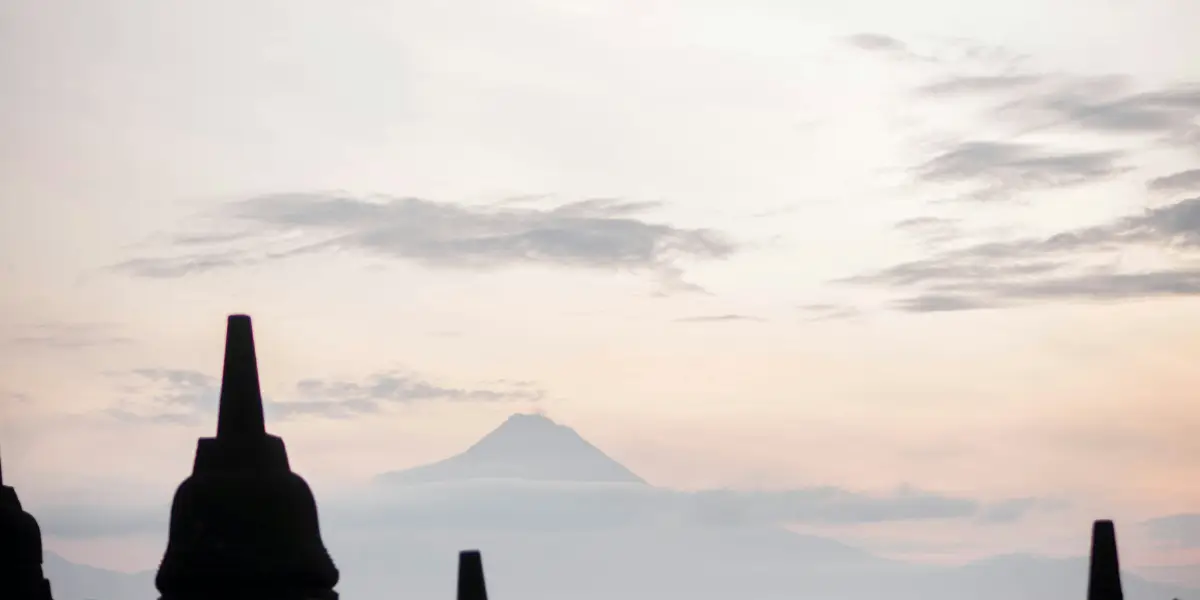
बोरोबुदुर मंदिर का स्तूप या लघु मंदिर शिखर अग्रभूमि में है, जबकि पृष्ठभूमि में बादल, धुंधले नीले पहाड़ और हल्के नारंगी रंग का आकाश देखा जा सकता है।

Centuries passed, and the majestic structure was cloaked in volcanic ash and jungle overgrowth, its splendor hidden from the world until its rediscovery in 1814 by Thomas Stamford Raffles.

This momentous event signaled the rebirth of Borobudur, igniting efforts to restore and preserve its intricate carvings and stupendous architecture.

The international collaboration led by the Indonesian government and UNESCO in the 1970s marked a pivotal chapter in its conservation, culminating in 1983 with the temple’s restoration, a testament to humanity’s dedication to preserving its cultural heritage.

UNESCO World Heritage Site

यहां से बोरोबुदुर मंदिर देखा जा सकता है, साथ ही पर्यटक बोरोबुदुर मंदिर के रास्ते और सीढ़ियों पर टहलते हुए भी देखे जा सकते हैं, जिसके दोनों ओर जंगल है।

The acknowledgment of Borobudur as a UNESCO World Heritage Site in 1991 further cemented its status as a monument of universal value, a beacon of Buddhist art and philosophy that continues to inspire awe and reverence.

This designation has helped safeguard the temple for future generations, ensuring that its spiritual and cultural messages endure.

A Living Monument

अग्रभूमि में बोरोबुदुर मंदिर के काले-भूरे पत्थर देखे जा सकते हैं, जबकि साथ में पथ, जंगल, पहाड़ और डूबता सूरज देखा जा सकता है।

Today, Borobudur stands resilient, a serene space of contemplation amid the bustling modern world, its narrative reliefs and stupas narrating the Buddha’s path to enlightenment.

It remains a focal point for pilgrimage and tourism, drawing souls from across the globe, each seeking a touch of its transcendent peace.

The Vesak festival, commemorating the birth, enlightenment, and death of Buddha, transforms the temple into a vibrant hub of spiritual activity, connecting the ancient with the contemporary in a profound communal celebration.

वास्तुकला का चमत्कार

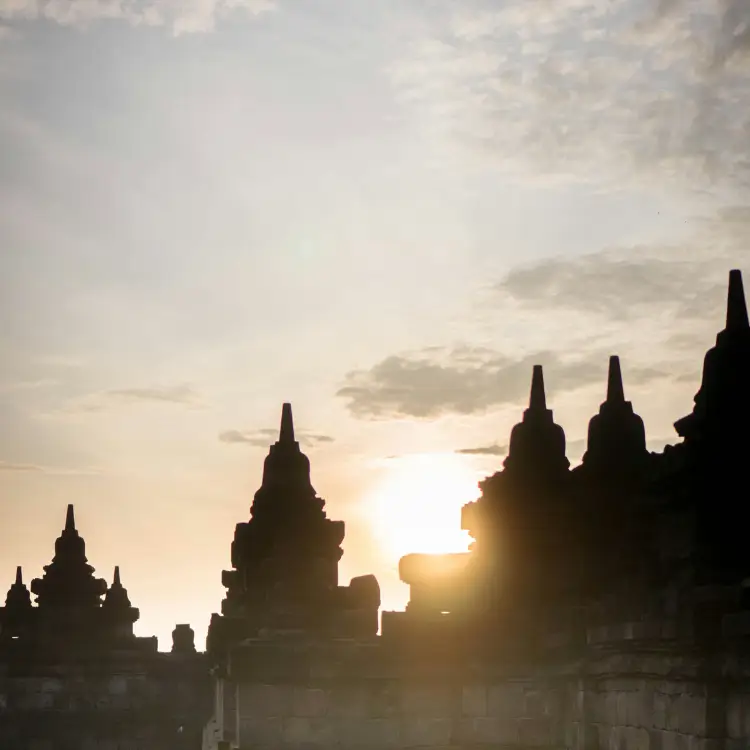
बोरोबुदुर मंदिर के स्तूप सामने और मध्य भाग में स्थित हैं, जहां सूर्यास्त के समय नारंगी आकाश और सफेद सूरज दिखाई देता है।

The architectural brilliance of Borobudur, with its myriad stupas, intricate bas-reliefs, and imposing structure, speaks volumes of the advanced capabilities of its creators.

The temple’s design, embodying the Buddhist cosmology with the world of desires at its base, the world of forms in the middle, and the formless world at its peak, offers a tangible representation of the spiritual journey from samsara to Nirvana.

The use of andesite stone and the unique interlocking construction technique underscore the ingenuity and resilience of the Javanese artisans of yesteryears.

कलात्मक विरासत

जमीन से देखने पर बोरोबुदुर मंदिर धुंध से ढका हुआ दिखाई देता है, तथा पत्थर की संरचना के शीर्ष पर स्थित मुख्य स्तूप की ओर देखता है।

The artistic legacy of Borobudur, encapsulated in its detailed reliefs, portrays the life of Buddha and illustrates Jataka tales, providing insight into the moral and spiritual lessons central to Buddhism.

These carvings not only embellish the temple but serve as a profound educational tool, conveying the essence of Buddhist teachings through the universal language of art.

Efforts to preserve these narratives are relentless, ensuring that the wisdom embedded within the stone endures.

Spiritual Significance

रात के समय मंदिर के अग्रभाग में आग की लपटें और बौद्ध भिक्षुओं की कतारें देखी जा सकती हैं, जो मंदिर के आधार तक जाती हैं। दूर स्थित बोरोबुदुर मंदिर स्पॉटलाइट से जगमगा रहा है।

The spiritual essence of Borobudur, with its serene Buddhas gazing out from the stupas, invites reflection and meditation.

The temple serves as a poignant reminder of the potential for inner peace and enlightenment inherent in all beings.

It stands as a symbol of the enduring search for meaning, a sanctuary where the temporal and the eternal converge.

The Many Faces of Borobudur

बोरोबुदुर मंदिर में स्तूप के नीचे चार बुद्ध प्रतिमाएँ। ग्रे पत्थर की संरचना के पीछे नीला आकाश दिखाई देता है।

The numerous Buddha statues, each with a different mudra or hand gesture, symbolize the various aspects of the Buddha’s teaching and the diversity of practices within Buddhism.

These serene figures invite contemplation and offer blessings to the pilgrims and visitors.

Borobudur's Narrative Panels

बोरोबुदुर मंदिर में पत्थर की ईंट की दीवार के किनारे बुद्ध की कई प्रतिमाओं की नक्काशी। एक बड़ी बुद्ध प्रतिमा पेड़ के नीचे बैठी है, और कई अन्य छोटी बुद्ध प्रतिमाएँ दीवार पर पैर मोड़कर बैठी हैं।

The temple’s walls are adorned with bas-reliefs, narrating the life of Buddha and the principles of Buddhism.

These panels serve not merely as decorative elements but as a spiritual text, guiding the devotee through Buddha’s teachings and the path to enlightenment.

A Monument to Compassion and Wisdom

घिसी हुई पत्थर की बुद्ध प्रतिमा के चेहरे का क्लोजअप, जिसमें से उसकी नाक गायब है। बोरोबुदुर मंदिर के दो स्तूप प्रतिमा के पीछे स्थित हैं। उन सभी के पीछे का आकाश हल्के नीले रंग का है।

Borobudur, with its grand stupas and serene Buddhas, stands as a monument to the compassion and wisdom of the Buddha.

It remains a place of profound spirituality and reflection, where the ancient and the present merge in the pursuit of enlightenment.

In the heart of Java, the Borobudur Temple transcends its physical boundaries, embodying the spiritual journey of countless pilgrims who have walked its sacred path.

It stands not merely as an architectural wonder but as a beacon of Buddhist faith and human aspiration, inviting all who seek to tread the path towards enlightenment.

Cultural Resonance

बाईं ओर, दो बुद्ध प्रतिमाएँ पत्थर के चबूतरे पर पैर मोड़े बैठी हैं। पृष्ठभूमि में जहाँ तक नज़र जाती है, जंगल फैला हुआ है, जो बोरोबुदुर मंदिर से दूर जाता है।

Borobudur’s influence extends beyond its physical boundaries, shaping the cultural and religious landscape of Indonesia and the broader Buddhist world.

It represents a confluence of art, faith, and history, a monument that transcends time, its legacy echoing through the ages as a testament to human creativity and spiritual aspiration.

In the tapestry of world heritage, the Borobudur Temple occupies a place of honor, its stones etched with the aspirations of past generations, inviting all who visit to embark on a journey of discovery and transcendence.

The history of Borobudur is not merely a chronicle of construction and restoration; it is a narrative of humanity’s quest for the divine, a saga of resilience and renewal that continues to unfold.

Borobudur Temple Gallery

दुनिया भर के मंदिरों के बारे में अधिक जानें