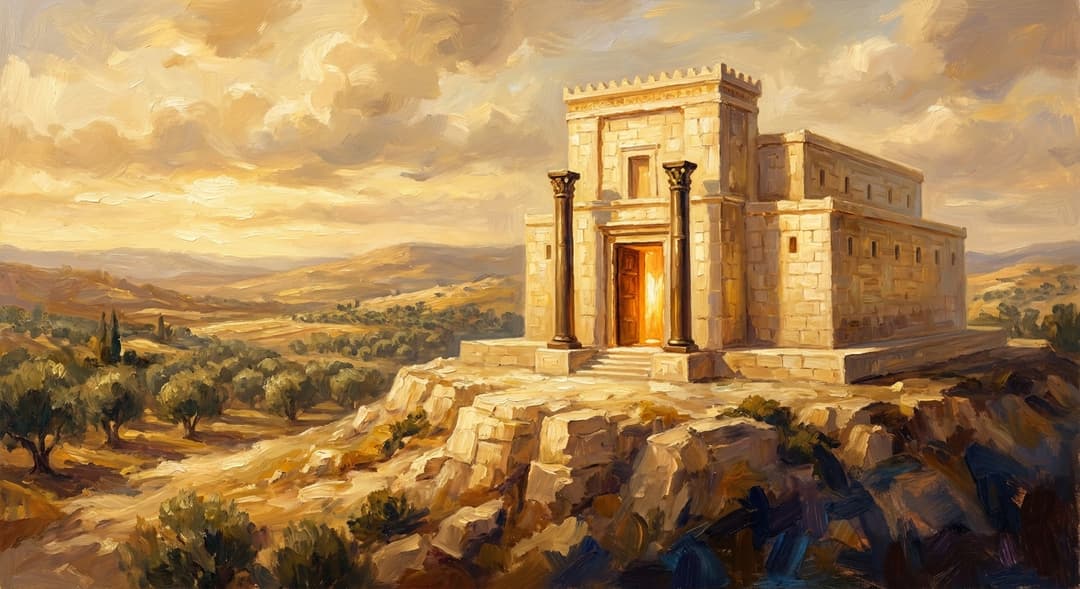
The Architectural Pattern of Heaven
From the earliest books of scripture, God has commanded His people to build sacred structures where He could dwell among them. The Tabernacle of Moses, built in the wilderness, was the first mobile temple, designed according to a pattern shown by God on Mount Sinai. Every element—from the division of space to the materials used—represented a step on the path of returning to God's presence.
The Outer Court and Sacrifice
The progression through sacred space begins in the Outer Court, where the Altar of Sacrifice stood. Here, worshipers brought offerings as a symbol of repentance, obedience, and dedication. In ancient Israel, this pointed forward to the ultimate sacrifice of Jesus Christ, reminding individuals of the necessity of clean hands and a pure heart before progressing further into holy spaces.
The Holy Place and Spiritual Light
Entering the Holy Place, the priest moved from natural daylight into a space lit only by the Menorah, a golden seven-branched lampstand representing spiritual light and the tree of life. Here also stood the Table of Shewbread, representing God's sustenance and covenant relationship, and the Altar of Incense, symbolizing the prayers of the saints ascending to heaven.
The Holy of Holies and the Mercy Seat
Separated by a thick veil was the Holy of Holies, the most sacred chamber representing the direct presence of God. Inside lay the Ark of the Covenant, covered by the Mercy Seat (Kaporet) flanked by two cherubim. Once a year, on the Day of Atonement (Yom Kippur), the High Priest passed through the veil to sprinkle blood on the Mercy Seat, reconciling the people with God—a powerful foreshadowing of Christ's role as Mediator and Savior.
A Continuity of Covenants
This pattern of sacred space did not end with the ancient world. Throughout scripture—from the Tabernacle to Solomon's Temple, and into the revelations of the Restoration—the temple remains a sanctuary for learning, making covenants, and obtaining spiritual power. By studying the scriptural descriptions of these holy structures, we gain a deeper appreciation for the modern temple experience and its ancient roots.
Sources & Research
Every fact on Temples.org is backed by verified Sources & Research. Each piece of information is rated by source tier and confidence level.
View All Sources (2)
| Field | Source | Tier | Retrieved |
|---|---|---|---|
| The Tabernacle in the Wilderness | The Church of Jesus Christ of Latter-day Saints (opens in a new tab) | A | 2026-05-28 |
| Solomon's Temple Description | Encyclopædia Britannica (opens in a new tab) | B | 2026-05-28 |