Before Writing, There Were Temples
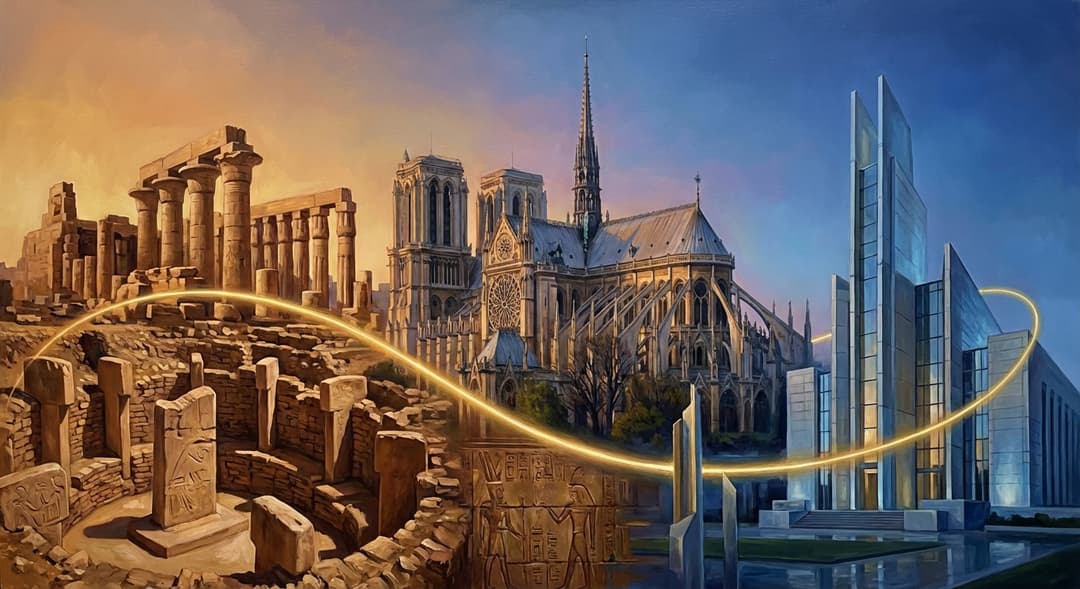
The oldest known monumental religious structure is Göbekli Tepe in southeastern Turkey, dating to approximately 9500 BCE — over 6,000 years before Stonehenge and 7,000 years before the first Egyptian pyramids. Its massive T-shaped limestone pillars, some weighing up to 10 tons, were carved and erected by hunter-gatherers who had not yet developed agriculture, pottery, or the wheel.
This astonishing fact overturned a long-held archaeological assumption: that organized religion followed the development of settled civilization. Göbekli Tepe suggests the reverse — that the desire to build temples may have driven the transition from nomadic to settled life. The need to sustain construction crews may have been the very catalyst for agriculture.
The Ancient World: Egypt, Mesopotamia, and Greece
Ancient Egyptian temples like Karnak and Luxor were not places of public worship but houses of the gods, accessible only to priests. The massive hypostyle halls with their forest of towering columns created a deliberate transition from the bright, open outside world to the dark, mysterious inner sanctum where the god's statue resided.
Mesopotamian ziggurats — stepped pyramid towers like the famous one at Ur — served as elevated platforms bringing priests closer to the heavens. The Greeks perfected the peripteral temple, surrounding their cella with columns in the Doric, Ionic, and Corinthian orders. The Parthenon in Athens, completed in 438 BCE, remains the archetype of classical temple architecture.
The Age of Cathedrals and Mosques
The medieval period saw an explosion of sacred architecture on unprecedented scales. In Europe, the Gothic cathedral emerged as a revolutionary new form: pointed arches, ribbed vaults, and flying buttresses allowed walls to be opened up with enormous stained-glass windows, flooding interiors with colored light that medieval theologians called "the light of God."
Meanwhile, the Islamic world was producing its own architectural miracles. The Great Mosque of Córdoba (begun 784 CE) pioneered the double-arched colonnade, creating a mesmerizing forest of red-and-white striped arches. The Dome of the Rock in Jerusalem (691 CE) remains one of the most recognizable sacred buildings on earth with its gleaming gold dome over an octagonal base.
Asian Temple Traditions
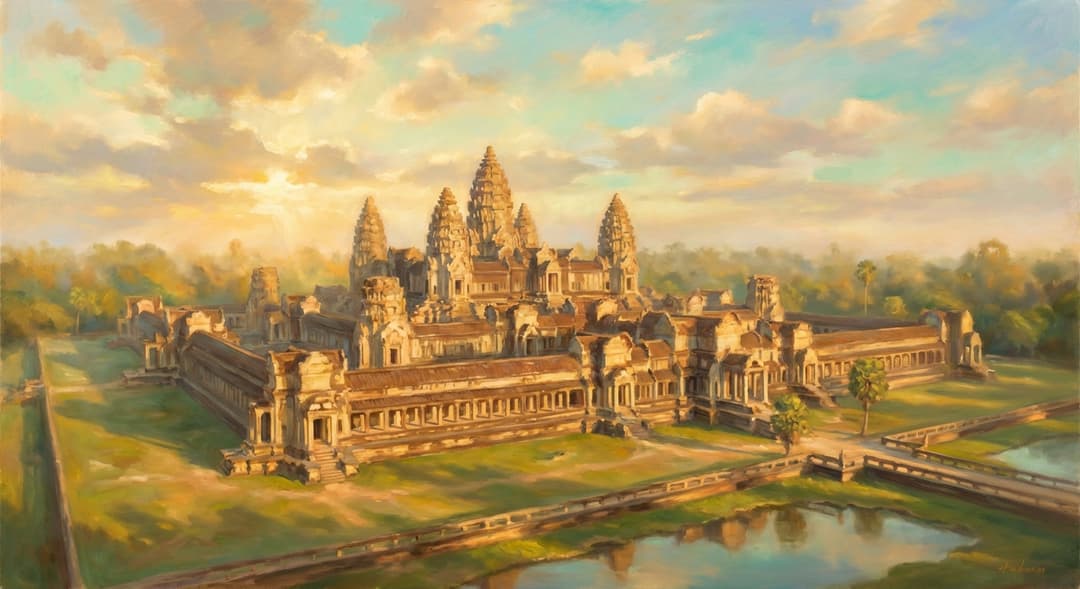
While European cathedrals and Islamic mosques were rising, Asian civilizations were building some of the most ambitious temples in human history. Angkor Wat in Cambodia (12th century) is the largest religious monument ever constructed — a 402-acre temple complex representing the Hindu cosmos in stone. When the Khmer Empire converted to Buddhism, the temple was rededicated without being destroyed, a remarkable testament to architectural reverence.
In China and Japan, Buddhist temple architecture developed along distinct lines: the Chinese pagoda evolved from the Indian stupa, while Japanese temples like Kinkaku-ji (the Golden Pavilion, 1397) blended Buddhist, Shinto, and aristocratic architectural traditions into something entirely new.
The Modern Temple Renaissance
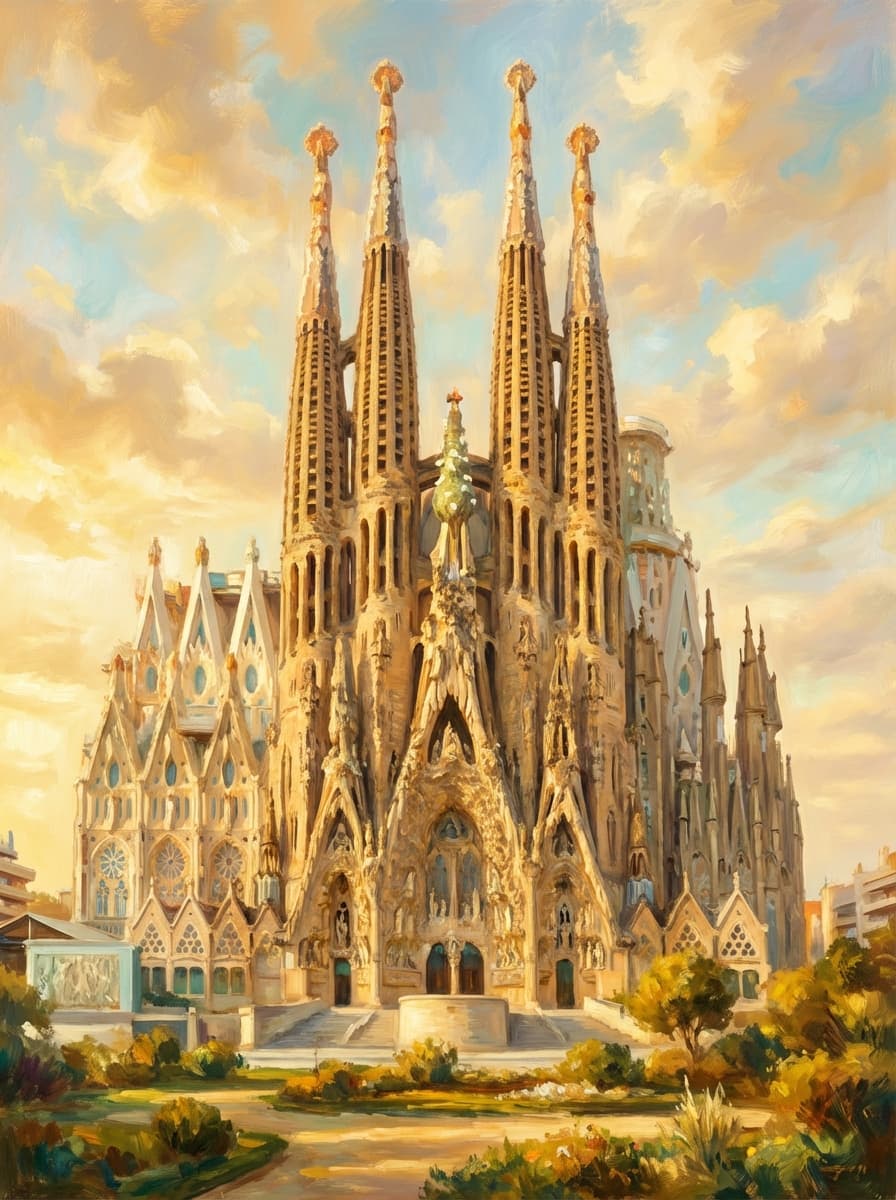
The 20th and 21st centuries have seen a remarkable renaissance in temple construction. Antoni Gaudí's La Sagrada Família in Barcelona, begun in 1882 and consecrated in 2010, pushes Gothic architecture into entirely new territory with organic, nature-inspired forms generated through mathematical modeling.
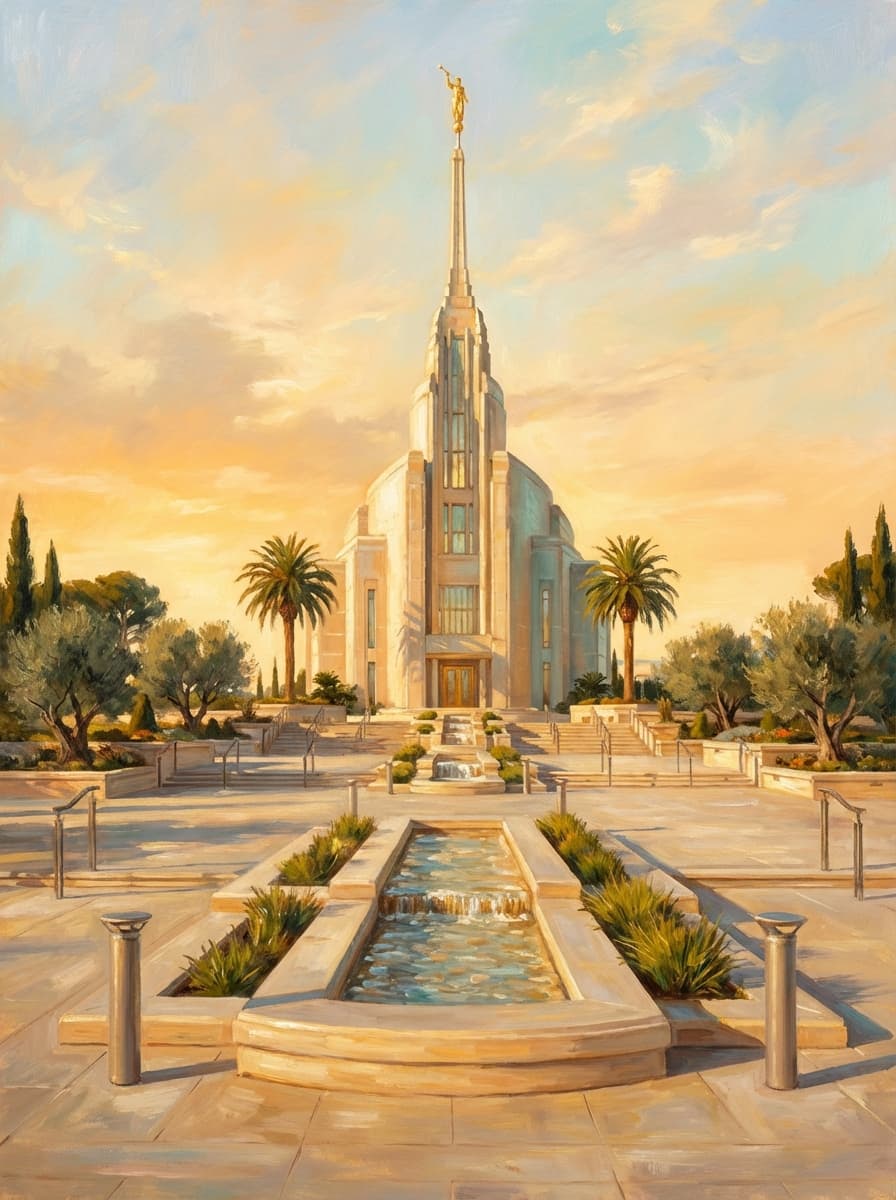
The Church of Jesus Christ of Latter-day Saints has undertaken one of the most ambitious sacred building programs in modern history, growing from 50 temples in 1998 to over 300 operating, under construction, or announced today. Modern LDS temple design ranges from the classical revival style of the Rome Italy Temple to the sleek contemporary lines of recent smaller temples.
Hindu temple construction has also surged globally: the BAPS Swaminarayan Akshardham in Delhi (2005) used 6,000 tons of hand-carved pink sandstone and Italian Carrara marble, with no steel framework. It was built by 11,000 artisans and volunteers in just five years.
What Remains Constant
Across 12,000 years of temple building, certain principles have remained remarkably constant. Sacred spaces are still set apart from ordinary life. They still use vertical elements — spires, domes, towers — to direct attention upward. They still employ special materials, remarkable craftsmanship, and extraordinary attention to symbolic detail.
Most fundamentally, every temple ever built reflects the same core human conviction: that there is something greater than ourselves, and that building a beautiful space to honor it is among the worthiest of human endeavors.
Related Temples

Sources & Research
Every fact on Temples.org is backed by verified Sources & Research. Each piece of information is rated by source tier and confidence level.
View All Sources (4)
| Field | Source | Tier | Retrieved |
|---|---|---|---|
| Göbekli Tepe and the origins of temple building | Smithsonian Magazine (opens in a new tab) | B | 2026-02-16 |
| History of Gothic cathedral architecture | The Metropolitan Museum of Art (opens in a new tab) | B | 2026-02-16 |
| Angkor Wat archaeological and historical overview | UNESCO World Heritage Centre (opens in a new tab) | B | 2026-02-16 |
| LDS temple construction worldwide | The Church of Jesus Christ of Latter-day Saints (opens in a new tab) | A | 2026-02-16 |