
The Universal Impulse to Build Sacred Spaces
For as long as human beings have gathered in communities, they have set apart special places for worship, prayer, and communion with the divine. Archaeological evidence shows that Neolithic peoples constructed ritual sites as early as 9500 BCE at Göbekli Tepe in modern-day Turkey — thousands of years before the invention of writing or the wheel.
This impulse transcends geography, language, and era. Whether it is a Mayan pyramid, a Buddhist stupa, a Jewish synagogue, or a Latter-day Saint temple, the driving motivation is remarkably consistent: to create a space where the boundary between heaven and earth feels thinnest.
Temples as Cosmic Centers
Many religious traditions describe their temples as the "navel of the world" or the axis mundi — the central point where the earthly and celestial realms connect. In Hindu cosmology, the temple represents Mount Meru, the cosmic mountain at the center of the universe. In Latter-day Saint theology, the temple is literally "the House of the Lord," a place where God's presence dwells most fully on earth.
This idea of sacred centrality explains why temples are often placed on elevated ground, oriented toward celestial bodies, or built with towering spires that draw the eye upward. The architecture itself becomes a sermon, pointing worshippers beyond the material world.
Community Identity and Belonging
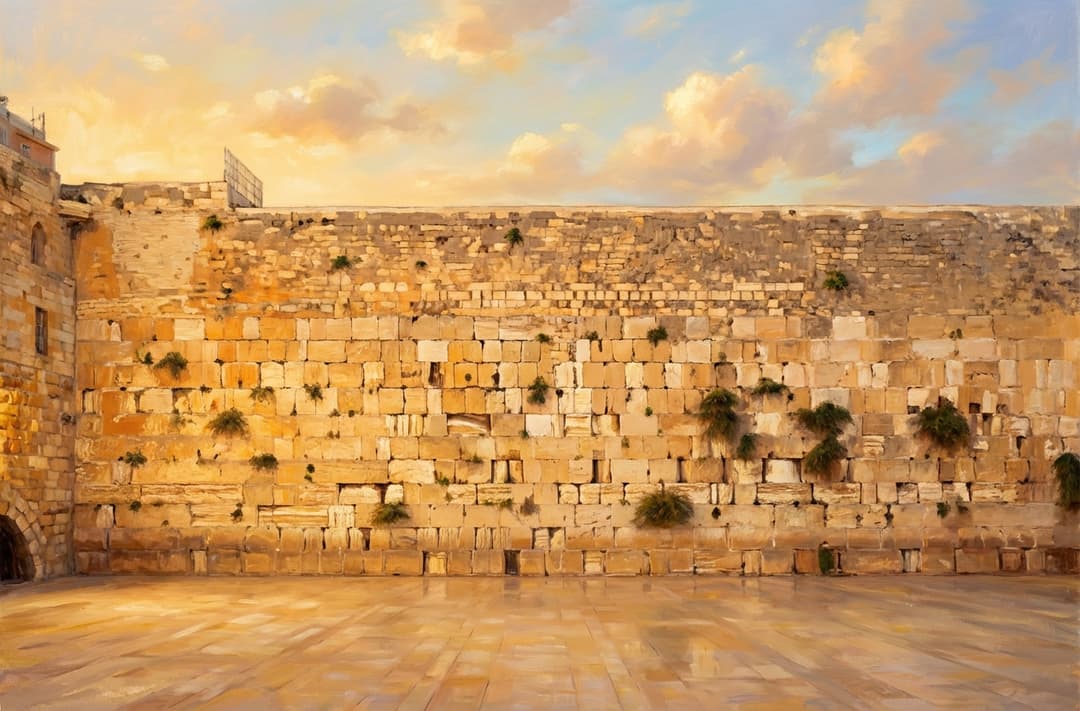
Temples serve a powerful social function beyond their spiritual purpose. They anchor communities, define shared identity, and preserve cultural memory across generations. The construction of the Salt Lake Temple, which took 40 years to complete, became a defining narrative for early Latter-day Saint pioneers. Similarly, the rebuilding of the Western Wall plaza in Jerusalem after 1967 became a symbol of Jewish resilience and return.
In Sikh tradition, every gurdwara (temple) operates a langar — a free community kitchen that feeds anyone regardless of caste, creed, or background. The temple thus becomes not only a place of worship but a living expression of the community's deepest values.
Architecture as Theology
Temple architecture is never accidental. Every element — from the number of steps to the orientation of doorways — carries symbolic meaning. Gothic cathedrals use pointed arches and flying buttresses to flood interiors with light, representing the divine illumination of the soul. Islamic mosques face the qibla toward Mecca, unifying Muslims worldwide in a shared direction of prayer.
Shinto shrines mark the boundary between the sacred and profane with torii gates, while Buddhist temples use mandalas and circular floor plans to represent the path to enlightenment. Understanding these architectural languages enriches the experience of visiting any sacred site.
Why It Matters Today
In an increasingly secular and digital world, temples remain among the most visited and revered structures on the planet. Millions of pilgrims journey to the Golden Temple in Amritsar, the Masjid al-Haram in Mecca, and the Vatican each year. New temples continue to be built at a remarkable pace — The Church of Jesus Christ of Latter-day Saints alone has over 300 temples operating, under construction, or announced worldwide.
These sacred spaces remind us that the human longing for transcendence, community, and meaning is as vital today as it was when our ancestors first carved pillars from limestone twelve thousand years ago.
Related Temples


Sources & Research
Every fact on Temples.org is backed by verified Sources & Research. Each piece of information is rated by source tier and confidence level.
View All Sources (3)
| Field | Source | Tier | Retrieved |
|---|---|---|---|
| Göbekli Tepe archaeological evidence | Smithsonian Magazine (opens in a new tab) | B | 2026-02-16 |
| Axis mundi in comparative religion | Encyclopædia Britannica (opens in a new tab) | B | 2026-02-16 |
| LDS temple purpose and significance | The Church of Jesus Christ of Latter-day Saints (opens in a new tab) | A | 2026-02-16 |