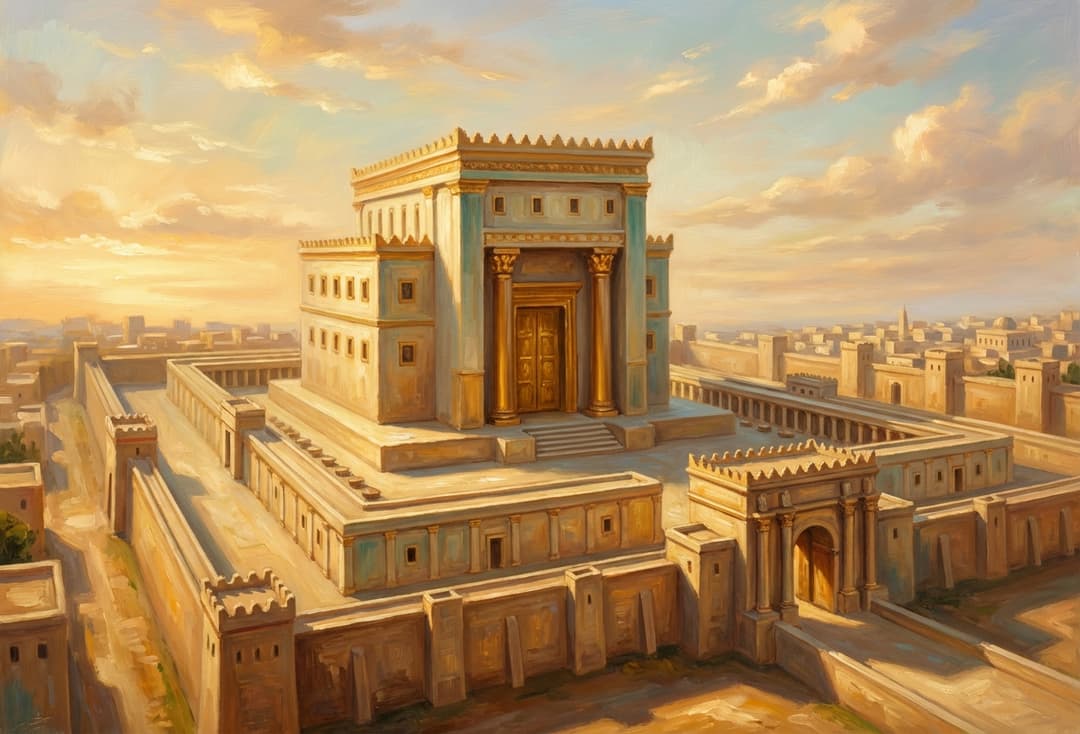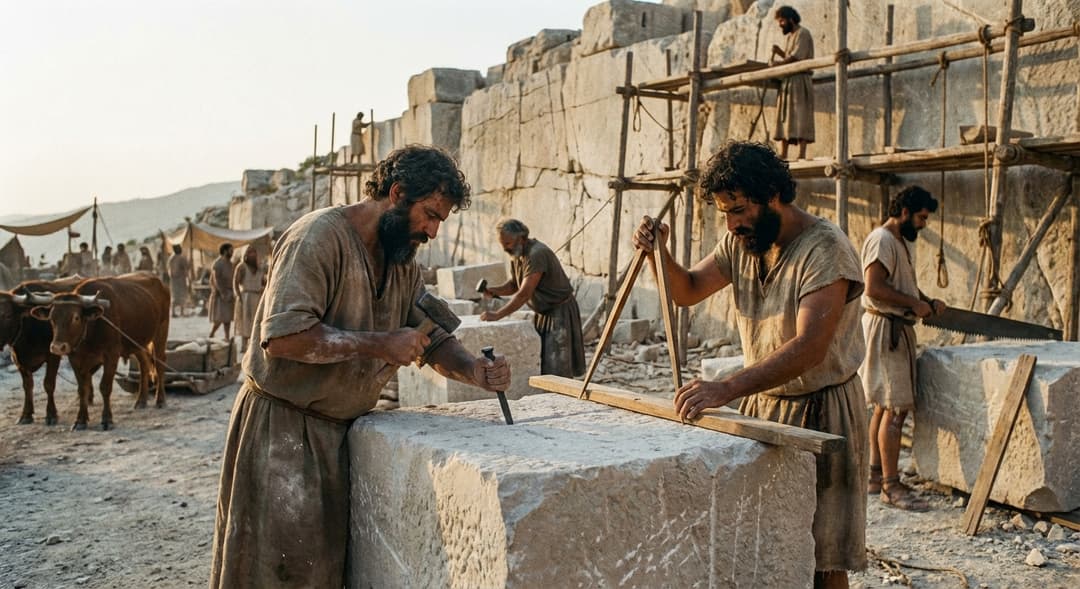
In the traditions of Freemasonry, the construction of King Solomon’s Temple serves as the foundational allegory for the fraternity’s moral and philosophical teachings. While rooted in the biblical accounts of 1 Kings and 2 Chronicles, Freemasonry utilizes the Temple not as a literal historical blueprint, but as a profound symbol for the "Temple of Humanity." Just as the ancient structure required precision, immense patience, and the cooperation of thousands to build, a Mason is encouraged to symbolically "build" their own character, striving continuously for virtue, wisdom, and moral self-improvement.
The central figure in Masonic ritual is Hiram Abiff. In the biblical text, Hiram is briefly mentioned as a skilled artisan sent by the King of Tyre to work in bronze. However, Masonic legend dramatically expands his role, casting him as the chief architect and Master Builder of Solomon's Temple. According to the allegory enacted in the Master Mason degree, Hiram Abiff was confronted by three ruffians demanding the secret passwords of a Master Builder. Upon his steadfast refusal to betray his integrity and his trust, he was murdered. This powerful ritual narrative is designed to teach initiates about unyielding integrity, fidelity to one's principles, and the eventual triumph of light over darkness.
Historically, scholars agree that this elaborate Hiramic legend was not part of early operative stonemason guilds but was introduced into speculative Freemasonry in the early 18th century. As the fraternity evolved in Europe, early Masonic scholars synthesized biblical texts, mystery plays, and philosophical traditions to create a resonant moral centerpiece. Today, the influence of Solomon's Temple permeates every aspect of Masonic lodge design, from the layout of the room to the presence of the symbolic pillars Jachin and Boaz.
Key Details
- Central Figure Hiram Abiff
- Symbolic Meaning The Temple of Humanity
- Key Architectural Symbols Jachin and Boaz (Pillars)
Timeline
The Biblical Artisan
Hiram of Tyre is recorded in the Hebrew Bible as a skilled bronze worker contributing to the Temple.
MilestoneThe Hiramic Legend
The allegorical story of Hiram Abiff is formalized within speculative Freemasonry, establishing the Master Mason degree.
EventMasonry Dissected
Samuel Prichard publishes the earliest written accounts of the Temple tragedy used in Masonic rituals.
EventSources & Research
Every fact on Temples.org is backed by verified Sources & Research. Each piece of information is rated by source tier and confidence level.
View All Sources (2)
| Field | Source | Tier | Retrieved |
|---|---|---|---|
| Solomon's Temple as Masonic Symbolism | Universal Co-Masonry (opens in a new tab) | C | 2024-02-29 |
| The Legend of Hiram Abiff | The Square Magazine (opens in a new tab) | B | 2024-02-29 |