Visitor Insights
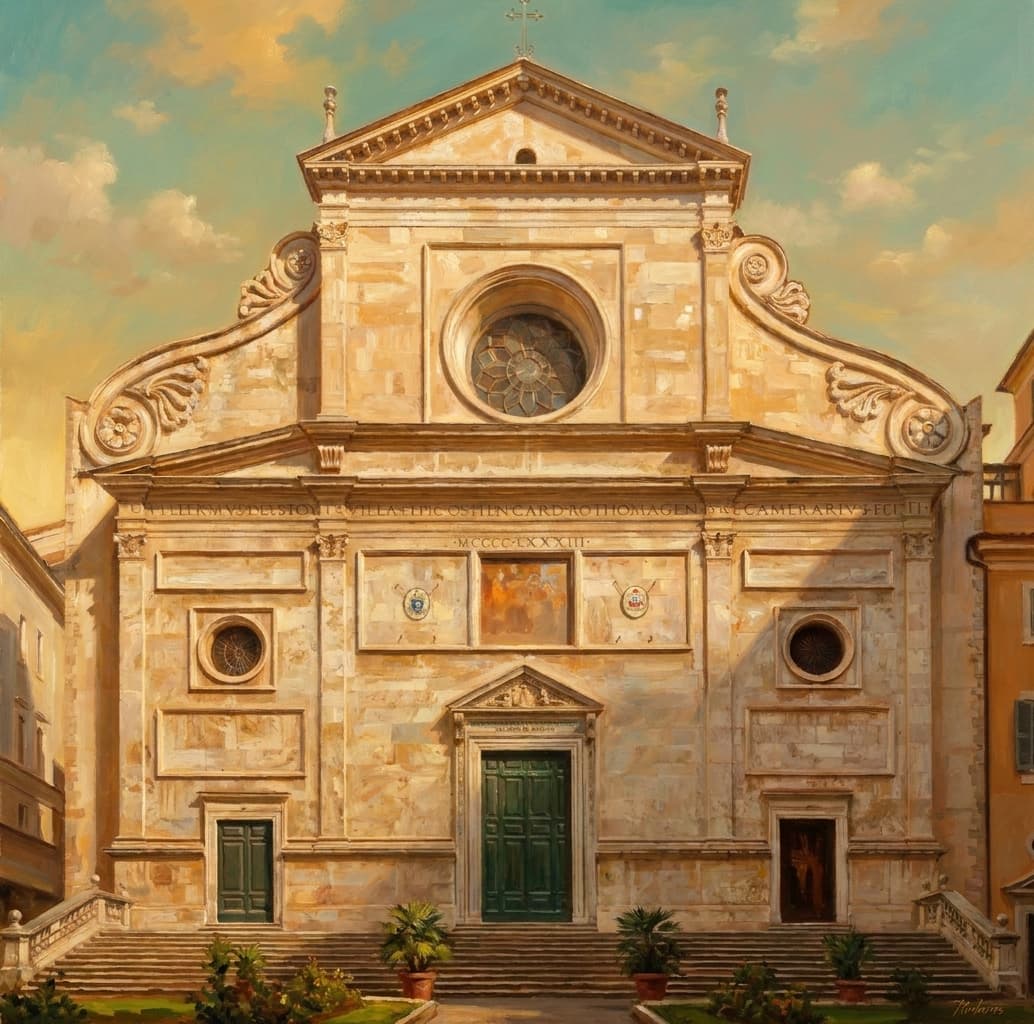
Visiting Basilica of Saint Augustine
The Basilica of Saint Augustine is an oasis of spiritual peace and Renaissance brilliance tucked between Piazza Navona and the Pantheon. Visitors encounter an active parish church where devout mothers kneel beside Sansovino's marble statue while art admirers quietly contemplate Caravaggio's evocative masterpiece.
Highlights
- Caravaggio's groundbreaking altarpiece depicting the Madonna of Loreto in the Cavalletti Chapel
- Raphael's powerful 1512 fresco of the Prophet Isaiah on the central nave pillar
- The green marble sarcophagus enshrining the sacred relics of Saint Monica
- Jacopo Sansovino's venerated Renaissance sculpture of the Madonna del Parto
Things to Know
- Flash photography and tourist movement are suspended during Mass and liturgical celebrations
- Modest attire with shoulders and knees covered is strictly enforced at the portal
- Small euro coins are helpful for operating chapel illumination timers
Location
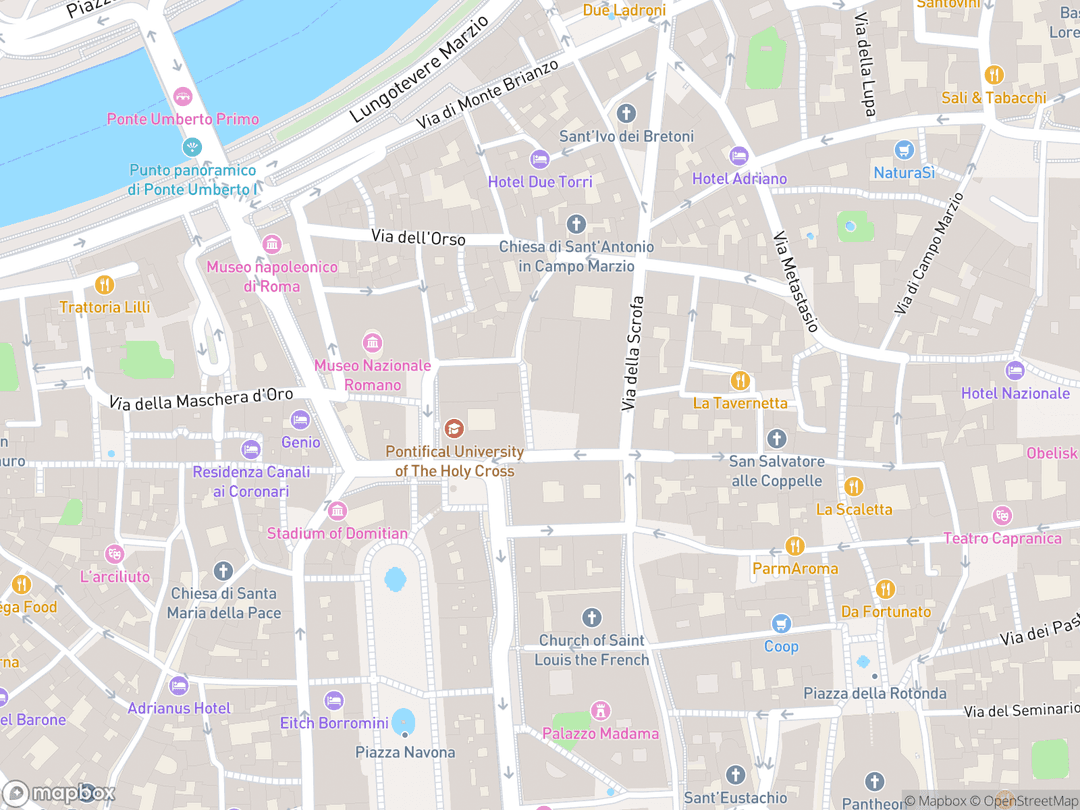
Piazza di Sant'Agostino, 00186 Roma RM, Italy
Hours: Monday through Saturday 7:30 AM to 12:00 PM and 4:00 PM to 7:30 PM; Sunday 8:00 AM to 1:00 PM and 4:30 PM to 8:00 PM
Getting There: Located a short walking distance northeast of Piazza Navona and accessible via bus lines 30, 70, 81, and 492 along Corso del Rinascimento.
Get DirectionsTips for Your Visit
Optimal Caravaggio Viewing
Visit in the mid-morning when northern ambient daylight gently illuminates the Cavalletti Chapel, revealing subtle details in the Madonna di Loreto.
Honoring Saint Monica
Pause in the left transept to view the surviving Renaissance marble bas-reliefs carved by Isaia da Pisa around Saint Monica's tomb.
Exploring the Angelica Library
Inspect the adjacent monastic building to see the entrance of Europe's first public lending library, established by the Augustinians in 1604.
About
Standing within the Abrahamic lineage of consecrated sanctuaries, the Basilica of Saint Augustine (Basilica di Sant'Agostino in Campo Marzio) serves as a vibrant hearth of Catholic sacramental life in historic Rome. Established by the Order of Saint Augustine, the church translates universal monotheistic impulses of pilgrimage and reverent encounter into an enduring sacred space.
The current Renaissance basilica was erected between 1479 and 1483 under the patronage of Cardinal Guillaume d'Estouteville, replacing an outgrown fourteenth-century church. Master masons Giacomo di Pietrasanta and Sebastiano Fiorentino raised the structure atop an imposing travertine staircase, shielding the sanctuary from Tiber floods while establishing a classical architectural benchmark.
Within its walls, Catholic sacramental theology flourishes through the communion of saints and maternal intercession. The basilica preserves the sacred remains of Saint Monica, the mother of Saint Augustine of Hippo, drawing pilgrims seeking solace through her steadfast prayers. Alongside her tomb, celebrated works by Raphael, Sansovino, and Caravaggio transform theology into intimate artistic contemplation.
Gallery
Symbolic Elements
The temple's exterior features intricate carvings, each rich with spiritual meaning:

The Flaming Pierced Heart
The core emblem of the Augustinian Order symbolizes ardent love for God ignited by divine truth.

The Calloused Pilgrim Feet
Caravaggio's portrayal of humble pilgrim soles reflects Christ's grace reaching ordinary, weary travelers.

The Silver Votive Foot
The silver sheath covering the Virgin's foot commemorates centuries of answered maternal prayers during childbirth.

The Prophet's Scroll
The unfurled scroll held by Isaiah evokes the continuity of Abrahamic prophecy heralding redemption.

The Byzantine Hodegetria
The fourteenth-century Marian icon signifies the Virgin pointing believers directly toward Christ as the way.
The Sarcophagus of Saint Monica
Green marble encasing the saint's body embodies persevering Christian prayer and maternal intercession.

The Travertine Portal Stairs
The broad staircase represents an ascent above worldly inundation into the sanctified house of God.
Interesting Facts
The crisp travertine blocks of the 1483 façade were dismantled from the Colosseum under official papal license (Tier A).
Caravaggio shocked seventeenth-century viewers by painting humble pilgrims with dirty, calloused soles in the Cavalletti Chapel (Tier B).
Devout kisses worn down the marble foot of Sansovino's Virgin, prompting its encasement in protective silver plate (Tier A).
The left transept houses the remains of Saint Monica, brought from Ostia Antica to Rome after more than a millennium (Tier A).
During the Renaissance, the church provided assigned seating and burial rights to renowned literary courtesans (Tier B).
The basilica features the earliest Renaissance cupola built in Rome, later reinforced by architect Luigi Vanvitelli (Tier B).
Adjoining the convent is the Biblioteca Angelica, established in 1604 as one of the first public lending libraries in Europe (Tier A).
Legend holds that Raphael repainted his Prophet Isaiah with grander dynamism after secretly glimpsing the Sistine Chapel ceiling (Tier B).
A floor slab marks the burial of Norwegian Archbishop Olav Trondsson, who died in Rome in 1474 returning from Compostela (Tier B).
Common Questions
Why is the basilica historically significant for mothers?
The church contains the tomb of Saint Monica and the shrine of the Madonna del Parto, creating a cherished focal point for maternal devotion.
What caused public sensation when Caravaggio's altarpiece was unveiled?
Romans were startled by Caravaggio's raw naturalism in depicting ordinary pilgrims with bare, calloused feet turned toward the viewer.
From where was the travertine stone for the façade sourced?
The façade blocks were quarried from ancient classical monuments, including the Colosseum, under papal concessions granted by Pope Sixtus IV.
Is Saint Augustine himself buried in this basilica?
No, Saint Augustine is entombed in Pavia, Italy, but his mother, Saint Monica, is entombed here.
Featured Stories
The Tears of Saint Monica and Her Roman Resting Place
April 11, 1424
For decades, Monica wept and prayed across North Africa and Italy for the spiritual conversion of her brilliant son Augustine. After her death at Ostia Antica in 387, her relics rested quietly near the sea until 1424, when Augustinian friars carried them triumphantly into Rome. Her enshrinement established the basilica as a sacred refuge where generations of parents entrust their families to God.
Source: Historia Augustiniana Records
Caravaggio's Radical Vision of Grace
1606
When Caravaggio was commissioned by the Cavalletti heirs to paint the Madonna of Loreto, he chose street models over idealized celestial courts. The resulting altarpiece stunned seventeenth-century Rome by placing the Virgin Mary on a chipped stone doorstep before two kneeling, dust-stained peasants. Rather than alienating the faithful, the work permanently consecrated the sacred dignity of humble pilgrimage.
Source: Fondazione di Studi di Storia dell'Arte Roberto Longhi
Raphael's Tribute to the Prophets
1512
Commissioned by the learned apostolic protonotary Johann Goritz, Raphael undertook the painting of the Prophet Isaiah on the basilica's nave pillar. Tradition relates that Raphael reworked the figure after seeing Michelangelo's dramatic Sistine Chapel frescoes, infusing the biblical seer with muscular majesty. Paired with Sansovino's marble sculpture below, the installation merged Renaissance humanist grandeur with scriptural reverence.
Source: Cantieri Narranti Monumental Survey
Timeline
Augustinian Papal Grant
Pope Honorius IV assigns the church of San Trifone in Posterula to the Hermits of Saint Augustine.
MilestoneTranslation of Saint Monica
The sacred relics of Saint Monica are translated from Ostia Antica to Rome, making the convent a premier shrine.
MilestoneSepulchre by Isaia da Pisa
Sculptor Isaia da Pisa completes an elaborate marble funerary monument to house the relics of Saint Monica.
EventRenaissance Construction Begins
Cardinal Guillaume d'Estouteville sponsors a total reconstruction executed by Giacomo di Pietrasanta and Sebastiano Fiorentino.
component.timeline.groundbreakingFaçade Completion
The travertine façade is finished and inscribed with the name and titles of Cardinal d'Estouteville.
MilestoneLiturgical Consecration
The newly completed Renaissance basilica is solemnly consecrated under Pope Sixtus IV.
DedicationRaphael's Isaiah Fresco
Humanist Johann Goritz unveils Raphael's fresco of the Prophet Isaiah above Andrea Sansovino's sculpted group.
EventMadonna del Parto Installed
Jacopo Sansovino completes the celebrated marble sculpture of the Madonna del Parto for the Martelli family.
EventTitular Elevation
Pope Sixtus V issues the constitution Religiosa, designating Sant'Agostino as a cardinalatial titular church.
MilestoneCaravaggio Altarpiece Unveiled
Caravaggio completes the Madonna di Loreto in the Cavalletti Chapel, captivating Romans with its humble naturalism.
EventBernini High Altar
Gian Lorenzo Bernini designs the monumental High Altar framing the historic Byzantine icon of the Virgin.
RenovationVanvitelli Renovation Completed
Architect Luigi Vanvitelli completes substantial interior modifications including lateral façade volutes and a restored dome.
RenovationElevation to Minor Basilica
Pope John Paul II formally grants the church the ecclesiastical title and dignity of a Minor Basilica.
MilestoneHistory by Decade
1280s–1300s — The Augustinian Foundation
Pope Honorius IV granted the parish of San Trifone in Posterula to the Hermits of Saint Augustine in 1287. The friars established their primary Roman convent on the site, laying the groundwork for an expanded monastic complex in the bustling Campo Marzio district.
1420s–1450s — Enshrinement of Saint Monica
Following the completion of an early church structure in 1420, Saint Monica's relics were translated from Ostia Antica in 1424. In 1455, sculptor Isaia da Pisa was commissioned to carve a splendid marble sepulchre, establishing the sanctuary as a celebrated pilgrimage center.
1470s–1480s — The Renaissance Reconstruction
Confronted by frequent Tiber River flooding, Cardinal Guillaume d'Estouteville financed an ambitious reconstruction executed by Giacomo di Pietrasanta and Sebastiano Fiorentino between 1479 and 1483. The elevated Renaissance basilica was consecrated in 1484, displaying a harmonious travertine façade.
1510s–1520s — High Renaissance Artistry
The early sixteenth century introduced sublime masterpieces into the basilica's fabric. Raphael completed his dynamic fresco of Isaiah in 1512, followed by Jacopo Sansovino's beloved Madonna del Parto in 1521, which quickly attracted fervent devotion from expectant mothers.
1600s–1630s — Baroque Innovations
Caravaggio unveiled his masterwork, the Madonna di Loreto, in the Cavalletti Chapel around 1606, introducing dramatic realism to Roman altarpieces. In 1627, Gian Lorenzo Bernini designed the monumental High Altar to enshrine the historic Byzantine icon of the Virgin.
1740s–1760s — Vanvitelli's Transformation
Between 1746 and 1763, architect Luigi Vanvitelli restructured the interior, rebuilding the central dome on pendentives and harmonizing the façade with elegant lateral volutes. Concurrently, the adjacent monastic quarters were reorganized around the expanding collections of the Biblioteca Angelica.
1850s–1860s — The Marian Fresco Program
Under the patronage of Pope Pius IX, painter Pietro Gagliardi was commissioned between 1858 and 1868 to execute an extensive decorative cycle across the central nave. The frescoes celebrated the recently proclaimed Dogma of the Immaculate Conception and key events in Augustinian history.
1990s–Present — Basilica Elevation and Conservation
Pope John Paul II elevated the historic sanctuary to the rank of Minor Basilica on October 29, 1999. In the twenty-first century, meticulous conservation initiatives restored Sansovino's Madonna del Parto and protected the building's exterior Renaissance stonework.
Architecture & Facilities
The Basilica of Saint Augustine exemplifies early Roman Renaissance church architecture seamlessly enhanced by eighteenth-century Late Baroque structural modifications. Built between 1479 and 1483, its classical two-tiered travertine façade incorporates proportional principles inspired by Leon Battista Alberti, crowned with a pediment and framed by sweeping lateral volutes designed by Luigi Vanvitelli.
Building Materials
Roman Travertine
Dressed travertine blocks quarried as spolia from classical monuments frame the exterior façade and grand stairs.
Carrara and Polychrome Marble
Fine white Carrara marble forms interior pillars, matched with antique porphyry and giallo antico accents.
Roman Pozzolanic Concrete
Brick-faced tufa and pozzolanic lime mortar compose the durable load-bearing piers and foundational masonry.
Mineral Fresco Plaster
Natural earth pigments and gold leaf embellish the vaulted ceilings and pictorial surfaces of the nave.
Interior Features
Central Nave and High Vaults
The six-bay nave is defined by sturdy cruciform pillars bearing arches and nineteenth-century Marian frescoes.
Cavalletti Chapel
The first chapel on the left contains Caravaggio's famous 1606 oil canvas depicting the Madonna of Loreto.
Shrine of the Madonna del Parto
Positioned beside the entrance portal, this marble niche enshrines Jacopo Sansovino's venerated maternal statue.
Chapel of Saint Monica
Situated in the left transept, this sanctuary preserves the green marble sarcophagus holding Saint Monica's relics.
Crossing Dome and Sanctuary
Vanvitelli's reconstructed cupola rises above Bernini's High Altar framing an authentic Byzantine Marian icon.
Temple Grounds
The basilica opens directly onto the historic cobblestone Piazza di Sant'Agostino, commanding the space via its wide travertine staircase.
Additional Facilities
The adjoining monastery houses the General Curia of the Augustinians and the historic Biblioteca Angelica founded in 1604.
Religious Significance
Within the broader Abrahamic tradition of consecrated places of prayer, the Basilica of Saint Augustine serves as a vital Catholic sanctuary celebrating the communion of saints and the Incarnation of Christ.
To serve as a consecrated house of liturgical worship, Eucharistic adoration, and continuous prayer under the patronage of Saint Augustine and Saint Monica.
Sacred Ordinances
Sacrament of the Holy Eucharist
The daily celebration of Holy Mass where the sacrifice of Christ is made present upon the altar.
Sacrament of Reconciliation
The ministry of confession offering penitents divine mercy and reconciliation with the Church.
Maternal Intercessory Prayer
Devotions invoking the intercession of Saint Monica and the Madonna del Parto for families and safe childbirth.
The Communion of Saints and Saint Monica
In Catholic theology, the saints in heaven remain intimately united in charity with the faithful on earth. The enshrinement of Saint Monica's relics provides a tangible focus for intercessory prayer, reminding believers that patient, faithful supplication participates in God's redemptive work.
Sacramental Realism in Sacred Art
Rather than treating imagery as mere ornamentation, the Catholic tradition views sacred art as an extension of the Incarnation. Works like Caravaggio's altarpiece illustrate the mystery of divine grace entering ordinary human poverty and everyday physical life.
Sources & Research
Every fact on Temples.org is backed by verified Sources & Research. Each piece of information is rated by source tier and confidence level.
View All Sources (8)
| Field | Source | Tier | Retrieved |
|---|---|---|---|
| About & Historical Background | Order of Saint Augustine Historical Institute (opens in a new tab) | A | 2026-02-18 |
| Architecture & Structural Evolution | Roma Capitale Department of Cultural Heritage (opens in a new tab) | A | 2026-02-18 |
| Visitor Insights & Cultural Heritage | Italian National Tourism Agency (opens in a new tab) | A | 2026-02-18 |
| Restorations & Saint Monica Shrine | Intesa Sanpaolo Cultural Heritage Initiative (opens in a new tab) | A | 2026-02-18 |
| Architectural Archives & Vanvitelli Modifications | Cantieri Narranti Monumental Registry (opens in a new tab) | B | 2026-02-18 |
| Art Historical Studies on Caravaggio & Sansovino | Fondazione di Studi di Storia dell'Arte Roberto Longhi (opens in a new tab) | B | 2026-02-18 |
| Chapels & Titular Records | Rome-Roma Cultural Guide (opens in a new tab) | C | 2026-02-18 |
| Visitor Logistics & Access | Pro Rome Historical Tours (opens in a new tab) | D | 2026-02-18 |