Visitor Insights
Visiting Etchmiadzin Cathedral
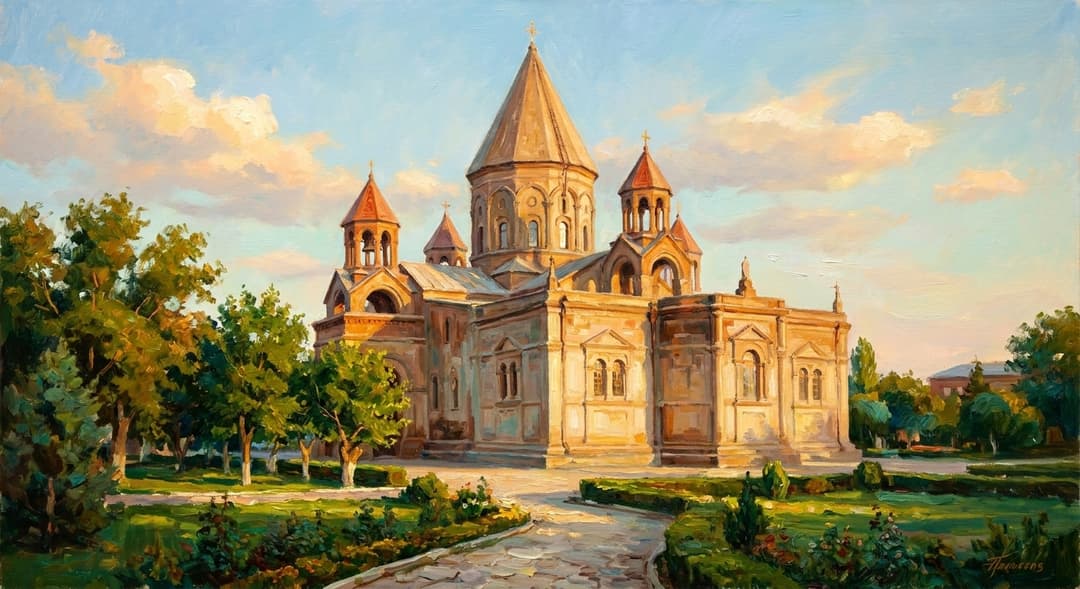
Visiting Etchmiadzin Cathedral offers a profound experience, immersing visitors in the rich history and spiritual significance of the Armenian Apostolic Church. The atmosphere is serene and reverent, with the echoes of centuries of prayer and worship resonating within its ancient walls. Visitors can explore the cathedral's stunning architecture, admire the intricate frescoes, and learn about the relics housed in its treasury. Expect a blend of historical exploration and spiritual reflection as you wander through this sacred site.
Highlights
- Admire the intricate 18th-century frescoes by the Hovnatanian family.
- Explore the cathedral's stunning architecture, blending various Armenian styles.
- Visit the treasury to see important relics, including the Holy Lance and a fragment of Noah's Ark.
Things to Know
- Dress modestly when visiting the cathedral.
- Check the schedule for services and events that may affect visiting hours.
- Photography may be restricted in certain areas.
Location

City of Ejmiatsin, Araratyan Street, 1, Vagharshapat, Armavir Province, Armenia
Hours: The cathedral is generally open to visitors, but it is best to check the current schedule due to services and events.
Getting There: Etchmiadzin is accessible by car or public transportation from Yerevan.
Get DirectionsAbout
Etchmiadzin Cathedral, located in Vagharshapat, Armenia, is the mother church of the Armenian Apostolic Church and a major pilgrimage site. Often considered the first cathedral built in Armenia, it holds a central place in Armenian religious, political, and cultural life. The cathedral's history spans from its founding in the early 4th century to its modern-day status as a UNESCO World Heritage Site.
According to tradition, the original church was built by Gregory the Illuminator after King Tiridates III adopted Christianity as the state religion in 301 AD, making Armenia the first Christian nation. The cathedral was constructed over a pagan temple, symbolizing the conversion from paganism to Christianity. Over the centuries, the cathedral has undergone numerous renovations and reconstructions, blending various Armenian architectural styles.
The cathedral's treasury houses important relics, including the Holy Lance (Geghard), believed to have pierced Christ, a fragment of Noah's Ark, and the hand of Saint Gregory the Illuminator. The interior features 18th-century frescoes by the Hovnatanian family, blending Christian themes with Persian-inspired ornamentation. In 2000, the UNESCO added Etchmiadzin Cathedral and nearby churches to the list of World Heritage Sites. A six-year restoration project (2018–2024) strengthened the structure against earthquakes and restored frescoes. The cathedral was reconsecrated and reopened on September 29, 2024.
Gallery
Symbolic Elements
The temple's exterior features intricate carvings, each rich with spiritual meaning:

Holy Lance (Geghard)
The Holy Lance, also known as the Lance of Longinus, is believed to have pierced the side of Jesus Christ during his crucifixion. This relic is housed in the treasury of Etchmiadzin Cathedral and is a symbol of Christ's sacrifice and the Armenian Church's deep connection to the crucifixion narrative. Its presence signifies the cathedral's role as a guardian of sacred Christian artifacts.

Fragment of Noah's Ark
Etchmiadzin Cathedral houses a fragment believed to be from Noah's Ark, the vessel that saved Noah, his family, and pairs of all animals from the Great Flood. This relic symbolizes salvation, divine intervention, and the renewal of life. Its presence in the cathedral underscores the Armenian Church's connection to biblical history and its role as a sanctuary of faith.

Hand of Saint Gregory the Illuminator
The Hand of Saint Gregory the Illuminator, the patron saint of Armenia, is another significant relic kept at Etchmiadzin Cathedral. Saint Gregory is revered for converting Armenia to Christianity in 301 AD, making it the first Christian nation. The relic symbolizes his pivotal role in Armenian religious history and the enduring legacy of his faith.

Cruciform Plan
The cruciform plan of Etchmiadzin Cathedral, with its four free-standing piers and projecting apses, is a symbolic representation of the cross on which Jesus Christ was crucified. This architectural design emphasizes the central importance of Christ's sacrifice in Christian theology and serves as a constant reminder of the core tenets of the faith. The cruciform shape reinforces the cathedral's role as a sacred space dedicated to Christian worship.

Conical Dome
The central cupola of Etchmiadzin Cathedral features a typically Armenian conical roof on a polygonal drum. This architectural element is not only aesthetically distinctive but also symbolizes the heavens and the divine realm. The dome's design reflects the Armenian architectural tradition and its unique interpretation of Christian sacred spaces, connecting the earthly structure with the celestial.
Belfries
The belfries of Etchmiadzin Cathedral, with their red tuff turrets, serve as both architectural features and symbolic elements. These towers house the bells that call the faithful to prayer and announce important religious events. The belfries represent the church's voice, reaching out to the community and inviting believers to gather in worship and fellowship.
Frescoes
The interior frescoes of Etchmiadzin Cathedral, created by the Hovnatanian family in the 18th century, depict biblical themes and saints. These artistic representations serve as visual narratives of Christian history and theology, educating and inspiring worshippers. The frescoes blend Christian motifs with Persian-inspired ornamentation, reflecting the cultural influences on Armenian religious art.
Stone Construction
The primary construction material of Etchmiadzin Cathedral is stone, symbolizing strength, durability, and the enduring nature of faith. The use of stone reflects the Armenian architectural tradition and the commitment to building structures that can withstand the test of time. The stone construction reinforces the cathedral's role as a lasting monument to Armenian Christianity.
Interesting Facts
Etchmiadzin is considered the oldest cathedral in the world, built in the early 4th century.
The cathedral was founded after St. Gregory the Illuminator had a vision of Christ marking the site with a golden hammer.
Armenia was the first country to adopt Christianity as its state religion in 301 AD.
Excavations in the mid-20th century revealed Urartian artifacts and an ancient fire pit beneath the altar.
The cathedral's design influenced later Armenian church architecture and even Byzantine designs.
The cathedral has three main entrances, with the main entrance being from the belfry.
The Holy Lance, believed to have pierced Christ's side, is kept in the cathedral's treasury.
The cathedral was declared a UNESCO World Heritage Site in 2000.
A six-year restoration project (2018–2024) reinforced the structure against earthquakes, restored frescoes, and uncovered 17th-century clay vessels hidden in the bell tower.
The cathedral was reconsecrated and reopened on September 29, 2024.
Common Questions
What is the significance of Etchmiadzin Cathedral?
Etchmiadzin Cathedral is the mother church of the Armenian Apostolic Church and is considered the first cathedral built in Armenia. It holds a central place in Armenian religious, political, and cultural life and is a major pilgrimage site.
When was Etchmiadzin Cathedral founded?
According to tradition, the original church was built by Gregory the Illuminator in the early 4th century (301-303 AD) after King Tiridates III adopted Christianity as the state religion of Armenia.
What relics are housed in the cathedral's treasury?
The cathedral's treasury houses important relics, including the Holy Lance (Geghard), believed to have pierced Christ, a fragment of Noah's Ark, and the hand of Saint Gregory the Illuminator.
What architectural styles are showcased in Etchmiadzin Cathedral?
Etchmiadzin Cathedral showcases a blend of Armenian architectural styles due to numerous renovations over the centuries. The core of the current building largely retains the form of the 483/4 construction, especially the floor plan.
When was Etchmiadzin Cathedral declared a UNESCO World Heritage Site?
In 2000, UNESCO added Etchmiadzin Cathedral and nearby churches to the list of World Heritage Sites.
Featured Stories
The Vision of Gregory the Illuminator
Early 4th Century
According to tradition, the founding of Etchmiadzin Cathedral is rooted in a divine vision experienced by Saint Gregory the Illuminator, the patron saint of Armenia. As Gregory prayed, he beheld a radiant figure of Christ descending from heaven, striking the earth with a golden hammer to mark the spot where the cathedral should be built. This miraculous event signified the divine sanction for Armenia's conversion to Christianity and the establishment of Etchmiadzin as its spiritual center.
The vision not only guided the location of the cathedral but also symbolized the triumph of Christianity over paganism. By building the cathedral on the site of a former pagan temple, Gregory demonstrated the transformative power of the new faith and its ability to replace old beliefs with the light of Christ. This story has resonated through generations of Armenians, solidifying Etchmiadzin's place as a sacred site and a testament to the nation's enduring Christian heritage.
Source: armenian-history.com
Re-establishment of the Catholicosate in 1441
1441
In 1441, a pivotal moment in Armenian religious history occurred when the seat of the Catholicosate, the supreme head of the Armenian Apostolic Church, was permanently re-established in Etchmiadzin. This decision marked the end of a period of relocation and instability, reaffirming Etchmiadzin's central role in Armenian spiritual life. The return of the Catholicosate to its original location was a cause for great celebration and renewed hope for the Armenian people.
The re-establishment of the Catholicosate in Etchmiadzin not only strengthened the church's authority but also contributed to the cultural and political revival of Armenia. As the spiritual heart of the nation, Etchmiadzin became a focal point for Armenian identity and resilience, providing a sense of continuity and stability during times of hardship. This event remains a significant milestone in the cathedral's history, symbolizing its enduring importance to the Armenian people.
Source: wikipedia.org
The 2018-2024 Restoration Project
September 29, 2024
In recent years, Etchmiadzin Cathedral underwent a comprehensive six-year restoration project (2018–2024) aimed at preserving its architectural integrity and historical significance. The project addressed structural weaknesses, reinforced the building against earthquakes, and restored the intricate frescoes that adorn its interior. This meticulous effort ensured that the cathedral would continue to stand as a testament to Armenian faith and culture for generations to come.
The restoration project also uncovered hidden treasures, including 17th-century clay vessels concealed within the bell tower. These discoveries provided valuable insights into the cathedral's past and the lives of those who worshipped within its walls. The reconsecration and reopening of the cathedral on September 29, 2024, marked a joyous occasion for the Armenian community, celebrating the successful completion of the restoration and the renewed vitality of this sacred site.
Source: traveltoarmenia.am
Timeline
Cathedral Founded by Gregory the Illuminator
The original church was built by Gregory the Illuminator after King Tiridates III adopted Christianity as the state religion, making Armenia the first Christian nation.
MilestoneCathedral Destroyed by Persian King Shapur II
The cathedral and the city of Vagharshapat were almost completely destroyed during the invasion of Persian King Shapur II.
RenovationReconstruction by Vahan Mamikonian
The core of the current building was constructed by Vahan Mamikonian after the cathedral was severely damaged during a Persian invasion.
RenovationRenovations by Catholicos Komitas
Catholicos Komitas replaced the wooden dome with a stone one.
RenovationFurther Renovations by Catholicos Nerses III
Further renovations occurred under Catholicos Nerses III.
RenovationCross Removed by Arab Emir
The cross of the cathedral was reportedly removed by an Arab emir.
EventSeat of Catholicosate Re-established in Etchmiadzin
The seat of the Catholicosate was permanently re-established in Etchmiadzin.
MilestoneEtchmiadzin Plundered by Shah Abbas I
Etchmiadzin was plundered by Shah Abbas I of Persia.
EventConstruction of Western Belfry Completed
Construction of the three-story belfry in the western wing was completed.
RenovationSmaller Bell Towers Constructed
Smaller bell towers with red tuff turrets were constructed on the southern, eastern, and northern wings.
RenovationRenovations by Catholicos Astvatsatur
Renovations continued under Catholicos Astvatsatur.
RenovationRenovations by Simeon I of Yerevan
Simeon I of Yerevan took actions to preserve the cathedral.
RenovationPublishing House Established
Simeon I established a publishing house near Etchmiadzin, the first in Armenia.
EventSacristy Constructed
A sacristy (museum and room of relics) was constructed at the cathedral’s east end.
RenovationExcavations Reveal Urartian Artifacts
Excavations revealed Urartian artifacts and an ancient fire pit beneath the altar.
EventUNESCO World Heritage Site
UNESCO added Etchmiadzin Cathedral and nearby churches to the list of World Heritage Sites.
MilestoneCathedral Re-consecrated and Reopened
After a six-year restoration project, the cathedral was reconsecrated and reopened.
DedicationSources & Research
Every fact on Temples.org is backed by verified Sources & Research. Each piece of information is rated by source tier and confidence level.
View All Sources (5)
| Field | Source | Tier | Retrieved |
|---|---|---|---|
| About & Historical Background | Armenian History (opens in a new tab) | A | 2024-07-03 |
| About & Historical Background | Armenian Apostolic Church (opens in a new tab) | A | 2024-07-03 |
| About & Historical Background | World History Encyclopedia (opens in a new tab) | B | 2024-07-03 |
| About & Historical Background | UNESCO (opens in a new tab) | B | 2024-07-03 |
| Interesting Facts | Armenia Planet (opens in a new tab) | C | 2024-07-03 |