Visitor Insights
Visiting Christ the Redeemer
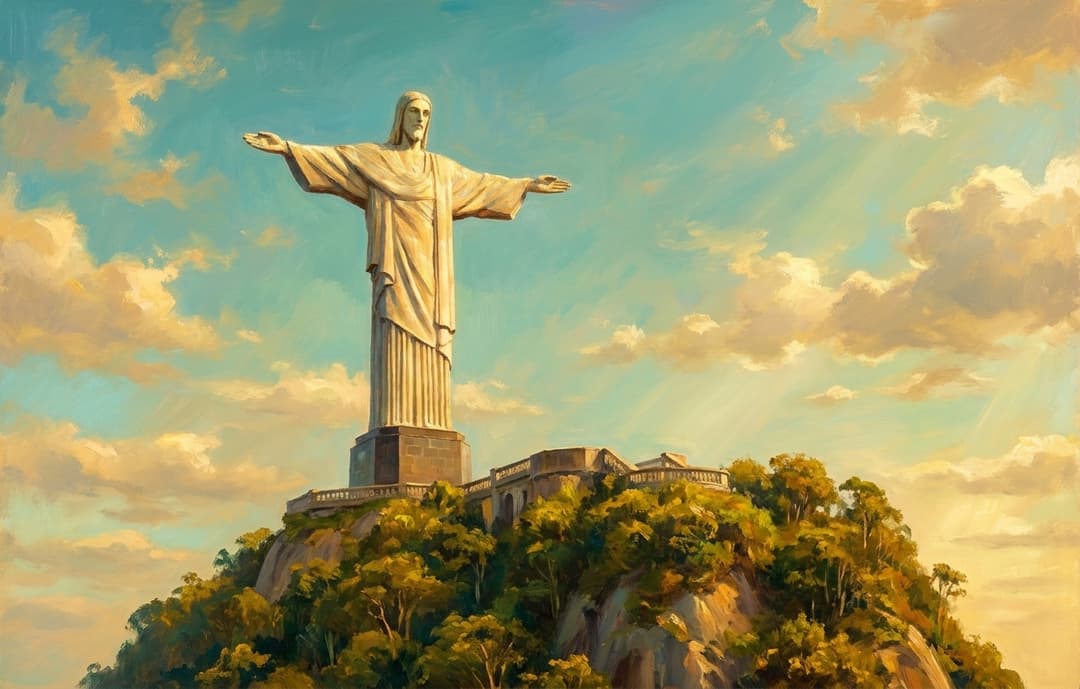
Perched high within Tijuca National Park, Christ the Redeemer offers sweeping panoramic views across Rio de Janeiro and an atmosphere of reverent prayer. Visitors should plan visits early in the morning to enjoy optimal lighting and quiet moments inside the base chapel.
Highlights
- Unrivaled 360-degree panoramas of Rio de Janeiro, Sugarloaf Mountain, and Guanabara Bay
- Chapel of Our Lady of Aparecida nestled directly inside the octagonal pedestal
- Scenic ascent through the Atlantic rainforest aboard the historic Corcovado Cog Railway
- Luminous soapstone mosaic surface comprised of millions of hand-applied tesserae
Things to Know
- Cloud cover can obscure summit visibility rapidly; checking weather webcams prior to ascent is recommended
- Modest attire is required when entering the consecrated sanctuary chapel
- Peak visiting hours occur mid-day; dawn departures offer calmer spiritual contemplation
- High winds and occasional tropical showers can bring cooler temperatures at the peak
Location
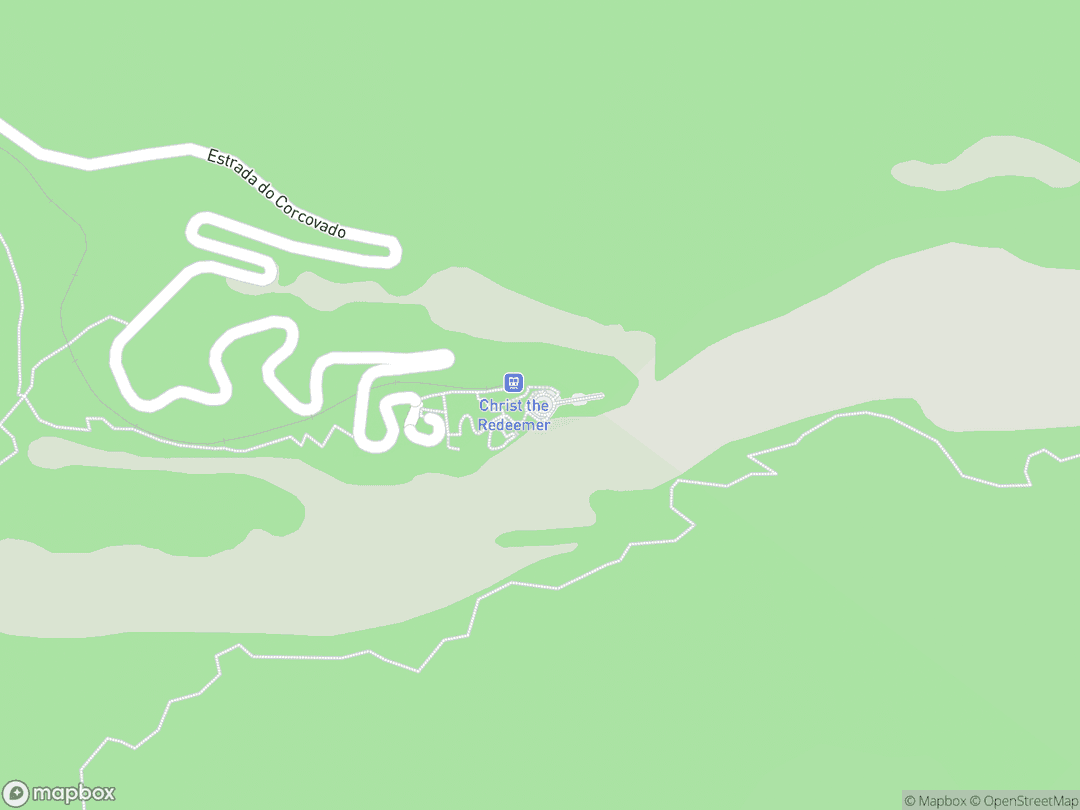
Parque Nacional da Tijuca, Alto da Boa Vista, Rio de Janeiro - RJ, 20531-540, Brazil
Hours: Daily from 08:00 to 19:00 (Corcovado Railway operates from 07:20 to 19:00)
Getting There: Take the historic Corcovado Rack Railway from Cosme Velho station or authorized visitor vans from Largo do Machado, Copacabana, or Paineiras.
Get DirectionsTips for Your Visit
Book Transit Early
Reserve cog train tickets well in advance online to secure your preferred departure time and avoid ticket lines.
Visit the Pedestal Chapel
Step inside the base chapel to participate in daily Holy Mass or light a candle before Our Lady of Aparecida.
Mind the Sun and Winds
Bring a light windbreaker and eye protection, as mountain gusts can be strong even on sunny tropical afternoons.
Morning Photography
Early morning sunlight illuminates the eastern facade of the Christ figure directly against the Atlantic horizon.
About
Rising 710 meters above Guanabara Bay atop Mount Corcovado, Christ the Redeemer (Cristo Redentor) is an iconic Roman Catholic sanctuary and the world's foremost Art Deco religious monument. Rooted in the biblical tradition of sacred mountain heights where God meets humanity, the colossal effigy portrays Jesus Christ with arms extended across the horizon. The monument forms a living Latin cross that proclaims divine redemption, universal welcome, and cosmic peace across the Carioca landscape.
Formally consecrated on October 12, 1931, the sanctuary originated through the collective vision of the Catholic Church in Brazil to bear public witness to faith in an increasingly secular age. Conceived by Brazilian civil engineer Heitor da Silva Costa and realized in collaboration with artist Carlos Oswald, French structural engineer Albert Caquot, and French-Polish sculptor Paul Landowski, the monument was funded entirely through donations from Brazilian Catholics. It stands as a testament to communal devotion and collaborative artistic innovation.
Beyond its international recognition as a civic emblem and UNESCO World Heritage site, the monument functions as an active Catholic sanctuary (Santuário Arquidiocesano). Beneath the statue's feet lies the Chapel of Our Lady of Aparecida, where the Holy Sacrifice of the Mass and the sacraments are regularly celebrated. Embodying Catholic devotion to the Sacred Heart of Jesus and the kingship of Christ, the monument invites pilgrims into communion with God high above the bustling metropolis.
Gallery
Symbolic Elements
The temple's exterior features intricate carvings, each rich with spiritual meaning:

Outstretched Arms
The 28-meter horizontal arm span forms a Latin cross, symbolizing Christ's redemptive sacrifice and an open embrace to all humanity.

The Sacred Heart
A raised exterior relief and internal heart chamber signify Christ's divine mercy, boundless love, and the reality of the Incarnation.

Triangular Soapstone Tesserae
Millions of triangular tiles represent the individual prayers of the faithful while honoring the Mystery of the Holy Trinity.

Mount Corcovado Summit
The natural 710-meter granite pinnacle evokes biblical mountains of divine revelation and the heavenly kingship of Christ.

Chapel of Our Lady of Aparecida
The consecrated base chapel anchors the monument to the Eucharistic liturgy and devotion to Brazil's patroness.

Downward Pastoral Gaze
The head tilts 3.5 degrees downward toward Rio, expressing divine benediction, pastoral vigilance, and tender solicitude.

Art Deco Drapery
Rigid vertical folds reflect modern order, spiritual solemnity, and a departure from dramatic theatrical sentimentality.
Interesting Facts
The entire monument was funded without state money through voluntary subscriptions and parish collections across Brazil (Tier A).
Volunteer women glued millions of triangular soapstone tiles onto fabric sheets, often writing personal prayers on the backs (Tier A).
The statue conceals an internal hollow chamber in the chest shaped precisely like a human heart beneath the mantle (Tier A).
Because of its exposed position, the statue is struck by lightning between four and six times every year (Tier B).
Radio pioneer Guglielmo Marconi was slated to illuminate the monument from Rome via radio wave, though weather forced local operation (Tier B).
The rigid reinforced concrete structure was engineered to withstand coastal gale winds exceeding 250 kilometers per hour (Tier A).
The chapel inside the base is consecrated to Our Lady of Aparecida and regularly celebrates the sacrament of Holy Matrimony (Tier A).
Commercial product advertising on the statue's surface is legally banned to protect its sacred religious integrity (Tier A).
Common Questions
Is Christ the Redeemer an active church or only a monument?
It is an active Archdiocesan Catholic Sanctuary with a consecrated chapel at its base where Mass, baptisms, and weddings take place.
Can visitors go inside the statue itself?
The interior concrete staircase and heart chamber are reserved exclusively for authorized clergy and maintenance engineers.
Why was soapstone chosen for the exterior surface?
Soapstone was chosen for its exceptional weather resistance against maritime storms and its warm, luminous quality under sunlight.
How tall is the monument including the base?
The monument measures 38.1 meters (125 feet) in total height, comprising a 30.1-meter statue atop an 8-meter chapel base.
Featured Stories
The Grassroots Campaign of Brazilian Catholics
1921
When the project was revived in the early 1920s, organizers chose not to rely on government subsidies, turning instead to the collective generosity of everyday citizens. Under Cardinal Sebastião Leme, parishes throughout Brazil organized 'Monument Week,' gathering donations from wealthy benefactors and humble laborers alike. This nationwide spiritual campaign ensured the sanctuary was built entirely through the personal sacrifices of the Catholic faithful.
Source: Arquidiocese de São Sebastião do Rio de Janeiro
Faith Inscribed in Soapstone
1927
Seeking a durable surface to protect the reinforced concrete from harsh maritime storms, engineer Heitor da Silva Costa selected native soapstone from Minas Gerais. Parishes enlisted volunteer women to affix millions of tiny triangular tiles onto mesh netting before mounting. In an extraordinary act of private devotion, many women inscribed the names of sick relatives, departed loved ones, and personal prayers on the backs of the stones, permanently embedding their petitions into the monument.
Source: Santuário Cristo Redentor
A Beacon through the Atlantic Gale
October 12, 1931
On the inaugural night of dedication, heavy Atlantic cloud cover swept across Mount Corcovado, threatening to obscure the long-awaited lighting demonstration orchestrated by radio pioneer Guglielmo Marconi. While atmospheric interference prevented the radio transmission from Rome, Brazilian engineers on the mountain manually illuminated the floodlights right on schedule. The gleaming figure pierced the coastal mist, eliciting tears and hymns of praise from crowds gathered across the plazas of Rio below.
Source: Santuário Cristo Redentor
Timeline
Initial Vision of Mount Corcovado Monument
Vincentian priest Father Pedro Maria Boss proposes placing a Christian monument on Mount Corcovado to honor Princess Isabel.
MilestoneInauguration of Corcovado Railway
Emperor Dom Pedro II dedicates the Corcovado Cog Railway, creating vital logistical transport up the mountain peak.
EventCatholic Circle Revives the Project
The Catholic Circle of Rio rallies to construct a national monument commemorating the centennial of Brazilian independence.
MilestoneSelection of Heitor da Silva Costa's Design
Brazilian engineer Heitor da Silva Costa wins the national competition with an open-armed design forming a cross.
EventCommencement of Construction
Structural work begins on the reinforced concrete core atop the 710-meter precipice of Mount Corcovado.
component.timeline.groundbreakingSolemn Dedication of Christ the Redeemer
Cardinal Sebastião Leme consecrates the monument on the feast day of Our Lady of Aparecida before national dignitaries.
DedicationNational Heritage Designation
Brazil's National Institute of Historic and Artistic Heritage formally lists the sanctuary as a protected monument.
MilestonePapal Visit of Pope John Paul II
Pope John Paul II visits the summit, imparts an apostolic blessing over Brazil, and celebrates the message of peace.
EventModern Accessibility Modernization
Panoramic elevators and outdoor escalators are installed to facilitate universal access to the summit terrace.
RenovationSanctuary Elevation and Chapel Consecration
On its 75th anniversary, the Archdiocese elevates the monument to an Archdiocesan Catholic Sanctuary.
DedicationUNESCO World Heritage Inscription
UNESCO designates the Carioca Landscapes as a World Heritage site, anchored by the sanctuary atop Corcovado.
MilestoneNinetieth Anniversary Restoration
Comprehensive drone surveys, lightning-protection updates, and soapstone tile conservation mark the monument's 90th year.
RenovationHistory by Decade
1850s–1880s — The Summit Vision
In 1859, French Vincentian priest Father Pedro Maria Boss first proposed erecting a Christian monument atop Corcovado with royal support from Princess Isabel. Though political unrest delayed the plan, the construction of the Corcovado Cog Railway in 1884 established the essential infrastructure needed for later mountain construction.
1920s — National Mobilization and Design
Following the centenary of Brazilian independence, the Catholic Circle of Rio galvanized the faithful to fund a monumental witness to Christ. Architect Heitor da Silva Costa won the design competition, collaborating with Carlos Oswald, Albert Caquot, and sculptor Paul Landowski to engineer an Art Deco cross of reinforced concrete and soapstone.
1930s — Consecration and Global Renown
Dedicated on October 12, 1931, the monument immediately became the defining symbol of Rio de Janeiro and Brazil's spiritual identity. Cardinal Sebastião Leme consecrated the sanctuary on the feast of Our Lady of Aparecida, initiating nine decades of continuous pilgrimage and pastoral care.
1980s — Papal Visit and Conservation
On July 2, 1980, Pope John Paul II visited the summit during his historic pilgrimage to Brazil, preaching on peace, solidarity, and human dignity. The decade also saw major structural assessments by federal heritage authorities to protect the soapstone exterior against weathering.
2000s — Elevation to Archdiocesan Sanctuary
In 2002, modern escalators and panoramic elevators were introduced to provide barrier-free access for pilgrims. Marking its 75th anniversary in 2006, Cardinal Eusébio Scheid formally elevated the complex to an Archdiocesan Sanctuary, consecrating the base chapel to Our Lady of Aparecida.
2010s–2020s — World Heritage and Centenary Preparations
UNESCO recognized the monument as the crown of Rio's Carioca Landscapes in 2012. Ahead of its 90th anniversary in 2021, specialists deployed advanced drone laser scanning, lightning-conductor enhancements, and stone restorations to preserve the sacred colossus for future generations.
Architecture & Facilities
Christ the Redeemer exemplifies monumental Art Deco architecture synthesized with classical Christian iconography, presenting a streamlined, geometric Latin cross that harmonizes human form with architectural purity.
Building Materials
Reinforced Concrete Core
Poured structural concrete framework calculated by Albert Caquot delivers tensile strength to withstand gale-force winds.
Minas Gerais Soapstone
Millions of light-gray steatite mosaic tesserae protect the inner core from coastal erosion and temperature shifts.
Pedestal Gneiss Granite
Durable native granite forms the heavy octagonal base that houses the interior chapel and elevator infrastructure.
Cast Plaster Models
Original full-scale plaster head and hand segments modeled in France served as the molds for the concrete casting.
Interior Features
Chapel of Our Lady of Aparecida
Consecrated octagonal chapel at the statue's base adorned with granite finishes and dedicated to Brazil's patroness.
Hollow Internal Concrete Heart
An interior chest chamber shaped as a sacred heart mirroring the external relief on the statue's breast.
Twelve-Tier Internal Staircase
A narrow internal reinforced concrete staircase providing structural maintenance access to the arms and head.
Upper Arm Walkways
Hollow interior passages extending horizontally through both shoulders out to maintenance hatches on the fingertips.
Temple Grounds
The summit platform features broad stone terraces, protective parapets, panoramic lookouts, and modern outdoor escalators integrated discreetly into the forested slopes of Tijuca National Park.
Additional Facilities
The sanctuary complex includes a pilgrim welcome pavilion, religious bookstore, vestry, first-aid center, and passenger terminals at the summit railway station.
Religious Significance
In Catholic theology, Christ the Redeemer stands as a sacramental proclamation of the Incarnation, joining heaven and earth on Mount Corcovado in the tradition of biblical holy summits.
To offer a permanent sanctuary of prayer, reconciliation, and Eucharistic worship while proclaiming the sovereignty and mercy of Jesus Christ over the city and the world.
Sacred Ordinances
The Holy Sacrifice of the Mass
Celebrated daily in the Chapel of Our Lady of Aparecida for pilgrims, visitors, and the resident clergy.
Sacrament of Reconciliation
Priests hear confessions inside the sanctuary chapel, extending Christ's healing mercy high above the city.
Sacrament of Baptism
Infants and converts are regularly baptized into the Catholic Church within the sanctuary's consecrated chapel.
Sacrament of Holy Matrimony
Catholic weddings are solemnized within the base chapel under the jurisdiction of the Archdiocese of Rio de Janeiro.
The Sacred Heart and Divine Mercy
The prominent Sacred Heart carved upon the chest emphasizes Christ's compassionate love for suffering humanity, inviting all people into divine communion.
Christ the King in Catholic Devotion
Conceived shortly after Pope Pius XI instituted the Feast of Christ the King, the sanctuary publicizes Christ's peaceful reign over human hearts and civil society.
Sources & Research
Every fact on Temples.org is backed by verified Sources & Research. Each piece of information is rated by source tier and confidence level.
View All Sources (8)
| Field | Source | Tier | Retrieved |
|---|---|---|---|
| About & Historical Background | Santuário Arquidiocesano Cristo Redentor (opens in a new tab) | A | 2026-03-31 |
| Religious Significance & Sacraments | Arquidiocese de São Sebastião do Rio de Janeiro (opens in a new tab) | A | 2026-03-31 |
| Historical Timeline & Dedication | The Holy See (Vatican News) (opens in a new tab) | A | 2026-03-31 |
| Architecture & Structural Preservation | Instituto do Patrimônio Histórico e Artístico Nacional (IPHAN) (opens in a new tab) | A | 2026-03-31 |
| Visitor Insights & Access | Instituto Chico Mendes de Conservação da Biodiversidade (Parque Nacional da Tijuca) (opens in a new tab) | A | 2026-03-31 |
| World Heritage Status & Landscape Context | UNESCO World Heritage Centre (opens in a new tab) | B | 2026-03-31 |
| Statistical Data & Engineering | Encyclopaedia Britannica (opens in a new tab) | B | 2026-03-31 |
| Timeline & Corcovado Railway History | Trem do Corcovado (opens in a new tab) | C | 2026-03-31 |