Visitor Insights
Visiting Curitiba Brazil Temple
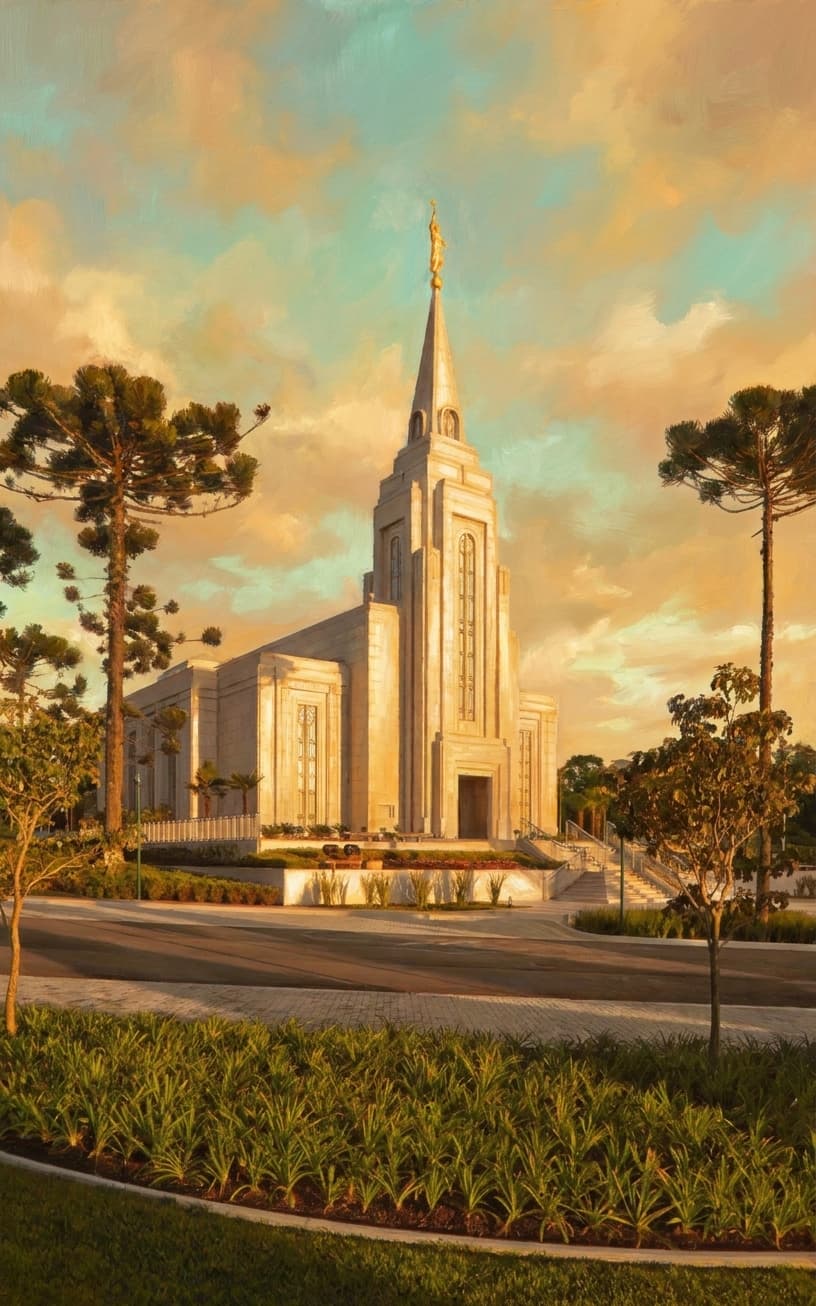
The Curitiba Brazil Temple grounds are open to the public and offer a serene, park-like setting for quiet contemplation. While the interior is reserved for members with a temple recommend, visitors are welcome to walk the beautifully manicured gardens and admire the temple's exterior. The site provides a peaceful escape and a glimpse into the sacred spaces of Latter-day Saint worship.
Highlights
- Walk the beautifully landscaped grounds, open to all visitors.
- Admire the unique Sienna white granite exterior and custom art-glass windows.
- Experience the tranquil atmosphere, screened by native Paraná pine trees.
Things to Know
- The temple interior is reserved for members with a current temple recommend.
- There is no public visitors' center or patron housing on the property.
- Modest dress is encouraged when visiting the temple grounds.
Location
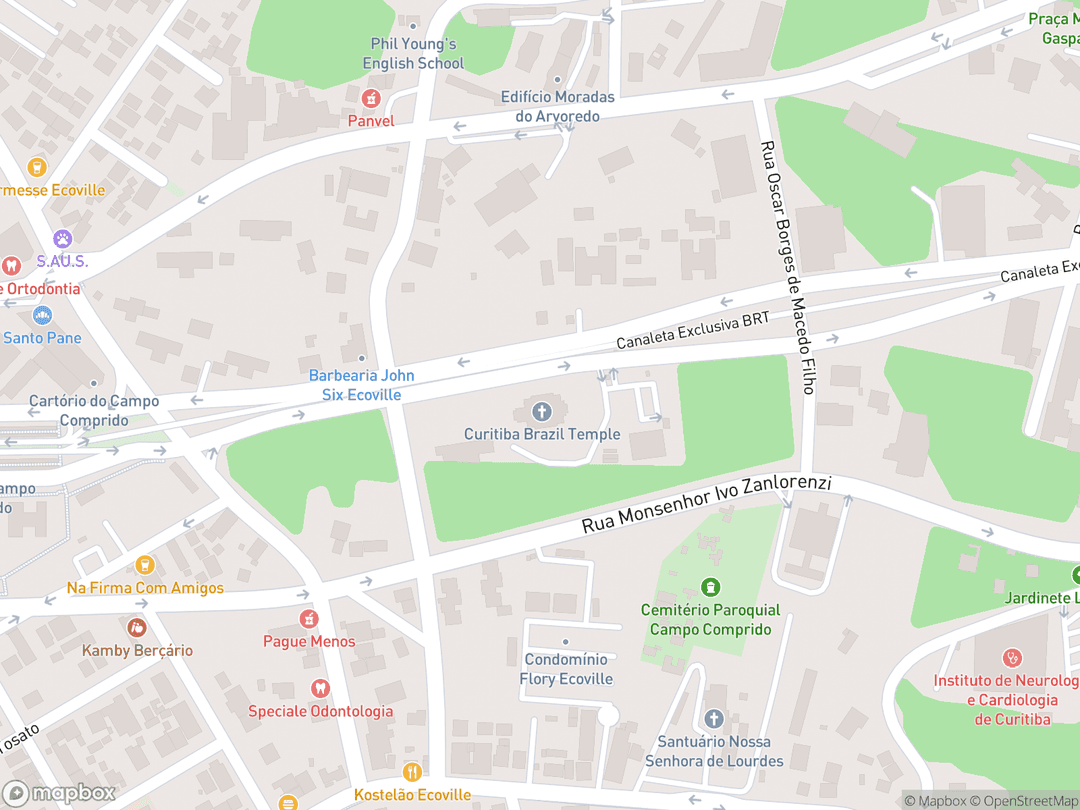
Rua Deputado Heitor Alencar Furtado, 3641, Mossunguê, 81200-110 Curitiba–PR, Brazil
Hours: Grounds open daily from dawn to dusk.
Getting There: The temple is easily accessible via public transit, located adjacent to the Unidade Saúde Campo Comprido bus stop. Parking is available on site.
Get DirectionsAbout
The Curitiba Brazil Temple stands as a prominent sacred edifice of The Church of Jesus Christ of Latter-day Saints in southern Brazil, serving as a spiritual center for members in the states of Paraná and Santa Catarina. As the 126th operating temple worldwide and the fifth in Brazil, it represents a significant milestone in the growth of the Church in the region. Dedicated in 2008, the temple provides a dedicated space for Latter-day Saints to participate in sacred ordinances and make eternal covenants with God.
Located in the Mossunguê district of western Curitiba, the temple's design features a classic modern, single-spire profile, clad in beautiful Sienna white granite native to Brazil. Its architecture and serene grounds offer a tranquil retreat from the surrounding urban environment, inviting visitors to experience a sense of peace and reverence. The temple's interior is adorned with high-quality local and imported materials, including native Brazilian ipê wood and original murals depicting local landscapes, creating an atmosphere of sacred beauty.
For Latter-day Saints, temples are considered Houses of the Lord, distinct from regular church meetinghouses. They are places where individuals can draw closer to Jesus Christ, receive divine instruction, and participate in ordinances that strengthen family bonds for eternity. The Curitiba Brazil Temple stands as a testament to the faith and devotion of the Latter-day Saints in Brazil and a fulfillment of prophetic vision for the region.
Gallery
Symbolic Elements
The temple's exterior features intricate carvings, each rich with spiritual meaning:

Angel Moroni
The gold-leafed statue atop the spire represents the restoration of the gospel of Jesus Christ and the spreading of His message to all nations, fulfilling Revelation 14:6.

Twelve Oxen
In the baptistry, the baptismal font rests on the backs of twelve oxen, mirroring Solomon's Temple and symbolizing the twelve tribes of Israel, representing strength and the gathering of God's covenant people.

Two-Stage Progressive Rooms
The architectural design of moving through instruction rooms symbolizes the soul's spiritual journey from mortality, through refinement and covenant-keeping, to returning to God's presence.

Paraná Pine
Integrated into the landscaping, the native Paraná pine (Araucaria angustifolia) symbolizes resilience, endurance, and reaching heavenward, connecting local nature with divine purposes.

Sienna White Granite
The exterior cladding of Sienna white granite, quarried in Espírito Santo, Brazil, signifies the temple's deep connection to its native land and its enduring, pure foundation.

Ipê Woodwork
Crafted from native Brazilian ipê wood, the interior woodwork represents strength, durability, and the beauty of local craftsmanship, contributing to the temple's sacred ambiance.

Art-Glass Windows
Thirty custom art-glass window panes, designed by Jurgen Dzierzon, allow soft, filtered natural light to illuminate the interior, creating an atmosphere of peace and spiritual reflection.

Original Murals
Original murals by local Brazilian artist Alexandre Reider, depicting natural landscapes, adorn the interior, bringing the beauty of God's creation into the sacred space.
Interesting Facts
The temple's dedication in 2008 fulfilled a prophecy made 55 years earlier by Elder Spencer W. Kimball that a temple would stand in southern Brazil.
President Gordon B. Hinckley personally walked three potential properties in 2004 before selecting the current prominent, elevated site for the temple.
The Curitiba Temple's efficient and aesthetic floor plan was adapted and reused for the Vancouver British Columbia Temple and the Manaus Brazil Temple.
During the 2005 groundbreaking, Curitiba's vice-mayor declared it 'one of the most important days in the city's 300-year history.'
The baptistry mural, depicting the baptism of Jesus Christ, is a direct replication of a historic mural found in the Copenhagen Denmark Temple.
The exterior facade is clad in Sienna white granite, quarried locally in the Brazilian state of Espírito Santo, connecting the building to its native land.
Interior woodwork and trim were crafted from native Brazilian ipê wood, known for its extreme durability and rich tones, symbolizing strength.
The Curitiba Brazil Temple was one of the very first temples dedicated by President Thomas S. Monson after he became President of the Church in February 2008.
Common Questions
What is the purpose of the Curitiba Brazil Temple?
The temple serves as a sacred place for Latter-day Saints to make covenants with God, receive divine instruction, and perform ordinances that unite families for eternity, distinct from regular Sunday worship services.
Can non-members enter the Curitiba Brazil Temple?
While the temple grounds are open to the public, the interior of the temple is reserved exclusively for members of The Church of Jesus Christ of Latter-day Saints who hold a current temple recommend.
What is the significance of the Angel Moroni statue on the spire?
The gold-leafed statue of the angel Moroni symbolizes the restoration of the gospel of Jesus Christ and the spreading of His message to the world, as prophesied in the Book of Revelation.
What kind of materials were used in the temple's construction?
The temple's exterior is clad in Sienna white granite from Espírito Santo, Brazil, while the interior features native Brazilian ipê wood, imported Spanish stone, and original murals by local artists.
How does the Curitiba Brazil Temple connect to the local culture?
The temple incorporates local materials like Sienna white granite and ipê wood, features murals by Brazilian artists, and includes Paraná pine trees in its landscaping, which are a symbol of the state.
Featured Stories
A Prophecy Fulfilled
1953-2008
In 1953, Elder Spencer W. Kimball, then an Apostle, visited southern Brazil and, inspired, declared that a temple would one day bless the region. This prophetic statement instilled a profound hope among the early Latter-day Saints in Brazil. Fifty-five years later, on June 1, 2008, President Thomas S. Monson dedicated the Curitiba Brazil Temple, bringing Elder Kimball's vision to fruition and marking a joyous fulfillment for generations of faithful members.
Source: LDS Living
President Hinckley's Personal Site Selection
2004
In a remarkable display of personal involvement, President Gordon B. Hinckley, then President of the Church, traveled to Curitiba in 2004 to personally select the temple site. He meticulously walked three potential properties, asking detailed questions about their suitability, visibility, and accessibility. His careful consideration led to the approval of the prominent, elevated lot in the Mossunguê district, ensuring the temple would stand in a dignified and accessible location for all.
Source: Latter-day Saint Magazine
A Historic Groundbreaking
March 10, 2005
The groundbreaking ceremony for the Curitiba Brazil Temple on March 10, 2005, was a momentous occasion, presided over by Elder Russell M. Nelson. Approximately 1,500 local members and civic leaders, including the vice-mayor of Curitiba, gathered to witness the event. The vice-mayor's address, declaring it 'one of the most important days in the city's 300-year history,' underscored the profound impact and significance of the temple's construction for the entire community.
Source: The Church News
Timeline
Prophecy of a Temple
Elder Spencer W. Kimball prophesied that a temple would one day stand in southern Brazil during a visit to Ipoméia, Santa Catarina.
EventCuritiba Stake Organized
The Curitiba Brazil Stake was created, marking the first stake organized in Brazil outside of the São Paulo metropolitan area.
MilestoneTemple Announced
President Gordon B. Hinckley officially announced plans for the construction of the Curitiba Brazil Temple.
component.timeline.announcementSite Selection by President Hinckley
President Gordon B. Hinckley personally visited Curitiba to select the prominent, elevated temple site in the Mossunguê district.
EventGroundbreaking Ceremony
Elder Russell M. Nelson presided over the groundbreaking ceremony, attended by approximately 1,500 local members and civic leaders.
component.timeline.groundbreakingPublic Open House Begins
A two-week public open house commenced, allowing tens of thousands of visitors to tour the temple's interior.
EventYouth Cultural Celebration
Local Latter-day Saint youth performed traditional Brazilian music and dance in a cultural celebration.
EventTemple Dedicated
President Thomas S. Monson dedicated the Curitiba Brazil Temple in four sessions, broadcast to meetinghouses throughout the district.
DedicationHistory by Decade
1950s — Prophetic Beginnings
The seed of the Curitiba Brazil Temple was planted in 1953 when Elder Spencer W. Kimball, then a member of the Quorum of the Twelve Apostles, visited southern Brazil. During a meeting in Ipoméia, Santa Catarina, he prophesied to the local congregation that "One day, in this region, there will be a temple of the Lord." This statement ignited hope and faith among the nascent Latter-day Saint community in Brazil, setting a long-term vision for their spiritual growth.
1970s — Establishing a Regional Hub
The Church continued to grow steadily in southern Brazil, leading to a significant organizational milestone in 1971. The Curitiba Brazil Stake was created, becoming the first stake (a regional administrative unit) organized in Brazil outside of the São Paulo metropolitan area. This established Curitiba as a crucial regional center for Latter-day Saint administration and worship, laying the groundwork for future expansion and the eventual need for a temple.
2000s — Announcement, Construction, and Dedication
The new millennium brought the fulfillment of prophecy. On August 23, 2002, President Gordon B. Hinckley officially announced plans for the Curitiba Brazil Temple. In 2004, President Hinckley personally visited Curitiba to select the prominent site. Ground was broken on March 10, 2005, with Elder Russell M. Nelson presiding. After a public open house in May 2008, President Thomas S. Monson dedicated the temple on June 1, 2008, making it the 126th operating temple worldwide and a spiritual anchor for the region.
Architecture & Facilities
The Curitiba Brazil Temple exemplifies a classic modern architectural style, characterized by its clean, symmetrical lines and a prominent single spire. The design harmoniously blends contemporary aesthetics with the traditional reverence expected of a Latter-day Saint temple. Its elegant profile, defined by a forward-facing tower and a gracefully rising spire, creates a distinctive and inspiring landmark within the urban landscape of Curitiba. The use of native Brazilian materials further grounds the design in its local context.
Building Materials
Exterior Cladding
Sienna white granite, a light-colored natural stone quarried in the Brazilian state of Espírito Santo, covers the reinforced concrete structure, providing a durable and aesthetically pleasing finish.
Interior Woodwork
Native Brazilian ipê wood, a highly durable hardwood known for its rich, deep tones, was meticulously crafted for the detailed woodwork, doors, and decorative trim throughout the interior.
Flooring
Premium stone and tile, imported from Spain, are featured prominently throughout the temple's flooring and entryways, contributing to a sense of elegance and reverence.
Interior Granite Accents
The same native Espírito Santo granite used on the exterior facade is also utilized for interior wall dividers and table tops, creating a cohesive design language between the exterior and interior spaces.
Interior Features
Ordinance Rooms
Two instruction (endowment) rooms are designed for a two-stage progressive presentation, guiding patrons through symbolic instruction and covenants in a sacred, contemplative setting.
Sealing Rooms
Two sealing rooms facilitate eternal marriage ceremonies, featuring sacred altars surrounded by mirrors that symbolize the eternal nature and continuity of family relationships.
Celestial Room
Positioned at the heart of the temple, the Celestial Room represents heaven and the peace of God's presence, adorned with elegant crystal chandeliers, soft cream-colored furnishings, and original landscape murals.
Baptistry
The baptistry houses a large baptismal font resting on the backs of twelve molded fiberglass oxen, with walls decorated by a mural depicting the baptism of Jesus Christ, replicating a historic mural from the Copenhagen Denmark Temple.
Temple Grounds
The temple is situated on an 8.15-acre site in a beautifully landscaped, park-like setting, featuring manicured lawns, vibrant flower beds, and a large central water feature. A grove of native Paraná pine trees screens the property, preserving a tranquil atmosphere and isolating the sacred site from the surrounding urban environment.
Additional Facilities
An onsite distribution center is available for members to purchase scriptures, church materials, and temple clothing. The property does not include a public visitors' center, patron housing, or an arrival center.
Religious Significance
As a sacred edifice of The Church of Jesus Christ of Latter-day Saints, the Curitiba Brazil Temple holds profound religious significance within the Christian theological grouping. It is considered a 'House of the Lord,' a dedicated space set apart from the world for sacred worship and communion with God, akin to the biblical Tabernacle and Temple of Solomon. Unlike traditional Christian churches designed for congregational worship, Latter-day Saint temples are distinctively purposed for individual and family covenants that bind generations together for eternity.
The core spiritual purpose of the temple is to provide a place where Latter-day Saints can participate in sacred ordinances and make eternal covenants with God, enabling them to draw closer to Jesus Christ and prepare for eternal life with their families.
Sacred Ordinances
Baptism for the Dead
In proxy, living members are baptized on behalf of their deceased ancestors, offering them the opportunity to accept these saving ordinances beyond the veil.
Endowment
Members receive instruction, make sacred covenants, and are endowed with power from on high, preparing them to return to God's presence.
Sealing
Husbands and wives are sealed together for time and all eternity, and children are sealed to their parents, creating eternal family units.
Covenant Path
The temple experience is designed to guide individuals along a 'covenant path,' a series of commitments and blessings that lead to spiritual growth and a closer relationship with God. Each ordinance and instruction within the temple reinforces this path.
Eternal Families
A central doctrine of The Church of Jesus Christ of Latter-day Saints is the belief in eternal families. Temple ordinances, particularly sealing, are essential for uniting families beyond mortal life, reflecting God's plan for His children.
Similar Temples
Sources & Research
Every fact on Temples.org is backed by verified Sources & Research. Each piece of information is rated by source tier and confidence level.
View All Sources (6)
| Field | Source | Tier | Retrieved |
|---|---|---|---|
| About & Basic Facts | The Church of Jesus Christ of Latter-day Saints (opens in a new tab) | A | 2024-07-30 |
| About & Historical Background | ChurchofJesusChristTemples.org (opens in a new tab) | C | 2024-07-30 |
| Historical Timeline & Dedication | The Church Newsroom (opens in a new tab) | A | 2024-07-30 |
| Historical Timeline & Prophecy | LDS Living (opens in a new tab) | B | 2024-07-30 |
| Architectural Description & Materials | Latter-day Saint Magazine (opens in a new tab) | C | 2024-07-30 |
| Architectural Style & Exterior | Book of Mormon Art Catalog (opens in a new tab) | B | 2024-07-30 |