Visitor Insights
Visiting Fortaleza Brazil Temple
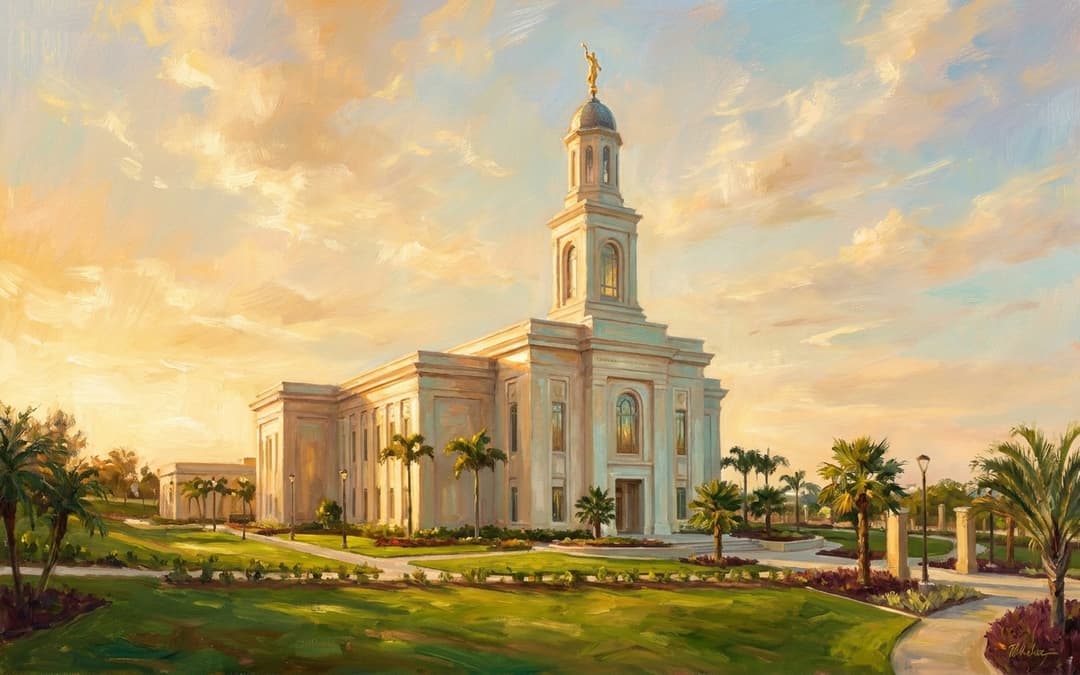
The Fortaleza Brazil Temple is a sacred space for members of The Church of Jesus Christ of Latter-day Saints. While the interior is reserved for endowed members with a current temple recommend, the beautifully landscaped grounds are open to the public for quiet reflection.
Highlights
- Experience the peaceful atmosphere of the temple grounds.
- Admire the unique architecture and local granite exterior.
- Learn about the temple's significance to the local community.
Things to Know
- The temple interior is not open for public tours after dedication.
- Dress respectfully when visiting the temple grounds.
- No food services or temple housing are available on site.
Location
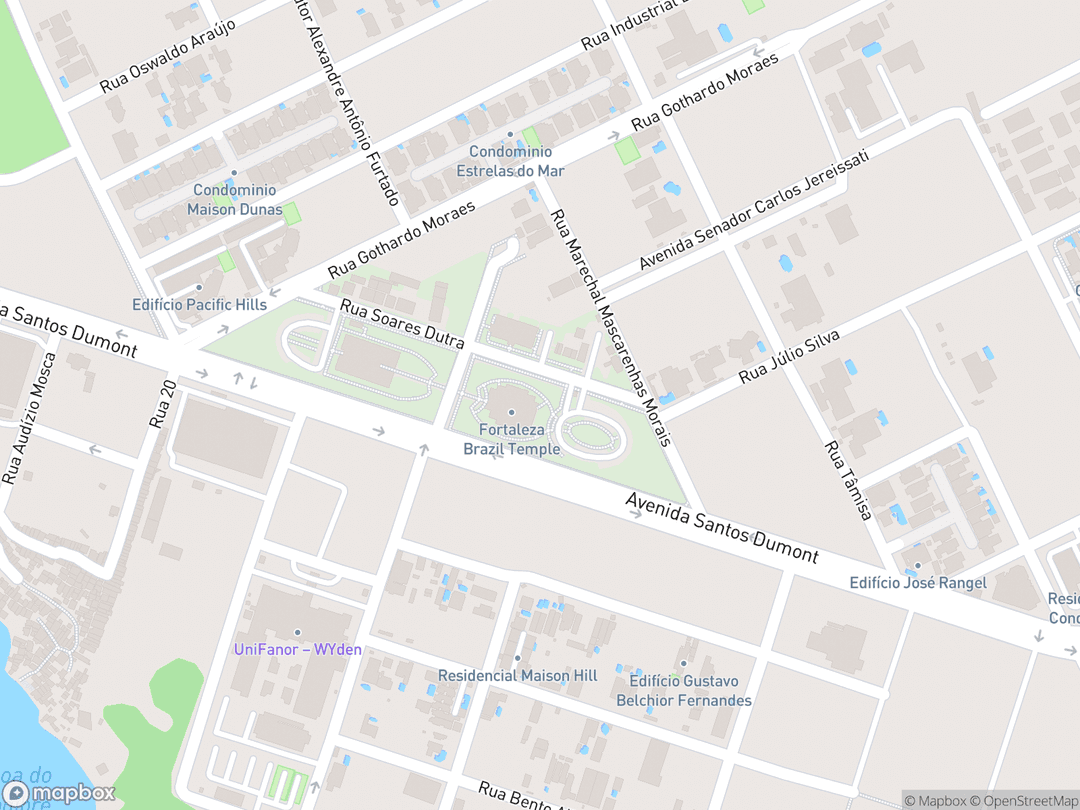
Avenida Santos Dumont 7771, Bairro de Lourdes, 60177-415 Fortaleza - CE, Brazil
Hours: Operating hours for endowed members are available through official Church channels.
Getting There: The temple is located at Avenida Santos Dumont 7771 in the Dunas neighborhood of Fortaleza. Parking is available on site.
Get DirectionsTips for Your Visit
Explore the Grounds
Take time to walk around the beautifully maintained gardens and enjoy the serene environment.
Respect Sacred Space
Maintain a reverent demeanor while on the temple grounds, as it is considered a holy place.
Plan Your Visit
Check the official Church website for any specific visitor guidelines or events before your trip.
About
The Fortaleza Brazil Temple stands as a spiritual anchor for members of The Church of Jesus Christ of Latter-day Saints in Ceará and surrounding regions. It is the seventh temple built in Brazil and the 164th worldwide, providing a sacred space for worship and covenants.
Announced in 2009 by President Thomas S. Monson, the temple's construction faced initial delays due to design modifications and government approvals. Its eventual dedication in 2019 marked a significant milestone, bringing temple blessings closer to thousands of members who previously traveled long distances.
The temple's design incorporates local Brazilian elements, such as native orchid motifs, and its exterior is clad in locally sourced Branco Ceará granite. It serves as a house of the Lord, where members participate in ordinances central to their Christian faith, strengthening their commitment to Jesus Christ and eternal family bonds.
Gallery
Symbolic Elements
The temple's exterior features intricate carvings, each rich with spiritual meaning:

Angel Moroni Statue
The statue of the Angel Moroni, atop the spire, symbolizes the proclamation of the restored gospel of Jesus Christ to the world.

Branco Ceará Granite
The temple's exterior is clad in Branco Ceará granite, a light-colored stone quarried locally, connecting the edifice to its Brazilian heritage.

Single Domed Steeple
The single domed steeple, a modification from an earlier design, adds a distinctive architectural feature to the temple's silhouette.

Orchid and Vine Motifs
Native Brazilian orchids and trailing vines are incorporated into the art glass, carpets, and decorative painting, reflecting local flora.

Baptistry Font
The baptismal font rests on the backs of twelve oxen, symbolizing the twelve tribes of Israel and the ordinance of baptism for the dead.

Celestial Room
The Celestial Room represents a return to God's presence, designed to evoke a feeling of eternal peace and joy.

Sealing Rooms
Sealing rooms are where families are united for eternity through sacred covenants, reinforcing the eternal nature of family relationships.

Instruction Rooms
Instruction rooms are where members receive sacred teachings and make covenants as part of the endowment ordinance.
Interesting Facts
The Fortaleza Brazil Temple is the seventh temple built in Brazil and the first in the state of Ceará (Tier A).
Its dedication marked the first time an entire temple dedication ceremony was conducted entirely in a language other than English (Portuguese) (Tier A).
Elder Ulisses Soares, who dedicated the temple, is the first South American and Brazilian apostle of The Church of Jesus Christ of Latter-day Saints (Tier A).
The original architectural design featured a double-towered structure, later modified to a single domed steeple (Tier C).
After the 2011 groundbreaking, the property remained vacant for nearly five years awaiting government approvals (Tier C).
The public open house attracted approximately 60,000 visitors prior to the dedication (Tier C).
The temple's exterior is adorned with Branco Ceará granite, a locally quarried stone, connecting it to its Brazilian heritage (Tier A).
Before the Fortaleza temple, members in the region often traveled nearly 500 miles to attend the Recife Brazil Temple (Tier C).
The temple serves members in the state of Ceará and surrounding regions of northeastern Brazil (Tier A).
The site includes an arrival center, missionary housing, a meetinghouse, and grounds building (Tier A).
Common Questions
Is the Fortaleza Brazil Temple open to the public?
The temple grounds are open to the public, but the interior is reserved for members of the Church with a temple recommend after dedication.
What is the architectural style of the temple?
The temple features a modern design with a single domed steeple, clad in local Branco Ceará granite.
Are there any visitor services available on site?
An arrival center is available for patrons, but there is no dedicated visitor's center or food services.
Who dedicated the Fortaleza Brazil Temple?
Elder Ulisses Soares of the Quorum of the Twelve Apostles dedicated the temple, marking a significant event as he is a native of Brazil.
What is the significance of the Angel Moroni statue?
The Angel Moroni statue symbolizes the proclamation of the restored gospel of Jesus Christ to the world.
Featured Stories
A Temple for Northeastern Brazil
October 3, 2009
The announcement of the Fortaleza Brazil Temple brought immense joy to Latter-day Saints in northeastern Brazil. For years, members traveled nearly 500 miles to the Recife Brazil Temple, a journey that required significant sacrifice and time. This new temple promised to bring sacred blessings closer to home, easing the burden on families and strengthening the Church in the region.
Source: The Church News
A Brazilian Apostle's Dedication
June 2, 2019
The dedication of the Fortaleza Brazil Temple was a historic event, presided over by Elder Ulisses Soares, the first South American and Brazilian apostle. This marked the first time a temple dedication ceremony, including hymns and the Hosanna Shout, was conducted entirely in a language other than English. Elder Soares's presence resonated deeply with local members, symbolizing the global reach and local leadership of the Church.
Source: The Church News
Overcoming Construction Challenges
2011-2016
Following the groundbreaking in 2011, the temple property remained vacant for nearly five years as the original double-towered design underwent modifications for government approval. This period of waiting tested the patience and faith of local members, but their anticipation only grew stronger. The eventual resumption of construction and the temple's completion were met with profound gratitude and celebration.
Source: ChurchofJesusChristTemples.org
Timeline
Temple Announced
President Thomas S. Monson announced the intent to build the Fortaleza Brazil Temple during General Conference.
component.timeline.announcementGroundbreaking Ceremony
Elder David A. Bednar of the Quorum of the Twelve Apostles presided over the groundbreaking ceremony.
component.timeline.groundbreakingInitial Design Modifications
The original double-towered design underwent modifications to feature a single domed steeple due to government approval processes.
EventConstruction Delay
The property remained vacant for approximately five years awaiting necessary government approvals before construction could proceed.
EventPublic Open House Begins
A public open house commenced, inviting the community to tour the interior of the temple.
EventPublic Open House Concludes
The public open house concluded, having hosted over 60,000 visitors.
EventYouth Devotional Held
A youth devotional was held in the adjacent meetinghouse, with Elder Ulisses Soares emphasizing the importance of temple ordinances.
EventTemple Dedicated
Elder Ulisses Soares of the Quorum of the Twelve Apostles formally dedicated the Fortaleza Brazil Temple.
DedicationHistory by Decade
2000s — Announcement and Groundbreaking
The intent to construct the Fortaleza Brazil Temple was announced on October 3, 2009, by Church President Thomas S. Monson. At the time, members in the Fortaleza area traveled nearly 500 miles to attend the Recife Brazil Temple. A groundbreaking ceremony was held on November 15, 2011, presided over by Elder David A. Bednar.
2010s — Construction and Dedication
Following the groundbreaking, the property remained vacant for approximately five years as the original double-towered design underwent modifications to feature a single domed steeple due to government approval processes. A public open house was held from April 27 to May 18, 2019, attracting over 60,000 visitors. The temple was formally dedicated on June 2, 2019, by Elder Ulisses Soares of the Quorum of the Twelve Apostles.
Architecture & Facilities
The Fortaleza Brazil Temple exhibits a modern architectural style, characterized by its clean lines, elegant proportions, and a single domed steeple. The design incorporates elements that reflect its Brazilian location, blending contemporary aesthetics with the sacred purpose of a Latter-day Saint temple. The use of locally sourced materials further grounds the edifice in its regional context.
Building Materials
Exterior
The temple's exterior is finished with Branco Ceará granite, a durable and light-colored stone quarried locally in the state of Ceará.
Interior Finishes
Interior spaces feature high-quality finishes, including custom carpets, decorative painting, and carved woodwork.
Art Glass
Stained glass windows incorporate motifs of native Brazilian orchids and trailing vines, adding local artistic flair.
Woodwork
Carved woodwork throughout the interior showcases intricate details and craftsmanship, often reflecting local flora.
Interior Features
Baptistry
The baptistry houses a baptismal font resting on the backs of twelve oxen, used for proxy baptisms for the deceased.
Instruction Rooms
These rooms are where members receive sacred instructions and make covenants as part of the endowment ceremony.
Sealing Rooms
Sealing rooms are designed for eternal marriage and family covenants, uniting families for time and all eternity.
Celestial Room
The Celestial Room is a serene space representing a return to God's presence, designed for quiet contemplation and spiritual reflection.
Temple Grounds
The temple is situated on a 10-acre plot in the Dunas neighborhood, built on a slight slope that offers views of the city. The grounds are meticulously landscaped with lush, tropical vegetation, creating a peaceful and inviting atmosphere for visitors.
Additional Facilities
The site includes an arrival center, missionary housing, a meetinghouse, and a grounds building, all designed to support temple operations and patron needs.
Religious Significance
As a sacred edifice of The Church of Jesus Christ of Latter-day Saints, the Fortaleza Brazil Temple is considered a house of the Lord, dedicated to the worship of God and the performance of holy ordinances. It serves as a place where members can draw closer to Jesus Christ and deepen their understanding of God's eternal plan.
The core purpose of the temple is to provide a sacred space for members to make and renew covenants with God, participate in saving ordinances, and receive divine instruction. It is a place of refuge, peace, and spiritual growth, enabling individuals and families to strengthen their faith and commitment to Christian principles.
Sacred Ordinances
Baptism for the Dead
Members perform proxy baptisms on behalf of deceased ancestors, a practice rooted in early Christian tradition (1 Corinthians 15:29) and restored through modern revelation.
Endowment
The endowment is a series of instructions and covenants that provide a deeper understanding of God's plan of salvation and the path to eternal life.
Sealing
Sealing ceremonies unite husbands and wives, and children to parents, for time and all eternity, emphasizing the eternal nature of family relationships as central to Christian theology.
Covenant Path
The temple is central to the Latter-day Saint 'covenant path,' a series of commitments made with God that lead to eternal blessings and a closer relationship with Jesus Christ.
Eternal Families
A foundational belief in Latter-day Saint Christian theology is the eternal nature of families. Temple ordinances, particularly sealings, enable family relationships to continue beyond mortal life.
Divine Instruction
Within the temple, members receive spiritual instruction and guidance, helping them to better understand their divine potential and their role in God's plan.
Similar Temples
Sources & Research
Every fact on Temples.org is backed by verified Sources & Research. Each piece of information is rated by source tier and confidence level.
View All Sources (4)
| Field | Source | Tier | Retrieved |
|---|---|---|---|
| About & Historical Background | ChurchofJesusChristTemples.org (opens in a new tab) | C | 2024-07-30 |
| Historical Timeline & Announcement | The Church of Jesus Christ of Latter-day Saints (opens in a new tab) | A | 2024-07-30 |
| Interesting Facts & Design | Architizer (opens in a new tab) | B | 2024-07-30 |
| Symbolic Elements | The Church of Jesus Christ of Latter-day Saints (opens in a new tab) | A | 2024-07-30 |