Visitor Insights
Visiting Mesquita Brasil
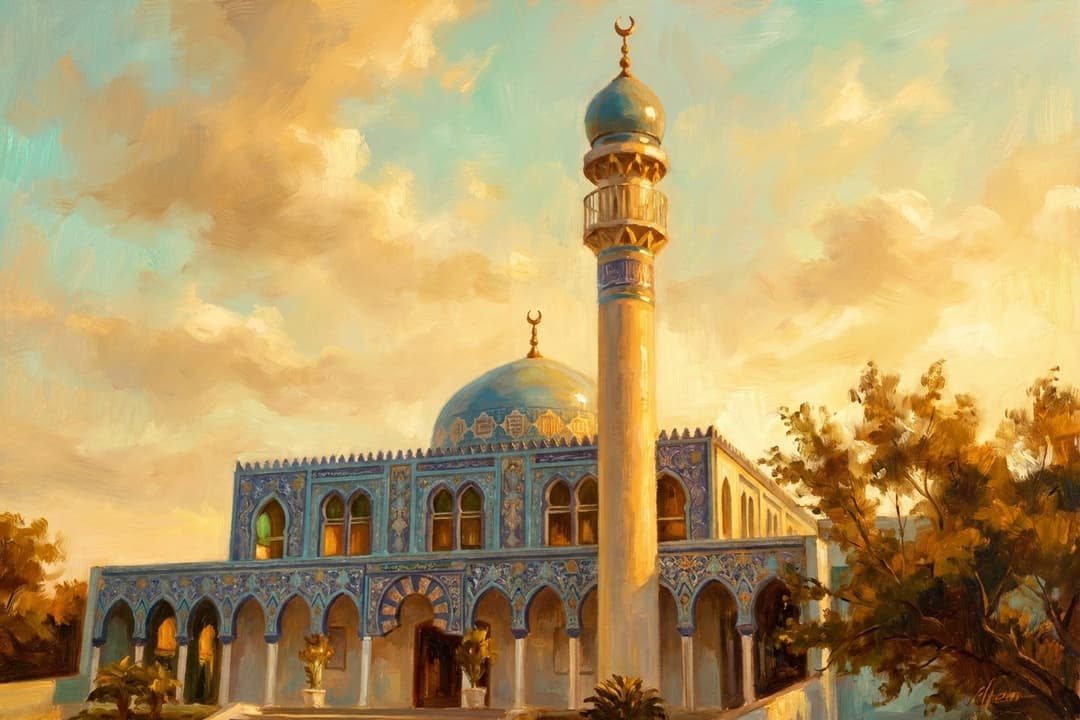
Mesquita Brasil welcomes worshippers and visitors seeking to explore South America's founding Islamic architectural heritage. Non-worshipper educational visits are best conducted between daily prayer windows in a quiet, respectful atmosphere.
Highlights
- Intricate hand-carved marble Mihrab framed with classical Arabic calligraphy
- A soaring 30-meter minaret overlooking São Paulo's historic Cambuci district
- Emerald-green carpeted prayer hall precisely oriented toward Mecca
- Traditional post-service tea and bread offerings in the courtyard on Fridays
Things to Know
- Visitors must remove footwear before entering the carpeted prayer sanctuary
- Modest dress is strictly required, including long trousers and covered shoulders
- Women must cover their hair with a headscarf, available at the welcome desk
Location
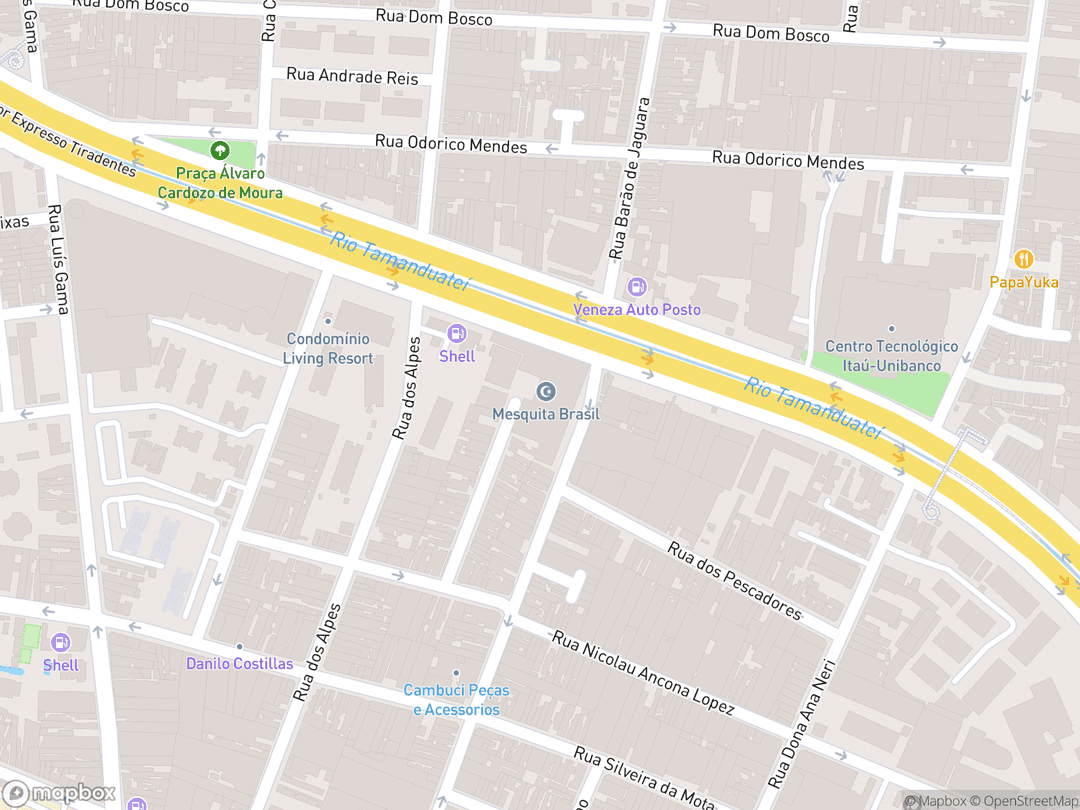
Av. do Estado, 5382, Cambuci, São Paulo - SP, 01516-000, Brazil
Hours: Open daily for the five congregation prayers; tours best scheduled 10:00 AM–11:30 AM and 2:00 PM–4:00 PM.
Getting There: Accessible via Metro Lines 1 or 3 to Sé or Pedro II Station, followed by a short ride down Avenida do Estado.
Get DirectionsTips for Your Visit
Plan Around Prayer Times
Schedule visits between prayer windows to appreciate the architecture without disturbing worshippers.
Observing Dress Etiquette
Wear clothing covering arms and ankles; headscarves are provided for female visitors at the entrance.
About
Mesquita Brasil, officially known as Masjid Brasil, holds the historic distinction of being the first purpose-built mosque in South America. Situated in the central Cambuci district of São Paulo, it stands as a monumental testament to the faith and civic dedication of early 20th-century Levantine immigrants. Founded by the Sociedade Beneficente Muçulmana de São Paulo, the complex serves as a primary center for monotheistic worship and cultural bridge-building in Brazil.
Architecturally designed in the Moorish Revival style by Egyptian architect Dr. Abdallah Abdelshakour, the sanctuary integrates classical Fatimid and Mamluk decorative traditions. Its prominent central dome, 30-meter minaret, and hand-carved interior details reflect the absolute oneness of God (Tawhid). Within the broader Abrahamic tradition, Mesquita Brasil offers a tranquil sanctuary dedicated exclusively to the unmediated worship of the Creator.
Gallery
Symbolic Elements
The temple's exterior features intricate carvings, each rich with spiritual meaning:

Qubba (Central Dome)
A hemispherical vault on an octagonal drum symbolizing the celestial canopy and divine mercy.

Manara (Minaret)
A 30-meter octagonal tower symbolizing spiritual light and serving as the visual marker for prayer.

Mihrab (Prayer Niche)
A recessed marble niche in the Qibla wall indicating the direction of the Kaaba in Mecca.

Minbar (Pulpit)
A carved wooden staircase pulpit from which the Imam delivers the Friday sermon.

Calligraphic Friezes
Hand-painted Thuluth Arabic inscriptions featuring Quranic verses as sacred ornamentation.

Geometric Arabesque
Infinite repeating geometric patterns reflecting the mathematical order and eternity of divine creation.

Hilal (Crescent Moon)
A bronze crescent finial crowning the dome and minaret, symbolizing the Islamic lunar calendar.

Wudu Khana (Ablution Pavilion)
A marble purification fountain area where worshippers perform ritual washing prior to prayer.
Interesting Facts
Mesquita Brasil is historically recognized as the very first purpose-built mosque in South America. (Tier A)
Community leaders chose the name Mesquita Brasil to honor Brazil rather than using a city name. (Tier A)
Construction costs were funded by small grassroots donations from Middle Eastern immigrants across São Paulo. (Tier B)
The 1960 grand opening drew diplomats from Egypt, Syria, and Saudi Arabia to São Paulo. (Tier A)
Traditional Arabic bread and cardamom coffee are served to worshippers following Friday prayers. (Tier C)
Stepping into the sanctuary from Avenida do Estado offers an immediate, tranquil acoustic escape. (Tier C)
The prayer floor is angled precisely at 67 degrees northeast to align directly with Mecca. (Tier B)
The society welcomes thousands of Brazilian public school students annually for interfaith educational visits. (Tier A)
Common Questions
Is Mesquita Brasil open to non-Muslim visitors?
Yes, respectful non-Muslim visitors and educational groups are welcome outside active prayer times.
What should visitors wear when visiting the mosque?
Visitors must wear modest clothing covering arms and legs, and women must wear a headscarf.
Why is it called Mesquita Brasil?
The community chose 'Mesquita Brasil' to honor their host country rather than naming it after a specific saint.
When was the mosque constructed?
Groundbreaking occurred in 1940, and the structure was officially inaugurated on May 20, 1960.
Featured Stories
A Vision Born in Cambuci
1927–1940
Following World War I, Levantine immigrants arriving in São Paulo sought to establish a permanent sanctuary for monotheistic worship. Founding leaders Dr. Hosni Adura and Darwich Gazal rallied local merchants to fund land acquisition along Avenida do Estado. Their grassroots efforts laid the foundation for South America's pioneer purpose-built mosque.
Source: Sociedade Beneficente Muçulmana de São Paulo
Architectural Fusion Across Continents
1939–1960
Egyptian architect Dr. Abdallah Abdelshakour designed the sanctuary by drawing inspiration from classical Mamluk and Fatimid monuments in Cairo. Construction required decades of persistent craftsmanship, surviving wartime material shortages before culminating in its 1960 dedication. The final edifice stands as a monumental bridge between Middle Eastern heritage and Brazilian civic life.
Source: Sleiman Arquitetura Archives
The Diplomatic Inauguration of 1960
May 20, 1960
On May 20, 1960, Mesquita Brasil opened its doors in a historic ceremony attended by Brazilian civic authorities and Arab diplomats. Representatives from Egypt, Syria, and Saudi Arabia gathered alongside local citizens to celebrate this landmark milestone. The event marked a new era of religious pluralism and cultural exchange in South America.
Source: Prefeitura de São Paulo Cultural Records
Timeline
Charitable Society Established
Immigrants establish the Palestinian Muslim Charitable Society to organize religious life in São Paulo.
MilestoneSBM Renaming
The organization renames itself Sociedade Beneficente Muçulmana de São Paulo and hosts rented hall prayers.
EventLand Acquisition
The SBM purchases property along Avenida do Estado in Cambuci after a decade of community fundraising.
MilestoneArchitectural Plans Approved
Egyptian architect Dr. Abdallah Abdelshakour completes structural designs inspired by Mamluk architecture.
EventGroundbreaking Ceremony
The formal cornerstone laying ceremony takes place, initiating construction of the landmark mosque.
component.timeline.groundbreakingStructural Shell Erection
The central sanctuary dome and primary concrete walls are completed, allowing initial gatherings.
MilestoneInterior Decorative Work
Artisans finish the marble mihrab, plaster arabesques, and Quranic calligraphic friezes.
EventOfficial Grand Inauguration
Mesquita Brasil is formally inaugurated in the presence of civic leaders and international diplomats.
DedicationEducational Center Launch
The complex establishes Brazil's first formal Islamic religious and cultural education center.
EventCommunity Center Expansion
A multi-story facility featuring a library and lecture halls is added adjacent to the main mosque.
RenovationHeritage Restoration
Architect Youssef Sleiman completes a major restoration of structural elements and historical murals.
RenovationHistory by Decade
1920s
In the 1920s, Levantine Arab immigrants settled in São Paulo and established the Palestinian Muslim Charitable Society in 1927. Renamed the Sociedade Beneficente Muçulmana in 1929, the group organized the city's first regular congregational Friday prayers in rented urban halls.
1930s
During the 1930s, the society conducted widespread fundraising across Brazil to build a dedicated house of worship. In 1938, they acquired land in Cambuci, and Egyptian architect Dr. Abdallah Abdelshakour completed plans inspired by Mamluk architecture.
1940s
Groundbreaking took place in 1940 along Avenida do Estado with a formal cornerstone ceremony. Although World War II caused severe material shortages, community members persevered with incremental structural construction.
1950s
By 1952, the central dome and exterior walls were erected, allowing worshippers to gather inside the sanctuary shell. Decorative works, including marble mihrab installation and Quranic calligraphic friezes, were finished by 1956.
1960s
Mesquita Brasil was officially inaugurated on May 20, 1960, in a grand ceremony attended by international diplomats. In 1968, the complex expanded its mission by launching Brazil's first formal Islamic religious education center.
2010s
In 2016, architect Youssef Sleiman led a comprehensive restoration that renewed structural elements, lighting, and historic arabesque wall paintings. Today, the mosque remains an active house of prayer and a listed heritage landmark.
Architecture & Facilities
Mesquita Brasil is executed in the Moorish Revival and Neo-Islamic architectural style, drawing heavily upon classical Egyptian Mamluk and Fatimid monumental design. The exterior features light-colored concrete render accented by pointed horseshoe arcades, while the main 30-meter minaret presents an octagonal shaft with muqarnas balcony overhangs capped by a bronze crescent finial.
Building Materials
Structural Frame
Reinforced concrete skeleton finished in weather-resistant light cream plaster render.
Exterior Accents
Imported bronze crescent finials capping the main minaret tower and central dome spire.
Interior Wall Finishes
Polished natural marble tiles lining the lower walls and hand-carved plaster arabesque bands.
Flooring & Textiles
Soft emerald-green patterned carpet woven with parallel prayer alignment lines.
Interior Features
Musalla (Main Sanctuary)
A spacious column-free prayer hall accommodating over 1,000 worshippers beneath a natural light dome.
Mihrab (Prayer Niche)
A recessed wall niche clad in hand-carved marble tiles framing the direction of Mecca.
Minbar (Pulpit)
An elevated wooden pulpit featuring intricate geometric lattice work and mother-of-pearl inlays.
Women's Gallery
A raised mezzanine balcony with screened wooden balustrades overlooking the main floor.
Temple Grounds
The mosque complex occupies an urban plot along Avenida do Estado, featuring a paved entry courtyard, administrative wings, and an adjacent community hall.
Additional Facilities
Includes an ablution pavilion, Islamic library, educational classrooms, and a multi-purpose lecture auditorium.
Religious Significance
Within the Islamic faith—a major monotheistic tradition sharing historical roots with the broader Abrahamic family—the mosque serves as a pure sanctuary dedicated exclusively to the worship of God (Allah). Islamic theology strictly emphasizes Tawhid (the absolute oneness and transcendence of the Creator), prohibiting icons or statues within sacred spaces. Instead, divine glory is expressed through architectural symmetry, natural light, and written scripture.
To provide a clean, unadorned sanctuary where believers gather in egalitarian lines to fulfill their daily prayers and strengthen community ties.
Sacred Ordinances
Salah (Daily Prayers)
Five mandatory daily prayers performed facing the Qibla in Mecca.
Juma’a (Friday Congregational Prayer)
The weekly communal gathering featuring a sermon (Khutbah) delivered from the Minbar.
Wudu (Ritual Purification)
A mandatory ritual washing of hands, face, and feet performed before prayer.
Sawm & Iftar (Ramadan Observances)
Communal evening meals and nighttime prayers held during the holy fasting month of Ramadan.
The Concept of Tawhid in Architecture
The open floor plan and absence of clerical altars reflect the theological principle that all worshippers stand equal directly before God without human intermediaries.
The Qibla and Universal Orientation
Every element of the main sanctuary is aligned toward the Kaaba in Mecca, symbolizing global unity among believers across geographic divides.
Sources & Research
Every fact on Temples.org is backed by verified Sources & Research. Each piece of information is rated by source tier and confidence level.
View All Sources (8)
| Field | Source | Tier | Retrieved |
|---|---|---|---|
| About & Historical Background | Sociedade Beneficente Muçulmana de São Paulo (opens in a new tab) | A | 2026-02-15 |
| Architecture & Facilities | Sleiman Arquitetura (opens in a new tab) | A | 2026-02-15 |
| About & Historical Background | Prefeitura de São Paulo (opens in a new tab) | A | 2026-02-15 |
| History & Heritage | Governo do Estado de São Paulo (opens in a new tab) | A | 2026-02-15 |
| Religious Significance | Universidade de São Paulo (opens in a new tab) | B | 2026-02-15 |
| History & Heritage | Fundação Getulio Vargas (opens in a new tab) | B | 2026-02-15 |
| Visitor Information | Agência de Notícias Brasil-Árabes (opens in a new tab) | C | 2026-02-15 |
| Visitor Information | Folha de S.Paulo (opens in a new tab) | C | 2026-02-15 |