Visitor Insights
Visiting Monastery of Saint Ivan of Rila
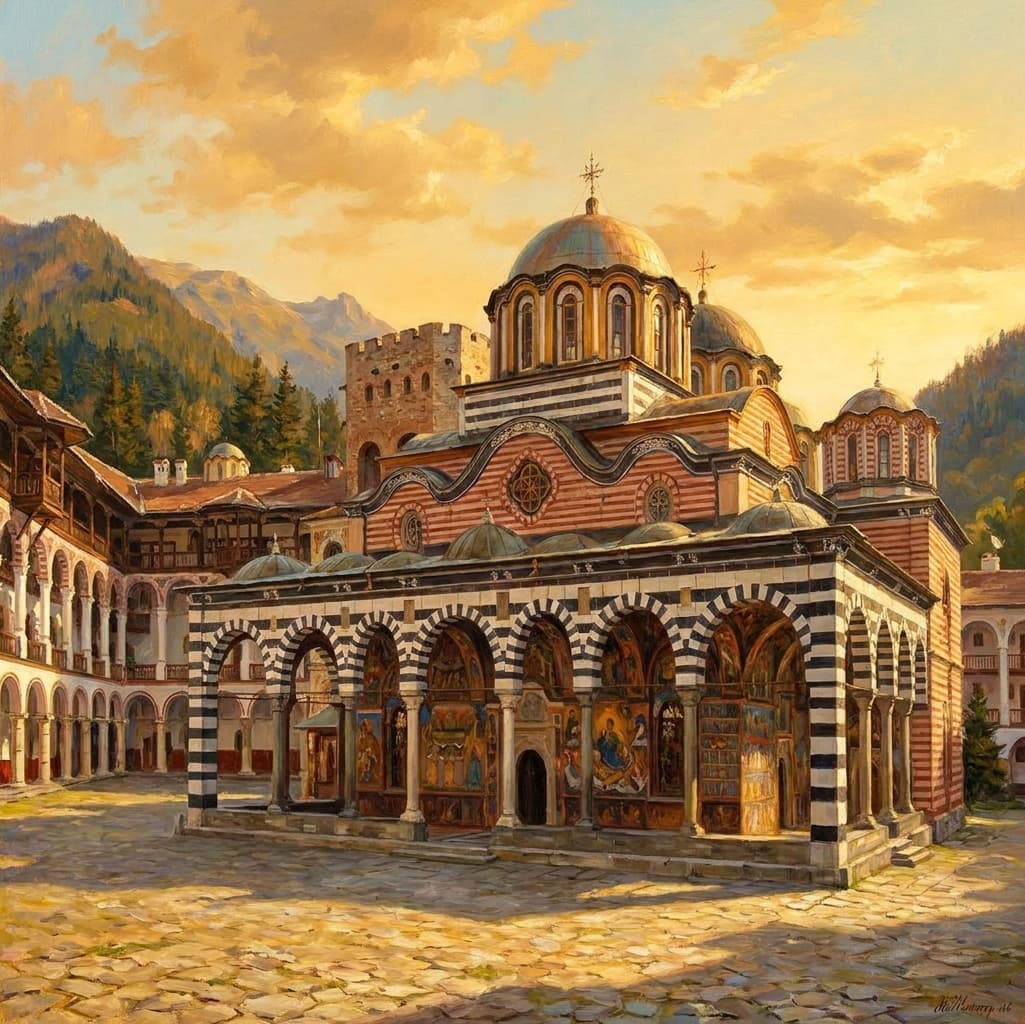
Nestled in a serene mountain gorge, Rila Monastery welcomes pilgrims and travelers into an active monastic atmosphere. Modest attire covering shoulders and knees is strictly enforced to enter the sacred Katholikon and inner precincts. Arriving early in the morning allows visitors to witness liturgical chants and experience the contemplative serenity before afternoon tour groups arrive.
Highlights
- Marvel at thousands of vivid narrative frescoes painted by Zahari Zograf along the outdoor church portico.
- Venerate the sacred relics of Saint Ivan of Rila inside the wood-carved Katholikon.
- Stand before the 14th-century stone Tower of Hrelyo, the oldest surviving medieval structure on site.
- Taste freshly made Rilski mekitsi paired with mountain sheep yogurt at the historic monastic bakery.
Things to Know
- Photography is strictly forbidden inside the main church and the ecclesiastical museum.
- Quiet monastic decorum must be observed near active residential living quarters.
- Mountain weather can change rapidly; bring warm layers even during the summer months.
- Hrelyo's Tower and its upper chapel are accessible only during the summer season.
Location
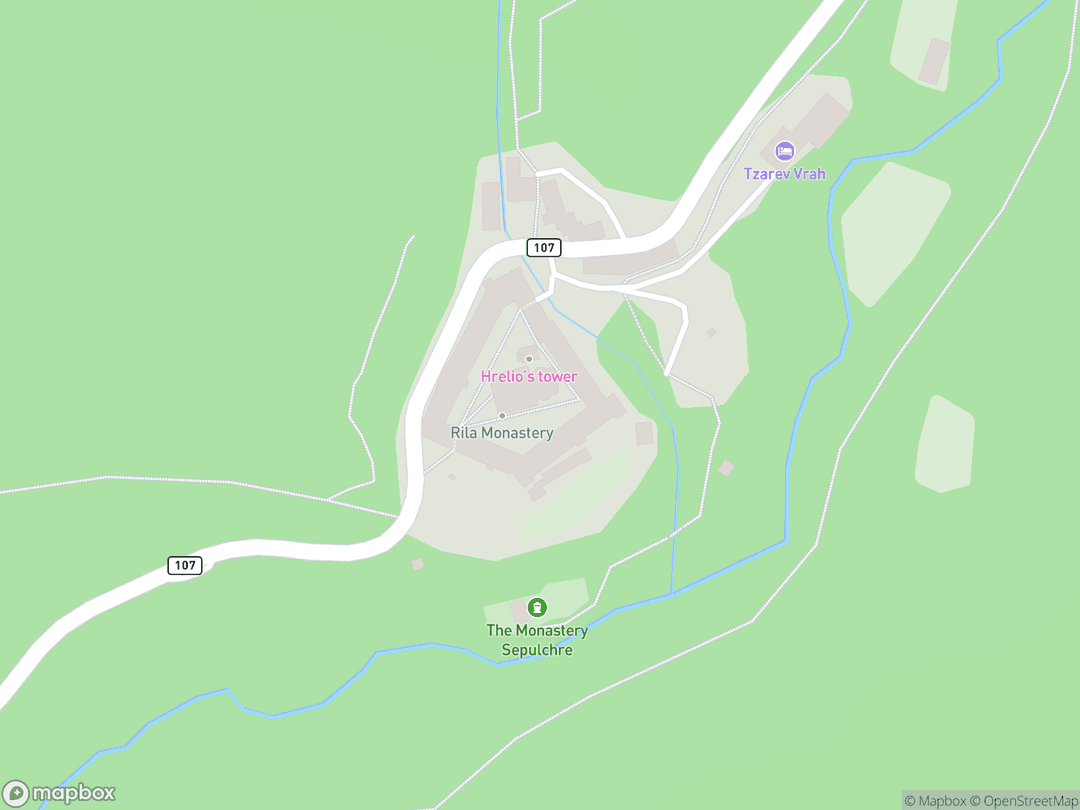
2643 Rila Monastery, Kyustendil Province, Bulgaria
Hours: Monastery courtyard and church open daily from 07:00 to 20:00; museum open daily from 08:30 to 16:30.
Getting There: Located 117 km south of Sofia via the A3/E79 motorway to Kocherinovo, then east along Route 107 up the Rilska River valley.
Get DirectionsTips for Your Visit
Arrive for Morning Liturgy
Visit before 09:00 to hear the striking of the wooden semantron and experience quiet morning prayers.
Explore the Hermit's Cave
Hike four kilometers up the valley to reach the original cave of Saint Ivan of Rila and pass through the stone opening.
Carry Cash for Tickets
While the courtyard and main church offer free admission, modest cash fees in Bulgarian Lev are required for the museum.
About
Founded in the 10th century by the hermit monk Saint Ivan of Rila, the Rila Monastery stands as Bulgaria's most revered spiritual haven and cultural bastion. Situated high in the forested gorge of the Rilska River, it carries forward the contemplative desert traditions of Christian monasticism, inviting monastics and pilgrims into profound stillness and communion with the Divine.
Throughout nearly five centuries of Ottoman rule, the stauropegic sanctuary faithfully guarded Slavic literacy, sacred liturgy, and Orthodox theology. Its fortified complex provided a resilient haven for manuscript production, monastic cell schools, and historical memory, anchoring national identity when sovereign institutions had ceased.
Rebuilt into its present architectural majesty during the Bulgarian National Revival following a devastating fire in 1833, the complex merges fortress-like exterior stonework with magnificent black-and-white courtyard arcades. As an active monastery and UNESCO World Heritage Site, it remains an enduring sanctuary of prayer and liturgical life.
Gallery
Symbolic Elements
The temple's exterior features intricate carvings, each rich with spiritual meaning:

Striped Arch Voussoirs
Alternating black and white arch bands symbolize the cosmic transition from worldly tribulation to Christ's resurrected light.
The Ladder of Divine Ascent
External murals depict the ascetic journey of spiritual ascent toward heaven as described by Saint John Climacus.

The Last Judgment Fresco
The esonarthex portico depicts the weighing of souls to inspire repentance and personal spiritual accountability.

Gilded Double-Headed Eagle
Floor marble beneath the central dome symbolizes the historic symphony between spiritual authority and temporal governance.
Rafael's Boxwood Cross
The intricate miniature carved cross signifies Christ's redemption portrayed through hundreds of microscopic biblical scenes.

Five Copper Domes
The rooftop dome arrangement represents Jesus Christ presiding at center, encircled by the four Gospel Evangelists.

Carved Wooden Sun Ceilings
Radiating rosette medallions hand-carved in wooden ceilings represent the uncreated light and beauty of God.

The Monastic Semantron
Striking rhythmic wooden boards calls monks to sacred prayer, embodying a call that echoes ancient early Christian practice.
Interesting Facts
Father Rafael worked for twelve years with tiny scalpels to carve 650 miniature figures into a boxwood crucifix before going blind. (Tier A)
The 14th-century stone Tower of Hrelyo miraculously survived undamaged when a massive fire leveled the surrounding wooden wings in 1833. (Tier B)
Following his mysterious death in 1943, Bulgaria's King Boris III had his heart interred inside a southern chapel of the Katholikon. (Tier B)
Pilgrim folklore holds that only those truly free of mortal sin can squeeze upward through the narrow stone chimney of Saint Ivan's cave. (Tier C)
The monastery's historic bakery has made Rilski mekitsi pastries served with chilled sheep's milk yogurt for hundreds of years. (Tier C)
Master painter Zahari Zograf broke centuries of anonymous Byzantine custom by including his realistic self-portrait within church murals. (Tier B)
Saint Ivan of Rila and the monastery's architecture were engraved on the reverse side of Bulgaria's national 1-lev banknote in 1999. (Tier A)
During the late 19th century, Bulgarian revolutionary leaders found refuge in secret trapdoors engineered into the upper monk cells. (Tier B)
Monks continue to call the brotherhood to services using a wooden semantron, striking rhythmic wood planks before church bells sound. (Tier A)
Common Questions
Is Rila Monastery an active monastery or a museum?
It functions actively as a working Eastern Orthodox monastery while simultaneously welcoming visitors to its historic church and museum.
What is the dress code for entering the monastery?
Visitors must wear modest clothing that fully covers shoulders and knees, and hats must be removed inside the church.
Is photography allowed inside the church?
Photography is strictly prohibited inside the main church and museum, though permitted throughout the open courtyard.
How old is the oldest standing building in the complex?
The fortified stone Tower of Hrelyo dates to 1335, having survived fires and regional conflicts for nearly seven centuries.
Can visitors stay overnight at the monastery?
Basic monastic guest rooms are traditionally open to pilgrims and travelers upon prior coordination with monastery administration.
Featured Stories
The Enduring Sacrifice of Master Rafael
1802
Devoting twelve grueling years to carving a boxwood crucifix with tiny scalpels, monk Rafael inscribed over 650 individual biblical figures into an 81-centimeter cross. Upon finishing the final sacred relief in 1802, the master monk permanently lost his eyesight from extreme ocular strain. Today, Rafael's Cross remains one of the greatest masterpieces of religious miniature carving in Christian art.
Source: Ecclesiastical History Museum of Rila Monastery
The Translation of the Saint's Relics
1469
After decades of exile following the Ottoman conquest, the incorrupt relics of Saint Ivan were solemnly reclaimed and carried across Bulgaria back to his mountain sanctuary. Crowds wept along mountain passes as towns and villages came out to touch the wooden casket containing their patron saint. This month-long procession rekindled Christian solidarity and restored the monastery as the beating heart of Bulgarian faith.
Source: Bulgarian Orthodox Church Archives
Spared Amidst the Great Fire
January 13, 1833
In the dead of winter, a ferocious blaze swept across the snow-capped compound, incinerating almost every wooden residential balcony and cell in hours. Yet as terrified monks watched through the smoke, sudden shifting winds deflected the flames away from the 14th-century stone Tower of Hrelyo and ancient treasury. Monks interpreted this preservation as divine assurance that their holy community would rise renewed from the ashes.
Source: National Museum of Rila Monastery
Timeline
Hermitage Founded by St. Ivan
Saint Ivan of Rila withdraws into the mountain wilderness, gathering disciples who establish the monastic community.
MilestoneDormition of Saint Ivan
The founding saint passes away and is buried near his cave, sparking a regional tradition of pilgrimage.
MilestoneTranslation of Relics to Tarnovo
Tsar Ivan Asen I triumphantly moves the holy relics of Saint Ivan to the medieval Bulgarian capital.
EventHrelyo Fortifies the Monastery
Feudal lord Stefan Dragovol moves the complex downstream and constructs the defensive stone tower.
MilestoneIssuance of the Rila Charter
Tsar Ivan Shishman issues a royal chrysobull granting extensive lands, villages, and tax exemptions to the monastery.
EventReturn of Holy Relics
Monks escort the incorrupt relics of Saint Ivan from Tarnovo back to Rila in a month-long national procession.
MilestoneAlexi Rilets Constructs Residential Wings
Master architect Alexi Rilets completes the monumental multi-tiered residential arcades along the outer courtyard.
MilestoneGreat Winter Fire
A catastrophic fire consumes the timber residential wings while mysteriously sparing the medieval stone tower.
EventDedication of the New Katholikon
Master Pavel Ivanovich finishes erecting the grand five-domed Church of the Nativity of the Blessed Virgin.
DedicationCompletion of Frescoes and Iconostasis
Zahari Zograf and master woodcarvers complete the vibrant biblical murals and monumental gilded iconostasis.
RenovationInscribed as UNESCO World Heritage Site
The monastery is designated a World Heritage Site for its exceptional cultural and spiritual significance.
MilestoneRestoration of Active Monastic Life
The Bulgarian state restores complete ecclesiastical stewardship to the Bulgarian Orthodox Church.
MilestoneHistory by Decade
920s–940s — The Ascetic Hermitage
Saint Ivan of Rila retreated into the rugged mountain forests to lead a solitary life dedicated to prayer, ascetic fasting, and contemplative communion with God. Attracted by his deep holiness, disciples gathered in surrounding caves and built the first rustic timber and stone prayer community. Following his dormition in 946, his cave became a beloved regional pilgrimage destination.
1330s — Medieval Fortification by Hrelyo
Local feudal lord Stefan Dragovol, known as Hrelyo, relocated the monastic site three kilometers downstream to its current, more strategic defensible location. He erected a mighty five-story stone defense keep alongside a fortified church to shield the brotherhood against brigands. This sturdy tower survived centuries of warfare and remains the sole intact medieval structure within the walls.
1460s — Restoration and the Sacred Return
With the assistance of Christian patrons across the Balkans, three dedicated brothers from Dupnitsa organized the physical renewal of the battered monastery complex. In 1469, they orchestrated the triumphant return of Saint Ivan's relics from Tarnovo back to the Rila valley. This restoration established the sanctuary as an enduring symbol of spiritual hope under foreign rule.
1810s–1830s — Devastation and Grand Revival
Architect Alexi Rilets completed magnificent four-story residential arcades between 1816 and 1819, creating expansive cloistered galleries. After a devastating fire destroyed nearly all wooden structures in 1833, builders and craftsmen from across the region rallied together. Master Pavel Ivanovich oversaw the swift construction of the massive new Katholikon, completing it within four years.
1840s–1850s — Frescoes and Gilded Artistry
Renowned painters led by Zahari and Dimitar Zograf covered the walls and porticos of the new Katholikon with thousands of vibrant theological frescoes. Simultaneously, master woodcarvers fashioned the immense walnut iconostasis, overlaying its intricate botanical openwork with shimmering gold leaf. These artistic triumphs turned the courtyard into an open-air visual academy of Orthodox doctrine.
1960s–Present — Heritage Preservation and Active Faith
Converted into a national museum under state secularization in 1961, the compound received global recognition when UNESCO inscribed it as a World Heritage Site in 1983. In 1991, the Bulgarian state restored its stauropegic status, allowing monastics to re-inhabit the complex permanently. Today, the brotherhood maintains continuous liturgical worship alongside national museum exhibitions.
Architecture & Facilities
The Rila Monastery exemplifies the pinnacle of Bulgarian National Revival architecture, harmonizing severe medieval defensive masonry with expressive, polychromatic courtyard galleries and traditional Byzantine-influenced ecclesiastical domes.
Building Materials
Rila Granite and Gneiss
Quarried locally from mountain gorges to build the monolithic two-meter-thick defensive curtain walls and medieval tower.
Chestnut and Mountain Pine
Heavily utilized to frame deep residential balconies, cantilevered galleries, and intricately carved wooden ceilings.
Lime Plaster and Natural Pigments
Formulated with sand and goat-hair binders to host thousands of square meters of vibrant al fresco narrative murals.
Sheet Copper and Lead
Expertly rolled and hammered to weatherproof the five primary domes and flanking chapels of the central Katholikon.
Interior Features
Main Katholikon Nave
The grand cross-in-square prayer hall crowned by five sweeping domes that filter natural mountain light into the sacred sanctuary.
Gilded Main Iconostasis
A monumental multi-tiered screen of carved walnut overlaid with gold leaf that visually demarcates the sacred altar space.
Reliquary Chapel of Saint Ivan
The solemn prayer area right of the iconostasis housing the silver-encased incorrupt right hand of the patron saint.
The Magernitsa
A monumental medieval kitchen featuring a dramatic 22-meter conical brick chimney squinch designed to vent communal feast cauldrons.
Temple Grounds
Enclosed within an 8,800-square-meter footprint, the sprawling stone compound features a vast 5,500-square-meter cobblestone courtyard centered upon the Katholikon and Hrelyo's Tower. Stone archways lead outward toward the murmuring Rilska River, mountain trailheads, and the historic hermit's cave.
Additional Facilities
The complex hosts the Ecclesiastical History Museum, the historic 19th-century monastic bakery, monastic cell schools, guest rooms, and theological archives.
Religious Significance
As part of the wider Christian tradition of Abrahamic desert contemplation, Rila Monastery embodies the ascetic quest to encounter God within solitude, prayer, and rhythmic liturgical worship.
The monastery serves as an active stauropegic sanctuary dedicated to perpetual prayer, monastic contemplation, and the liturgical preservation of Eastern Orthodox tradition.
Sacred Ordinances
The Divine Liturgy
The celebration of the Holy Eucharist uniting monastics and pilgrims in the mystical body of Jesus Christ.
Veneration of Holy Relics
Pious prayers offered before the incorrupt hand of Saint Ivan of Rila seeking healing and spiritual intercession.
Hesychast Solitary Prayer
The quiet repetition of the Jesus Prayer cultivating inner stillness and personal awareness of the divine uncreated light.
The Nativity of the Theotokos
Dedicated to the birth of the Virgin Mary, the Katholikon honors the Mother of God as the supreme protector of monks and humanity's chief intercessor before Christ.
Sanctuary of Slavic Memory
During centuries of external subjugation, the monastery operated as an ark of Christian culture, transcribing sacred scriptures and maintaining Old Church Slavonic worship.
Sources & Research
Every fact on Temples.org is backed by verified Sources & Research. Each piece of information is rated by source tier and confidence level.
View All Sources (8)
| Field | Source | Tier | Retrieved |
|---|---|---|---|
| About & Historical Background | Patriarchate of the Bulgarian Orthodox Church (opens in a new tab) | A | 2026-02-15 |
| Architecture & Facilities | Rila Holy Monastery Official Administration (opens in a new tab) | A | 2026-02-15 |
| Religious Significance & Ordinances | Dveri na Pravoslavieto Theological Portal (opens in a new tab) | A | 2026-02-15 |
| Visitor Insights & Cultural Heritage | Ministry of Tourism of the Republic of Bulgaria (opens in a new tab) | A | 2026-02-15 |
| About & World Heritage Inscription | UNESCO World Heritage Centre (opens in a new tab) | B | 2026-02-15 |
| Timeline & Architectural History | Encyclopaedia Britannica (opens in a new tab) | B | 2026-02-15 |
| Symbolic Elements & Art History | Bulgarian Monasteries Guide (opens in a new tab) | C | 2026-02-15 |
| Interesting Facts & Regional Lore | Ermak Vagus Cultural Travel (opens in a new tab) | C | 2026-02-15 |