Visitor Insights
Visiting Angkor Wat
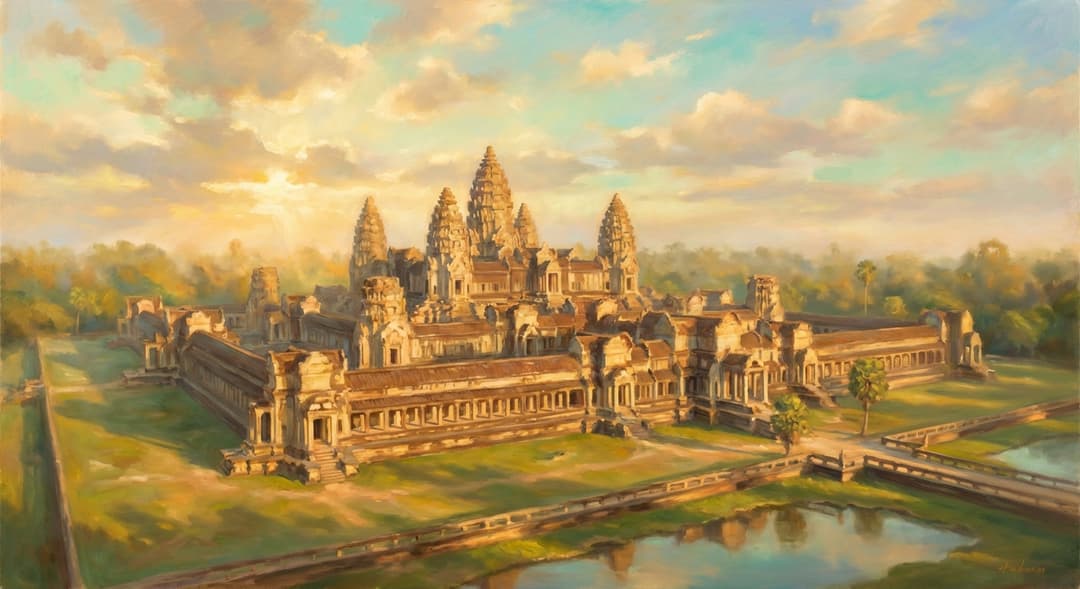
Visiting Angkor Wat is an unforgettable experience, offering a glimpse into the rich history and architectural grandeur of the Khmer civilization. The temple complex is open to visitors throughout the day, with sunrise being a particularly popular time to witness its majestic beauty. Be sure to dress respectfully, covering shoulders and knees, as a sign of reverence for this sacred site. Exploring Angkor Wat involves navigating its extensive galleries, courtyards, and towers, each adorned with intricate carvings and bas-reliefs. Allow ample time to wander through the complex, taking in the details of its architecture and absorbing the spiritual atmosphere. Consider hiring a local guide to gain deeper insights into the temple's history and significance. Getting to Angkor Wat is convenient from Siem Reap, with options including tuk-tuks, taxis, and bicycles. Plan your visit in advance, especially during peak tourist season, to avoid crowds and ensure a smooth experience. Whether you're a history enthusiast, architecture lover, or spiritual seeker, Angkor Wat promises a journey of discovery and wonder.
Highlights
- Witness the breathtaking sunrise over the iconic towers of Angkor Wat.
- Explore the intricate bas-reliefs depicting scenes from Hindu epics.
- Wander through the galleries and courtyards, marveling at the Khmer architecture.
Things to Know
- Dress respectfully, covering shoulders and knees.
- Allow ample time to explore the extensive complex.
- Hire a local guide for deeper insights into the temple's history.
Location
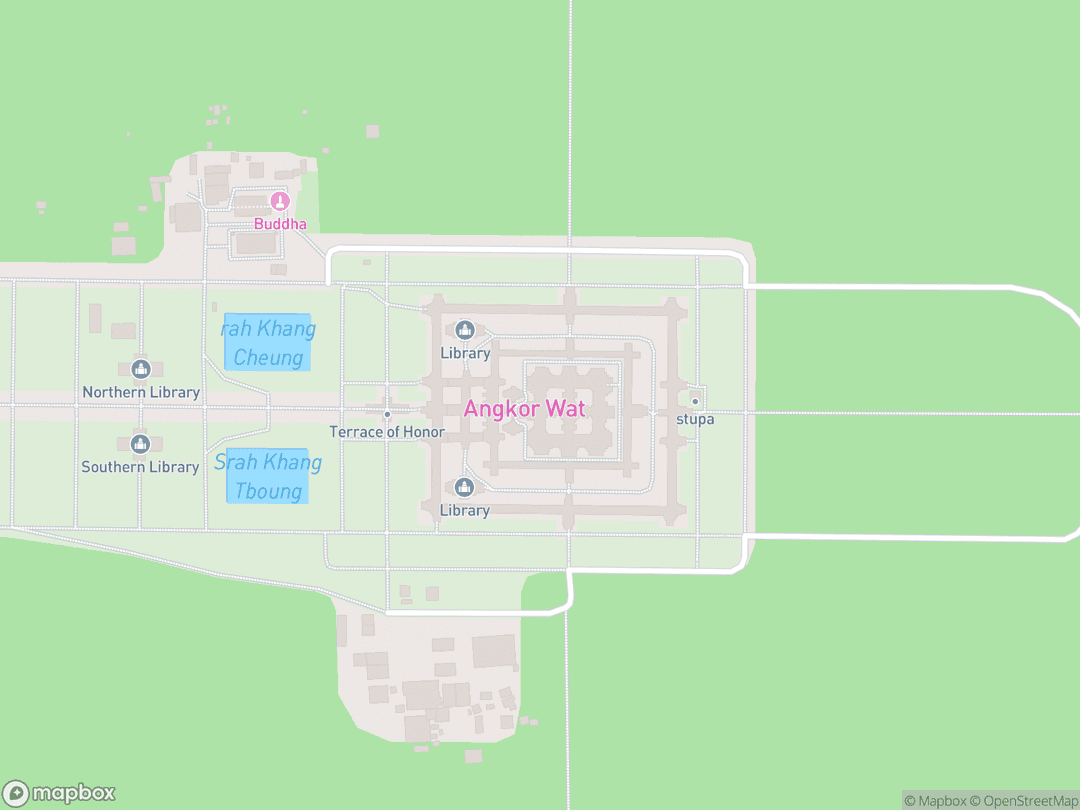
Street 51 Ring road, Kaksekam, Srangae, Siem Reap, Cambodia
Hours: Open daily, with sunrise viewing highly recommended.
Getting There: Easily accessible from Siem Reap by tuk-tuk, taxi, or bicycle.
Get DirectionsTips for Your Visit
Sunrise Viewing
Arrive early to secure a prime spot for witnessing the sunrise over Angkor Wat.
Dress Code
Remember to dress respectfully, covering shoulders and knees, as a sign of reverence.
About
Angkor Wat, meaning "City of Temples," is a sprawling temple complex located in Siem Reap, Cambodia. Originally constructed in the early 12th century during the reign of Khmer King Suryavarman II, it was initially dedicated to the Hindu god Vishnu. Over time, it transitioned into a Buddhist temple, reflecting the evolving religious landscape of the region. Today, it stands as a testament to the architectural prowess and spiritual depth of the Khmer civilization.
The temple's design is a harmonious blend of classical Khmer architecture, symbolizing Mount Meru, the sacred mountain in Hindu and Buddhist cosmology. Enclosed by a broad moat and outer wall, the complex features three progressively elevated galleries rising toward a central quincunx of towers. These iconic towers, shaped like lotus buds, dominate the skyline and contribute to the temple's majestic presence.
Angkor Wat's rich history is interwoven with tales of kings, conquests, and cultural transformations. From its initial construction to its rediscovery by French explorer Henri Mouhot in the 19th century, the temple has witnessed centuries of change. Despite periods of abandonment and conflict, it has endured as a symbol of Cambodian identity and a UNESCO World Heritage Site since 1992.
Today, Angkor Wat attracts millions of visitors annually, drawn by its architectural grandeur, intricate bas-reliefs, and spiritual ambiance. Restoration efforts continue to preserve this cultural treasure for future generations, ensuring that its legacy endures as a beacon of human creativity and devotion.
Gallery
Symbolic Elements
The temple's exterior features intricate carvings, each rich with spiritual meaning:

Mount Meru
The five central towers of Angkor Wat symbolize the five peaks of Mount Meru, the sacred mountain in Hindu and Buddhist cosmology. This mountain is considered the home of the gods and represents the center of the universe. The temple's design intentionally mirrors this cosmic geography, reinforcing its spiritual significance.
Cosmic Ocean
The broad moat surrounding Angkor Wat represents the cosmic ocean that surrounds Mount Meru. This ocean is a fundamental element in Hindu and Buddhist cosmology, symbolizing the vastness and mystery of the universe. The moat not only serves as a physical barrier but also as a symbolic boundary between the sacred space of the temple and the mundane world.
Lotus Bud Towers
The towers of Angkor Wat are shaped like lotus buds, a symbol of purity, beauty, and spiritual awakening in both Hinduism and Buddhism. The lotus emerges from muddy waters to bloom in pristine condition, representing the journey from ignorance to enlightenment. These towers signify the potential for spiritual growth and the blossoming of inner peace.
Devatas and Apsaras
Angkor Wat features over 1,796 unique devatas (female deities) and apsaras (celestial nymphs) adorning the temple walls. These celestial beings symbolize divine protection, grace, and spiritual significance. Their presence adds a layer of ethereal beauty and reinforces the temple's connection to the divine realm.
Bas-Reliefs
The bas-reliefs at Angkor Wat depict scenes from Hindu epics such as the Ramayana and Mahabharata, illustrating cosmic order and moral principles. These intricate carvings serve as visual narratives, conveying stories of gods, heroes, and moral lessons. They provide insights into the cultural and religious beliefs of the Khmer civilization.

Sandstone Construction
The primary construction material of Angkor Wat is sandstone, a durable and aesthetically pleasing stone that allowed for intricate carvings and detailed architectural designs. The use of sandstone reflects the Khmer civilization's mastery of engineering and their commitment to creating a lasting monument. Laterite was used for the core.

Westward Orientation
Unlike most Angkorian temples, Angkor Wat faces west, a unique feature that may be attributed to its dedication to Vishnu, who is associated with the west. This orientation also aligns with the setting sun, symbolizing death and the afterlife, suggesting the temple's role as a mausoleum for King Suryavarman II. The westward direction adds a layer of symbolic complexity to the temple's design.

Galleries
The three progressively elevated galleries rise toward a central quincunx of towers. The inner face of the outer wall is decorated with 700 meters of continuous bas-reliefs. These galleries provide a structured pathway through the temple, guiding visitors on a spiritual journey towards the central sanctuary. Each gallery contains intricate carvings and architectural details that contribute to the temple's overall grandeur.
Interesting Facts
Angkor Wat means 'City of Temples' in Khmer.
It is the largest religious monument in the world, covering 162.6 hectares (400 acres).
The construction of Angkor Wat took approximately 30 years and involved 300,000 laborers and 6,000 elephants.
Angkor Wat was originally dedicated to the Hindu god Vishnu before becoming a Buddhist temple.
The temple's design is based on Mount Meru, the home of the Hindu gods.
Angkor Wat contains more than 1,000 buildings.
The city used more stone than all the Egyptian pyramids combined.
Angkor Wat is the only ancient monument directly depicted on a national flag (Cambodia).
The temple complex was used as a location for a scene in Lara Croft: Tomb Raider.
Angkor Wat's main tower aligns with the morning sun of the spring equinox.
The Angkor area was designated as a UNESCO World Heritage Site in 1992.
Common Questions
What is Angkor Wat?
Angkor Wat is a massive stone temple complex built in the 12th century in what is now Cambodia. First dedicated to the Hindu god Vishnu, it later became a Buddhist temple. It is one of the largest religious structures ever constructed and is considered a masterpiece of Khmer architecture.
Where is Angkor Wat located?
Angkor Wat is located in Angkor, near Siem Reap, in northwestern Cambodia. It is situated about 5.5 kilometers (3.5 miles) north of Siem Reap.
When was Angkor Wat built?
Construction of Angkor Wat began in the early 12th century, around 1113 CE, during the reign of Khmer King Suryavarman II. It was completed around 1150 CE.
Why was Angkor Wat built?
Angkor Wat was originally built as a Hindu temple dedicated to Vishnu. King Suryavarman II intended it to be his state temple and eventual mausoleum. The temple was designed to represent Mount Meru, the sacred mountain in Hindu mythology.
How has Angkor Wat changed over time?
Originally dedicated to Vishnu, Angkor Wat gradually transformed into a Buddhist temple. Many Hindu sculptures were replaced with Buddhist art. In the late 13th century, it became predominantly associated with Theravada Buddhism. Despite periods of abandonment, it has remained a significant religious and cultural site.
What are some of the key architectural features of Angkor Wat?
Key features include the temple-mountain design symbolizing Mount Meru, a broad moat and outer wall, three progressively elevated galleries, five iconic towers shaped like lotus buds, and extensive bas-reliefs depicting scenes from Hindu epics.
Related Stories
Explore the rich history, traditions, and people connected to this sacred site.
Featured Stories
The Vision of Suryavarman II
Early 12th Century
King Suryavarman II, a powerful and ambitious ruler of the Khmer Empire, envisioned Angkor Wat as more than just a temple; he sought to create a monument that would embody his divine authority and immortalize his reign. Inspired by the Hindu concept of Mount Meru, the sacred mountain of the gods, he commissioned the construction of a temple that would mirror this cosmic ideal on Earth. The temple was to serve as his state temple and eventual mausoleum, a testament to his power and devotion.
The king's vision required immense resources and manpower, drawing from across the empire to gather the finest artisans, engineers, and laborers. For nearly three decades, they toiled tirelessly, shaping sandstone blocks and carving intricate details that would bring Suryavarman's dream to life. The construction of Angkor Wat became a symbol of the king's unwavering commitment to his people and his gods.
As Angkor Wat neared completion, Suryavarman II could behold the realization of his grand vision. The temple stood as a testament to his reign, a harmonious blend of earthly power and divine inspiration. Though he would not live to see its full glory, his legacy would forever be intertwined with the magnificent temple he had created.
Source: Historical records of the Khmer Empire and architectural analyses of Angkor Wat.
From Vishnu to Buddha
12th–13th Centuries
Originally dedicated to the Hindu god Vishnu, Angkor Wat underwent a gradual transformation as Buddhism gained prominence in the Khmer Empire. This transition reflected the evolving religious landscape of the region, as Khmer kings embraced new spiritual traditions while honoring the legacies of their predecessors. The shift from Hinduism to Buddhism at Angkor Wat was not a sudden conversion but a gradual integration of new beliefs and practices.
As Buddhism took root, many Hindu sculptures within Angkor Wat were replaced with Buddhist art, reflecting the changing religious identity of the temple. However, the temple's original Hindu elements were not entirely erased, but rather incorporated into a new syncretic blend of religious symbolism. This fusion of Hindu and Buddhist influences created a unique spiritual atmosphere within Angkor Wat, where visitors could encounter the teachings of both traditions.
The transformation of Angkor Wat from a Hindu to a Buddhist temple underscores the dynamic nature of religious belief and the ability of cultures to adapt and evolve over time. It stands as a testament to the Khmer civilization's openness to new ideas and their capacity to integrate diverse spiritual traditions into a harmonious whole.
Source: Religious studies and archaeological findings at Angkor Wat.
Rediscovery and Restoration
19th–20th Centuries
After centuries of neglect and abandonment, Angkor Wat was rediscovered by French explorer Henri Mouhot in the mid-19th century, sparking renewed interest in the temple and the Khmer civilization. Mouhot's vivid descriptions of Angkor Wat captivated the Western world, leading to increased exploration and scholarly attention. The rediscovery of Angkor Wat marked the beginning of a long and arduous process of restoration and preservation.
Under French colonial rule, efforts were undertaken to clear the jungle overgrowth and stabilize the temple's structure. These early restoration attempts laid the foundation for more comprehensive conservation efforts in the 20th century. However, the Cambodian Civil War and the Khmer Rouge regime disrupted restoration work, causing further damage to the temple.
Despite the challenges, dedicated teams of archaeologists, architects, and conservators have worked tirelessly to restore Angkor Wat to its former glory. Their efforts have not only preserved the temple's physical integrity but also helped to uncover its rich history and cultural significance. Today, Angkor Wat stands as a symbol of Cambodia's resilience and a testament to the power of human ingenuity and perseverance.
Source: Historical accounts of Angkor Wat's rediscovery and restoration efforts.
Timeline
Construction Begins
Angkor Wat is constructed during the reign of Khmer King Suryavarman II, initially as a Hindu temple dedicated to Vishnu.
MilestoneConstruction Completed
The main construction phase of Angkor Wat is completed, showcasing classical Khmer architecture.
MilestoneTransition to Buddhism
Angkor Wat gradually transforms into a Buddhist temple, with many Hindu sculptures replaced with Buddhist art.
EventAngkor Sacked by the Chams
Angkor is sacked by the Chams, leading to a period of instability.
EventTheravada Buddhism Dominance
Angkor Wat becomes predominantly associated with Theravada Buddhism.
EventAbandonment as Royal Center
Angkor is abandoned as a royal center, but Theravada Buddhist monks maintain Angkor Wat.
EventRediscovery by Portuguese Traders
Portuguese traders and missionaries discover the abandoned city, and the temple complex becomes known as Angkor Wat.
EventRediscovery by Henri Mouhot
Angkor Wat is rediscovered by French explorer Henri Mouhot, who popularizes it in the Western world.
EventFrench Restoration
The French, who ruled Cambodia, restore the site for tourism purposes.
RenovationCambodian Civil War
The Cambodian Civil War and the Khmer Rouge regime disrupt restoration efforts, and Angkor Wat sustains minimal damage, including bullet holes.
EventUNESCO World Heritage Site
Angkor Wat is designated a UNESCO World Heritage Site, recognizing its cultural significance.
MilestoneRemoval from 'In Danger' List
Angkor is removed from the list of World Heritage in Danger due to increased restoration efforts.
RenovationIncreased Tourism
Angkor Wat becomes a major tourist attraction, drawing millions of visitors annually.
EventRestoration Efforts
Restoration efforts continue to preserve Angkor Wat for future generations.
RenovationConservation and Preservation
Ongoing efforts to conserve and preserve Angkor Wat's architecture and cultural heritage.
RenovationArchitecture & Facilities
Classical Khmer architecture combining the temple-mountain and galleried temple designs, built between 1113 and 1150 CE during the reign of King Suryavarman II. The complex symbolizes Mount Meru through a quincunx of five lotus-bud towers — the central tower rising 65 meters — arranged within three progressively elevated concentric galleries. A 190-meter-wide moat with a 5-kilometer perimeter represents the cosmic ocean, while 700 meters of continuous bas-relief panels on the inner gallery walls depict scenes from the Ramayana, Mahabharata, and Hindu cosmology. Over 1,796 unique devatas and apsaras adorn the sandstone walls, and the entire structure is built from sandstone blocks with laterite core, oriented westward — unusual for Angkorian temples — possibly reflecting its dedication to Vishnu and its dual function as temple and mausoleum.
Religious Significance
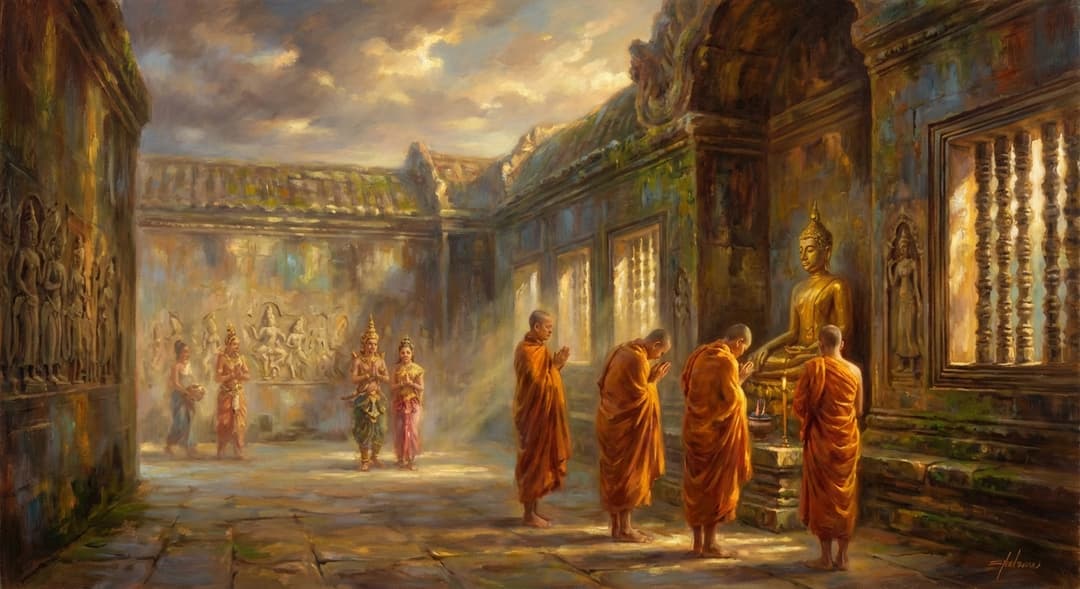
Angkor Wat holds profound spiritual significance within the Buddhist tradition as a sacred site of worship, meditation, and pilgrimage. Buddhist temples serve as physical embodiments of the Dharma — the teachings of the Buddha — and provide spaces where practitioners can cultivate wisdom, compassion, and mindfulness on the path toward enlightenment. The sacred architecture itself is designed to guide visitors through the stages of spiritual awakening, with every level, relief, and statue carrying deep symbolic meaning.
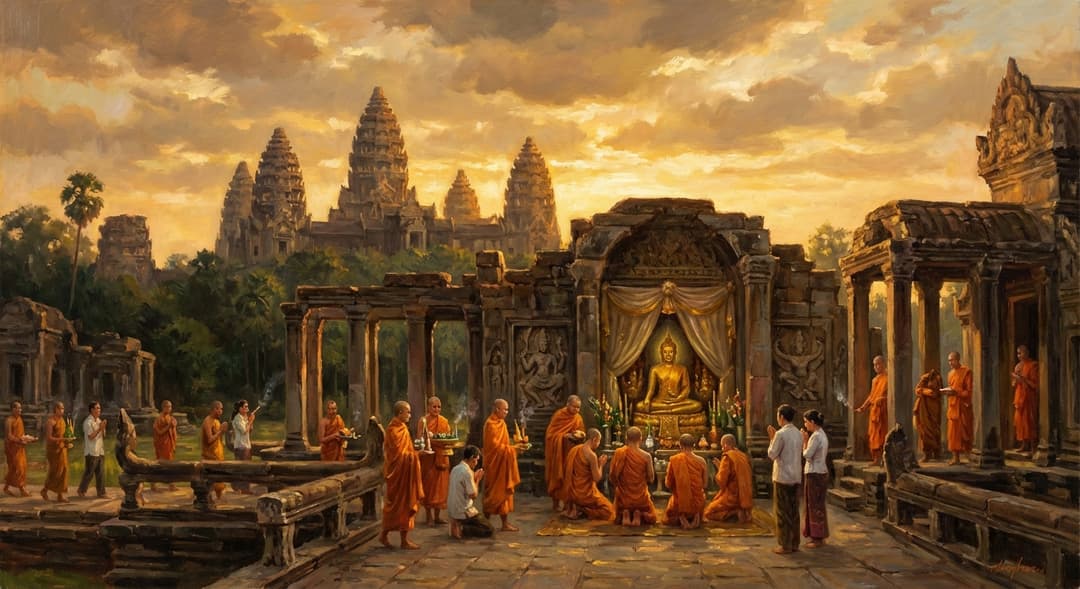
The temple serves as a living center of Buddhist practice, where devotees gather to honor the Buddha's teachings, perform rituals of devotion, and pursue spiritual liberation from the cycle of suffering (samsara). It functions both as a pilgrimage destination drawing believers from around the world and as a repository of Buddhist art, philosophy, and cultural heritage that has transmitted the Dharma across centuries.
Sacred Ordinances
Meditation
Practitioners engage in various forms of meditation at the temple, including mindfulness meditation (vipassana) and concentration meditation (samatha). The temple's serene environment and sacred architecture create an ideal setting for contemplative practice aimed at cultivating inner peace and insight into the nature of reality.
Chanting and Recitation
Devotees recite sutras and mantras as acts of devotion and spiritual cultivation. These chanted prayers, often performed in Pali or Sanskrit, are believed to purify the mind, generate merit, and create a resonant spiritual atmosphere that benefits all sentient beings.
Offerings and Veneration
Worshippers present offerings of flowers, incense, candles, and food before Buddha images and sacred relics. These offerings symbolize the impermanence of material things and express gratitude for the Buddha's teachings while cultivating generosity and non-attachment.
Circumambulation
Devotees walk clockwise around the temple or its sacred structures as an act of reverence and meditation. This practice, known as pradakshina, symbolizes the spiritual journey toward enlightenment and generates merit for the practitioner and all sentient beings.
The Path to Enlightenment
The temple's architecture embodies the Buddhist cosmological journey from the realm of desire through the realm of form to the realm of formlessness — the three spheres of existence described in Buddhist scripture. Pilgrims who ascend through the temple's levels are symbolically retracing the Buddha's own journey toward supreme enlightenment, moving from earthly attachment toward the ultimate liberation of nirvana.
Merit and Devotion
Visiting the temple and performing acts of devotion — offering prayers, making donations, and circumambulating sacred structures — are considered powerful means of generating spiritual merit (punya). In Buddhist belief, accumulated merit influences one's future rebirths and contributes to progress on the path toward enlightenment. The temple thus serves not merely as a historical monument but as a living spiritual instrument through which devotees actively shape their spiritual destiny.
Sources & Research
Every fact on Temples.org is backed by verified Sources & Research. Each piece of information is rated by source tier and confidence level.
View All Sources (7)
| Field | Source | Tier | Retrieved |
|---|---|---|---|
| Basic Facts and History | Britannica (opens in a new tab) | B | 2024-01-01 |
| Architectural Details | Smarthistory (opens in a new tab) | B | 2024-01-01 |
| UNESCO World Heritage Designation | UNESCO (opens in a new tab) | B | 2024-01-01 |
| Angkor Wat History and Facts | Asia King Travel (opens in a new tab) | D | 2024-01-01 |
| Angkor Wat Location | Google Maps (opens in a new tab) | B | 2024-01-01 |
| Angkor Wat History | World History Encyclopedia (opens in a new tab) | B | 2024-01-01 |
| Angkor Wat Details | Holidify (opens in a new tab) | D | 2024-01-01 |