Visitor Insights
Visiting Edmonton Alberta Temple
The Edmonton Alberta Temple grounds are open to the public for quiet contemplation and enjoyment. The temple interior is reserved for sacred ordinances for members of The Church of Jesus Christ of Latter-day Saints who hold a current temple recommend.
Highlights
- Enjoy the beautifully landscaped grounds, open to all visitors.
- Learn about the temple's unique architecture and symbolic motifs.
- Experience a peaceful atmosphere for personal reflection.
Things to Know
- The temple interior is not open for public tours after dedication.
- There is no public visitors' center or patron housing on site.
- Contact the temple directly for accessibility needs or specific inquiries.
Location
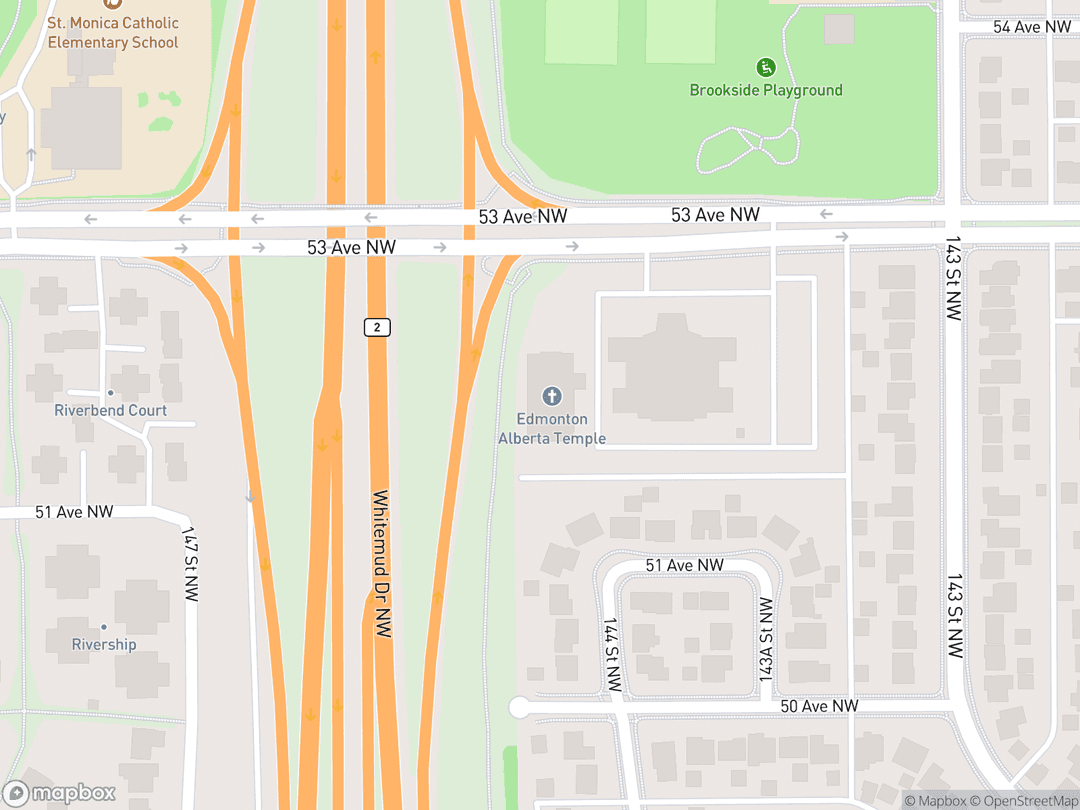
14335 53rd Avenue NW, Edmonton, Alberta T6H 5G6, Canada
Hours: Endowment sessions are generally held Tuesdays through Saturdays; check the official Church website for specific schedules.
Getting There: The temple is located at 14335 53rd Avenue NW, Edmonton, Alberta. It is accessible by car, with parking available on site.
Get DirectionsAbout
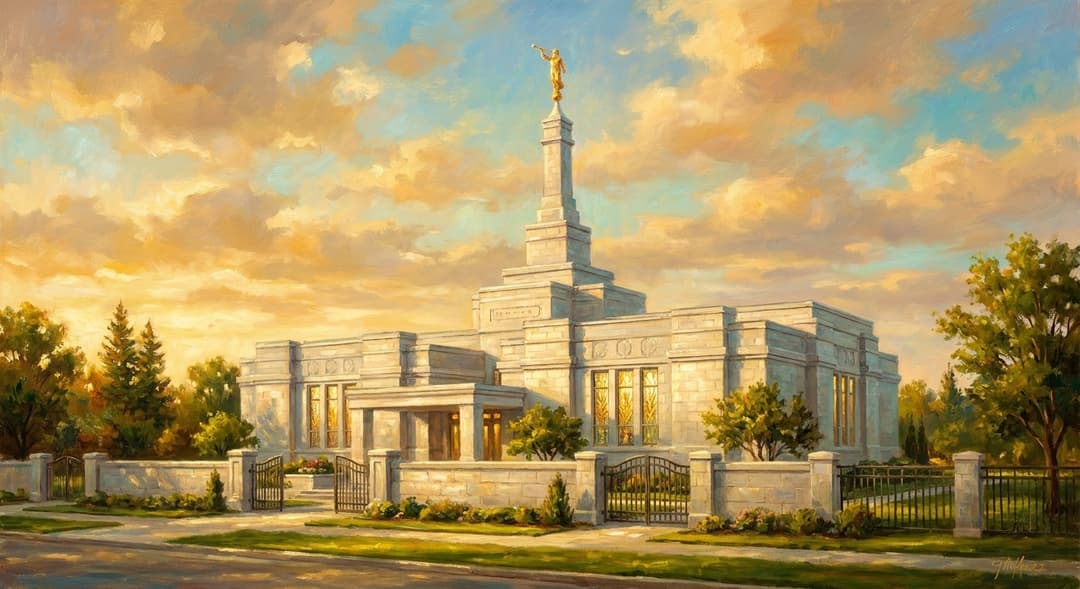
The Edmonton Alberta Temple stands as a beacon of faith in Canada's Alberta province, serving as the 67th operating temple of The Church of Jesus Christ of Latter-day Saints. Dedicated in December 1999 by President Gordon B. Hinckley, it was the second temple built in Alberta and the fifth in Canada, marking a significant expansion of temple access for Latter-day Saints in the region. Its construction was part of a broader initiative to bring sacred temple ordinances closer to members worldwide.
Designed in a classic modern style, the temple features a single spire topped with a statue of the angel Moroni, a symbol of the restored gospel. The exterior is clad in light gray granite, and its design thoughtfully incorporates local elements like wheat and wild rose motifs, reflecting Alberta's agricultural heritage and provincial identity. These details are visible in the stained-glass windows, railings, and interior furnishings.
The temple provides a sacred space where Latter-day Saints participate in ordinances and make covenants, deepening their commitment to Jesus Christ. It stands as a testament to the enduring faith of the local community, offering a place of peace and spiritual reflection amidst the bustling city of Edmonton.
Gallery
Symbolic Elements
The temple's exterior features intricate carvings, each rich with spiritual meaning:
Angel Moroni Statue
A gilded statue atop the spire, symbolizing the spreading of the restored gospel message to all the world.

Wheat Motifs
Designs featuring wheat are incorporated throughout the temple, honoring Alberta's rich agricultural heritage.

Wild Rose Motifs
Motifs of the wild rose, Alberta's provincial flower, connect the sacred space to its local culture and environment.

Light Gray Granite Exterior
The temple's exterior is clad with light gray granite, quarried in Quebec, Canada, providing a clean and modern aesthetic.

Single Spire Design
The temple features a classic modern architectural style characterized by clean lines and a prominent single spire.

Stained-Glass Windows
The stained-glass windows incorporate symbolic wheat and wild rose motifs, adding beauty and local significance to the interior.

Baptistry
A sacred room within the temple where baptisms for the dead are performed, symbolizing renewal and salvation.

Ordinance Rooms
Rooms where members participate in sacred ordinances, including the endowment, to make covenants with God.
Interesting Facts
The Edmonton Alberta Temple was the 67th operating temple of The Church of Jesus Christ of Latter-day Saints worldwide (Tier A).
It was the second temple built in Alberta, following the Cardston Alberta Temple (dedicated in 1923), and the fifth temple built in Canada (Tier A).
Alberta became the first Canadian province to have more than one Latter-day Saint temple with the dedication of the Edmonton temple (Tier A).
The temple's announcement was made shortly after Church President Gordon B. Hinckley's nine-day ministry across Canada (Tier A).
During the public open house in December 1999, an estimated 27,210 people toured the temple over four days (Tier A).
Despite cold temperatures during its dedication in December, vinyl tents and enclosed walkways were used to protect attendees (Tier B).
The temple's presence has influenced some members, particularly retirees, to remain in the Edmonton area for temple worship (Tier C).
The temple's location allows its spire and the angel Moroni statue to be seen by motorists traveling along the Whitemud Freeway (Tier A).
The design of the temple, with its smaller scale, was part of President Gordon B. Hinckley's initiative to construct 100 temples by the year 2000 (Tier A).
Before the Edmonton temple was announced, members in the area had to drive approximately five to six hours south to attend the closest temple in Cardston, Alberta (Tier C).
Common Questions
What is the purpose of the Edmonton Alberta Temple?
The temple provides a sacred space for Latter-day Saints to participate in ordinances and make covenants with God.
Can non-members enter the temple?
After its dedication, only members of The Church of Jesus Christ of Latter-day Saints with a current temple recommend can enter the temple interior.
What is the significance of the Angel Moroni statue?
The Angel Moroni statue symbolizes the restoration of the gospel and its message being spread to all the world.
Are there any visitor facilities at the temple?
The Edmonton Alberta Temple does not have a public visitors' center, but its grounds are open for public enjoyment.
What architectural style does the temple feature?
The temple features a classic modern architectural style, characterized by clean lines and a single-spire design.
Featured Stories
A Vision for Smaller Temples
1998
The announcement of the Edmonton Alberta Temple in 1998 was a direct result of President Gordon B. Hinckley's vision to construct smaller temples in more communities. This initiative aimed to make temple blessings more accessible to Latter-day Saints worldwide, reducing travel burdens and fostering greater participation in sacred ordinances.
Community Embraces the Temple
December 1999
During its public open house, the Edmonton Alberta Temple welcomed thousands of visitors from various faiths and backgrounds. This period allowed the community to explore the sacred interior, fostering understanding and goodwill before the temple's dedication for exclusive Latter-day Saint worship.
Dedication in Winter's Embrace
December 11-12, 1999
Despite the cold December weather, the dedication of the Edmonton Alberta Temple was a joyous occasion, with members attending multiple sessions. Enclosed walkways and vinyl tents were utilized to ensure comfort, a testament to the community's eagerness to participate in this significant spiritual event.
Timeline
Early Latter-day Saint Presence
Latter-day Saint university students and government leaders began residing in Edmonton.
EventFirst Recorded Church Meeting
The first recorded Church meeting in Edmonton took place with 15 members present.
EventN. Eldon Tanner's Leadership
N. Eldon Tanner, a future counselor in the First Presidency, moved to northern Alberta and served in Church leadership.
EventFirst Church Building Dedicated
The first Church building in Edmonton was dedicated on Whyte Avenue.
EventFirst Edmonton Stake Organized
The first stake (a group of congregations) in Edmonton was organized, signifying growth in the area.
MilestoneTemple Announcement
President Gordon B. Hinckley announced plans to construct the Edmonton Alberta Temple as part of a global initiative.
component.timeline.announcementGroundbreaking Ceremony
Elder Yoshihiko Kikuchi of the Seventy presided over the groundbreaking, attended by local dignitaries.
component.timeline.groundbreakingPublic Open House Begins
A public open house commenced, allowing thousands of visitors to tour the temple prior to its dedication.
EventTemple Dedicated
President Gordon B. Hinckley dedicated the Edmonton Alberta Temple in seven sessions.
DedicationTemporary Closure Due to Pandemic
The temple, along with others worldwide, temporarily closed in response to the COVID-19 pandemic.
EventLethbridge Temple Announced
A third temple in Alberta was announced to be located in Lethbridge, further expanding temple access.
component.timeline.announcementHistory by Decade
1920s–1950s — Early Church Growth
Latter-day Saint university students and government leaders began residing in Edmonton as early as 1920, establishing an early presence for the Church. The first recorded Church meeting in Edmonton took place in 1933, with 15 members present, marking the formal beginning of organized worship in the city. In 1951, the first Church building in Edmonton was dedicated on Whyte Avenue, providing a permanent gathering place for the growing congregation.
1960s — Stake Organization
The Church continued to grow steadily in Edmonton, leading to a significant organizational milestone in the region. On November 15, 1960, the first stake (a group of congregations) in Edmonton was organized, signifying the increasing strength and self-sufficiency of the local Latter-day Saint community.
1990s — Temple Announcement and Dedication
In 1998, Church President Gordon B. Hinckley announced plans for the Edmonton Alberta Temple, fulfilling a long-held desire for a temple closer to local members. Following a groundbreaking ceremony in February 1999, the temple was completed and dedicated by President Hinckley on December 11-12, 1999. This event marked a spiritual highlight for thousands of Latter-day Saints in central Alberta.
2020s — Continued Expansion
Like all other temples, the Edmonton Alberta Temple temporarily closed in 2020 due to the COVID-19 pandemic, demonstrating the Church's commitment to public health. Looking ahead, a third temple in Alberta was announced in April 2023 to be located in Lethbridge, further expanding temple access and reflecting the continued growth of the Church in the province.
Architecture & Facilities
The Edmonton Alberta Temple features a classic modern architectural style, characterized by its clean lines, elegant simplicity, and a single-spire design. This contemporary approach reflects a blend of functional design with spiritual symbolism, creating a dignified and inviting sacred space. The design harmonizes with its suburban setting while standing out as a distinctive landmark.
Building Materials
Exterior Cladding
Light gray granite, quarried in Quebec, Canada, provides a durable and aesthetically pleasing finish to the temple's exterior.
Windows
Stained-glass windows incorporate symbolic motifs of wheat and the wild rose, adding intricate detail and local cultural significance.
Spire
The single spire is constructed to support the Angel Moroni statue, serving as a prominent visual element of the temple's silhouette.
Interior Finishes
High-quality wood, stone, and fabrics are used throughout the interior, creating an atmosphere of reverence and beauty.
Interior Features
Baptistry
A sacred space featuring a baptismal font resting on twelve oxen, used for proxy baptisms for the deceased.
Ordinance Rooms
Rooms designed for members to receive instruction and make sacred covenants as part of the endowment ceremony.
Sealing Rooms
Rooms where eternal marriages and family sealings are performed, uniting families for time and all eternity.
Celestial Room
A serene and beautifully appointed room symbolizing a return to God's presence and eternal peace.
Temple Grounds
The one-acre grounds are meticulously landscaped with trees, shrubbery, and flowers, providing a peaceful and contemplative environment for visitors.
Additional Facilities
A distribution center, where temple garments and clothing can be purchased, is located on site or nearby to serve temple patrons.
Religious Significance
As a temple of The Church of Jesus Christ of Latter-day Saints, the Edmonton Alberta Temple is a sacred edifice dedicated to the worship of God and the performance of eternal ordinances. It serves as a house of the Lord, distinct from regular chapels, where members engage in higher covenants and receive divine instruction.
The core spiritual purpose of the temple is to provide a place where Latter-day Saints can participate in sacred ordinances and make covenants that bind them to God and to their families for eternity. These ordinances are central to the Latter-day Saint understanding of salvation and exaltation within the broader Christian theological framework.
Sacred Ordinances
Baptism for the Dead
A proxy ordinance performed on behalf of deceased ancestors who did not have the opportunity to be baptized during their mortal lives.
Endowment
A series of instructions and covenants that provide a deeper understanding of God's plan of salvation and empower individuals to live righteously.
Sealing
An ordinance that unites husbands and wives, and children to parents, for time and all eternity, establishing eternal family units.
Covenants and Blessings
Temple ordinances involve making sacred promises with God, which, when kept, bring profound spiritual blessings, guidance, and strength in daily life. These covenants are seen as essential steps on the path back to God's presence.
Eternal Families
A foundational doctrine taught in the temple is the eternal nature of the family. Through sealing ordinances, families can be united beyond the veil of death, providing hope and comfort to members.
Personal Revelation
The temple is a place of peace and revelation, where members can draw closer to God, receive answers to prayers, and gain personal spiritual insights through quiet contemplation and worship.
Similar Temples
Sources & Research
Every fact on Temples.org is backed by verified Sources & Research. Each piece of information is rated by source tier and confidence level.
View All Sources (8)
| Field | Source | Tier | Retrieved |
|---|---|---|---|
| About & Historical Background | The Church of Jesus Christ of Latter-day Saints (opens in a new tab) | A | 2024-07-30 |
| Dedication & Basic Facts | Church News (opens in a new tab) | B | 2024-07-30 |
| Architectural Description & Symbolic Elements | ChurchofJesusChristTemples.org (opens in a new tab) | C | 2024-07-30 |
| Historical Timeline & Community Impact | Photogent (opens in a new tab) | C | 2024-07-30 |
| General Information & Statistics | Bliptext (opens in a new tab) | B | 2024-07-30 |
| Interesting Facts & Local Context | Fandom (opens in a new tab) | C | 2024-07-30 |
| Accessibility Information | Gochet (opens in a new tab) | D | 2024-07-30 |
| Architectural Style & Materials | Brigham Young University (opens in a new tab) | B | 2024-07-30 |