Visitor Insights
Visiting Dai Temple
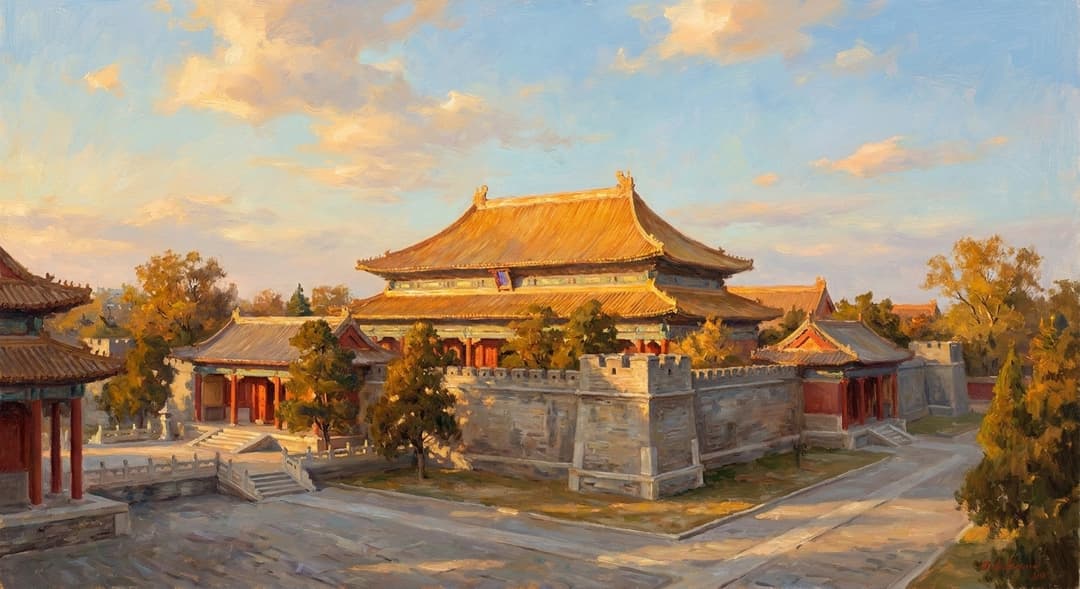
Dai Temple welcomes pilgrims and cultural travelers into a majestic complex shaded by millennia-old cypresses. The expansive courtyards provide a serene architectural preamble before the ascent of Mount Tai.
Highlights
- Tiankuang Hall, one of the three grand ancient palace halls of China.
- Vast Song dynasty fresco depicting the royal inspection tour of Dongyue Dadi.
- Five living cypresses planted by Han Emperor Wu in 110 BCE.
- Forest of stone steles containing calligraphy spanning multiple dynasties.
Things to Know
- Flash photography is strictly banned inside Tiankuang Hall to protect delicate mineral murals.
- Plan at least two hours to walk the central ceremonial axis and side gardens.
- Temple grounds open early, offering the quietest experience before midday tour crowds.
Location
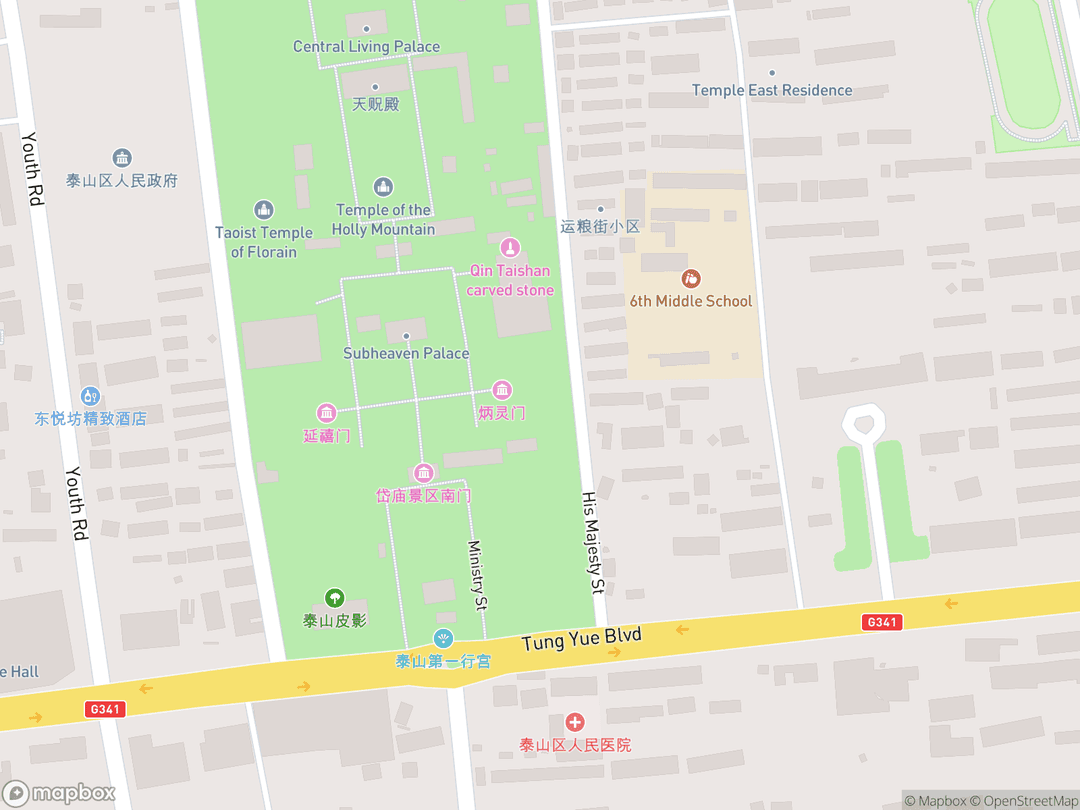
No. 191 Dongyue Street, Taishan District, Tai'an, Shandong Province, China
Hours: 07:30 - 18:00 (April to October); 08:00 - 17:30 (November to March)
Getting There: Take city bus routes 3, 4, 33, or 39 from Tai'an Railway Station directly to Daimiao Station.
Get DirectionsTips for Your Visit
Combined Ticketing
Purchase entry at the southern Zhengyang Gate or bundle it with Mount Tai hiking passes.
Preservation Respect
Avoid touching ancient carved stone steles and delicate tree bark.
Temple Etiquette
Step aside quietly when Taoist monks or local pilgrims present incense.
About
Dai Temple stands as the ancient terrestrial seat of Dongyue Dadi, the Great Emperor of Mount Tai. Located at the southern foot of Mount Tai, the sanctuary historically served as the mandatory staging ground where Chinese emperors performed preparatory purification and sacrifice before ascending the sacred peak.
Established formally during the Western Han Dynasty under Emperor Wu, the complex evolved over two millennia into a vast imperial citadel spanning ninety-six thousand square meters. Its central axis exemplifies the classical palatial plan reserved for supreme cosmic and dynastic deities.
Within Taoist theology, Mount Tai governs the East, the Wood phase of cosmic transformation, and the balance of life, mortal lifespan, and moral retribution. Dai Temple embodies this celestial court on earth, bridging primal mountain veneration with organized Taoist ritual liturgy.
Gallery
Symbolic Elements
The temple's exterior features intricate carvings, each rich with spiritual meaning:

Double-Eaved Yellow Glazed Roof
Yellow tiles and the double-eaved hip structure represent supreme imperial sovereignty.

Inspection Tour Mural
This Song fresco illustrates the deity's vigilant cosmic oversight of earthly lifespans.

Han Dynasty Cypresses
Ancient evergreen trees planted in 110 BCE embody cosmic longevity and the Wood phase.

Cypress of Loyalty
This historic tree serves as an anchor for traditional folk divination and sincerity rites.
Li Si Qin Stele
Small-seal script calligraphy represents the earliest unified imperial submission to Heaven.
Ming Bronze Pavilion
Cast bronze metallurgy symbolizes incorruptible celestial virtue and enduring alchemy.

Cast Iron Pagoda
Surviving iron tiers reflect the Taoist tradition of anchoring terrestrial qi against instability.
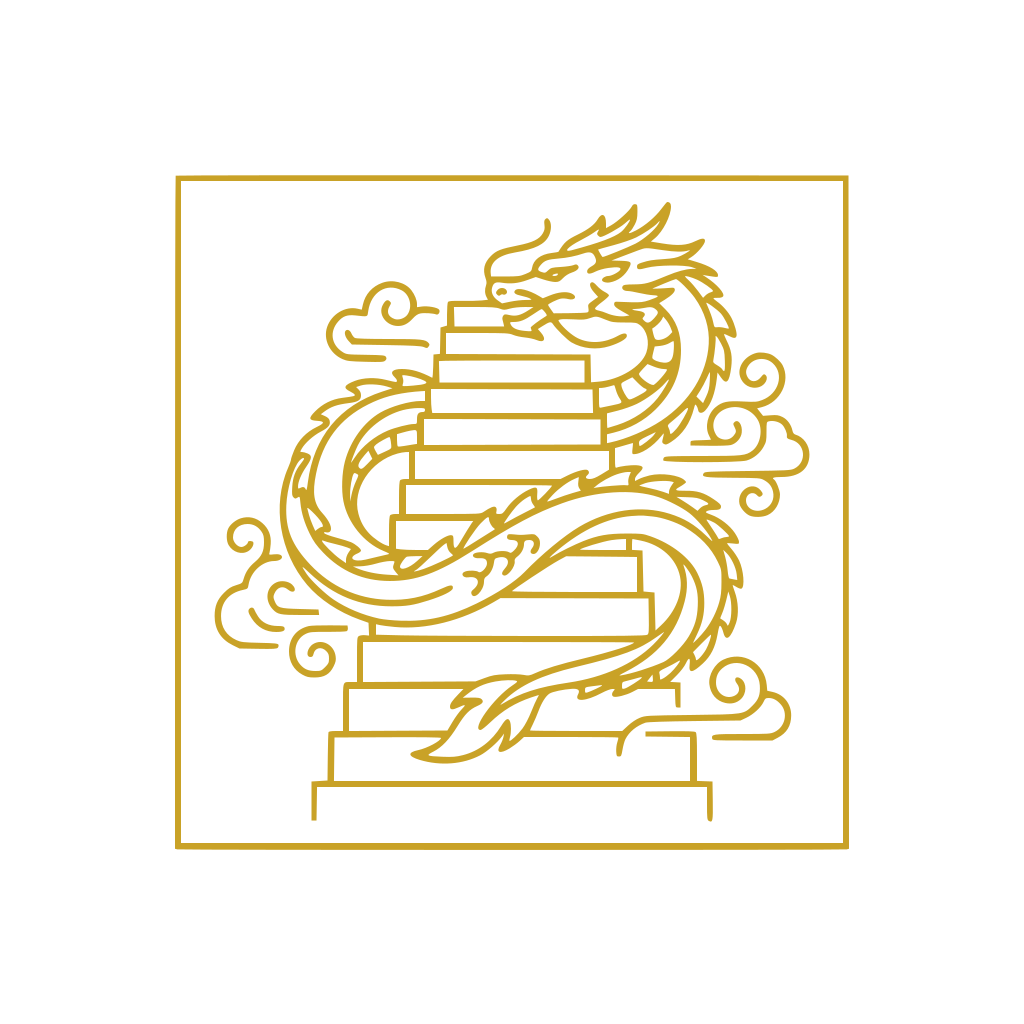
Dragon Spirit Ramp
Carved central staircase relief depicts celestial dragons ascending through sacred mist.
Interesting Facts
Tiankuang Hall is ranked among the Three Great Ancient Palace Halls of China. (Tier B)
Five twisted cypresses in the eastern court were planted in 110 BCE by Emperor Wu of Han. (Tier A)
The temple preserves surviving fragments of the 219 BCE Qin dynasty small-seal stele of Li Si. (Tier B)
Over 470 stone tablets and inscriptions form an outdoor museum of calligraphy across dynasties. (Tier B)
The 1615 Ming Bronze Pavilion was originally moved from the stormy summit of Mount Tai for safety. (Tier B)
The rear iron pagoda originally soared thirteen stories before surviving wartime damage in the twentieth century. (Tier B)
Granite curtain walls and corner watchtowers gave the temple the defensive footprint of a fortified citadel. (Tier B)
Pilgrims engage in a folk ritual circling the Cypress of Loyalty blindfolded to divine fortune. (Tier C)
Imperial code required ancient emperors to perform purification rites here before ascending the mountain. (Tier A)
Common Questions
Why is Dai Temple designed like an imperial palace?
Imperial protocol accorded Dongyue Dadi royal status equal to the earthly Son of Heaven.
What is the historical significance of the Feng Shan rites?
Emperors conducted these rituals to report dynastic peace to Heaven and Earth.
Are the ancient cypresses in the courtyard genuine?
Historical records verify that five cypresses date back to Emperor Wu of Han in 110 BCE.
Can visitors see the Song Dynasty fresco today?
Visitors can view the continuous 62-meter mural along the interior walls of Tiankuang Hall.
Featured Stories
Emperor Wu's Living Legacy
110 BCE
In the spring of 110 BCE, Emperor Wu of Han revived the solemn Feng Shan ceremonies at the base of Mount Tai. Commemorating the renewal of the imperial mandate, the emperor personally planted five young cypress trees in the eastern court. Over two thousand years later, their gnarled trunks remain living witnesses to the continuity of sacred veneration.
Source: Mount Tai Historical Records
The Song Imperial Vision
1009
Following imperial omens, Song Emperor Zhenzong undertook the last full dynastic Feng Shan pilgrimage to Mount Tai. He commissioned Tiankuang Hall as an imperial palace for Dongyue Dadi, employing premier court painters to execute a panoramic mural. The dynamic 62-meter fresco still preserves the vivid colors and divine retinue of that imperial offering.
Source: Song Dynasty Cultural Annals
Preserving the Bronze Pavilion
1615
Cast in 1615, an exquisite bronze pavilion was initially assembled near Mount Tai's cloud-swept summit. Relentless lightning storms and severe mountain erosion threatened its preservation over subsequent centuries. Custodians painstakingly transported the multi-ton treasure down into Dai Temple's gardens to ensure its survival for future generations.
Source: Shandong Provincial Cultural Relics Bureau
Timeline
Han Imperial Consecration
Emperor Wu of Han conducts Feng Shan rites and plants five cypresses in the courtyard.
MilestoneTang Dynasty Expansion
Emperor Gaozong and Empress Wu Zetian conduct sacrificial rituals and enlarge the shrine.
EventTang Stele Dedication
Emperor Xuanzong offers imperial sacrifices and erects massive stone commemorative markers.
MilestoneCompletion of Tiankuang Hall
Emperor Zhenzong of Song completes the grand palace hall and commissions its historic fresco.
DedicationJin Dynasty Ramparts
Defensive rammed-earth perimeter walls are erected around the expanding temple citadel.
RenovationQuanzhen Taoist Custody
Quanzhen Taoist masters assume formal monastic stewardship over the imperial sanctuary.
MilestoneMing Granite Fortification
Perimeter curtain walls are encased in dressed gray granite complete with parapets.
RenovationIron Pagoda Casting
An octagonal thirteen-story cast-iron pagoda is cast and erected on the temple grounds.
MilestoneBronze Pavilion Casting
Ming imperial benefactors cast a solid bronze pavilion later preserved in the rear garden.
MilestoneDaimiao Archway Erection
The monumental stone archway is constructed at the southern ceremonial entrance.
RenovationZhengyang Gate Reconstruction
Southern Zhengyang Gate and Wufeng Tower are meticulously rebuilt in Song architectural style.
RenovationUNESCO World Heritage Inscription
Dai Temple is formally inscribed as a primary cultural component of Mount Tai.
MilestoneHistory by Decade
110s BCE — Han Dynasty Foundations
Mount Tai commands the Eastern direction, nurturing the dawn of all living things under Heaven.
Emperor Wu of Han formally consecrated the ancestral shrine at the foot of Mount Tai in 110 BCE. The emperor initiated comprehensive state sacrificial ceremonies and personally planted commemorative evergreen cypresses. This established the complex as the obligatory ritual gateway for all imperial mountain pilgrimages.
660s–720s — Tang Dynasty Splendor
Tang rulers transformed the shrine into a formal palace-scale administrative sanctuary. Emperors Gaozong and Xuanzong personally led grand ritual processions to renew their dynastic mandates. Expansive stele galleries and ceremonial gates were added to honor the mountain divinity.
1000s–1010s — Northern Song Reconstruction
Emperor Zhenzong ordered the construction of Tiankuang Hall in 1009 to honor Dongyue Dadi. Master court builders implemented double-eaved imperial roofs and complex dougong timber joinery. Muralists completed the iconic wall painting depicting the deity's celestial inspection tour.
1510s–1530s — Ming Fortifications
Prompted by regional unrest, Ming military engineers encased the temple perimeter in massive granite masonry. Battlements, corner watchtowers, and parapets turned the sacred complex into a fortified urban fortress. Artisans also cast the octagonal iron pagoda within the temple grounds.
1670s–1770s — Qing Imperial Patronage
Emperors Kangxi and Qianlong showered Dai Temple with imperial plaques, inscriptions, and personal visits. The ornate Daimiao stone archway was erected at the southern perimeter in 1672. Emperor Qianlong visited the sanctuary eleven times, composing numerous commemorative poetic tablets.
1980s–Present — Heritage and Restoration
The southern Zhengyang Gate and Wufeng Tower underwent authentic reconstruction according to Song architectural texts in 1985. In 1987, the complex earned international recognition as part of Mount Tai's UNESCO World Heritage inscription. Ongoing conservation protects its ancient murals, wooden architecture, and botanical treasures.
Architecture & Facilities
The architecture of Dai Temple embodies Northern Song imperial palace design combined with Ming defensive fortifications, utilizing the strict Qian Chao Hou Qin layout with nine-by-five bay symmetry and double-eaved hip roofs clad in imperial yellow glazed tiles.
Building Materials
Imperial Yellow Glazed Tiles
High-fired ceramic roof tiles produce the radiant yellow finish reserved for imperial status.
Granite Curtain Walls
Hewn gray granite blocks encase the five-meter-tall defensive perimeter battlements.
Nanmu and Pine Columns
Thick lacquered timber pillars bear the structural loads of the sweeping tiled roofs.
White Limestone Balustrades
Finely carved limestone railings and drainage spouts border the elevated hall terrace.
Interior Features
Tiankuang Hall Inner Chamber
The primary throne chamber houses the enthroned golden icon of Dongyue Dadi.
East Inspection Fresco Wall
Wall paintings depict the deity departing on his celestial tour amid divine warriors.
West Inspection Fresco Wall
Mural panels capture the glorious return of the heavenly retinue through misty peaks.
Peitian Gate Pavilion
The transitional ceremonial hall preserves imperial stone markers recording historic renovations.
Temple Grounds
A 96,000-square-meter complex organized along a central axis featuring ancient cypress courtyards, stele galleries, and tranquil rear gardens.
Additional Facilities
Yaocan Pavilion ceremonial forecourt, Stele Forest exhibition gallery, Bonsai Garden, and cultural preservation offices.
Religious Significance
Mount Tai occupies the supreme Eastern position within Taoist cosmology, symbolizing dawn, renewal, and the source of life.
Dai Temple serves as the earthly palatial court of Dongyue Dadi, where mortals and sovereigns honor divine moral order.
Sacred Ordinances
Feng Shan State Sacrifices
Imperial rites reporting dynastic achievements to Heaven on the summit and Earth at the base.
Dongyue Incense Offering
Devotional prayers invoking divine protection, health, and ethical balance in human life.
Tree Divination Rites
Traditional circumambulation seeking moral alignment and personal blessings of good fortune.
Cosmic Magistrate of Life and Death
Dongyue Dadi oversees mortal lifespans and the ethical registers determining destiny in the afterlife.
The Eastern Peak and Yang Renewal
Mount Tai is cosmologically linked with the Wood phase, governing Spring, dawn, and biological rebirth.
Sources & Research
Every fact on Temples.org is backed by verified Sources & Research. Each piece of information is rated by source tier and confidence level.
View All Sources (8)
| Field | Source | Tier | Retrieved |
|---|---|---|---|
| About & Historical Background | Tai'an Municipal People's Government (opens in a new tab) | A | 2026-03-01 |
| Temple Layout & Inscriptions | Travel China Guide Cultural Heritage Department (opens in a new tab) | D | 2026-03-01 |
| Architecture & Fresco Preservation | Visit Our China Heritage Guide (opens in a new tab) | B | 2026-03-01 |
| Visitor Protocols & Facilities | Easy Tour China Research Staff (opens in a new tab) | B | 2026-03-01 |
| Historical Timeline & Ancient Trees | China Tour Information Portal (opens in a new tab) | B | 2026-03-01 |
| Tiankuang Hall Analysis | Frommer's Cultural Guides (opens in a new tab) | B | 2026-03-01 |
| Mount Tai Pilgrimage Route | Mount Tai Travel Guide Editorial (opens in a new tab) | B | 2026-03-01 |
| Site Coordinates & Logistics | Trip.com Travel Database (opens in a new tab) | D | 2026-03-01 |