Visitor Insights
Visiting Famen Temple
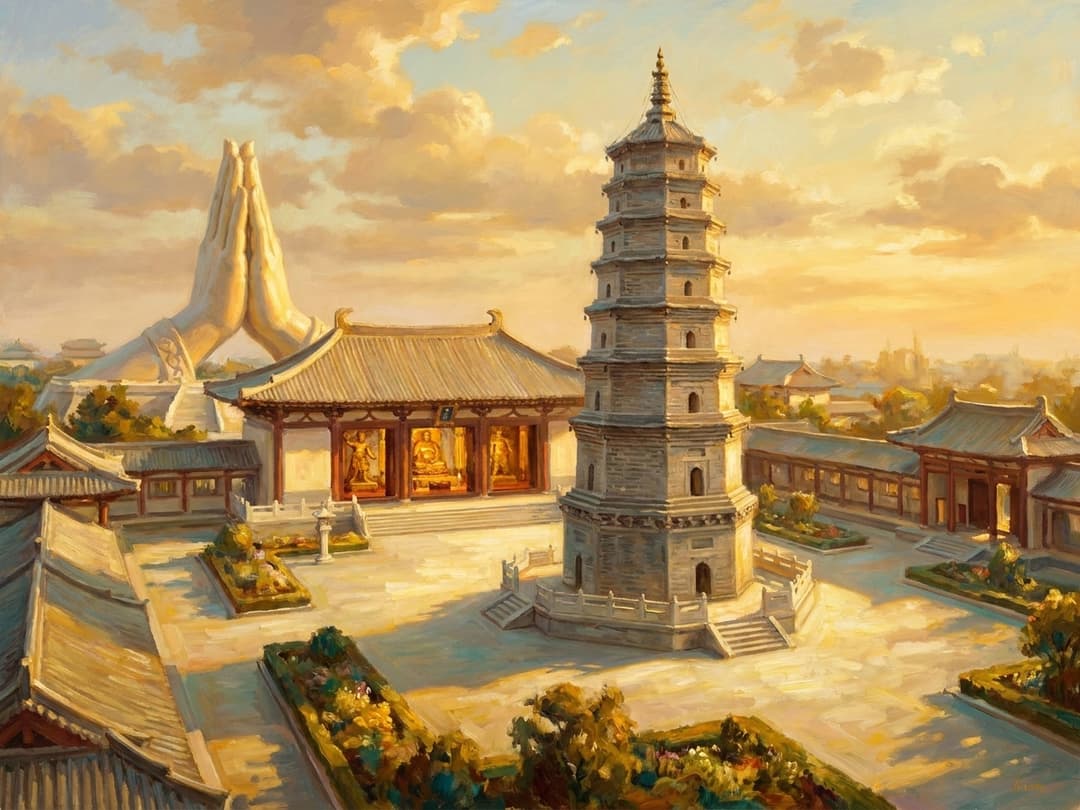
The temple complex comprises two distinct zones: the historic monastery grounds containing the Ming-style pagoda and subterranean crypt, and the expansive modern cultural park featuring the Namaste Dagoba. Visitors should plan for extensive walking across wide ceremonial plazas. The authentic finger bone relic is elevated for public veneration exclusively on lunar holidays, weekends, and national celebrations.
Highlights
- Veneration of the True Buddha Finger Bone Relic within the Namaste Dagoba
- Original Tang Dynasty Underground Palace crypt beneath the True Relic Pagoda
- Famen Temple Museum housing the Tang imperial gold reliquaries and secret-color porcelain
- Grand Anjali Mudra architectural form of the 148-meter Namaste Dagoba
Things to Know
- Electric sightseeing trams are strongly recommended between the modern and historic gates
- Conservative dress covering shoulders and knees is mandatory inside active monastic halls
- Photography is strictly prohibited inside the subterranean crypt and relic sanctum
- Significant walking distances require comfortable footwear and weather protection
Location
Famen Town, Fufeng County, Baoji City, Shaanxi Province, China
Hours: 08:30 – 17:30 (March to November); 09:00 – 17:00 (December to February)
Getting There: Direct tourist express buses depart daily from Xi'an West Bus Station and Big Wild Goose Pagoda; high-speed rail connects Xi'an North to Qishan Station followed by local transit.
Get DirectionsTips for Your Visit
Time Your Relic Viewing
Confirm lunar calendar dates beforehand, as the authentic finger relic is only elevated on the 1st and 15th of lunar months, weekends, and legal holidays.
Utilize Internal Transit
The ceremonial avenue stretching between the Namaste Dagoba and the historic core is over 1.5 kilometers long, making internal shuttle carts essential.
Prioritize the Museum
Allocate at least two hours for the on-site museum to study the imperial Tang gold caskets and Silk Road glassware.
About
Famen Temple stands as one of the preeminent sanctuaries of Mahāyāna Buddhism within the global Dharmic spiritual heritage. Located in Shaanxi Province along the historic Silk Road corridor, the monastery traces its traditional inception to the Eastern Han Dynasty when it was established as King Ashoka Temple.
Within Dharmic cosmology, the physical remains of enlightened beings serve as consecrated bridges between mundane transience and ultimate liberation. Famen Temple enshrines the revered True-Body Finger Bone Sarira of Sakyamuni Buddha, an object of intense devotion that linked imperial Chinese statecraft with Esoteric Vajrayana mandala ritualism.
During the Tang Dynasty, successive emperors escorted the relic to the imperial capitals of Chang'an and Luoyang to ensure dynastic legitimacy and cosmological harmony. In 874 CE, the underground palace was sealed alongside thousands of imperial offerings, creating a preserved time capsule forgotten until its sensational archaeological rediscovery in 1987.
Today, the complex bridges ancient heritage and modern monumental architecture, pairing the reconstructed Ming brick pagoda with the towering 148-meter Namaste Dagoba. The monastery remains a living center of monastic practice and international Buddhist pilgrimage.
Gallery
Symbolic Elements
The temple's exterior features intricate carvings, each rich with spiritual meaning:

Buddha's True Finger Bone
Calcified middle phalanx embodying the eternal Dharmakaya truth body of Sakyamuni Buddha.

Shadow Relics
Protective jade and bone replicas representing the Buddhist doctrine of skillful means.
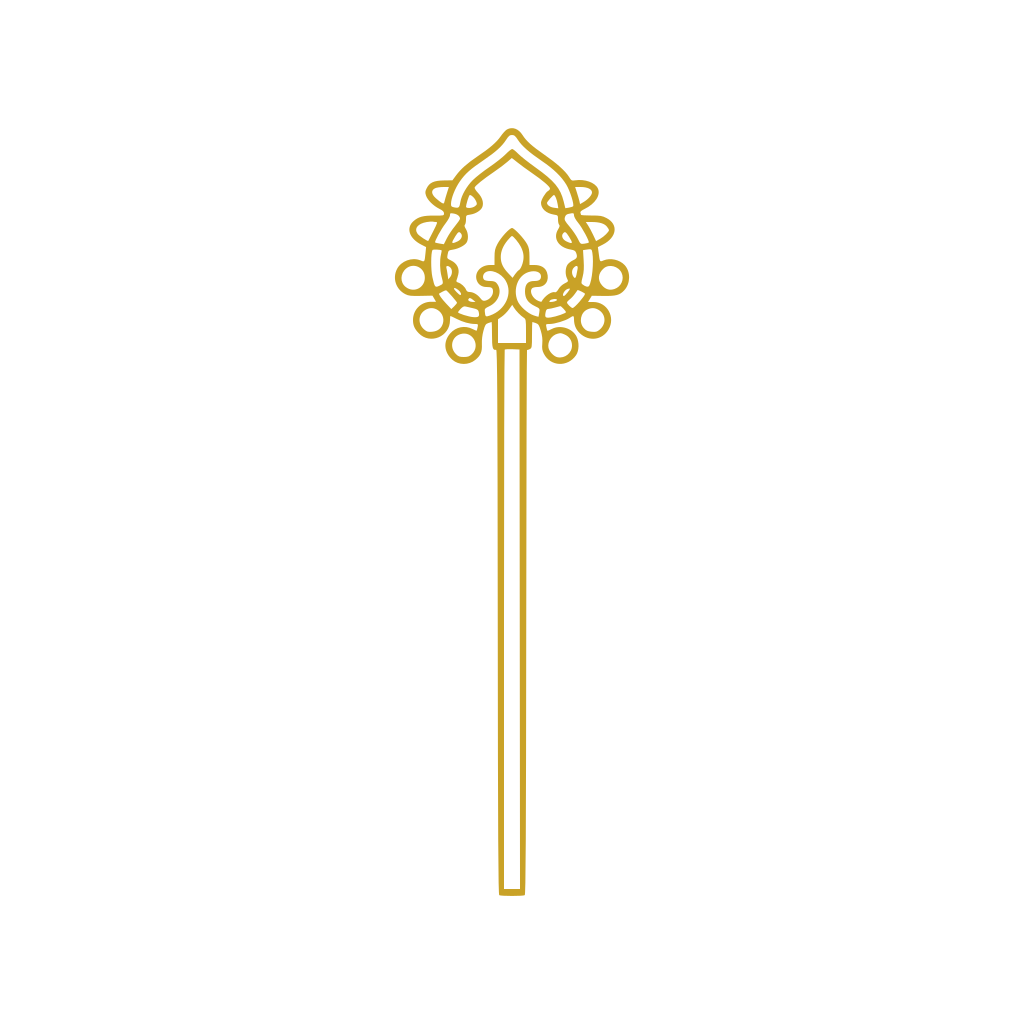
Gilded Bronze Khakkhara
Imperial ceremonial staff whose twelve rings symbolize the Twelve Links of Dependent Origination.
Secret-Color Porcelain
Exclusive imperial celadon ceramics symbolizing purity, clarity, and non-attachment in Tang ritual.
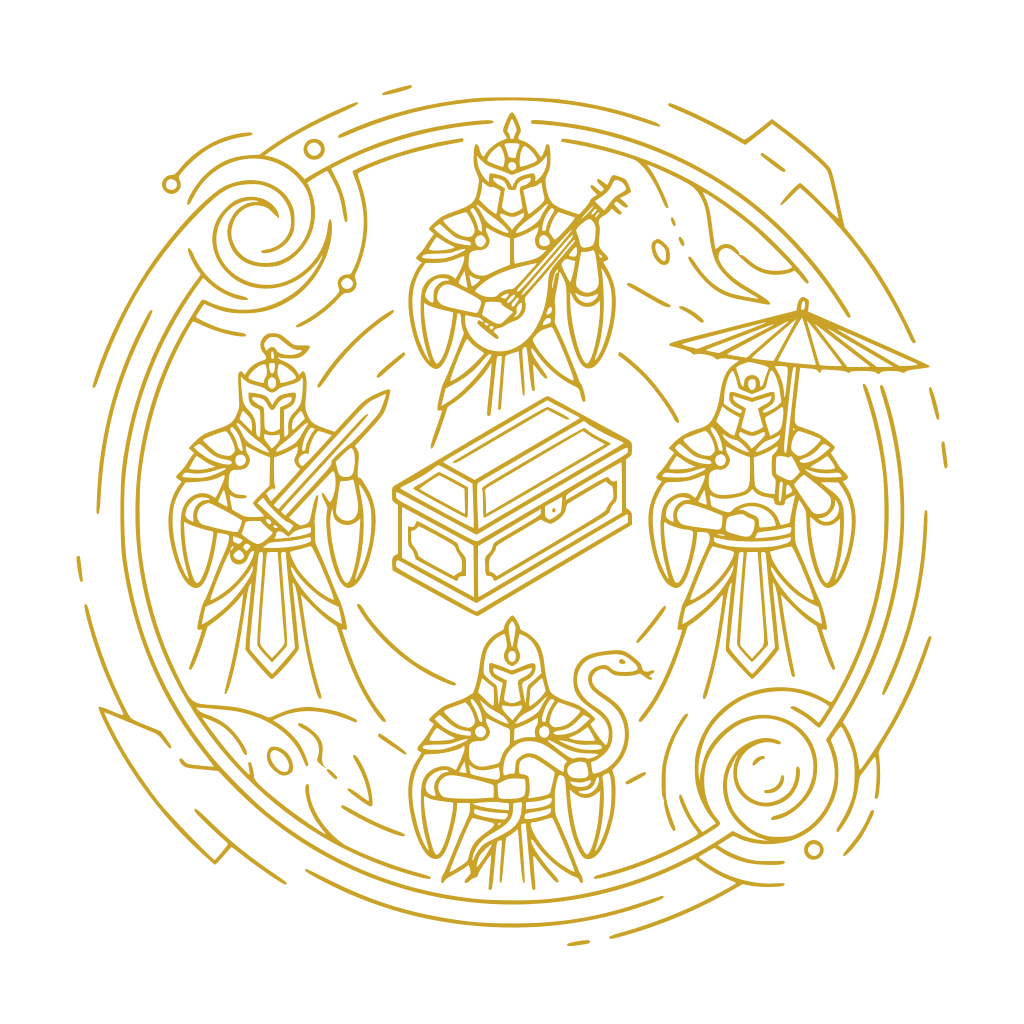
Four Heavenly Kings Caskets
Carved gilded silver reliefs depicting guardian kings defending sacred space against cosmic disorder.

Diamond Realm Mandala Inscriptions
Incised Sanskrit and Chinese characters manifesting the indestructible nature of enlightened wisdom.
Interesting Facts
The underground palace remained sealed and completely undisturbed beneath the pagoda for 1,113 years from 874 to 1987. (Tier A)
Excavation of the crypt confirmed the existence of fabled secret-color porcelain previously considered a literary myth. (Tier A)
The authentic bone relic was shielded inside an eightfold concentric set of sandalwood, gold, silver, and jade boxes. (Tier A)
Archaeologists unearthed the personal gilded silver tea set of Tang Emperor Xizong, the oldest complete royal tea service discovered. (Tier A)
In 1966, Abbot Liangqing self-immolated before the pagoda to prevent Red Guards from demolishing the site and discovering the crypt. (Tier B)
The crypt yielded delicate blown glass vessels originating from the Islamic Abbasid Caliphate and the Byzantine Empire. (Tier B)
The sacred finger bone has traveled under military-level diplomatic escort for public veneration in Thailand, Taiwan, and Korea. (Tier A)
The unearthed 1.96-meter gilded monastic staff is the most complex ceremonial khakkhara surviving from antiquity. (Tier A)
Common Questions
Is the authentic finger bone relic always visible to visitors?
No, the genuine relic is raised from the subterranean vault to the main altar only on weekends, national holidays, and lunar feast days.
Why are there four finger bones in the reliquary collection?
One is the authentic spiritual bone, while three are jade and bone shadow relics crafted by monks to protect the original from destruction.
What is the architectural significance of the modern Namaste Dagoba?
Designed by Taipei 101 architect C.Y. Lee, its 148-meter towers depict two praying hands enclosing a golden pagoda within empty space.
Can visitors enter the historical Tang dynasty underground palace?
Yes, visitors can descend into the restored stone crypt underneath the 47-meter historic brick pagoda.
Featured Stories
The Selfless Sacrifice of Abbot Liangqing
1966
During the tumult of the Cultural Revolution, Red Guard factions converged on Famen Temple determined to dismantle the historic brick pagoda and excavate its foundations. Demonstrating profound monastic devotion, Abbot Liangqing doused his robes in kerosene and self-immolated directly in front of the tower. Terrified by his supreme act of sacrifice, the crowd dispersed, leaving the sealed Tang crypt undiscovered beneath the stones.
Source: Famen Temple Monastic Records
The 1987 Archaeological Breakthrough
April 1987
Following the partial collapse of the Ming brick pagoda in 1981, archaeological clearing crews began excavating the foundation slabs to prepare for reconstruction. Beneath heavy paving stones, workers unexpectedly broke through into a subterranean stone stairwell leading into the pristine Tang imperial crypt. The discovery revealed thousands of undisturbed royal treasures and the four finger bone reliquaries untouched since 874 CE.
Source: Shaanxi Archaeological Institute
The Imperial Procession of Emperor Xizong
873
In the final decades of the Tang Dynasty, Emperor Yizong orchestrated a lavish imperial procession to welcome the Buddha's finger relic into Chang'an. Following his passing, his successor Emperor Xizong completed the rituals and ordered the sacred crypt permanently sealed with the finest royal treasures. On the fourth day of the first lunar month in 874 CE, the underground palace was locked, closing the chapter on Tang imperial relic patronage.
Source: Tang Imperial Court Annals
Timeline
Monastic Establishment
Founded as King Ashoka Temple to enshrine an Ashokan stupa housing the Buddha's finger bone.
MilestoneNorthern Wei Expansion
Monastery grounds are enlarged and granted imperial favor across the Guanzhong region.
EventInaugural Imperial Veneration
Emperor Ming of the Northern Zhou unseals the crypt for public veneration of the bone relic.
EventRenamed Famen Temple
Tang Emperor Gaozu confers the name Famen Si and builds a four-tier wooden pagoda.
MilestoneImperial Escort by Wu Zetian
Emperor Gaozong and Empress Wu escort the relic to the Luoyang imperial palace for veneration.
EventHan Yu Polemic
Confucian scholar Han Yu protests imperial expenditure on the relic and is exiled by the emperor.
EventHuichang Persecution Concealment
Monks secretly bury the genuine relic beneath crypt flagstones to survive nationwide Buddhist purges.
EventFinal Sealing of the Crypt
Tang court seals the underground palace with over 2,400 royal treasures and esoteric mandala offerings.
MilestoneMing Octagonal Pagoda Reconstruction
Abbot Fazhan commences construction of a 13-tier brick pagoda over the sealed crypt.
MilestoneCatastrophic Pagoda Collapse
Heavy seasonal rains cause the southern half of the historic Ming masonry tower to shear off.
EventRediscovery of the Underground Palace
Archaeologists excavating pagoda foundations break through into the pristine Tang imperial crypt.
MilestoneConsecration of the Namaste Dagoba
The 148-meter C.Y. Lee designed stupa is consecrated as the permanent modern reliquary sanctum.
DedicationHistory by Decade
140s–580s — Foundation and Ashokan Roots
The monastery was established upon sacred soil to preserve the bodily relics of the enlightened sage.
Originating under the Eastern Han Dynasty as King Ashoka Temple, the monastic complex was established to enshrine an Ashokan reliquary stupa. Throughout the Northern Dynasties, regional rulers elevated the sanctuary to imperial status across the Guanzhong basin. In 558 CE, Emperor Ming of the Northern Zhou Dynasty instituted the tradition of periodic ritual unsealing for imperial devotion.
610s–710s — Tang Imperial Patronage
Emperor Gaozu renamed the monastery Famen Si in 618 CE and replaced the stupa with a four-story wooden pagoda. Emperor Gaozong and Empress Wu Zetian initiated grand royal processions, transporting the relic to palaces in Luoyang and Chang'an. Lavish imperial endowments of gold, textiles, and silk transformed the monastery into the spiritual protector of the Tang dynasty.
810s–870s — Devotion, Persecution, and Sealing
Despite Confucian protests from court officials such as Han Yu, Tang emperors continued periodic relic veneration. Monks hid the authentic bone beneath subterranean flagstones during the Huichang Persecution of 845 CE to escape state destruction. In 874 CE, Emperor Xizong permanently sealed the underground palace with over 2,400 royal offerings organized within an esoteric mandala framework.
1570s–1600s — Ming Masonry Reconstruction
A catastrophic earthquake in 1569 leveled the ancient wooden tower that stood over the forgotten crypt. Between 1579 and 1609, Abbot Fazhan rallied regional patrons and craft guilds to construct a 47-meter octagonal brick pagoda. The builders unknowingly erected the 13-story masonry tower directly above the sealed Tang vault without disturbing the treasures below.
1980s — Collapse and Spectacular Rediscovery
The stone doors gave way to reveal a thousand years of imperial devotion frozen in silent splendor.
Persistent summer deluges caused the southern half of the Ming pagoda to shear away on August 24, 1981. During clearing excavations in April 1987, archaeologists uncovered the intact subterranean palace containing the four finger relics. By November 1988, a reinforced replica pagoda was erected, and the Famen Temple Museum opened to preserve the royal artifacts.
2000s–Present — Monumental Modern Consecration
Between 2006 and 2009, the monastery expanded with the construction of the Famen Temple Cultural Scenic Area. Renowned Taiwanese architect C.Y. Lee designed the 148-meter Namaste Dagoba to house the genuine relic in a modern setting. On May 9, 2009, world Buddhist leaders gathered to consecrate the stupa, securing Famen Temple as a global pilgrimage capital.
Architecture & Facilities
The complex integrates classical Chinese monastic axial planning with late-Ming masonry tower design and 21st-century monumental Buddhist structural expressionism, uniting Tang esoteric crypt geometry with modern skyscraper-scale stupa engineering.
Building Materials
Ming-Style Exterior Masonry
Salvaged historic grey kiln bricks line the outer facade of the octagonal 13-tier True Relic Pagoda.
Reinforced Concrete Core
An earthquake-resistant concrete core within the pagoda protects the underlying archaeological chamber.
Dressed Limestone Crypt Slabs
Precision-cut limestone blocks form the walls and vaults of the sealed Tang subterranean mandala.
Structural Steel Dagoba Framework
A monumental steel frame supports the 148-meter soaring hands of the contemporary Namaste Dagoba.
Interior Features
Underground Palace Crypt (Digong)
A 21.4-meter limestone chamber laid out as an esoteric Buddhist dual mandala protecting the reliquaries.
Namaste Dagoba Relic Sanctum
A vast subterranean vault equipped with a hydraulic elevator to raise the relic for ceremonies.
Grand Hall of the Great Sage (Daxiongbaodian)
The primary monastic prayer hall housing gilded statues of Sakyamuni Buddha flanked by principal disciples.
Famen Temple Imperial Museum
A secure exhibition facility showcasing the 2,499 unearthed Tang dynasty gold, silver, and ceramic treasures.
Temple Grounds
The expansive complex features a wide ceremonial boulevard flanked by Buddhist statues, reflecting pools, and manicured gardens connecting the historic courtyard to the modern stupa.
Additional Facilities
Comprehensive tourist service centers, vegetarian dining halls, research institutes, and electric tram transit stations serve visiting pilgrims across the scenic area.
Religious Significance
Within the broader Dharmic theological tradition, physical relics (sarira) serve as energetic manifestations of spiritual attainment and living embodiments of enlightened wisdom.
To house and venerate the sacred finger bone relic of Sakyamuni Buddha, cultivating merit and spiritual realization for all sentient beings.
Sacred Ordinances
Relic Circumambulation (Pradaksina)
The devotional practice of walking clockwise around the pagoda or stupa while reciting sacred mantras.
Bowing and Prostration
Physical acts of reverence performed before the finger bone relic to cultivate humility and purify karma.
Incense and Lamp Offerings
Ritual presentation of light and fragrance symbolizing the dispersal of ignorance and adherence to Dharma.
Mandala Meditation
Esoteric visualization practices centered on the Diamond and Womb Realm mandalas embodied in the crypt.
The Theology of Sarira in Dharmic Faith
In Buddhist theology, sarira is not biological residue but crystallized spiritual merit produced by supreme meditation and ethical perfection. Veneration of the Buddha's finger bone connects practitioners directly to the historical teacher's living Dharmakaya.
Esoteric Mandala of the Tang Dynasty
The underground palace was configured as an indissoluble cosmic boundary where the Diamond Realm and Womb Realm mandalas unified to transform royal offerings into an eternal field of spiritual protection.
Sources & Research
Every fact on Temples.org is backed by verified Sources & Research. Each piece of information is rated by source tier and confidence level.
View All Sources (8)
| Field | Source | Tier | Retrieved |
|---|---|---|---|
| About & Historical Background | MDPI Religions Journal (opens in a new tab) | B | 2026-02-28 |
| Archaeological Excavation & Crypt | Asian Art Newspaper (opens in a new tab) | B | 2026-02-28 |
| Scientific Relic Documentation | Proceedings of the National Academy of Sciences (opens in a new tab) | B | 2026-02-28 |
| Historical Records & Tang Lineage | Chinese History Digest (opens in a new tab) | B | 2026-02-28 |
| Silk Road Cultural Context | Facts and Details (opens in a new tab) | C | 2026-02-28 |
| Visitor Facilities & Access | China International Travel Service (opens in a new tab) | D | 2026-02-28 |
| Monastic Complex Architecture | Silk Road Tour China (opens in a new tab) | D | 2026-02-28 |
| Crypt Artifacts & Reliquaries | Trip.com Travel Guide (opens in a new tab) | D | 2026-02-28 |