Visitor Insights
Visiting Lingyin Temple
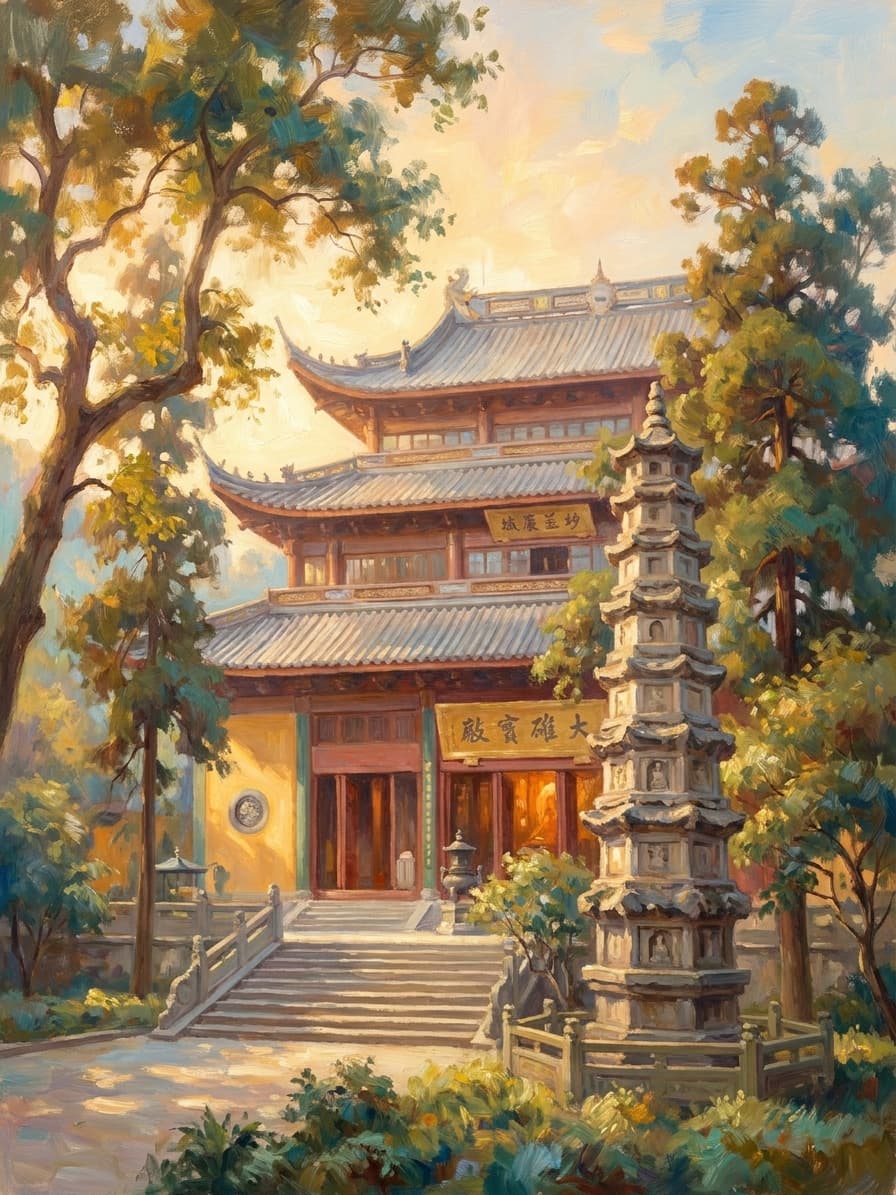
Visitors journey into a misty mountain basin framed by towering bamboo groves, rushing cold springs, and limestone grottos. The atmosphere balances active monastic devotion with centuries of art history across terraced mountain halls. Arriving in the early morning allows for quiet contemplation before daily pilgrim crowds gather.
Highlights
- Feilai Feng cliff carvings spanning the Song and Yuan dynasties
- Monumental 19.6-meter camphor wood statue of Shakyamuni Buddha
- Intricate Southern Song camphor wood carving of Wei Tuo Bodhisattva
- Labyrinthine Hall of the Five Hundred Arhats arranged in a swastika plan
Things to Know
- Requires two separate entry tickets: one for Feilai Peak and one for the temple interior
- Early arrival before 08:30 is recommended to observe monastic chanting
- Extensive terraced stairs require moderate walking across uneven stone paving
Location
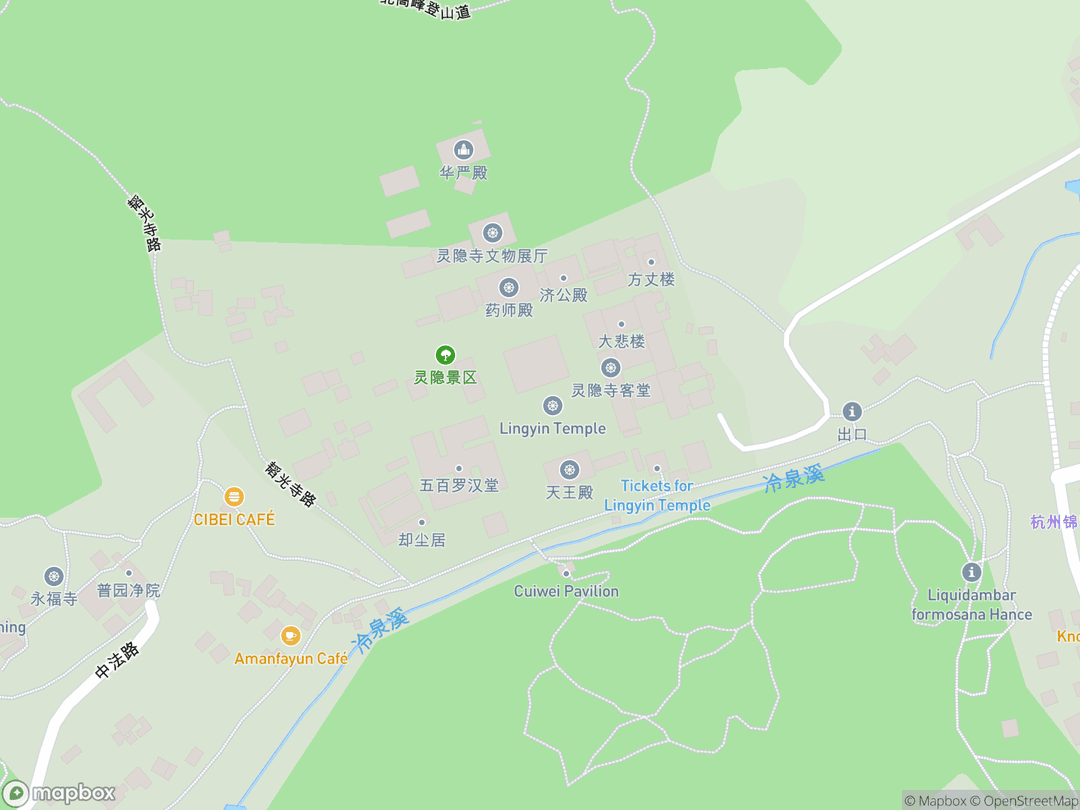
No. 1, Fayun Lane, Lingyin Road, Xihu District, Hangzhou, Zhejiang Province, China
Hours: 07:00 – 18:15 daily (ticket sales conclude at 17:30)
Getting There: Hangzhou Bus Lines 7, 324, or 807 directly serve the Lingyin scenic transport hub.
Get DirectionsTips for Your Visit
Ticketing Structure
Purchase the Feilai Peak scenic ticket at the perimeter gate before securing your temple interior admission.
Morning Chanting
Arrive at opening to hear the resonance of the morning bells and witness monastic assemblies.
Incense Etiquette
Temple admission includes three complimentary incense sticks; light them at exterior bronze burners.
About
Founded in 328 CE by the Indian monk Huili, Lingyin Temple ('Temple of the Soul's Retreat') is one of China's most celebrated Chan Buddhist sanctuaries. Nestled beneath the limestone crags of Feilai Feng, the temple was established as an anchor of Dharmic practice along the scenic waterways of Hangzhou.
Over seventeen centuries, the complex grew into an influential center of Mahayana and Chan contemplation, earning imperial status among the historic 'Five Mountains and Ten Temples'. Its sprawling courtyards, ancient stone pagodas, and lush forest canopy provide an enduring refuge dedicated to the cultivation of inner wisdom and compassion.
Gallery
Symbolic Elements
The temple's exterior features intricate carvings, each rich with spiritual meaning:
Feilai Feng Grottos
Limestone cliffs carved with over 340 Buddhist figures illustrating the union of Han and Tibetan traditions.
Laughing Buddha of Feilai Feng
Song Dynasty rock carving of Budai symbolizing unattached joy, generosity, and loving-kindness.
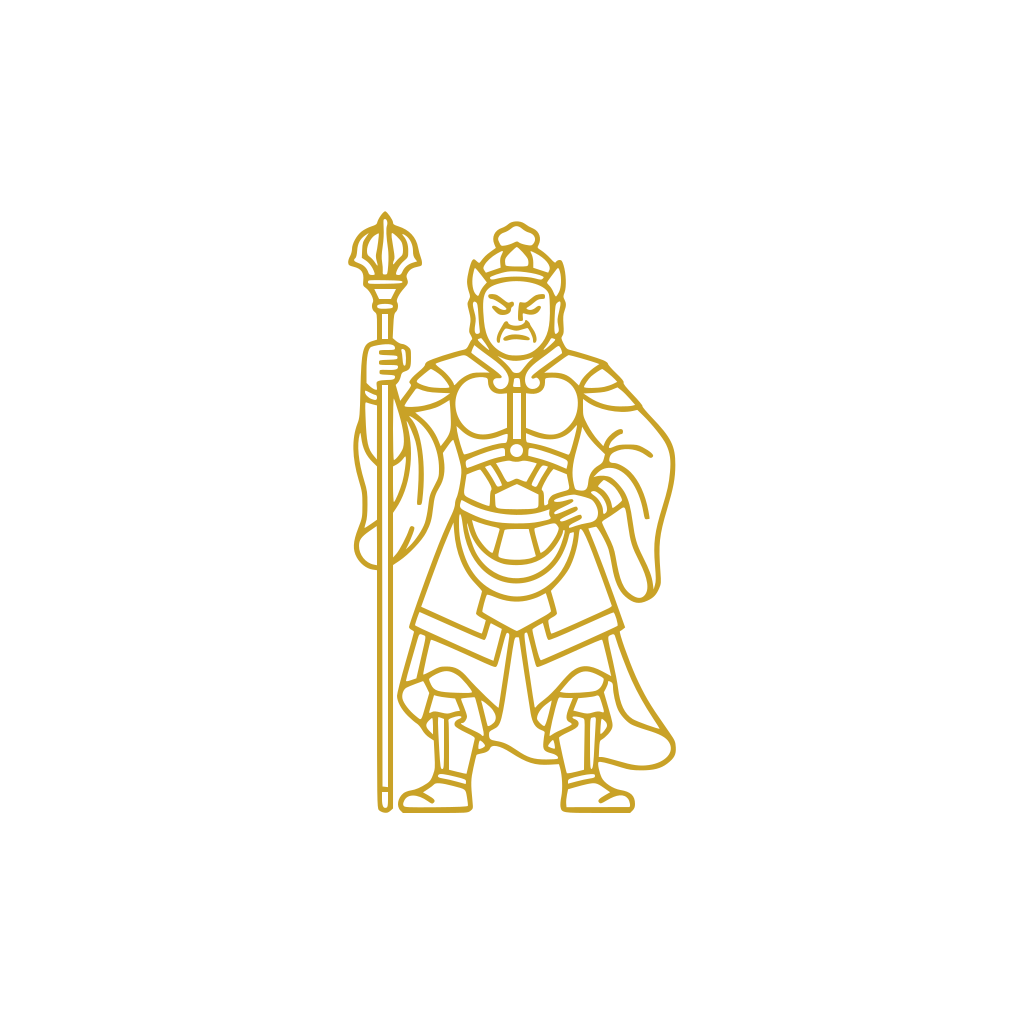
Southern Song Wei Tuo
An 800-year-old gilded camphor wood guardian standing vigilant to preserve monastic discipline and peace.
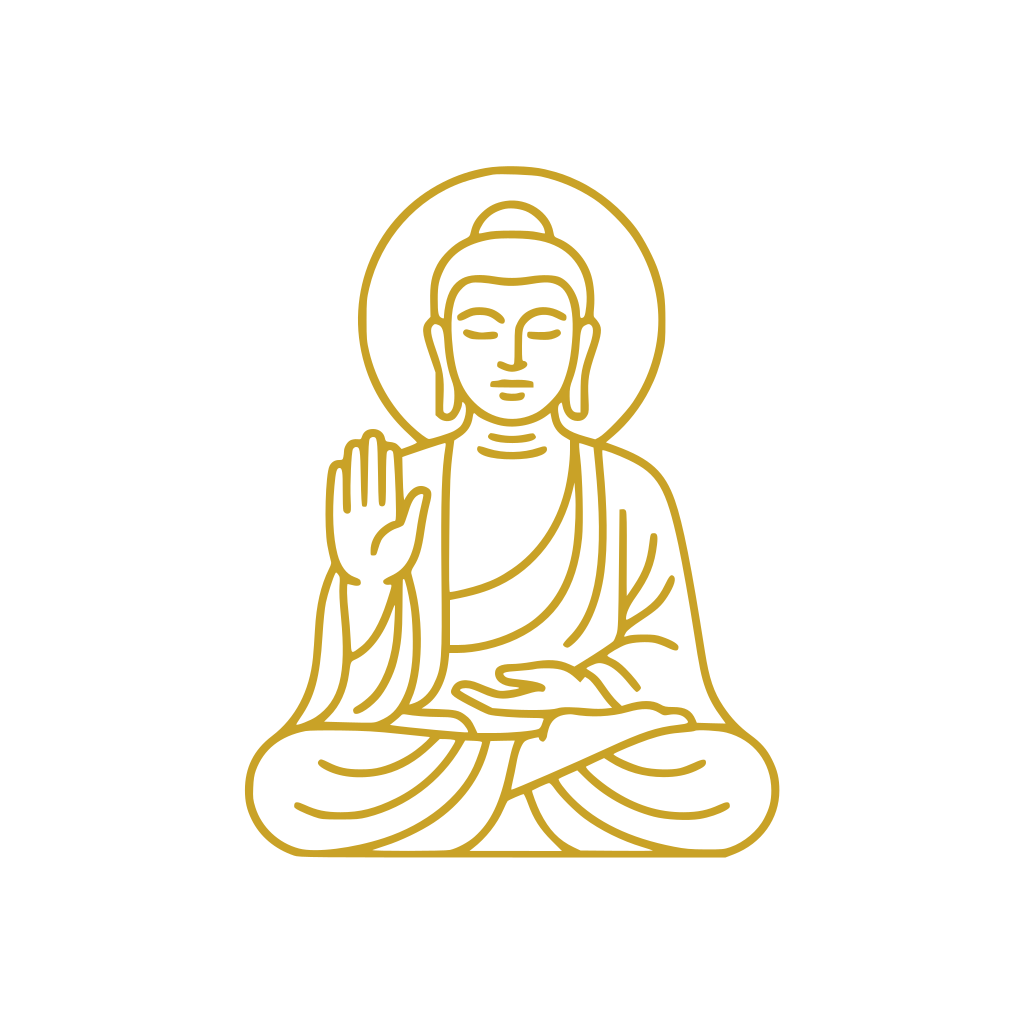
Camphor Wood Shakyamuni
Colossal gilded Buddha showing the Abhaya Mudra to reassure devotees against worldly fear.
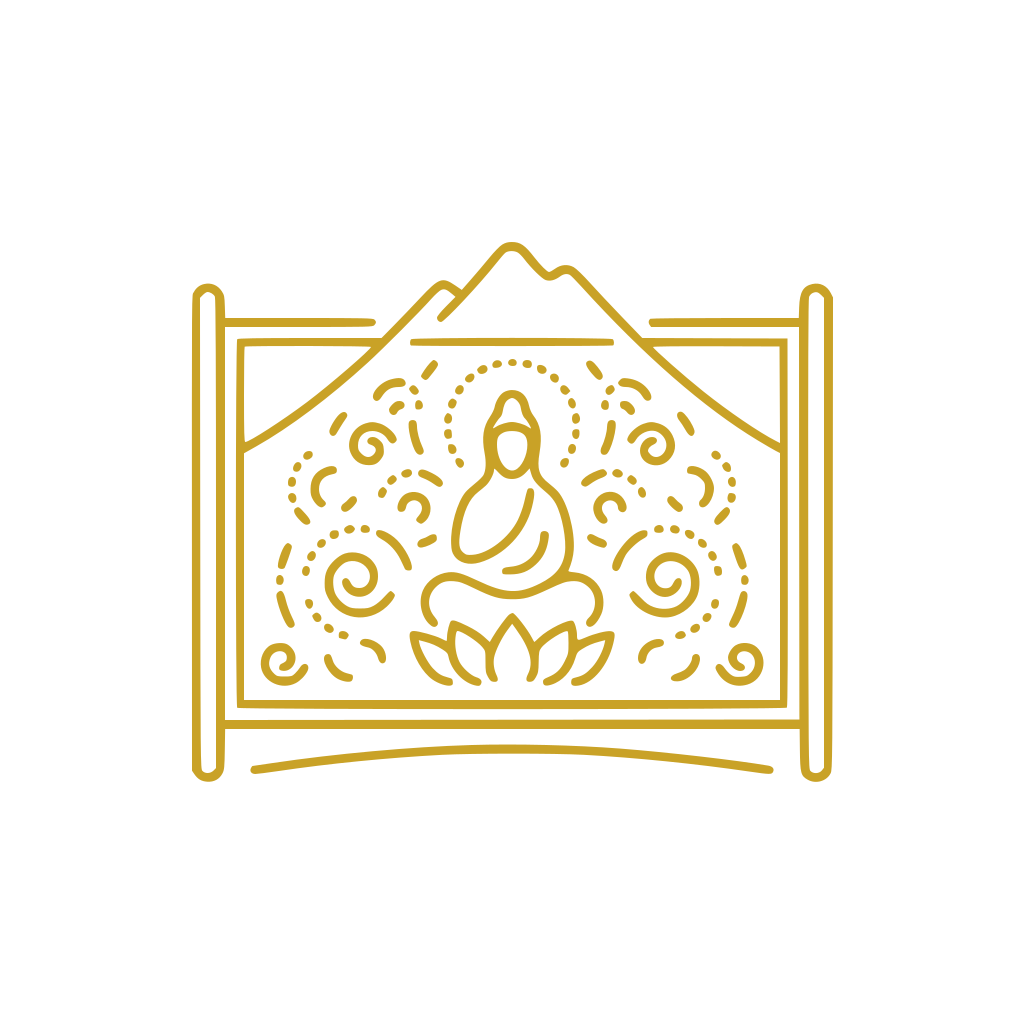
Mount Potalaka Screen
Rear dimensional mural depicting Guanyin surrounded by 150 figures from the pilgrim youth Sudhana's journey.
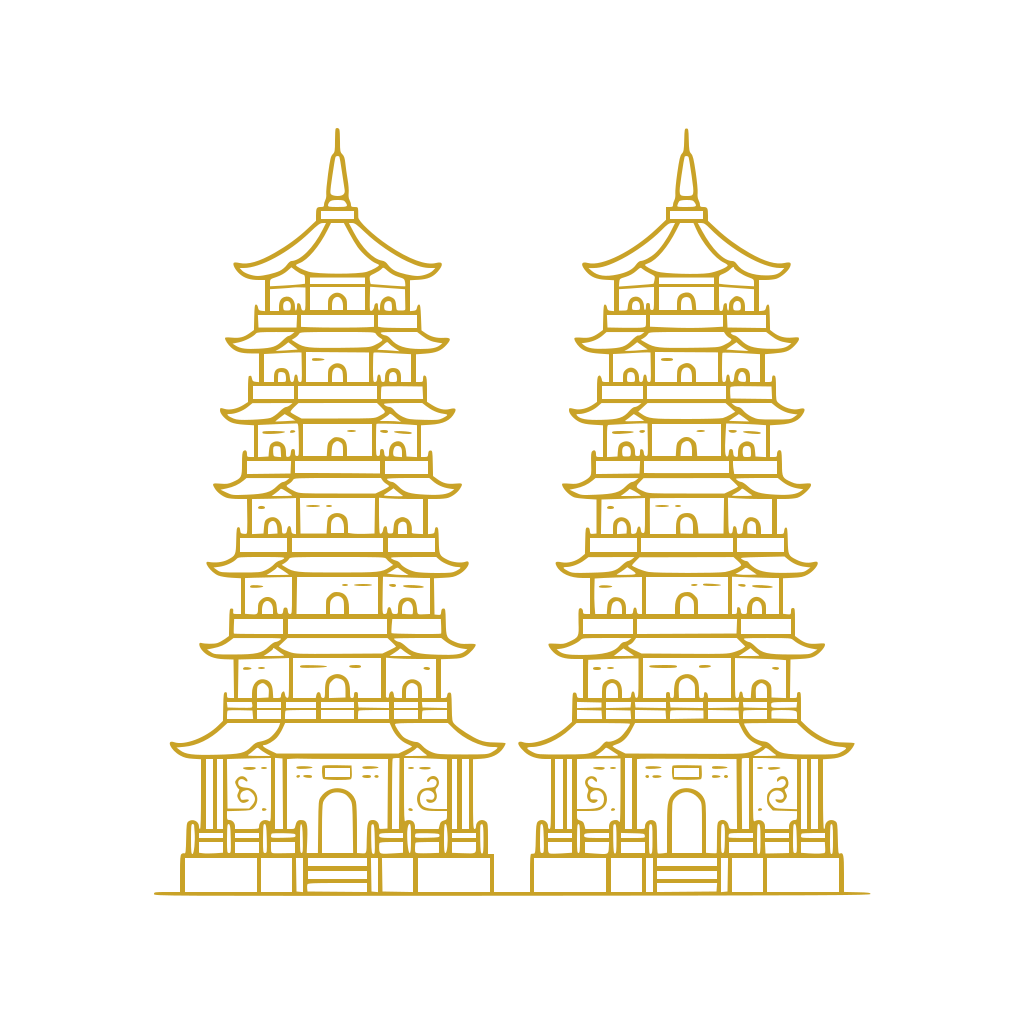
Twin Northern Song Pagodas
Octagonal nine-story stone towers carved with minute sutra figures preserving monastic heritage.
Interesting Facts
Emperor Kangxi inadvertently named the temple 'Cloud Forest' after writing the wrong Chinese character while admiring North Peak. (Tier A)
Premier Zhou Enlai dispatched an emergency protection telegram in 1966 that saved the complex from destruction. (Tier A)
The smiling Maitreya cliff relief on Feilai Feng is considered the earliest dated rock carving of the 'Laughing Buddha' in China. (Tier B)
The primary Shakyamuni statue was assembled from 24 sections of fragrant camphor wood and covered in gold leaf. (Tier B)
Folk legend associates Lingyin with Master Jigong, an eccentric monk celebrated for protecting the poor. (Tier B)
Feilai Feng contains one of the only intact collections of 14th-century Tibetan Buddhist rock art in southern China. (Tier B)
The Hall of Five Hundred Arhats is built in the geometrical shape of a sacred Buddhist swastika character. (Tier B)
An 800-year-old camphor wood statue of Wei Tuo Bodhisattva survived the catastrophic 1860 fires entirely intact. (Tier B)
Twin Northern Song stone pagodas flanking the courtyard have survived more than a thousand years of mountain weather. (Tier B)
Common Questions
Why is the temple named 'Soul's Retreat'?
Master Huili felt the serene forest landscape was so spiritual that immortals and divine beings had retreated there.
Why do some signs read 'Yunlin Zen Temple'?
Emperor Kangxi bestowed the name Yunlin ('Cloud Forest') after mistaking a calligraphic character in 1689.
Are photos permitted inside the worship halls?
Photography of sacred altars and consecrated Buddha statues is strictly prohibited inside the halls.
What is unique about the Feilai Feng carvings?
They preserve rare coexisting Southern Song Han sculptures and 14th-century Yuan dynasty Sino-Tibetan tantric carvings.
Featured Stories
Huili and the Peak Flying from Afar
328 CE
When the Indian monk Huili arrived in the bamboo-cloaked valleys of Hangzhou, he stopped in amazement before a craggy limestone hill. Believing the peak was a section of India's sacred Vulture Peak that had miraculously flown to China, he named it Feilai Feng and established Lingyin to anchor the Dharma in Jiangnan.
Source: Lingyin Temple Monastic Records
The Imperial Slip of the Brush
1689
During his southern tour, the Kangxi Emperor ascended North Peak at dawn and was asked to compose an inscription plaque for the monastery. Distracted by the rolling morning mists, he accidentally brushed the character for 'Cloud' instead of 'Spirit', gracefully saving face by naming the sanctuary the Cloud Forest Zen Temple.
Source: Qing Imperial Records
The Protective Shield of 1966
1966
As destructive fervor swept through cultural sites during the Cultural Revolution, Premier Zhou Enlai sent an urgent protective directive to Hangzhou. Local factory workers and university students formed a human cordon around Lingyin's gates, ensuring the ancient timber halls and priceless stone carvings remained untouched.
Source: Hangzhou Historical Gazetteer
Timeline
Founding by Master Huili
Indian monk Huili establishes the hermitage after recognizing the limestone cliffs as reminiscent of India's Vulture Peak.
MilestoneSui Dynasty Restoration
The monastery is revitalized following the imperial reunification of southern China.
RenovationTang Dynasty Expansion
Eminent scholars and poets gather at Cold Spring Pavilion as Lingyin becomes a regional cultural center.
EventWuyue Kingdom Golden Era
King Qian Chu expands the grounds to 72 halls and constructs the twin octagonal stone pagodas.
MilestoneNorthern Song Renovation
Imperial edicts restore the monastic complex and Chan Master Qisong strengthens ascetic discipline.
RenovationFive Mountains Designation
Lingyin is ranked second among the premier Five Mountains and Ten Temples of Chinese Chan Buddhism.
MilestoneYuan Dynasty Grotto Carvings
Tibetan and Han Buddhist rock sculptures are carved across the face of Feilai Feng.
EventKangxi Emperor Imperial Naming
The Kangxi Emperor visits and officially confers the calligraphy title Yunlin Zen Temple.
EventTaiping War Fire
Severe conflict destroys timber structures while the Hall of the Heavenly Kings and stone grottos survive.
EventReconstruction of the Mahavira Hall
Abbot Xizheng leads the comprehensive timber reconstruction of the central worship hall.
RenovationCultural Revolution Protection
Premier Zhou Enlai issues orders that mobilize local students and workers to protect the temple.
MilestoneModern Hall Expansion
Construction concludes on the expansive Hall of the Five Hundred Arhats and Huayan Hall.
MilestoneHistory by Decade
320s — Foundation in Jiangnan
Indian missionary monk Huili recognizes the sacred nature of the West Lake karst hills and founds Lingyin Temple. The modest mountain hermitage introduces Indian Buddhist thought to the scholars and recluses of the Eastern Jin Dynasty.
960s — Expansion under Wuyue
The devout kings of the Wuyue Kingdom lavish patronage upon Lingyin, expanding the site to dozens of multi-story pavilions and thousands of resident monks. Master craftsmen carve the earliest rock reliefs along the Cold Spring stream.
1160s — Capital Chan Center
With Hangzhou serving as the imperial capital of the Southern Song, Lingyin becomes a vital intellectual hub of the Linji Chan tradition. Eccentric and revered masters such as Daoji (Jigong) leave indelible marks on regional literature and folklore.
1280s — Yuan Dynasty Crossroads
Under Mongol rule, Tibetan Buddhist artisans carve monumental tantric deities across the cliffs of Feilai Feng. The site evolves into a unique syncretic meeting place for Han Chinese Mahayana and Tibetan Esoteric art.
1910s — Republican Reconstruction
Following the destruction of the Taiping Rebellion, Abbot Xizheng and civic leaders rebuild the massive Grand Hall of the Great Sage using traditional joinery. The timber reconstruction preserves Song proportions with refined Jiangnan carpentry.
1950s–Present — Conservation & Modern Flourishing
Following state preservation directives and modern restorations, the monastery re-emerges as a premier Buddhist landmark. The addition of the Hall of Five Hundred Arhats marks continued architectural expansion in the twenty-first century.
Architecture & Facilities
The architecture exemplifies traditional Jiangnan official-style Buddhist monastery design, blending Southern Song structural proportions with refined late Qing timber carpentry. The buildings step progressively up the natural mountain contours along a strict central axis, integrating deep-eaved timber structures directly with surrounding forests and limestone outcrops.
Building Materials
Structural Timber
Massive seasoned fir and southern pine pillars joined without metal nails support the multi-tiered roof framework.
Karst Limestone
Native grey limestone forms terraced podiums, staircases, and the cliff faces carved with Buddhist grottos.
Fragrant Camphor Wood
Seasoned camphor logs provide insect-resistant medium for interior statues and the Southern Song Wei Tuo.
Glazed Ceramic Tile
Traditional grey and ochre ceramic tiles line the sweeping curved eaves of the primary ceremonial halls.
Interior Features
Grand Hall of the Great Sage
Soaring central worship hall containing the 19.6-meter gilded Shakyamuni Buddha flanked by twenty celestial guardians.
Hall of the Heavenly Kings
Entry pavilion housing Maitreya, the Four Heavenly Kings, and the ancient Southern Song Wei Tuo statue.
Hall of the Five Hundred Arhats
Vast swastika-shaped labyrinth exhibiting five hundred uniquely expressive life-sized bronze arhat statues.
Huayan Hall
Elevated rear shrine enshrining the Three Sages of the Avatamsaka Sutra carved from tropical camphor.
Temple Grounds
Sloping forested grounds feature stone bridges across Cold Spring Stream, winding bamboo walkways, and stone pagodas nestled directly against the karst cliffs of Feilai Feng.
Additional Facilities
Active monastic residence quarters, Buddhist research academy, vegetarian dining facilities, and the Cold Spring Tea Pavilion.
Religious Significance
As a cornerstone of the East Asian Mahayana and Chan traditions, Lingyin Temple operates within the broader Dharmic lineage originating in ancient India. While sharing the common Indian cosmological foundations of karma, samsara, and moral liberation (dharma), Lingyin emphasizes the distinctive East Asian Chan path of direct insight into one's original Buddha-nature.
To provide an enduring sanctuary for monastic discipline, meditation, scriptural study, and the alleviation of universal suffering through Bodhisattva compassion.
Sacred Ordinances
Chan Meditation (Zuochan)
Silent seated contemplation cultivating direct experiential insight into the nature of the mind.
Morning and Evening Chanting
Daily monastic assemblies reciting Mahayana sutras, mantras, and dharanis to dedicate merit to all sentient beings.
Incense Offering (Shangxiang)
Devotional presentation of incense symbolizing purification, ethical conduct, and transient worldly existence.
Bodhisattva Vows
Formal pledges dedicating personal spiritual progress to the liberation of all living creatures.
The Bodhisattva Ideal in East Asia
Mahayana theology at Lingyin centers on compassionate Bodhisattvas such as Guanyin and Wei Tuo, who willingly postpone absolute cessation to assist suffering beings navigate worldly trials.
Nature as the Living Dharma
In Chan thought, the pristine streams and limestone peaks of Lingyin are not mere scenery but living expressions of the Dharma, providing an environment where nature itself teaches impermanence and clarity.
Sources & Research
Every fact on Temples.org is backed by verified Sources & Research. Each piece of information is rated by source tier and confidence level.
View All Sources (5)
| Field | Source | Tier | Retrieved |
|---|---|---|---|
| About & Historical Background | Lingyin Temple Monastic Administration (opens in a new tab) | A | 2026-02-18 |
| Visitor Insights | Trip.com Travel Guides (opens in a new tab) | D | 2026-02-18 |
| Interesting Facts | Easy Tour China (opens in a new tab) | D | 2026-02-18 |
| Symbolic Elements | Trippest Travel (opens in a new tab) | D | 2026-02-18 |
| Common Questions | Frommer's Travel Guides (opens in a new tab) | D | 2026-02-18 |