Visitor Insights
Visiting Mount Penglai
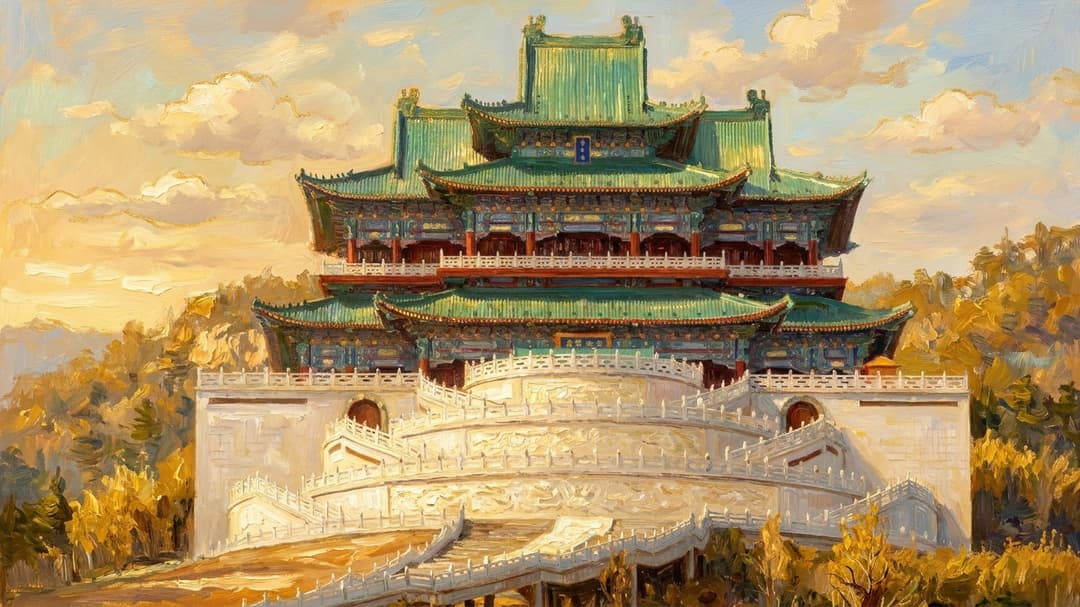
Visitors to the historic Penglai coastal promontory can explore the cliff-top Penglai Pavilion complex and the adjacent Ming-era water fortress. The site offers panoramic ocean vistas where summer atmospheric conditions occasionally produce historic mirages over the misty waters.
Highlights
- Penglai Pavilion overlooking the junction of the Bohai and Yellow Seas
- Historic shrines dedicated to Lü Dongbin and the Three Pure Ones
- The ancient Penglai Water City fortress and historic naval docks
- Atmospheric ocean views famous for rare maritime mirages
Things to Know
- Substantial stair climbing is required along the steep cliffside paths
- Summer brings ideal coastal weather but attracts high visitor volumes
- Maritime fog can obstruct ocean views during early morning hours
- The actual mythical mountain remains a spiritual concept rather than a physical island
Tips for Your Visit
Mirage Viewing
Visit between May and September on warm days following sea squalls when atmospheric inversion creates optimal mirage conditions.
Early Arrival
Arrive at the pavilion gates early in the morning to enjoy serene Taoist courtyards before tour groups congregate.
About
Mount Penglai stands as the quintessential mystical paradise in Taoism and East Asian sacred geography. According to ancient Taoist tradition, this otherworldly sanctuary in the Bohai Sea serves as the home of enlightened immortals who dwell in harmony with the Dao.
For centuries, Chinese emperors dispatched naval expeditions eastward across the waters in search of Penglai and its herbs of longevity. These sacred quests profoundly influenced Chinese navigation, medical herbology, cartography, and early imperial statecraft.
The terrestrial manifestation of this myth endures at Penglai Pavilion in Shandong Province. Perched high above coastal cliffs, the historic temple complex honors the Eight Immortals and celebrates the natural sea mirages that inspire pilgrims to seek transcendence.
Gallery
Symbolic Elements
The temple's exterior features intricate carvings, each rich with spiritual meaning:
Lingzhi Mushroom of Immortality
Represents the eternal life granted to enlightened practitioners who master inner alchemy.

Jade Gourd of Li Tieguai
Embodying the healing medicine and universal spiritual vessel carried by the Eight Immortals.

Cosmic Turtle Ao
Symbolizes the primordial marine strength supporting the floating immortal mountains upon the cosmic ocean.

White Crane of Transcendence
Portrays the spiritual transport conveying liberated Taoist souls into the celestial realms.

Peaches of Longevity
Signifies the divine celestial nourishment said to ripen on mythical Penglai once every three millennia.
Celestial Miraged Pavilions
Reflects the boundary between temporal human perception and the eternal dwelling of the gods.

Feathered Robes of the Xian
Represents spiritual purification and liberation from the mortal burdens of terrestrial dust.

Treasures of the Eight Immortals
Signifies the diverse talismans utilized by sages to cross turbulent worldly waters through personal virtue.
Interesting Facts
Imperial court diviner Xu Fu set sail from this coast with three thousand youths on an expedition to find Penglai in 219 BC. (Tier A)
Taoist scriptures record that all living beasts and palace pavilions on Mount Penglai are completely white. (Tier B)
The famous Taoist legend of the 'Eight Immortals Crossing the Sea' begins on the rocky bluffs below Penglai Pavilion. (Tier A)
Penglai Pavilion is historically celebrated alongside Tengwang Pavilion and Yellow Crane Tower as a premier tower of China. (Tier B)
The waters directly off Penglai mark the visible boundary line dividing the yellow sediment of the Yellow Sea and Bohai Sea. (Tier A)
Emperor Wu of the Han Dynasty established ceremonial sea altars along this coast after failing to reach the immortal isle. (Tier B)
Ancient texts describe Penglai as resting on the back of a colossal celestial turtle named Ao to keep it anchored. (Tier B)
The Ming-era water fortress beneath Penglai Pavilion constitutes China's earliest intact maritime military basin. (Tier A)
Common Questions
Is Mount Penglai an actual geographic mountain that can be visited?
Mount Penglai is a mythical Taoist island paradise, but its physical shrine complex at Penglai Pavilion in Shandong welcomes visitors.
Why is Penglai associated with sea mirages?
Specific temperature inversions over the cold Bohai currents frequently bend light rays to project distant shores onto the horizon.
Who are the Eight Immortals associated with Penglai?
They are revered Taoist figures who represent diverse social backgrounds and crossed the Bohai Sea from Penglai using personal spiritual items.
What is the best time of year to visit Penglai Pavilion?
The summer months from May through September offer optimal warm weather and the greatest chance to witness coastal mirages.
Featured Stories
The Imperial Voyage of Xu Fu
219 BC
Determined to conquer mortality, Emperor Qin Shi Huang funded court sorcerer Xu Fu with a fleet carrying hundreds of artisans and youths to find Penglai. The expedition sailed past the horizon into the eastern seas and vanished, seeding timeless legends across East Asian maritime history.
Source: Records of the Grand Historian
The Eight Immortals Crossing the Sea
1100
After a feast atop the seaside cliffs of Penglai, the Eight Immortals declined cloud travel and instead threw their personal talismans into the roaring sea. By riding these everyday tools across the currents, the sages demonstrated that spiritual transcendence operates through individual character rather than worldly power.
Source: Ming Taoist Legendarium
The Han Emperor's Ocean Altar
110 BC
Yearning for a glimpse of the immortals, Emperor Wu of Han constructed stone altars along the windy cliffs of Danya Mountain. Standing before the boundless waters, the emperor offered solemn libations to the distant island of Penglai, enshrining the coastal promontory as an imperial sanctuary.
Source: Book of Han
Timeline
Warring States Naval Quests
The rulers of Qi and Yan dispatch early maritime voyages into the Bohai Sea to seek immortal isles.
MilestoneQin Dynasty Expedition
Emperor Qin Shi Huang commissions Xu Fu to sail eastward to secure the herbal elixir of Mount Penglai.
MilestoneHan Imperial Sacrifices
Emperor Wu of Han conducts solemn seaside rituals at the coast of Penglai seeking spiritual enlightenment.
MilestoneCodification in Taoist Literature
Scholars of the Shangqing Taoist lineage formally record Penglai as a prime heavenly retreat for celestial adepts.
MilestoneConstruction of Penglai Pavilion
Song Dynasty magistrate Zhu Chuyue oversees the initial construction of the cliff-side pavilion complex.
component.timeline.groundbreakingMirage Chronicles
Northern Song court scholars compile detailed treatises documenting recurring optical mirages over Penglai waters.
MilestoneFounding of Penglai Water City
Ming military commanders construct the fortified naval harbor beneath Penglai Pavilion to deter coastal raiders.
MilestoneMing Garrison Fortification
General Qi Jiguang refortifies the maritime fortress while repairing the sanctuary halls of the Taoist sages.
RenovationQing Dynasty Shrine Renewal
Local administrators execute comprehensive timber restorations across the Lüzu and Sanqing shrine halls.
RenovationNational Heritage Designation
The State Council of the People's Republic of China designates the Penglai Pavilion complex as a National Key Heritage Site.
MilestoneMunicipal Preservation Initiative
Modern conservation authorities integrate the Penglai scenic corridor into regional cultural preservation networks.
MilestoneArchitecture & Facilities
Traditional Chinese classical cliff-sanctuary architecture characterized by multi-tiered timber-frame pavilions, interlocking dougong bracket sets, flying eaves, and defensive stone retaining walls that synthesize Taoist spiritual iconography with coastal military bastion engineering.
Building Materials
Danya Red Sandstone
Quarried locally from seaside cliffs to form rugged retaining foundations against sea erosion.
Chinese Fir Timbers
Selected for primary post-and-beam construction and treated to endure humid ocean air.
Glazed Imperial Tile
Protects high roofs from maritime rain while deflecting sunlight in brilliant earthen tones.
Carved White Marble
Decorates interior altar platforms and terrace balustrades with cloud and dragon carvings.
Interior Features
Sanqing Hall
Houses magnificent gilded sculptures representing the Three Pure Ones of the Taoist cosmos.
Lüzu Hall
Dedicated to immortal Lü Dongbin featuring classic wall frescoes depicting wandering sages.
Tianhou Palace
Honors Mazu, protector of sailors, complete with incense braziers and nautical votive plaques.
Penglai Main Chamber
Features broad viewing verandas designed to observe seasonal sea mirages and maritime horizons.
Temple Grounds
The temple grounds wind across the summit of Danya Mountain, featuring stone-paved lanes, ancient pines, engraved cliff inscriptions, and viewing terraces connected to the historical water fortress below.
Additional Facilities
Visitor facilities include the Penglai Maritime Museum, historical weapon storehouses, scenic promenades, and traditional tea pavilions.
Religious Significance
Within Taoist theology and the broader Taoic worldview, Mount Penglai represents the prime archetype of the celestial paradise where mortal beings attain union with the Dao.
To serve as a spiritual compass for seekers striving for longevity, moral integrity, inner alchemy, and liberation from the cycle of worldly decay.
Sacred Ordinances
Neidan (Internal Alchemy)
Meditation methods designed to cultivate inner energy and mirror the eternal purity of the Penglai immortals.
Jiao Rituals (Offering Ceremonies)
Community liturgies petitioning celestial deities for harmony, cosmic balance, and maritime safety.
Incense Devotion at Sea Altars
Votive presentations honoring the Eight Immortals and coastal protectors before ocean voyages.
The Concept of Grotto-Heavens
Penglai is venerated among the sacred realms where heavenly energies gather, bridging the tangible terrestrial environment with the subtle celestial spheres of Taoist metaphysics.
The Way of the Xian
The immortals associated with Penglai instruct practitioners that liberation is attained not through material conquest, but through simplicity, natural harmony, and effortless action (wu wei).
Sources & Research
Every fact on Temples.org is backed by verified Sources & Research. Each piece of information is rated by source tier and confidence level.