Visitor Insights
Visiting White Cloud Temple
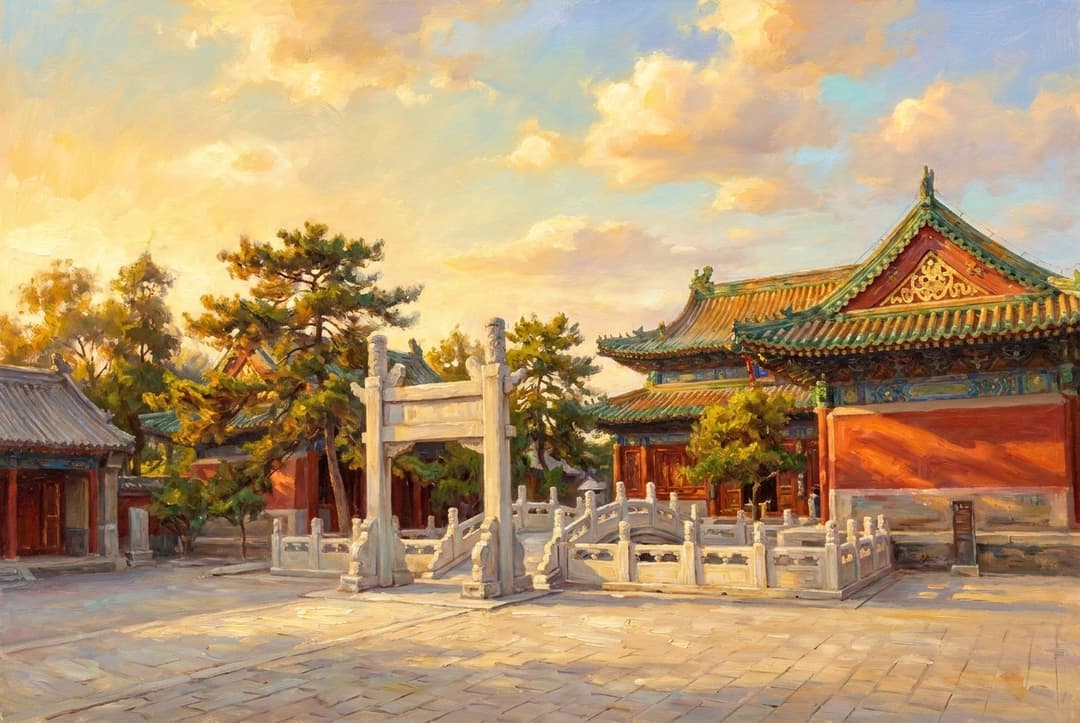
White Cloud Temple offers a peaceful oasis of traditional spiritual practice within modern Beijing. Visitors can observe ordained monastics wearing traditional robes, uncut hair, and topknots while chanting scriptures. The complex features classic imperial courtyard architecture across three distinct liturgical axes.
Highlights
- Touch the three hidden stone monkeys carved into the entrance gate and balustrades.
- Toss copper coins through the aperture of the giant bell beneath Wofeng Bridge.
- Pay respects at Qiuzu Hall, which shelters the crypt of Master Qiu Chuji.
- Locate your personal patron deity among the sixty figures in Yuanchen Hall.
Things to Know
- Monastic rituals and private meditation halls require quiet reverence.
- Photography is strictly prohibited inside the interior shrine pavilions.
- Expect heavy crowds during the annual Spring Festival Temple Fair.
Location
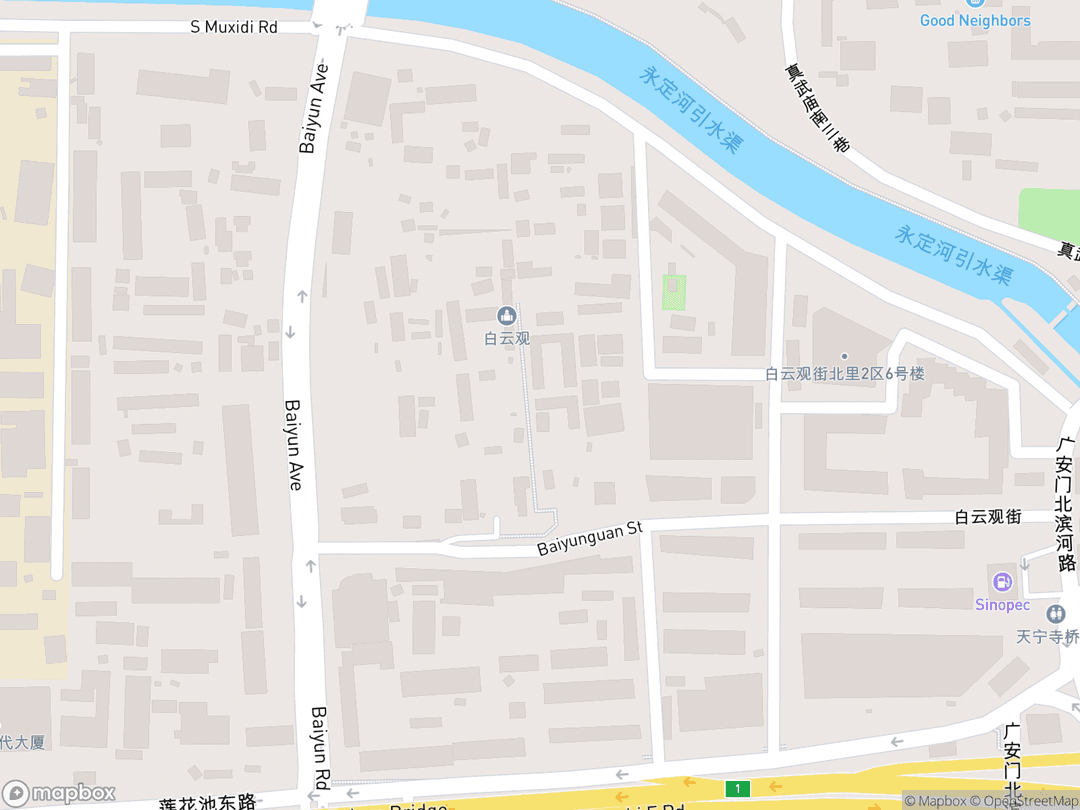
No. 9 Baiyunguan Street, Xicheng District, Beijing 100045, China
Hours: 08:30 – 16:30 (Summer); 08:30 – 16:00 (Winter)
Getting There: Subway Line 1 to Muxidi Station (Exit C1) or Line 7 to Daguanying Station; Bus lines 26, 45, 80, or 320 to Baiyunguan Station.
Get DirectionsTips for Your Visit
Find Your Birth Deity
Check your birth year according to the Chinese lunar calendar before entering Yuanchen Hall to locate your guardian Taisui.
Spring Festival Visit
Visit on the 19th day of the first lunar month to participate in the traditional 'Meeting the Immortals' festival.
Attire and Demeanor
Wear modest clothing covering shoulders and knees when entering active liturgical sanctuaries.
About
White Cloud Temple (Baiyun Guan) stands in Beijing as the historic cradle and administrative apex of Quanzhen Taoism. Tracing its imperial roots to the 8th-century Tang Dynasty, the sanctuary has flourished for centuries as the ancestral seat of the Longmen (Dragon Gate) monastic lineage.
Within the broader family of Taoic traditions, the temple exemplifies the Complete Perfection path of Neidan (Internal Alchemy). Rather than seeking external elixirs, residents harmonize inner essence, breath, and spirit through meditation, monastic discipline, and ethical purity.
Today, the temple serves as the national headquarters of the Chinese Taoist Association and hosts the Chinese Taoist College. Its sprawling complex preserves ancient halls, rare liturgical texts, and the intact tomb of Patriarch Qiu Chuji.
Gallery
Symbolic Elements
The temple's exterior features intricate carvings, each rich with spiritual meaning:
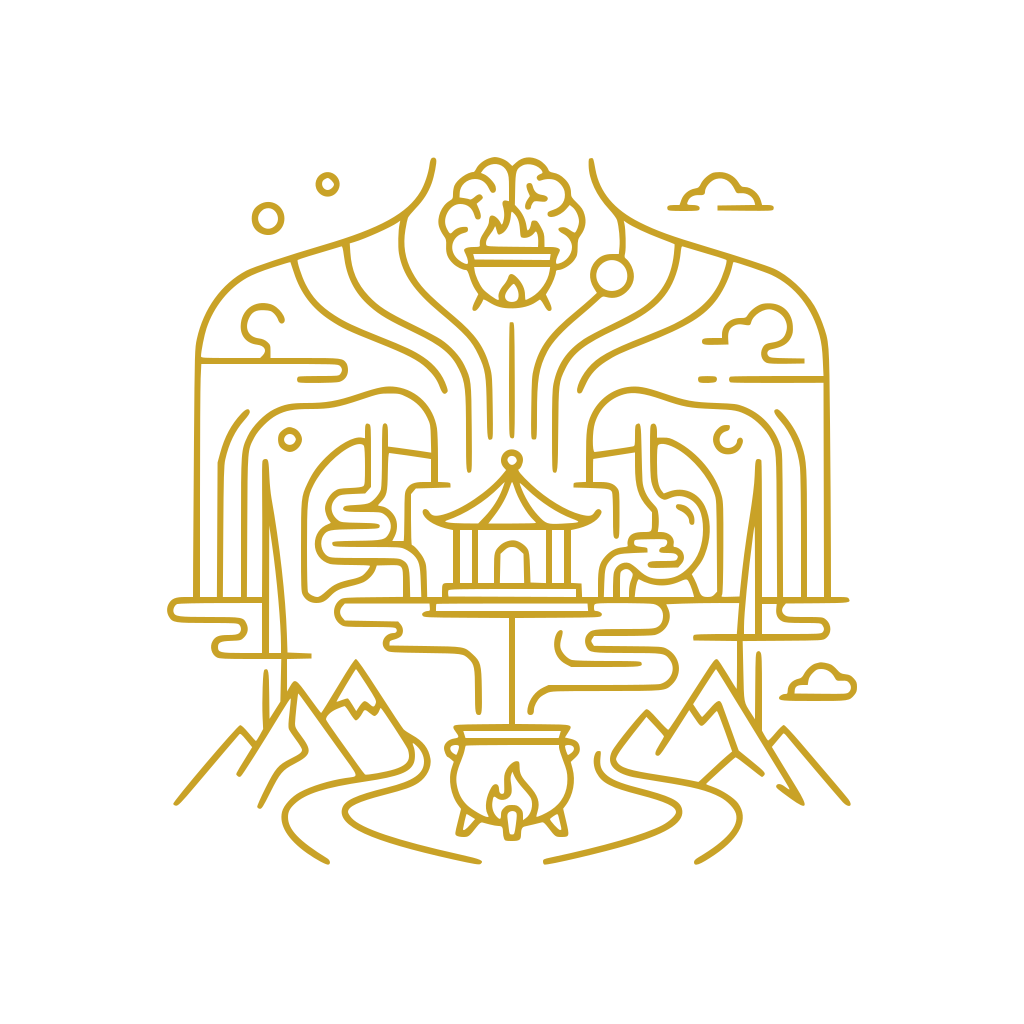
Neijing Tu Diagram
Illustrates internal bodily alchemy where organs correspond to mountains, rivers, and cosmological furnaces.
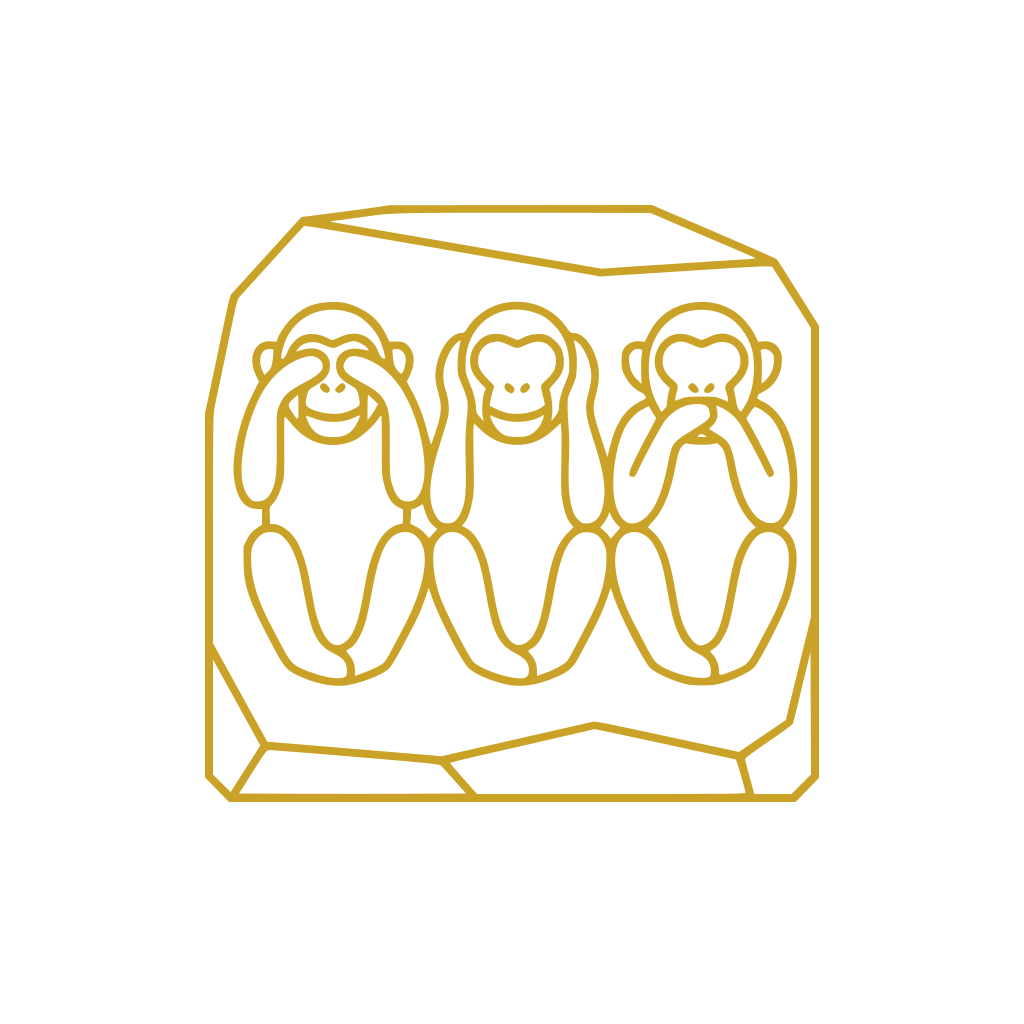
Three Hidden Stone Monkeys
Symbolizes sensory mastery, watchfulness over the mind, and the pursuit of spiritual nobility.

Wofeng Bridge Giant Coin
Represents relinquishing material avarice while striking its chime invites celestial accord.

Yingmu Root Bowl
Embodies monastic poverty, ascetic simplicity, and the ancient begging bowl vows of Quanzhen.

Taiji and Bagua Emblems
Signifies the dynamic harmony of Yin and Yang balancing universal energies across the eight trigrams.
Cloud and Crane Motifs
Evokes spiritual transcendence, moral purity, and the effortless freedom of realized immortals.

Sixty Taisui Deities
Reflects cosmic cycles of time and the alignment of human fate with stellar influences.
Interesting Facts
The temple is widely regarded as the supreme executive headquarters of mainland Chinese Taoism (Tier A).
Patriarch Qiu Chuji remains entombed directly beneath the flagstones of Qiuzu Hall (Tier A).
Devotees celebrate the annual Meeting the Immortals festival believing sages wander the grounds in disguise (Tier B).
Tradition holds that touching all three hidden miniature stone monkeys guarantees enduring physical health (Tier B).
The definitive chart of Taoist internal alchemy, the Neijing Tu, is preserved here on an 1886 marble stele (Tier A).
A gigantic tree-root bowl gifted by the Wanli Emperor entitled starving monks to receive palace grain (Tier B).
Monks in residence wear traditional robes and tie their uncut hair into classical topknots (Tier A).
Direct intervention by Premier Zhou Enlai protected the temple from destruction during the Cultural Revolution (Tier B).
Common Questions
Why is White Cloud Temple significant in Taoism?
It serves as the supreme grand cloister of Quanzhen Taoism and houses the tomb of Patriarch Qiu Chuji.
Can non-Taoists visit the temple?
Yes, visitors of all cultural and religious backgrounds are welcome to tour the courtyards and active shrines.
What is the custom of tossing coins at Wofeng Bridge?
Visitors aim coins at a suspended bronze chime beneath the dry bridge arch to pray for blessings and fortune.
Are Quanzhen monks vegetarian?
Yes, Quanzhen monastics observe strict vegetarian diets and practice lifelong celibacy within cloistered communities.
Featured Stories
Qiu Chuji's Journey to Genghis Khan
1220
In 1220, the aging master Qiu Chuji undertook an arduous journey across Central Asia to counsel Genghis Khan in the Hindu Kush. His counsel persuaded the conqueror to curb unnecessary slaughter and grant protection to religious devotees across China. Upon returning to Beijing, Qiu established this temple as a haven of learning and charitable relief.
Source: Historical Records of the Yuan Dynasty
The Imperial Tree-Root Bowl
1600
During the Ming Dynasty, the Wanli Emperor presented the cloister with the Yingmu Wan, an enormous bowl carved from a single burled root. Imperial decree granted monks the privilege of rolling the vessel to the Forbidden City during severe famines to receive grain directly from the royal stores. The treasured artifact remains on display inside Qiuzu Hall as a testament to historical imperial patronage.
Source: Baiyun Guan Monastic Gazetteers
Revival of the Ordination Platform
1656
In the early Qing Dynasty, Master Wang Changyue established public ordination platforms here to revive rigorous monastic ethics. He codified the Three-Tiered Precepts, requiring initiates to master ascetic rules, inner meditation, and transcendent wisdom. His reform solidified White Cloud Temple as the universal standard for Quanzhen lineages across East Asia.
Source: Records of the Dragon Gate Patriarchs
Timeline
Tang Dynasty Foundation
Emperor Xuanzong decrees the founding of Tianchang Temple to enshrine an imperial jade statue of Laozi.
MilestoneJurchen Jin Expansion
Emperor Shizong extensively expands the temple complex and renames it Taiji Palace.
RenovationDevastating Fire
A major conflagration destroys extensive sections of the palace complex.
EventQiu Chuji Establishes Headquarters
Patriarch Qiu Chuji returns from Central Asia and transforms the site into Changchun Palace.
MilestonePassing of Qiu Chuji
Qiu Chuji enters ultimate transformation and is entombed beneath the Chushun Hall.
EventMing Dynasty Renaming
Emperor Zhengtong completes a full restoration and grants the official title Chijian Baiyun Guan.
DedicationLongmen Lineage Revival
Master Wang Changyue institutes the formal Three-Tiered Ordination platform at the sanctuary.
MilestoneQing Imperial Reconstruction
The Kangxi Emperor finances sweeping renovations across the central liturgical spine.
RenovationCarving of the Neijing Tu
Court officials sponsor the monumental marble stele illustrating the pathways of internal alchemy.
EventChinese Taoist Association Formed
The national association is founded on site, establishing the temple as administrative headquarters.
MilestoneNational Reopening
Following comprehensive restoration, the temple officially resumes nationwide ordination ceremonies.
MilestoneNational Heritage Designation
The State Council recognizes the compound as a Major National Historical and Cultural Site.
MilestoneHistory by Decade
730s — Imperial Foundation
The Way gives birth to the One; through stillness the state finds lasting peace.
Emperor Xuanzong of the Tang Dynasty decreed the establishment of Tianchang Temple in 739 to venerate Laozi. The state sanctuary cemented imperial patronage of northern Taoism and housed an acclaimed imperial jade statue.
1160s–1170s — Jurchen Jin Expansion
Following extensive wartime devastation, Emperor Shizong of the Jurchen Jin dynasty lavishly rebuilt the sanctuary as Taiji Palace. The complex evolved into the central administrative seat for northern Taoist clergy and scholarly liturgies.
1220s — Arrival of Qiu Chuji
Master Qiu Chuji transformed the damaged sanctuary into Changchun Palace after meeting Genghis Khan. Disciples constructed the underground tomb chamber in 1228 following the master's passing, forming the enduring heart of the site.
1440s — Ming Imperial Restoration
Emperor Zhengtong sponsored a thorough reconstruction of the courtyard axes, officially conferring the modern name White Cloud Temple. In 1445, the Ming court entrusted the monastery with a rare imperially printed Daoist Canon.
1650s–1710s — Qing Golden Era
Patriarch Wang Changyue revived strict monastic precepts, drawing imperial support from the Shunzhi and Kangxi Emperors. Imperial funds restored the central axis halls, bridges, and residential cloisters to their peak architectural glory.
1950s–Present — Modern Administration
In 1957, the Chinese Taoist Association established its national headquarters at the temple. After surviving the mid-century intact under state protection, the complex reopened in 1984 as the primary monastic academy in China.
Architecture & Facilities
White Cloud Temple exemplifies classical northern Chinese imperial courtyard architecture arranged along three symmetrical north-south axes. The design reflects Quanzhen monastic austerity combined with Ming and Qing timber-frame craftsmanship, featuring interlocking dougong bracket sets, post-and-lintel joinery, glazed ceramic roof ridges, and secluded meditation cloisters.
Building Materials
Imperial Kiln Gray Brick
High-fired dense gray bricks form the fire-resistant perimeter walls and raised hall podiums.
White Marble Balustrades
Carved Hanbaiyu marble lines the courtyard terraces, access stairways, and bridge railings.
Glazed Roof Tiles
Green and yellow glazed ceramic tiles cover hall roofs to signal high imperial status.
Pine and Fir Timber Framing
Massive solid wooden pillars and beam frames support heavy hip-and-gable roofs without metal nails.
Interior Features
Qiuzu Hall
Enshrines the master's relics directly above his intact subterranean stone crypt.
Laolü Hall
Houses shrines to the Seven Perfected of the North and serves as the historic ordination chamber.
Sanqing Pavilion
Towering upper sanctuary enshrining the Three Pure Ones overlooking the central courtyards.
Yuanchen Hall
Features sixty life-sized painted clay figures representing the complete sexagenary cosmic cycle.
Temple Grounds
The walled grounds encompass roughly 19,000 square meters, featuring centuries-old cypress trees, flowering ginkgoes, flagstone courtyards, and the tranquil Yunji Cloud Garden behind the northern pavilions.
Additional Facilities
Houses the national offices of the Chinese Taoist Association, the Chinese Taoist College classrooms, monastic quarters, a scriptorium, and a public cultural vegetarian dining hall.
Religious Significance
Within the Taoic theological landscape, White Cloud Temple is the preeminent sacred center of Quanzhen monasticism. It stands as a living sanctuary dedicated to cultivating harmony with the Dao through moral discipline, meditation, and communion with cosmic principles.
To preserve the Longmen liturgical lineage, provide rigorous monastic education, and facilitate internal alchemical transformation (Neidan) for the benefit of humanity.
Sacred Ordinances
Neidan (Internal Alchemy)
Meditative refinement of bodily essence into breath and breath into spirit to achieve union with the Dao.
Chuanjie (Ordination Rites)
Rigorous transmission of the Three-Tiered Precepts certifying monastics in vows of purity and service.
Zhaojiao (Liturgical Offerings)
Communal prayer rituals invoking cosmic deities to avert disaster, forgive sins, and restore harmony.
The Three-Tiered Precepts
Initiates progress through the Chuzhen, Zhongji, and Tianxian vows, integrating Confucian ethics, Buddhist monastic discipline, and Taoist spiritual transcendence.
Harmony of the Three Teachings
Quanzhen doctrine synthesizes the moral benevolence of Confucianism, the psychological clarity of Chan Buddhism, and the natural spontaneity of Taoism.
Sources & Research
Every fact on Temples.org is backed by verified Sources & Research. Each piece of information is rated by source tier and confidence level.
View All Sources (8)
| Field | Source | Tier | Retrieved |
|---|---|---|---|
| About & Historical Background | Chinese Taoist Association (opens in a new tab) | A | 2026-02-18 |
| Historical Timeline | The State Council of the People's Republic of China (opens in a new tab) | A | 2026-02-18 |
| Architecture & Facilities | Encyclopaedia Britannica (opens in a new tab) | B | 2026-02-18 |
| Patriarch Qiu Chuji Heritage | Western Washington University (opens in a new tab) | B | 2026-02-18 |
| Internal Alchemy Traditions | State University of New York Press (opens in a new tab) | B | 2026-02-18 |
| Monastic Codes and Precepts | China Taoism Journal (opens in a new tab) | A | 2026-02-18 |
| Visitor Insights & Cultural Activities | Beijing Municipal Bureau of Culture and Tourism (opens in a new tab) | C | 2026-02-18 |
| Sanctuary History & Inscriptions | Beijing Municipal Cultural Heritage Bureau (opens in a new tab) | A | 2026-02-18 |