Visitor Insights
Visiting Yonghe Temple
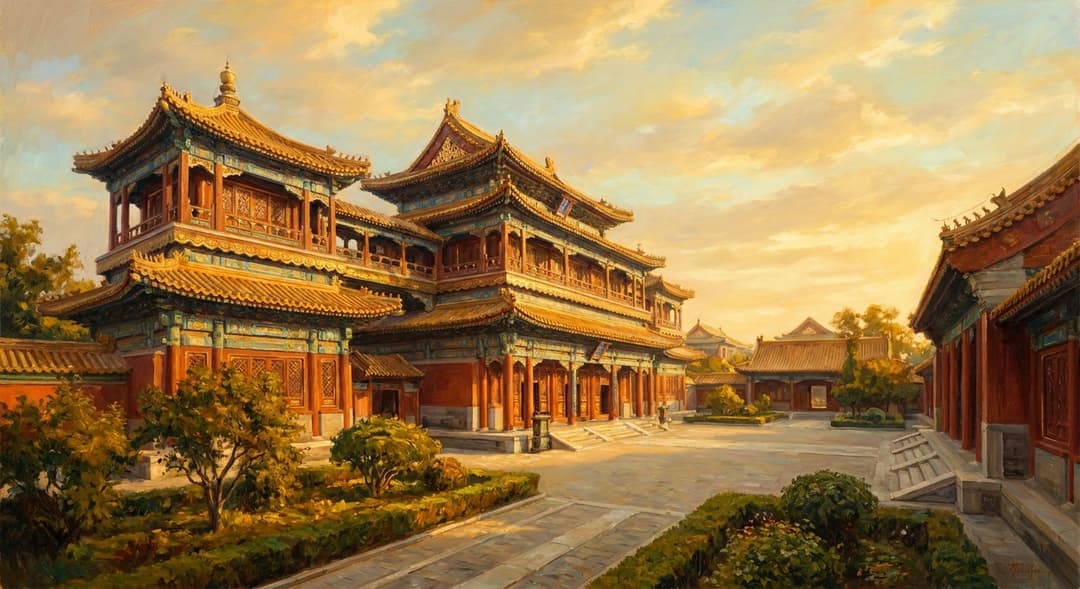
Yonghe Temple welcomes visitors into an active Gelug Buddhist monastery marked by burning incense, monastic prayer, and soaring imperial rooflines. The five primary halls align along a linear meridian, growing progressively taller and more spiritually profound as one advances southward to northward.
Highlights
- Marvel at the record-setting 26-meter sandalwood Maitreya Buddha enshrined in the Wanfu Pavilion.
- Inspect the intricate Mountain of 500 Arhats carved from fragrant red sandalwood in the Falun Dian.
- Observe the harmonious fusion of Han palatial courtyard architecture and Tibetan dagoba stupas.
- Stroll through the shaded entrance avenue flanked by ancient ginkgo trees that glow brilliant gold in autumn.
Things to Know
- Photography is strictly forbidden inside all prayer hall interiors to protect sacred statuary.
- Circumambulate all stupas, altars, and prayer halls in a clockwise direction in accordance with Buddhist custom.
- Complimentary incense is provided at the entrance gate; burn only three sticks at outdoor censers.
- Arrive early in the morning near opening time to experience the monks' morning assembly and avoid peak crowds.
Location
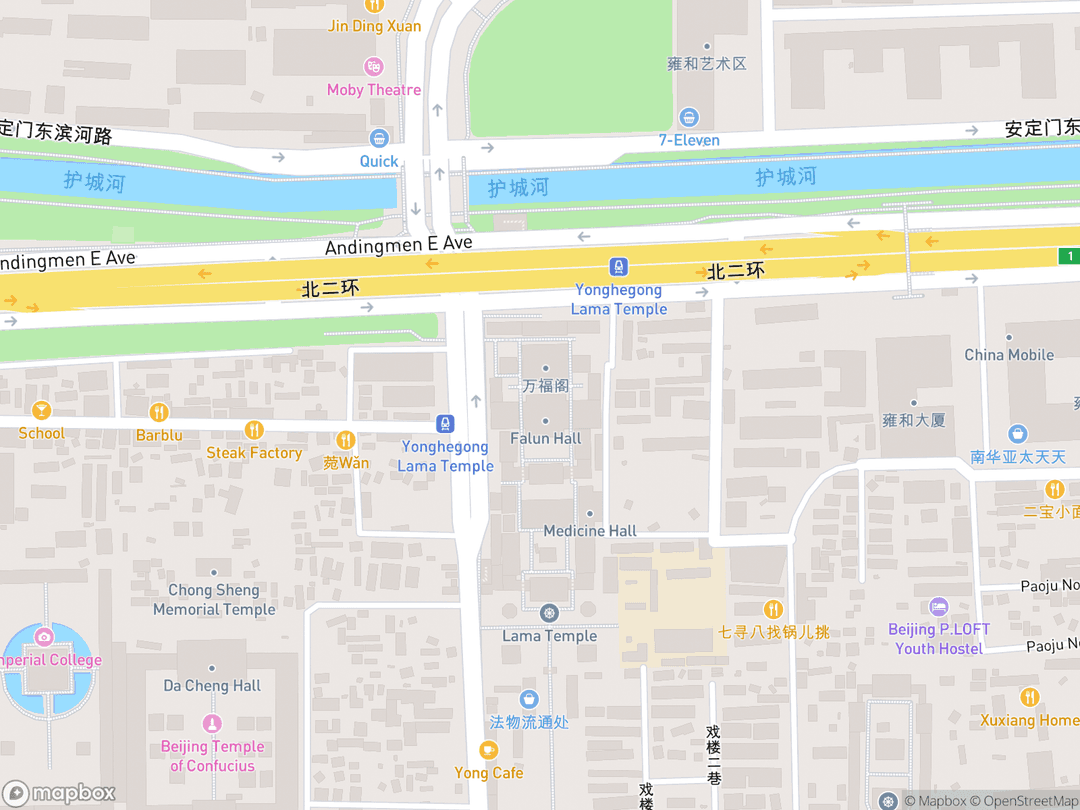
No. 12 Yonghegong Street, Dongcheng District, Beijing 100007, China
Hours: Peak season 09:00 to 17:00; off-peak season 09:30 to 16:30
Getting There: Take Beijing Subway Line 2 or Line 5 directly to Yonghegong Station and depart via Exit F.
Get DirectionsTips for Your Visit
Morning Chanting Atmosphere
Enter directly at opening hours to witness sunlight cutting through juniper incense smoke while monks chant sutras.
Respectful Conduct
Dress modestly with covered shoulders and knees, and step over rather than onto the raised wooden thresholds of hall doors.
Quadrilingual Artifacts
Look for stele inscriptions written simultaneously in Manchu, Chinese, Tibetan, and Mongolian across the central pavilion.
About
Yonghe Temple, celebrated across the world as the Lama Temple, stands as the preeminent sanctuary of the Gelug school of Tibetan Buddhism outside Tibet. Rooted deeply within the Dharmic tradition, the complex embodies the timeless Buddhist pursuit of liberation from samsara through compassion, meditation, and philosophical study. Its vibrant prayer halls integrate exoteric scholarship with esoteric Vajrayana ritual, serving as an enduring spiritual crossroads where practitioner devotion meets monumental sacred art.
Constructed in 1694 during the Qing Dynasty as the princely residence of the future Yongzheng Emperor, the estate was formally elevated to an imperial palace in 1725. Following Yongzheng's passing in 1735, the palace received imperial yellow roof tiles to denote sovereign rank. In 1744, Emperor Qianlong converted the compound into a full monastic lamasery, establishing four traditional academic colleges and creating a crucial bridge between central imperial governance and the spiritual leaders of Tibet and Mongolia.
Today, Yonghe Temple remains an active monastery where resident monks maintain unbroken liturgical rhythms alongside heritage preservation. The sanctuary houses three extraordinary woodcarving masterpieces, crowned by a colossal twenty-six-meter Maitreya Buddha carved from a single trunk of white sandalwood. Through periods of imperial decline, war, and political transformation, this palace-monastery has preserved its sacred dignity as a beacon of harmony, Buddhist wisdom, and cross-cultural spiritual brotherhood.
Gallery
Symbolic Elements
The temple's exterior features intricate carvings, each rich with spiritual meaning:
Imperial Yellow Glazed Tiles
Golden ceramic roof tiles represent the supreme sovereign authority of the Qing emperors and the radiant truth of the Dharma.
Five Roof Mini-Pavilions
Crown pavilions atop the Falun Dian embody the Five Dhyani Buddhas presiding over the spiritual compass.
Je Tsongkhapa Gilded Statue
The central bronze figure in the Falun Dian honors the founder of the Gelug school displaying the wheel-turning mudra.

Mount Meru Bronze Mandala
An intricate bronze cosmic map in the central courtyard depicts the sacred world mountain surrounded by oceans.

The Golden Urn
This sacred ritual vessel symbolizes imperial divination used to authenticate high-ranking Tibetan and Mongolian reincarnations.
Imperial Quadrilingual Stele
The Lama Shuo pavilion houses Qianlong's treatise written in Chinese, Manchu, Tibetan, and Mongolian script.
Sandalwood Maitreya Buddha
The colossal twenty-six-meter sculpture represents Maitreya, the future Buddha of loving kindness, awaiting his descent.

Mountain of Five Hundred Arhats
A red sandalwood mountain carving displays five hundred enlightened disciples fashioned from precious metals.
Interesting Facts
Two Qing emperors resided in this compound before ascending the throne, conferring upon it the title 'Cradle of Emperors' (Tier A).
The twenty-six-meter Maitreya statue was verified by Guinness World Records as the tallest Buddha carved from a single tree trunk (Tier A).
Eight meters of the colossal sandalwood Maitreya statue extend underground into solid bedrock to provide seismic stability (Tier A).
The three-story Wanfu Pavilion was constructed around the standing sandalwood Buddha after the statue was already erected (Tier A).
Premier Zhou Enlai personally ordered military protection over the temple in August 1966, preventing destruction during the Cultural Revolution (Tier A).
Major steles throughout the temple are inscribed simultaneously in Manchu, Chinese, Tibetan, and Mongolian scripts (Tier A).
The Mountain of 500 Arhats includes miniature disciple statues cast from silver, gold, bronze, and iron (Tier B).
Suspended wooden sky-bridges connect the Wanfu Pavilion to flanking side towers, echoing celestial Pure Land palaces (Tier B).
The golden-nanmu wood shrine in the Zhaofo Building contains exactly ninety-nine intricately carved dragons (Tier B).
Yonghe Temple continues as an active, practicing Gelug monastery with dozens of resident ordained monks (Tier A).
Common Questions
Why does a Buddhist temple feature imperial yellow roof tiles?
The yellow tiles were installed by imperial decree because two Qing emperors lived here before taking the imperial throne.
Is Yonghe Temple an active monastery or a historical museum?
It functions as both an active Tibetan Gelug Buddhist monastery and an internationally recognized cultural heritage site.
What is the single most celebrated artwork inside the temple?
The twenty-six-meter tall Maitreya Buddha carved from a single white sandalwood trunk inside the Wanfu Pavilion.
What should visitors avoid doing inside the prayer halls?
Visitors must refrain from taking photographs, wearing hats, and stepping directly onto the raised door thresholds.
Featured Stories
The Journey of the Sacred Sandalwood
1750
Seeking to cement the spiritual alliance between Lhasa and the Qing court, the Seventh Dalai Lama purchased a colossal white sandalwood tree trunk from Nepal. The immense timber was transported over three grueling years across mountain passes and frozen rivers to reach the capital. Imperial sculptors meticulously transformed this single tree into a towering twenty-six-meter Maitreya Buddha that still inspires pilgrims today.
Source: Court Office of Works Archives
A Temple Built Around a Colossal Buddha
1753
When court artisans began fashioning the colossal Maitreya Buddha, its monumental dimensions surpassed the physical limits of any existing hall. Builders resolved the crisis by anchoring the statue eight meters deep into subterranean bedrock before any walls were raised. The three-story Wanfu Pavilion and its soaring aerial sky-bridges were subsequently constructed around the standing image.
Source: Yonghe Temple Monastic Records
The Sealed Gates of August 1966
August 18, 1966
At the violent onset of the Cultural Revolution, militant factions converged on Yonghegong intent on destroying its ancient icons and rare manuscripts. Recognizing the irreparable peril to world heritage, Premier Zhou Enlai dispatched an emergency order to seal and guard the compound with military forces. The sanctuary survived the tumultuous decade completely intact, standing today as a pristine survival of Qing Buddhist architecture.
Source: State Administration of Cultural Heritage Records
Timeline
Construction of Prince Yong's Mansion
Emperor Kangxi constructs a palatial residence for his fourth son, Prince Yinzhen.
component.timeline.groundbreakingElevation to Imperial Palace
Prince Yinzhen ascends the throne as Emperor Yongzheng, designating his former home as Yonghegong.
MilestoneSovereign Funerary Rites
The deceased Emperor Yongzheng lies in state here, prompting the replacement of green roof tiles with imperial yellow.
MilestoneConversion to Tibetan Lamasery
Emperor Qianlong formally converts the imperial palace into a high-status Gelug monastery.
DedicationGift of the Sacred Sandalwood
The Seventh Dalai Lama procures and ships a gigantic white sandalwood tree trunk from Nepal to Beijing.
EventEnshrinement of the Great Maitreya
Imperial artisans carve the twenty-six-meter Maitreya statue and erect the Wanfu Pavilion around it.
MilestoneThe Golden Urn Ordinance
Emperor Qianlong installs the imperial Golden Urn to authenticate reincarnations of high lamas.
EventPreservation Through Crisis
Monks successfully protect the compound from destruction during the capture of Beijing by foreign forces.
EventNational Heritage Designation
The State Council proclaims Yonghe Temple a National Key Cultural Relics Protection Site.
MilestoneZhou Enlai Intervention
Premier Zhou Enlai orders military protection over Yonghegong, preventing desecration by Red Guards.
EventPublic Reopening and Restoration
The monastery resumes public religious activities following extensive state conservation.
RenovationGuinness World Record Recognition
The sandalwood Maitreya Buddha is certified as the world's tallest statue carved from a single tree.
MilestoneHistory by Decade
1690s — Prince Yong's Princely Residence
In 1694, Emperor Kangxi ordered the construction of a palatial residence in northeastern Beijing for his fourth son, Prince Yinzhen. Known as Prince Yong's Mansion, the compound functioned as an aristocratic estate following traditional Han Chinese courtyard symmetry with green glazed roof tiles. Here the prince cultivated scholarly discipline, administrative acumen, and a deep private devotion to Chan and Tibetan Buddhist philosophy.
1720s — Imperial Elevation and Dual Purpose
Following the Kangxi Emperor's death in 1722, Prince Yinzhen ascended the throne as the Yongzheng Emperor. In 1725, his former residential quarters were elevated to an imperial secondary palace renamed Yonghegong, meaning the Palace of Peace and Harmony. Demonstrating his profound commitment to Himalayan Buddhist traditions, the emperor converted half of the compound into living quarters for visiting Tibetan and Mongolian Gelug lamas.
1730s — Sovereign Funerary Honors and Imperial Yellow
Emperor Yongzheng passed away in 1735, and his imperial coffin was placed inside Yonghegong for elaborate sovereign funerary rites. Because both Yongzheng and his heir, the Qianlong Emperor, had lived within these walls, the estate was acclaimed throughout the realm as a cradle of dragons. By imperial command, the estate's green roof tiles were stripped and replaced with dazzling yellow glazed porcelain tiles reserved solely for sovereign palaces.
1740s–1750s — Transformation into an Imperial Lamasery
Emperor Qianlong formally converted the entire complex into a full-scale Tibetan Buddhist lamasery in 1744, placing it under the spiritual guidance of the Changkya Khutukhtu. Monks established four monastic faculties focusing on exoteric doctrine, tantric rituals, Tibetan medicine, and cosmological mathematics. During this era, court artisans carved the colossal sandalwood Maitreya Buddha and erected the Wanfu Pavilion around its towering form.
1790s — The Golden Urn and Regional Harmony
In 1792, Emperor Qianlong promulgated his landmark twenty-nine-article decree reforming administrative protocols across Tibet and Mongolia. To curb partisan nepotism among regional nobility, the emperor commissioned the sacred Golden Urn system, keeping one divination vessel at Yonghe Temple for selecting high incarnate lamas. Qianlong simultaneously composed the celebrated 'Discourse on Lamas,' engraved onto a colossal quadrilingual stone stele standing in the monastery courtyard.
1960s–1980s — Preservation Through Tumult to Reopening
Yonghe Temple faced existential peril at the outbreak of the Cultural Revolution in 1966 when hostile crowds targeted religious institutions. Direct intervention by Premier Zhou Enlai closed the gates and placed military guards at every entrance, preserving the priceless statues from harm. Following meticulous restoration by master conservators, the monastery reopened to the public in 1981, resuming its dual role as a living temple and premier cultural monument.
Architecture & Facilities
Yonghe Temple represents a consummate synthesis of classical Han Chinese imperial palace architecture and Tibetan Buddhist monastic design, enriched by Manchu and Mongolian decorative motifs. Laid out along a rigorous 480-meter south-to-north meridian, the complex progresses through five ascending courtyards that transition from open imperial administrative gateways into soaring, esoteric sacred spaces crowned by golden ceramic roofs.
Building Materials
Imperial Yellow Glazed Tiles
High-fired glazed ceramic tiles from imperial kilns reflect brilliant amber sunlight across all main roofs.
Golden Nanmu Hardwood
Fragrant and exceptionally durable Phoebe zhennan timber forms the load-bearing pillars and the 99-dragon shrine.
Himalayan White Sandalwood
A single twenty-six-meter trunk of white sandalwood gifted from Nepal forms the record-holding Maitreya Buddha.
Red Sandalwood (Zitan)
Dense dark-red zitan wood was intricately carved by court artisans to create the Mountain of 500 Arhats.
Interior Features
Hall of Harmony and Peace (Yonghe Dian)
The primary former audience hall houses the Three Age Buddhas surrounded by eighteen expressive arhat sculptures.
Hall of the Wheel of the Dharma (Falun Dian)
The monastic assembly hall centers upon a 6.1-meter bronze statue of Je Tsongkhapa flanked by sutra libraries.
Pavilion of Ten Thousand Happinesses (Wanfu Ge)
A soaring three-story sanctuary built to house the colossal twenty-six-meter standing sandalwood Maitreya.
Hall of the Luminous Buddha (Zhaofo Lou)
This intimate chapel preserves the exquisite golden-nanmu wood shrine carved with ninety-nine entwined dragons.
Temple Grounds
The expansive complex spans 66,400 square meters, featuring tree-lined ceremonial paths, bronze censers, carved marble terraces, and tranquil prayer wheel colonnades.
Additional Facilities
The temple includes an operational monastic residential college, a cultural relics exhibition gallery, an authentic Tibetan medicine study hall, and visitor reception services.
Religious Significance
As part of the universal Dharmic tradition, Yonghe Temple functions as an externalized mandala designed to lead the mind from worldly distraction to transcendent insight. Its architecture and rituals honor the Four Noble Truths and the Bodhisattva ideal of liberating all sentient beings from the suffering of cyclic existence.
To serve as a center for Buddhist philosophical education, Gelug monastic debate, daily ritual puja, and harmonious spiritual fellowship across diverse ethnic traditions.
Sacred Ordinances
Daily Monastic Pujas
Resident monks assemble each morning in the Falun Dian to chant Tibetan scriptures and dedicate spiritual merit to all beings.
Scholastic Buddhist Debate
Monks engage in formal philosophical dialectics testing scriptural logic and understanding of emptiness in the tradition of Je Tsongkhapa.
Monlam Chenmo (Great Prayer Festival)
An annual gathering featuring sacred Cham masked dances and extensive prayer sessions to inaugurate the lunar new year with blessings.
Incense Offerings and Circumambulation
Lay devotees offer juniper incense and circumambulate sacred altars clockwise to purify karma and cultivate mindfulness.
The Dharmic Heritage of the Gelug School
The Gelug tradition, established by the fourteenth-century master Je Tsongkhapa, synthesizes comprehensive monastic ethics with advanced Madhyamaka philosophy and esoteric Tantric paths. Yonghe Temple maintains this intellectual and contemplative legacy, venerating the Bodhisattva Maitreya as an emblem of universal loving-kindness and the eventual renewal of the Dharma.
The Cho-Yon Priest-Patron Paradigm
During the Qing Dynasty, Yonghe Temple served as the central node of the priest-patron relationship uniting imperial authority with Himalayan spiritual masters. Qing sovereigns positioned themselves as earthly protectors of the Dharma and emanations of the Bodhisattva Manjushri, transforming this monastery into an enduring embassy of peace.
Sources & Research
Every fact on Temples.org is backed by verified Sources & Research. Each piece of information is rated by source tier and confidence level.
View All Sources (6)
| Field | Source | Tier | Retrieved |
|---|---|---|---|
| About & Historical Background | State Administration of Cultural Heritage (opens in a new tab) | A | 2026-03-30 |
| Cultural Revolution Survival & Preservation | Marefa Heritage Encyclopedia (opens in a new tab) | B | 2026-03-30 |
| Visitor Insights & Access Routes | China Discovery Travel (opens in a new tab) | D | 2026-03-30 |
| Wanfu Pavilion Sandalwood Statue Details | Go Grand China Cultural Guides (opens in a new tab) | D | 2026-03-30 |
| Courtyard Layout & Travel Practicalities | China Travel Places (opens in a new tab) | D | 2026-03-30 |
| Three Wonders of Woodcarving Documentation | Kupi Travel Compendium (opens in a new tab) | D | 2026-03-30 |