
Visitor Insights
Visiting Sanctuary of Las Lajas
Las Lajas is one of Colombia's most visited pilgrimage sites, drawing hundreds of thousands of pilgrims and tourists annually from across Colombia and Ecuador. Visitors arrive down a winding road into the Guáitara canyon, crossing the dramatic stone bridge directly into the basilica entrance. The experience is unlike any other church: the back wall of the nave opens directly onto the canyon rock face, where the miraculous image of the Virgin is enshrined. The crypt below is lined with thousands of votive plaques in dozens of languages, each one a testimony of answered prayer.
Highlights
- View the miraculous image of the Virgin embedded directly in the canyon rock
- Walk the 50-meter stone bridge spanning the Guáitara Gorge
- Explore the crypt lined with thousands of ex-voto miracle plaques
- Ride the cable car across the canyon for a dramatic aerial perspective
- Attend Mass inside this extraordinary natural and architectural setting
Things to Know
- The approach road into the canyon is steep and narrow — allow extra time
- Pilgrimage traffic peaks during Holy Week, the Feast of Our Lady of the Rosary (October 7), and September
- The canyon environment is cool and humid year-round; dress in layers
- Photography is permitted inside the basilica; be respectful during services
Tips for Your Visit
Come on a Weekday
Weekends and holy days draw massive crowds. Weekday mornings are the most peaceful time to pray and explore without the throngs.
Take the Cable Car
The teleférico (cable car) offers a spectacular aerial view of the basilica suspended in the gorge — one of the most dramatic vantage points in South America.
Explore the Crypt
The lower crypt is lined with thousands of votive plaques in Spanish, Italian, English, and other languages — a moving gallery of gratitude spanning more than a century.
Walk the Canyon Path
A pathway along the canyon bottom offers a stunning view looking up at the full height of the basilica and bridge from the river level.
Nearby Border
Las Lajas is only 2 km from the Rumichaca border crossing with Ecuador, making it a natural stop when transiting between countries.
About
The Sanctuary of Las Lajas — officially the Santuario de Nuestra Señora del Rosario de las Lajas — stands as one of the most dramatic sacred sites in the Americas, rising in neo-Gothic splendor from a 50-meter stone bridge spanning the canyon of the Guáitara River near Ipiales, Colombia, just kilometers from the Ecuadorian border. The basilica clings to the canyon wall 100 meters above the river floor, its white spires piercing the Andean sky, its nave built directly against the living rock that gave the sanctuary its name — las lajas, the flat sedimentary flagstones of the canyon.
The site's origins trace to 1754, when an indigenous woman, María Mueses de Quiñones, took refuge with her deaf-mute daughter, Rosa, in a cave within the canyon during a fierce storm. According to the account preserved in local tradition, Rosa suddenly cried out — her first words ever spoken — exclaiming "The Mestiza is calling me!" and pointing to a light on the rock wall. Later, after Rosa fell gravely ill and died, her grief-stricken mother returned to the cave and prayed before the apparition. Rosa was miraculously revived. Word spread quickly to the surrounding indigenous communities, and the site became a place of immediate and fervent devotion.
The image venerated within the sanctuary is extraordinary: a colorful depiction of the Virgin Mary and the Christ Child, with Saint Francis and Saint Dominic, appears to be part of the stone wall itself rather than painted on its surface. The precise nature of the image has fascinated believers and skeptics alike for centuries. Laboratory analyses conducted by the Colombian Institute of Anthropology in the twentieth century found no evidence of artificial pigments — the image appears to penetrate several centimeters into the rock.
The present basilica — the fourth structure to occupy the site — was built between January 1, 1916, and August 20, 1949, designed by Ecuadorian architect Lucindo María Espinosa Medina and engineer Gualberto Pérez. It was funded almost entirely through popular donations from Colombian and Ecuadorian parishioners, a testament to the deep popular faith the site generates across the region. Pope Pius XII elevated it to a Minor Basilica on August 30, 1954. Thousands of votive plaques — ex-votos testifying to miraculous healings and answered prayers — line the walls of the crypt beneath the nave, earning it the informal title "the Lourdes of South America."
Gallery
Symbolic Elements
The temple's exterior features intricate carvings, each rich with spiritual meaning:
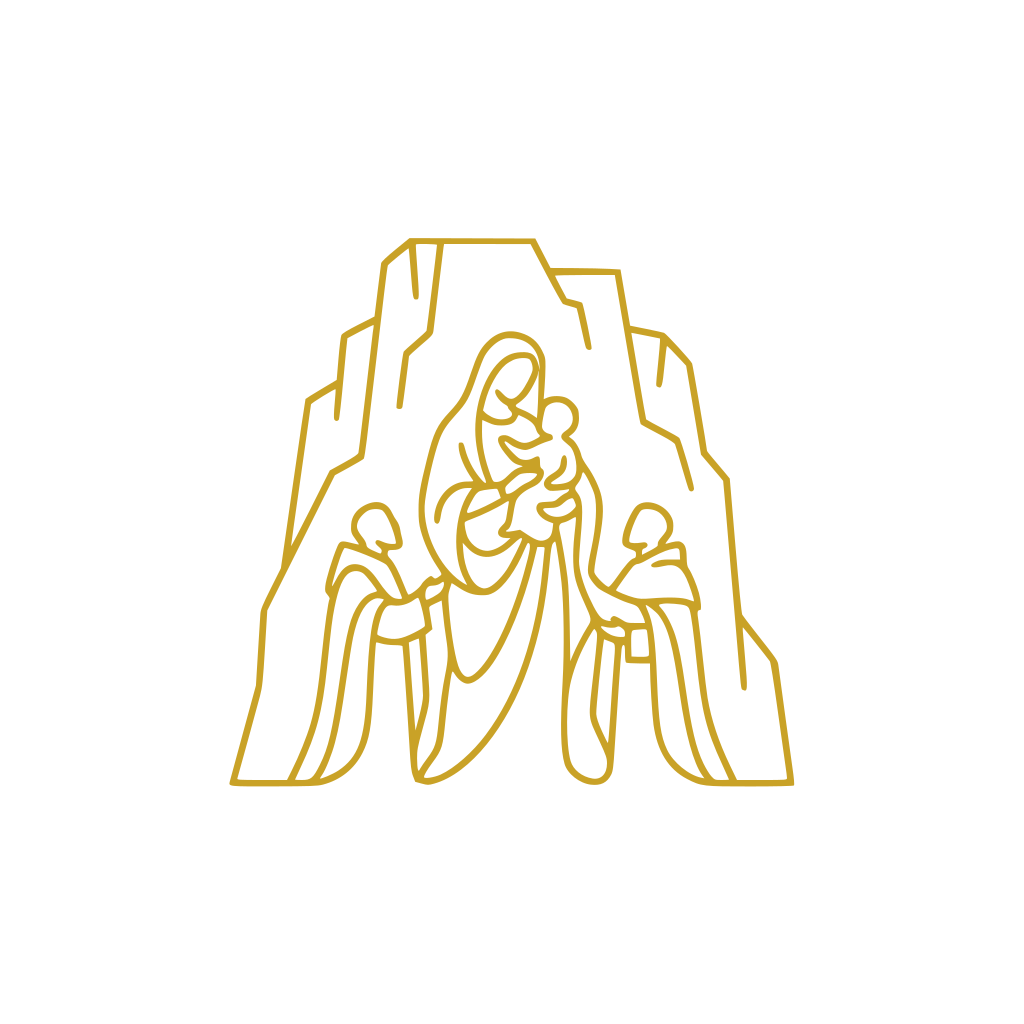
Miraculous Rock Image
The colorful image of the Virgin Mary and the Christ Child with Saint Francis and Saint Dominic, appearing to be embedded directly in the canyon rock wall. The defining symbol of Las Lajas — a supernatural imprint that has drawn pilgrims for over 270 years and has never faded.

Gothic Spires
The twin white pointed spires of the basilica rising above the canyon rim, visible for kilometers. They represent the aspiration of the faithful toward heaven and are the most recognizable exterior symbol of Las Lajas.

Stone Bridge
The 50-meter masonry bridge spanning the Guáitara Gorge that forms the physical foundation of the basilica. It symbolizes the bridge between the earthly and the divine, between the world above and the sacred space below.

Ex-Voto Plaque
The thousands of votive plaques (ex-votos) lining the crypt walls, each a written testimony of a miracle or answered prayer. They represent the living, collective memory of faith and the ongoing dialogue between pilgrims and the Virgin of Las Lajas.

Minor Basilica Cross Keys
The crossed keys of the papacy displayed at the sanctuary as a symbol of its Minor Basilica status, granted by Pope Pius XII in 1954. They represent papal recognition of Las Lajas as a place of special sanctity within the universal Church.

Guáitara Canyon
The dramatic vertical gorge of the Guáitara River that serves as the sacred geography of Las Lajas. In indigenous Andean tradition, canyons and rivers are places of spiritual power. The canyon is inseparable from the identity of the sanctuary.
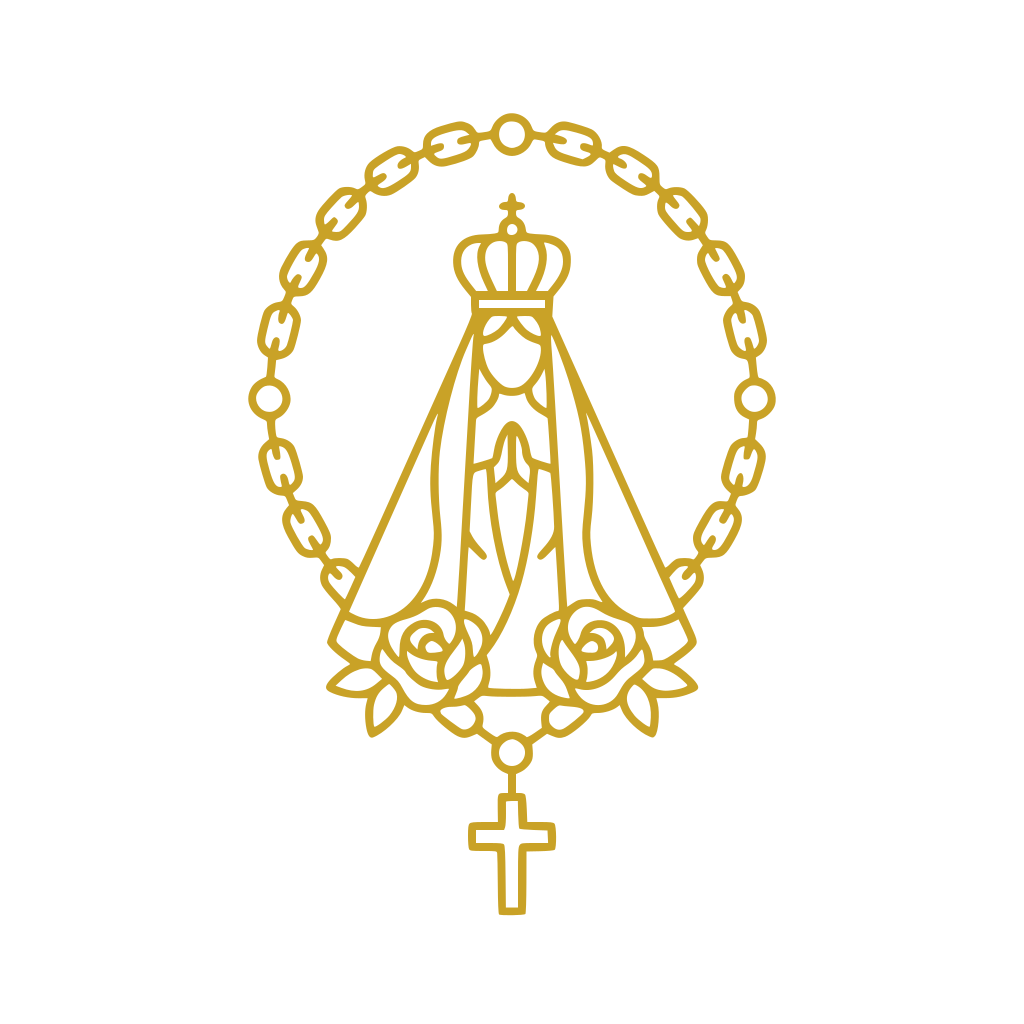
Our Lady of the Rosary
The Marian title "Nuestra Señora del Rosario de las Lajas" (Our Lady of the Rosary of Las Lajas) depicted with a crown and roses. The rosary is the primary devotional prayer associated with the sanctuary, and pilgrims often pray it on the approach to the basilica.
Interesting Facts
The image of the Virgin at Las Lajas appears to penetrate into the rock itself — studies found no artificial pigments on the stone surface.
The basilica was funded almost entirely by popular donations, without major state or institutional backing — a reflection of the grassroots faith that has sustained the site for over 270 years.
Rosa, the deaf-mute child of the first visionary, reportedly spoke her first words ever when she saw the image — crying out in the cave, "The Mestiza is calling me!"
The crypt beneath the nave houses approximately 7,000 votive plaques in multiple languages, documenting answered prayers and miracles attributed to Our Lady of Las Lajas over more than a century.
Las Lajas is often called the "Lourdes of South America" due to the volume of reported miraculous healings associated with the site.
The stained glass windows of the basilica were created by Italian artist Walter Wolf.
A cable car (teleférico) spans the canyon, offering one of the most dramatic aerial views of any church in the world — suspended high above the Guáitara River below.
Common Questions
Is the image of the Virgin really embedded in the rock?
The image appears to penetrate several centimeters into the rock surface. Studies by the Colombian Institute of Anthropology found no evidence of artificial pigments on the surface. Believers hold that the image is of divine origin; the debate between faith and scientific inquiry has continued for centuries.
Why is it called "Las Lajas"?
The name comes from las lajas, a regional term for the flat, slate-like sedimentary flagstones (shale) that characterize the canyon walls of the Guáitara River.
Is Las Lajas a cathedral?
No. Las Lajas is a Minor Basilica — a title granted by Pope Pius XII in 1954. The cathedral of the Diocese of Ipiales is separate. The Minor Basilica rank is a distinction given by the Holy See to particularly significant and beloved pilgrimage churches.
How far is it from the Ecuadorian border?
The sanctuary is approximately 7 km from Ipiales and roughly 9 km from the Rumichaca border crossing with Ecuador, making it a common stop for travelers between the two countries.
What are the ex-votos in the crypt?
Ex-votos (from the Latin "from a vow") are votive offerings left by pilgrims as thanksgiving for answered prayers or miracles. The crypt at Las Lajas contains approximately 7,000 such plaques in multiple languages, testifying to healings, rescues, and other graces attributed to Our Lady of Las Lajas.
Timeline
Marian Apparition
María Mueses de Quiñones and her deaf-mute daughter Rosa reportedly see the Virgin Mary in a cave in the Guáitara Canyon. Rosa miraculously speaks for the first time.
component.timeline.historicalFirst Brick Chapel
A small brick chapel is built at the site to shelter and honor the miraculous image on the rock.
component.timeline.constructionExpanded Shrine
A larger shrine structure is built and connected across the canyon by a bridge, establishing the basic configuration of the current site.
component.timeline.constructionConstruction of the Current Basilica Begins
Ground is broken for the present Neo-Gothic basilica. Construction is funded almost entirely by popular donations from Colombian and Ecuadorian parishioners.
component.timeline.groundbreakingBasilica Completed
After 33 years, the current basilica is completed in its present form.
DedicationCanonical Coronation
The Marian image receives a canonical coronation authorized by Pope Pius XII (decree dated May 31, 1951).
MilestoneElevated to Minor Basilica
Pope Pius XII elevates the sanctuary to the status of a Minor Basilica via the decree Templum per Decorum.
MilestoneDeclared Patroness of Diocese of Ipiales
Pope Paul VI declares the image the Principal Patroness of the Diocese of Ipiales.
MilestoneArchitecture & Facilities
Gothic Revival (Neo-Gothic), constructed between 1916 and 1949. The basilica is uniquely integrated into the canyon itself — the rear wall of the nave is the living rock face of the Guáitara Canyon, where the miraculous image is displayed. The structure is anchored to and rises from a 50-meter-tall stone bridge spanning the gorge, with the full building reaching approximately 100 meters above the river. The exterior features tall lancet arches, flying buttresses, and twin white pointed spires characteristic of Gothic Revival. The roof is designed in the form of a Latin cross when viewed from above.
Building Materials
Exterior Walls
Local shale and ashlar masonry sourced from the Nariño region, echoing the flat-stone (laja) geology of the canyon itself
Bridge Structure
Reinforced stone masonry spanning 50 meters across the Guáitara Gorge at a height of 50 meters above the river
Spires and Decorative Elements
Worked stone with Gothic Revival profiles including pointed arches, pinnacles, and decorative tracery
Stained Glass
Imported stained glass windows by Italian artist Walter Wolf, set in Gothic lancet frames throughout the nave
Canyon Rock Wall
The unmodified living rock of the Guáitara Canyon forms the apse and rear wall, with the miraculous image of the Virgin embedded directly in its surface
Interior Features
Miraculous Image Chapel
The sacred heart of the basilica — the rear apse where the miraculous image of the Virgin Mary, Christ Child, Saint Francis, and Saint Dominic appears embedded in the canyon rock face
Main Nave
A single-nave Gothic interior with pointed vaulted ceiling, flanked by side aisles with lancet arched windows; the canyon rock face forms the apse wall
Crypt (Votive Gallery)
The lower crypt beneath the nave is lined with approximately 7,000 ex-voto plaques in multiple languages, each a written testimony of answered prayers or miraculous healings
Bridge Walkway
The 50-meter stone bridge forming the basilica's foundation doubles as a public walkway across the gorge, providing dramatic views of the canyon from both sides
Temple Grounds
The canyon setting serves as the grounds — a steep-walled Andean river gorge whose verticality and natural drama form the architectural context. A canyon-floor pathway allows visitors to view the basilica from below, while the bridge provides the primary access from the road above. A cable car system crosses the canyon adjacent to the basilica. The approach from Ipiales descends a winding mountain road into the gorge.
Additional Facilities
The sanctuary complex includes an upper plaza with visitor facilities, a pilgrimage center, and service buildings near the road level. The lower level includes the bridge approach, the basilica entrance, and a riverside path. A cable car (teleférico) provides alternative access across the canyon. The town of Ipiales (7 km) provides full visitor services including accommodation, restaurants, and bus connections.
Religious Significance
Las Lajas is one of the most beloved Marian shrines in Latin America, drawing pilgrims from across Colombia, Ecuador, and beyond for over 270 years.
The sanctuary exists as a place of Marian pilgrimage centered on the miraculous image of Our Lady of the Rosary of Las Lajas embedded in the canyon rock face. Pilgrims come to seek healing, offer thanksgiving, fulfill vows, and experience what they believe to be a site of ongoing divine presence.
The Miraculous Image
The image of the Virgin Mary holding the Christ Child, flanked by Saint Francis and Saint Dominic, appears to be embedded in and part of the rock wall itself. Believers hold that the image appeared through divine agency and cannot be explained by natural means. The image has never faded despite centuries of exposure to the canyon's humid environment.
Ex-Votos and Healing Tradition
The practice of leaving ex-voto plaques at Las Lajas reflects a centuries-long tradition of popular Catholic faith in which pilgrims offer a written or material testimony of a grace received. The approximately 7,000 plaques in the crypt represent what believers consider a living archive of divine intervention, spanning healings of illness, rescues from accidents, restoration of relationships, and conversions.
Pontifical Recognition
The canonical coronation of 1952 (authorized by Pope Pius XII) conferred formal recognition of the image as a major Marian devotion. The elevation to Minor Basilica in 1954 granted the sanctuary special standing within the universal Catholic Church, including the right to display crossed keys and a tintinnabulum (processional bell) as symbols of papal recognition.
Sources & Research
Every fact on Temples.org is backed by verified Sources & Research. Each piece of information is rated by source tier and confidence level.
View All Sources (1)
| Field | Source | Tier | Retrieved |
|---|---|---|---|
| Official Sanctuary Website — History | Santuario de Las Lajas (opens in a new tab) | A | 2026-04-07 |