Visitor Insights
Visiting Salt Cathedral of Zipaquirá
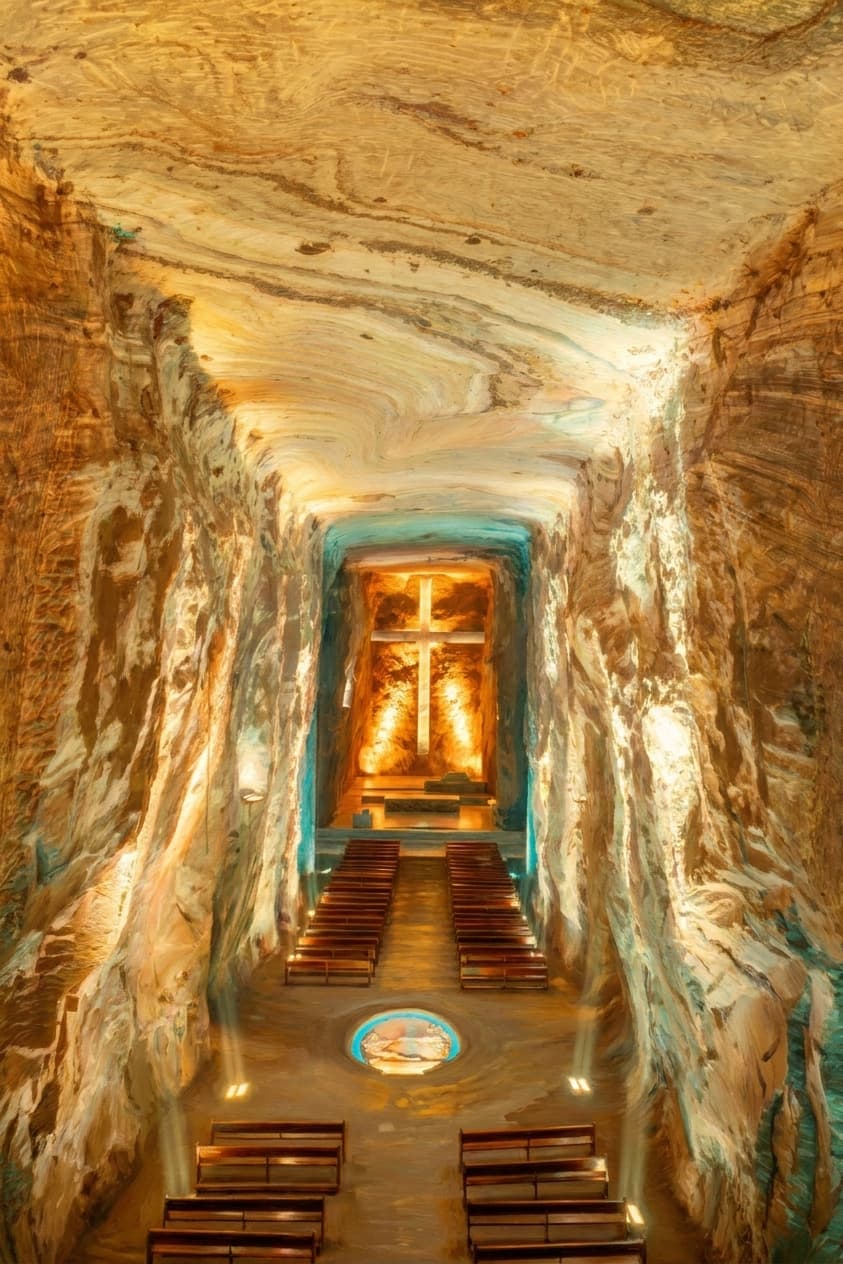
Visitors descend into a cool, contemplative subterranean cathedral system carved completely within active salt deposits. The journey transitions from dimly illuminated penitential passages into monumental chambers anchored by the world's largest underground cross.
Highlights
- Monumental 16-meter tall illuminated high cross cut directly into the halite rock wall
- Fourteen discrete cavernous chambers depicting the liturgical Stations of the Cross
- Subterranean brine water mirror creating a glass-like reflection of carved vaults
- Active Catholic Sunday Mass celebrated weekly at the 16-ton salt high altar
Things to Know
- Interior temperatures remain constant year-round at 14°C (57°F) with elevated humidity, requiring light outerwear
- Underground paths feature gentle slopes, damp salt surfaces, and stairs requiring non-slip footwear
- Peak pilgrim crowds gather on Sunday afternoons around the 1:00 PM liturgical service
Location
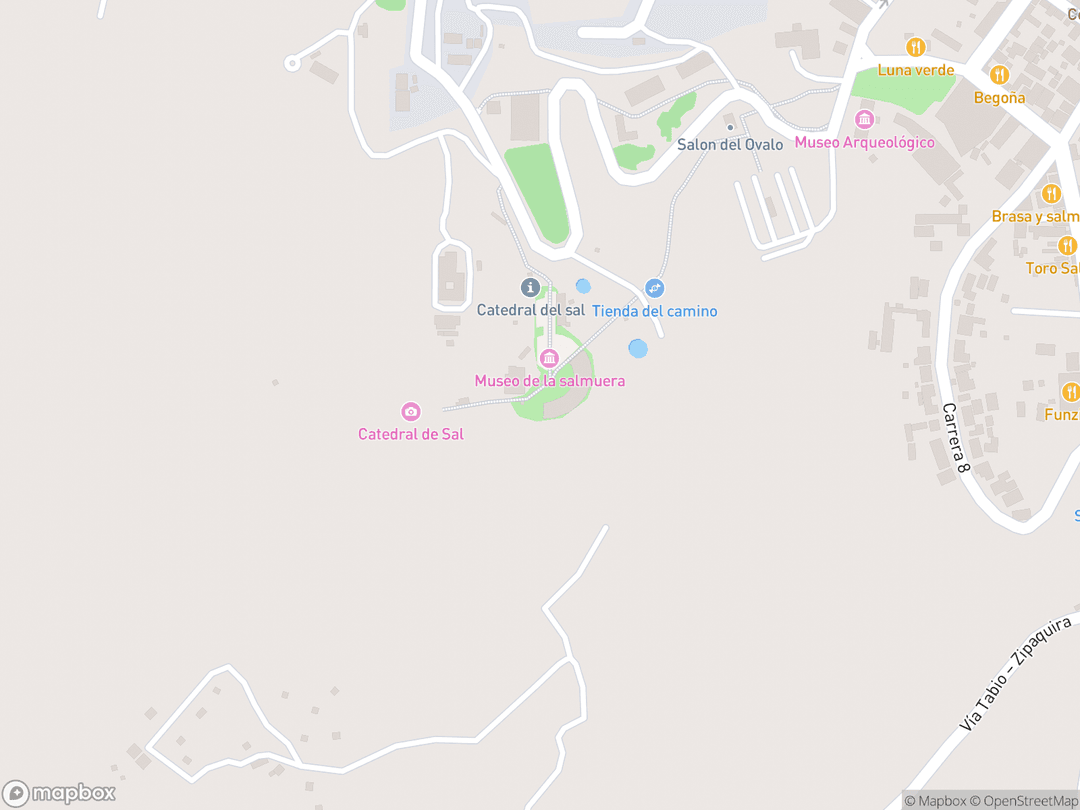
Parque de la Sal, Carrera 6 Calle 1, Zipaquirá, Cundinamarca, Colombia
Hours: Daily from 9:00 AM to 5:40 PM (last entry)
Getting There: Located in Zipaquirá 49 km north of Bogotá; reachable via intermunicipal buses from Portal del Norte, private vehicles via Route 45A, or the weekend Sabana Tourist Train.
Get DirectionsTips for Your Visit
Wear Sturdy Shoes
Salt-crusted ramps and rock steps can become damp and slippery inside the underground galleries.
Bring Warm Clothing
The mine maintains a brisk 14°C (57°F) climate throughout all seasons regardless of surface temperatures.
Attend Sunday Mass
Catholic Mass takes place in the Central Nave at 1:00 PM every Sunday and is open to all visitors.
Visit Midweek Mornings
Arrive at 9:00 AM between Tuesday and Thursday to experience quiet contemplation before tour groups arrive.
About
The Salt Cathedral of Zipaquirá is a monumental Roman Catholic sanctuary sculpted 180 meters beneath the surface of Cerro del Zipa. Rooted in the ancient Abrahamic tradition of subterranean encounter with the Divine, this consecrated cavern echoes early Christian catacombs where believers worshipped in earth's deep sanctuaries. Salt itself serves as a profound biblical covenant of preservation, incorruptibility, and spiritual fidelity.
Historically carved from commercial halite mines exploited since pre-Columbian Muisca civilization, the current complex was designed by architect Roswell Garavito Pearl and opened in 1995 to replace an earlier 1954 sanctuary. Ecclesiastically functioning as a shrine under the patronage of Our Lady of the Rosary of Guasá, it provides miners and pilgrims with an awe-inspiring subterranean house of prayer.
The temple comprises a 386-meter penitential Way of the Cross leading into three colossal naves representing the Nativity, the Life and Cross, and the Resurrection of Christ. Rather than an episcopal seat, this active shrine welcomes thousands of weekly pilgrims who celebrate Catholic sacraments amidst soaring chiseled rock walls.
Gallery
Symbolic Elements
The temple's exterior features intricate carvings, each rich with spiritual meaning:

The Fourteen Stations of the Cross
Fourteen cavernous chambers along the entry corridor invite pilgrims into deep spiritual reflection upon Christ's Passion.
The Monumental High Cross
Carved 16 meters high into the bedrock, the back-lit cross proclaims Christ's definitive victory over sin and death.

The Subterranean Dome
Hollowed into the salt roof, the azure-lit dome symbolizes celestial eternity descending into human toil.

Altar of Our Lady of Guasá
This side shrine honors Mary as maternal patroness and celestial protector of miners navigating dangerous shafts.

The Nativity Font
An amphitheater-style basin carved from crystalline salt signifies baptismal regeneration and the Incarnation.

Medallion of Creation
A monumental salt mural portrays God endowing humanity with life from terrestrial clay in Genesis.

Archangel Michael Sculpture
The sword-bearing archangel stands at the threshold representing divine guardianship over subterranean workers.

Water Mirror of Stillness
A high-density brine reservoir symbolizes baptismal cleansing and tranquil spiritual introspection.
Interesting Facts
Engineers and miners excavated over 250,000 tons of solid halite rock salt without using explosive dynamite. (Tier B)
Colombian citizens voted the Salt Cathedral as the 'Number One Wonder of Colombia' in a 2007 national poll. (Tier C)
The 16-meter high cross carved into the central nave wall is the largest sculpted underground cross in the world. (Tier B)
The cathedral is supported entirely by self-bearing salt pillars and vaults without external steel support beams. (Tier B)
The sanctuary's high altar is carved out of a single monolithic salt block weighing more than 16 tons. (Tier A)
Because halite absorbs chaotic acoustic frequencies, choral voices resonate through the chambers with pristine clarity. (Tier B)
An underground brine pond functions as a liquid mirror, reflecting the cavernous ceiling with optical perfection. (Tier D)
The microclimate contains virtually zero airborne allergens due to continuous atmospheric filtration by sodium chloride walls. (Tier B)
Common Questions
Is the Salt Cathedral of Zipaquirá an actual episcopal cathedral?
Canonically it is a consecrated Catholic votive sanctuary rather than a bishop's seat, which resides at Holy Trinity Cathedral in Zipaquirá.
Is active mining still occurring near the cathedral?
Yes, industrial halite extraction continues in isolated lower levels of the mountain beneath the cultural park.
Can visitors attend Catholic worship services inside?
Yes, Catholic Mass is celebrated in the Central Nave every Sunday at 1:00 PM for all visitors and pilgrims.
How cold does it get inside the underground chambers?
The subterranean temperature remains steady at 14°C (57°F) year-round with moderate natural humidity.
Featured Stories
The Miners' Rosary in the Dark
1932
Before formal architectural plans existed, miners carved a humble devotional altar into the dark Guasá shaft. Every crew gathered beneath flickering tallow lamps to recite the Rosary before facing volatile gas pockets and rock falls. This grassroots miners' devotion inspired Colombia to transform the mineral quarry into a consecrated sanctuary.
Source: Diocese of Zipaquirá Historical Archive
The Non-Explosive Masterpiece
1991
When the old 1954 cathedral faced vault collapse, architect Roswell Garavito Pearl proposed carving an entirely new sanctuary sixty meters lower down. To avoid fracturing the delicate Andean salt dome, mining engineers prohibited dynamite and removed 250,000 tons of rock with precision mechanical picks. Their structural mastery resulted in self-supporting rock arches that require no steel columns.
Source: Sociedad Colombiana de Arquitectos Monograph
The Floating Cross of the Abyss
December 16, 1995
At the cathedral's 1995 dedication, witnesses were stunned by the optical illusion created around the 16-meter high cross. By deeply excavating the perimeter trench behind the carved salt relief and installing hidden optical illumination, the architect made the solid rock cross appear suspended in mid-air. The visual effect reminds worshippers that divine light pierces the darkest recesses of human struggle.
Source: Catedral de Sal de Zipaquirá Official Dedication Ledger
Timeline
Pre-Columbian Muisca Extraction
Indigenous Muisca extract rock salt from Zipaquirá surface deposits, using cakes of salt as regional Andean currency.
MilestoneColonial Subterranean Mining
Spanish authorities establish formal underground gallery mining, where laborers erect early devotional shrines to Mary.
EventMiners' Votive Altar
Miners hollow out an informal underground chapel dedicated to Our Lady of the Rosary of Guasá for daily pre-shift prayer.
MilestoneFirst Cathedral Groundbreaking
Construction begins on the first monumental subterranean cathedral directed by architect José María González Concha.
component.timeline.groundbreakingDedication of the Original Cathedral
The first Salt Cathedral is consecrated on the Solemnity of the Assumption, featuring four large underground naves.
DedicationStructural Closure of First Cathedral
Geological surveys indicate upper vault instability from commercial salt extraction, halting large assemblies.
EventArchitectural Competition and New Excavation
Roswell Garavito Pearl wins the national design competition, initiating excavation 60 meters below the original structure.
component.timeline.groundbreakingDecommissioning of 1954 Cathedral
The original 1954 cathedral is officially and permanently closed to ensure miner and visitor safety.
RenovationDedication of New Salt Cathedral
The modern Salt Cathedral is officially inaugurated in a national civil and diocesan Catholic consecration ceremony.
DedicationProclaimed First Wonder of Colombia
Over 40,000 Colombian citizens vote the Salt Cathedral as the country's most significant cultural wonder.
MilestoneHistory by Decade
1500s–1800s — Indigenous Exploitation to Colonial Shafts
Salt was our sacred offering to the mountains long before iron tools opened the subterranean shafts.
For generations prior to European arrival, indigenous Muisca groups traded dried salt cakes as currency across the Andes. Spanish colonial administrators transitioned surface works into deep underground tunnels where Catholic miners began carving crude crucifixes into the rock face.
1930s–1940s — Devotional Altars in the Guasá Shaft
Miners laboring in dangerous underground conditions established a dedicated shrine to Our Lady of the Rosary in the early 1930s. Their custom of praying the Rosary before descending into active quarry faces drew the attention of industrialist Luis Ángel Arango, who proposed a permanent monumental church.
1950s — Construction of the First Salt Cathedral
Architect José María González Concha directed the conversion of existing commercial galleries into the first subterranean cathedral, which was dedicated on August 15, 1954. The massive four-nave structure accommodated up to 8,000 worshippers but was located within an actively worked mineral zone.
1980s–1990 — Structural Compromise and Closure
Continued commercial salt excavation around the 1954 cathedral compromised the structural integrity of its overhead vaults. After severe seismic warnings in 1990, authorities permanently closed the upper cathedral to prevent catastrophic collapses during public gatherings.
1991–1995 — Designing the Modern Subterranean Sanctuary
We carved not by adding stone upon stone, but by excavating light out of the ancient mountain void.
In 1991, Bogotano architect Roswell Garavito Pearl won a national competition to construct a replacement cathedral 60 meters deeper inside the mountain. Specialized teams extracted over 250,000 tons of rock salt using non-explosive equipment before its formal dedication on December 16, 1995.
2000s–Present — National Monument and Living Sanctuary
Voted Colombia's First Wonder in 2007, the Salt Cathedral established itself as an international cultural beacon. Today it remains an active house of prayer where weekly Masses and liturgical devotions unite civic tourism with authentic Catholic worship.
Architecture & Facilities
The Salt Cathedral of Zipaquirá represents subterranean expressionist sacred architecture executed through subtractive lithic excavation. Rather than erecting additive walls, the architect sculpted monumental basilical spaces directly into solid halite within an active Andean salt dome.
Building Materials
Halite Rock Salt
Extracted from the Andean salt diapir with dark mineral and clay striations, forming the monolithic self-supporting ceilings and walls.
Italian Carrara Marble
Polished white marble sculptures installed across altars to provide tactile and luminous contrast with rough dark salt.
Monolithic Altar Salt Block
A sixteen-ton solid block of quarried halite carved and polished to function as the primary Eucharistic table of sacrifice.
Concealed Fiber-Optic Luminaires
Engineered LED and fiber-optic lighting systems recessed into trenches to project colored hues and celestial backlighting.
Interior Features
Nave of the Nativity
Houses an amphitheater-shaped crystalline rock font representing the Incarnation of Christ into the physical world.
Central Nave of Life and the Cross
The primary liturgical basilica anchored by a 16-meter tall high cross carved in relief against the terminal cavern wall.
Nave of Death and Resurrection
A contemplative chamber dedicated to the Paschal mystery, decorated with symbols of eternal life and heavenly triumph.
Via Crucis Entrance Tunnel
A 386-meter descending passage containing fourteen separate liturgical shrines depicting the Passion of Jesus Christ.
Temple Grounds
Situated in the 32-hectare Parque de la Sal, the complex features native Andean pine landscapes, miner heritage plazas, paved access trails, and scenic overlooks above Zipaquirá's colonial center.
Additional Facilities
Includes the Miner's Route interactive educational tunnel, a geological cinema auditorium, subterranean commercial retail arcades, and on-site diocesan reception facilities.
Religious Significance
Within Christian Abrahamic theology, the encounter between humanity and the Almighty frequently occurs in subterranean chambers, rock-hewn grottos, and mountains of covenant. Consecrated Catholic shrines redeem the physical elements of the earth, transforming a commercial mine into a sacred house of prayer.
To provide a sacred sanctuary where pilgrims contemplate the mysteries of the Passion and encounter the Real Presence of Christ through the Catholic sacraments.
Sacred Ordinances
The Sacrifice of the Mass
Weekly celebration of the Catholic Eucharist on Sunday afternoons at the monolithic 16-ton salt altar.
Sacrament of Penance
Pilgrims receive the ministry of reconciliation in subterranean confessionals prior to liturgical celebrations.
The Stations of the Cross
A physical and prayerful pilgrimage through the 14 subterranean niches meditating on the Passion of Jesus.
Marian Intercessory Rosary
Traditional prayers offered before the image of Our Lady of Guasá for safety, guidance, and spiritual peace.
The Biblical Theology of Salt
Scripture identifies salt as an enduring sign of divine fidelity (Leviticus 2:13) and calls the faithful to be 'the salt of the earth' (Matthew 5:13). The cathedral's salt chambers remind visitors of spiritual preservation and moral integrity in a transient world.
A Living Votive Sanctuary
Though popularly designated a cathedral, canon law classifies this temple as a votive shrine under the Diocese of Zipaquirá. It honors generations of Colombian miners who entrusted their lives daily to God within hazardous mountain corridors.
Sources & Research
Every fact on Temples.org is backed by verified Sources & Research. Each piece of information is rated by source tier and confidence level.
View All Sources (9)
| Field | Source | Tier | Retrieved |
|---|---|---|---|
| About & Historical Background | Catedral de Sal de Zipaquirá Sociedad de Economía Mixta (opens in a new tab) | A | 2026-03-30 |
| Religious Significance & Sacraments | Diócesis de Zipaquirá (opens in a new tab) | A | 2026-03-30 |
| About & Ecclesiastical History | Conferencia Episcopal de Colombia (opens in a new tab) | A | 2026-03-30 |
| Historical Timeline & Pre-Columbian Muisca Heritage | Alcaldía Municipal de Zipaquirá (opens in a new tab) | A | 2026-03-30 |
| Architecture & Structural Engineering | Sociedad Colombiana de Arquitectos (opens in a new tab) | B | 2026-03-30 |
| Historical Timeline & Mining Archaeology | Instituto Colombiano de Antropología e Historia (opens in a new tab) | B | 2026-03-30 |
| First Wonder of Colombia Referendum | Casa Editorial El Tiempo (opens in a new tab) | C | 2026-03-30 |
| Visitor Insights & Transit Information | Parche x Bogotá (opens in a new tab) | D | 2026-03-30 |
| Visitor Insights & Travel Logistics | Safe Transfers Colombia (opens in a new tab) | D | 2026-03-30 |