Visitor Insights
Visiting Saint Catherine's Monastery
Visitors should arrive early in the morning to experience the ancient katholikon before group tours gather. Modest dress covering shoulders and knees is strictly enforced by monastic gatekeepers. Footwear must be removed when entering the sacred Chapel of the Burning Bush.
Highlights
- Marvel at the glittering 6th-century Transfiguration mosaic in the Katholikon apse.
- Venerate the living bramble revered as the biblical Burning Bush in the central courtyard.
- View world-renowned 6th-century encaustic icons and illuminated manuscript treasures in the monastic museum.
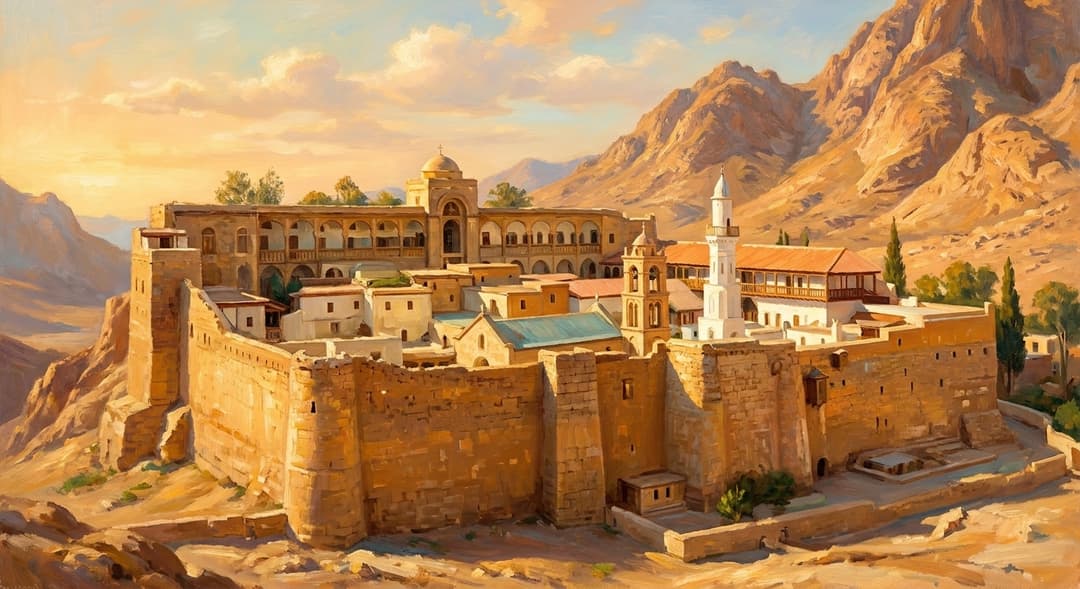
- Contemplate the historical coexistence visible in the adjacent Fatimid-era minaret and Christian bell tower.
Things to Know
- Public visiting hours are restricted to 09:00 AM through 11:30 AM on non-fasting weekdays and Saturdays.
- The monastery is completely closed to casual tourism on Fridays, Sundays, and major Orthodox feast days.
- Photography is strictly forbidden within the basilica, the relic chapels, and the museum vault.
- Winter mornings in the high desert can drop below freezing, requiring warm layered clothing.
Location
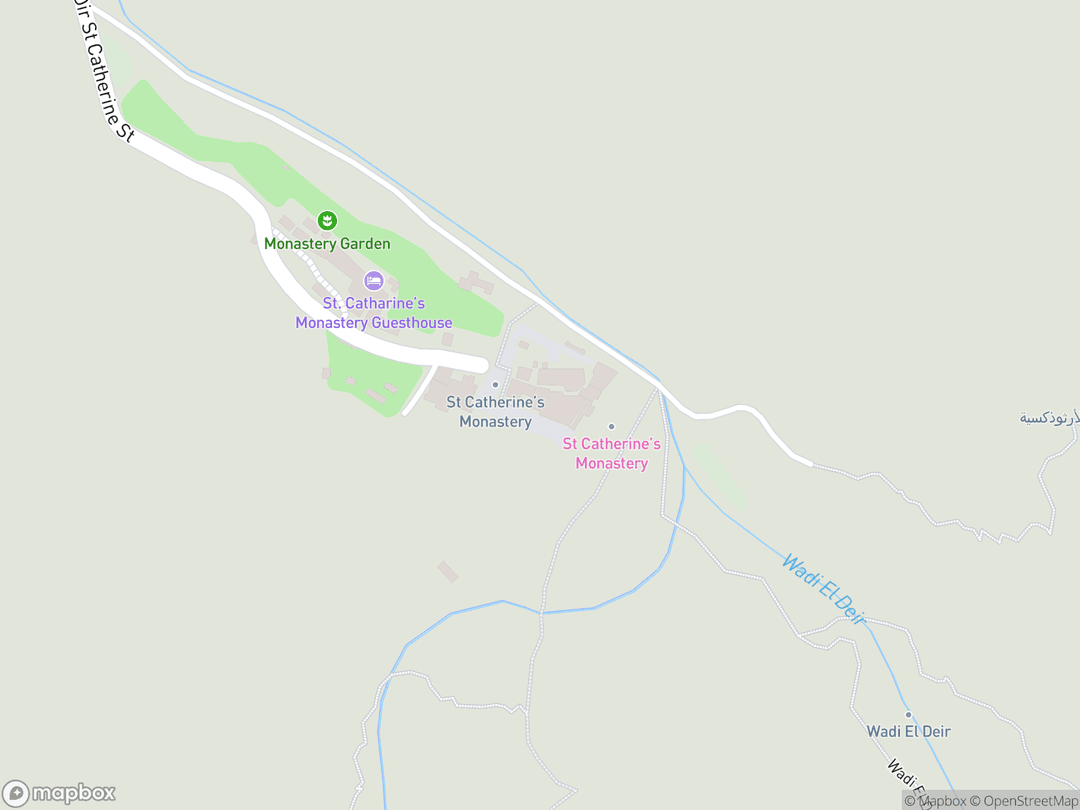
Wadi el-Deir, Saint Catherine City, South Sinai Governorate, Egypt
Hours: Monday through Thursday and Saturday: 09:00 AM to 11:30 AM; Closed Friday and Sunday.
Getting There: Located 220 km northwest of Sharm El-Sheikh and 450 km southeast of Cairo via South Sinai desert highways.
Get DirectionsTips for Your Visit
Arrive Before Opening
Clear the security checkpoints by 08:30 AM to enter the Basilica before large bus excursions arrive from Red Sea resorts.
Plan Mount Sinai Hikes Separately
Summit hikes for Mount Sinai typically depart between 01:00 AM and 02:00 AM with mandatory Jebeliya Bedouin guides.
About
The Sacred Monastery of the God-Trodden Mount Sinai, commonly known as Saint Catherine's Monastery, stands at the foot of Mount Sinai where Moses encountered the Burning Bush and received the Ten Commandments. Founded by Empress Helena in the 4th century and fortified by Emperor Justinian I between 548 and 565 CE, it remains an unbroken bastion of Eastern Orthodox monasticism.
Enclosed within towering granite curtain walls, the complex holds the world's oldest continuously operating monastic library and an unmatched collection of pre-iconoclastic encaustic icons. Its autonomous brotherhood preserves ancient liturgical traditions, hesychastic contemplative prayer, and a historic Fatimid-era mosque constructed within its defensive perimeter.
Revered across Christian, Jewish, and Islamic traditions, Saint Catherine's Monastery exemplifies interfaith coexistence and timeless ascetic devotion. Protected through centuries by imperial edicts and the historic Achtiname of Muhammad, this UNESCO World Heritage site continues its daily cycle of prayer and hospitality in the rugged Sinai desert.
Gallery
Symbolic Elements
The temple's exterior features intricate carvings, each rich with spiritual meaning:

The Burning Bush
The living bramble represents divine presence and typifies the Virgin Mary bearing the divine flame unharmed.
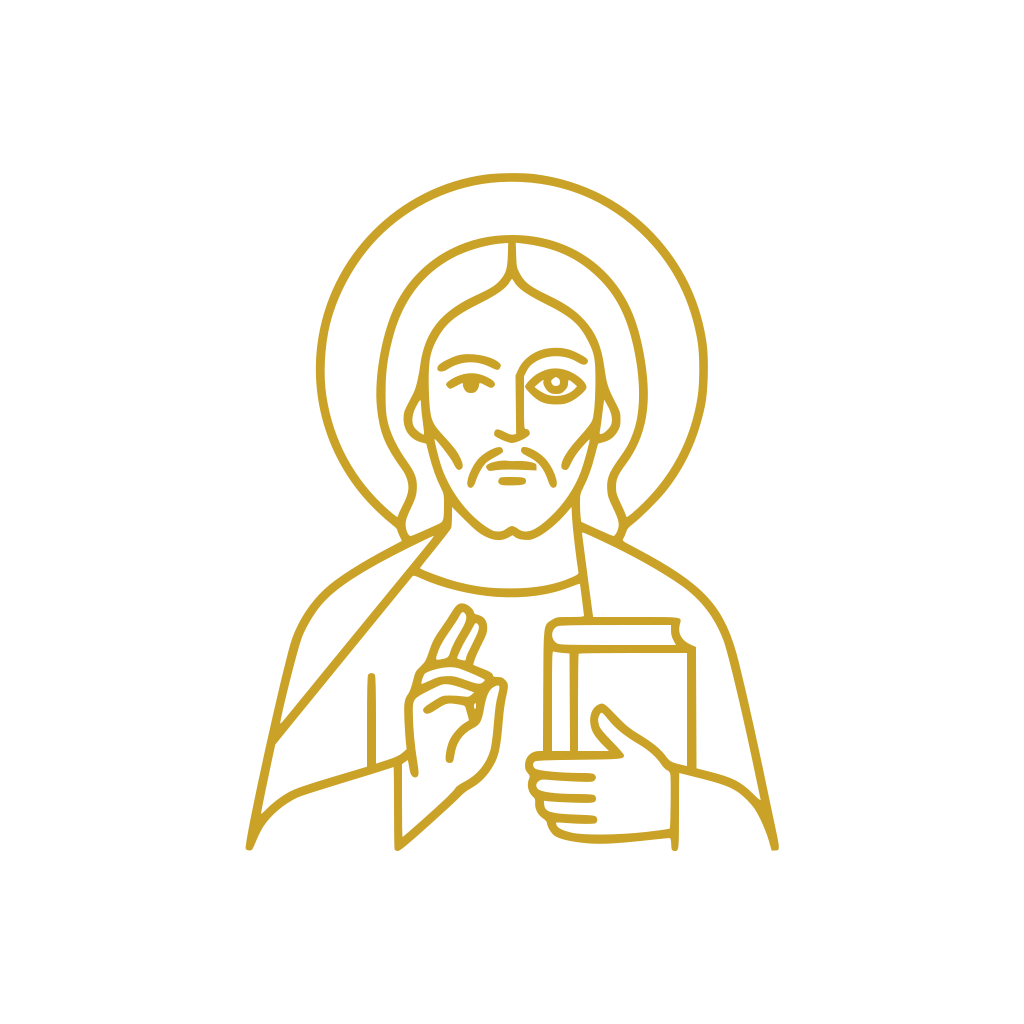
Christ Pantocrator Icon
The 6th-century encaustic masterpiece illustrates the dual divine and human natures of Christ through intentional facial asymmetry.

Transfiguration Mandorla
Concentric bands of blue and gold apse mosaic tesserae depict the Uncreated Light of Mount Tabor.

Ladder of Divine Ascent
A ladder with thirty rungs symbolizes the ascetic journey overcoming passions to attain divine union.

The Achtiname Seal
The handprint charter of the Prophet Muhammad represents interfaith protection and religious immunity across centuries.

Reliquary of Saint Catherine
Gilded reliquaries encasing the martyr's relics symbolize spiritual wisdom and bodily incorruption through faith.
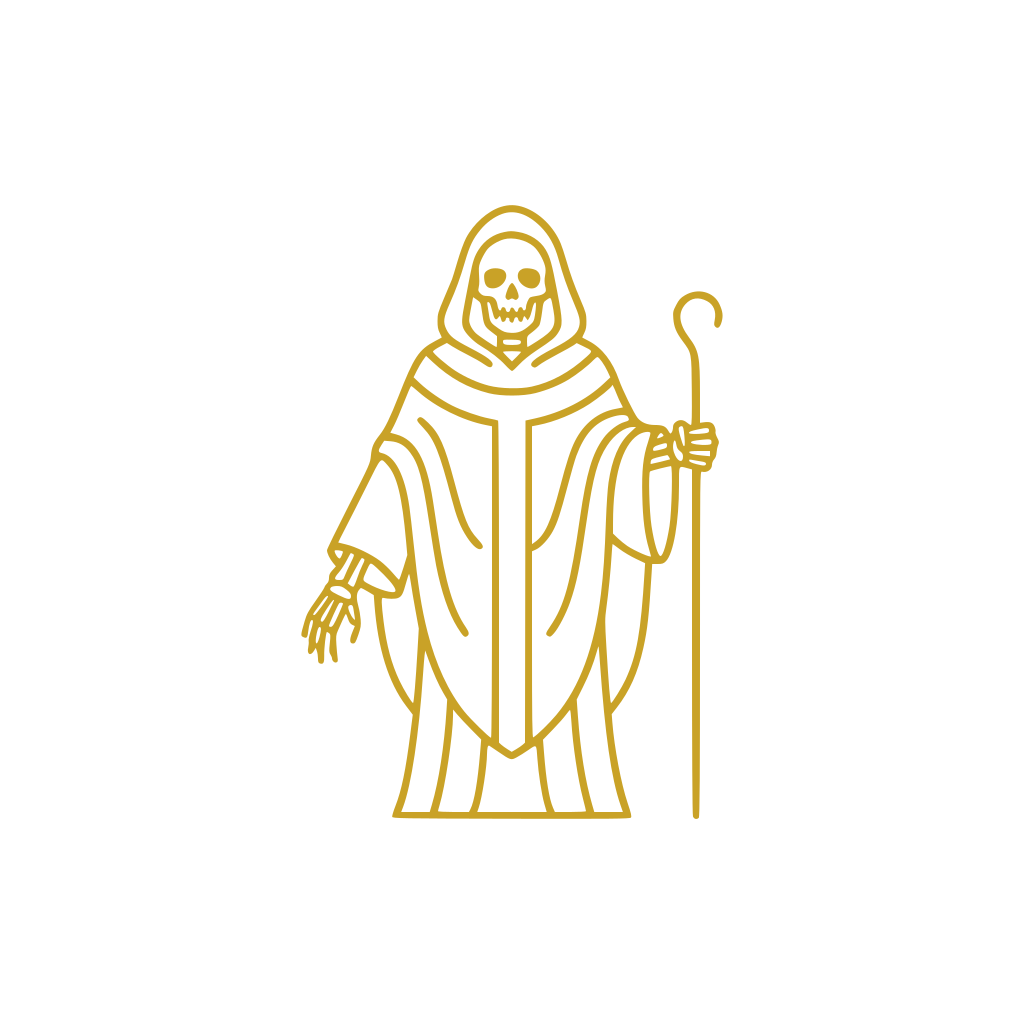
Stephanos the Guardian
The vestment-clad skeleton of the 6th-century hermit exemplifies ascetical vigilance and remembrance of mortality.
Interesting Facts
Saint Catherine's is the world's oldest continuously inhabited Christian monastic community, maintaining daily prayer for 1,500 years (Tier A).
Guinness World Records recognizes the monastery as home to the world's oldest continuously operating library (Tier A).
Because Sinai was governed by Islamic rulers during the Iconoclasm, it preserves half of the world's surviving pre-8th-century icons (Tier A).
The local Jebeliya Bedouins who guard the monastery descend from Roman guards sent by Justinian in the 6th century (Tier B).
A Christian bell tower and an Islamic minaret stand together inside the defensive walls from the Fatimid era (Tier A).
High-tech multispectral imaging has uncovered lost classical languages and erased biblical texts beneath its palimpsests (Tier B).
Botanists have documented that cuttings taken from the monastery's sacred bramble bush have failed to grow elsewhere (Tier B).
The intact skeleton of 6th-century hermit monk Stephanos has remained seated in full vestments inside the ossuary for 1,400 years (Tier A).
Common Questions
Why is the monastery named after Saint Catherine of Alexandria?
Monks discovered the relics of the 4th-century martyr atop Mount Catherine around 800 CE and enshrined them inside the basilica.
Is the Burning Bush inside the monastery genuinely alive?
Yes, an ancient specimen of Rubus sanctus continues to grow in the courtyard adjoining the original 4th-century chapel.
Why is there an Islamic mosque inside a Christian monastery?
The Fatimid mosque was erected in 1106 CE to preserve the monastery from destruction by hostile caliphate factions.
Can tourists attend Orthodox liturgical services at the monastery?
Orthodox Christians may request permission for morning liturgies, but regular services are reserved for the monastic brotherhood.
Featured Stories
The Imperial Mandate of Stephanos of Aila
548
When desert raids threatened the anchorites of Mount Sinai, Byzantine Emperor Justinian commissioned master architect Stephanos of Aila to erect an impregnable mountain redoubt. Stephanos quarried massive red granite blocks from adjacent peaks to construct curtain walls up to twenty meters tall, carving his own name onto the cedar roof beams. His architectural genius ensured the sanctuary survived fifteen centuries of earthquakes, sieges, and political turmoil.
Source: Holy Monastery of Saint Catherine Archives
The Imperial Covenant of the Achtiname
628
Facing the rise of Islamic governance across the region, a delegation of Sinai monks journeyed to Medina to seek diplomatic protection from the Prophet Muhammad. Impressed by their ascetic peace, the Prophet granted them the Achtiname, a decree granting perpetual immunity, religious autonomy, and tax exemptions. Bearing Muhammad's handprint, this covenant shielded the monastery through Umayyad, Fatimid, Mamluk, and Ottoman rules.
Source: Sinai Monastic Charters
The Rediscovery of the New Finds
May 26, 1975
While clearing rubble after an accidental fire beneath the Chapel of Saint George, monks discovered a forgotten subterranean room packed with ancient manuscripts. The cache yielded over one thousand leaves, including twelve missing folios of the 4th-century Codex Sinaiticus and lost Caucasian Albanian texts. This historic find ignited international conservation projects that revolutionized modern digital scholarship.
Source: Saint Catherine Foundation
Timeline
Helena Commissions the Burning Bush Chapel
Empress Helena orders a sanctuary built at the site of the Burning Bush to protect desert hermits.
MilestonePilgrim Egeria Visits Sinai
The pilgrim Egeria records active monastic cells and generous ascetic hospitality in Wadi el-Deir.
EventImperial Fortress Construction Commences
Emperor Justinian I dispatches architect Stephanos of Aila to encase the shrine in massive granite curtain walls.
component.timeline.groundbreakingBasilica of the Transfiguration Completed
Master artisans complete the monumental three-aisled basilica and the imperial apse mosaics.
DedicationAbbot John Climacus Authors Spiritual Classic
Saint John Climacus writes The Ladder of Divine Ascent, defining Byzantine hesychastic theology.
MilestoneMonastery Receives the Achtiname
The Prophet Muhammad grants an imperial charter guaranteeing immunity and protection to the Sinai brotherhood.
EventDiscovery of Saint Catherine's Relics
Monks translate the uncorrupted relics of the martyr Catherine from the adjacent peak into the Katholikon.
EventFatimid Mosque Constructed
A stone mosque and minaret are built inside the monastery walls to protect the compound from destruction.
MilestoneOttoman Renewal of Monastic Privileges
Sultan Selim I confirms the ancient protections of the Achtiname following the Ottoman conquest of Egypt.
MilestoneDiscovery of Codex Sinaiticus
Constantin von Tischendorf identifies leaves of the 4th-century Greek biblical manuscript in the library.
MilestoneDiscovery of the New Finds
Monks uncover a hidden chamber containing over 1,100 manuscript leaves and missing biblical folios.
EventUNESCO World Heritage Inscription
The Saint Catherine Area is inscribed on the UNESCO World Heritage List for cultural significance.
MilestoneHistory by Decade
330s — The Marian Hermitage of Empress Helena
The place where you are standing is holy ground.
Empress Helena visited Mount Sinai in 330 CE, commissioning a stone tower and chapel at the traditional site of the Burning Bush. Desert hermits flocked to the valley, dwelling in mountain caves while gathering for weekly prayer around the sacred spring. Western pilgrims, including Egeria, documented the hospitable colony of ascetics in the late 4th century.
550s — Justinian's Fortress and the Transfiguration
Between 548 and 565 CE, Emperor Justinian fortified the shrine against nomadic raiders by building colossal granite walls. Master architect Stephanos of Aila oversaw construction of the Basilica of the Transfiguration, adorning its apse with magnificent imperial mosaics. A garrison of Roman soldiers was permanently stationed to defend the monastic community.
620s — Hesychastic Flourishing and the Islamic Charter
Under Abbot John Climacus, the monastery became the intellectual capital of Byzantine hesychasm and ascetic contemplation. In 628 CE, the brotherhood secured the Achtiname from the Prophet Muhammad, gaining inviolable protection under Islamic authority. This charter guaranteed continuous liturgical life while neighboring Christian communities vanished.
800s — Arrival of Saint Catherine's Relics
Hermits discovered the uncorrupted remains of the 4th-century martyr Saint Catherine atop the neighboring peak of Mount Catherine. The brotherhood enshrined her relics within the Katholikon, attracting Christian pilgrims from across Europe and the Levant. Western travelers began referring to the complex by Saint Catherine's name.
1100s — The Fatimid Mosque and Crusader Pilgrimage
To deter the destructive edicts of Caliph Al-Hakim, the monks converted a fortified refectory into an Islamic mosque in 1106 CE. A stone minaret was raised alongside the Christian bell tower, fostering interfaith harmony within the walls. Crusader kings of Jerusalem recognized monastic privileges and established protected pilgrim trails.
1510s — Ottoman Protection and Tsarist Benefaction
Following the 1517 conquest of Egypt, Ottoman Sultan Selim I reaffirmed the historic privileges established by the Achtiname. Simultaneously, the Tsars of Russia sent precious liturgical gifts, gold revetments, and bronze bells cast in Moscow. The monastery emerged as a major center of international diplomacy and Orthodox heritage.
1970s — Discoveries and Modern Conservation
In 1975, monks clearing debris beneath the Chapel of Saint George uncovered a hidden vault filled with over 1,100 ancient manuscript folios. International conservation bodies partnered with the brotherhood to restore the priceless codices. The discovery affirmed the monastery's place as an unmatched treasure trove of Christian antiquity.
2000s — UNESCO Inscription and Digital Heritage
UNESCO inscribed the Saint Catherine Area in 2002, recognizing its universal cultural and spiritual significance. The Sinai Palimpsests Project utilized multispectral imaging to reveal erased ancient writings beneath layered parchment pages. Ongoing diplomatic accords between Egypt and Greece continue to preserve the monastery's unique autonomy.
Architecture & Facilities
Saint Catherine's Monastery represents the pinnacle of 6th-century Byzantine fortified architecture, integrating an imperial Roman military compound with organic monastic additions. Designed by Stephanos of Aila, its irregular quadrilateral perimeter follows the natural topography of Wadi el-Deir, blending monumental red granite defenses with classical basilica proportions and later Fatimid-era Islamic stone additions.
Building Materials
Red Sinai Granite
Quarried from neighboring Mount Sinai and dressed into defensive ashlar wall blocks.
Lebanese Cedar
Imported timber forming the structural roof beams and carved ceiling coffers of the basilica.
Glass and Gold Smalti
Imperial tesserae crafted in Constantinople to execute the luminous Transfiguration apse mosaic.
Proconnesian Marble
Fine imported marble used for classical columns, chancel revetments, and opus sectile floors.
Interior Features
Basilica of the Transfiguration
A three-aisled Katholikon flanked by twelve granite columns symbolizing the apostles.
Chapel of the Burning Bush
A shoe-free sanctuary situated directly above the ancient root system of the holy shrub.
Monastic Library
The world's oldest operating library housing thousands of irreplaceable ancient codices.
The Fatimid Mosque
A stone-built 12th-century Islamic house of prayer preserving a hand-carved wooden minbar.
Temple Grounds
Ancient terraced orchards featuring centuries-old olive trees, pomegranates, and cypresses irrigated by natural mountain aquifers outside the walls.
Additional Facilities
Climate-controlled digital manuscript preservation laboratories, an advanced icon conservation studio, and a monastic museum gallery.
Religious Significance
Saint Catherine's Monastery is revered across Eastern Orthodoxy as the holy sanctuary of the theophany at Mount Sinai.
To perpetuate uninterrupted liturgical prayer, ascetic contemplation, and monastic hospitality at the site of the Burning Bush.
Sacred Ordinances
The Divine Liturgy
The daily Eucharistic celebration celebrated in Greek using the ancient Liturgy of Saint John Chrysostom.
Hesychastic Prayer
Silent, contemplative practice of the Jesus Prayer aimed at perceiving the Uncreated Light of God.
Veneration of Relics
Devotional honoring of the uncorrupted remains of Saint Catherine and desert hermit fathers.
Ascetic Fasting and Vigil
Rigorous monastic self-denial and nocturnal prayer vigils sustained across seventeen centuries.
The Theophany of Sinai
Sinai theology bridges the Old Covenant revelation of God to Moses with the New Covenant Transfiguration of Jesus Christ on Mount Tabor.
The Cradle of Christian Monasticism
Saint Catherine's represents an unbroken link to the 4th-century Desert Fathers who fled worldly cities to seek spiritual deification in solitude.
Sources & Research
Every fact on Temples.org is backed by verified Sources & Research. Each piece of information is rated by source tier and confidence level.
View All Sources (6)
| Field | Source | Tier | Retrieved |
|---|---|---|---|
| About & Historical Background | Holy Monastery of Saint Catherine at Mount Sinai (opens in a new tab) | A | 2026-03-31 |
| About & Historical Background | UNESCO World Heritage Centre (opens in a new tab) | B | 2026-03-31 |
| Timeline & Featured Stories | Saint Catherine Foundation (opens in a new tab) | A | 2026-03-31 |
| Symbolic Elements & Relics | Sinai Palimpsests Project / EMEL (opens in a new tab) | A | 2026-03-31 |
| Religious Significance & Liturgy | Library of Congress (opens in a new tab) | B | 2026-03-31 |
| Visitor Guidelines & Local Logistics | Memphis Tours Egypt (opens in a new tab) | D | 2026-03-31 |