Visitor Insights
Visiting Rock-Hewn Churches, Lalibela
Visiting Lalibela offers an encounter with living medieval Christian devotion within dramatic subterranean stone trenches. Navigating the ancient basalt corridors, chiseled footpaths, and sunlit sunken courtyards requires sturdy footwear and quiet reverence.
Highlights
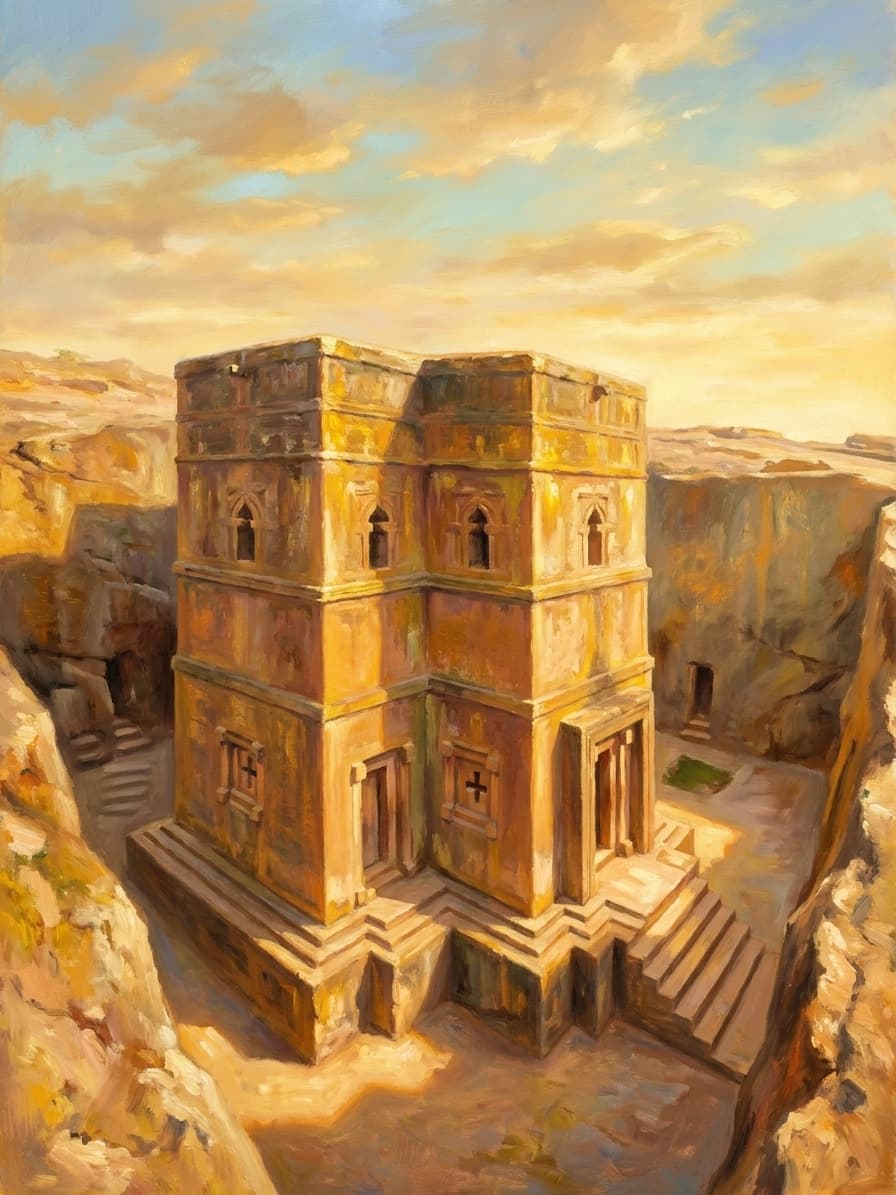
- Marvel at the cruciform geometry and nested roof crosses of freestanding Biete Giyorgis.
- Walk the deep subterranean rock corridors connecting Biete Maryam and the northern cluster.
- Witness early morning liturgical prayers enveloped in Ge'ez chanting, drums, and frankincense.
- Examine the classical peripteral facade and colonnades of Biete Medhane Alem.
Things to Know
- Shoes must be removed before crossing the threshold of every consecrated church interior.
- Modest attire covering shoulders and knees is strictly mandatory across all sacred grounds.
- Sunken rock walkways and unlit interconnecting tunnels are uneven, requiring a small pocket flashlight.
- Sanctuaries close to non-worshipping visitors between noon and two o'clock for clerical devotion.
Location
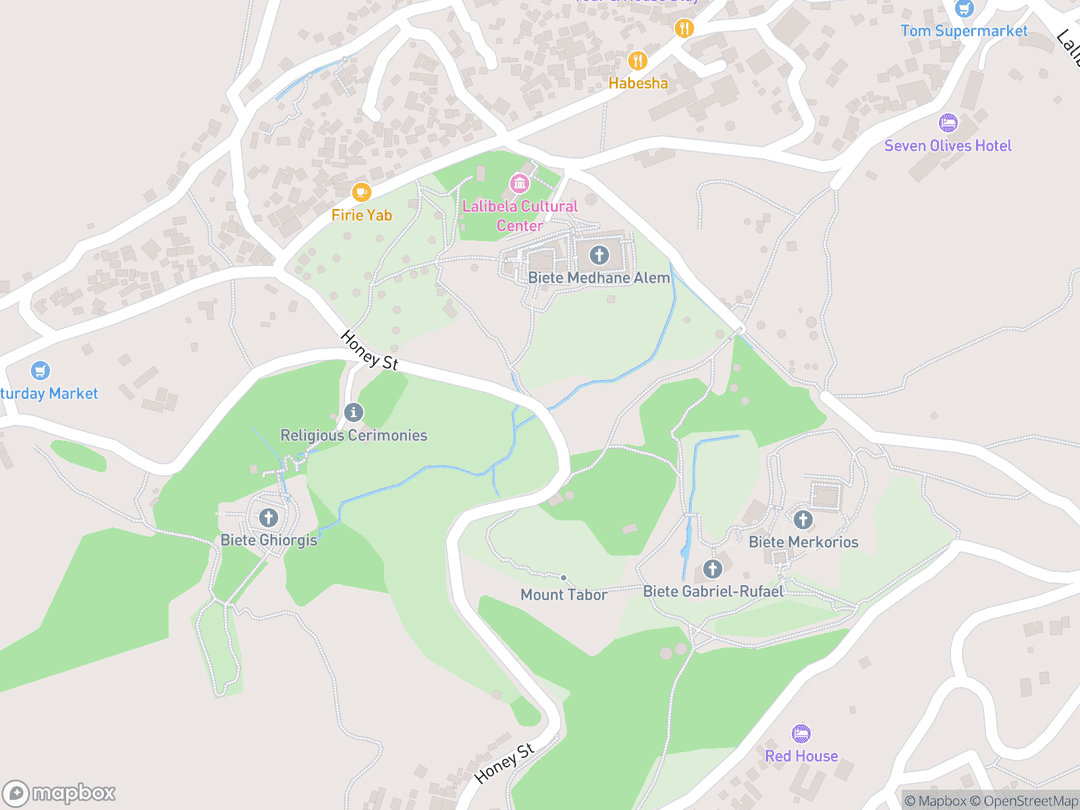
Lalibela, Lasta District, North Wollo Zone, Amhara Region, Ethiopia
Hours: Open daily from 6:00 AM to 12:00 PM and 2:00 PM to 5:30 PM; dawn liturgy begins at 4:30 AM
Getting There: Daily scheduled domestic flights connect Addis Ababa to Lalibela Airport, located twenty-three kilometers southwest of the churches by paved mountain road.
Get DirectionsTips for Your Visit
Wear Slip-On Shoes
Footwear must be removed at every church entrance, making comfortable slip-on shoes and wool socks ideal.
Carry a Small Flashlight
Subterranean tunnels and deep church interiors are kept dark to protect historic tempera wall paintings.
Engage an Official Guide
Licensed local deacons provide rich theological context and safely navigate intricate trench labyrinths.
Attend Morning Liturgy
Observing dawn Qeddase offers an authentic experience of ancient Ethiopian liturgical traditions.
About
The Rock-Hewn Churches of Lalibela comprise eleven medieval monolithic and semi-monolithic sanctuaries carved from solid volcanic scoria in the rugged Ethiopian Highlands. Commissioned during the Zagwe Dynasty by King Gebre Mesqel Lalibela, the holy city of Roha was transfigured into a symbolic earthly Jerusalem following the fall of the Holy Land to Saladin in 1187.
Rather than assembling materials upward from foundation trenches, master masons chiseled downward from the highland surface to isolate titanic blocks of stone before sculpting detailed basilican naves, vaulted aisles, barrel arches, and Aksumite-style windows. Divided by a rock-cut river named the Jordan, the churches form interconnected northern and southeastern sacred clusters.
Unlike preserved archaeological relics of antiquity, Lalibela remains an active sanctuary of the Ethiopian Orthodox Tewahedo Church. For more than eight centuries, continuous monastic brotherhoods, hermits, and white-robed pilgrims have filled its subterranean courtyards with ancient Ge'ez liturgical chants, incense, and sacred communal rites.
Gallery
Symbolic Elements
The temple's exterior features intricate carvings, each rich with spiritual meaning:

Biete Giyorgis Nested Cruciform Roof
Three concentric carved Greek crosses on the flat monolithic roof signify the Holy Trinity visible from highland cliffs.

Aksumite Monkey-Head Bosses
Carved square stone bosses replicate ancient timber-tie beam construction, symbolizing historical lineage with Aksum.

Pierced Geometric Cross Windows
Intricate stone screen windows shaped as geometric and fylfot crosses illuminate dark interiors with divine light.

Veiled Pillar of Biete Maryam
A central interior column permanently wrapped in ceremonial fabric represents secret divine revelations given to King Lalibela.

Tomb of Adam Monolith
A freestanding rectangular stone block at the trench entrance recalls Golgotha tradition where Christ redeemed the first man.

River Jordan Rock Canal
A deep excavated stone drainage channel dividing church groups symbolizes baptismal rebirth during the Epiphany feast.

Subterranean Purgation Tunnel
A pitch-black stone corridor traversed without artificial light symbolizes death and purgation before emerging into spiritual grace.

Floor Graves of the Patriarchs
Sunken stone troughs in Biete Medhane Alem honor Abraham, Isaac, and Jacob to anchor the community in biblical history.
Interesting Facts
Not a single stone or mortar joint was imported to construct the eleven churches; every pillar, arch, and ceiling was chiseled out of living mountain bedrock. (Tier B)
Biete Medhane Alem is widely documented by architectural surveys as the largest monolithic rock-hewn church in the world. (Tier B)
The settlement was intentionally laid out to replicate Jerusalem, featuring a rock-hewn Jordan River canal, Mount Sinai, and the Tomb of Adam. (Tier B)
King Lalibela received his name, meaning 'the bees recognize his sovereignty,' after a swarm enveloped his infant cradle without harming him. (Tier B)
An intricate 50-meter subterranean passage known as the Tunnel to Hell is navigated in complete darkness to symbolize repentance. (Tier B)
Biete Medhane Alem preserves the sacred seven-kilogram solid gold Lalibela Hand Cross crafted in the late twelfth century. (Tier B)
Ascetic Christian hermits have inhabited narrow vertical niches chiseled into the courtyard cliff faces for over eight centuries. (Tier B)
The iron-rich volcanic scoria stone changes color throughout the day, glowing deep orange at sunrise and turning charcoal at dusk. (Tier B)
Common Questions
Are the churches of Lalibela still used for active religious worship?
Yes, all eleven churches maintain active clergy, monastic brotherhoods, and daily liturgical services.
Why were the churches carved downward into the bedrock instead of built upward?
Subtractive excavation utilized natural highland geology to create an enduring, fireproof holy city mirroring Jerusalem.
Can foreign visitors enter every room inside the rock churches?
Visitors may enter outer halls, but the innermost Holy of Holies is strictly restricted to ordained priests.
What is the best season to explore the churches of Lalibela?
The dry months between October and March offer mild sunny highland weather and clear mountain paths.
What language is used during traditional worship services in Lalibela?
Liturgies and seasonal hymns are chanted in Ge'ez, the historic liturgical language of Ethiopian Christianity.
Featured Stories
The Swarm of Sovereign Bees
1181
Medieval Ethiopian chronicles recount that a dense swarm of wild bees surrounded the infant cradle of Prince Lalibela without causing harm. His mother interpreted the miracle as a heavenly sign that he was destined for imperial rule, bestowing upon him the name Lalibela, meaning 'the bees recognize his sovereignty.' Guided by this divine omen, the king dedicated his royal life and resources to carving an enduring sanctuary in the mountain heights.
Source: The Life of King Lalibela (Gadla Lalibela)
Saint George and the Stone Steed
1215
Highland tradition tells that after King Lalibela completed ten churches, Saint George rode out on a white horse, asking why no home had been dedicated to him. Deeply moved, the king immediately promised to build the most exquisite sanctuary of all, personally overseeing the excavation of Biete Giyorgis. To this day, pilgrims point out carved indentations in the courtyard stone as the indelible hoofprints of the holy warrior's mount.
Source: Traditions of the Lasta Clergy
The Recovery of the Golden Hand Cross
1999
In 1997, international shock spread through Ethiopia when the revered twelfth-century gold Lalibela Cross was stolen from Biete Medhane Alem. Following an exhaustive two-year international investigation across several continents, the sacred seven-kilogram treasure was recovered and repatriated to its ancestral altar. Tens of thousands of jubilant townspeople and clergy gathered in tears to welcome the holy cross back to its mountain home.
Source: World Monuments Fund Field Reports
Timeline
Pre-Lalibela Excavations
Early Agaw rulers chisel defensive hydraulic trenches and civil hypogea into the Roha mountain plateau.
MilestoneAccession of King Lalibela
Gebre Mesqel Lalibela assumes the Zagwe throne and initiates construction of an African New Jerusalem.
MilestoneInspiration of the Holy Land
The capture of Jerusalem by Saladin prompts Zagwe leaders to build an accessible pilgrimage sanctuary in Lasta.
MilestoneExcavation of Northern Cluster
Stonemasons isolate massive stone monoliths to hollow out the monumental basilicas of Medhane Alem and Maryam.
MilestoneCarving of Biete Giyorgis
Masons chisel the cruciform monolith of Saint George within a vertical twenty-five-meter rock pit.
MilestonePassing of King Lalibela
King Lalibela is interred within the subterranean crypt of Biete Golgotha, sealing the city's pilgrimage status.
DedicationSolomonic Dynasty Endowments
Emperor Yekuno Amlak restores the Solomonic line while preserving royal monastic patronage for Lalibela.
MilestoneFirst European Eyewitness Account
Portuguese chaplain Francisco Álvares documents the complex in his chronicle of the Ethiopian court.
MilestoneSubterranean Concealment
Sunken trenches and mountain defiles shield the rock churches during regional highland campaigns.
MilestoneEarly Structural Preservation
The Ethiopian Antiquities Administration and international partners apply initial stone consolidants to fragile roofs.
RenovationUNESCO World Heritage Inscription
Lalibela is inscribed among the world's first cohort of twelve official UNESCO World Heritage Sites.
MilestoneErection of Protective Shelters
Freestanding protective canopies are installed above vulnerable churches to shield brittle volcanic tuff from monsoon rains.
RenovationHistory by Decade
1050s — Pre-Lalibela Foundations
Early highland builders mastered living stone long before sacred basilicas emerged.
Long before the reign of King Lalibela, the plateau of Roha served as an administrative center for early Zagwe sovereigns. Stonemasons excavated subterranean chambers and hydraulic drainage channels directly into the basaltic crust. These early civil structures established the subtractive engineering techniques later refined for religious sanctuaries.
1180s — Conception of the New Jerusalem
Following the fall of Jerusalem to Islamic forces in 1187, hazardous overland pilgrimage routes cut off highland Christians from the Levant. King Lalibela directed royal stonemasons and monastic scholars to transform Roha into an African counterpart to the holy city. Work commenced across deep volcanic cliffs to fashion interconnected sanctuaries.
1200s — Northern and Southeastern Excavation
Hundreds of masons chiseled down through twelve meters of volcanic tuff to isolate colossal cubic monoliths. From these isolated blocks, workers hollowed out the cavernous colonnades of Biete Medhane Alem and the decorated nave of Biete Maryam. Southeastern complexes were carved into adjoining cliff faces to complete the pilgrimage network.
1220s — Completion of Biete Giyorgis and Royal Entombment
The freestanding cruciform monolith of Biete Giyorgis was completed as the artistic culmination of the royal program. King Lalibela passed away around 1221 and was entombed inside the subterranean crypt of Biete Golgotha. The settlement of Roha was subsequently renamed in his honor as a holy pilgrimage capital.
1520s — First Western Documentation
I swear by God, in Whose power I am, that all that is written is the truth.
Portuguese chaplain Francisco Álvares accompanied a diplomatic embassy to Emperor Lebna Dengel and explored the complex in 1520. His detailed accounts recorded the living liturgical traditions and extraordinary subtractive architecture for European readers. Álvares famously feared readers would disbelieve his written descriptions of such grand stone monuments.
1970s — Global Recognition and Modern Preservation
In 1978, Lalibela gained worldwide prominence when UNESCO designated the eleven churches among the first twelve World Heritage Sites. Collaborative preservation programs commenced to mitigate water infiltration and weathering of the porous volcanic tuff. The complex continues to serve as an unbroken spiritual center for millions of faithful believers.
Architecture & Facilities
The Lalibela complex represents a masterly synthesis of ancient Aksumite engineering and Byzantine basilican architectural typologies executed through subtractive hypogean carving. Rather than stacking stone upward, master builders quarried downward through twelve meters of solid volcanic plateau to isolate massive cubic monoliths before sculpting intricate exterior peristyles, barrel vaults, and blind arcades directly out of living mountain stone.
Building Materials
Red Volcanic Scoria
Porous iron-rich volcanic tuff chiseled in situ that hardens naturally when exposed to air.
Basaltic Substratum
Dense volcanic rock anchoring the foundation floors and trench corridors of the church courtyards.
Lime Mineral Pigments
Traditional natural ochres and mineral binders used for medieval interior ceiling murals and friezes.
Carved Bedrock Columns
Integral stone piers and peristyle pillars chiseled directly from the parent rock formation.
Interior Features
Nave of Biete Medhane Alem
A cavernous five-aisled central basilica supported by twenty-eight massive rectangular stone piers.
Holy of Holies (Maqdas)
Concealed inner sanctuaries housing consecrated Tabot altar tablets accessible exclusively to ordained priests.
Painted Vault of Biete Maryam
Elaborately frescoed barrel vaults adorned with geometric interlaced crosses and early biblical animal motifs.
Crypt of Biete Golgotha
A subterranean stone chamber containing life-size carved relief figures of early saints and King Lalibela's tomb.
Temple Grounds
Interconnected trench networks, defensive footbridges, rock-cut drainage aqueducts, and sunken plazas wind through the rugged highland mountain plateau.
Additional Facilities
Active monastic living quarters, sacred treasury chambers, manuscript libraries, and nearby community pilgrim reception halls.
Religious Significance
To the Ethiopian Orthodox Tewahedo Church, Lalibela is a living spiritual nexus conceived as an African New Jerusalem and the terrestrial reflection of the Holy Land.
Continuous sacramental worship, monastic ascetic prayer, and seasonal pilgrimage centered upon the veneration of the sacred Tabot.
Sacred Ordinances
Qeddase (Divine Liturgy)
The ancient Eucharistic service celebrated with Ge'ez hymns, bronze sistra, and sacred drum rhythms.
Timkat (Epiphany Epiphany Blessing)
Vibrant January processions where holy Tabot tablets are escorted to consecrated waters for communal blessings.
Genna (Feast of the Nativity)
Tens of thousands of white-robed faithful gather atop courtyard cliffs for nighttime antiphonal Christmas vigil chants.
Pilgrim Vow Offerings
Devotees present handmade woven textiles, beeswax candles, and personal prayers before holy church thresholds.
The Mystery of the Tabot
Each sanctuary derives its holiness not from architectural grandeur, but from the presence of its consecrated altar tablet representing the Ark of the Covenant.
Subterranean Pilgrimage as Spiritual Ascent
Descending into pitch-black trenches physically dramatizes human mortality and repentance before climbing upward into illuminated stone sanctuaries.
Sources & Research
Every fact on Temples.org is backed by verified Sources & Research. Each piece of information is rated by source tier and confidence level.
View All Sources (9)
| Field | Source | Tier | Retrieved |
|---|---|---|---|
| About & Historical Background | UNESCO World Heritage Centre (opens in a new tab) | B | 2026-02-18 |
| Architectural Typology & Laser Survey | Zamani Project Heritage Documentation (opens in a new tab) | B | 2026-02-18 |
| Art History & Aksumite Influences | Metropolitan Museum of Art (opens in a new tab) | B | 2026-02-18 |
| Monolithic Excavation & Subtractive Engineering | Studio Matrx Architectural Research (opens in a new tab) | B | 2026-02-18 |
| Highland Geology & Material Studies | ResearchGate Scientific Network (opens in a new tab) | B | 2026-02-18 |
| Medieval Art & Architectural Survey | LibreTexts Humanities Project (opens in a new tab) | B | 2026-02-18 |
| Cultural Traditions & Sacred Geography | Senses Atlas (opens in a new tab) | C | 2026-02-18 |
| Symbolism & Subterranean Network | Ancient Origins (opens in a new tab) | C | 2026-02-18 |
| Visitor Protocols & Regional Logistics | My Ethiopia Tours (opens in a new tab) | D | 2026-02-18 |