Visitor Insights
Visiting Grande Pagode de Vincennes
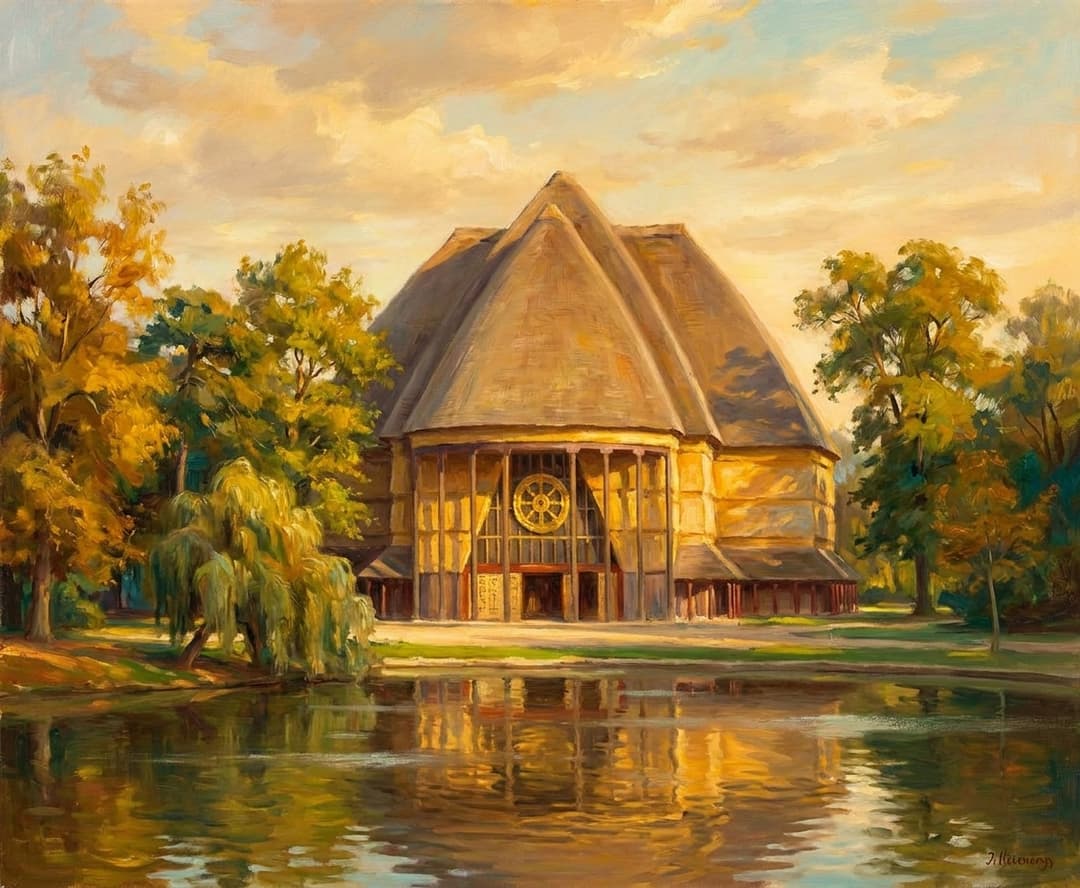
The Grande Pagode is an active sanctuary situated in the tranquil woods of the Bois de Vincennes. Rather than a daily tourist museum, it opens to the public during weekend meditation services, Dharma teachings, and major cultural festivals.
Highlights
- Europe's tallest indoor seated Buddha figure finished in radiant gold leaf
- Authentic historical Buddha relics gifted by the Supreme Sangha of Thailand
- The adjacent traditional Tibetan Kagyu-Dzong temple consecrated in 1985
- The evocative bronze Zen pilgrim sculpture by Japanese artist Torao Yazaki
Things to Know
- Visitors must remove footwear before entering the carpeted prayer hall
- Modest attire covering shoulders and knees is strictly requested on temple grounds
- Circumambulation around the Buddha altar must be performed clockwise
- Access is primarily during weekend services, cultural festivals, and Heritage Days
Location
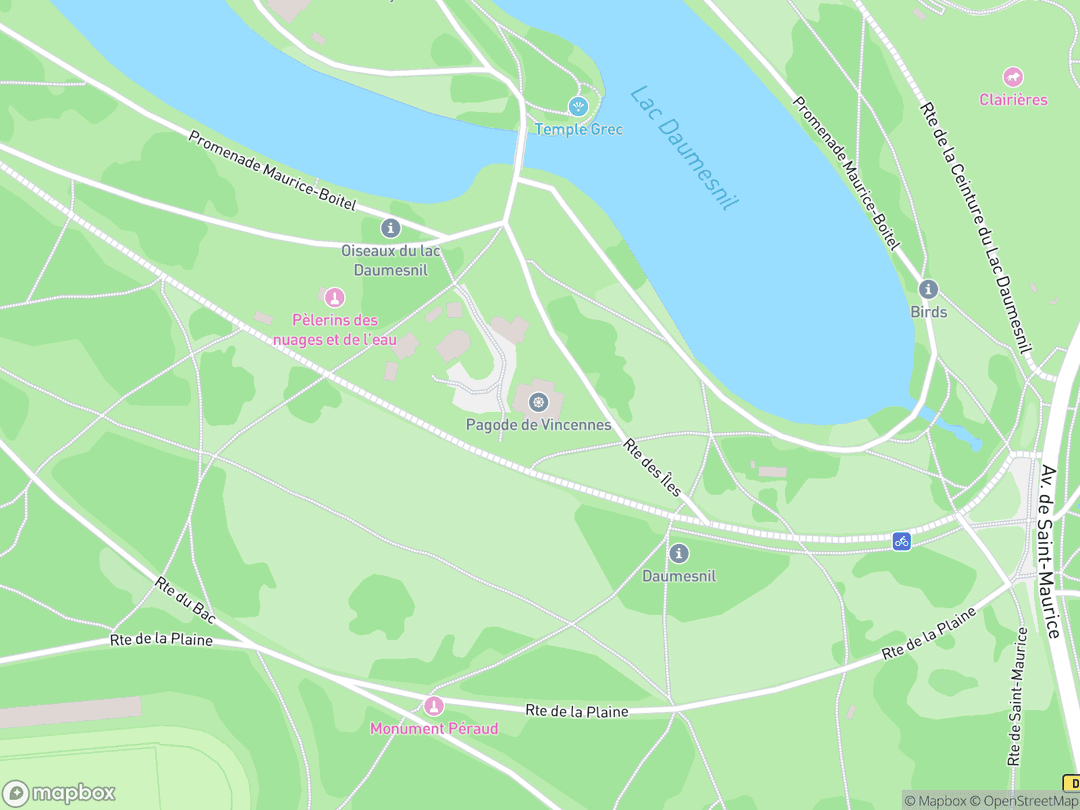
40 bis, Route de Ceinture du Lac-Daumesnil, 75012 Paris, France
Hours: Open during scheduled weekend services, festivals, and European Heritage Days
Getting There: Take Métro Line 8 or Tramway T3a to Porte Dorée, followed by a short walk along Lac Daumesnil
Get DirectionsTips for Your Visit
Festival Visits
Visit during Vesak in May or the Southeast Asian New Year in April to experience vibrant cultural processions and monastic chanting.
Quiet Reflection
Maintain silence inside the central sanctuary to respect community members engaged in solitary meditation and prayer.
About
Rooted within shared Dharmic traditions that seek liberation from cyclic existence through ethical conduct, meditation, and wisdom, the Grande Pagode de Vincennes stands as a rare pan-Buddhist sanctuary. Consecrated in 1977 under the auspices of the Institut International Bouddhique, it serves as the spiritual and administrative seat of the Union Bouddhiste de France.
The complex brings together the three major Buddhist vehicles—Theravada, Mahayana, and Vajrayana—under a single sacred roof. Originally erected for the 1931 Paris Colonial Exposition, the majestic timber pavilion was transformed from a secular civic hall into a sanctuary honoring the Three Jewels: Buddha, Dharma, and Sangha.
Today, this protected historical monument houses Europe's tallest indoor seated Buddha figure and authentic Shakyamuni relics gifted from Thailand. Surrounded by the serene woodlands of the Bois de Vincennes, the pagoda serves as a vibrant crossroads of meditation, ecumenical devotion, and intercultural refuge.
Gallery
Symbolic Elements
The temple's exterior features intricate carvings, each rich with spiritual meaning:
The Great Buddha of Vincennes
Europe's tallest indoor seated Buddha figure features pan-Buddhist iconography symbolizing universal enlightenment.

Dhyana Mudra
The resting hands of the Buddha embody profound meditative absorption and spiritual harmony across Buddhist lineages.

Sacred Buddha Relics
Authentic bone and ash relics of Shakyamuni Buddha ground the Parisian sanctuary within historical Dharmic pilgrimage traditions.

Unsui Zen Pilgrims
Seven bronze Zen novices depict the freedom of clouds and water, signifying non-attachment and selfless wandering.

Dharmachakra Wheel
The eight-spoked wheel represents the Noble Eightfold Path and the timeless turning of Buddhist law.

Four Pillar Framework
Four massive structural timber columns symbolize the foundational Four Noble Truths delivered at Sarnath.

Golden Lotus Dais
The stylized lotus pedestal represents spiritual purity rising unstained from worldly suffering.
Interesting Facts
The Great Buddha inside the sanctuary is the tallest indoor seated Buddha figure in Europe (Tier A).
Because of its immense scale, the Buddha was cast in six pieces inside Joan Miró's Paris workshop (Tier A).
The building was originally designed in 1931 as a colonial exhibition pavilion honoring Cameroon royal architecture (Tier A).
The sanctuary offered crucial cultural and spiritual refuge to thousands of Indochinese refugees in the late 1970s (Tier B).
The temple enshrines verified cremation relics of Shakyamuni Buddha gifted from Wat Saket in Bangkok (Tier A).
Outside the hall stands an authentic bronze replica of the famed Zen pilgrim monument at Daihonzan Soji-ji in Japan (Tier B).
The complex hosts Kagyu-Dzong, a traditional Tibetan fortress temple consecrated by Kalu Rinpoche in 1985 (Tier A).
Future French President Jacques Chirac presided over the civic inauguration of the pagoda in October 1977 (Tier A).
Common Questions
Is the Grande Pagode affiliated with a single Buddhist tradition?
No, it functions as an ecumenical pan-Buddhist sanctuary welcoming Theravada, Mahayana, and Vajrayana communities.
How tall is the Great Buddha statue inside the sanctuary?
The seated figure measures 9 meters high and exceeds 10 meters when including its multi-tiered lotus pedestal.
Can regular visitors enter the pagoda on any day of the week?
General interior access is typically limited to scheduled weekend services, public conferences, and major religious festivals.
What authentic relics are housed inside the temple?
The pagoda enshrines historical Gautama Buddha relics gifted by the Supreme Patriarch of Thailand in 2009.
Featured Stories
From Colonial Pavilion to Sacred Sanctuary
October 28, 1977
Constructed for the 1931 Colonial Exposition, the massive Cameroon timber hall was preserved from demolition by serving as a municipal wood museum. In the 1970s, diplomat Jean Sainteny championed its reconsecration as an ecumenical Buddhist refuge, which was inaugurated by Mayor Jacques Chirac.
Source: Union Bouddhiste de France Archives
The Colossus in Miró's Atelier
1976
Sculptor François Mozès required an exceptionally tall studio to model Europe's largest seated Buddha figure. Catalan master Joan Miró opened his Parisian atelier to Mozès, who cast the nine-meter statue in six distinct sections before reassembling and gilding it inside the pagoda.
Source: Institut International Bouddhique Historical Dossier
The Royal Gift of Wat Saket
May 17, 2009
In a historic act of inter-tradition brotherhood, the Supreme Sangha of Thailand and the Royal Thai Embassy presented authentic relics of Shakyamuni Buddha from Wat Saket in Bangkok. Four ceremonial bearers solemnly carried the golden reliquary into the sanctuary to establish Paris as a major pilgrimage destination.
Source: Royal Thai Embassy Paris Ecumenical Protocol
Timeline
Colonial Exposition Construction
Architects Boileau and Carrière construct the pavilion as the Cameroon hall for the 1931 Paris Colonial Exposition.
MilestoneWood Industries Museum
The City of Paris converts the grand wooden structure into a municipal museum celebrating timber craft.
EventNatural Site Classification
The surrounding Bois de Vincennes receives formal protection as a classified natural site.
MilestoneInstitut International Bouddhique
French diplomat Jean Sainteny establishes the foundation to create an ecumenical Buddhist sanctuary in Paris.
MilestoneZen Pilgrim Sculpture Installed
Japanese master Torao Yazaki installs the bronze Unsui pilgrim ensemble along the garden threshold.
MilestoneHistorical Monument Inscription
The primary timber pavilion receives formal listing on the supplementary inventory of historical monuments.
MilestoneReligious Dedication
Jacques Chirac presides over the civic inauguration of the Grande Pagode as an ecumenical Buddhist center.
DedicationKagyu-Dzong Consecration
The adjacent Tibetan temple is consecrated under the spiritual direction of Kyabje Kalu Rinpoche.
DedicationFounding of the UBF
The Union Bouddhiste de France is created, establishing its communal headquarters at the pagoda.
MilestoneEnshrinement of Sacred Relics
Authentic bone and ash relics of Gautama Buddha gifted from Wat Saket in Bangkok are formally enshrined.
MilestoneRestoration Reopening
The pagoda reopens following an extensive timber structural consolidation financed by the City of Paris.
RenovationExpanded Monument Protection
The French Ministry of Culture issues an updated decree expanding historical monument protection across the parcel.
MilestoneHistory by Decade
1930s — Colonial Exposition and Preservation
Architects Louis-Hippolyte Boileau and Charles Carrière designed the colossal wooden hall to celebrate Cameroon royal architecture for the 1931 Colonial Exposition. When temporary plaster structures were demolished after the exposition, the City of Paris retained the timber building, re-opening it in 1933 as the Museum of Wood Industries.
1940s–1950s — Civic Exhibition and Survival
Throughout the occupation and the post-war reconstruction of Paris, the pavilion functioned quietly as a civic space displaying forestry and timber craftsmanship. Its sturdy beam framework weathered the decades intact while surrounding open grounds returned to peaceful woodland parkland beside Lac Daumesnil.
1960s — Natural Protection and Ecumenical Vision
The Bois de Vincennes received protective status as a classified natural site by ministerial decree on November 22, 1960. In 1969, diplomat and resistance hero Jean Sainteny founded the Institut International Bouddhique to create an international spiritual center welcoming all Asian traditions.
1970s — Transformation and Dedication
Following the closure of the wood museum, Paris granted the site to Sainteny's institute, which listed the building as a historical monument on October 29, 1975. Sculptor François Mozès created the colossal Buddha, and Mayor Jacques Chirac inaugurated the pagoda on October 28, 1977, offering sanctuary to arriving Indochinese refugees.
1980s–1990s — Kagyu-Dzong and National Union
In 1985, Tibetan Buddhist master Kyabje Kalu Rinpoche consecrated the traditional Kagyu-Dzong temple across the courtyard, introducing Vajrayana practice to the compound. In 1986, the newly founded Union Bouddhiste de France established its communal home on the site, cementing its pan-Buddhist role.
2000s–Present — Relic Enshrinement and Renewal
Authentic relics of Gautama Buddha from Wat Saket were enshrined in May 2009, elevating the pagoda's global stature. Following a major municipal structural restoration in 2015, the French Ministry of Culture issued an expanded decree of historical protection for the complex on July 8, 2024.
Architecture & Facilities
The architecture of the Grande Pagode de Vincennes is a singular synthesis of Western African royal vernacular and Asian sacred function, nested within a French metropolitan public park. Conceived in 1931 by Louis-Hippolyte Boileau and Charles Carrière, the building reinterprets the monumental, steep-roofed timber palaces of the Bamoun and Bamiléké kingdoms of Cameroon, adapting high-peaked African timber engineering into an ecumenical Buddhist vihara.
Building Materials
Northern Pine Shingles
Durable pitch-pine shingles cladding the steep roof slopes have sheltered the timber structure from Parisian weather since 1933.
Structural Timber Trusses
Colossal load-bearing timber columns and triangular trusses distribute weight across an uninterrupted 28-meter-high interior.
Gilded Fiberglass
Lightweight composite fiberglass cast in six interlocking segments allowed François Mozès to erect a colossal nine-meter seated Buddha.
Cast Architectural Bronze
Heavy bronze alloys form both external ceremonial sculptures and traditional interior altar vessels representing global lineages.
Interior Features
Central Prayer Vihara
A vast 28-meter-high open sanctuary free of dividing walls or intermediate floors accommodates multi-tradition worship.
Monumental Buddha Altar
An elevated tiered platform supports the nine-meter golden Buddha figure flanked by diverse regional offering vessels.
Sacred Relic Shrine
A protected enameled and glass cabinet beneath the central dais houses authentic bone fragments of Gautama Buddha.
Ecumenical Meditation Hall
A wide carpeted perimeter floor provides flexible arrangements for silent Theravada, Zen, and Tibetan contemplation sessions.
Temple Grounds
An 8,000-square-meter forested enclave in the Bois de Vincennes bordering Lac Daumesnil, featuring prayer lawns, Zen sculptures, and the neighboring Tibetan Kagyu-Dzong.
Additional Facilities
The complex incorporates the Union Bouddhiste de France administrative offices, a monastics' residence, meeting halls, and the Kagyu-Dzong temple.
Religious Significance
The Grande Pagode de Vincennes occupies a distinct theological space within Dharmic spiritual geography, serving as a unified European sanctuary honoring the Three Jewels (Triratna). Sharing ancient Dharmic roots that affirm the reality of karma, samsara, and the universal path toward liberation (nirvana), the pagoda provides an ecumenical vessel where Theravada, Mahayana, and Vajrayana monastics and practitioners worship together.
To provide a pan-Buddhist sanctuary for communal meditation, inter-lineage harmony, Dharma teachings, and veneration of authentic Shakyamuni relics.
Sacred Ordinances
Vipassana and Samatha Meditation
Mindfulness and concentration practices cultivating insight into impermanence and liberation from suffering.
Relic Veneration and Pradaksina
Clockwise devotional circumambulation around the sacred relics and central Buddha to generate spiritual merit.
Dharma Chanting and Sutta Recitation
Communal vocalization of sacred discourses across Pali, Sanskrit, Tibetan, and Vietnamese liturgical traditions.
The Three Jewels in One Temple
The sanctuary's deliberate avoidance of single-tradition iconography ensures that all practitioners recognize the Buddha as universal teacher, the Dharma as timeless path, and the Sangha as inclusive community.
Sources & Research
Every fact on Temples.org is backed by verified Sources & Research. Each piece of information is rated by source tier and confidence level.
View All Sources (8)
| Field | Source | Tier | Retrieved |
|---|---|---|---|
| About & Historical Background | Union Bouddhiste de France (opens in a new tab) | A | 2025-02-18 |
| History By Decade & Memorial Inscription | Ministère de la Culture (opens in a new tab) | A | 2025-02-18 |
| Architecture & Structural Restoration | Fonds de Dotation de l'UBF (opens in a new tab) | A | 2025-02-18 |
| Visitor Insights & Access Policy | Office du Tourisme de Paris (opens in a new tab) | C | 2025-02-18 |
| Timeline & Featured Stories | Paris la Douce (opens in a new tab) | C | 2025-02-18 |
| Sculptor Background & Altar Artwork | Association des Amis et Passionnés du Père-Lachaise (opens in a new tab) | B | 2025-02-18 |
| Architectural Description & Dimensions | The Guardian (opens in a new tab) | B | 2025-02-18 |
| Symbolic Elements & Grounds History | Paris Promeneurs (opens in a new tab) | C | 2025-02-18 |