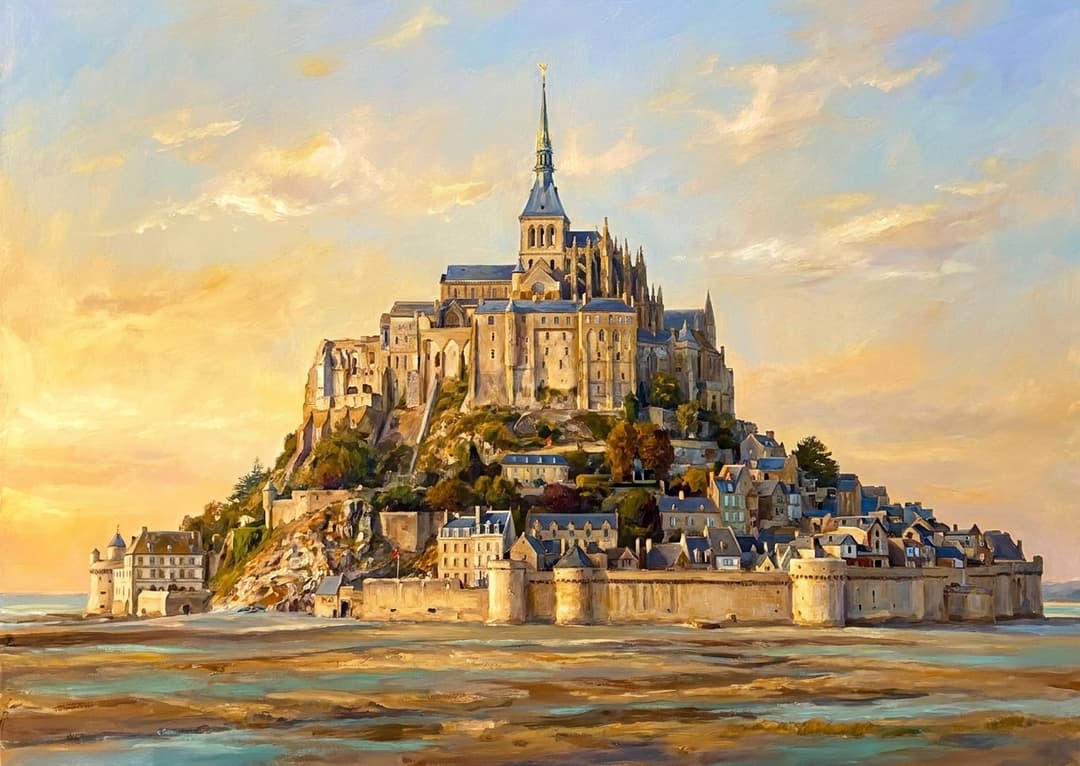
Visitor Insights
Visiting Abbaye du Mont-Saint-Michel
Visiting Mont-Saint-Michel involves traversing an elevated tidal pedestrian causeway before ascending steep cobblestone village ramparts. Within the abbey complex, visitors encounter sweeping marine panoramas and over 350 stone steps across dramatic vertical levels. Early morning or twilight visits offer the best contemplation of daily monastic office chants and surging Atlantic tides.
Highlights
- Marvel at La Merveille, a masterpiece of thirteenth-century Norman Gothic architecture.
- Contemplate the suspended cloister garden overlooking panoramic sea vistas.
- Witness the extreme Atlantic tides that completely isolate the granite mount.
- Hear the daily sung liturgical office performed by the resident monastic fraternities.
Things to Know
- The tidal mudflats feature treacherous quicksands and must only be crossed with certified bay guides.
- The interior contains extensive stone staircases and cannot accommodate standard wheeled wheelchairs.
- During equinoctial spring tides, the footbridge access may submerge for one to two hours.
Location
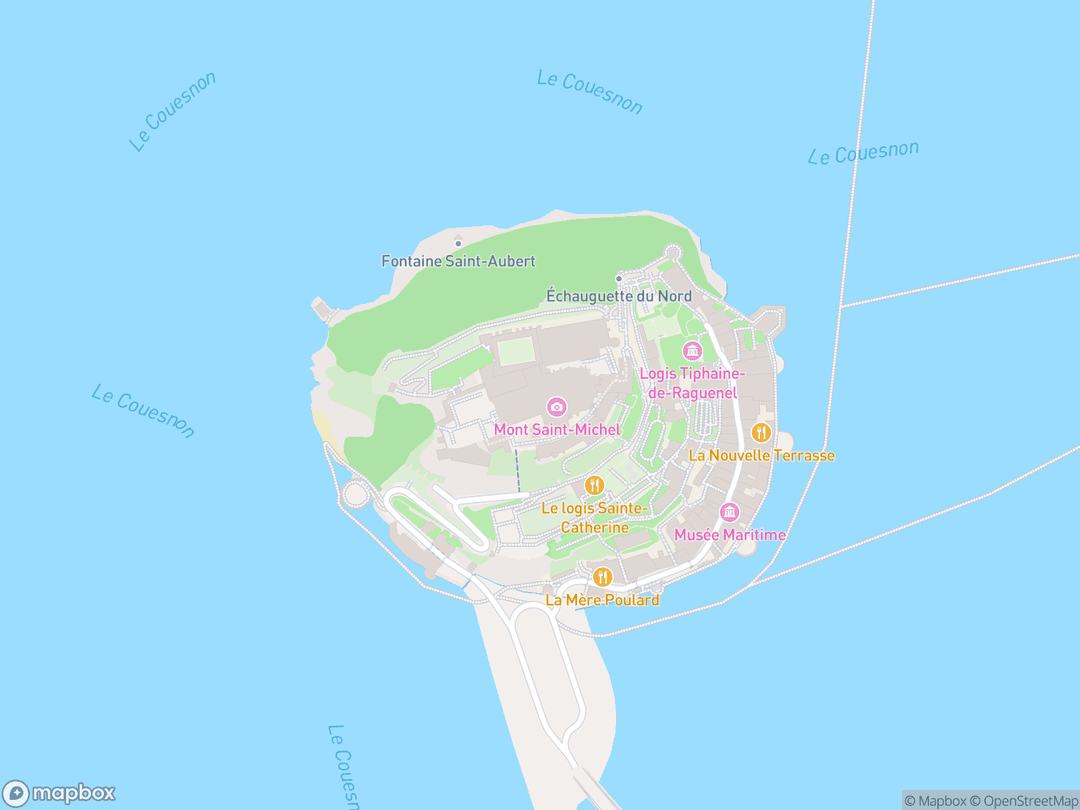
L'Abbaye, 50170 Le Mont-Saint-Michel, Manche, Normandy, France
Hours: May 1 to August 31: 9:00 AM – 7:00 PM; September 1 to April 30: 9:30 AM – 6:00 PM; Closed Jan 1, May 1, and Dec 25.
Getting There: Take the high-speed TGV from Paris to Rennes or Dol-de-Bretagne followed by regional coach to the hub, or regional train to Pontorson. From the mainland visitor center, access the mount via electric shuttle, horse carriage, or a 35-minute pedestrian footbridge walk.
Get DirectionsTips for Your Visit
Time Your Arrival for Rising Tides
Arrive roughly two hours before peak high tide during spring cycles to witness the bay waters rush across the sandflats.
Attend Monastic Liturgies
Monks and nuns of the Monastic Fraternities of Jerusalem celebrate public masses daily except Mondays in the abbey chancel.
Wear Sturdy Walking Footwear
The historical village paths and monastic crypts feature uneven medieval cobblestones and steep granite steps.
About
Perched atop a granitic tidal islet off the coast of Normandy, the Abbaye du Mont-Saint-Michel stands as one of the most remarkable monastic strongholds in Western Christendom. Founded in 709 following the apparitions of the Archangel Michael to Bishop Aubert of Avranches, the sanctuary evolved over centuries from a modest mountain hermitage into an internationally celebrated Benedictine monastery.
The complex features an extraordinary vertical arrangement of stone, culminating in La Merveille—a three-tiered Gothic monastery block built upon the northern cliff face. Supported by colossal subterranean crypts designed to stabilize the sheer granite promontory, the abbey church reaches toward heaven with its soaring lantern spire and gilded archangel.
Throughout the Hundred Years' War, Mont-Saint-Michel remained an unconquered fortress of French faith and sovereignty against English sieges. Following a temporary secularization as a state prison during the French Revolution, the historic monument was restored in the nineteenth century and now houses active monastic communities of the Monastic Fraternities of Jerusalem.
Gallery
Symbolic Elements
The temple's exterior features intricate carvings, each rich with spiritual meaning:
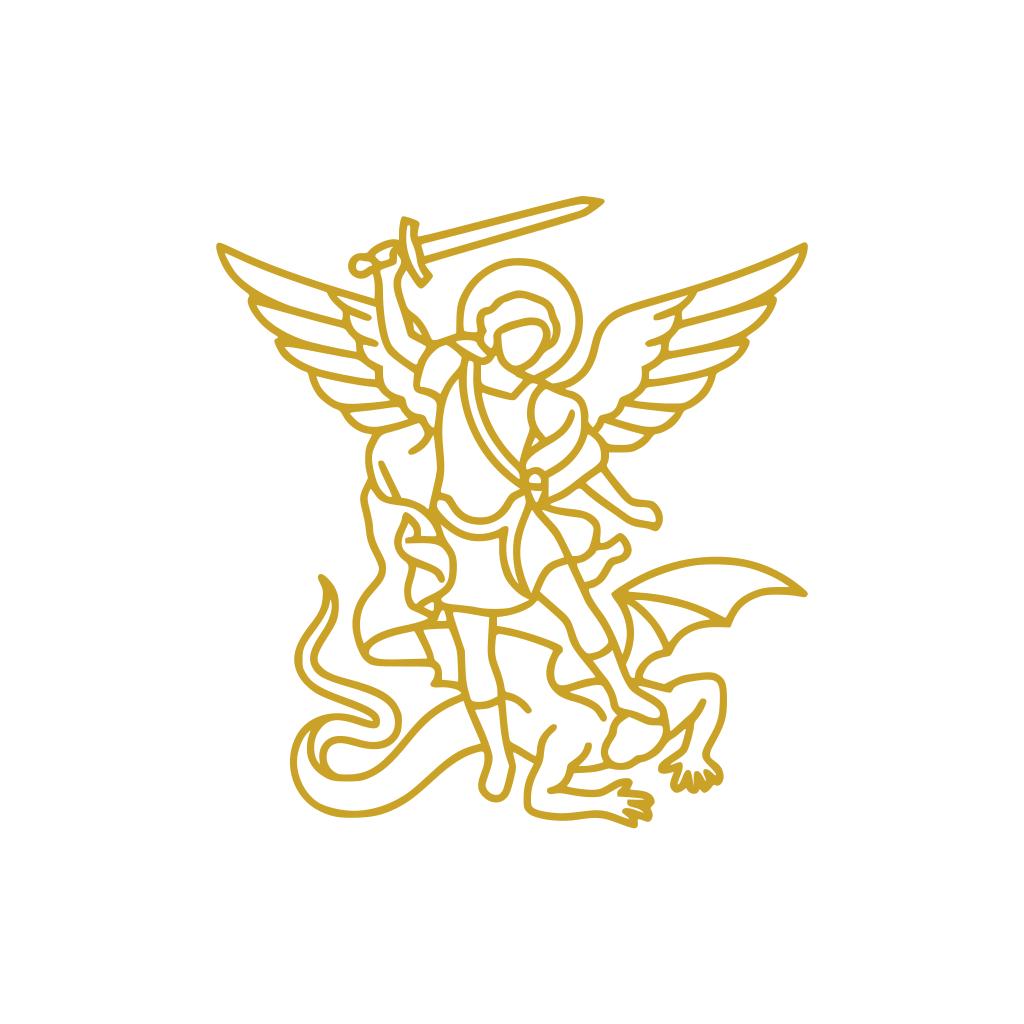
Gilded Archangel Michael
Perched 157 meters high, Saint Michael brandishes a sword over the dragon, symbolizing divine triumph over spiritual chaos.

Three-Tiered Vertical Hierarchy
The mount's structure mirrors medieval Christian cosmology, rising from secular townspeople to knights, then monastic prayer.
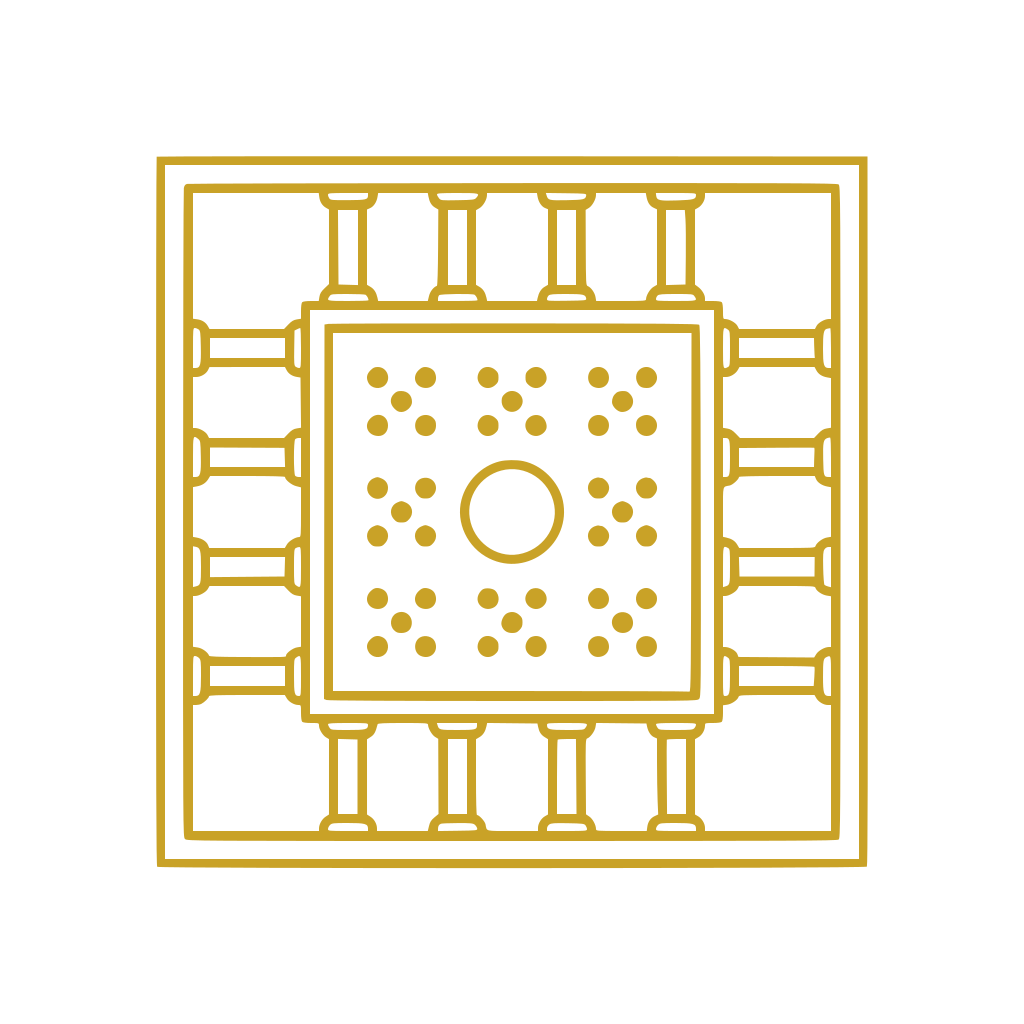
The Double Colonnade Cloister
Alternating quincunx limestone columns evoke the Garden of Eden and encourage rhythmic contemplation during monastic prayer.
Giant Treadmill Wheel
Installed during the prison era, this wooden human treadmill hoist contrasts mortal captivity with heavenly freedom.

Lace Staircase
This intricately carved openwork buttress staircase symbolizes the disciplined, narrow ascent required for spiritual perfection.
Crypt of the Great Pillars
Ten immense granite columns represent solid foundations of faith, bearing the weight of the Gothic choir above.

East-West Nave Orientation
The sanctuary nave points toward the rising sun, symbolizing the Risen Christ, while the west terrace overlooks the turbulent sea.
Interesting Facts
Europe's most extreme tides occur around the mount, varying vertically up to 15 meters during spring cycles (Tier A).
A massive hydraulic project completed in 2015 flushed away centuries of trapped sediment to preserve the island (Tier B).
A tiny garrison of 119 French knights defended the mount against decades of English sieges during the Hundred Years' War (Tier A).
Following the French Revolution, the sanctuary became a state prison housing up to 14,000 inmates (Tier A).
Mont-Saint-Michel aligns geographically with six other ancient European shrines dedicated to Archangel Michael (Tier B).
The monks founded a sister priory on a smaller tidal island in Cornwall named St Michael's Mount (Tier B).
The architectural silhouette directly inspired the city of Minas Tirith in Peter Jackson's Lord of the Rings films (Tier C).
Over two hundred illuminated medieval manuscripts from the abbey scriptorium survive in the library of Avranches (Tier A).
Before Christian dedication in 709, the solitary granite rock was known to Celtic Gauls as Mons Tumba (Tier B).
Common Questions
Is Mont-Saint-Michel an active religious site?
Yes, monks and nuns of the Monastic Fraternities of Jerusalem conduct daily masses and divine office services in the abbey church.
When does Mont-Saint-Michel become a full island?
The mount becomes completely surrounded by water during high spring tides when the tidal coefficient exceeds 110.
Why is the monastery called La Merveille?
The three-story Gothic building block is called 'The Marvel' because of its daring construction upon a sheer granite cliff.
Can visitors walk across the bay mudflats?
Yes, but walking across the tidal sands is only safe when accompanied by an authorized and certified local bay guide.
Featured Stories
The Apparitions to Bishop Aubert
708
In the year 708, Archangel Michael appeared three times in visions to Bishop Aubert of Avranches, instructing him to erect an oratory upon the windswept granite rock of Mont-Tombe. According to tradition, the angel pressed his finger against Aubert's forehead when the bishop hesitated, leaving an impression that spurred the sanctuary's founding.
Source: Revelatio ecclesiae sancti Michaelis
The Impregnable Citadel of the Hundred Years' War
1434
During the Hundred Years' War, an English army surrounded the mount with naval blockades and artillery bases, seeking to crush the last French outpost in northern Normandy. A resolute garrison of only 119 French knights defended the abbey's massive ramparts against superior numbers, maintaining an enduring bastion of spiritual hope.
Source: Centre des Monuments Nationaux
The Hydraulic Restoration of the Island
2015
Centuries of land reclamation and a nineteenth-century road-dyke trapped sediment around the mount, threatening to turn the tidal island into a permanent mainland promontory. A ten-year hydraulic engineering project completed in 2015 built a flushing dam and a lightweight pedestrian bridge, successfully restoring the natural island tides.
Source: Projet Mont-Saint-Michel
Timeline
Sanctuary Dedication
Bishop Aubert consecrates the first subterranean stone chapel dedicated to Saint Michael on Mont-Tombe.
DedicationBenedictine Monastery Founded
Richard I, Duke of Normandy, establishes a royal Benedictine monastery on the tidal mount.
MilestoneRomanesque Church Construction Begins
Abbot Hildebert II and William of Volpiano initiate the monumental Romanesque cross-plan abbey church.
MilestoneGolden Age of Scriptorium
Robert de Torigni becomes abbot, expanding the abbey's intellectual renown as 'The City of Books'.
EventCompletion of La Merveille
Builders finish the three-story Norman Gothic monastery block financed by King Philip Augustus.
MilestoneCollapse of Romanesque Choir
The original Romanesque chancel collapses during wartime sieges, prompting later Flamboyant Gothic rebuilding.
RenovationFlamboyant Gothic Choir Dedicated
Master masons complete the luminous new chancel and supporting Crypt of the Great Pillars.
DedicationRevolutionary Prison Conversion
Revolutionary authorities dissolve the monastery, converting the empty abbey into a state penitentiary named Mont-Libre.
EventHistoric Monument Classification
Napoleon III closes the prison following public outcry, placing the site under state architectural protection.
MilestoneSpire and Archangel Installed
Architect Victor Petitgrand erects the neo-Gothic central spire crowned by Emmanuel Frémiet's gilded statue.
RenovationUNESCO World Heritage Inscription
The abbey and surrounding bay are inscribed on the UNESCO World Heritage List under reference number 80.
MilestoneTidal Island Reconnection
A new lightweight pedestrian bridge opens, replacing the historic causeway and restoring maritime tides.
MilestoneHistory by Decade
700s — The Sacred Hermitage
Build here a sanctuary in honor of the Archangel Michael, where prayer may rise continuously.
Following divine apparitions in 708, Bishop Aubert consecrated a modest stone grotto on the isolated granite rock known as Mont-Tombe. Drawing early pilgrims inspired by relics brought from Mount Gargano in Italy, the mount quickly established its sacred identity as a fortress of angelic guardianship against the sea.
960s–1080s — The Norman Benedictines
In 966, Duke Richard I of Normandy installed Benedictine monks who instituted structured liturgical life under the Rule of Saint Benedict. In 1023, builders undertook the audacious task of erecting a Romanesque crossing church on the narrow peak, anchoring the transepts on heavy stone crypts.
1200s–1230s — Construction of La Merveille
Following Normandy's integration into France, King Philip Augustus financed the construction of La Merveille to demonstrate royal piety. Completed between 1204 and 1228, this three-tiered Norman Gothic marvel housed refectories, reception halls, and an elevated cloister facing heaven.
1420s–1520s — Resistance and Flamboyant Choir
During the Hundred Years' War, the fortified abbey successfully withstood decades of English naval blockades and assaults. After the Romanesque chancel collapsed in 1421, stonecutters erected a soaring Flamboyant Gothic choir supported by massive subterranean pillars.
1790s–1860s — The Maritime Penitentiary
The French Revolution expelled the monastic order in 1793, turning the sacred halls into a penal colony called Mont-Libre. Holding thousands of political prisoners and non-juring priests, the abbey deteriorated until advocacy by Victor Hugo prompted its closure in 1863.
1870s–1890s — Archaeological Restoration
Classified as a historic monument in 1874, the abbey underwent extensive restoration led by architect Édouard Corroyer. In 1897, Victor Petitgrand added the dramatic neo-Gothic spire, crowning the sanctuary with Emmanuel Frémiet's gilded Archangel Michael.
1970s–2010s — World Heritage and Maritime Revival
UNESCO inscribed Mont-Saint-Michel on the World Heritage List in 1979 for its outstanding universal cultural value. Monastic worship returned permanently in 2001, accompanied by a major public works project that cleared accumulated silt and restored the mount's true tidal character.
Architecture & Facilities
Mont-Saint-Michel represents a structural synthesis of early Norman Romanesque and Rayonnant/Flamboyant Gothic engineering built around a granitic outcrop. Medieval architects constructed a network of massive barrel-vaulted and rib-vaulted crypts to establish an artificial platform atop the sheer rock pinnacle.
Building Materials
Chausey Island Granite
Dense granodiorite quarried from the offshore Chausey archipelago forms the exterior ramparts, flying buttresses, and structural pillars.
Caen Limestone
Delicate Jurassic limestone from central Normandy was utilized for carved interior column capitals, ribbed vaulting, and window tracery.
English Channel Slate
Layered natural slate tiles shield the high medieval monastic roofs from severe Atlantic windstorms.
Repoussé Copper
Beaten copper sheets form the decorative cladding of the neo-Gothic central spire and the gilded statue of Archangel Michael.
Interior Features
Abbey Church Choir
A luminous Flamboyant Gothic chancel featuring triforium galleries, delicate stone tracery, and soaring ribbed clerestory vaults.
The Cloister
An open skyward quadrangle bounded by 137 staggered Caen limestone colonnettes arranged in a rhythmic quincunx pattern.
Knights' Hall (Salle des Chevaliers)
A grand medieval scriptorium and working room divided by three rows of ribbed columns featuring carved acanthus-leaf capitals.
Crypt of the Great Pillars
A subterranean hall containing ten massive circular granite columns that bear the structural weight of the Gothic chancel above.
Temple Grounds
The granite islet rises steeply from the intertidal flats, encompassed by medieval defensive stone ramparts, battlements, outer barbicans, and a village street.
Additional Facilities
The complex includes an entry museum, public liturgical chapels, monastic living quarters, the Avranches manuscript heritage repository, and a mainland visitor welcome hub.
Religious Significance
Mont-Saint-Michel is revered across Christendom as a pinnacle sanctuary dedicated to the Archangel Michael, representing divine guardianship and spiritual vigilance against darkness.
To serve as an enduring sanctuary of prayer, liturgical intercession, and monastic contemplation amidst the ocean tides.
Sacred Ordinances
The Divine Office
Daily chanted canonical hours celebrated by monks and nuns of the Monastic Fraternities of Jerusalem.
Eucharistic Mass
Sacramental Catholic celebrations held daily in the abbey chancel for resident monastics and pilgrims.
Michaelmas Pilgrimage
Annual celebrations honoring Saint Michael on September 29, drawing thousands across the tidal flats.
The Sanctuary of Archangel Michael
Dedicated to the heavenly commander who defeated Satan, Mont-Saint-Michel embodies the physical threshold where heaven touches earth amid maritime solitude.
The Rule of Saint Benedict
For over eight centuries, Benedictine monks sanctified the rock through ora et labora, cultivating an intellectual and spiritual center of European renown.
Sources & Research
Every fact on Temples.org is backed by verified Sources & Research. Each piece of information is rated by source tier and confidence level.