Visitor Insights
Visiting Reims Cathedral
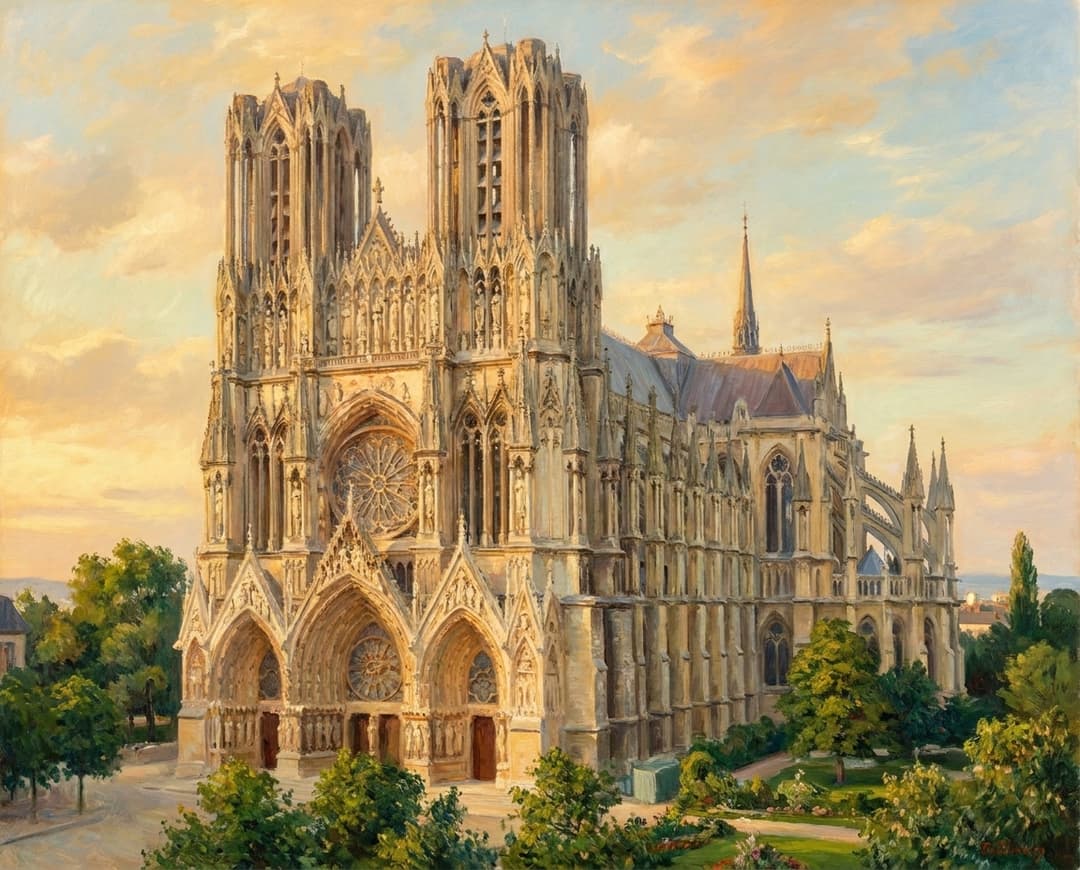
Reims Cathedral welcomes pilgrims and cultural travelers into one of Europe's most storied Gothic sanctuaries. The interior glows with natural light filtered through medieval and modern stained glass, offering a peaceful atmosphere for personal prayer. Visitors can admire the vast sculptural facade and contemplative chapels throughout the week.
Highlights
- Marvel at the world's most extensive sculptural program featuring over 2,300 medieval carved stone figures.
- Contemplate the luminous blue hues of Marc Chagall's modern stained glass windows in the axial Lady Chapel.
- Stand on the historic threshold where 33 French sovereigns received the sacred royal anointing.
- Discover the famous Smiling Angel gracing the northern portal of the monumental western facade.
Things to Know
- Tourist visits pause during parish celebrations, Eucharistic liturgies, and solemn holy feast masses.
- Upper tower ascents require separate reservations managed through the Centre des Monuments Nationaux.
- Early morning hours provide the quietest setting for contemplative prayer before tour groups arrive.
Location
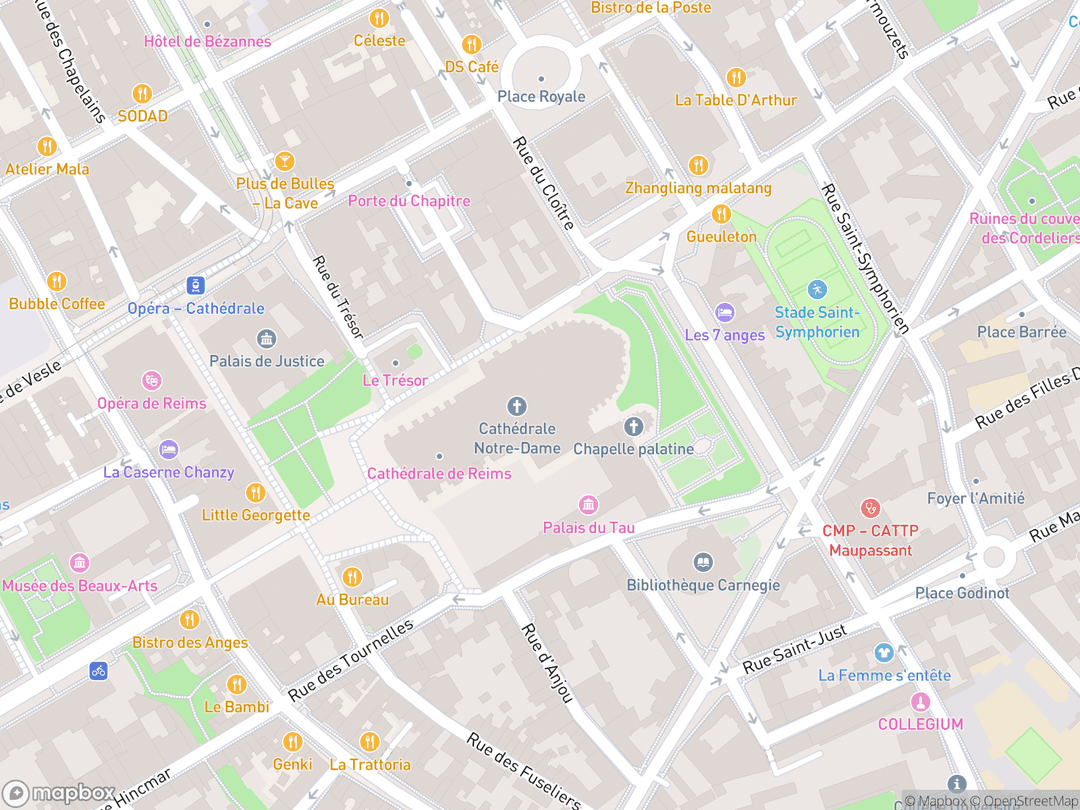
Place du Cardinal Luçon, 51100 Reims, Marne, Grand Est, France
Hours: Monday through Saturday 7:30 AM to 7:30 PM, Sundays 7:30 AM to 7:15 PM
Getting There: Located a 10-minute walk from Gare de Reims central train station, reachable by TGV in 45 minutes from Paris.
Get DirectionsTips for Your Visit
Morning Light
Visit the eastern chapels early in the morning to witness dawn light streaming directly through the Chagall stained glass.
Facade Details
Bring small binoculars to appreciate the intricate expressions carved into the Gallery of Kings high on the facade.
Sacred Modesty
Remember that the cathedral is an active Roman Catholic church; maintain quiet decorum and respectful attire inside.
About
Within the Abrahamic sacred architectural tradition, the sanctuary stands as an earthly threshold between humanity and the living God. Reims Cathedral elevates this archetype into both an apostolic episcopal seat and the historic sacramental heart of France.
Consecrated to the Blessed Virgin Mary, the cathedral witnessed the sacred anointing and coronation of 33 French sovereigns across eight centuries. It remains an active parish, an apostolic see, and an enduring monument of Catholic faith, reconciliation, and divine worship.
Rising above the Champagne plain, the High Gothic edifice harmonizes soaring stone vaults, radiant bar-tracery rose windows, and more than two thousand sculpted figures that proclaim salvation history in stone.
Gallery
Symbolic Elements
The temple's exterior features intricate carvings, each rich with spiritual meaning:

The Smiling Angel
This iconic facade sculpture displays a gentle smile expressing divine benevolence, hospitality, and the joy of Christian salvation.

Gallery of Kings
Fifty-six colossal stone monarchs remind worshippers that earthly rulers remain humble servants accountable beneath divine law.
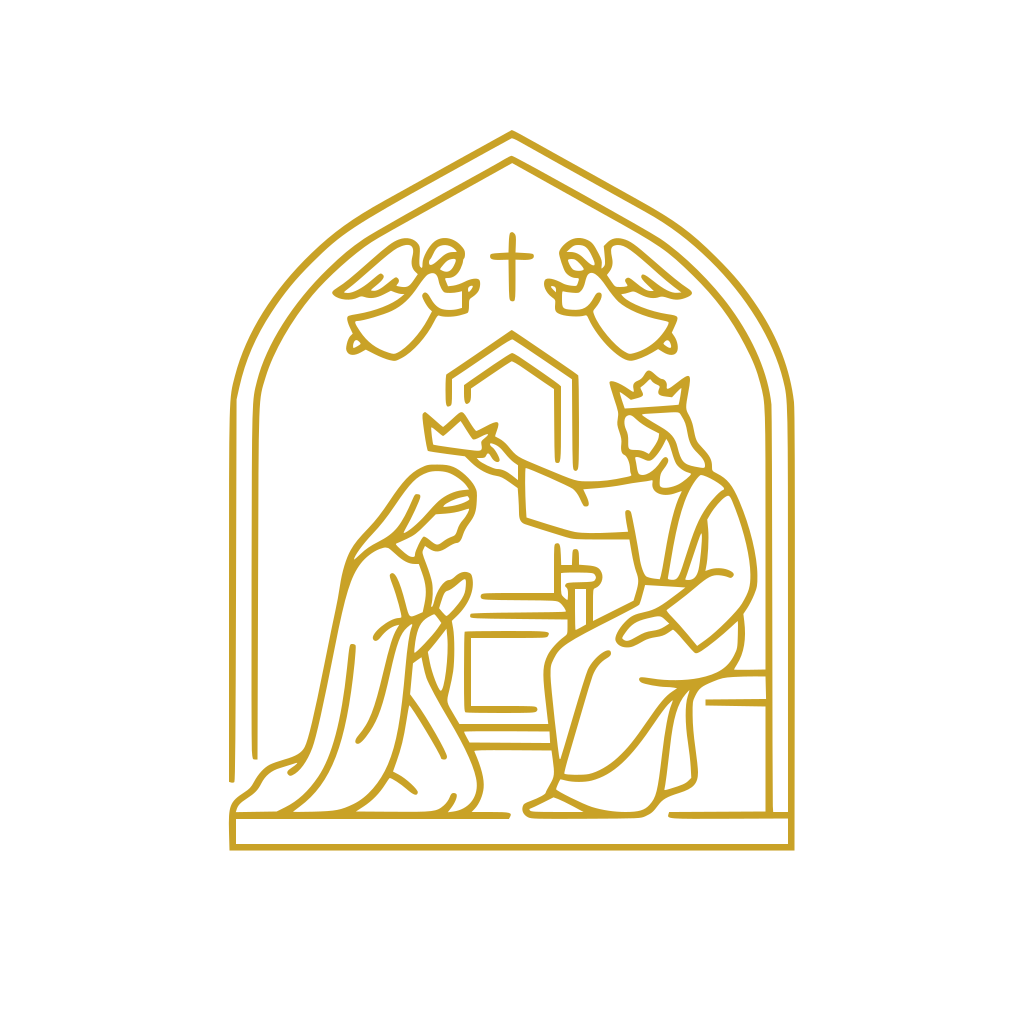
Coronation of the Virgin
The central western gable portrays Christ crowning Mary, prefiguring heavenly glory and the royal anointings celebrated within.

The Lost Labyrinth
An octagonal inlaid stone floor pattern historically represented the soul's winding spiritual pilgrimage toward celestial Jerusalem.
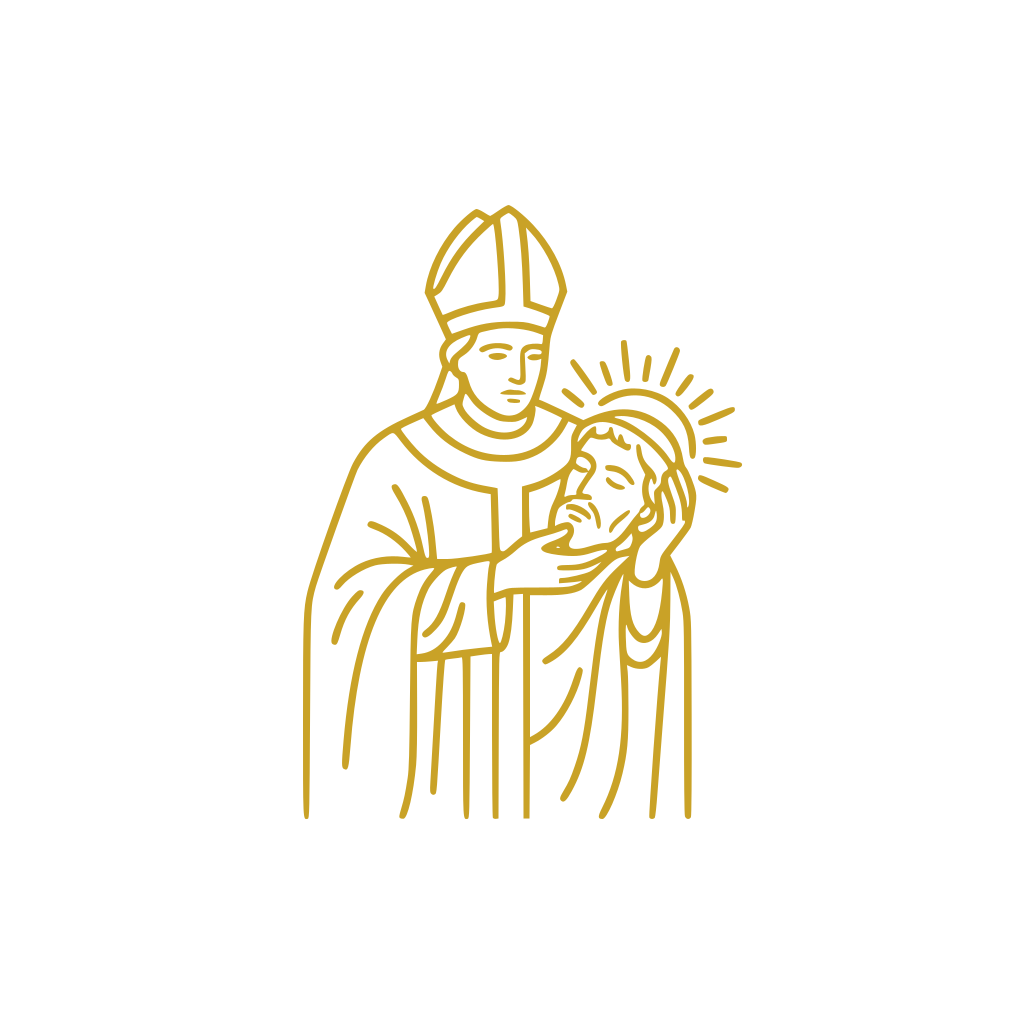
Saint Nicasius Cephalophore
A martyr bishop carrying his severed head proclaims the triumph of eternal Christian faith over mortal earthly persecution.
Chagall Axial Windows
Vibrant ultramarine glass lancets weave Old and New Testament covenants together, centered upon Christ and Abraham.
The Angel Flèche
A bronze sentinel angel atop the eastern apse roof marks the sacred presence of Christ in the tabernacle below.
Interesting Facts
Reims Cathedral hosted the solemn anointing and sacred coronation of 33 French sovereigns between 1223 and 1825. (Tier A)
With precisely 2,303 carved figures, the cathedral holds the global record for the most statuary on any medieval church. (Tier A)
Joan of Arc stood beside the high altar with her victory banner during Charles VII's coronation in 1429. (Tier A)
The Holy Ampulla contained ancient consecrated chrism believed to have been brought by a white dove for King Clovis. (Tier B)
Marc Chagall created three luminous cobalt-blue stained-glass windows for the axial Catholic Lady Chapel in 1974. (Tier A)
The decapitated head of the Smiling Angel was recovered from rubble in 1914 and restored as a national symbol. (Tier B)
Architect Henri Deneux designed a groundbreaking non-flammable concrete truss framework to replace the burned attic. (Tier B)
American philanthropist John D. Rockefeller Jr. provided crucial funding to restore the cathedral after World War I devastation. (Tier B)
In 1962, French President Charles de Gaulle and German Chancellor Konrad Adenauer celebrated a historic reconciliation Mass here. (Tier A)
Common Questions
Why were French kings crowned at Reims Cathedral?
The tradition honors the baptism of Clovis by Saint Remigius around 496 using miraculous chrism preserved in the Holy Ampulla.
Is Reims Cathedral an active church or a museum?
It remains an active Roman Catholic cathedral church with regular daily Masses and diocesan liturgies.
What happened to the original roof during World War I?
Artillery fire incinerated the 15th-century timber roof, which was replaced in the 1920s by an innovative fireproof concrete truss structure.
Are tourists allowed inside during liturgical services?
Tourist sightseeing pauses during scheduled Masses and solemn services to preserve reverent prayer for the congregation.
Featured Stories
Joan of Arc and the Dauphin's Crowning
July 17, 1429
Following her divine calling to relieve Orleans, Joan of Arc guided the Dauphin Charles across hostile territories to Reims. Standing proudly near the high altar during his coronation with her standard unfurled, she declared that having shared the burden, her banner rightfully shared the honor.
Source: Cathedral Historical Archives
The Martyrdom and Rebirth of the Smiling Angel
September 19, 1914
When heavy artillery bombardments ignited the cathedral scaffolding during World War I, blazing beams sheared off the head of the Smiling Angel into twenty fragments. Loyal citizens gathered and concealed the shards until post-war artisans meticulously reconstructed the radiant face as an enduring beacon of peace.
Source: Centre des Monuments Nationaux
The Seal of Franco-German Reconciliation
July 8, 1962
Standing together before the high altar, French President Charles de Gaulle and West German Chancellor Konrad Adenauer participated in a solemn Reconciliation Mass. By choosing this heavily bombed cathedral, both leaders transformed a scarred monument of past conflicts into the spiritual bedrock of a united Europe.
Source: Diocesan Archives of Reims
Timeline
Founding of First Marian Basilica
Bishop Saint Nicasius erects the initial Christian cathedral over Gallo-Roman thermal bath foundations.
MilestoneBaptism of Clovis
Saint Remigius baptizes King Clovis I and Frankish warriors with holy oil, inaugurating France's Christian monarchy.
EventFirst Imperial Coronation
Pope Stephen IV crowns Emperor Louis the Pious within the grand Carolingian cathedral.
MilestoneCoronation Tradition Established
The crowning of King Henry I establishes Reims as the mandatory coronation sanctuary for French kings.
MilestoneCatastrophic City Fire
A destructive municipal blaze entirely consumes the ancient Carolingian cathedral complex.
EventGothic Groundbreaking
Archbishop Aubry de Humbert and master mason Jean d'Orbais lay the foundation for the High Gothic cathedral.
component.timeline.groundbreakingChoir Stalls Consecration
The Cathedral Chapter officially enters and occupies the completed High Gothic radiant choir.
DedicationJoan of Arc at Charles VII Coronation
Joan of Arc stands with her victorious banner beside Charles VII as he is anointed king.
EventGreat Roof Fire
An accidental roof fire destroys the medieval timber attic, prompting royal funding for lead repairs.
RenovationFinal French Royal Coronation
King Charles X is anointed in the last traditional French royal coronation ceremony in history.
EventWWI Bombardment & Fire
German artillery shells ignite the timber scaffolding and roof framing, decapitating the Smiling Angel.
EventFranco-German Reconciliation Mass
Charles de Gaulle and Konrad Adenauer celebrate peace inside the cathedral to seal European reconciliation.
MilestoneHistory by Decade
400s–500s — Foundations of Christian Gaul
Bishop Saint Nicasius established the original cathedral atop Roman thermal baths, creating one of Western Europe's earliest shrines dedicated to Mary. Decades later, Saint Remigius baptized King Clovis I on Christmas Day, laying the cornerstone of the French Christian monarchy.
800s–1000s — The Carolingian Basilica
Archbishops Ebbo and Hincmar constructed a monumental Carolingian basilica consecrated in 862 before Emperor Charles the Bald. By 1027, the coronation of Henry I cemented the permanent canon that every French sovereign must receive the holy anointing within Reims.
1210s–1280s — The High Gothic Masterpiece
Following a catastrophic blaze in 1210, Archbishop Aubry de Humbert initiated the present High Gothic cathedral under master mason Jean d'Orbais. Over seven decades, master builders perfected bar tracery and erected towering quadripartite vaults that redefined European architecture.
1420s–1480s — Triumphs, Flames, and Rebuilding
In 1429, Joan of Arc accompanied Charles VII into the cathedral for his coronation, turning the tide of the Hundred Years' War. A devastating 1481 roof fire later rallied royal subsidies from King Louis XI to construct the iconic lead angel spire.
1790s–1820s — Revolution to Restoration
The French Revolution disrupted liturgical life, converting the sacred interior into a military storehouse while officials smashed the ancient Holy Ampulla. In 1825, King Charles X celebrated the final French royal coronation, reviving medieval chivalric rites before the crown.
1910s–1930s — Devastation and Heroic Renewal
Hundreds of artillery strikes ravaged the cathedral during World War I, destroying the historic timber attic and calcifying facade sculptures. Architect Henri Deneux led an innovative restoration using fireproof concrete trusses, bolstered by major funding from John D. Rockefeller Jr.
1960s–Present — Reconciliation and World Heritage
The 1962 joint Reconciliation Mass attended by Charles de Gaulle and Konrad Adenauer established the cathedral as a monument to European brotherhood. Inscribed by UNESCO in 1991, Reims continues welcoming faithful worshippers and world pilgrims into its radiant Gothic nave.
Architecture & Facilities
Reims Cathedral represents the pinnacle of High Gothic and early Rayonnant architecture, characterized by soaring verticality, harmonious bay proportions, and the invention of bar tracery that maximizes luminous interior glazing.
Building Materials
Courville Limestone
Fine-grained lutetian limestone quarried locally at Saint-Thierry, providing warm golden tones and exceptional sculptural malleability.
Deneux Concrete Trusses
Precast fireproof reinforced concrete beams joined by oak pegs, engineered in the 1920s to replace the burned timber framework.
Cast Lead Roofing
Heavy cast lead plating lining the roofs and pinnacles, protecting the underlying Gothic stone vaults from moisture.
Armature Ironwork
Forged wrought iron armatures securing the vast expanses of medieval and modern stained glass within stone mullions.
Interior Features
Central Nave
Soaring 38-meter vaults supported by bundled compound piers adorned with hand-carved botanical capitals depicting local flora.
Axial Lady Chapel
Semicircular radiating choir chapel containing the famous ultramarine blue stained-glass lancets designed by artist Marc Chagall.
Liturgical Choir
Elevated sanctuary containing the archbishop's cathedra and the high altar where French monarchs received sacred chrism.
Reverse West Wall
Unique triumphal facade interior adorned with 52 sculptured blind niches portraying biblical prophets and sacred mysteries.
Temple Grounds
The cathedral anchors the Place du Cardinal Luçon in the historic center of Reims, bordered by landscaped pedestrian avenues, the adjacent Archbishop's Palace of Tau, and open stone-paved plazas facilitating pilgrim processions.
Additional Facilities
The nearby Palace of Tau displays preserved cathedral treasures, original coronation regalia, and museum collections of restored statues.
Religious Significance
Within Roman Catholic theology, a cathedral is the heart of a diocese, housing the bishop's teaching cathedra and serving as the Eucharistic hearth for the communion of believers.
To glorify God through the Holy Sacrifice of the Mass, administer sacraments, nurture the faithful, and serve as an open house of prayer for all people.
Sacred Ordinances
The Holy Sacrifice of the Mass
The daily liturgical celebration of the Eucharist, where bread and wine become the Real Presence of the Body and Blood of Jesus Christ.
Sacrament of Reconciliation
Priestly absolution of sins offered to contrite penitents seeking divine mercy and restored fellowship with the Church.
Sacrament of Confirmation
The solemn anointing of baptized believers with holy chrism, imparting the strengthening gifts of the Holy Spirit.
The Sacre (Royal Coronation)
The historical quasi-sacramental rite of anointing sovereigns with sacred chrism to consecrate their civil duties under God.
Apostolic Succession and the Cathedra
The cathedra of the Archbishop of Reims represents unbroken apostolic lineage traceable back to Saint Nicasius and Saint Remigius, teaching Catholic doctrine in communion with Rome.
Marian Patronage and Heavenly Sanctuary
Dedicated to Notre-Dame, the cathedral honors the Virgin Mary as the Mother of God, whose maternal intercession is celebrated in the facade sculptures and daily Marian prayers.
Sources & Research
Every fact on Temples.org is backed by verified Sources & Research. Each piece of information is rated by source tier and confidence level.
View All Sources (8)
| Field | Source | Tier | Retrieved |
|---|---|---|---|
| About & Historical Background | Paroisse Notre-Dame Saint-Jacques de Reims (opens in a new tab) | A | 2026-02-18 |
| Architecture & Facilities | Encyclopaedia Britannica (opens in a new tab) | B | 2026-02-18 |
| Visitor Insights & Overview | French Moments (opens in a new tab) | B | 2026-02-18 |
| Timeline & Restoration | Atout France (opens in a new tab) | B | 2026-02-18 |
| Art & Sculptural Program | Web Gallery of Art (opens in a new tab) | B | 2026-02-18 |
| Ecclesial Heritage | European Church Heritage Network (opens in a new tab) | B | 2026-02-18 |
| Regional Sacred Heritage | Union des Maisons de Champagne (opens in a new tab) | B | 2026-02-18 |
| Liturgical Architecture | Guide des Eglises de France (opens in a new tab) | B | 2026-02-18 |