Visitor Insights
Visiting Cologne Cathedral
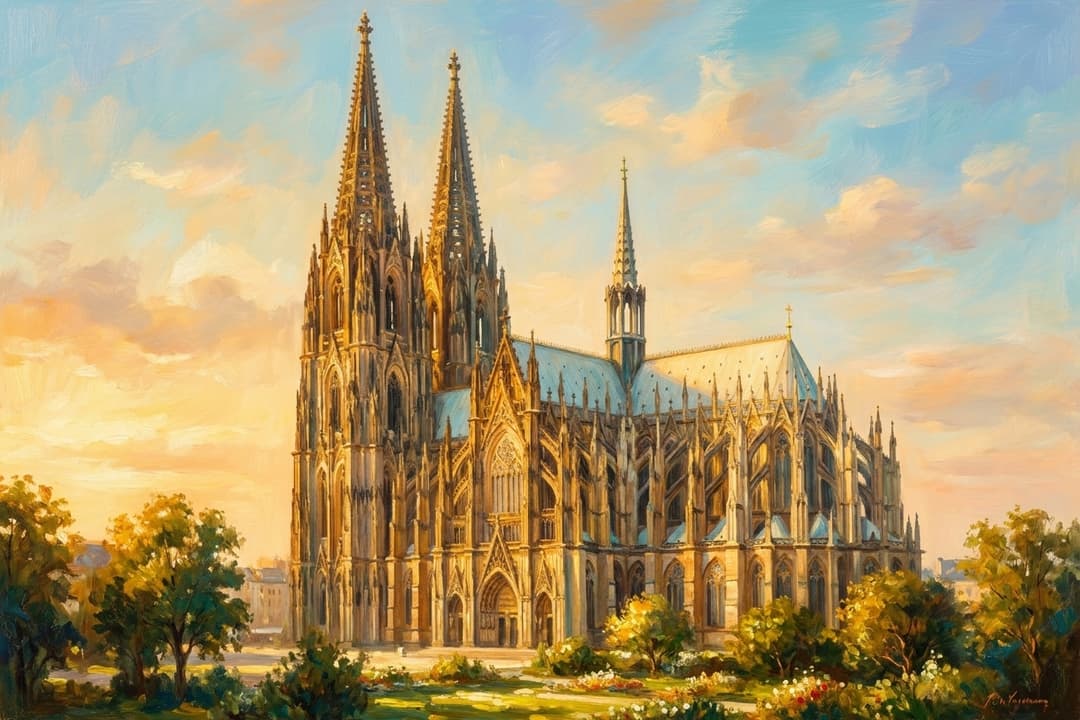
Visiting Cologne Cathedral offers an awe-inspiring encounter with soaring vertical stonework and monumental medieval treasures. The sacred interior remains active for daily liturgical prayer while welcoming pilgrims and travelers from around the globe.
Highlights
- Venerate the gilded Romanesque Shrine of the Three Kings behind the monolithic black marble High Altar.
- Contemplate the historic tenth-century Gero Crucifix, the oldest monumental crucifix north of the Alps.
- Climb the 533 spiral steps of the South Tower for sweeping vistas over the Rhine River.
Things to Know
- Modest attire covering shoulders and knees is strictly requested inside the sanctuary.
- Interior sightseeing pauses during solemn liturgical masses and sacramental celebrations.
- The South Tower staircase is strenuous and lacks elevator access for mobility devices.
Location
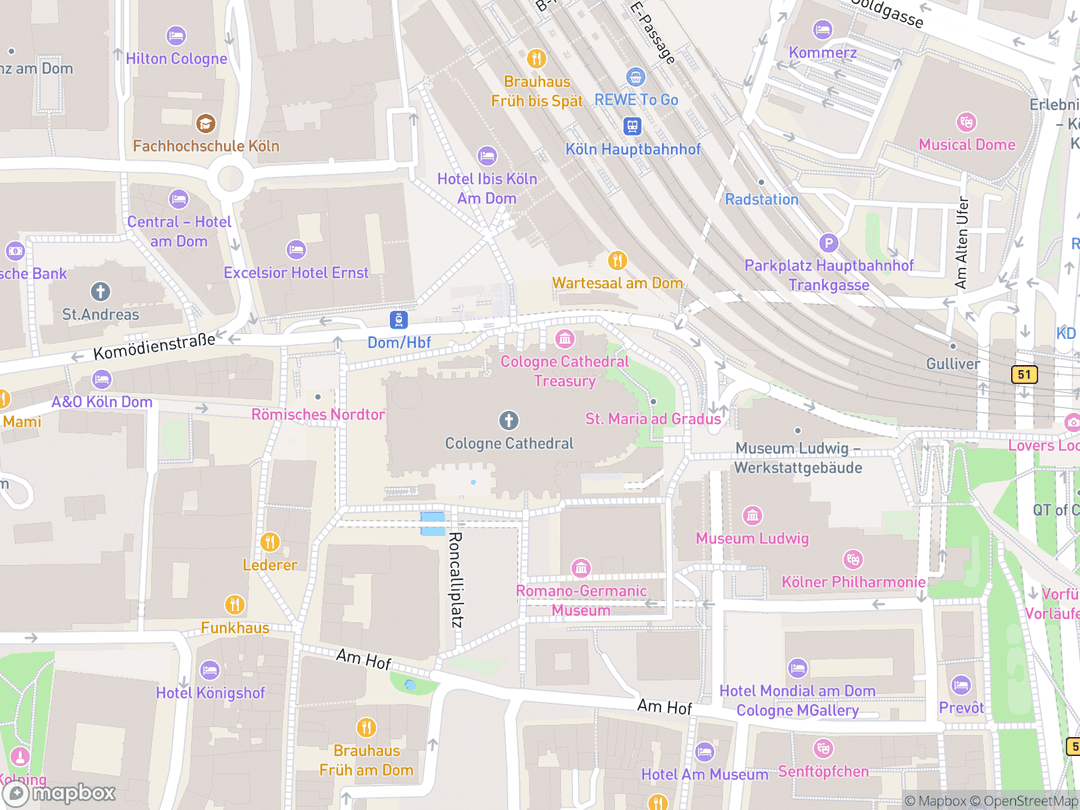
Domkloster 4, 50667 Köln, Germany
Hours: Monday to Saturday 6:00 AM – 8:00 PM; Sundays 1:00 PM – 8:00 PM
Getting There: Located directly beside Köln Hauptbahnhof (Cologne Central Station) with direct regional, ICE, and S-Bahn rail connections.
Get DirectionsTips for Your Visit
Arrive Early for Quiet Contemplation
Visit before 9:00 AM to experience the sacred stillness and vibrant morning illumination through the stained glass before tour groups arrive.
Choral Liturgies
Attend Sunday High Mass at 10:00 AM to hear the world-renowned Kölner Domchor alongside the grand cathedral organ.
About
Cologne Cathedral is a supreme masterpiece of French-inspired High Gothic architecture rising beside the Rhine in North Rhine-Westphalia. Commissioned in 1248 to house the venerated relics of the Three Magi, its monumental twin spires form an enduring beacon of Christian heritage and apostolic witness.
Although construction stalled for nearly three centuries, the original medieval plans were recovered in the nineteenth century, culminating in an extraordinary nationwide completion effort. Today, the cathedral serves as the seat of the Archbishop of Cologne and stands as an enduring monument of faith, resilience, and artistic brilliance.
Gallery
Symbolic Elements
The temple's exterior features intricate carvings, each rich with spiritual meaning:

Shrine of the Three Kings
A monumental gilded basilican reliquary honoring the Epiphany and Christ's supreme divine kingship.
The Gero Cross
An expressive tenth-century oak crucifix depicting the physical suffering and redemption of the crucified Savior.
Twin Openwork Spires
Perforated stone cage steeples directing pilgrim sightlines heavenward while allowing Rhine winds to pass through.
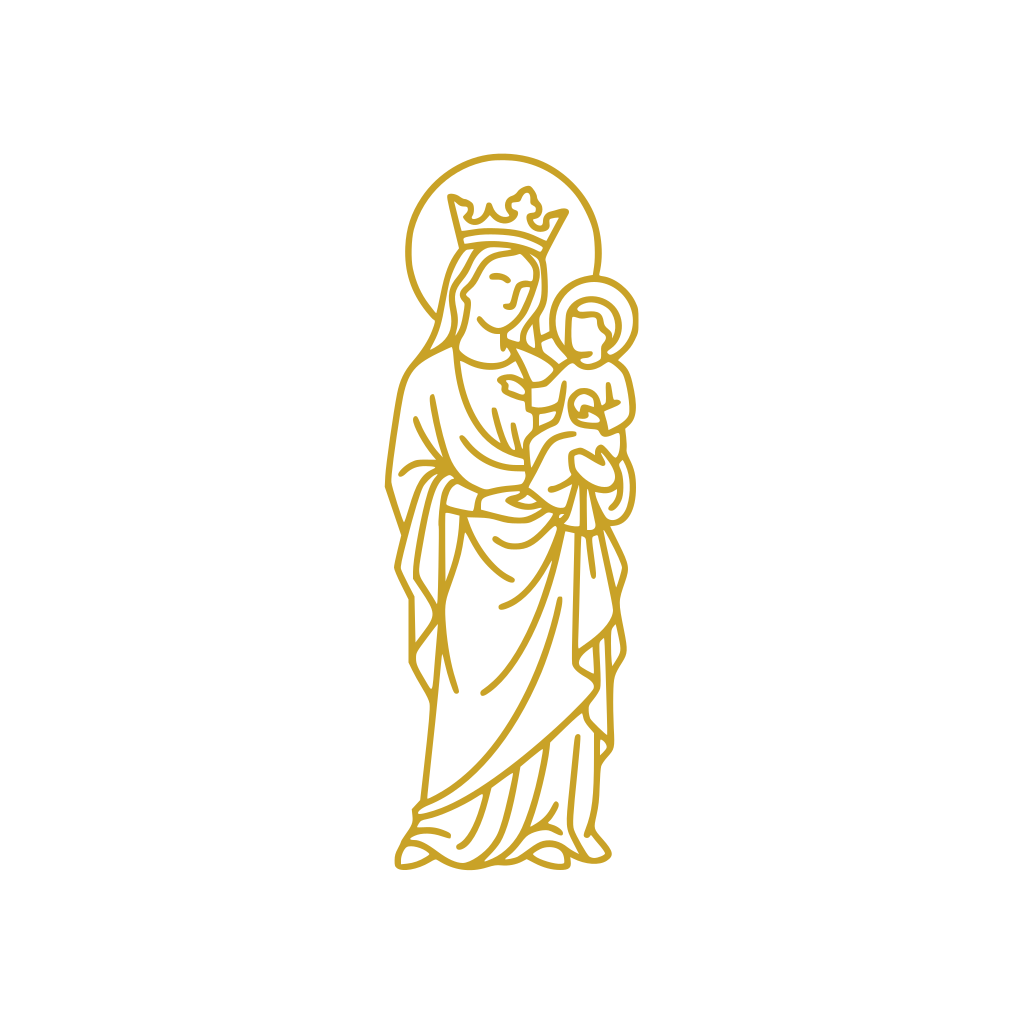
Milan Madonna
A graceful thirteenth-century wooden sculpture celebrating the Blessed Mother as the regal Queen of Heaven.

Gerhard Richter Stained Glass
A modern mosaic of 72 historic hues symbolizing divine light beyond human words and forms.

Latin Cross Ground Plan
A five-aisled cruciform floor plan mapping the physical sanctuary to the redeeming cross of Christ.

Flying Buttresses
Tiered exterior stone arches that channel gravitational weight outward to open the sanctuary walls to stained glass.
Interesting Facts
The western façade encompasses over 7,000 square meters, forming the largest unified church front in the world (Tier A).
A medieval construction crane sat atop the unfinished south tower for four hundred years as a beloved city landmark (Tier B).
Architects replaced traditional timber trusses with a revolutionary wrought-iron roof frame in the 1860s that prevented catastrophic fire (Tier B).
Allied pilots deliberately used the soaring cathedral spires as a visual navigation landmark, which helped preserve it from total destruction (Tier B).
Masons used twenty thousand red bricks to create the temporary 'Domplombe' plug that held up a sheared tower pillar after World War II (Tier B).
The cathedral's St. Peter bell, affectionately nicknamed 'Decke Pitter', is among the world's largest free-swinging bells (Tier A).
The High Altar rests upon a monolithic black limestone slab measuring 4.5 meters long, the largest single slab in Gothic architecture (Tier B).
Active work halted for 282 years before nineteenth-century builders resumed construction strictly from rediscovered medieval drawings (Tier A).
Local stonemasons maintain that when the cathedral is finally completed, the world will end, ensuring perpetual restoration (Tier C).
Common Questions
Is admission charged to enter Cologne Cathedral?
Entry to the main cathedral nave and choir is completely free for all worshippers and sightseers.
Why is the exterior stone so darkly colored?
Industrial coal smoke and environmental sulfur reacted chemically with limestone minerals to produce dark gypsum crusts.
What sacred relic is housed within the cathedral?
The church protects the ornate gilded medieval reliquary holding the bones of the Three Wise Men.
Can visitors ascend the cathedral towers?
Visitors can climb 533 stone steps up the South Tower for panoramic city and river views.
Featured Stories
The Imperial Pilgrimage and the Holy Relics
July 23, 1164
When Archbishop Rainald of Dassel processed into Cologne bearing the relics of the Three Magi, the city was instantly transformed into one of Christendom's preeminent pilgrimage centers. Medieval pilgrims and Holy Roman Emperors traveled here in solemn succession to pay homage at the golden shrine following their coronations at Aachen. This profound spiritual prestige prompted the cathedral chapter to tear down their Romanesque basilica to erect a soaring Gothic shrine worthy of Christ's earthly witnesses.
Source: Metropolitankapitel der Hohen Domkirche zu Köln
The Attic Discovery of Plan F
1814
For nearly three centuries, Cologne's skyline remained interrupted by an unfinished stone tower crowned by a medieval wooden crane. In 1814, romantic art historian Sulpiz Boisserée stumbled upon a section of the monumental medieval west façade parchment drawings tucked away in an attic in Darmstadt, while the matching portion was uncovered in Paris. This providential discovery galvanized intellectual figures like Goethe and King Frederick William IV to complete the cathedral in absolute fidelity to its original medieval vision.
Source: Central-Dombau-Verein zu Köln
Miraculous Survival in the Rubble of War
1945
During the devastating aerial bombings of World War II, over ninety percent of central Cologne was leveled, yet the Gothic cathedral stubbornly dominated the horizon. Hit directly by fourteen heavy aerial bombs, its vaults held firm thanks to the pioneering nineteenth-century iron truss roof system that resisted incineration. Allied pilots used its towering twin spires as an indispensable navigational waypoint, ensuring that this sacred landmark endured to anchor the post-war spiritual rebirth of Germany.
Source: Kölner Dombauhütte
Timeline
Early Christian Origins
Early Christian congregations build initial baptisteries and assembly halls near the northern Roman city wall.
MilestoneConsecration of the Old Cathedral
The Carolingian Hildebold Cathedral is consecrated to serve as the chief regional bishop's seat.
DedicationArrival of the Magi Relics
Archbishop Rainald of Dassel delivers the sacred relics of the Three Kings from Milan to Cologne.
EventGothic Groundbreaking
Archbishop Konrad von Hochstaden lays the foundation stone for the French Rayonnant-inspired cathedral.
component.timeline.groundbreakingConsecration of the Gothic Choir
The towering eastern choir is consecrated and receives the completed Shrine of the Three Kings.
DedicationConstruction Stoppage
Work ceases due to shifting theological priorities and funding shortages, leaving a crane on the south tower.
EventPlan F Rediscovery
Scholars discover the lost medieval parchment elevations in Darmstadt, sparking a romantic revival.
MilestoneResumption of Construction
Prussian King Frederick William IV and civic leaders officially relaunch construction on the Gothic nave.
MilestoneSolemn National Dedication
Emperor Wilhelm I attends the dedication festival marking the structural completion of both giant spires.
DedicationSurvival of Wartime Bombing
Though struck by fourteen heavy aerial bombs, the cathedral's Gothic vaults and iron frame survive collapse.
EventUNESCO World Heritage Inscription
The cathedral is formally inscribed by UNESCO as an exceptional synthesis of Gothic genius.
MilestoneGerhard Richter Window Consecration
A luminous pixelated glass installation of 11,263 mouth-blown squares is dedicated in the south transept.
DedicationHistory by Decade
1160s–1240s — The Imperial Relic Translation
The arrival of the Three Kings transformed Cologne into a spiritual beacon for the entire Christian world.
Following the acquisition of the Three Magi relics in 1164, Nicholas of Verdun spent decades forging the golden reliquary. The surge in pilgrim traffic soon overwhelmed the Carolingian cathedral, prompting church leaders to plan a French-style Gothic structure after a disastrous fire in 1248.
1248–1320s — High Gothic Construction
Master Gerhard directed the groundbreaking, modeling the proportions on the French Gothic masterpieces of Amiens and Beauvais. By 1322, the soaring choir was consecrated and received the venerated shrine behind the new black marble altar.
1330s–1560s — Medieval Halting
Master masons completed Plan F and raised the South Tower to fifty-six meters before work ground to a halt. Economic depression and the Protestant Reformation ended construction funding in 1560, leaving the legendary crane frozen on the tower for centuries.
1790s–1830s — Secularization and Rediscovery
French Revolutionary forces occupied the city in 1794, using the unfinished nave as a military hospital and forage barn. The rediscovery of the original facade blueprints in 1814 inspired a national movement that led to the re-establishment of the stonemasons' lodge in 1823.
1840s–1880s — The Romantic Completion
Here stands the greatest monument of faith and unity that our people have ever raised.
Catholic and Protestant patrons unified under King Frederick William IV to resume construction in 1842. Utilizing a pioneering wrought-iron roof framework, Master Builders Zwirner and Voigtel completed the twin 157-meter towers for the grand national dedication in 1880.
1940s–Present — Post-War Healing and Renewal
Though severely damaged by fourteen direct aerial bombs during World War II, emergency masonry work secured the cathedral for reopening in 1956. Inscribed as a UNESCO World Heritage site in 1996, the active Dombauhütte continues perpetual conservation of its ancient stone fabric today.
Architecture & Facilities
Cologne Cathedral represents the ultimate synthesis and realization of French High Gothic Rayonnant architecture on German soil. Its daring verticality, expansive stained glass clerestories, and openwork stone filigree express the medieval theological vision of the New Jerusalem descending from heaven to earth.
Building Materials
Drachenfels Trachyte
Volcanic stone quarried from the nearby Siebengebirge hills that formed the primary masonry of the medieval choir.
Obernkirchen Sandstone
Durable fine-grained sandstone used during nineteenth-century construction to complete the colossal western façade and towers.
Wrought-Iron Roof Truss
Engineered in the 1860s, this non-combustible metal framework supported the lead roof and protected vaults from wartime fire.
Namur Black Marble
A single unbroken four-and-a-half-meter limestone slab quarried in Belgium that forms the medieval High Altar table.
Interior Features
Choir and High Altar
Dedicated in 1322, this liturgical center contains 104 carved oak stalls and the monolithic black marble altar.
Ambulatory and Chevet Chapels
Seven radiating chapels surround the altar area to facilitate pilgrim prayer around the Shrine of the Three Kings.
Five-Aisled Nave
A colossal hall rising over forty-three meters on bundled stone colonnettes that direct all visual attention heavenward.
South Transept
A brightly illuminated transept featuring Gerhard Richter's luminous pixelated stained glass installation consecrated in 2007.
Temple Grounds
The cathedral rises above the elevated Domplatte pedestrian terrace, seamlessly separating sacred pedestrian pilgrims from city rail traffic.
Additional Facilities
An underground Cathedral Treasury exhibits priceless liturgical vessels, vestments, and ancient reliquaries beneath the northern terrace.
Religious Significance
As the seat of the Archbishop of Cologne and the sanctuary of the Magi relics, Cologne Cathedral embodies the universal call of the Catholic Church.
To celebrate the Holy Sacrifice of the Mass, administer the Sacraments, and offer an earthly sanctuary of contemplation and prayer.
Sacred Ordinances
The Holy Mass
Daily celebration of the Eucharistic sacrifice where the faithful encounter the living presence of Jesus Christ.
Pilgrim Veneration of the Magi
Sacred procession and prayers offered before the gilded reliquary housing the earthly remains of the Three Wise Men.
Sacrament of Reconciliation
Confessionals staffed throughout the day offering spiritual healing and forgiveness to pilgrims and local parishioners.
The Theology of Stained Glass and Divine Light
Medieval builders dissolved solid exterior stone walls into towering bands of stained glass to materialize the divine mystery of lux nova. The jewel-toned light filtering through the nave illuminates the soul with heavenly radiance, reminding worshippers that God is uncreated light.
Sources & Research
Every fact on Temples.org is backed by verified Sources & Research. Each piece of information is rated by source tier and confidence level.
View All Sources (5)
| Field | Source | Tier | Retrieved |
|---|---|---|---|
| About & Historical Background | Metropolitankapitel der Hohen Domkirche zu Köln (opens in a new tab) | A | 2026-03-31 |
| World Heritage Nomination & Evaluation | UNESCO World Heritage Centre (opens in a new tab) | B | 2026-03-31 |
| Nineteenth-Century Completion & Construction Documents | German History in Documents and Images (opens in a new tab) | B | 2026-03-31 |
| Theological Heritage & Christian Sacred Art | Omnes Magazine (opens in a new tab) | B | 2026-03-31 |
| Visitor Logistics & Urban Context | KölnTourismus GmbH (opens in a new tab) | D | 2026-03-31 |