Visitor Insights
Visiting Dohány Street Synagogue
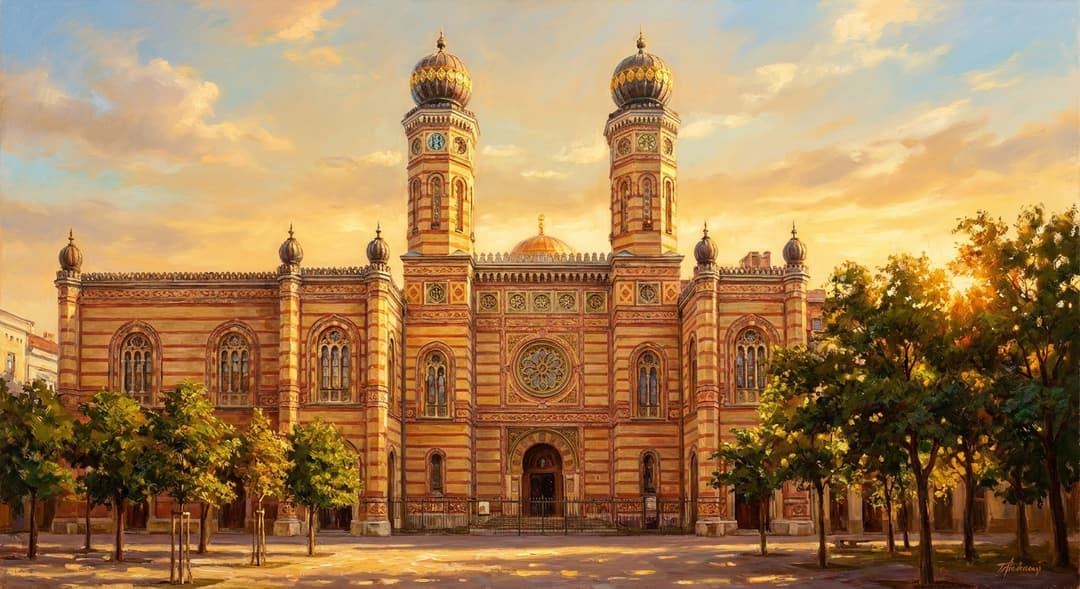
Visitors to the Dohány Street Synagogue encounter one of the grandest sacred interiors in Europe, combining vibrant Moorish polychromy with somber memorial spaces. Modest dress covering shoulders and knees is strictly required, and men must wear a head covering inside the sanctuary. Security screening is standard, and the complex is always closed on Saturdays for the Jewish Sabbath.
Highlights
- Monumental 12-meter clear span nave framed by ornate cast-iron columns and gilded galleries.
- Frigyes Feszl's oriental pavilion Aron Kodesh holding sacred rescued Torah scrolls.
- Imre Varga's steel weeping willow sculpture in the Raoul Wallenberg Memorial Park.
- Historic courtyard cemetery preserving the resting places of Budapest Ghetto victims.
Things to Know
- Closed on Saturdays (Shabbat) and all major Jewish holidays.
- Airport-style security checkpoints prohibit large luggage, knives, and backpacks.
- Modest dress is required, and paper kippot are provided at the entrance for male visitors.
- Early closing hours on Friday afternoons to allow for Shabbat preparations.
Location
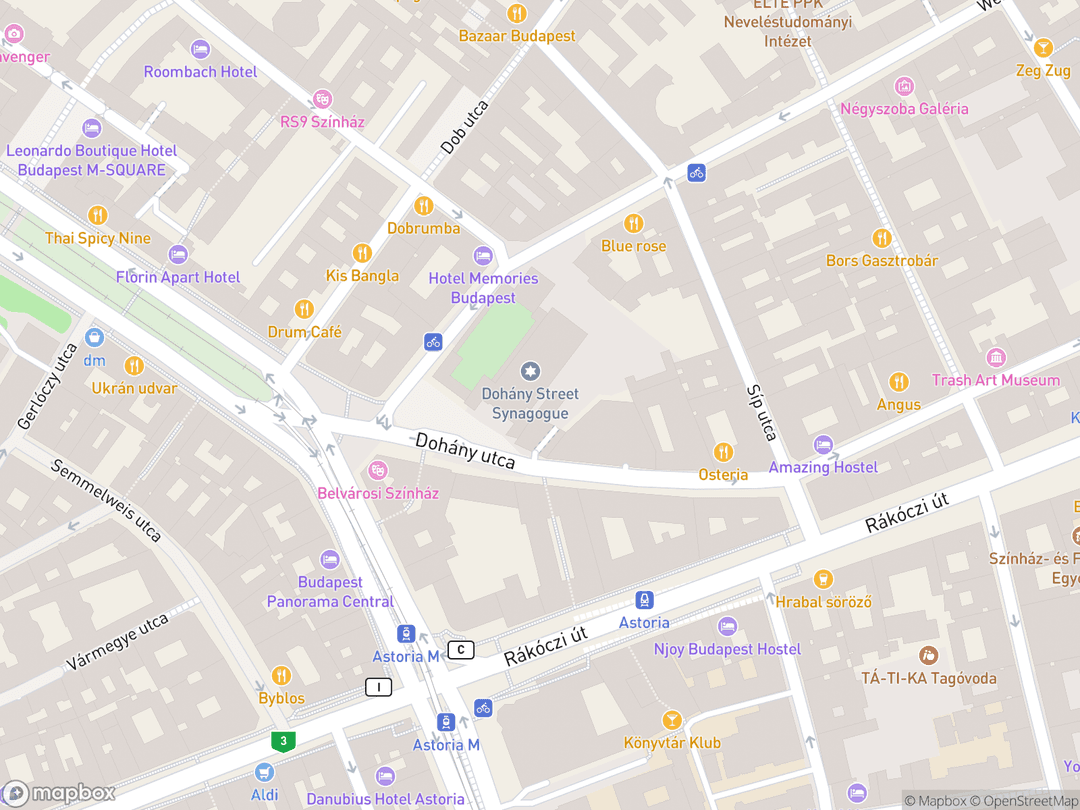
Dohány u. 2, 1074 Budapest, Hungary
Hours: Sunday to Thursday 10:00 AM – 6:00 PM (Summer), 10:00 AM – 4:00 PM (Winter); Friday early closing; Saturday closed
Getting There: Located a two-minute walk from the Astoria station on Metro Line M2, or a six-minute walk from Deák Ferenc tér hub.
Get DirectionsTips for Your Visit
Arrive for Morning Entry
Visit at 10:00 AM on weekday mornings to view the sunlit stained-glass windows before tour group crowds arrive.
Attend an Included Guided Tour
Take advantage of the multi-language 45-minute guided tours included with standard admission tickets.
Explore the Adjoining Museum
Allow time to tour the Hungarian Jewish Museum built upon the birthplace foundation of Theodor Herzl.
About
The Dohány Street Synagogue, also known as the Great Synagogue of Budapest, stands in Erzsébetváros as the monumental spiritual center of Hungarian Neolog Judaism. Consecrated in 1859, this palatial sanctuary represents a landmark era of Jewish civic emancipation within the Austro-Hungarian Empire. As the largest synagogue in Europe, it serves as an enduring testament to deep community faith and cultural integration.
Rooted in Abrahamic monotheism, the synagogue shares profound theological foundations with sibling traditions, emphasizing covenantal assembly, public scripture reading, and sacred orientation toward Jerusalem. Designed by Viennese architect Ludwig Förster, the building boldly adopts a Moorish-Byzantine Revival aesthetic that evokes the Golden Age of medieval Spain while affirming a unique Jewish cultural identity within Central Europe.
Beyond its architectural splendor, the complex bears witness to profound twentieth-century historical trials. Integrated into the perimeter of the Budapest Ghetto during the Holocaust, its grounds sheltered mass graves and endured military occupation. Today, painstakingly restored through civic and philanthropic support, the vibrant sanctuary functions as an active house of prayer, a museum of living Jewish heritage, and a world-renowned memorial.
Gallery
Symbolic Elements
The temple's exterior features intricate carvings, each rich with spiritual meaning:

Solomonic Twin Towers
The octagonal twin towers architecturalize Jachin and Boaz, the two grand bronze columns of King Solomon's Temple.

Tablets of the Law
Carved marble Tablets of the Covenant crown the main pediment inscribed with the Ten Commandments.
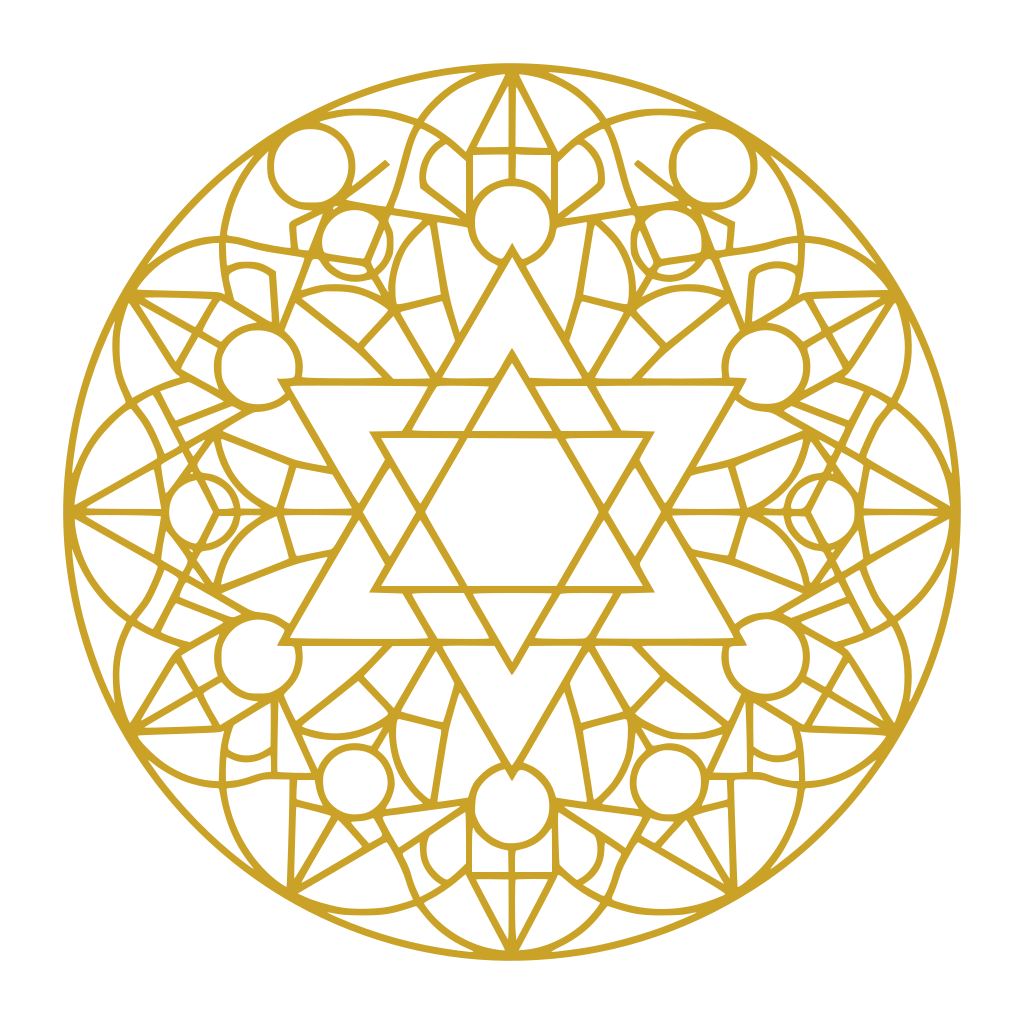
Star of David Rose Window
The central rose window integrates hexagonal Star of David geometry within intricate geometric tracery.

Gilded Onion Domes
Crowning the towers, Moorish onion domes symbolize celestial glory reaching downward to touch the earth.

Ner Tamid
The eternal bronze lamp suspended before the Ark symbolizes the unending divine presence of the Shekhinah.

The Tree of Life
Imre Varga's metal weeping willow bears individual engraved leaves honoring murdered victims of the Holocaust.

Exodus Dedicatory Script
Raised Hebrew lettering above the entrance portal quotes God's command to build a sanctuary for divine dwelling.

Cast-Iron Palm Capitals
Structural iron pillars terminate in stylized palm frond capitals recalling the biblical Oasis of Elim.
Interesting Facts
New York City's landmark Central Synagogue in Manhattan was directly modeled after the Dohány Street Synagogue (Tier B).
The entire building sits at an off-grid angle so the Holy Ark aligns directly toward the Temple Mount in Jerusalem (Tier A).
Franz Liszt attended the 1859 consecration and composed pieces performed on the newly installed pipe organ (Tier A).
Architect Ludwig Förster was a Roman Catholic who selected Moorish motifs to emphasize ancient Semitic artistic roots (Tier B).
The courtyard houses 2,281 mass graves created out of extreme necessity during the winter siege of 1944–1945 (Tier A).
Hollywood actor Tony Curtis spearheaded the multi-million-dollar post-Communist restoration of the sanctuary (Tier A).
The structure was among the earliest in Central Europe to employ load-bearing cast-iron interior columns (Tier B).
Zionist visionary Theodor Herzl was born in a townhouse that stood immediately against the synagogue wall (Tier A).
The organ was deliberately shielded behind an oriental latticework to respect traditional visual sensibilities (Tier B).
Common Questions
Why is an organ located inside an Ashkenazi synagogue?
Hungarian Neolog Judaism embraced sacred instrumental music, utilizing an organ operated by a non-Jewish musician during Shabbat.
Why does the synagogue look like an Islamic or Byzantine palace?
Architect Ludwig Förster used Moorish Revival forms to honor Jewish cultural flourishing during Al-Andalus in medieval Spain.
Why are graves situated directly in the synagogue courtyard?
During the brutal winter siege of 1944–1945, emergency courtyard burials were permitted due to wartime blockades.
What connection does Theodor Herzl have to this site?
Theodor Herzl was born in a residence directly adjoining the synagogue, where the Jewish Museum now stands.
Do men and women sit together during services?
Following traditional gender separation, men sit in the lower nave while women occupy the two elevated gallery tiers.
Featured Stories
Liszt and the Dedication Chords
September 6, 1859
When the synagogue opened its gates in 1859, Hungarian virtuoso Franz Liszt sat prominently among civic dignitaries. He praised the acoustic brilliance of the Friedrich Ladegast pipe organ and performed compositions that inaugurated a daring era of musical liturgy.
Source: Great Synagogue Historical Archive
Sanctuary of the Ghetto
January 18, 1945
During the dark winter of 1944, Nazi and Arrow Cross forces confined over 70,000 Jews to the surrounding ghetto. When Soviet troops liberated the complex, the courtyard was transformed into an emergency cemetery to inter thousands of victims with dignified rabbinic prayer.
Source: Hungarian Jewish Museum and Archives
Tony Curtis and the Heritage Rebirth
1987
Moved by the memory of his Hungarian-Jewish father, Hollywood legend Tony Curtis established the Emanuel Foundation to rescue the decaying building. Curtis lobbied state officials and gathered global philanthropists to fund the multi-million-dollar restoration that revived the temple.
Source: Emanuel Foundation Historical Records
Timeline
Groundbreaking Ceremony
Construction officially begins in Pest under the direction of master builder Ignác Wechselmann.
component.timeline.groundbreakingSanctuary Consecration
The synagogue is consecrated with civic fanfare and organ performances attended by Franz Liszt.
DedicationThe Jewish Congress of Hungary
The national schism establishes the Neolog stream, with Dohány Street serving as its national flagship.
MilestoneHeroes' Temple Dedicated
The adjacent arcade and Heroes' Temple open to honor Jewish soldiers fallen in World War I.
MilestoneArrow Cross Party Assault
Fascist militants target congregants with hand grenades as Sabbath services conclude.
EventGhetto Enclosure and Seizure
German occupation forces incorporate the complex into the Budapest Ghetto and desecrate the main hall.
EventLiberation of the Ghetto
Soviet forces liberate the complex, revealing thousands of victims who receive emergency burial in the courtyard.
MilestoneEmanuel Foundation Established
Actor Tony Curtis founds a philanthropic trust to fund a comprehensive restoration of the decaying site.
RenovationRededication and Memorial Dedication
The restored sanctuary reopens alongside the dedication of Imre Varga's weeping willow memorial.
DedicationSesquicentennial Jubilee
The congregation celebrates its 150th anniversary with international symposia and concerts.
MilestoneHistory by Decade
1850s — Civic Emancipation and Construction
Make me a sanctuary, that I may dwell among them.
Following the 1848 Hungarian Revolution, the thriving Jewish community of Pest organized a design competition to build a monumental sanctuary. Viennese architect Ludwig Förster broke ground in 1854, completing the grand Moorish Revival temple for its September 1859 consecration.
1860s–1890s — The Golden Age of Pest
Following the 1867 Compromise, Hungarian Jewry convened the 1868 Jewish Congress, solidifying the Neolog movement with Dohány Street as its center. The sanctuary hosted patriotic celebrations during the 1896 Hungarian Millennium while anchoring a thriving intellectual quarter.
1920s–1930s — Expansion and Gathering Storms
Between 1929 and 1931, the block expanded with the construction of the Hungarian Jewish Museum and the Heroes' Temple honoring World War I dead. Mounting antisemitism culminated on February 3, 1939, when Arrow Cross fascists attacked Sabbath worshipers with hand grenades.
1940s — Ghetto Desecration and Liberation
In 1944, the synagogue was encircled by the walled Budapest Ghetto and seized by the SS as an administrative office, radio depot, and horse stable. Following liberation in January 1945, the community returned to clear rubble and establish mass graves in the courtyard.
1950s–1980s — Deterioration Under State Socialism
Behind the Iron Curtain, Jewish religious life faced heavy state surveillance and severe economic hardship. Lacking maintenance funds, the building suffered structural water damage, deteriorating murals, and plaster collapse throughout the Cold War decades.
1990s–Present — Democratic Renaissance
The collapse of communism allowed international partnerships, notably the Emanuel Foundation, to finance an exhaustive restoration from 1991 to 1996. Today, the complex thrives as a consecrated house of worship, a living museum, and an international symbol of Jewish endurance.
Architecture & Facilities
The Dohány Street Synagogue is a celebrated triumph of Moorish Revival and Romantic Historicism, fusing North African Islamic decorative traditions with Central European basilical engineering to express Jewish distinctiveness without relying on Christian ecclesiastical forms.
Building Materials
Polychrome Brickwork
Glazed red and golden-yellow brick cladding alternating in vivid horizontal courses.
Structural Cast Iron
Slender prefabricated load-bearing columns manufactured by the historic Ganz Foundry in Buda.
Copper Sheeting
Repoussé copper roofing enclosing the octagonal domes with ornamental geometric openwork.
Limestone Portals
Fine-grained Hungarian limestone carved into triple rounded arches and colonnettes.
Interior Features
Central Nave
A 12-meter clear span hall lined with pews accommodating nearly 1,500 male worshipers.
Women's Galleries
Two cantilevered tiers of open seating supported by slender ornamental iron colonnades.
Aron Kodesh Sanctuary
An oriental domed pavilion designed by Frigyes Feszl housing sacred rescued Torah scrolls.
Organ Loft
An integrated acoustic gallery housing thousands of pipes behind carved decorative wooden screens.
Temple Grounds
The urban complex encompasses the central brick forecourt, the Heroes' Temple arcade, the Raoul Wallenberg Memorial Park, and the sanctified Martyrs' Cemetery.
Additional Facilities
The site incorporates the Hungarian Jewish Museum, the Holocaust Memorial Room, archival research rooms, and dedicated visitor reception facilities.
Religious Significance
As the historic motherhouse of Hungarian Neolog Judaism, the Dohány Street Synagogue represents a unique theological synthesis within Abrahamic monotheism, balancing strict fidelity to Torah law with active civic and cultural integration.
To serve as a consecrated house of assembly (Beit Knesset), study (Beit Midrash), and prayer (Beit Tefilah) oriented toward Jerusalem.
Sacred Ordinances
Torah Proclamation
The public chanting of weekly Torah portions from the elevated bimah facing the Holy Ark.
Communal Liturgy
Choral prayers and cantorial melodies accompanied by organ music during regular Sabbath services.
Shabbat Observance
Sacred Sabbath assemblies characterized by scriptural sermons delivered in the vernacular tongue.
The Neolog Liturgical Synthesis
Neolog Judaism harmonizes traditional Halakha with refined Western aesthetics, introducing vernacular preaching, choral singing, and instrumental accompaniment while maintaining reverence for ancestral scripture.
The Sacred Orienting Axis
In faithful accordance with halakhic geography, the entire architectural footprint is oriented eastward toward the Temple Mount in Jerusalem, symbolizing covenantal unity with Zion.
Sources & Research
Every fact on Temples.org is backed by verified Sources & Research. Each piece of information is rated by source tier and confidence level.
View All Sources (8)
| Field | Source | Tier | Retrieved |
|---|---|---|---|
| About & Historical Background | Dohány Street Synagogue Official Administration (opens in a new tab) | A | 2026-02-18 |
| Architecture & Jewish Heritage Complex | Hungarian Jewish Museum and Archives (opens in a new tab) | A | 2026-02-18 |
| Community Heritage & Post-War Rebuilding | Jewish Heritage Europe (opens in a new tab) | B | 2026-02-18 |
| Memorial Park & Holocaust History | Patrick Comerford Cultural and Architectural Archives (opens in a new tab) | B | 2026-02-18 |
| Architectural Overview & Structural Data | Roods Architectural Database (opens in a new tab) | B | 2026-02-18 |
| Sacred Travel & Congregation Records | Jewish Tour Hungary (opens in a new tab) | C | 2026-02-18 |
| Heritage Preservation & Ritual Protocol | Breaking Matzo Heritage Project (opens in a new tab) | C | 2026-02-18 |
| Visitor Itineraries & Site Context | Kosherica Cultural Travel (opens in a new tab) | D | 2026-02-18 |