Visitor Insights
Visiting Badrinath Temple
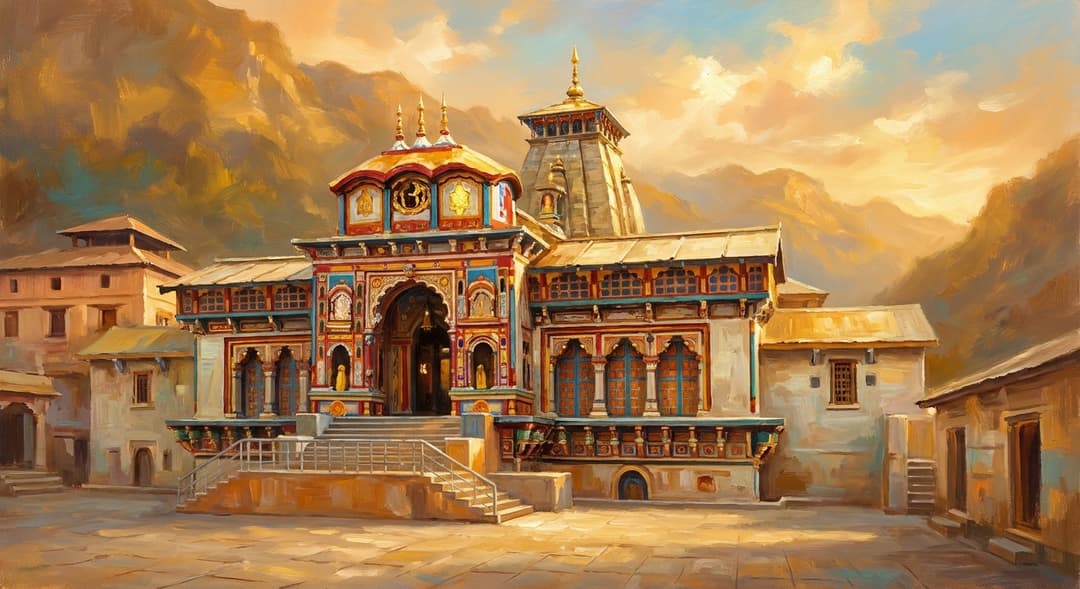
Perched in an alpine river valley, the temple operates seasonally from late spring through early November due to heavy winter snowdrifts. Pilgrims routinely bathe in the thermal waters of Tapt Kund along the riverbank before ascending the painted stone stairs for darshan. The high-altitude sanctuary provides organized queue lines and medical support along its perimeter.
Highlights
- Dhyana Mudra posture of the black Shaligram deity
- Natural sulfur baths of Tapt Kund below the temple terrace
- Vividly painted multihued arches of the outer Singhdwar
- Dramatic vistas framed by the towering Neelkantha peak
Things to Know
- Temple remains closed during the six snowy winter months
- High-altitude acclimatization is essential to prevent altitude sickness
- Leather articles, camera gear, and mobile phones are prohibited inside
- Mountain highways are vulnerable to monsoon landslides in July and August
Location
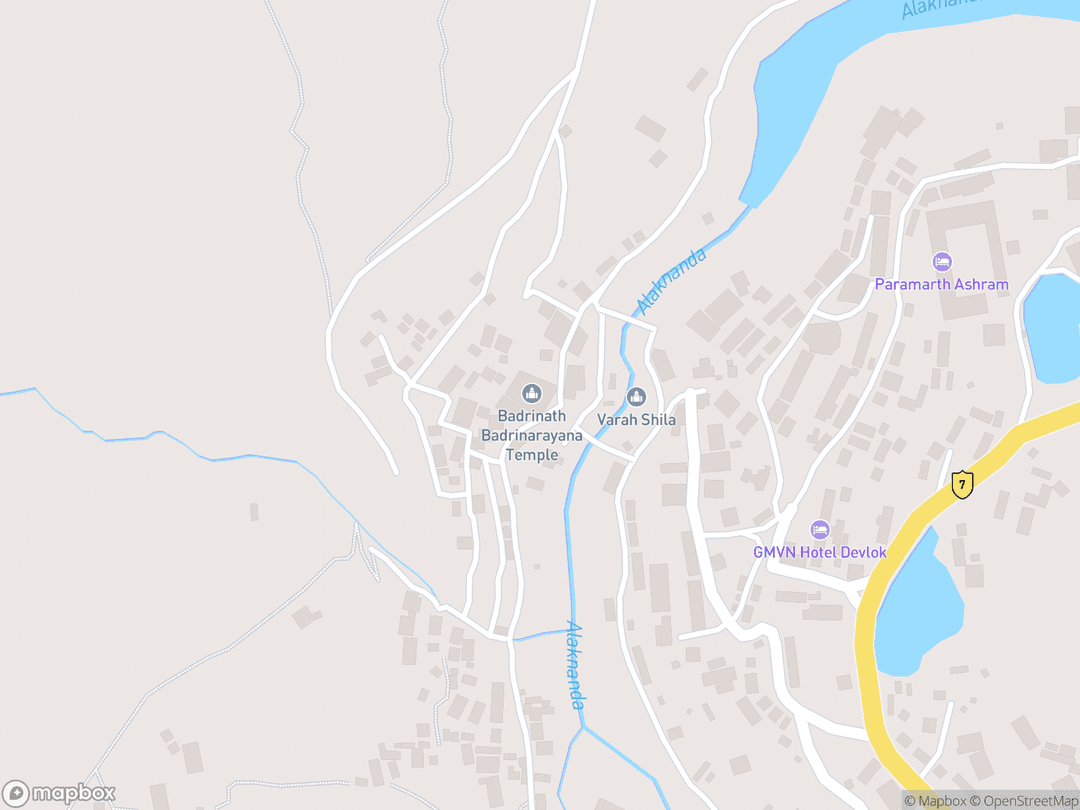
Badripuri, Badrinath Town, Joshimath Tehsil, Chamoli District, Uttarakhand 246422, India
Hours: 04:30 AM to 01:00 PM; 04:00 PM to 09:00 PM (Seasonal)
Getting There: Accessible via National Highway 7 from Rishikesh and Joshimath, with seasonal helicopter charters operating to the Badrinath helipad.
Get DirectionsTips for Your Visit
Geothermal Preparation
Take a ritual bath in the natural 55°C waters of Tapt Kund prior to darshan to warm up and fulfill classical pilgrimage purification.
Altitude Safety
Pause in Joshimath or Pandukeshwar for gradual acclimatization before sleeping at the 3,133-meter altitude of Badrinath.
Seasonal Timing
Plan your journey during May and June or September and October to avoid severe monsoon roadblocks and torrential summer downpours.
About
Badrinath Temple stands as the preeminent Himalayan shrine of Lord Vishnu, situated along the rushing waters of the Alaknanda River in Uttarakhand's Chamoli district. Revered within the broader Dharmic continuum as a supreme crossing place between earthly exertion and divine realization, the site draws millions of seekers into the towering shadows of the Nar and Narayana peaks.
Rooted in ancient Vedic and Puranic lore as Badrikashrama, the sanctuary is the northern pillar of India's cardinal Char Dham and the culmination of the regional Chota Char Dham circuit. Celebrated by the Tamil Alvar poet-saints as one of the sacred 108 Divya Desams, it bridges subcontinental geographies and philosophical lineages.
According to sacred history, Adi Shankaracharya recovered the presiding self-manifested black stone icon from the river and established its formal rites during the ninth century. To this day, the head priest is uniquely appointed from the Nambudiri Brahmin lineage of Kerala, embodying an enduring spiritual bridge spanning northern mountain passes and southern coastal traditions.
Gallery
Symbolic Elements
The temple's exterior features intricate carvings, each rich with spiritual meaning:

The Sacred Badri Tree
Commemorates Goddess Lakshmi manifesting as a berry tree to shelter meditating Vishnu from snow.

Black Shaligram Murti
Carved from Gandaki ammonite fossil, representing the self-manifested primeval presence of cosmic divinity.

Dhyana Mudra Posture
Portrays Vishnu in seated meditation, symbolizing inner spiritual mastery over external worldly conquering.

Twin Mountain Sentinels
The surrounding peaks of Nar and Narayana represent the union of individual soul and supreme cosmic consciousness.

Golden Kalasha Spire
Crowns the sanctum tower as the nectar of immortality and an architectural axis connecting earth to heaven.

Kneeling Garuda Figure
Stands facing the inner doors with folded hands to embody steadfast humility and winged vigilance.

Tapt Kund Thermal Waters
Natural geothermal springs along the freezing river symbolizing bodily purification before approaching the holy sanctum.
Interesting Facts
The chief priest of this northern Himalayan shrine must legally hail from the Nambudiri Brahmin community of Kerala (Tier A).
Badrinath is the only holy site in India included in both the pan-Indian Char Dham and the Himalayan Chota Char Dham (Tier A).
When doors open after six months of snowy winter isolation, the sacred Akhand Jyoti ghee lamp is traditionally found still burning (Tier C).
Directly below the freezing glacial Alaknanda River, the geothermal Tapt Kund spring bubbles at a scalding 55 degrees Celsius (Tier A).
The colorful wooden arched gate gives the temple facade an appearance often compared to Himalayan Buddhist pagodas (Tier B).
Following total destruction in the 1803 earthquake, the temple was rebuilt through master artisans dispatched by the Maharaja of Jaipur (Tier B).
Badrinath serves as the primary sanctuary among the Panch Badri, an ancient network of five Vishnu temples in Garhwal (Tier A).
Historically, the King of Tehri-Garhwal was reverenced as the living deity Bolanda Badrinath and authorized all pilgrimage openings (Tier B).
The deity is sculpted in the meditative Padmasana posture rather than the standard standing or reclining poses of Vishnu (Tier A).
Common Questions
Why is the chief priest of Badrinath from South India?
Adi Shankaracharya decreed that a Nambudiri Brahmin from Kerala must serve as Rawal to forge an enduring ecclesiastical bridge uniting India.
When does the temple open and close each year?
The shrine opens annually on Akshaya Tritiya in late April or May and closes around mid-November due to heavy mountain snowfall.
Where is the deity worshipped during the winter months?
During the snowbound winter season, the movable representative idol is ceremonially relocated to the Narsingh Temple in Joshimath.
What is the water temperature of Tapt Kund?
The natural geothermal sulfur spring of Tapt Kund maintains an approximate year-round temperature of 55 degrees Celsius.
Is photography allowed inside the temple chambers?
Photography, videography, and mobile phone usage are strictly forbidden inside the inner mandap and sanctum sanctorum.
Featured Stories
The Cosmic Shelter of Lakshmi
Vedic Era
Engaged in intense ascetic meditation across centuries in the high Himalayas, Lord Vishnu sat exposed to freezing squalls and sleet. Witnessing his self-denial, Goddess Lakshmi transformed into a dense Badri tree to stand over him, absorbing the punishing storms. Touched by her eternal devotion, Vishnu declared that her protective shelter would forever define the sacred name of the sanctuary.
Source: Shri Badarinath-Kedarnath Temple Committee Traditions
Shankaracharya's Vision at Narad Kund
815
Ascending through treacherous mountain trails, Adi Shankaracharya sought to restore neglected spiritual seats across the Garhwal range. Guided by divine intuition, he dove into the swirling eddy of Narad Kund along the icy Alaknanda River to salvage the ancient Shaligram image. He formally enshrined the deity in a hillside cave and ordained that Kerala Brahmins must perpetuate its liturgical worship across centuries.
Source: Badarikashrama Mahatmya & Garhwal Historical Records
The Resilient Reconstruction of 1815
1815
When the massive earthquake of 1803 tore open the Garhwal mountains and leveled the temple structures, pilgrims feared the historic shrine was permanently lost. The royal court of Jaipur stepped forward, dispatching caravan trains of master stonecarvers across northern plains to rebuild the fallen shrine. Using seismic-resistant stone and cedar ties, the craftsmen raised the robust conical tower that shelters the deity today.
Source: Walter Hamilton Historical Gazetteer (1828)
Timeline
Enshrinement by Shankaracharya
Adi Shankaracharya retrieves the sacred Shaligram murti from Narad Kund and institutes formal liturgical worship.
MilestoneDivya Desam Canonization
The Alvar poet-saints immortalize the sanctuary within the Naalayira Divya Prabandham devotional canon.
MilestoneGarhwal Royal Construction
Raja Ajay Pal commissions a permanent ashlar stone and timber architectural complex along the Alaknanda.
MilestoneHolkar and Scindia Endowments
Maharani Ahilyabai Holkar of Indore funds substantial masonry ghats, pilgrim rest houses, and temple renovations.
EventThe Great Garhwal Earthquake
A catastrophic magnitude 7.5 seismic shock causes severe structural collapses across the central sanctuary.
EventJaipur Kingdom Restoration
Master stonemasons sent by the Maharaja of Jaipur reconstruct the conical stone tower and reinforced sanctum walls.
RenovationBritish Survey Inscription
Walter Hamilton documents the rebuilt conical temple and seasonal pilgrim traffic under British Garhwal administration.
MilestoneMandir Governance Act
The United Provinces legislature establishes the statutory Shri Badarinath-Kedarnath Temple Committee.
MilestoneHimalayan Cloudburst Resilience
Catastrophic flash floods ravage the river valley settlements while the primary stone sanctum remains undamaged.
EventRecord Pilgrim Season
The shrine hosts more than 2.8 million devotees during its operational post-pandemic seasonal window.
MilestoneMaster Plan Civic Modernization
Modern queue concourses, reinforced riverfront retaining embankments, and emergency bypasses reach completion.
RenovationHistory by Decade
Puranic Origins
Sacred texts celebrate Badrikashrama as the eternal retreat where sage avatars Nar and Narayana engaged in timeless yogic meditation. The serene alpine basin became celebrated across the Dharmic continuum as a sanctuary immune to worldly cyclical strife. Sages gathered along the riverbanks to seek enlightenment in total solitude.
810s — The Adi Shankaracharya Renaissance
During his Himalayan travels, Adi Shankaracharya rediscovered the sacred Shaligram idol immersed in the Alaknanda and revived continuous temple rites. He instituted a subcontinental administrative structure, designating southern Nambudiri priests to preside over daily pujas. This visionary ecclesiastical network permanently linked northern alpine pilgrims with southern temple scholars.
1580s — Garhwal Royal Patronage
The Kings of Garhwal established a formal stone temple complex on the current river terrace to support growing pilgrimage routes. King Ajay Pal formalized the monarchy's spiritual duty as the living voice and temporal protector of Badrinarayan. Masonry halls and protective stone perimeter embankments were erected along the river corridor.
1780s — Princely Endowments
Rulers across Rajasthan and Central India directed expansive endowments toward the remote mountain sanctuary. Maharani Ahilyabai Holkar financed stone bathing ghats along the Alaknanda and constructed stone rest shelters for traveling pilgrims. These investments established the modern logistical infrastructure necessary for cross-country caravans.
1810s — Earthquake Reconstruction
Following the devastating 1803 Garhwal earthquake, the Maharaja of Jaipur funded an ambitious structural rebuilding of the sanctum. Stonemasons reengineered the conical tower using interlocking mortarless stone and flexible Himalayan cedar joists. The restored sanctuary survived subsequent tremors and maintained the unbroken lineage of ritual worship.
1930s — Legislative Governance
To modernize administration and safeguard pilgrim revenues, the provincial legislature enacted the Badrinath Temple Act of 1939. This established a statutory oversight board to manage temple assets, civil infrastructure, and priest welfare. The historic authority of the Rawal was preserved while instituting public financial accountability.
2010s to Present — Modern Resilience
Despite historic 2013 flash floods destroying roads across the valley, the core stone sanctum stood entirely resilient against the deluge. The Government of India initiated a comprehensive master plan, building flood retaining walls and modern queue facilities. The shrine now welcomes millions of worshippers each operating season with expanded disaster protections.
Architecture & Facilities
The Badrinath Temple exemplifies the Central Himalayan Vernacular (Pahari) architectural style, synthesizing classical North Indian Nagara stone sanctum proportions with earthquake-resistant timber post-and-beam construction adapted to intense alpine climates.
Building Materials
Himalayan Grey Granite
Dressed ashlar granite blocks form the thick, load-bearing walls of the lower sanctum.
Himalayan Cedar Timber
Seasoned deodar wood forms flexible interior lintels and gables built to flex safely during tremors.
Gilded Copper Cladding
Heavy copper plates with gold leaf finish clad the roof surfaces against alpine snow accumulation.
Metamorphic Slate
Flat cleaved metamorphic flagstones line the surrounding outdoor circulation concourses and courtyards.
Interior Features
Garbhagriha
A compact stone sanctum sheltering the black Shaligram murti surrounded by fourteen subsidiary bronze figures.
Darshan Mandap
The primary ritual vestibule where the chief priest performs daily pujas and lights silver oil lamps.
Sabha Mandap
A pillared interior assembly hall where pilgrims gather and sing hymns awaiting passage to the inner sanctum.
Shringardwar Threshold
The carved ornamental doorway connecting the pilgrim assembly hall directly with the inner sanctuary chamber.
Temple Grounds
The temple grounds occupy a broad stone terrace above the Alaknanda River, accessed through stone stairways rising directly from the thermal Tapt Kund pavilions. Open perimeter corridors facilitate safe crowd movement, reinforced by newly completed stone embankment walls designed to protect the courtyard against Himalayan flash floods.
Additional Facilities
Civic facilities include thermal changing rooms at Tapt Kund, administrative offices of the Temple Committee, free pilgrim food dispensing halls (Langar), medical first-aid outposts, and seasonal queue concourses.
Religious Significance
Within the sacred geography of Dharmic spirituality, Badrinath stands as the crown of Vaishnava devotion and an epicenter of yogic realization. As the northern guardian of India's cardinal Char Dham and one of the 108 Divya Desams, the shrine embodies the sacred pursuit of moksha through steadfast meditation and self-surrender.
To provide a high-altitude sanctuary where seekers commune with the supreme cosmic reality through the tranquil vision of Vishnu as an ascetic yogi.
Sacred Ordinances
Maha Abhishek
The dawn purification ceremony bathing the sacred Shaligram stone with holy herbs, milk, and saffron water.
Geeta Path
Daily recitation of verses from the Bhagavad Gita reinforcing spiritual duty and devotion.
Sandhya Aarti
The evening light offering accompanied by conch horns, bells, and Vedic chants before the temple curtains close.
Shayan Aarti
The concluding night ritual preparing the deity for rest with classical Sanskrit lullabies.
The Rawal Ecclesiastical Lineage
Adi Shankaracharya mandated that only a Nambudiri Brahmin from Kerala could hold the office of Rawal (chief priest). This centuries-old rule enforces national ecclesiastical unity, connecting the southernmost coastal temples of India with the highest mountain shrines of the north.
The Unbroken Winter Flame
When the temple closes each November for its six-month winter hibernation under heavy snow, priests leave a massive brass lamp of ghee burning before the sealed deity. Tradition affirms that when the sanctuary doors are unsealed in spring, the Akhand Jyoti flame is miraculously found still burning.
Major Festivals
Kapat Udghatan (Temple Opening)
Late April or Early May (Akshaya Tritiya)
The grand ceremonial unsealing of the temple doors following six months of winter hibernation, marked by royal fanfare and pipe bands.
Badri Kedar Utsav
June
An annual cultural festival celebrated in the temple courtyard showcasing classical Garhwali folk dances, music, and religious recitations.
Janmashtami
August (Bhadrapada Krishna Ashtami)
Celebration of the birth of Lord Krishna with midnight abhishek, devotional bhajans, and special fruit offerings in the inner sanctum.
Kapat Samapan (Temple Closing)
November (Bhai Dooj or Kartika Purnima)
The solemn seasonal closing ritual when the perpetual ghee lamp is lit and the Utsav Murti travels down to Joshimath for winter worship.
Sources & Research
Every fact on Temples.org is backed by verified Sources & Research. Each piece of information is rated by source tier and confidence level.