Visitor Insights
Visiting Mahabodhi Temple
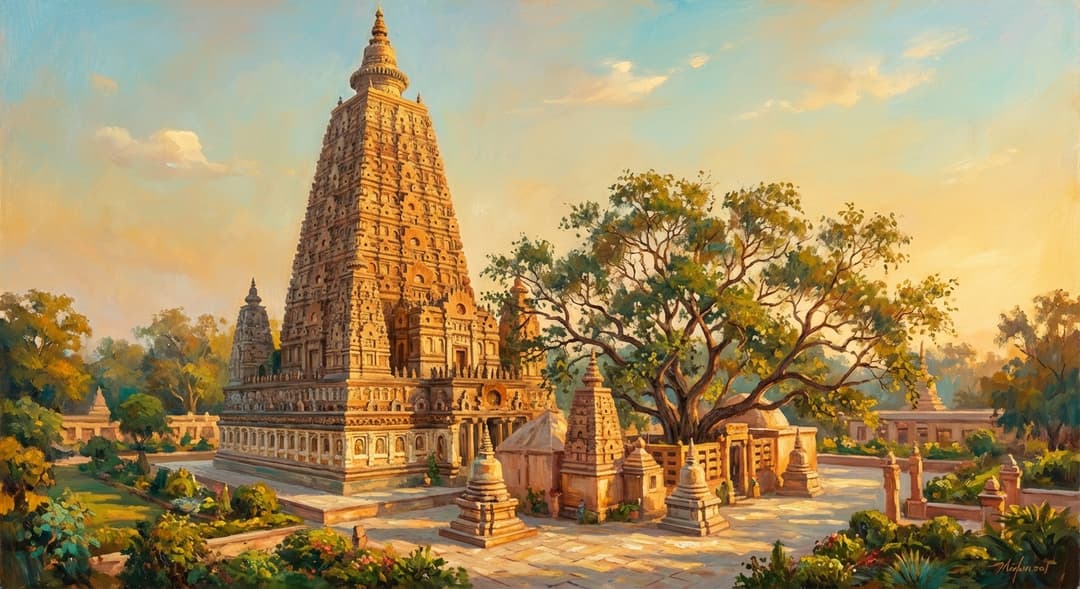
Visiting Bodh Gaya offers a profound experience of serenity and spiritual significance. The atmosphere is imbued with a sense of reverence, as monks, pilgrims, and tourists alike gather to pay homage to the site of Buddha's enlightenment. Expect a peaceful environment, especially around the Mahabodhi Temple and Bodhi Tree, with opportunities for meditation and reflection.
Highlights
- Witness the ancient Mahabodhi Temple, a UNESCO World Heritage Site.
- Meditate under the sacred Bodhi Tree, believed to be a descendant of the original tree.
- Explore the diverse monasteries and temples built by various Buddhist countries.
Things to Know
- Dress modestly when visiting the temple complex.
- Be mindful of the religious practices and maintain a respectful demeanor.
- The winter months (December to February) are the most pleasant for visiting.
Location
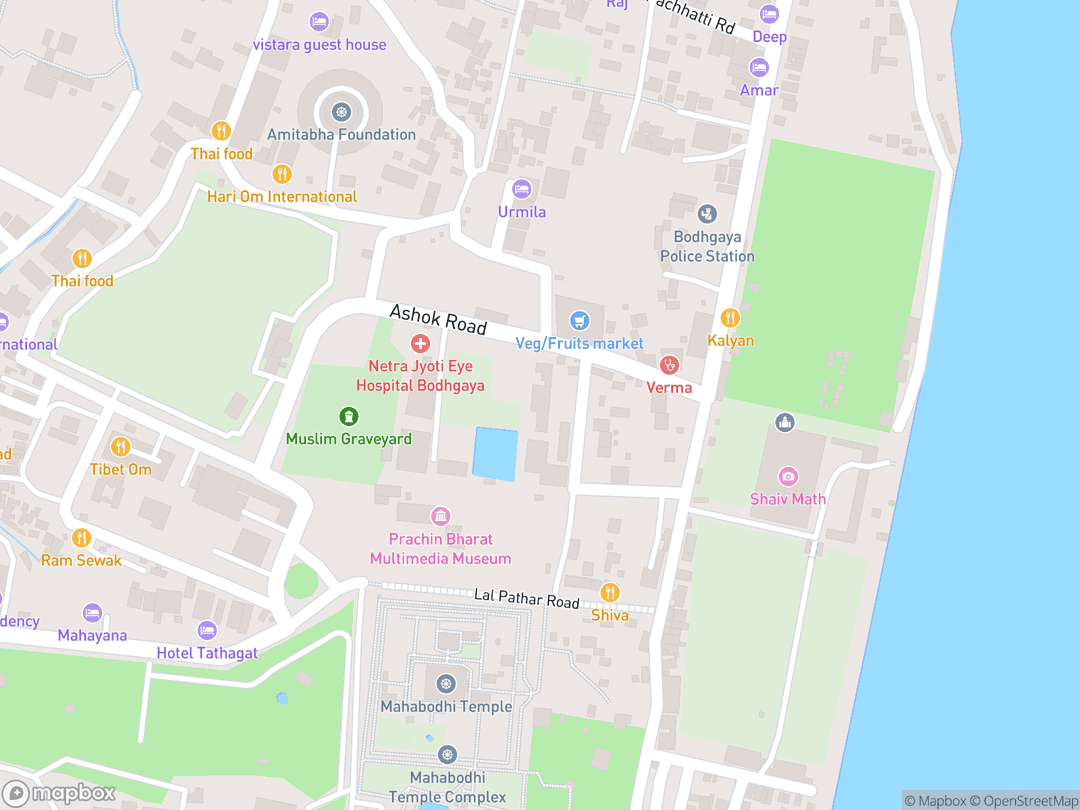
Bodhgaya, Gaya, Bihar 824231, India
Hours: The Mahabodhi Temple is generally open from 5:00 AM to 9:00 PM.
Getting There: The nearest airport is in Gaya (approximately 10 km away). The nearest railway station is also in Gaya (approximately 16 km away).
Get DirectionsAbout
Bodh Gaya, located in the Gaya district of Bihar, India, is one of the most sacred sites in Buddhism. It is revered as the place where Siddhartha Gautama, after years of searching, attained enlightenment under the Bodhi Tree, becoming the Buddha. For Buddhists, it is the most important of the four main pilgrimage sites related to the life of Gautama Buddha, the others being Kushinagar, Lumbini, and Sarnath.
The Mahabodhi Temple Complex stands as a testament to centuries of Buddhist history and architectural influence. The site's rich history includes visits from Emperor Ashoka in the 3rd century BCE, who is credited with building the first temple, and subsequent construction and renovations by various dynasties. The present Mahabodhi Temple structure is believed to have been built during the Gupta period in the 5th-6th century CE.
Today, Bodh Gaya continues to function as a major center for Buddhist study and pilgrimage, attracting monks, pilgrims, and travelers from around the world. The site's significance extends beyond its historical and architectural importance, representing the universal human quest for understanding, inner peace, and enlightenment, making it a beacon of spiritual inspiration for people of all backgrounds.
Gallery
Symbolic Elements
The temple's exterior features intricate carvings, each rich with spiritual meaning:

Bodhi Tree
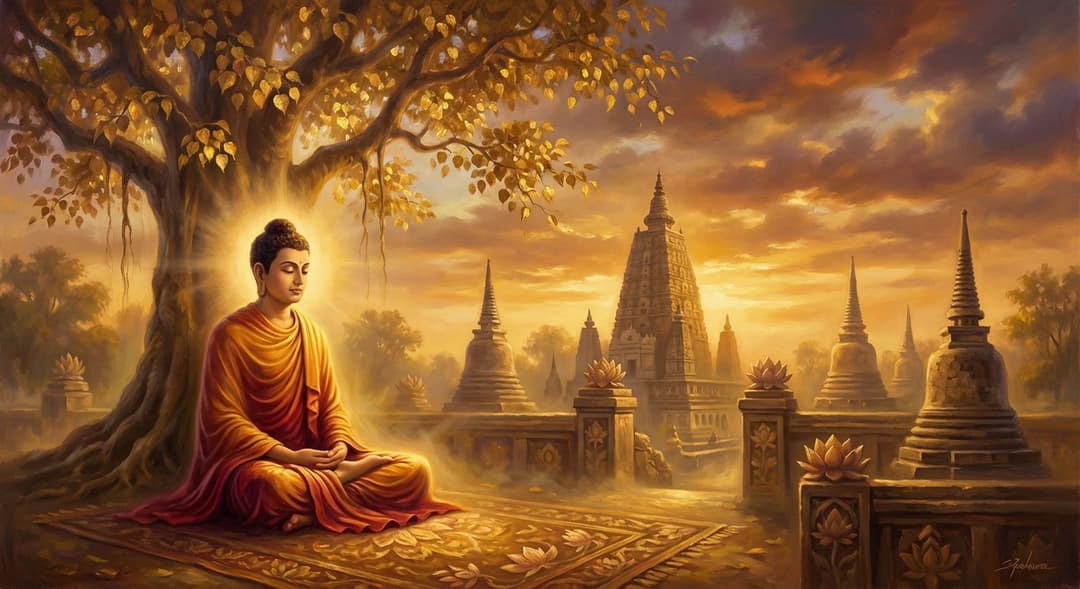
The Bodhi Tree, a sacred fig tree (Ficus religiosa), is believed to be a direct descendant of the original tree under which Siddhartha Gautama attained enlightenment. It represents enlightenment, wisdom, and the path to Nirvana, serving as a central symbol of Buddhist faith and practice. Pilgrims often meditate and offer prayers near the tree, seeking inspiration and spiritual growth.

Vajrasana (Diamond Throne)
The Vajrasana, or Diamond Throne, is a stone slab that marks the exact spot where the Buddha meditated and attained enlightenment. It symbolizes the unwavering resolve and stability required for enlightenment, representing the foundation of Buddhist practice. The Vajrasana is a focal point for meditation and reverence, reminding practitioners of the Buddha's steadfast commitment to his spiritual journey.

Mahabodhi Temple
The Mahabodhi Temple, a towering pyramidal structure, represents the Great Awakening and the teachings of the Buddha. Its architectural design, with intricate engravings and arch motifs, has influenced Buddhist architecture for centuries. The temple serves as a central place of worship and pilgrimage, embodying the essence of Buddhist philosophy and spiritual practice.

Lotus
The lotus flower, a prominent symbol in Buddhism, represents purity, love, and compassion. Emerging from muddy waters, the lotus symbolizes the ability to rise above suffering and attain enlightenment. It is often depicted in Buddhist art and iconography, reminding practitioners of the potential for spiritual growth and the importance of cultivating compassion in their lives.

Prayer Wheels
Prayer wheels, often found around Buddhist temples, contain rolled-up mantras or prayers. Spinning the wheel is believed to accumulate merit and spread blessings, symbolizing the continuous cycle of prayer and spiritual practice. Pilgrims and devotees often spin the prayer wheels as they circumambulate the temple, engaging in a physical and spiritual act of devotion.

Incense
The burning of incense is a common practice in Buddhist temples, symbolizing purification, offering, and the fragrant qualities of enlightenment. The rising smoke represents the transcendence of earthly concerns and the aspiration for spiritual growth. The scent of incense creates a serene and contemplative atmosphere, enhancing the meditative experience for practitioners.

Monk's Robes
The robes worn by Buddhist monks symbolize renunciation, simplicity, and detachment from worldly possessions. The color and style of the robes vary depending on the monastic tradition, but they generally represent a commitment to a life of spiritual discipline and service. The sight of monks in their robes is a reminder of the importance of humility and the pursuit of inner peace.

Offering Bowls
Offering bowls, often filled with water, flowers, or other symbolic items, represent generosity and the practice of giving. Making offerings is a way to express gratitude, cultivate compassion, and accumulate merit. The act of offering is a reminder of the interconnectedness of all beings and the importance of sharing resources and blessings with others.
Interesting Facts
Bodh Gaya is considered the most important of the four main Buddhist pilgrimage sites.
The site was known as Uruvela during the time of the Buddha.
The Mahabodhi Temple Complex was designated a UNESCO World Heritage Site in 2002.
The present Bodhi Tree is believed to be a direct descendant of the original tree under which the Buddha attained enlightenment.
Emperor Ashoka built the first temple at Bodh Gaya in the 3rd century BCE.
The Mahabodhi Temple is one of the oldest brick structures surviving in eastern India.
In some Buddhist traditions, Bodh Gaya itself is referred to as the 'Diamond Throne' (Vajrasana).
Bodh Gaya neighbors the major Hindu pilgrimage town of Gaya.
The Great Buddha Statue was consecrated by the 14th Dalai Lama in 1989.
Bodh Gaya is a major center for Buddhist study and attracts monks, pilgrims, and travelers from around the world.
Common Questions
Why is Bodh Gaya considered a sacred site?
Bodh Gaya is revered as the place where Siddhartha Gautama attained enlightenment under the Bodhi Tree, becoming the Buddha. This makes it the most important pilgrimage site for Buddhists worldwide.
What is the significance of the Mahabodhi Temple?
The Mahabodhi Temple is a UNESCO World Heritage Site and one of the oldest brick structures in India. It marks the spot where Buddha attained enlightenment and represents the Great Awakening and the teachings of the Buddha.
What is the Bodhi Tree, and why is it important?
The Bodhi Tree is a sacred fig tree (Ficus religiosa) believed to be a direct descendant of the original tree under which the Buddha attained enlightenment. It represents enlightenment, wisdom, and the path to Nirvana.
When is the best time to visit Bodh Gaya?
The winter months (December to February) are considered the best time to visit Bodh Gaya, as the weather is pleasant and conducive to exploring the site.
How can I get to Bodh Gaya?
The nearest airport is in Gaya (approximately 10 km away), and the nearest railway station is also in Gaya (approximately 16 km away). From there, you can hire taxis or take buses to reach Bodh Gaya.
Are there other attractions to see in Bodh Gaya besides the Mahabodhi Temple?
Yes, other attractions include the Great Buddha Statue, Thai Monastery, Japanese Temple, Tibetan Monastery, and Sujata Garh, offering a diverse range of cultural and spiritual experiences.
Related Stories
Explore the rich history, traditions, and people connected to this sacred site.
Featured Stories
Emperor Ashoka's Pilgrimage and the Temple's Foundation
3rd Century BCE
In the 3rd century BCE, Emperor Ashoka, a pivotal figure in Indian history and a fervent convert to Buddhism, made a pilgrimage to Bodh Gaya. Deeply moved by the sanctity of the site where the Buddha attained enlightenment, Ashoka sought to commemorate this sacred ground. His visit marked a turning point in the site's development, leading to the establishment of a monastery and shrine, effectively laying the foundation for what would become the Mahabodhi Temple.
Ashoka's commitment to spreading Buddhist principles across his empire led him to invest significantly in Bodh Gaya. He is credited with constructing the first temple structure, a modest yet significant edifice that honored the Bodhi Tree and the Vajrasana, the Diamond Throne where Buddha meditated. This act not only solidified Bodh Gaya's status as a major Buddhist center but also set the stage for future generations to build upon his legacy.
The emperor's actions transformed Bodh Gaya from a relatively obscure location to a prominent destination for Buddhist pilgrims and scholars. His patronage ensured the site's preservation and development, fostering a vibrant community of monks and practitioners. Ashoka's pilgrimage and subsequent construction efforts remain a testament to his devotion and his profound impact on the history of Buddhism.
Source: UNESCO World Heritage Site Records
The Great Buddha Statue: A Symbol of Peace and Enlightenment
1989
In 1989, Bodh Gaya welcomed a new landmark, the Great Buddha Statue, an imposing 80-foot (24 m) figure crafted from sandstone and granite. Consecrated by the 14th Dalai Lama, this statue stands as a powerful symbol of peace, enlightenment, and the enduring legacy of the Buddha. Its construction and unveiling marked a significant moment in the site's modern history, attracting devotees and visitors from around the globe.
The statue's creation was a collaborative effort, involving skilled artisans and dedicated volunteers who sought to embody the essence of Buddhist teachings in its form. The choice of materials, sandstone and granite, reflects a desire for durability and timelessness, ensuring that the statue would stand as a lasting tribute to the Buddha's wisdom. Its serene expression and majestic posture invite contemplation and reverence, inspiring those who behold it.
The consecration ceremony, led by the Dalai Lama, added a layer of spiritual significance to the statue, imbuing it with blessings and positive energy. Since its unveiling, the Great Buddha Statue has become an integral part of the Bodh Gaya experience, offering a focal point for meditation, prayer, and reflection. It serves as a reminder of the potential for inner peace and the transformative power of enlightenment, resonating with people of all backgrounds.
Source: Bodh Gaya Tourism Board
The 2013 Bomb Blasts: Resilience in the Face of Adversity
2013
In 2013, Bodh Gaya faced a moment of crisis when the Mahabodhi Temple complex was targeted by a series of bomb blasts. These acts of violence sent shockwaves through the Buddhist community and the world, threatening the sanctity of this revered site. However, the response to the attacks demonstrated the resilience and unwavering faith of those connected to Bodh Gaya, as they rallied together to restore and protect the temple.
The immediate aftermath of the blasts saw a surge of support from local communities, government agencies, and international organizations. Efforts were quickly underway to repair the damage, enhance security measures, and reassure pilgrims and visitors that Bodh Gaya remained a safe and welcoming destination. The determination to preserve the temple's heritage and spiritual significance was palpable, uniting people from diverse backgrounds in a common cause.
The 2013 bomb blasts served as a stark reminder of the challenges faced by sacred sites in a turbulent world. Yet, the response to the attacks underscored the enduring power of faith, compassion, and community. Bodh Gaya emerged from this crisis stronger and more determined than ever to uphold its role as a beacon of peace and enlightenment, reaffirming its importance as a place of pilgrimage and spiritual inspiration.
Source: Indian Archaeological Survey Reports
Timeline
Siddhartha Gautama Attains Enlightenment
Siddhartha Gautama arrives at Uruvela (now Bodh Gaya), meditates under a Bodhi tree, and after three days and nights, attains enlightenment, becoming the Buddha.
MilestoneEmperor Ashoka's Visit
Emperor Ashoka of the Mauryan Empire visits Bodh Gaya around 260 BCE and establishes a monastery and shrine, building the first temple at the site.
MilestoneStone Railings Erected
Stone railings are erected around the Bodhi Tree, marking the sacred space.
MilestoneSri Lankan Monks Visit
The first evidence of a Sri Lankan monk, Bodhiraksita, visiting Bodh Gaya, fostering international connections.
EventMahabodhi Temple Construction
The present Mahabodhi Temple structure is believed to have been built during the Gupta period, showcasing advanced architectural skills.
MilestoneChinese Pilgrims Visit
Chinese pilgrims Faxian and Xuanzang visit Bodh Gaya and document its significance, contributing to its historical record.
EventSumatran Pilgrimage
Acharya Dharmakirti from Sumatra makes a pilgrimage to Bodh Gaya, highlighting its widespread appeal.
EventTibetan Scholar's Visit
Tibetan scholar monk Dharmasvamin visits Bodh Gaya and finds it deserted due to Turkic soldiers, reflecting a period of turmoil.
EventTurkic Conquest
Turkic armies conquer the area, leading to a decline in Buddhist civilization and the site's abandonment.
EventCenter of Scholarship
Bodh Gaya continues to function as a center of Buddhist scholarship and pilgrimage, despite regional conflicts.
EventCommon Usage of Name
The name Bodh Gaya comes into common use, solidifying its identity.
MilestoneMajor Restorations
Major restorations of the Mahabodhi Temple are undertaken, preserving its architectural heritage.
RenovationGreat Buddha Statue Unveiled
The Great Buddha Statue is unveiled, adding a new landmark to the site.
MilestoneUNESCO World Heritage Site
The Mahabodhi Temple Complex is designated a UNESCO World Heritage Site, recognizing its global significance.
MilestoneSerial Bomb Blasts
The Mahabodhi Temple experiences serial bomb blasts, highlighting ongoing security challenges.
EventHistory by Decade
6th Century BCE
Siddhartha Gautama, after years of wandering as an ascetic, arrived at Uruvela (now Bodh Gaya). He meditated under a Bodhi tree, and after three days and nights, he attained enlightenment and became the Buddha. This event marked the beginning of Bodh Gaya's significance as the most sacred site in Buddhism.
3rd Century BCE
Emperor Ashoka of the Mauryan Empire visited Bodh Gaya around 260 BCE. He established a monastery and shrine, building the first temple at the site. Ashoka's patronage helped solidify Bodh Gaya's status as a major Buddhist center.
2nd-1st Century BCE
Stone railings were erected around the Bodhi Tree. These railings marked the sacred space and provided a physical boundary for the site.
5th-6th Century CE
The present Mahabodhi Temple structure is believed to have been built during the Gupta period. This period saw significant architectural and artistic developments, and the temple reflects the Gupta style.
7th Century CE
Chinese pilgrims Faxian and Xuanzang visited Bodh Gaya. They documented its significance, providing valuable historical records of the site.
13th Century
Turkic armies conquered the area, leading to a decline in Buddhist civilization. The site was deserted for a period of time.
19th Century
Major restorations of the Mahabodhi Temple were undertaken. These restorations helped preserve the architectural heritage of the temple.
21st Century
The Mahabodhi Temple Complex was designated a UNESCO World Heritage Site in 2002. In 2013, the temple experienced serial bomb blasts, highlighting ongoing security challenges.
Architecture & Facilities
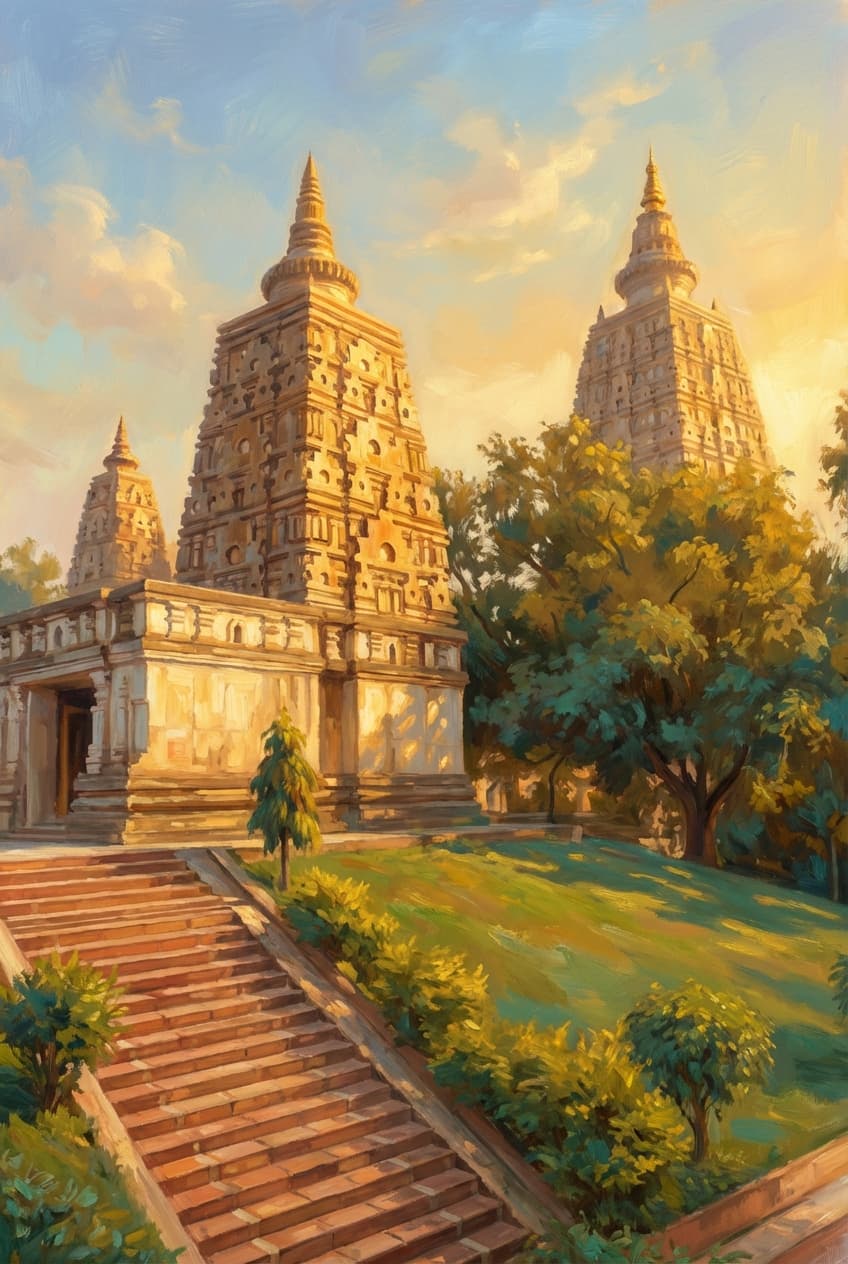
The Mahabodhi Temple is built in the Gupta architectural style, characterized by its pyramidal shikhara (tower) adorned with intricate engravings and arch motifs. The temple's design has influenced Buddhist architecture for centuries, blending indigenous Indian elements with Buddhist symbolism.
Building Materials
Brick
The Mahabodhi Temple is one of the oldest surviving brick structures in India. The use of brick as the primary building material reflects the region's resources and the architectural techniques of the time.
Sandstone
Sandstone is used for various elements of the temple, including the Great Buddha Statue. The sandstone provides a durable and aesthetically pleasing material for sculptures and architectural details.
Granite
Granite is also used for the Great Buddha Statue, adding to its strength and longevity. The granite provides a solid foundation and contributes to the statue's imposing presence.
Interior Features
Main Shrine
The main shrine houses a gilded image of the Buddha, attracting devotees and pilgrims from around the world. The shrine is the focal point of the temple, providing a space for prayer and meditation.
Meditation Hall
The meditation hall offers a quiet space for contemplation and spiritual practice. The hall is designed to promote inner peace and reflection, providing a sanctuary for those seeking enlightenment.
Circumambulation Path
The circumambulation path allows devotees to walk around the temple in a clockwise direction, a common practice in Buddhist worship. The path provides a way to engage with the temple physically and spiritually.
Temple Grounds
The temple grounds include the sacred Bodhi Tree, the Vajrasana (Diamond Throne), and various smaller shrines and stupas. The grounds are designed to create a peaceful and contemplative environment, inviting visitors to connect with the spiritual significance of the site.
Religious Significance
Bodh Gaya holds immense religious significance as the place where Siddhartha Gautama attained enlightenment and became the Buddha. It is the most sacred site in Buddhism, attracting pilgrims and practitioners from around the world.
The core spiritual purpose of Bodh Gaya is to commemorate the Buddha's enlightenment and to provide a place for practitioners to connect with his teachings. The site serves as a reminder of the potential for inner peace and the transformative power of enlightenment.
Sacred Ordinances
Meditation
Meditation is a central practice at Bodh Gaya, allowing practitioners to cultivate mindfulness, concentration, and insight. Meditating near the Bodhi Tree or in the meditation hall is believed to enhance the meditative experience.
Circumambulation
Circumambulation involves walking around the temple or other sacred objects in a clockwise direction. This practice is a form of devotion and is believed to accumulate merit.
Offerings
Making offerings of flowers, incense, or other symbolic items is a way to express gratitude and cultivate generosity. Offerings are often made at the main shrine or near the Bodhi Tree.
The Four Noble Truths
The Four Noble Truths are a central teaching of Buddhism, outlining the nature of suffering and the path to liberation. Reflecting on these truths at Bodh Gaya can deepen one's understanding of the Buddha's teachings.
The Eightfold Path
The Eightfold Path provides a practical guide for living a moral and ethical life, leading to enlightenment. Following this path at Bodh Gaya can inspire practitioners to cultivate wisdom, compassion, and inner peace.
Similar Temples
Sources & Research
Every fact on Temples.org is backed by verified Sources & Research. Each piece of information is rated by source tier and confidence level.
View All Sources (11)
| Field | Source | Tier | Retrieved |
|---|---|---|---|
| Introduction & Historical Background | Original Buddhas (opens in a new tab) | A | 2024-01-02 |
| Introduction & Historical Significance | Smarthistory (opens in a new tab) | B | 2024-01-02 |
| Introduction & Pilgrimage Site | Bhartiya Sanskriti (opens in a new tab) | A | 2024-01-02 |
| Historical Timeline & Significance | Vajiramandravi (opens in a new tab) | A | 2024-01-02 |
| Architectural Description & Mahabodhi Temple | UNESCO (opens in a new tab) | B | 2024-01-02 |
| Symbolic Elements & Bodhi Tree | Travel and Leisure Asia (opens in a new tab) | B | 2024-01-02 |
| Visitor Information & Getting There | WikiVoyage (opens in a new tab) | C | 2024-01-02 |
| Interesting Facts & Historical Context | Britannica (opens in a new tab) | B | 2024-01-02 |
| Coordinates & Location Details | Latitude Longitude (opens in a new tab) | D | 2024-01-02 |
| Historical Events & Bomb Blasts | Prepp (opens in a new tab) | A | 2024-01-02 |
| Historical Context & Bodh Gaya | Bodhgayaholiday (opens in a new tab) | A | 2024-01-02 |