Visitor Insights
Visiting Dilwara Temples
Visiting the Dilwara Temples offers a rare transition from austere exterior stonework into luminous marble chambers carved with gossamer precision. Morning hours are reserved exclusively for practicing Jain devotees performing sacred rites, after which the complex opens to general visitors seeking contemplative wonder. Strict monastic rules prohibit leather and photography to preserve the tranquil sanctity of the mountain sanctuary.
Highlights
- Translucent suspended marble lotus pendant (Padmasila) of the Luna Vasahi
- Fifty-nine subsidiary cloister shrines carved with narrative relief panels
- Hastishala elephant court showcasing sculptured historical donor processions
- Colossal 108-maund five-metal alloy idol of Lord Rishabhanatha in Pittalhar
Things to Know
- All leather goods including belts, wallets, shoes, and watch bands are strictly prohibited
- Photography, videography, and mobile phone usage are completely banned inside
- Modest attire covering shoulders and knees is mandatory for all entrants
- Visitors must speak in whispers and avoid touching delicate marble carvings
Location
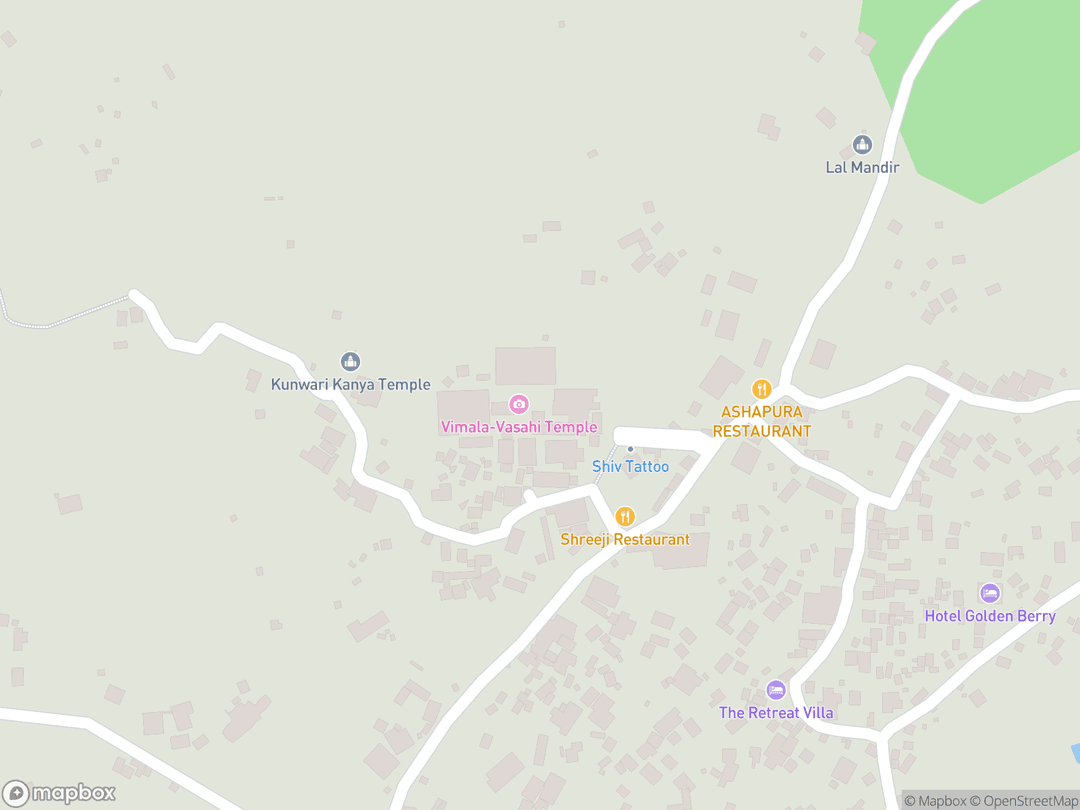
Dilwara, Mount Abu, Sirohi District, Rajasthan 307501, India
Hours: Pilgrims: 6:00 AM – 12:00 PM; General Visitors: 12:00 PM – 5:00 PM daily
Getting There: Located 2.5 km from central Mount Abu and 28 km uphill from Abu Road Railway Station via scenic mountain road.
Get DirectionsTips for Your Visit
Deposit Leather Early
Leave all leather accessories in your hotel or utilize the dedicated token deposit lockers before entering security.
Arrive Promptly at Noon
General tourist entry begins at noon, making midday the best time to experience soft sunlight illuminating the translucent domes.
Wear Slip-On Footwear
Shoes must be removed at the courtyard gate, so easily removable socks and slip-on shoes simplify the transition.
Look Upward in the Domes
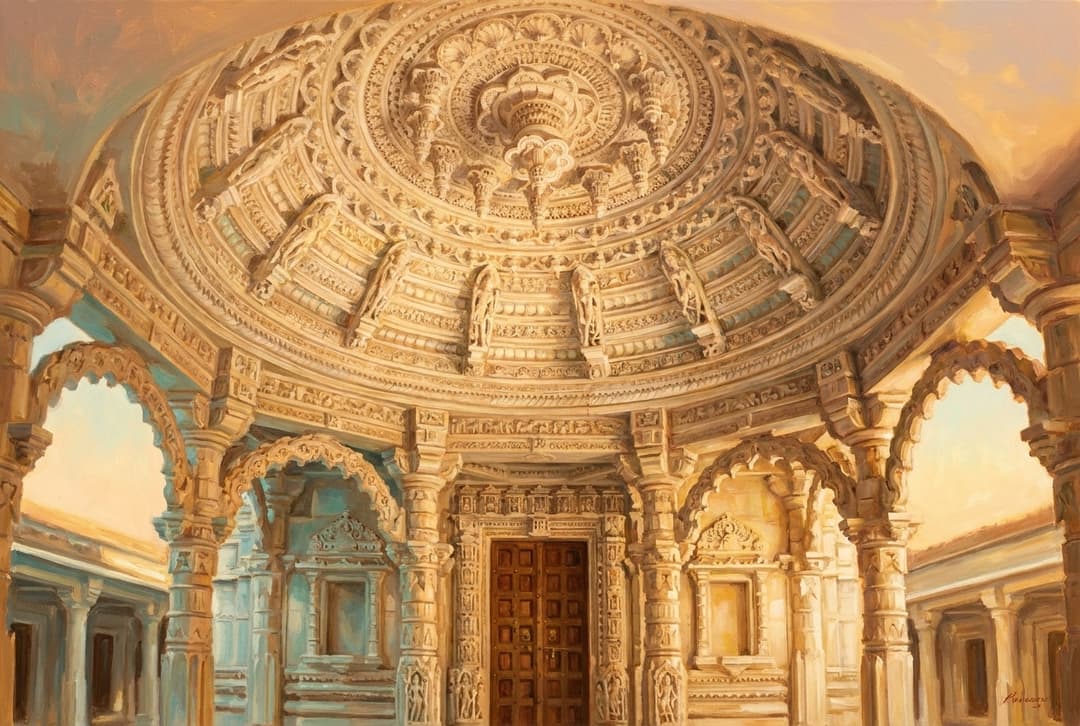
Spend time studying the intricate concentric rings and celestial dancers carved beneath the central corbelled rosettes.
About
The Dilwara Temples represent the spiritual and artistic zenith of Western Indian temple architecture, nestled among the forested heights of Mount Abu in Rajasthan. Consecrated between the eleventh and sixteenth centuries by dedicated Jain ministers and merchant patrons, the sacred complex houses five distinct Svetambara shrines that transform dense Makrana marble into weightless, lace-like filigree.
In Jain metaphysics, a temple is conceived as an architectural replica of the Samavasarana, the celestial preaching hall where an enlightened Tirthankara delivers sermons of universal peace and non-violence. Rather than housing an intervening creator deity, these sanctuaries honor liberated souls who conquered inner passions, providing pilgrims with a meditative sanctuary for spiritual purification and moral contemplation.
The shrines are deliberately concealed within plain, austere exterior perimeter walls resembling an unadorned hill fortress. Stepping across the threshold reveals an astonishing transition into an ethereal forest of intricately carved fluted columns, corbelled ceilings, and suspended marble pendants that diffuse daylight into a luminous spiritual glow.
Maintained as an active Maha-Tirtha under the stewardship of the Seth Shri Kalyanji Anandji Pedhi, the temples welcome devout Svetambara pilgrims daily for sacred puja and meditation. Strict adherence to non-violence governs the complex, offering all visitors an encounter with sublime artistic devotion.
Gallery
Symbolic Elements
The temple's exterior features intricate carvings, each rich with spiritual meaning:

Padmasila (Hanging Lotus Pendant)
The suspended ceiling pendant symbolizes spiritual transcendence, flourishing untainted above worldly attachments just as a lotus rises clean above muddy waters.

Sixteen Vidyadevis
Sculpted female deities of wisdom positioned along dome brackets represent righteous knowledge, intellectual discernment, and sacred arts.

Ashta Mangala
Eight auspicious emblems carved above lintels invoke universal prosperity, divine protection, and right spiritual orientation.

Dhyana Mudra
The meditative seated posture of the central Tirthankara icons communicates serene detachment and the total conquest of inner passions.

Hastishala Processional Elephants
Life-size stone elephants bearing ministers signify the voluntary subordination of imperial wealth and political power to spiritual truth.

Kalpavriksha Foliage
Dense arabesques and wish-fulfilling creepers express cosmic harmony and natural abundance awakened by an enlightened soul.

Chaumukha Four-Faced Tower
The four-sided sanctum layout illustrates the Tirthankara delivering the spiritual sermon simultaneously toward all cardinal directions.

Cusped Torana Arches
Intricately scalloped marble cusps suspended between pillars evoke woven silk garlands welcoming pilgrims into sacred space.
Interesting Facts
Carvers were compensated with grains of silver and gold equal in weight to the marble dust they delicately scraped away. (Tier A)
The suspended marble lotus pendant is carved so thinly that natural sunlight filters directly through the translucent stone. (Tier B)
The temple exterior was deliberately designed to look like a plain military fortress to hide its treasures from raiding armies. (Tier B)
General Vimal Shah purchased the land by covering the entire building site with silver coins laid edge to edge. (Tier A)
The seated idol of Lord Rishabhanatha in Pittalhar is cast from five sacred metals and weighs over four metric tons. (Tier A)
Two intricately carved shrines were commissioned in friendly artistic rivalry by the wives of the patron minister brothers. (Tier B)
The central idol of Neminatha in Luna Vasahi is sculpted from black basalt while the surrounding temple is pure white marble. (Tier A)
Every single block of Makrana marble was hauled over three hundred kilometers across plains and dragged up steep mountain tracks. (Tier B)
Architects Loyana and Kela were immortalized through rare portrait sculptures carved directly into the ceiling of Vimal Vasahi. (Tier B)
Common Questions
Why is all leather strictly forbidden inside the Dilwara Temples?
Jainism mandates absolute Ahimsa or non-violence toward all sentient beings, making animal products incompatible with sacred temple precincts.
Are tourists allowed inside during morning worship hours?
Morning hours until noon are reserved exclusively for practicing Jain pilgrims performing sacred bathing and ritual puja.
Can visitors take photos or videos inside the complex?
All photography and mobile recording are strictly prohibited to safeguard fragile carvings and preserve meditative quiet.
What is the best time of year to visit Dilwara?
The winter months from October through March provide comfortable temperatures and clear skies on the Mount Abu plateau.
How many temples make up the Dilwara complex?
The complex comprises five independent shrines constructed between the eleventh and sixteenth centuries.
Featured Stories
The Silver Coin Consecration
1031
When military general Vimal Shah sought atonement for the bloodshed of imperial campaigns, local rulers challenged him to purchase the mountain site with silver coins laid edge to edge. The devoted minister accepted the challenge, carpeting the rocky plateau with silver pieces to consecrate holy ground for Lord Rishabhanatha. His act transformed battlefield wealth into an eternal sanctuary of non-violence.
Source: Epigraphical Records of Mount Abu
Payment by Marble Dust
1230
During the construction of Luna Vasahi, minister brothers Vastupala and Tejapala instituted an ingenious compensation method to encourage delicate craftsmanship. Rather than paying by standard daily wages, they rewarded sculptors with gold and silver grains equal in weight to the fine marble dust carved away. This generous incentive inspired artisans to chisel gossamer-thin stone petals without risking fractures.
Source: Prabandhachintamani Chronicles
The Sister-in-Law Rivalry
1232
Within the Luna Vasahi hall, two opposing marble niches were commissioned by the wives of Vastupala and Tejapala, known affectionately as the Derani and Jethani niches. Each sister-in-law encouraged her assigned master sculptors to surpass the other in delicate geometric openwork and miniature filigree. Their affectionate family rivalry gifted the temple with its two most astonishingly refined ornamental screens.
Source: Mount Abu Temple Inscriptions
Timeline
Consecration of Vimal Vasahi
General Vimal Shah establishes the primary temple dedicated to Lord Rishabhanatha with architect Sutradhara Loyana.
DedicationExpansion of Perimeter Cloisters
Chaulukya patrons erect the outer corridor containing fifty-nine subsidiary devakulika shrines around Vimal Vasahi.
MilestoneArtisans Immortalized in Stone
Master sculptors Loyana and Kela receive rare ceiling portrait carvings beside Sarasvati in recognition of their work.
MilestoneConstruction of Luna Vasahi
Ministers Vastupala and Tejapala commission the second great shrine in memory of family members under architect Shobhanadeva.
component.timeline.groundbreakingConsecration of Neminatha Sanctum
The polished black basalt idol of the twenty-second Tirthankara is installed within the completed Luna Vasahi sanctum.
DedicationRegional Invasions Cause Damage
Sultanate military incursions across Western India damage external pavilions and subsidiary shrine figures.
EventComprehensive Merchant Restoration
Svetambara philanthropists Bijada and Pethada finance extensive repairs and re-consecrate defaced images on Mount Abu.
RenovationErection of Parshvanatha Temple
Merchant Mandlika commissions the towering three-story Chaumukha shrine dedicated to Lord Parshvanatha.
DedicationFounding of Pittalhar Temple
Court minister Bhima Shah builds the fourth shrine featuring a colossal seated Rishabhanatha cast in five sacred metals.
DedicationCompletion of Mahavir Swami Temple
The final temple dedicated to Lord Mahavira is consecrated with vaulted ceilings painted by local Sirohi artisans.
DedicationModern Trust Administration
Seth Shri Kalyanji Anandji Pedhi formalizes rigorous preservation policies alongside archaeological oversight.
MilestoneHistory by Decade
1030s — Consecration of Vimal Vasahi
Following bloody military victories in Gujarat, minister Vimal Shah sought spiritual absolution by creating an enduring house of prayer. Guided by Jain preceptors, he purchased the rocky plateau of Mount Abu and oversaw the erection of the Vimal Vasahi temple under master architect Loyana. The simple exterior safeguarded an inner sanctuary radiating spiritual devotion.
1140s–1150s — Cloister Expansion
During the golden age of Chaulukya architecture, royal patrons funded major additions around the original Vimal Vasahi sanctum. Artisans constructed an expansive peristyle bhamati housing fifty-nine individual miniature shrines, each equipped with its own narrative ceiling panel. The magnificent domed ranga-mandapa was also completed during this creative renaissance.
1230s — Construction of Luna Vasahi
Brothers Vastupala and Tejapala, prime ministers of Gujarat, commissioned the Luna Vasahi shrine to honor their late mother, wife, and son. Chief architect Shobhanadeva directed master artisans to chisel the translucent Makrana marble to paper-thin tolerances. Dedicated to Lord Neminatha, the temple achieved the historic peak of Western Indian stone filigree.
1310s–1320s — Desecration and Renewal
Mount Abu suffered damage during raiding campaigns led by armies of the Delhi Sultanate through Rajasthan. The Jain community responded through coordinated non-violent perseverance, pooling resources under merchants Bijada and Pethada to restore shattered shrines. By 1321, Acharya Jnanachandra Suri presided over joyful ceremonies re-consecrating the defaced sanctums.
1450s–1460s — Late Medieval Additions
The fifteenth century witnessed the addition of two distinct shrines reflecting evolving architectural ambitions. Mandlika and his family built the multi-tiered Parshvanatha Chaumukha temple, while minister Bhima Shah initiated the Pittalhar temple. Master founder Deva successfully cast and hoisted a four-ton five-metal idol of Rishabhanatha to anchor the sacred precinct.
1580s — Final Shrine and Frescoes
The modest Mahavir Swami temple completed the five-shrine architectural assembly in 1582. Local craftsmen decorated its ceiling panels with traditional Sirohi mineral fresco paintings illustrating the life path and enlightenment of Lord Mahavira. This final sanctuary established the spatial boundaries of the complex as it stands today.
1950s–Present — Heritage Stewardship
Under the management of Seth Shri Kalyanji Anandji Pedhi, the temples balance strict pilgrim worship with conservation. Strict environmental and visitor protocols protect delicate marble carvings from urban pollutants and physical degradation. The site remains a vibrant living pilgrimage center celebrated across the globe.
Architecture & Facilities
The Dilwara complex represents the pinnacle of Māru-Gurjara temple architecture, characterized by plain exterior fortification walls concealing an opulent interior of concentric corbelled marble domes, cusped toranas, and filigreed columns.
Building Materials
Makrana White Marble
Pristine crystalline metamorphic limestone quarried in central Rajasthan and hauled over three hundred kilometers across mountain passes.
Panchadhatu Metal Alloy
A sacred five-metal blend predominantly composed of brass, bronze, copper, gold, and silver utilized for the monumental Pittalhar sanctum idol.
Polished Black Basalt
Fine-grained volcanic stone carved into the central Mulanayaka icon of Lord Neminatha to create dramatic contrast within Luna Vasahi.
Granitic Bedrock and Lime Mortar
Dense indigenous Aravalli stone assembled in ashlar courses to form protective exterior curtain walls and foundational terraces.
Interior Features
Garbhagriha (Sanctum Sanctorum)
The darkened inner shrine chamber designed to focus meditative adoration directly upon the radiant, glass-eyed Tirthankara icon.
Ranga-Mandapa (Hall of Celebrations)
A grand octagonal hall supported by fluted pillars and cusped arches crowned by a soaring concentric corbelled dome.
Padmasila Central Lotus Pendant
A gossamer marble rosette suspended from the dome zenith carved so thinly that filtered daylight reveals crystalline stone veins.
Bhamati Cloister Gallery
A covered perimeter corridor containing independent miniature shrines fronted by individually sculpted narrative ceiling panels.
Hastishala (Elephant Court)
A ceremonial pavilion housing ten life-size carved marble processional elephants carrying sculptures of historic patron ministers.
Temple Grounds
Perched upon a high mountain shelf surrounded by the forested slopes of Mount Abu, the complex is enclosed by tall stone masonry walls that shield stone-paved open courtyards connecting the five shrines.
Additional Facilities
Visitor facilities outside the sacred perimeter include ritual bathing halls with solar heating, administrative trust offices, secure shoe depositories, and covered pilgrim reception verandas.
Religious Significance
In Svetambara Jainism, the temple represents an architectural manifestation of the Samavasarana, where an enlightened Ford-Maker shares universal truth in absolute peace with all living creatures.
The complex serves as a sacred retreat for purifying worldly consciousness, contemplating non-violence, and emulating the detached moral perfection of the Tirthankaras.
Sacred Ordinances
Anga Puja
Physical anointing of the consecrated Tirthankara idol using purified water, sandalwood paste, and fragrant saffron.
Agra Puja
Devotional offerings arranged before the sanctum altar comprising flowers, burning incense, oil lamps, and unbroken rice grains.
Bhava Puja
Silent mental meditation and inward reflection on the spiritual virtues exemplified by liberated Siddhas.
Chaitya Vandana
Structured ritual adoration recited by devotees praising the sacred architecture and the ford-makers enshrined within.
The Samavasarana Concept
Jain theology regards the temple interior as an earthly reflection of the divine preaching pavilion that manifests whenever a Tirthankara attains Kevala Jnana. Its tiered domes and circular assembly spaces welcome every seeker into an egalitarian sanctuary of eternal non-violence.
Ahimsa Expressed in Stone
The extreme delicacy of Dilwara carving reflects the core doctrine of Ahimsa. By grinding away marble powder with patient devotion rather than striking aggressive blows, master carvers demonstrated how material nature can be refined into pure spiritual peace.
Sources & Research
Every fact on Temples.org is backed by verified Sources & Research. Each piece of information is rated by source tier and confidence level.
View All Sources (6)
| Field | Source | Tier | Retrieved |
|---|---|---|---|
| About & Historical Background | Department of Tourism, Government of Rajasthan (opens in a new tab) | A | 2026-03-30 |
| Architecture & Facilities | Archaeological Survey of India (opens in a new tab) | A | 2026-03-30 |
| Architectural Style & Ceilings | Encyclopaedia Britannica (opens in a new tab) | B | 2026-03-30 |
| Sculptural Analysis & Inscriptions | Journal of the Indian Society of Oriental Art (opens in a new tab) | B | 2026-03-30 |
| Medieval Western Indian Architecture | Digital South Asia Library, University of Chicago (opens in a new tab) | B | 2026-03-30 |
| Visitor Insights & Regulations | Rajasthan Tourism Development Corporation (opens in a new tab) | A | 2026-03-30 |