Visitor Insights
Visiting Kailasa Temple
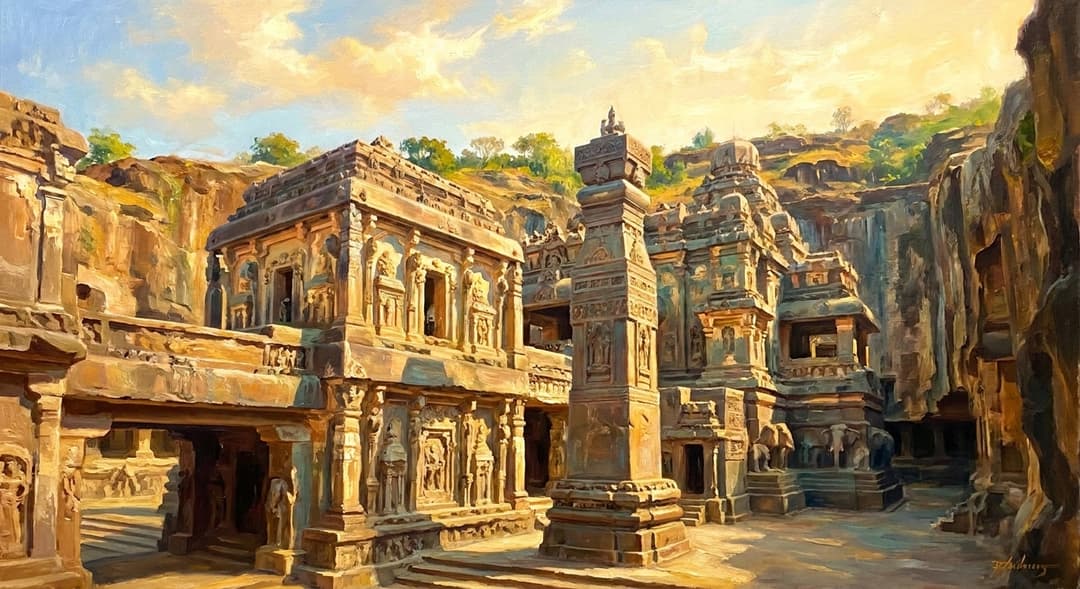
Kailasa Temple is the dramatic centerpiece of the Ellora cave system, open daily except Tuesdays from dawn until dusk. Visitors traverse an open courtyard flanked by monumental stone facades, elevated walkways, and soaring monolithic pillars.
Highlights
- Marvel at the multi-story carved vimana tower rising over thirty-two meters from the sunken courtyard.
- Examine the dynamic low-relief narrative carvings illustrating the Ramayana and Mahabharata epics.
- Admire the colossal life-sized elephants supporting the main plinth along the perimeter.
Things to Know
- The Ellora Caves complex is closed every Tuesday for regular archaeological maintenance.
- Sturdy walking shoes and sun protection are essential when walking across exposed stone courtyards.
- Arrive near sunrise at 6:00 AM to avoid heavy crowds and experience balanced courtyard lighting.
Location
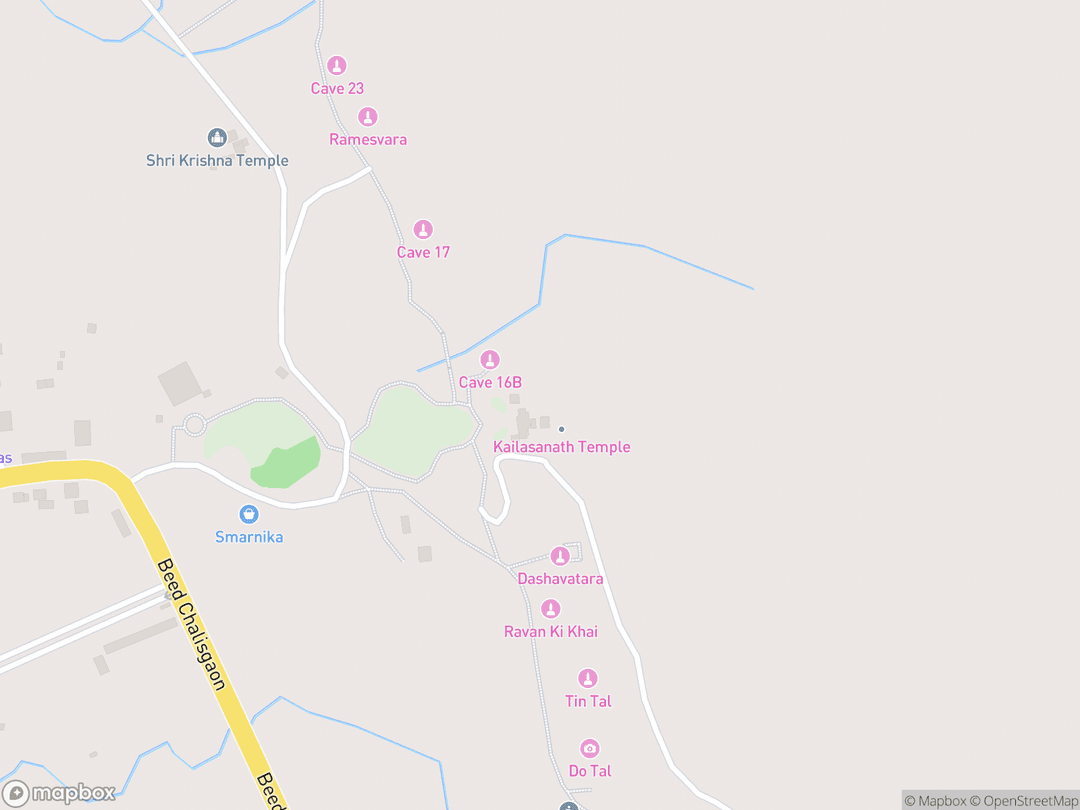
Cave 16, Ellora Caves, Verul Village, Khuldabad Taluka, Chhatrapati Sambhajinagar District, Maharashtra 431102, India
Hours: 6:00 AM – 6:00 PM (Closed Tuesdays)
Getting There: Located thirty kilometers northwest of Chhatrapati Sambhajinagar, accessible via regional buses, taxis, and state highway routes.
Get DirectionsTips for Your Visit
Beat the Heat
Explore the sunken open-air courtyard early in the morning before radiant heat warms the basalt floor.
Photography Timing
Morning light illuminates the front facade and Nandi pavilion before high canyon walls cast deep shadows.
Shuttle Transit
Use the on-site electric buses to navigate comfortably between the Hindu, Buddhist, and Jain cave clusters.
About
Kailasa Temple, designated as Cave 16 of the Ellora complex, is an extraordinary monolithic marvel carved entirely from a single basalt cliff face. Commissioned during the eighth century by Rashtrakuta King Krishna I, it stands as the zenith of Indian rock-cut architecture.
Situated within the shared Dharmic continuum of Ellora, the temple bridges Hindu Shaivism with adjacent Buddhist and Jain sanctuaries. The entire complex functions as a sacred microcosm, manifesting the Himalayan Mount Meru and Mount Kailash through living rock.
Carved strictly from the summit downward, master craftsmen removed over two hundred thousand tonnes of volcanic stone without structural scaffolding. Its seamless assembly of sanctuaries, pillared halls, and celestial sculptures remains one of humanity's greatest artistic feats.
Gallery
Symbolic Elements
The temple's exterior features intricate carvings, each rich with spiritual meaning:

Monolithic Shiva Lingam
The central aniconic pillar of light in the inner sanctum representing the infinite, unmanifest divine consciousness.
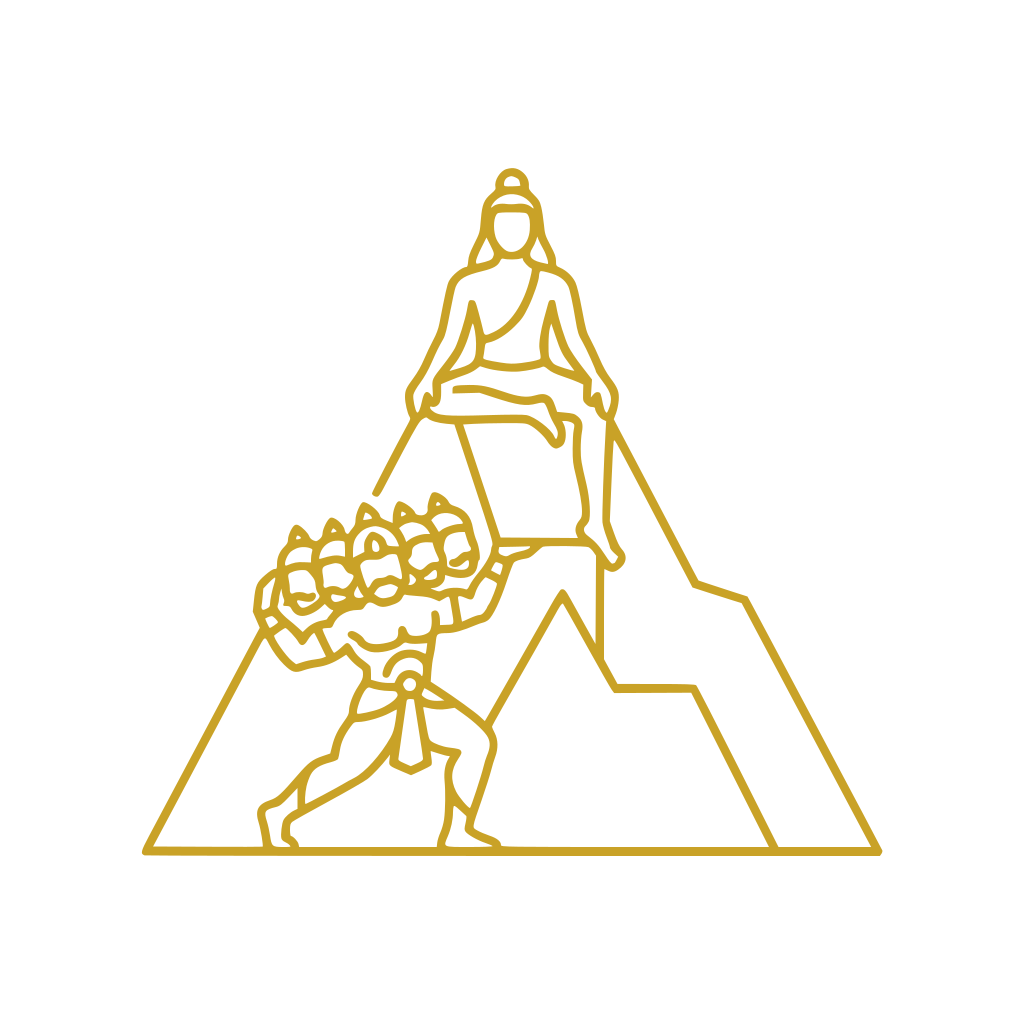
Ravananugraha Relief
A dynamic carving of Ravana shaking Mount Kailash while Shiva anchors the world with his toe, subduing mortal pride.

Colossal Elephant Plinth
A continuous base frieze of life-sized elephants symbolizing the celestial Diggajas bearing the weight of the cosmos.

Twin Dhvajastambha Pillars
Two monolithic victory pillars rising fourteen meters to embody the universal cosmic axis and spiritual conquest.
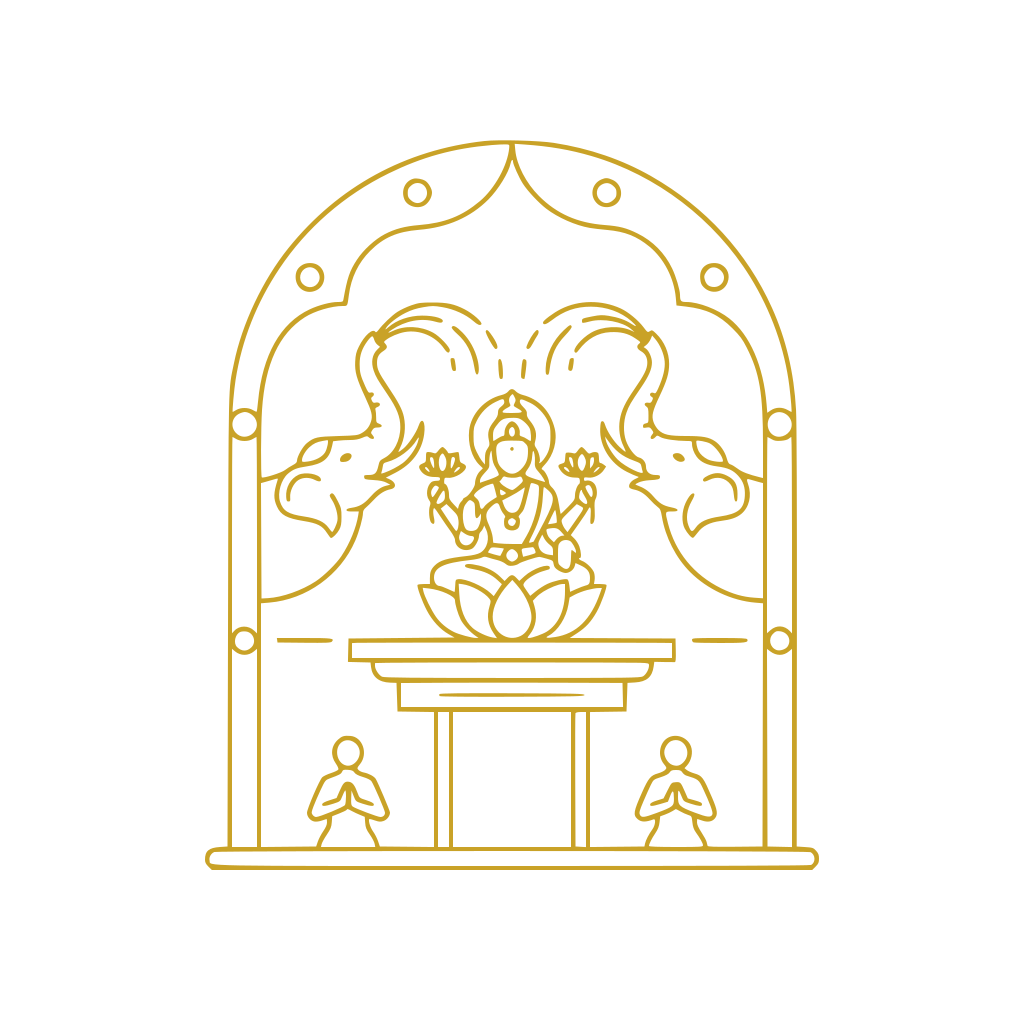
Gajalakshmi Threshold
An auspicious entrance carving of Goddess Lakshmi bathed by elephants, welcoming pilgrims into the sacred court.

Sacred River Goddesses
Courtyard relief figures of Ganga and Yamuna upon aquatic mounts offering symbolic purification before entry.

Dravidian Shikhara Octagon
The octagonal crowned dome topping the main vimana, marking the terrestrial anchor of celestial realms.
Interesting Facts
Cave 16 is recognized as the single largest free-standing monolithic rock excavation in the world. (Tier A)
Unlike conventional architecture built upward, the monument was excavated entirely from the top downward. (Tier B)
Mughal forces sent to dismantle the temple in 1682 failed because the solid mountain core proved indestructible. (Tier B)
The entire exterior was originally coated in brilliant white lime plaster to resemble Himalayan snow. (Tier B)
A ninth-century copper plate records that the chief architect marvelled in disbelief at what he had achieved. (Tier B)
Stonecutters required no scaffolding because they stood continuously upon the uncut bedrock below them. (Tier B)
The temple sits between twelve Buddhist monasteries and five Jain sanctuaries along the Ellora cliff. (Tier A)
Colossal narrative friezes depict over forty sequential scenes from the Ramayana and Mahabharata. (Tier B)
Common Questions
Was the temple assembled or carved from existing bedrock?
It was carved entirely from the top down out of a single living volcanic basalt hillside.
Why was the temple originally plastered in white?
A polished white lime plaster was applied to mimic the snow-capped Himalayan summit of Mount Kailash.
How long did it take to complete the excavation?
The primary shrine was excavated over roughly two decades during the late eighth century.
Is active religious worship still conducted inside Cave 16?
It is maintained as an archaeological monument, though pilgrims offer prayers during Maha Shivaratri.
Featured Stories
The Architect's Astonishment
773
According to the historic Baroda copper-plate grant, the master architect gazed back upon the completed monolithic shrine in profound spiritual humility. Overwhelmed by the precision of the multi-tiered vimana, he cried out in wonder, questioning how his mortal hands could have carved such perfection.
Source: Baroda Copper-Plate Inscriptions of Karkaraja II
The Indestructible Mountain
1682
When imperial troops arrived under orders to raze the temple, they were confronted with a mountain sculpted into sacred architecture. Finding no masonry joints or structural pillars to topple, the soldiers could only chip surface reliefs before abandoning the immovable basalt cliff.
Source: Archaeological Survey of India Historical Records
The Living Epic Galleries
850
Rashtrakuta sculptors chiseled continuous narrative bands across the courtyard walls, immortalizing episodes from the Ramayana and Mahabharata. These intricate friezes transformed the subterranean courtyard into a comprehensive visual library of Dharma for generations of visiting pilgrims.
Source: Ministry of Culture Indian Heritage Documentation
Timeline
Rise of the Rashtrakutas
King Dantidurga establishes Rashtrakuta dominance over the Deccan and initiates preliminary cave excavations.
MilestoneAscension of Krishna I
Emperor Krishna I ascends the throne and commissions the monolithic excavation of Cave 16.
EventVertical Trench Excavation
Artisans cut three deep trenches into the Charanandri basalt hill to isolate the central rock block.
MilestoneSanctum Completion
Sculptors complete the central sanctuary tower, Nandi pavilion, and soaring courtyard victory pillars.
DedicationBaroda Copper Plate Record
The Vadodara grant records Krishna I's patronage and the chief architect's awe at the finished shrine.
EventSecondary Shrines Added
Subsequent rulers excavate the Lankeshwar shrine and the Hall of Matrikas along the perimeter cliff.
MilestoneDeccan Political Shifts
The Delhi Sultanate enters the Deccan, shifting political power while sacred sites retain regional reverence.
EventMughal Demolition Attempt
Imperial forces attempt to destroy the temple but abandon efforts after disfiguring only surface statuary.
EventHolkar Restorations
Queen Ahilyabai Holkar of Indore sponsors protective plaster coatings and site conservation works.
RenovationInternational Documentation
John B. Seely publishes 'The Wonders of Elora', introducing the monument to global architectural scholars.
MilestoneWorld Heritage Inscription
UNESCO inscribes the Ellora Caves on the World Heritage List, honoring Cave 16's exceptional value.
MilestoneModern Laser Conservation
Archaeological teams deploy 3D scanning and mud-pack chemical cleanings to preserve basalt reliefs.
RenovationHistory by Decade
750s — Rashtrakuta Rise
Following the decline of the Western Chalukyas, King Dantidurga established Rashtrakuta authority throughout the Deccan. Ellora became a royal center for monumental religious patronage across multiple Dharmic traditions.
760s — The Great Cut
Emperor Krishna I commissioned master artisan guilds to excavate Cave 16 into the Charanandri basalt cliff. Workers chiseled deep vertical boundary trenches, isolating a massive stone core from which carving began top-down.
770s — Sanctuary Dedication
Craftsmen completed the soaring Dravidian vimana tower, the central hypostyle assembly hall, and the monolithic Nandi shrine. The main Shiva Lingam was consecrated within the dark garbhagriha.
850s — Perimeter Expansion
Successive Rashtrakuta monarchs expanded the site by carving secondary shrines and perimeter colonnaded galleries. The Lankeshwar cave sanctuary was hewn directly into the northern cliff face.
1680s — Defiance of Imperial Siege
Imperial forces attempted to dismantle the temple during military campaigns across the Deccan plateau. The solid monolithic structure resisted destruction, surviving with only localized surface damage.
1980s — Global Heritage Recognition
UNESCO inscribed Ellora Caves on the World Heritage List in 1983, recognizing Kailasa as an unparalleled monolithic feat. Conservation protocols were initiated by the Archaeological Survey of India.
Architecture & Facilities
The Kailasa Temple represents the apex of Karnata Dravida rock-cut architecture, translating the structural elements of southern masonry sanctuaries into a seamless basalt monolith. Its multi-tiered pyramidal vimana, octagonal shikhara, barrel-vaulted gopuram gateway, and columned hypostyle mandapa replicate freestanding temples while remaining physically anchored to the mother mountain.
Building Materials
Tholeiitic Flood Basalt
Fine-grained volcanic bedrock quarried directly in situ from the Deccan Traps formation.
Traditional Chuna Plaster
A crushed seashell and lime plaster historically layered over exterior surfaces to emulate snow.
Vegetable Pigment Binders
Natural organic binders utilized for painting interior narrative frescoes across ceilings and pillars.
Basalt Monolithic Columns
Integral structural pillars chiseled in place to support immense subterranean hall ceilings.
Interior Features
Garbhagriha
A quiet, dark square sanctum sanctorum housing the sacred monolithic Shiva Lingam.
Maha Mandapa
A grand sixteen-pillared hypostyle assembly hall arranged in symmetrical cruciform groupings.
Nandi Mandapa
A square, elevated stone pavilion enshrining the vehicle of Shiva facing the sanctum doorway.
Lankeshwar Shrine
An upper-level northern rock-hewn chapel housing elaborately carved pillars and Shaiva iconographic panels.
Temple Grounds
The temple grounds consist of a deep, sunken rectangular courtyard carved eighty-four meters into the cliff. Continuous covered colonnades line the perimeter, adorned with sculptural alcoves, elevated rock bridges, and free-standing stone victory columns.
Additional Facilities
The site features an Archaeological Survey of India ticket pavilion, an interpretation center, paved footpaths, and electric visitor transit vehicles.
Religious Significance
Within the broader Dharmic continuum of India, sacred architecture serves as an axis mundi connecting human existence with the transcendent cosmos. Kailasa Temple embodies the sacred mountain where Lord Shiva dwells, translating profound Shaiva philosophy into durable living stone.
To serve as a terrestrial manifestation of Mount Kailash, facilitating communion between devotees and the unmanifest divine reality.
Sacred Ordinances
Pradakshina
Sacred circumambulation around the central vimana and auxiliary shrines along the raised ambulatory path.
Darshan
Auspicious beholding of the monolithic Shiva Lingam situated inside the dark sanctuary womb.
Abhisheka
Ritual pouring of holy water and offerings over the consecrated lingam stone.
The Dharmic Synthesis at Ellora
Kailasa Temple stands as an integral member of Ellora's sacred geography, flanked by Buddhist monasteries to the south and Jain temples to the north. This shared cliff symbolizes ancient India's shared theological reverence for mountain sanctuaries, meditation, and cosmic order.
Shaiva Iconography and Cosmic Balance
From the energetic cosmic dance of Nataraja to the quiet stillness of the inner sanctum, the complex balances divine dynamism with eternal peace, illustrating Shiva's dual nature as formless consciousness and manifested reality.
Major Festivals
Maha Shivaratri
February or March (Phalguna month)
Devotees gather to offer prayers, sacred chants, and quiet contemplation honoring Lord Shiva's cosmic dance.
Ellora-Ajanta Festival
January
A state cultural festival celebrating regional classical music and dance against the backdrop of illuminated rock caves.
Sources & Research
Every fact on Temples.org is backed by verified Sources & Research. Each piece of information is rated by source tier and confidence level.
View All Sources (8)
| Field | Source | Tier | Retrieved |
|---|---|---|---|
| About & Historical Background | UNESCO World Heritage Centre (opens in a new tab) | B | 2026-02-18 |
| Archaeological Protection & Preservation | Archaeological Survey of India (opens in a new tab) | A | 2026-02-18 |
| Cultural Profile & Architecture | Ministry of Culture, Government of India (opens in a new tab) | B | 2026-02-18 |
| Rashtrakuta Epigraphy & Inscriptions | Live History India (opens in a new tab) | B | 2026-02-18 |
| Monolithic Engineering & Art Analysis | Studio Matrx Research (opens in a new tab) | B | 2026-02-18 |
| Rock-Cut Monuments & Art History | Imperial Art Research Initiative (opens in a new tab) | B | 2026-02-18 |
| Regional Geography & Heritage Itineraries | Explore Hills Tourism (opens in a new tab) | D | 2026-02-18 |
| Architectural Documentation | My Modern Met (opens in a new tab) | D | 2026-02-18 |