Visitor Insights
Visiting Shri Kashi Vishwanath Temple
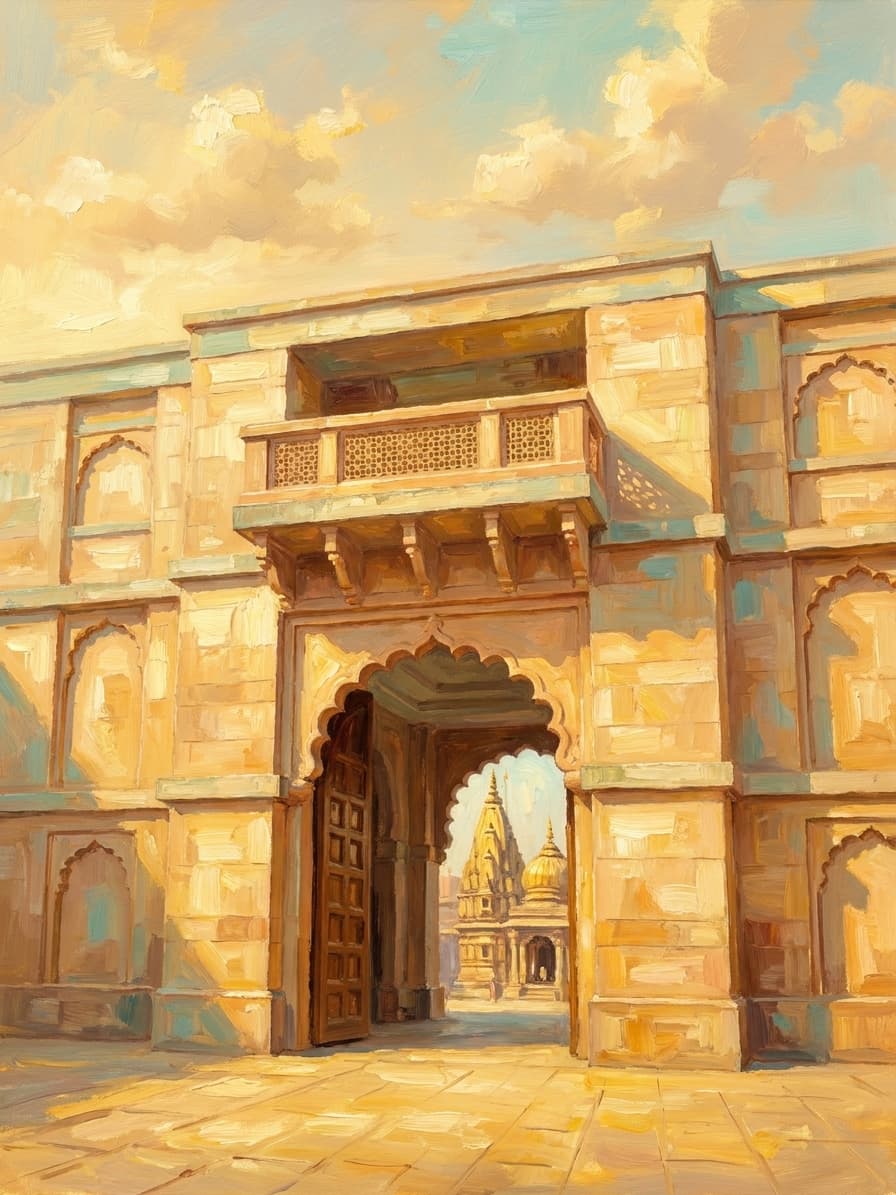
Visiting Shri Kashi Vishwanath Temple offers an intense, spiritually transformative immersion into the heart of ancient Hindu worship on the Ganges. Security protocols are stringent, and devotees move steadily through traditional sanctum queues amid rhythmic chants and floral offerings. Early arrival before dawn ensures a comparatively peaceful darshan experience before daytime crowds gather.
Highlights
- Witnessing the Mangala Aarti before dawn in the inner sanctum.
- Viewing the gleaming gold-plated shikhara donated by Maharaja Ranjit Singh.
- Walking the expansive red sandstone corridor connecting directly to the Ganga ghats.
- Catching a glimpse of the historic Jnana Vapi well of wisdom.
Things to Know
- Strict dress code requires modest traditional Indian attire covering arms and legs.
- Electronic items, leather goods, and bags must be deposited in security lockers outside.
- Queue times can extend across several hours during major Hindu festivals.
- Footwear must be deposited at designated stalls before entering the corridor complex.
Location
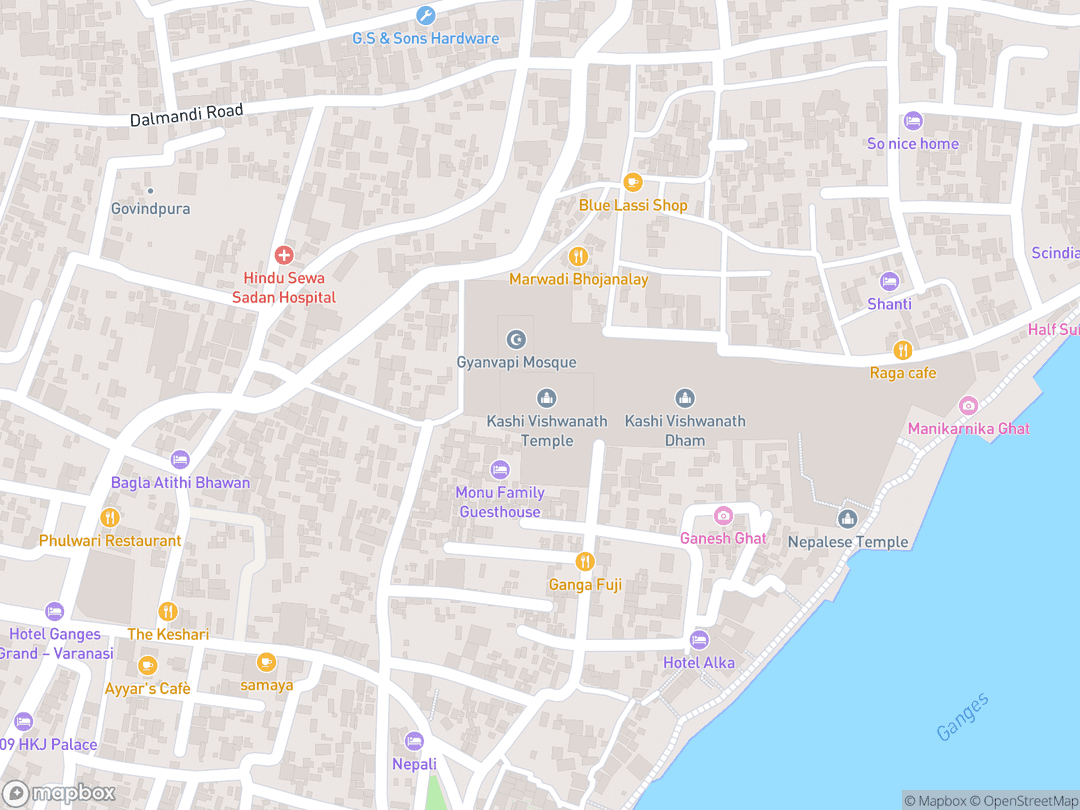
Vishwanath Gali, Godowlia, Varanasi, Uttar Pradesh 221001, India
Hours: 2:30 AM to 11:00 PM daily
Getting There: Located in Godowlia, 6 km from Varanasi Junction railway station and 25 km from Lal Bahadur Shastri International Airport, reachable via taxi or auto-rickshaw followed by a short walk through Vishwanath Gali.
Get DirectionsTips for Your Visit
Pre-book Aarti Online
Book ritual passes on the official temple trust portal in advance to secure seated access to early morning or evening ceremonies.
Arrive Before Sunrise
Line up around 5:00 AM if not attending an aarti to experience minimal wait times and cooler corridor conditions.
Follow Traditional Attire
Wear dhoti-kurta or kurta-pajama for men, and sarees or salwar suits for women to ensure smooth entry past temple guards.
About
Shri Kashi Vishwanath Temple is one of the most venerated sacred sites in Hinduism, serving as the central spiritual anchor of Varanasi on the western banks of the river Ganges. Dedicated to Lord Shiva as Vishwanath, the ruler of the universe, it houses one of the twelve divine Jyotirlingas, symbolizing the beginningless and endless cosmic light.
Within the Dharmic philosophical tradition, pilgrimage to Kashi represents the ultimate pursuit of spiritual liberation (moksha). Viewing the sacred Jyotirlinga and bathing in the sacred waters of the Ganga severs the perpetual cycle of rebirth (samsara), granting divine peace under Shiva's eternal guardianship.
Having withstood repeated destructions and reconstructions across centuries of turbulence, the current inner temple was erected in 1780 by the devout Maratha ruler Maharani Ahilyabai Holkar of Indore. Maharaja Ranjit Singh of the Sikh Empire later plated its spires with pure gold, exemplifying a trans-sectarian legacy of shared devotion.
In 2021, the ambitious Kashi Vishwanath Dham Corridor opened, re-establishing a direct ceremonial pathway between Lalita Ghat on the Ganges and the inner sanctum. This modern transformation balances ancient Nagara architectural sanctity with expansive infrastructure accommodating millions of pilgrims who arrive daily to offer homage.
Gallery
Symbolic Elements
The temple's exterior features intricate carvings, each rich with spiritual meaning:

Jyotirlinga
A dark cylindrical stone shaft standing within a silver base, representing the beginningless and infinite pillar of cosmic light.

Golden Shikhara
The gold-clad curvilinear tower representing Mount Meru as the cosmic axis connecting terrestrial earth to heavenly realms.

Jnana Vapi Well
The historic wisdom well venerated as the sanctuary harboring the protective primordial energy and hidden essence of Lord Shiva.

Ganga Jal Vessel
Sacred brass vessels used by pilgrims to carry sanctified Ganges river water for ceremonial bathing of the lingam.

Trishula and Damru
The sacred trident and drum of Shiva symbolizing control over creation, preservation, destruction, and cosmic rhythm.

Silver Jalhari Pedestal
The elaborately engraved silver yoni base that channels holy libations poured over the central Jyotirlinga.

Bilva Leaf Garland
Three-lobed leaves offered to Lord Shiva representing the three gunas, creation cycles, and the trident of knowledge.

Nandi Bull
The stone gatekeeper bull facing the inner sanctum, embodying unwavering patience, righteous devotion, and quiet focus.
Interesting Facts
Shri Kashi Vishwanath Temple enshrines one of the twelve divine Jyotirlingas, symbolizing the formless cosmic column of light. (Tier A)
In Hindu cosmology, Varanasi is revered as the sacred threshold where the very first Jyotirlinga manifested. (Tier B)
Queen Ahilyabai Holkar financed the current stone temple in 1780 after widespread regional destruction in preceding centuries. (Tier A)
Maharaja Ranjit Singh of the Sikh Empire donated pure gold in 1835 to plate the temple spires, creating the famous Golden Temple aesthetic. (Tier A)
In sacred tradition, offering prayers at this shrine after bathing in the Ganga bestows liberation from the cycle of rebirth. (Tier B)
The Jnana Vapi well north of the main sanctum is traditionally revered as a divine reservoir conveying cosmic wisdom. (Tier B)
The 2021 corridor project expanded the historic precinct from a narrow cluster of lanes into an expansive complex of half a million square feet. (Tier A)
The temple has been administered by a state-appointed board of trustees under the Uttar Pradesh government since 1983. (Tier A)
Common Questions
What is the best time to visit Shri Kashi Vishwanath Temple?
The winter months between October and March offer pleasant weather, while visiting at 7:00 AM on weekdays minimizes waiting in long queues.
What is the dress code for entering the sanctum?
Devotees must wear traditional, modest Indian clothing covering arms and legs, such as dhoti-kurta for men and sarees or salwar suits for women.
Are mobile phones and bags allowed inside the temple?
No, all electronic devices, cameras, and leather items must be left in secure lockers outside the corridor entrance.
Why is the temple commonly known as the Golden Temple?
The temple earned this moniker after Maharaja Ranjit Singh donated gold in 1835 to plate the tower and central dome.
How does one attend the famous Mangala Aarti?
Devotees can book tickets through the official temple portal for the early morning Mangala Aarti held between 3:00 AM and 4:00 AM.
Featured Stories
The Devotion of Maharani Ahilyabai Holkar
1780
Following over a century without a formal temple for Kashi's central lingam, Queen Ahilyabai Holkar of Indore resolved to restore the deity's sacred home. Drawing personal royal revenues, she commissioned master craftsmen to erect the elegant stone Nagara shrine adjacent to the historic site. Her dedication re-established continuous daily rituals in Varanasi, ensuring the eternal presence of Vishwanath for future generations.
Source: Shri Saubhagya Mal Ji Lodha Historical Archives
Ranjit Singh's Golden Gift
1835
In a remarkable act of interfaith reverence, Maharaja Ranjit Singh of the Sikh Empire resolved to adorn Kashi Vishwanath with royal grandeur. He dispatched loads of pure gold from Lahore to guild the sanctum's twin spires and crowning domes. His gesture stands as an enduring emblem of Dharmic unity, bridging North Indian cultural heritages beneath gleaming golden canopies.
Source: Kashi Trust Annals
Unearthing Ancient Shrines
2019
During the demolition of tightly packed modern houses to clear land for the new corridor, workers made an astonishing archaeological discovery. Hidden inside residential foundations and behind plaster walls were over seventy centuries-old stone temples and intricately carved family altars. Architects meticulously preserved and restored these long-forgotten structures, integrating them as open-air exhibits within the spiritual complex.
Source: Varanasi Smart City Archaeological Survey
Timeline
Destruction of Adi Vishveshwar
The original historic Vishwanath shrine was destroyed during regional military conquests by the Ghurid forces.
MilestoneThirteenth-Century Rebuilding
A Gujarati merchant rebuilt the temple complex near Avimukteshwara during the reign of Delhi Sultan Iltutmish.
RenovationSharqi Dynasty Demolition
The sanctuary suffered another documented demolition during the rule of the Sharqi rulers of Jaunpur.
MilestoneAkbar Era Restoration
Raja Todar Mal and Raja Man Singh orchestrated a full reconstruction of the grand temple under Emperor Akbar.
RenovationMughal Demolition
Emperor Aurangzeb ordered the demolition of the temple structure, over which the Gyanvapi Mosque was subsequently built.
MilestoneAhilyabai Holkar Reconstruction
Queen Ahilyabai Holkar of Indore financed and constructed the present temple sanctuary on an adjoining site.
DedicationGilding of the Shikhara
Maharaja Ranjit Singh of the Sikh Empire donated pure gold to plate the twin domes and spire of the shrine.
RenovationState Trust Establishment
The Government of Uttar Pradesh took over management, establishing a formal board of trustees.
MilestoneCorridor Groundbreaking
Prime Minister Narendra Modi laid the foundation stone for the massive Kashi Vishwanath Dham redevelopment.
component.timeline.groundbreakingInauguration of Kashi Dham Corridor
The expanded pedestrian corridor connecting the temple directly to Lalita Ghat on the sacred Ganges was officially opened.
MilestoneHistory by Decade
1190s–1230s — Devastation and Early Renewal
Kashi remains eternal, never shaken even when stone and mortar yield to the passage of time.
The ancient Adi Vishveshwar temple was destroyed in 1194 during political incursions into the Gangetic plains. Devotees subsequently erected a replacement sanctuary near Avimukteshwara in 1230, preserving sacred worship despite persistent regional political turmoil.
1580s–1660s — Akbar's Court and Aurangzeb's Edict
Under the patronage of Emperor Akbar, imperial courtiers Raja Todar Mal and Raja Man Singh financed a magnificent temple in 1585. This golden age ended in 1669 when Emperor Aurangzeb ordered its demolition, leaving remnants later subsumed by the adjacent Gyanvapi Mosque.
1780s–1830s — Maratha Rebirth and Sikh Patronage
Maharani Ahilyabai Holkar commissioned the current Nagara temple in 1780 on an adjoining parcel. Decades later in 1835, Maharaja Ranjit Singh endowed the shrine with glistening gold leaf across its towers, cementing its modern identity.
1980s–2000s — State Administration and Security
In 1983, the Government of Uttar Pradesh established a statutory board of trustees to manage daily operations and handle surging pilgrim crowds. Heightened regional security protocols led to barricaded corridors and organized entry systems throughout the narrow lanes of Vishwanath Gali.
2010s–2020s — The Modern Kashi Corridor
Prime Minister Narendra Modi launched the ambitious Kashi Vishwanath Dham project in 2019, removing surrounding congested buildings. Inaugurated in December 2021, the new corridor reconnected the sanctum directly to the Ganges River along expansive stone walkways.
Architecture & Facilities
The temple exemplifies classical North Indian Nagara temple architecture characterized by a soaring curvilinear shikhara, compact square sanctum, and red sandstone courtyards. Rebuilt by Ahilyabai Holkar in 1780 and expanded through the 2021 Dham Corridor, the complex harmonizes traditional Hindu sacred geometry with modern, expansive pedestrian courtyards.
Building Materials
Gold Leaf
Over one ton of pure gold plates the soaring shikhara and main domes, originally gifted by Maharaja Ranjit Singh.
Chunar Sandstone
Fine-grained pinkish buff stone quarried nearby, providing the primary structural fabric for the corridor courtyards.
Makrana Marble
Pristine white marble quarried in Rajasthan forms smooth floorings and sanctum linings inside the shrine.
Kota Granite
Durable polished stone tiles pave high-traffic exterior walkways across the pedestrian pilgrimage corridor.
Interior Features
Garbhagriha (Sanctum Sanctorum)
A compact square stone chamber enshrining the sacred black Jyotirlinga resting on an embossed silver pedestal.
Antarala (Vestibule)
The small transitional doorway where priests offer bilva leaves and sacred water directly to the inner altar.
Sabha Mandapa
The pillared congregational hall where pilgrims assemble in rows to view the deities during ceremonial aartis.
Jnana Vapi Precinct
An adjacent historic stone enclosure surrounding the sacred well of wisdom where ancient deities were once sheltered.
Temple Grounds
The five-hundred-thousand-square-foot Kashi Vishwanath Dham corridor features red sandstone arcades, seventy restored heritage shrines, pilgrim facilitation centers, wide ramps, and a ceremonial stairway descending to Lalita Ghat on the Ganges River.
Additional Facilities
The temple precinct provides modern air-conditioned pilgrim reception halls, automated cloakrooms, Vedic book emporiums, drinking water stations, cafeteria amenities, and dedicated wheelchair assistance.
Religious Significance
In Hindu philosophy, Kashi is celebrated as the Avimukta Kshetra, the sacred space never abandoned by Shiva. The temple serves as the spiritual epicenter where material existence meets transcendent liberation.
To provide a direct pilgrimage threshold where devotees offer veneration to Lord Shiva, cleanse karmic accumulations, and seek liberation (moksha) from the cosmic cycle of rebirth.
Sacred Ordinances
Jalabhishekam
The ceremonial pouring of sacred Ganges water over the Jyotirlinga accompanied by chanting of Vedic mantras.
Mangala Aarti
The auspicious pre-dawn awakening ceremony featuring oil lamps, conch blasts, and hymn recitations.
Bhog Aarti
The midday offering of sanctified vegetarian food to the deity followed by distribution among priests and devotees.
Saptarishi Aarti
An elaborate evening ritual conducted jointly by seven priests symbolizing the primordial cosmic sages.
Shayana Aarti
The late-night ceremony putting the deity to rest with gentle vocal hymns and instrumental music.
The Concept of Moksha in Kashi
Traditional scriptures proclaim that anyone who departs mortal life within the boundaries of Kashi receives the Taraka Mantra whispered directly by Shiva, gaining immediate liberation from samsara.
The Jyotirlinga as Cosmic Light
Unlike sculpted anthropomorphic idols, the Jyotirlinga manifests Shiva as an unconditioned column of radiant infinite energy, reminding seekers of the formless reality underpinning creation.
Sources & Research
Every fact on Temples.org is backed by verified Sources & Research. Each piece of information is rated by source tier and confidence level.
View All Sources (10)
| Field | Source | Tier | Retrieved |
|---|---|---|---|
| About & Historical Background | Shri Kashi Vishwanath Special Area Development Board (opens in a new tab) | A | 2026-02-17 |
| Historical Timeline | Encyclopaedia Britannica (opens in a new tab) | B | 2026-02-17 |
| Corridor Architecture & Restoration | Varanasi Smart City Government Portal (opens in a new tab) | A | 2026-02-17 |
| Visitor Information & Regulations | The Economic Times (opens in a new tab) | A | 2026-02-17 |
| Architectural Description & Materials | Archidust Architecture Journal (opens in a new tab) | B | 2026-02-17 |
| Corridor Project Overview | Open Magazine (opens in a new tab) | B | 2026-02-17 |
| Pilgrimage Traditions & Significance | Visit Kashi Tourism Portal (opens in a new tab) | C | 2026-02-17 |
| Religious Practices & Rituals | Cottage9 Cultural Resources (opens in a new tab) | C | 2026-02-17 |
| Visitor Logistics & Travel Details | Skyscanner Travel Guides (opens in a new tab) | D | 2026-02-17 |
| Temple Tourism Details | YatraDham Pilgrim Services (opens in a new tab) | D | 2026-02-17 |