Visitor Insights
Visiting Takht Sri Patna Sahib
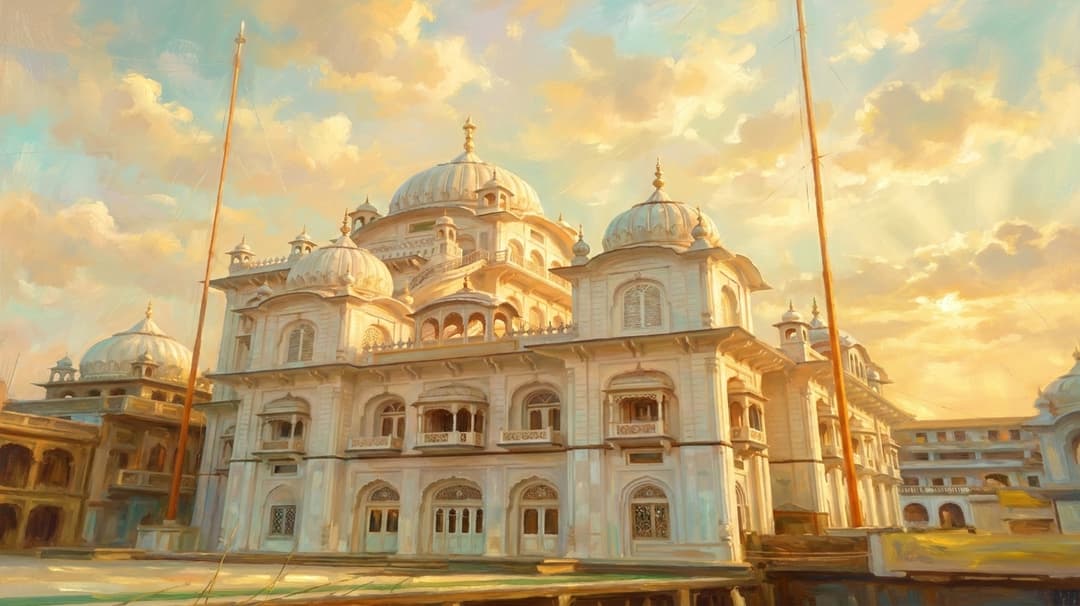
Takht Sri Patna Sahib welcomes pilgrims and travelers of all faiths into a spiritually serene atmosphere resounding with sacred kirtan. The expansive marble complex offers constant access to prayers, historical museum relics, and the egalitarian communal dining hall.
Highlights
- Veneration of the sacred cradle and historic childhood weapons of Guru Gobind Singh Ji.
- Communal dining experience through uninterrupted daily Langar service.
- Dazzling evening prayers and soul-stirring Gurbani hymns echoing off polished white marble.
Things to Know
- Head coverings are strictly required at all times across the gurdwara complex.
- Footwear must be deposited at the shoe storage counter prior to crossing the washing basin.
- Photography is forbidden inside the inner sanctum where holy relics are preserved.
Location
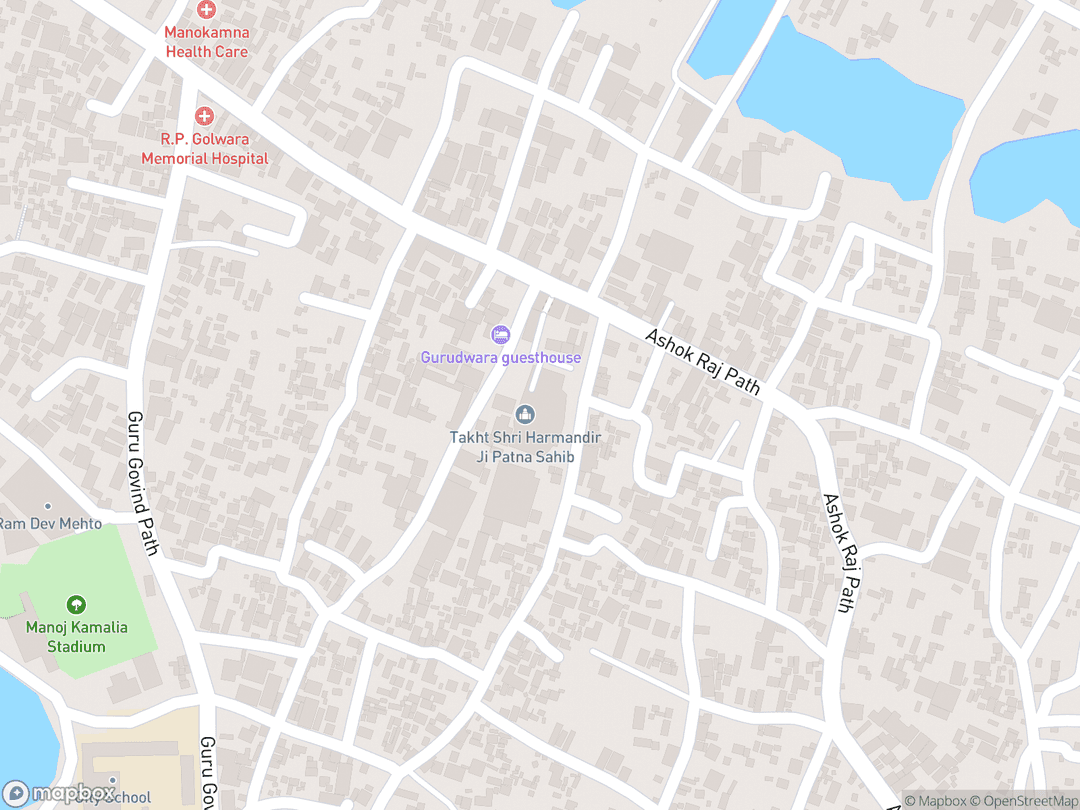
Takhat Sri Harimandir Ji, Patna Sahib, Patna, Bihar 800008, India
Hours: Open 24 hours daily; sanctum darshan from 5:00 AM to 9:00 PM
Getting There: Located in Patna City, 12 kilometers from Patna Junction railway station and 18 kilometers from Jay Prakash Narayan Airport.
Get DirectionsTips for Your Visit
Head Coverings
Scarves and rumals are provided complimentary near the entrance if you do not bring your own.
Early Morning Darshan
Arrive at dawn around 5:00 AM for the deeply peaceful Prakash ceremony and early morning hymns.
Relic Viewing Schedule
The historic childhood relics of Guru Gobind Singh Ji are shown during designated midday and evening ceremonies.
Langar Etiquette
Sit cross-legged in orderly rows on the floor carpets to partake of the sanctified vegetarian meal.
About
Takht Sri Patna Sahib, known formally as Takhat Sri Harimandir Ji, marks the holy birthplace of Guru Gobind Singh Ji, the tenth Sikh Guru. Situated along the historic banks of the Ganges River in Patna, Bihar, this revered Gurdwara serves as the epicenter of the Sikh faith in Eastern India.
Within the broader Dharmic theological tradition, Sikhism emphasizes the oneness of the Divine, universal brotherhood, selfless service (Seva), and the tireless defense of spiritual liberty. Patna Sahib stands as one of the five supreme temporal seats of authority (Takhts) established to guide the global Sikh community.
The sanctified premises were blessed by the footsteps of three Sikh Gurus: Guru Nanak Dev Ji, Guru Tegh Bahadur Ji, and Guru Gobind Singh Ji. Maharaja Ranjit Singh initiated the construction of the grand modern edifice in the nineteenth century, preserving a sacred repository of relics and enduring devotional tradition.
Gallery
Symbolic Elements
The temple's exterior features intricate carvings, each rich with spiritual meaning:

The Khanda
The double-edged sword surrounded by a circle and crossed blades signifies divine knowledge and righteous authority.

Nishan Sahib
The towering saffron-colored triangular flag represents the sovereignty, freedom, and sanctuary offered by the Gurdwara.

Jyoti Saroop
The perpetual flame honors the eternal enlightenment and timeless teachings radiating from Guru Gobind Singh Ji.

Golden Lotus Dome
Fluted gilded domes atop the marble sanctum embody purity, divine transcendence, and regal sovereignty.

Guru Granth Sahib Throne
The ornate Palki Sahib canopy houses the living eternal scripture, serving as the spiritual focus of all prayer.

Pangura Sahib
The preserved childhood cradle symbolizes the divine advent and innocent early years of the warrior-poet Guru.

Chhatri Cupolas
Corner Rajput turrets represent regal spiritual protection and harmony across Indian architectural heritages.
Interesting Facts
Takht Sri Patna Sahib is one of the five temporal Takhts holding supreme moral authority in the Sikh faith (Tier A).
The Gurdwara commemorates the exact childhood residence where Guru Gobind Singh Ji was born in December 1666 (Tier A).
Maharaja Ranjit Singh personally funded and commissioned the nineteenth-century reconstruction of the central shrine (Tier B).
The sacred complex was consecrated by the footsteps of three separate Sikh Gurus across two centuries (Tier A).
The on-site treasury preserves an authentic pangura gold-plated wooden cradle used during the Guru's infancy (Tier B).
A handwritten copy of the Guru Granth Sahib bearing the personal signature of Guru Gobind Singh Ji is housed here (Tier B).
The historic complex survived a devastating regional earthquake in 1934 before being rebuilt in pure marble (Tier B).
The free community kitchen serves thousands of freshly prepared meals daily in keeping with the tenet of Vand Chhako (Tier A).
Common Questions
Why is Takht Sri Patna Sahib so significant in Sikhism?
It marks the holy birthplace of Guru Gobind Singh Ji and serves as one of Sikhism's five seats of temporal authority.
Are people of non-Sikh faiths allowed to enter?
Yes, visitors of all religious backgrounds, nationalities, and walks of life are warmly welcomed.
What items of the tenth Guru are displayed here?
The museum preserves his childhood cradle, arrows, curved dagger, iron quoit, and a sacred handwritten manuscript.
Is free food served at Patna Sahib?
Yes, the community Langar kitchen serves nourishing, hot vegetarian meals freely to all visitors throughout the day.
What is the best season to plan a pilgrimage?
The cool winter months from October to March offer pleasant weather for gurdwara visits and city travel.
Featured Stories
The Birth of the Tenth Guru
December 22, 1666
While Guru Tegh Bahadur Ji traveled through Eastern India to preach spiritual dignity, Mata Gujri gave birth to Gobind Rai in Patna. The local Muslim saint Pir Bhikhan Shah famously perceived the child's universal divine light from miles away and traveled to bow before the infant. This birth transformed Patna into an indelible sanctuary of truth, valor, and universal equality.
Source: Historical Gurudwaras Research
Royal Devotion of the Lion of Punjab
1839
Maharaja Ranjit Singh held deep reverence for the sacred birthplace of the founder of the Khalsa. In the 1830s, he dispatched master artisans and precious white marble from Rajasthan to erect a magnificent palace-like shrine upon the ruins of older chambers. His royal endowments ensured that Patna Sahib possessed the grandeur commensurate with its lofty station as a supreme Takht.
Source: Government of Bihar
Preserving Relics Through the 1934 Quake
January 15, 1934
When the massive 1934 earthquake tore through Bihar, local sevadars dashed into the shaking sanctum to protect the sacred scriptures and priceless relics of the tenth Guru. Though walls fractured and archways cracked, the holy treasures remained unscathed. Their heroic efforts preserved irreplaceable manuscripts, the childhood cradle, and historical weapons for subsequent generations.
Source: Discover Sikhism
Timeline
Guru Nanak Dev Ji Visits Patna
The founder of Sikhism sanctifies the area during his eastern preaching travels.
MilestoneGuru Tegh Bahadur Ji Blesses the Site
The ninth Guru resides in Patna during his missionary journey toward Bengal and Assam.
MilestoneBirth of Guru Gobind Singh Ji
The tenth Guru is born as Gobind Rai to Guru Tegh Bahadur Ji and Mata Gujri Ji.
MilestoneDeparture for Anandpur Sahib
Young Gobind Rai departs his childhood home in Patna to join his family in Punjab.
EventEarly Memorial Structure Erected
A memorial prayer hall is established to mark the sanctified birthplace of the tenth Guru.
MilestoneMaharaja Ranjit Singh Renovation
The Lion of Punjab completes grand marble additions and gilded dome construction on the sanctum.
RenovationBihar Earthquake Damage
A catastrophic 8.0-magnitude earthquake causes severe structural cracks across the historic gateway.
EventReconstruction Groundbreaking
The global Sikh Sangat initiates comprehensive reconstruction of the monumental marble structure.
component.timeline.groundbreakingSanctum Dedication
Reconstruction concludes with solemn ceremonies re-enshrining the Guru Granth Sahib under golden domes.
Dedication350th Prakash Parv Celebrations
Millions of devotees gather globally in Patna to celebrate the 350th birth anniversary of Guru Gobind Singh Ji.
EventHistory by Decade
1660s — Advent of Gobind Rai
During this foundational decade, Guru Tegh Bahadur arrived in Bihar to strengthen local spiritual congregations. Gobind Rai was born on December 22, 1666, spending his earliest childhood playing near the riverbanks of the Ganges and receiving instruction in Persian, Sanskrit, and martial arts.
1720s — Rise of the First Shrine
Following the demise of the tenth Guru and the rise of the Khalsa Commonwealth, devotees built a permanent shrine over the sanctified birthplace. The Gurdwara became a central pilgrimage refuge for travelers traversing northern and eastern India.
1830s — The Imperial Restorations
Maharaja Ranjit Singh directed substantial imperial resources toward rebuilding and adorning the Gurdwara. Skilled stonemasons incorporated polished marble facades and ornate gilded finials, elevating the site into an imposing royal complex.
1930s — Earthquake and Devotion
The devastating 1934 earthquake wreaked widespread destruction across Patna and damaged the upper reaches of the Gurdwara. Devotees formed restoration committees to shore up the foundation and safeguard the priceless historic armaments.
1950s — Comprehensive Rebuilding
Between 1948 and 1957, modern Kar Seva volunteers completed a thorough reconstruction in gleaming white marble. The renewed sanctum grandly showcased modern craftsmanship while honoring traditional Sikh architectural canons.
2010s — Prakash Parv Epoch
In 2017, the Gurdwara was the global focus of the 350th birth anniversary of Guru Gobind Singh Ji. State and central governments revitalized transport links, welcoming millions of international pilgrims to the historic seat.
Architecture & Facilities
Takht Sri Patna Sahib represents an exquisite synthesis of Indo-Islamic Mughal arches, Rajput chhatris, and classic Sikh architectural idioms. Cloaked in pristine white marble, the complex features symmetrical layered colonnades, scalloped openings, and brilliant gilded domes that reflect profound spiritual sovereignty beside the sacred river.
Building Materials
Makrana Marble
Pristine white marble provides a radiant and cooling exterior envelope across the walls, archways, and terraces.
Gold Leaf
Gilded copper plates cover the high central domes, reflecting bright sunlight across the sacred courtyard.
Teak Woodwork
Carved hardwood elements compose the interior relic display cases, structural ceiling beams, and palanquin rests.
Brass and Iron Hardware
Ornamental forged fixtures adorn the ceremonial gateways, balustrades, and historic interior armories.
Interior Features
Main Sanctum (Darbar Sahib)
The grand central hall houses the holy Guru Granth Sahib under an exquisitely jeweled golden canopy.
Birthplace Chamber
A consecrated alcove marks the specific holy chamber where Mata Gujri gave birth to Gobind Rai.
Museum Treasury
Secure glass galleries house the childhood cradle, sacred arrows, khanda daggers, and historic royal farmans.
Langar Hall
A spacious dining facility serves hot communal meals seated upon pristine floor mats in continuous rotation.
Temple Grounds
The Gurdwara complex features an expansive paved marble parikrama courtyard bordered by arched pilgrim rest lodges, modern shoe depositories, ablution footbaths, and direct access lanes descending toward the holy Ganges.
Additional Facilities
An extensive Sarai provides multi-story pilgrim accommodations, while dedicated interpretive centers and book repositories provide literature on Sikh theology and history.
Religious Significance
Takht Sri Patna Sahib is venerated as one of the five temporal Takhts (seats of divine justice and moral authority) of the Sikh faith. It anchors Sikh identity within Eastern India, celebrating the life, courage, and legacy of Guru Gobind Singh Ji.
To serve as a living fountain of egalitarian spirituality, preserving the relics of the tenth Guru while promulgating moral guidance, scriptural wisdom, and selfless communal service.
Sacred Ordinances
Prakash Ceremony
The ceremonial morning installation of the Siri Guru Granth Sahib from the resting chamber to the sanctum throne.
Akhand Path
The unbroken, continuous recitation of the entire Sikh scripture conducted by relays of trained granthis.
Langar Seva
The sacred duty of preparing and distributing sanctified vegetarian food to all human beings without distinction.
Sukhasan Ceremony
The reverent evening retirement of the Guru Granth Sahib to the Sachkhand resting chamber amid prayers.
Seat of Moral Authority
As a Takht, Patna Sahib issues Hukamnamas (edicts) to clarify matters of community welfare and code of conduct for Sikhs worldwide.
The Legacy of Guru Gobind Singh Ji
The Guru's birthplace embodies the synthesis of saintly devotion and martial virtue, reminding devotees to stand bravely against oppression while maintaining spiritual humility.
Sources & Research
Every fact on Temples.org is backed by verified Sources & Research. Each piece of information is rated by source tier and confidence level.
View All Sources (8)
| Field | Source | Tier | Retrieved |
|---|---|---|---|
| About & Historical Background | Government of Bihar (opens in a new tab) | A | 2026-02-15 |
| Visitor Insights & Overview | Ministry of Tourism, Government of India (opens in a new tab) | A | 2026-02-15 |
| Historical Timeline & Renovation | National Informatics Centre Bihar (opens in a new tab) | A | 2026-02-15 |
| Birthplace Sanctum Records | Bihar Foundation (opens in a new tab) | A | 2026-02-15 |
| Relics & Architectural Details | Discover Sikhism (opens in a new tab) | B | 2026-02-15 |
| Sikh Heritage Documentation | Historical Gurudwaras Research (opens in a new tab) | B | 2026-02-15 |
| Visitor Logistics & Pilgrim Guides | Holidify Travel (opens in a new tab) | D | 2026-02-15 |
| Access & Transportation Guide | Tour My India (opens in a new tab) | D | 2026-02-15 |