Visitor Insights
Visiting Borobudur Temple
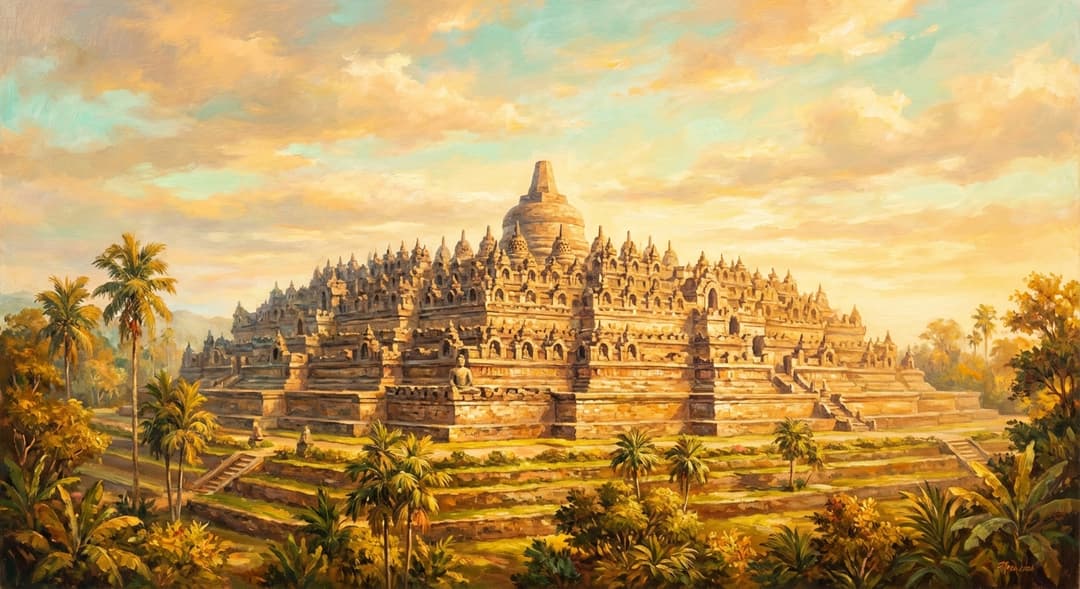
Visiting Borobudur Temple is a truly unforgettable experience, offering a glimpse into the rich cultural and religious heritage of Indonesia. As the world's largest Buddhist temple, Borobudur is a magnificent sight to behold, with its intricate carvings, towering stupas, and panoramic views of the surrounding landscape. Whether you're a history buff, a spiritual seeker, or simply an admirer of beauty, Borobudur is sure to leave a lasting impression.
Highlights
- Witness the breathtaking sunrise over the temple, casting a golden glow on the ancient stones.
- Explore the intricate relief panels, depicting scenes from the life of Buddha and ancient Javanese daily life.
- Climb to the top of the temple and marvel at the panoramic views of the surrounding landscape.
- Experience the spiritual atmosphere of this sacred site, a place of pilgrimage and contemplation for centuries.
Things to Know
- The best time to visit Borobudur is during the dry season (May to October) for clear skies.
- Sunrise is a magical time to visit, although access to the temple structure is limited.
- Book tickets online in advance to avoid long queues.
- Wear comfortable shoes, as you'll be doing a lot of walking and climbing.
- Bring sunscreen, water, and a hat to protect yourself from the sun.
Location
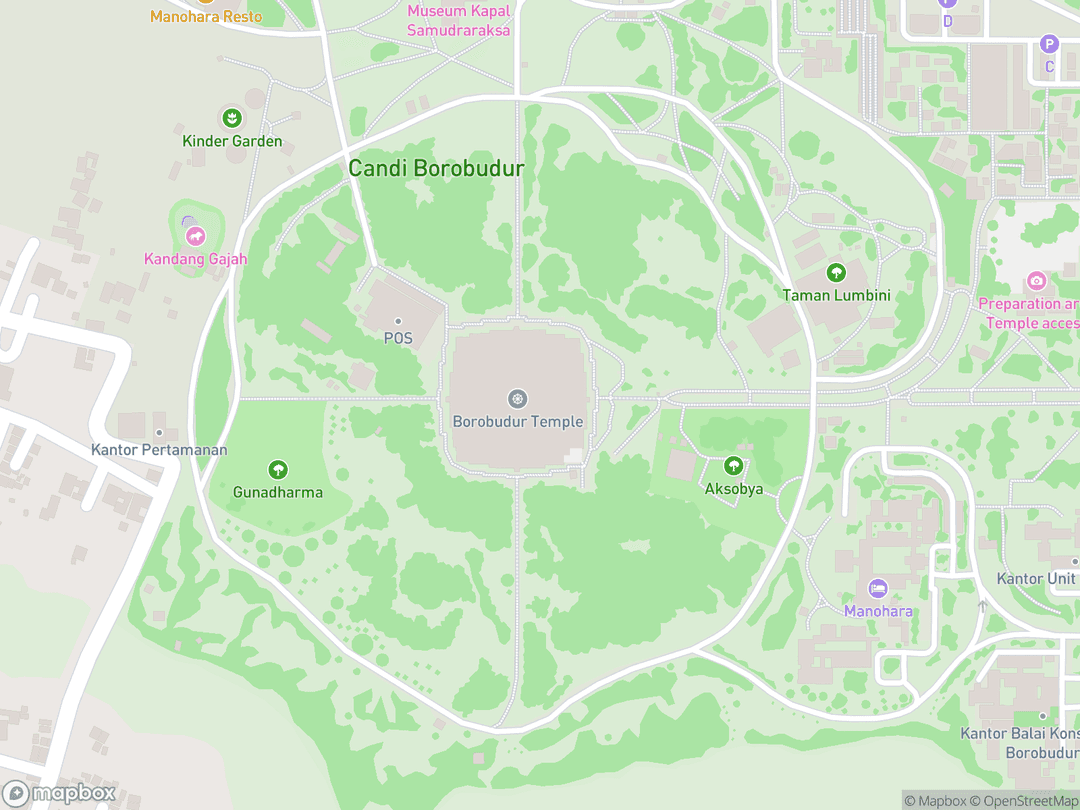
Jl. Badrawati, Kw. Candi Borobudur, Borobudur, Kec. Borobudur, Kabupaten Magelang Jawa Tengah, Indonesia
Hours: The Borobudur Temple Grounds are open daily from 6:30 am to 5:30 pm. The Temple Structure is open from Tuesday to Sunday between 08:30 and 15:30.
Getting There: The closest major city is Yogyakarta, which has an international airport and train connections. From Yogyakarta, visitors can reach Borobudur by renting a motorbike, taking a local bus, hiring a private driver, or joining an organized tour.
Get DirectionsTips for Your Visit
Book Tickets Online
Purchase your tickets online in advance to avoid long queues and ensure entry, especially during peak season.
Dress Respectfully
While there's no official dress code, it's advisable to dress modestly out of respect for the sacred nature of the site.
Stay Hydrated
Bring plenty of water, especially if you're visiting during the hot and humid months.
About
According to Wikipedia, Borobudur (also transcribed Barabudur) is a 9th-century Mahayana Buddhist temple in Magelang Regency, Central Java, Indonesia, and is recognized as the world's largest Buddhist temple. This monumental structure is a testament to the rich cultural and religious history of the region, with its design combining Javanese Buddhist architecture with indigenous Indonesian traditions to create a unique and breathtaking sacred site.
The temple was built around 780-840 AD during the Syailendra Dynasty, a period of flourishing Buddhist art and architecture in Java. Gunadharma is credited as the architect behind this magnificent creation. For centuries, Borobudur served as an important pilgrimage site, attracting devotees from across the region. However, it was abandoned in the 14th-15th centuries as the influence of Hindu and Buddhist kingdoms waned, and Islam spread in Java.
Rediscovered in 1814 by Sir Thomas Stamford Raffles, the British Governor-General of Java, Borobudur underwent significant restoration efforts in the 20th century. A major restoration project, undertaken by the Indonesian government and UNESCO, took place in the 1970s and 1980s, culminating in its designation as a UNESCO World Heritage Site in 1991. Today, Borobudur stands as a symbol of Indonesia's rich cultural heritage and a testament to the enduring power of Buddhist art and philosophy.
Gallery
Symbolic Elements
The temple's exterior features intricate carvings, each rich with spiritual meaning:

Stupa Structure
The overall structure of Borobudur is based on the concept of a stupa, a Buddhist commemorative monument typically housing relics. The central stupa represents the ultimate goal of enlightenment, symbolizing the release from worldly desires and the attainment of Nirvana.
Mandala Layout
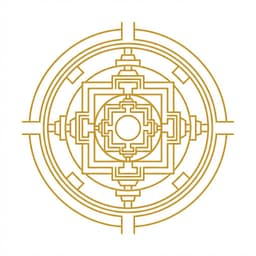
Viewed from above, the temple forms a giant mandala, a symbolic representation of the universe in Buddhist cosmology. The mandala layout reflects the interconnectedness of all things and the cyclical nature of existence, guiding pilgrims through a meditative journey.

Three Realms
The division of the temple into three levels (Kamadhatu, Rupadhatu, and Arupadhatu) symbolizes the three realms of Buddhist cosmology and the spiritual journey from worldly desires to enlightenment. Each level represents a different stage of spiritual development, guiding pilgrims towards higher states of consciousness.
Buddha Statues
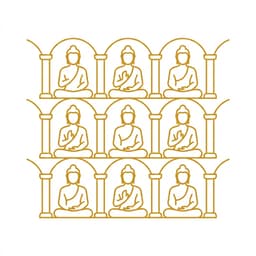
The temple originally featured 504 Buddha statues, with different mudras (hand gestures) depending on their placement, representing various aspects of Buddhist teachings. These statues serve as visual reminders of the Buddha's teachings and the path to enlightenment, inspiring devotion and contemplation.
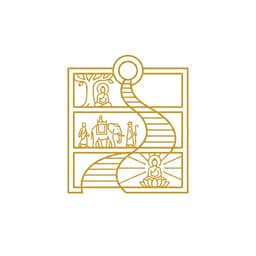
Relief Panels
The intricate relief panels depict stories from Buddhist scriptures, illustrating moral lessons and the path to enlightenment. These panels serve as visual aids for understanding Buddhist teachings, conveying complex philosophical concepts through narrative storytelling.
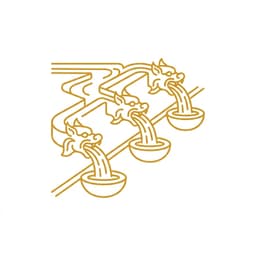
Drainage System
Borobudur is equipped with a sophisticated drainage system, including 100 spouts carved in the shape of gargoyles or makaras, to manage the area's high stormwater runoff. This system symbolizes the purification of the mind and the removal of obstacles on the path to enlightenment.
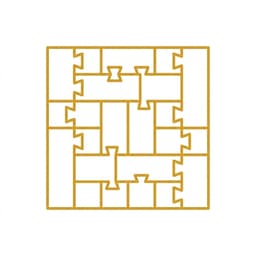
Andesite Stone
The temple is constructed from approximately 55,000 cubic meters of gray andesite stone, interlocked without mortar using knobs, dovetails, and indentations. The use of this durable and locally sourced material symbolizes the strength and resilience of the Buddhist faith.
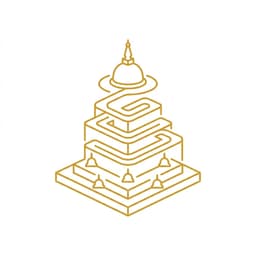
Pilgrimage Path
The design of Borobudur guides pilgrims through a symbolic journey, ascending through the different levels and realms to reach enlightenment. This pilgrimage path represents the gradual process of spiritual growth and the challenges and rewards of the Buddhist path.
Interesting Facts
Borobudur is the world's largest Buddhist temple.
The temple was constructed without using any cement or mortar; the stones were interlocked.
The construction of Borobudur spanned over 70 years.
Borobudur is adorned with 2,672 relief panels covering a total area of 1,900 square meters.
A visitor circling the galleries across 4 stories would walk approximately 1.2 kilometers.
The temple was built with 2 to 4-meter-thick blocks of stone laid over a hill and leveled with soil from below.
The blocks of stones were not sealed together with mortar but used a complex interlocking system.
The Buddha statues throughout the temple express six different types of mudras (hand positions).
Borobudur represents the stages of enlightenment.
The temple was abandoned around the 14th century and rediscovered in 1814.
Borobudur was designated as a UNESCO World Heritage Site in 1991.
The design was influenced by Indian Gupta art.
The monument is equipped with a good drainage system to cater to the area’s high stormwater run-off.
The temple's design follows Javanese Buddhist architecture, blending the Indonesian indigenous tradition of ancestor worship and the Buddhist concept of attaining Nirvana.
The temple is located in an elevated area between twin volcanoes and two rivers.
The three temples of Borobudur, Pawon and Mendut are positioned along a straight line.
Common Questions
What is Borobudur?
Borobudur is a 9th-century Mahayana Buddhist temple located in Magelang Regency, Central Java, Indonesia. It is the world's largest Buddhist temple and a UNESCO World Heritage Site, renowned for its intricate architecture, rich symbolism, and historical significance.
When was Borobudur built?
Borobudur was built during the Syailendra dynasty, approximately between 780 and 840 AD. The construction spanned several decades and involved the labor of countless artisans and workers.
What is the architectural style of Borobudur?
Borobudur's architecture is a unique blend of Javanese Buddhist design and indigenous Indonesian traditions. The temple's structure incorporates elements of a stupa, mandala, and mountain sanctuary, reflecting the Buddhist cosmology and the spiritual journey to enlightenment.
What are the symbolic divisions of Borobudur?
Borobudur is divided into three zones representing the Buddhist cosmology: Kamadhatu (the world of desires), Rupadhatu (the world of forms), and Arupadhatu (the world of formlessness). These divisions symbolize the spiritual journey from worldly desires to enlightenment.
How was Borobudur rediscovered?
Borobudur was rediscovered in 1814 by Sir Thomas Stamford Raffles, the British Governor-General of Java. The temple had been abandoned for centuries and was largely hidden beneath layers of volcanic ash and vegetation.
Related Stories
Explore the rich history, traditions, and people connected to this sacred site.
Featured Stories
The Rediscovery of a Lost Wonder
1814
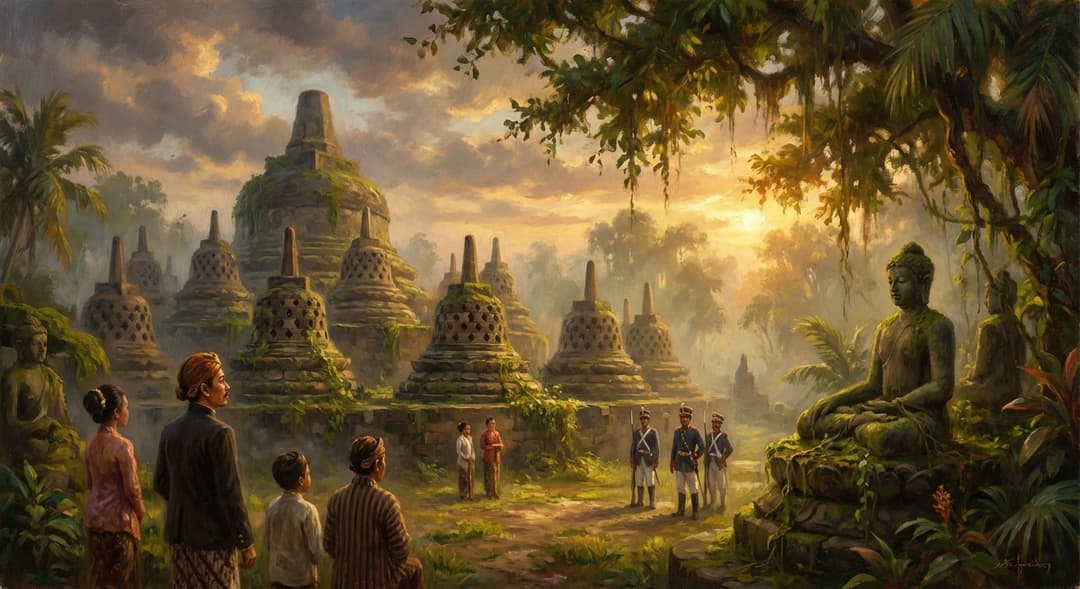
For centuries, Borobudur lay hidden beneath layers of volcanic ash and dense jungle vegetation, its existence largely forgotten by the outside world. It was Sir Thomas Stamford Raffles, the British Governor-General of Java, who stumbled upon this lost wonder in 1814, sparking a renewed interest in its history and significance.
Raffles, a keen historian and explorer, dispatched a team to clear the vegetation and excavate the temple, revealing its magnificent structure and intricate carvings. The rediscovery of Borobudur marked a turning point in the understanding of Javanese history and the rich cultural heritage of Indonesia.
The event captured the imagination of scholars and artists alike, leading to further research and restoration efforts that would eventually restore Borobudur to its former glory. The rediscovery of Borobudur is a testament to the enduring power of human curiosity and the importance of preserving our cultural heritage.
Source: Authentic Indonesia
The Monumental Restoration Project
1970s-1980s
By the 1970s, Borobudur faced significant threats from weathering, erosion, and structural instability. A major restoration project, undertaken by the Indonesian government and UNESCO, was launched to save this cultural treasure for future generations.
The project involved dismantling the temple stone by stone, reinforcing its foundations, and improving its drainage system. The intricate relief panels were cleaned and preserved, and the entire structure was carefully reassembled.
The restoration project was a massive undertaking, involving the expertise of engineers, archaeologists, and artisans from around the world. The successful completion of the project in 1983 ensured the long-term preservation of Borobudur and its designation as a UNESCO World Heritage Site.
Source: UNESCO
Borobudur as a Symbol of Indonesian Identity
Present Day
Today, Borobudur stands as a powerful symbol of Indonesian identity, representing the country's rich cultural heritage and its diverse religious traditions. The temple attracts visitors from around the world, who come to marvel at its beauty, learn about its history, and experience its spiritual atmosphere.
Borobudur is not only a historical monument but also a living cultural site, hosting religious ceremonies, cultural events, and educational programs. The temple serves as a reminder of the importance of preserving our cultural heritage and promoting understanding and respect among different cultures and religions.
The enduring legacy of Borobudur is a testament to the vision and skill of its creators, and its continued preservation ensures that future generations will be able to appreciate its beauty and learn from its history. Borobudur is a symbol of Indonesia's past, present, and future, a beacon of cultural pride and a testament to the enduring power of human creativity.
Source: Indonesia Travel
Timeline
Construction of Borobudur Temple
The temple was built during the Syailendra dynasty, a period of flourishing Buddhist art and architecture in Java.
MilestoneEstimated Founding
The temple was founded by Mahayana Buddhists.
MilestoneSailendra Dynasty Construction
The Sailendra dynasty built the temple.
MilestoneFifth Stage Completion
Sanjaya completed Borobudur's fifth stage.
MilestonePilgrimage Site
Borobudur served as an important pilgrimage site.
EventAbandonment
The temple was abandoned as the influence of Hindu and Buddhist kingdoms weakened, and Islam spread in Java.
EventRediscovery by Sir Thomas Stamford Raffles
The temple was rediscovered by Sir Thomas Stamford Raffles, the British Governor-General of Java.
MilestoneDiscovery of Hidden Foot
A hidden foot of the temple was discovered.
EventFirst Restoration
The first restoration was led by Theodoor van Erp, a Dutch army engineer.
RenovationMajor Restoration Project
A major restoration project was undertaken by the Indonesian government and UNESCO.
RenovationRestoration Completed
The restoration of Borobudur was completed.
RenovationUNESCO World Heritage Site
Borobudur was designated as a UNESCO World Heritage Site.
MilestoneTemporary Closure
The temple was temporarily closed due to volcanic ash from the eruption of Kelud volcano.
EventReopening with New Rules
The temple was reopened with new rules in place.
EventArchitecture & Facilities
Javanese Buddhist architecture combining the forms of a stupa, mandala, and mountain sanctuary. Built from approximately 55,000 cubic meters of gray andesite stone, interlocked without mortar using knobs, dovetails, and indentations. The monument consists of nine stacked platforms — six square and three circular — crowned by a central dome, rising over 35 meters. The square platforms feature walls adorned with 2,672 bas-relief panels and 504 Buddha statues, while the three circular platforms are open-air, supporting 72 bell-shaped perforated stupas. The structure is divided into three symbolic zones reflecting Buddhist cosmology: Kamadhatu (base, world of desires), Rupadhatu (five square terraces, world of forms), and Arupadhatu (three circular platforms and summit, world of formlessness). A sophisticated drainage system with 100 makara-shaped gargoyle spouts manages stormwater. The design blends Gupta-influenced Indian Buddhist art with indigenous Javanese ancestral shrine traditions.
Building Materials
Gray Andesite Stone
The primary building material, approximately 55,000 cubic meters of locally sourced volcanic andesite. The gray stone blocks were laid without cement or mortar, using a sophisticated interlocking system of knobs, dovetails, and indentations — a technique that has allowed the structure to endure for over 1,200 years.
Volcanic Stone Foundation
The temple was constructed over a natural hill, which was shaped and leveled with fill material to create the stepped pyramid base. Blocks of stone 2 to 4 meters thick were laid over this prepared foundation, with the hill itself serving as the structural core.
Carved Relief Panels
The 2,672 bas-relief panels and 1,460 narrative panels are carved directly into the andesite stone, covering a total area of approximately 1,900 square meters. These required extremely precise masonry work, as each stone had to be carved before being fitted into the interlocking system.
Perforated Stupa Bells
The 72 bell-shaped stupas on the three circular terraces are constructed from individually carved andesite blocks assembled into latticed, diamond-shaped perforations. Each stupa originally enclosed a seated Buddha statue visible through the openings.
Interior Features
Kamadhatu (Hidden Foot)
The original base level depicting the world of desires, carved with 160 relief panels illustrating the law of karma. Discovered in 1885, this level was largely concealed by the encasement base added during construction to stabilize the monument. A corner has been left exposed for visitors to view the original carvings.
Rupadhatu Galleries (Levels 1–4)
Four square terraces forming enclosed corridors with walls lined by 1,300 narrative relief panels and 1,212 decorative panels. These galleries depict the life of the Buddha (Lalitavistara), Jataka tales of his previous lives, and the journey of Sudhana from the Gandavyuha sutra. Pilgrims walk clockwise through progressively higher levels, symbolizing spiritual ascent.
Arupadhatu Platforms (Levels 5–7)
Three circular open-air terraces representing the formless realm, a dramatic shift from the enclosed galleries below. These platforms support 72 perforated stupas arranged in concentric circles (32, 24, and 16 stupas), each containing a Buddha statue in meditation posture. The openness symbolizes the liberation from worldly attachments.
Central Stupa (Summit)
The crowning element of Borobudur, a large sealed bell-shaped stupa rising 35 meters above ground level. Unlike the perforated stupas below, the central stupa is solid and unadorned, representing the ultimate emptiness (sunyata) and the attainment of Nirvana. Whether it originally contained a relic or was intentionally left empty remains debated among scholars.
Temple Grounds
Borobudur sits in an elevated valley on the Kedu Plain of Central Java, strategically positioned between the twin volcanoes Sundoro-Sumbing and Merbabu-Merapi, with the Progo and Elo rivers flowing nearby. The surrounding archaeological park encompasses gardens, manicured lawns, and tree-lined pathways that guide visitors from the entrance plaza to the monument's base. A network of paved walkways connects to the nearby Pawon and Mendut temples, which are aligned along a straight east-west axis — a deliberate arrangement believed to represent the stages of a Buddhist pilgrimage. The park includes visitor amenities such as ticketing facilities, rest areas, and vendor stalls near the entrance.
Additional Facilities
The Borobudur Conservation Office, operated by the Indonesian government's Cultural Heritage Preservation Center, maintains an on-site facility dedicated to the ongoing conservation and study of the monument. The nearby Karmawibhangga Archaeological Museum displays artifacts recovered from the site, replicas of the hidden Kamadhatu reliefs, and documentation of the 1970s–1980s UNESCO restoration project. The Samudra Raksa Museum, housed near the temple grounds, showcases a reconstructed ancient Indonesian sailing vessel, connecting Borobudur to the maritime trade networks of the Sailendra dynasty era. Together, these facilities serve as educational and cultural centers for visitors, scholars, and conservation specialists.
Religious Significance
Borobudur Temple holds profound spiritual significance within the Buddhist tradition as a sacred site of worship, meditation, and pilgrimage. Buddhist temples serve as physical embodiments of the Dharma — the teachings of the Buddha — and provide spaces where practitioners can cultivate wisdom, compassion, and mindfulness on the path toward enlightenment. The sacred architecture itself is designed to guide visitors through the stages of spiritual awakening, with every level, relief, and statue carrying deep symbolic meaning.
The temple serves as a living center of Buddhist practice, where devotees gather to honor the Buddha's teachings, perform rituals of devotion, and pursue spiritual liberation from the cycle of suffering (samsara). It functions both as a pilgrimage destination drawing believers from around the world and as a repository of Buddhist art, philosophy, and cultural heritage that has transmitted the Dharma across centuries.
Sacred Ordinances
Meditation
Practitioners engage in various forms of meditation at the temple, including mindfulness meditation (vipassana) and concentration meditation (samatha). The temple's serene environment and sacred architecture create an ideal setting for contemplative practice aimed at cultivating inner peace and insight into the nature of reality.
Chanting and Recitation
Devotees recite sutras and mantras as acts of devotion and spiritual cultivation. These chanted prayers, often performed in Pali or Sanskrit, are believed to purify the mind, generate merit, and create a resonant spiritual atmosphere that benefits all sentient beings.
Offerings and Veneration
Worshippers present offerings of flowers, incense, candles, and food before Buddha images and sacred relics. These offerings symbolize the impermanence of material things and express gratitude for the Buddha's teachings while cultivating generosity and non-attachment.
Circumambulation
Devotees walk clockwise around the temple or its sacred structures as an act of reverence and meditation. This practice, known as pradakshina, symbolizes the spiritual journey toward enlightenment and generates merit for the practitioner and all sentient beings.
The Path to Enlightenment
The temple's architecture embodies the Buddhist cosmological journey from the realm of desire through the realm of form to the realm of formlessness — the three spheres of existence described in Buddhist scripture. Pilgrims who ascend through the temple's levels are symbolically retracing the Buddha's own journey toward supreme enlightenment, moving from earthly attachment toward the ultimate liberation of nirvana.
Merit and Devotion
Visiting the temple and performing acts of devotion — offering prayers, making donations, and circumambulating sacred structures — are considered powerful means of generating spiritual merit (punya). In Buddhist belief, accumulated merit influences one's future rebirths and contributes to progress on the path toward enlightenment. The temple thus serves not merely as a historical monument but as a living spiritual instrument through which devotees actively shape their spiritual destiny.
Sources & Research
Every fact on Temples.org is backed by verified Sources & Research. Each piece of information is rated by source tier and confidence level.
View All Sources (4)
| Field | Source | Tier | Retrieved |
|---|---|---|---|
| Basic Facts and History | Britannica (opens in a new tab) | B | 2024-01-30 |
| UNESCO World Heritage Designation | UNESCO (opens in a new tab) | B | 2024-01-30 |
| Borobudur History and Architecture | IndoAddict (opens in a new tab) | C | 2024-01-30 |
| Borobudur Visit Information | Yogyakarta Tour (opens in a new tab) | C | 2024-01-30 |