Visitor Insights
Visiting Pura Ulun Danu Bratan
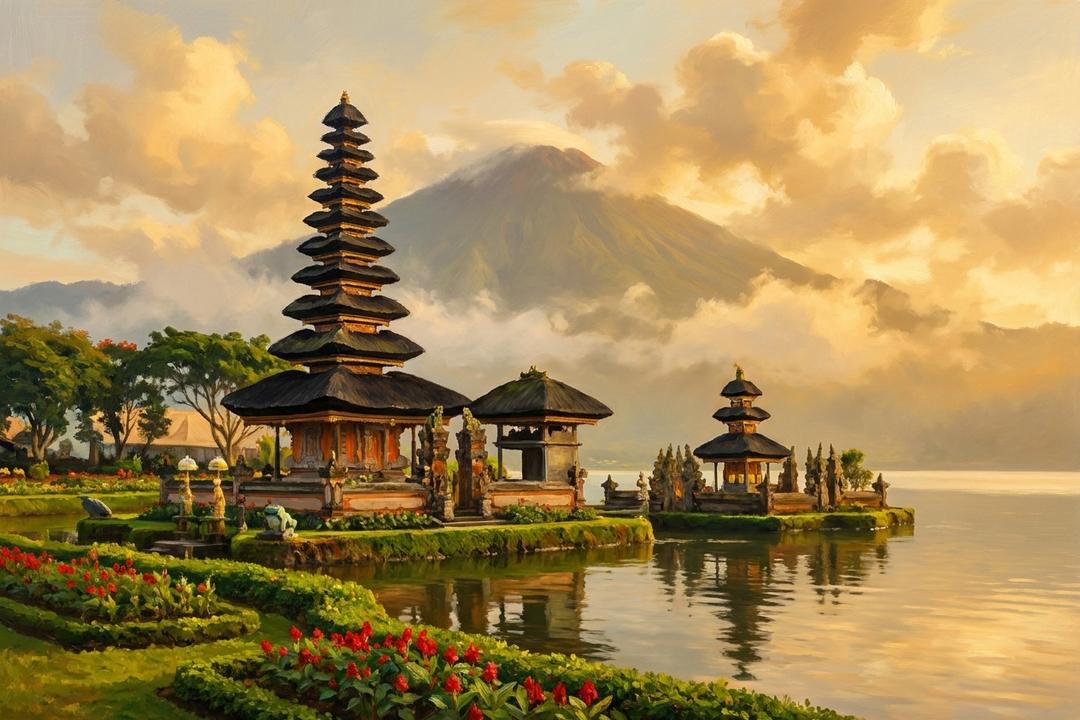
Perched at high altitude on Lake Beratan, the sanctuary offers serene lakeside vistas often enveloped in dramatic mountain mist. Visitors encounter active prayer rituals, multi-tiered thatched meru shrines, and classical Balinese split gateways. The highland microclimate remains notably cooler than coastal Bali.
Highlights
- Views of the iconic 11-tiered and 3-tiered meru shrines appearing to float on the volcanic lake.
- Intricately carved Candi Bentar split gates made from red brick and volcanic andesite stone.
- The ancient Buddhist stupa illustrating centuries of harmonious Hindu-Buddhist syncretism.
- Terraced lakeside gardens, purification ghats, and traditional outrigger canoes.
Things to Know
- Modest attire is strictly enforced, requiring all visitors to wear a sarong and waist sash.
- The innermost sacred sanctums are reserved exclusively for practicing Hindu worshippers.
- Frequent afternoon rain and thick fog make early morning visits ideal for clear views.
Location
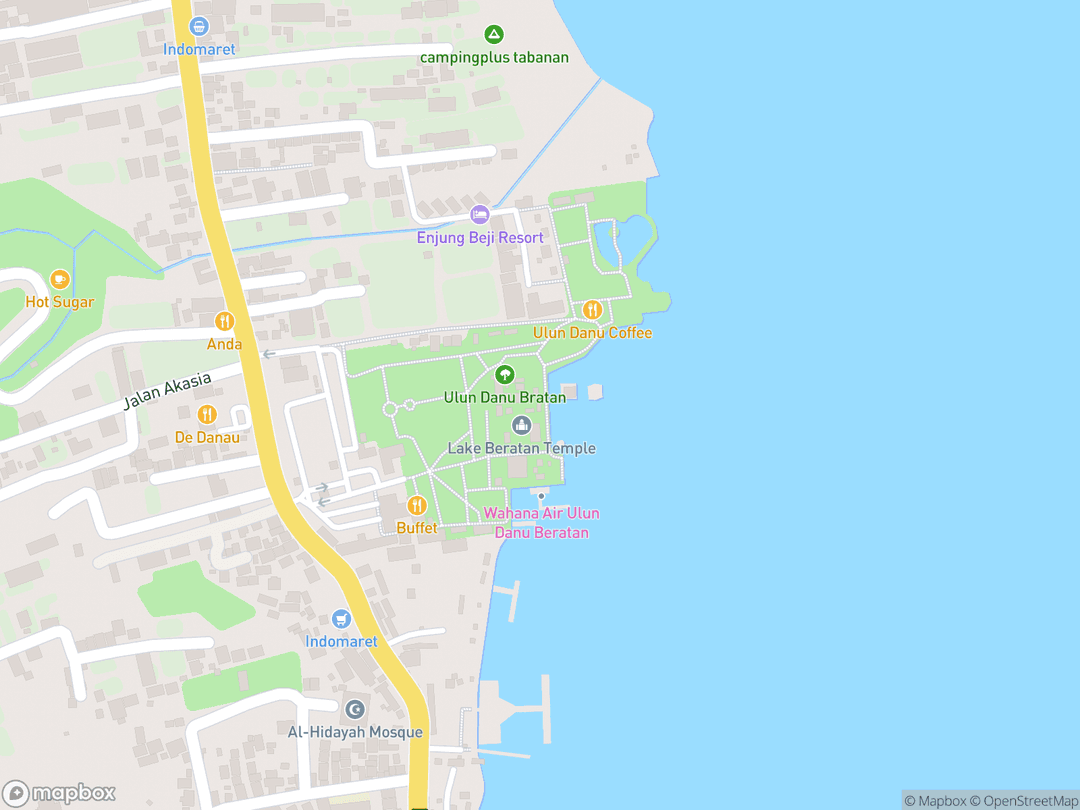
Danau Beratan, Desa Candikuning, Kecamatan Baturiti, Kabupaten Tabanan, Bali 82191, Indonesia
Hours: Open daily from 07:00 AM to 07:00 PM WITA
Getting There: Located along the central highway connecting Ubud and Singaraja in Bedugul, roughly a two-hour drive from southern Bali.
Get DirectionsTips for Your Visit
Arrive Early for Reflections
Visit between 7:00 AM and 9:00 AM for calm water surfaces and clear mountain backdrops before afternoon mist gathers.
Pack Warm Layers
Highland temperatures average 18°C to 24°C, so bring a light rain jacket and warm sweater.
Observe Sacred Courtyards
Remain outside inner ritual enclosures unless actively participating in authorized prayer ceremonies.
About
Pura Ulun Danu Bratan is a celebrated 17th-century Shaivite water sanctuary nestled on the caldera shores of Lake Beratan in highland Bali. Consecrated by the founder-king of Mengwi, the complex honors Ida Batari Dewi Danu, the goddess of lakes and rivers, alongside the Hindu Trimurti. Within wider Dharmic traditions, water represents a living manifestation of cosmic purification and divine generative energy.
The temple functions as the spiritual and hydrological apex for central Bali's subak cooperative irrigation network. Downstream farming federations coordinate water distribution and crop cycles through synchronized rituals at this sanctuary. Its sacred architecture harmonizes pan-Hindu metaphysics with indigenous Balinese philosophy.
Recognized globally for its multi-tiered meru shrines that appear to float upon misty volcanic waters, the complex bridges Shaivite Hinduism and ancient Mahayana Buddhism. As part of the UNESCO-inscribed cultural landscape of Bali, the sanctuary preserves centuries of community-driven ecology and spiritual veneration.
Gallery
Symbolic Elements
The temple's exterior features intricate carvings, each rich with spiritual meaning:

11-Tiered Meru Tower
Represents Mount Meru and cosmic hierarchy, honoring Lord Vishnu and water goddess Dewi Danu.

3-Tiered Meru Tower
Symbolizes the Hindu Trimurti and enshrines a sacred stone lingam dedicated to Lord Shiva.

Ijuk Palm Thatch
Dense black sugar-palm fiber representing Lord Vishnu and the cosmic northern water direction.

Candi Bentar
The split mountain gate illustrating cosmic duality and the necessity of balance before entering sacred space.

Dwarapala Guardians
Fierce stone figures armed with maces stationed to ward off destructive influences from sacred courtyards.

Padmasana Lotus Throne
An open stone seat representing the cosmic lotus and the supreme unmanifest deity Sang Hyang Widhi Wasa.

Bedawang Nala Turtle
Cosmic foundation tortoise entwined by sacred serpents symbolizing agricultural stability and mineral wealth.

Sacred Water Lilies
Pink and white lotus blossoms blooming across lakeside ponds signifying immaculate spiritual purity.
Interesting Facts
The temple's offshore meru shrines were depicted on Indonesia's 50,000 rupiah banknote for over a decade (Tier A).
Megalithic stone sarcophagi and altars from 500 BCE remain enshrined alongside classical Hindu deities (Tier B).
Water distribution for thousands of hectares of downstream rice terraces is coordinated through the temple's ritual calendar (Tier A).
The roofs are thatched with sugar-palm fiber that withstands highland monsoon weather for up to eighty years (Tier B).
A historic Buddhist stupa with statues of Dhyani Buddhas stands within the outer temple grounds (Tier B).
The offshore shrines only appear to float during high water seasons when lake levels submerge foundational bridges (Tier B).
Lake Beratan fills an extinct volcanic caldera that plunges to depths exceeding twenty-two meters (Tier B).
Priests row to the middle of the lake every five years to deposit sacred gold and copper offerings (Tier B).
Common Questions
Why do the shrines appear to float on the water?
The meru towers sit on offshore islets that appear isolated across the water when lake levels rise.
What is the subak system connected to the temple?
It is a democratic water management network governed by temple calendars and shared communal irrigation channels.
What clothing is required to enter the temple grounds?
All visitors must wear traditional Balinese sarongs and waist sashes with shoulders covered.
Why is there a Buddhist stupa in a Hindu temple complex?
It represents historical Balinese syncretism that harmonized Shaivite Hinduism and Mahayana Buddhism.
Featured Stories
The Royal Consecration of Mengwi
1633
King I Gusti Agung Putu established the water sanctuary to honor Dewi Danu and secure divine protection over the waterways nourishing his kingdom. Royal chronicles describe ceremonies uniting highland priests and lowland farmers around the newly built meru shrines. The foundation marked Mengwi's rise as a dominant spiritual and political power in central Bali.
Source: Babad Mengwi Historical Chronicles
The Sacred Pakelem Offering
1750
During seasons of prolonged drought, high priests boarded carved outrigger canoes to navigate into the center of Lake Beratan. Devotees lowered precious metals, gemstones, and livestock into the caldera depths as an offering of gratitude to the lake goddess. This solemn rite continues to renew the spiritual pact between agrarian communities and mountain headwaters.
Source: Tabanan Subak Custodial Records
Preserving the Living Heritage
1891
When the Mengwi Kingdom dissolved in the late nineteenth century, governance of the temple transferred seamlessly to democratic subak irrigation councils. The farmers sustained daily rituals and maintained the fragile palm thatch roofs through shared voluntary labor. Their tireless stewardship safeguarded the sanctuary until its global recognition under UNESCO.
Source: Bali Cultural Office Documentation
Timeline
Megalithic Ritual Origins
Early Austronesian communities establish sacred ceremonial grounds and stone altars along the lake.
EventEarly Written Epigraphy
Palm-leaf lontar manuscripts document an established water sanctuary complex on the caldera shore.
MilestoneRoyal Temple Consecration
King I Gusti Agung Putu of Mengwi rebuilds and consecrates the grand water temple.
DedicationSister Sanctuary Completed
The Mengwi dynasty finishes construction of royal sister temple Pura Taman Ayun.
MilestoneStandardization of Pakelem
Royal courts formalize deep-lake sacrificial rituals to ensure regular rainfall across downstream regencies.
EventAgrarian Custodial Transition
Local subak farming federations assume full custodial care of the sanctuary following Mengwi's partition.
MilestoneHighland Quake Restoration
Preservation societies restore the thatched meru roofs following significant regional seismic tremors.
RenovationNational Banknote Feature
Bank Indonesia features the floating meru shrines on the national 50,000 Indonesian Rupiah note.
MilestoneUNESCO World Heritage Listing
The complex is inscribed as an essential headwater component of Bali's cultural subak landscape.
MilestoneDigital Infrastructure Upgrade
Tabanan regency introduces automated visitor ticketing while safeguarding historical lakeside conservation.
RenovationHistory by Decade
500 BCE–1500s — Megalithic Foundations
Indigenous animistic communities revered Lake Beratan as a vital ancestral cradle long before royal patronage. Early Austronesian settlers erected monolithic stones and sarcophagi to honor lake spirits. These ancient megaliths remain integrated within the modern temple courtyards.
1630s–1790s — The Mengwi Royal Era
The waters of the mountain lake flow through the blessings of Dewi Danu to nourish all fields.
In 1633, King I Gusti Agung Putu consolidated local shrines into a grand royal water sanctuary. The temple anchored regional statecraft by spiritually connecting the Mengwi monarchy to highland headwaters. Majestic multi-tiered meru towers were constructed upon lakeside islets.
1890s–1940s — Subak Cooperative Stewardship
Following the fall of Mengwi, custodial oversight transitioned smoothly to local agrarian subak federations. Village elders and farmers maintained the fragile palm-thatched towers through communal self-help known as gotong royong. The temple endured major regional earthquakes intact.
1950s–Present — National and World Heritage
The post-independence era brought nationwide recognition as Bank Indonesia highlighted the floating meru on the 50,000 rupiah banknote. In 2012, UNESCO inscribed the temple as an integral element of Bali's subak cultural landscape. Today, the complex balances flourishing pilgrimage rites with international visitation.
Architecture & Facilities
Pura Ulun Danu Bratan embodies classical Balinese temple architecture structured around the sacred Tri Mandala spatial layout, organizing compounds from outer gathering spaces to inner holy sanctums. The buildings follow ancient Asta Kosala Kosali architectural canons, positioning multi-tiered meru pagodas over the lake surface to harmonize human devotion with the volcanic mountain topography.
Building Materials
Volcanic Andesite Stone
Dense dark riverbed stone forms the seawalls, foundation plinths, and perimeter staircases.
Sugar Palm Fiber (Ijuk)
Black water-resistant cordage bound tightly to thatch the distinctive multi-tiered roofs.
Teak and Ironwood
Hand-hewn tropical hardwood timbers provide durable load-bearing support in damp mountain air.
Terracotta Red Brick
Hand-pressed clay bricks joined with traditional rub-joints form the soaring monumental gate facades.
Interior Features
Pura Lingga Petak
Offshore sanctum containing a 3-tiered meru dedicated to Lord Shiva and housing an ancient stone lingam.
Pura Puncak Mangu
Lakeside islet shrine featuring an 11-tiered meru dedicated to Lord Vishnu and goddess Dewi Danu.
Pura Teratai Bang
Mainland red-brick courtyard consecrated to Lord Brahma and the sacred cosmic fire principle.
Pura Dalem Purwa
Inner sanctum dedicated to Dewi Sri where farming delegates bless agricultural seeds.
Temple Grounds
The sanctuary spans five hectares of manicured lakeside lawns, stepped lotus ponds, stone retaining seawalls, and ceremonial boat moorings along Lake Beratan's shoreline.
Additional Facilities
Features traditional open-air gamelan pavilions, meeting halls for subak irrigation delegates, a wooden kulkul bell tower, and lakeside purification ghats.
Religious Significance
Within the Dharmic umbrella of Balinese Hinduism, holy water serves as the tangible vehicle of divine purification, renewal, and cosmic order.
To venerate the supreme divine source of agricultural water, harmonizing ecological balance and human well-being through the philosophy of Tri Hita Karana.
Sacred Ordinances
Melasti
Sacred purification procession where deities and ritual heirlooms are cleansed in lake water.
Piodalan
Biannual temple anniversary ceremony celebrated with gamelan music, dances, and vibrant food offerings.
Tawur Pakelem
Solemn rite where priests deposit gold, gems, and offerings into the deep lake during severe drought.
Subak Blessing Rites
Ritual distribution of sanctified lake water to downstream agrarian delegates to inaugurate planting cycles.
The Tri Hita Karana Philosophy
The temple operationalizes the three causes of prosperity: devotion to God, harmonious community relations, and ecological stewardship of water.
Syncretic Shiva-Buddha Heritage
The presence of a historic Buddhist stupa reflects centuries of philosophical harmony between Shaivite Hinduism and Mahayana Buddhism in Bali.
Sources & Research
Every fact on Temples.org is backed by verified Sources & Research. Each piece of information is rated by source tier and confidence level.
View All Sources (8)
| Field | Source | Tier | Retrieved |
|---|---|---|---|
| About & Historical Background | Ministry of Tourism, Republic of Indonesia (opens in a new tab) | A | 2026-02-18 |
| Historical Timeline & Inscription | UNESCO World Heritage Centre (opens in a new tab) | B | 2026-02-18 |
| Architectural & Subak Heritage | Indonesian Tourism Promotion Board (opens in a new tab) | A | 2026-02-18 |
| Cultural Landscape Analysis | Bali Institute for Global Renewal (opens in a new tab) | B | 2026-02-18 |
| Regional Epigraphy & Royal History | Balinese Historical Research Archives (opens in a new tab) | C | 2026-02-18 |
| Visitor Protocol & Highland Geography | Bali Destination Guide (opens in a new tab) | D | 2026-02-18 |
| Religious Traditions & Pilgrimage | Bali Touristic Services (opens in a new tab) | D | 2026-02-18 |
| Lakeside Caldera Documentation | Atlas Obscura (opens in a new tab) | C | 2026-02-18 |