Visitor Insights
Visiting Imam Husayn Shrine
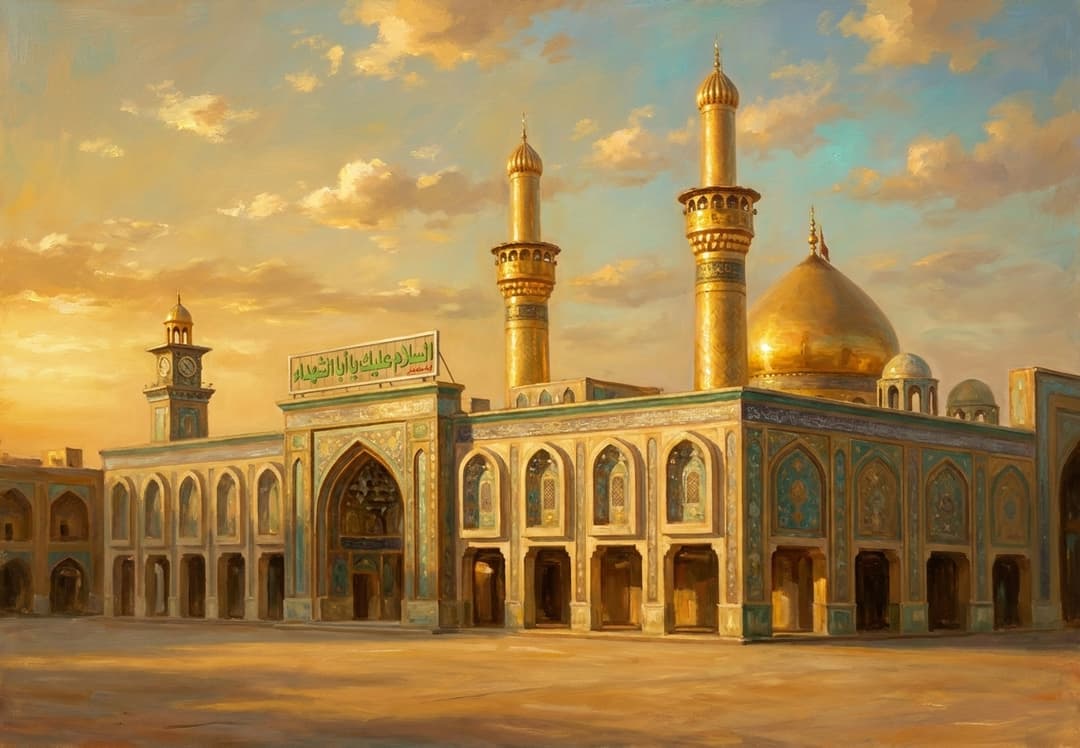
Visiting the Imam Husayn Shrine is a deeply spiritual experience for Shia Muslims. Pilgrims can expect a serene and reverent atmosphere, filled with the echoes of prayers and recitations. The shrine complex offers various spaces for prayer, reflection, and paying respects to Imam Husayn, providing a profound connection to Islamic history and faith.
Highlights
- Witness the stunning golden dome and minarets.
- Explore the intricate tilework and calligraphy adorning the shrine.
- Participate in prayers and recitations within the sacred space.
Things to Know
- Dress modestly and respectfully when visiting the shrine.
- Be mindful of the cultural and religious sensitivities of the site.
- Plan your visit during off-peak hours to avoid large crowds.
Location

Karbala, Karbala Governorate, Iraq
Hours: Open 24 hours daily
Getting There: Located in the heart of Karbala, the shrine is easily accessible by taxi or bus. Karbala is approximately 90 km southwest of Baghdad.
Get DirectionsTips for Your Visit
Respectful Attire
Dress modestly and respectfully when visiting the shrine, covering your head and wearing loose-fitting clothing.
Photography
Photography may be restricted in certain areas of the shrine. Always ask for permission before taking photos.
About
The Imam Husayn Shrine is a mosque and mausoleum located in Karbala, Iraq. It stands as one of the most sacred sites in Shia Islam, second only to Mecca and Medina. This revered shrine is dedicated to Husayn ibn Ali, the grandson of the Prophet Muhammad and a pivotal figure in Shia Islam, who was martyred during the Battle of Karbala in 680 CE.
The shrine's history is rich with periods of construction, destruction, and renovation, reflecting the devotion and resilience of its followers. From its humble beginnings as a simple enclosure around Husayn's grave, the shrine has evolved into a magnificent complex featuring a golden dome, towering minarets, and expansive courtyards adorned with intricate tilework and calligraphy.
Millions of pilgrims converge upon the Imam Husayn Shrine each year, particularly during Ashura, the solemn commemoration of Husayn's martyrdom. The shrine serves as a focal point for spiritual reflection, communal prayer, and the expression of deep religious devotion within the Shia Islamic tradition, rooted in the Abrahamic traditions.
Gallery
Symbolic Elements
The temple's exterior features intricate carvings, each rich with spiritual meaning:

Golden Dome
The large golden dome that sits directly above the grave of Husayn symbolizes the heavens and the importance of Husayn's grave. Gold is seen as a royal and important color in Islam, representing authority and power.

Minarets
The two large minarets that flank the dome act as a lighthouse of faith for Muslims, guiding them towards the shrine. They are covered in gold and inscribed with Quranic verses and calligraphy, emphasizing the importance of Islamic teachings.
Courtyard
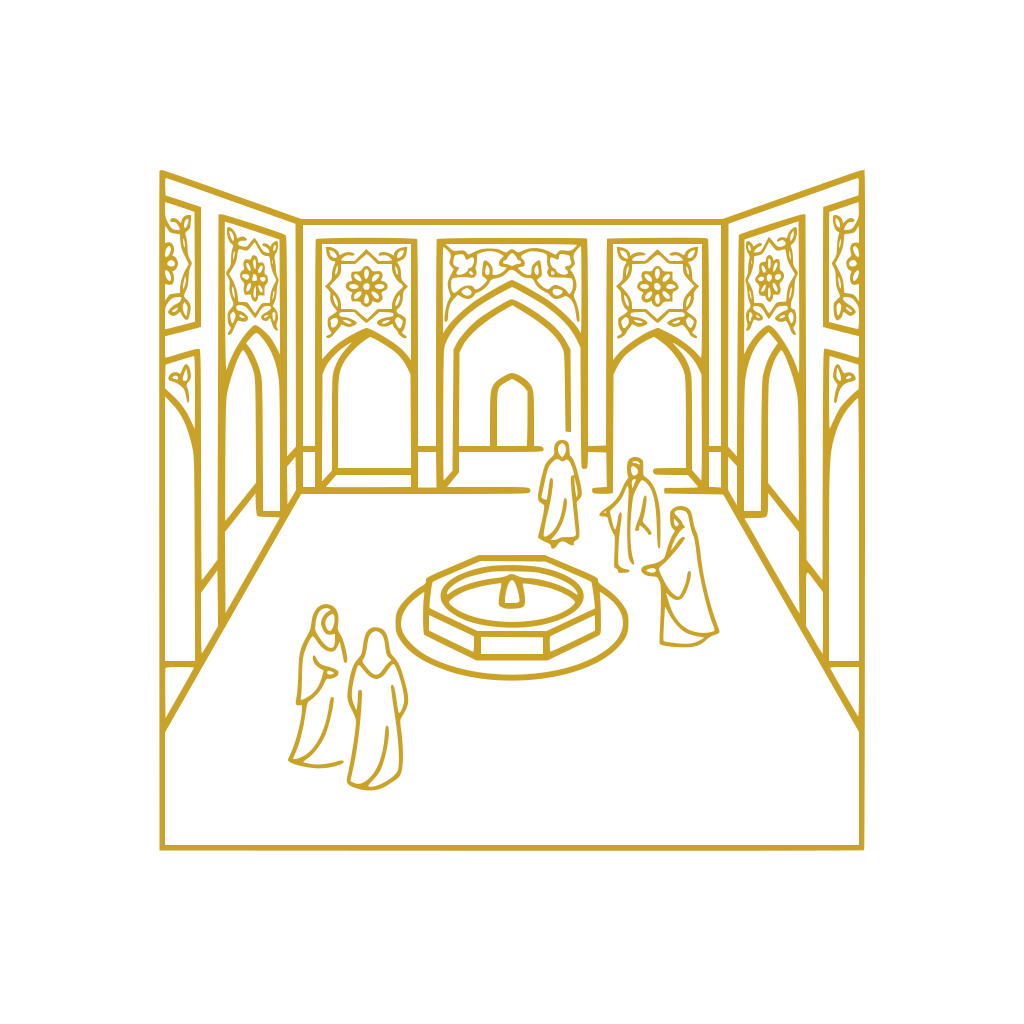
The large courtyard with gates opening to different districts in Karbala symbolizes openness and accessibility to all. The walls are decorated with Persian-style tilework, featuring blue and gold mosaics, reflecting the beauty and intricacy of Islamic art.

Darih
The grave of Husayn is enclosed within a metal-mesh like structure (zarih) beneath the golden dome, representing the sacredness of the burial site. The darih has been renovated and replaced throughout history, using materials like teak, silver, brass, and bronze, showcasing the devotion of pilgrims.

Mirror Mosaics
The interior of the shrine is adorned with mirror mosaics, reflecting light in intricate patterns, symbolizing divine light and the presence of God. These mosaics create a mesmerizing visual experience for pilgrims, enhancing the spiritual atmosphere.

Crystal Chandeliers
Crystal chandeliers illuminate the shrine's interior, casting a warm and inviting glow, symbolizing purity and enlightenment. The chandeliers add to the shrine's grandeur and create a sense of awe and reverence.

Carpets
Luxurious carpets, primarily from Iran and Iraq, cover the floors, featuring intricate patterns and Quranic inscriptions, symbolizing respect and reverence for the sacred space. These carpets are made from wool and silk, providing comfort and beauty to the shrine's interior.

Calligraphy
Quranic verses and other calligraphy adorn the walls, representing the importance of the Quran and Islamic teachings. The calligraphy serves as a reminder of the divine message and the values of Islam, inspiring pilgrims to reflect on their faith.
Interesting Facts
The Imam Husayn Shrine is built on the site where Husayn ibn Ali was martyred in the Battle of Karbala in 680 CE.
It is believed that Husayn's head is buried in the shrine, although some traditions claim it is in other locations.
The shrine has been destroyed and rebuilt multiple times throughout history, reflecting its enduring significance.
Many hadiths emphasize the importance of visiting Imam al-Husayn's shrine, with some even considering it obligatory for those who are able.
It is believed that prayers are answered beneath the dome of the shrine and that healing is found in its soil.
The shrine is one of the most-visited religious sites in the world, attracting millions of pilgrims annually.
The Al-Abbas Shrine, dedicated to Husayn's half-brother Abbas ibn Ali, is located nearby, and the space between the two shrines is known as Bayn al-Haramayn.
The architecture of the shrine has been influenced by various Islamic and Persian styles throughout its history.
The shrine complex includes courtyards, prayer halls, libraries, and a museum, offering a comprehensive experience for visitors.
The shrine's golden dome and minarets can be spotted from far away, serving as a beacon for pilgrims.
Common Questions
What is the significance of the Imam Husayn Shrine?
The Imam Husayn Shrine is one of the holiest sites in Shia Islam, commemorating the martyrdom of Husayn ibn Ali, the grandson of the Prophet Muhammad. It serves as a focal point for spiritual reflection and religious devotion.
When is the best time to visit the shrine?
The shrine is open to visitors year-round, but the most significant pilgrimage occurs during Ashura, the commemoration of Husayn's martyrdom. However, visiting during off-peak times may provide a more peaceful experience.
What are the key architectural features of the shrine?
The shrine boasts a magnificent golden dome, towering minarets, expansive courtyards adorned with intricate tilework and calligraphy, and a metal-mesh like structure (zarih) enclosing the grave of Husayn.
What activities can pilgrims engage in at the shrine?
Pilgrims can participate in prayers, recitations, and reflection within the sacred space. They can also visit the Al-Abbas Shrine and other historical sites related to the Battle of Karbala.
Is there a museum within the shrine complex?
Yes, the shrine complex houses a Quranic Museum, showcasing historic Qurans and Islamic artifacts, providing insights into the rich cultural and religious heritage of the site.
Featured Stories
The Martyrdom of Imam Husayn
680 CE
The story of Imam Husayn's martyrdom is central to the shrine's significance. In 680 CE, Husayn ibn Ali, along with his family and followers, faced the army of Yazid I in the Battle of Karbala. Despite being outnumbered, Husayn refused to pledge allegiance to Yazid, whom he considered an unjust ruler. This act of defiance against tyranny and oppression is a cornerstone of Shia Islamic belief.
The battle resulted in the tragic death of Husayn and many of his companions. His sacrifice is commemorated annually during Ashura, a period of mourning and reflection for Shia Muslims worldwide. The Imam Husayn Shrine stands as a testament to his courage, faith, and unwavering commitment to justice.
Source: Al-Islam.org
The Construction and Destruction Throughout History
Various Eras
The Imam Husayn Shrine has undergone numerous cycles of construction, destruction, and renovation throughout its history. From its humble beginnings as a simple enclosure around Husayn's grave, the shrine has been expanded and embellished by various rulers and patrons. However, it has also faced periods of destruction, often due to political or religious conflicts.
Despite these challenges, the shrine has always been rebuilt and restored, reflecting the enduring devotion of Shia Muslims. Each reconstruction has added to the shrine's architectural grandeur and symbolic significance, making it a testament to the resilience of faith.
Source: WikiShia
The Pilgrimage to Karbala
Annual
The annual pilgrimage to the Imam Husayn Shrine is one of the largest religious gatherings in the world. Millions of Shia Muslims from across the globe converge upon Karbala to pay their respects to Imam Husayn and commemorate his martyrdom. The pilgrimage is a deeply spiritual experience, marked by prayers, recitations, and acts of charity.
The journey to Karbala is often arduous, but pilgrims are driven by their love for Imam Husayn and their desire to connect with his legacy. The pilgrimage serves as a reminder of the values of sacrifice, justice, and compassion that are central to Shia Islamic belief.
Source: Travelsetu
Timeline
Martyrdom of Husayn ibn Ali
Husayn ibn Ali is martyred in the Battle of Karbala and buried at the site of the shrine, marking the beginning of its significance.
MilestoneFirst Enclosure Built
Mukhtar ibn Abu Ubaidah Thaqafi builds an enclosure around the grave, resembling a mosque with a dome, marking the first rudimentary structure of the shrine.
MilestoneRoof and Entrances Added
A roof is built over part of the mosque, and two entrances are added during the reign of As-Saffah, expanding the initial structure.
RenovationRoof Demolished
The roof is demolished during the reign of Al-Mansur, leading to a period of vulnerability for the shrine.
RenovationRoof Reconstructed
The roof is reconstructed during the reign of Al-Mahdi, restoring some of the shrine's protective features.
RenovationDestruction by Harun al-Rashid
The Abbasid caliph Harun al-Rashid destroys the dome and the roof and cuts down a plum tree near the grave, causing significant damage.
RenovationReconstruction during Al-Amin's Reign
Reconstruction occurs during the reign of Al-Amin, initiating efforts to repair the damage caused by previous destruction.
RenovationDestruction by Al-Mutawakkil
Abbasid caliph Al-Mutawakkil destroys the tomb and its annexes and prohibits Shia pilgrimage, marking a period of suppression.
RenovationDome Constructed by Al-Muntasir
A dome is constructed on Imam Husayn's mausoleum by Al-Muntasir, symbolizing a resurgence of reverence.
RenovationMausoleum Destroyed
The mausoleum is destroyed when pilgrims gather on the Day of Arafah, highlighting the challenges faced by the shrine.
RenovationConstruction by Al-Da'i al-Saghir
Al-Da'i al-Saghir orders the construction of buildings for the shrines of Imam Ali and Imam Husayn, featuring tall domes and two gates, enhancing the shrine's prominence.
RenovationConstruction by 'Adud al-Daula
The Buwayhid emir 'Adud al-Daula builds shrines in Karbala and Najaf, further solidifying the shrine's architectural grandeur.
RenovationReconstruction Ordered by 'Adud al-Dawla
'Adud al-Dawla orders the reconstruction of the shrine of Imam al-Husayn, decorating the place and building porches around the shrine, enhancing its aesthetic appeal.
RenovationGilding by Shah Ismail I
Shah Ismail I conquers Baghdad and orders the gilding of the margins of Imam al-Husayn's darih, adding to the shrine's splendor.
RenovationAl-Aqeela Zainab Courtyard Construction
Extension to the Imam Hussain Shrine with the construction of the Al-Aqeela Zainab courtyard, expanding the shrine's capacity and facilities.
RenovationHistory by Decade
680s CE — The Martyrdom and Initial Burial
In 680 CE, Husayn ibn Ali, the grandson of the Prophet Muhammad, was martyred in the Battle of Karbala. This event is the central event in Shia Islam, and the site of his martyrdom and burial became a sacred place. Initially, a simple enclosure marked the grave.
680s-800s CE — Early Construction and Destruction
Over the next few centuries, the site saw periods of construction and destruction. In 684 CE, Mukhtar ibn Abu Ubaidah Thaqafi built an enclosure around the grave, resembling a mosque with a dome. However, subsequent rulers, such as the Abbasid caliph Harun al-Rashid, destroyed the dome and the roof.
900s-1000s CE — Reconstruction and Expansion
The 10th and 11th centuries saw significant reconstruction and expansion of the shrine. Al-Da'i al-Saghir ordered the construction of buildings for the shrines of Imam Ali and Imam Husayn, featuring tall domes and two gates. The Buwayhid emir 'Adud al-Daula also built shrines in Karbala and Najaf.
1300s-1500s CE — Jalayirid and Safavid Influence
The Jalayirid dynasty and the Safavid dynasty played a role in the shrine's development. Uways b. Hasan al-Jalayiri renewed the mosque and the shrine and built a semicircular dome. Shah Ismail I conquered Baghdad and ordered the gilding of the margins of Imam al-Husayn's darih.
1600s-1800s CE — Ottoman and Qajar Contributions
The Ottoman Empire and the Qajar dynasty also contributed to the shrine's development. Shah Abbas I constructed a copper darih and decorated the dome with Kashan stones. Fath 'Ali Shah Qajar built a new silver darih, gilding the dome's portico, and reconstructing everything destroyed by Wahhabis.
1900s-2000s CE — Modern Developments
The 20th and 21st centuries have seen further developments, including the renewal of the dome and some of the golden covers by Nasir al-Din Shah. In 2018, an extension to the Imam Hussain Shrine with the construction of the Al-Aqeela Zainab courtyard.
Religious Significance
The Imam Husayn Shrine holds immense religious significance for Shia Muslims, rooted in the Abrahamic traditions. It is a place of pilgrimage, prayer, and reflection, where devotees seek to connect with the divine and honor the legacy of Imam Husayn.
The core spiritual purpose of the shrine is to commemorate the martyrdom of Imam Husayn and to draw inspiration from his unwavering commitment to justice, compassion, and faith. It serves as a reminder of the values that are central to Shia Islamic belief.
Sacred Ordinances
Ziyarat
Ziyarat is the act of pilgrimage to the shrine, where devotees pay their respects to Imam Husayn and seek his intercession. It is a deeply personal and spiritual experience, marked by prayers, recitations, and acts of devotion.
Mourning Rituals
During Ashura, Shia Muslims engage in mourning rituals to commemorate the martyrdom of Imam Husayn. These rituals include processions, sermons, and expressions of grief, demonstrating solidarity with Imam Husayn's suffering.
Charity and Service
The shrine serves as a center for charitable activities, providing assistance to the poor and needy. Devotees offer donations and volunteer their time to serve others, following the example of Imam Husayn's compassion and generosity.
The Significance of Karbala
Karbala is considered a sacred city by Shia Muslims, as it is the site of Imam Husayn's martyrdom. The city is home to numerous shrines and historical sites related to the Battle of Karbala, attracting pilgrims from across the globe.
The Role of Imam Husayn
Imam Husayn is revered as a symbol of resistance against tyranny and oppression. His sacrifice is seen as a victory of good over evil, inspiring Shia Muslims to stand up for justice and to uphold the values of Islam.
Sources & Research
Every fact on Temples.org is backed by verified Sources & Research. Each piece of information is rated by source tier and confidence level.
View All Sources (4)
| Field | Source | Tier | Retrieved |
|---|---|---|---|
| About & Historical Background | Shia Waves (opens in a new tab) | A | 2024-02-29 |
| Historical Timeline | Al-Islam.org (opens in a new tab) | B | 2024-02-29 |
| Architectural Description | WikiShia (opens in a new tab) | B | 2024-02-29 |
| Visitor Information | Travelsetu (opens in a new tab) | C | 2024-02-29 |