Visitor Insights
Visiting Ancient Tabernacle of Moses
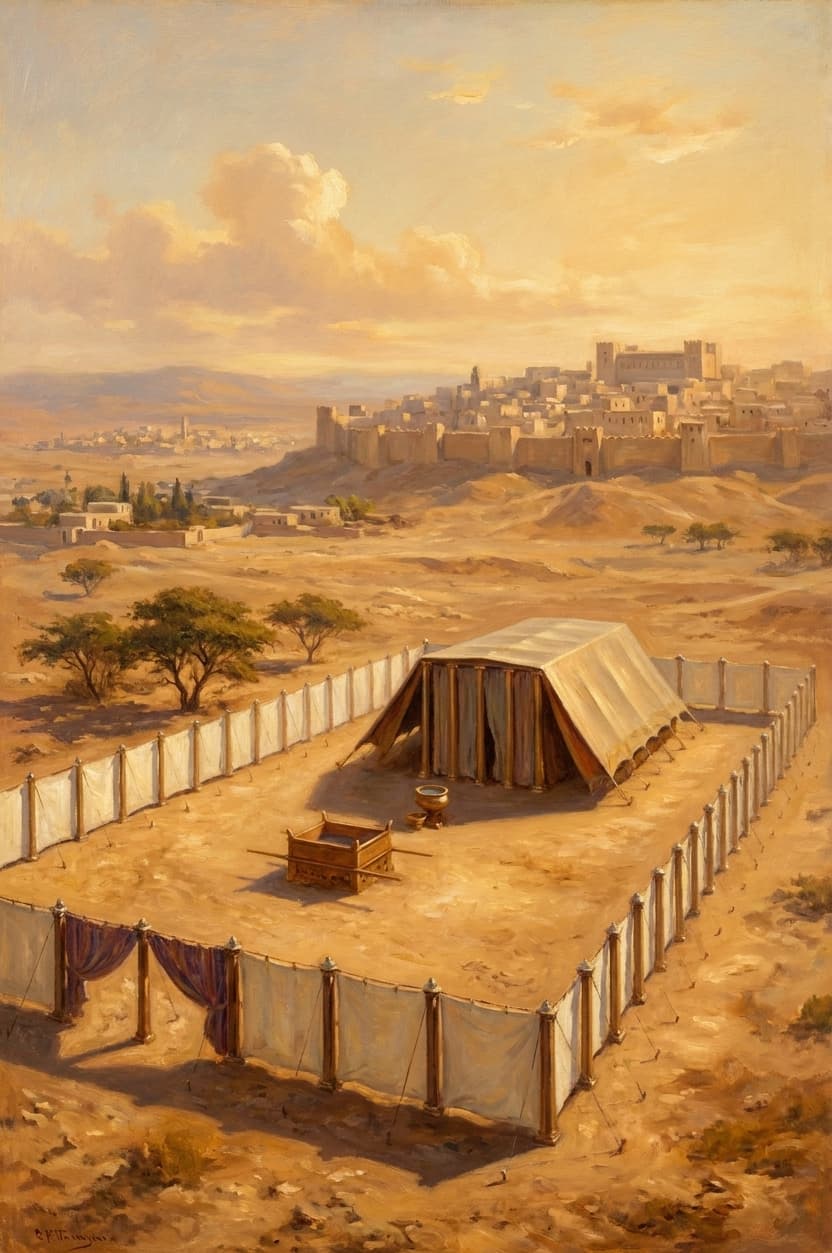
As a historical structure, the Ancient Tabernacle of Moses no longer exists. However, replicas and models can be found in various locations, such as Timna Park in Israel, offering visitors a tangible experience of the biblical description. Visiting these sites provides a unique opportunity to connect with the history and symbolism of this important religious structure. The atmosphere is one of reverence and reflection, allowing visitors to contemplate the relationship between God and humanity.
Highlights
- Explore a life-size replica of the Tabernacle in Timna Park, Israel.
- Discover the symbolic significance of each element within the Tabernacle.
- Reflect on the historical and religious importance of the Tabernacle.
Things to Know
- The Ancient Tabernacle of Moses no longer exists in its original form.
- Replicas and models may vary in accuracy and detail.
- Consider the religious and cultural context of the Tabernacle when visiting.
Location

Sinai Desert (historical)
Hours: N/A (Historical Site)
Getting There: N/A (Historical Site)
Get DirectionsAbout
The Ancient Tabernacle of Moses, also known as the Tent of Meeting (Ohel Moed) or Mishkan (dwelling place), holds a central place in the history of Judaism and the broader Abrahamic traditions. It served as the portable sanctuary for the Israelites during their 40-year journey in the wilderness after the Exodus from Egypt, around 1450 BCE. As a representation of God's presence among His people, the Tabernacle was not merely a physical structure but a sacred symbol of the relationship between God and Israel, prefiguring later temples and embodying key theological concepts.
The Tabernacle is a key element of the Judaic theological grouping within the broader Abrahamic traditions. Abrahamic religions are monotheistic faiths that trace their origins to Abraham, a critical patriarchal figure in their traditions. The major Abrahamic religions are Judaism, Christianity, and Islam.
The Tabernacle was designed as a portable structure, allowing it to be disassembled, transported, and reassembled as the Israelites journeyed. It consisted of an outer court, the Altar of Burnt Offering, the Bronze Laver, the Tabernacle Proper, the Holy Place, and the Holy of Holies. The materials used in the Tabernacle's construction were of high quality, including gold, silver, bronze, fine linen, and acacia wood.
Every element of the Tabernacle held symbolic significance, reflecting God's holiness and the means of approaching Him. The Ark of the Covenant represented God's presence, the Menorah symbolized divine light, the Table of Showbread represented God's provision, the Altar of Incense represented prayer, and the Veil symbolized the separation between God and humanity due to sin.
Gallery
Symbolic Elements
The temple's exterior features intricate carvings, each rich with spiritual meaning:
Ark of the Covenant
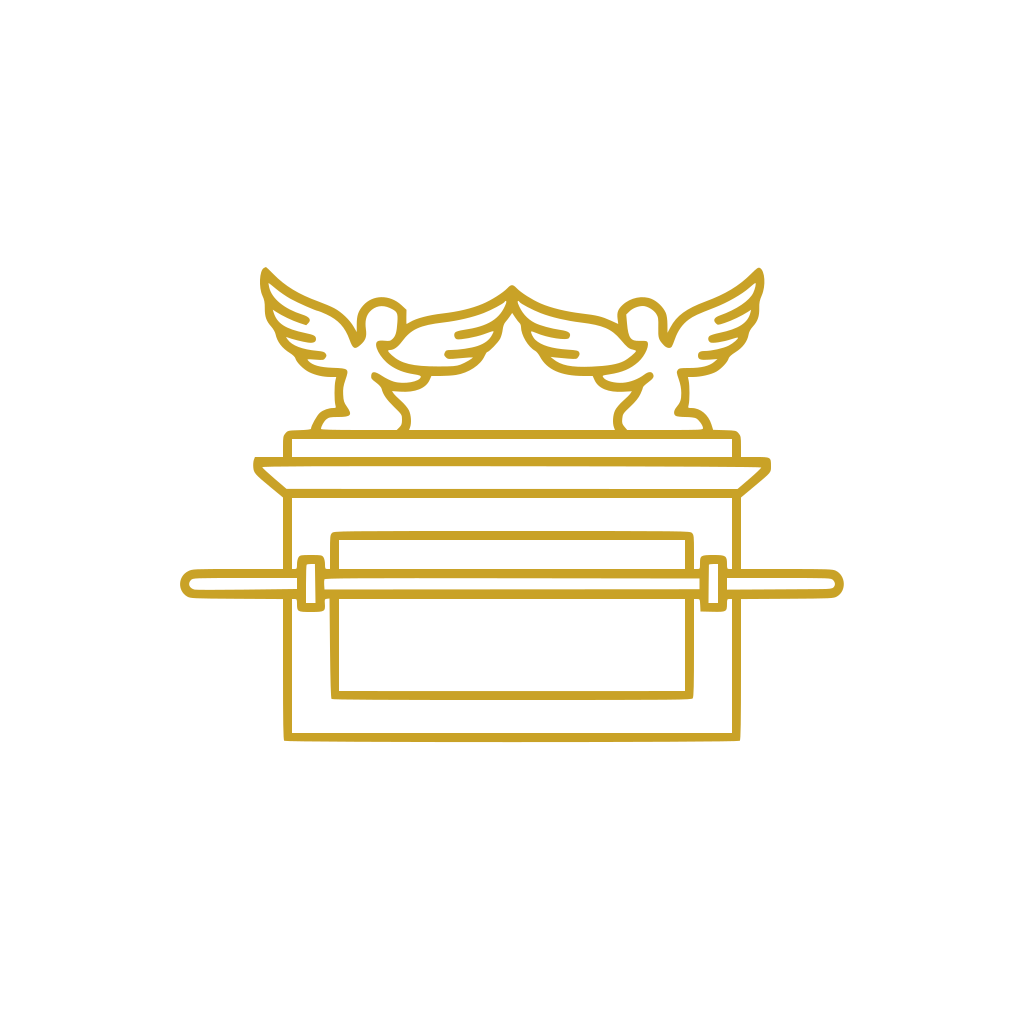
The Ark of the Covenant represented God's presence and contained the tablets of the Ten Commandments, a jar of manna, and Aaron's rod. It was the most sacred object in the Tabernacle, symbolizing God's covenant with the Israelites. The ark's cover represented the throne of God.
Menorah (Golden Lampstand)
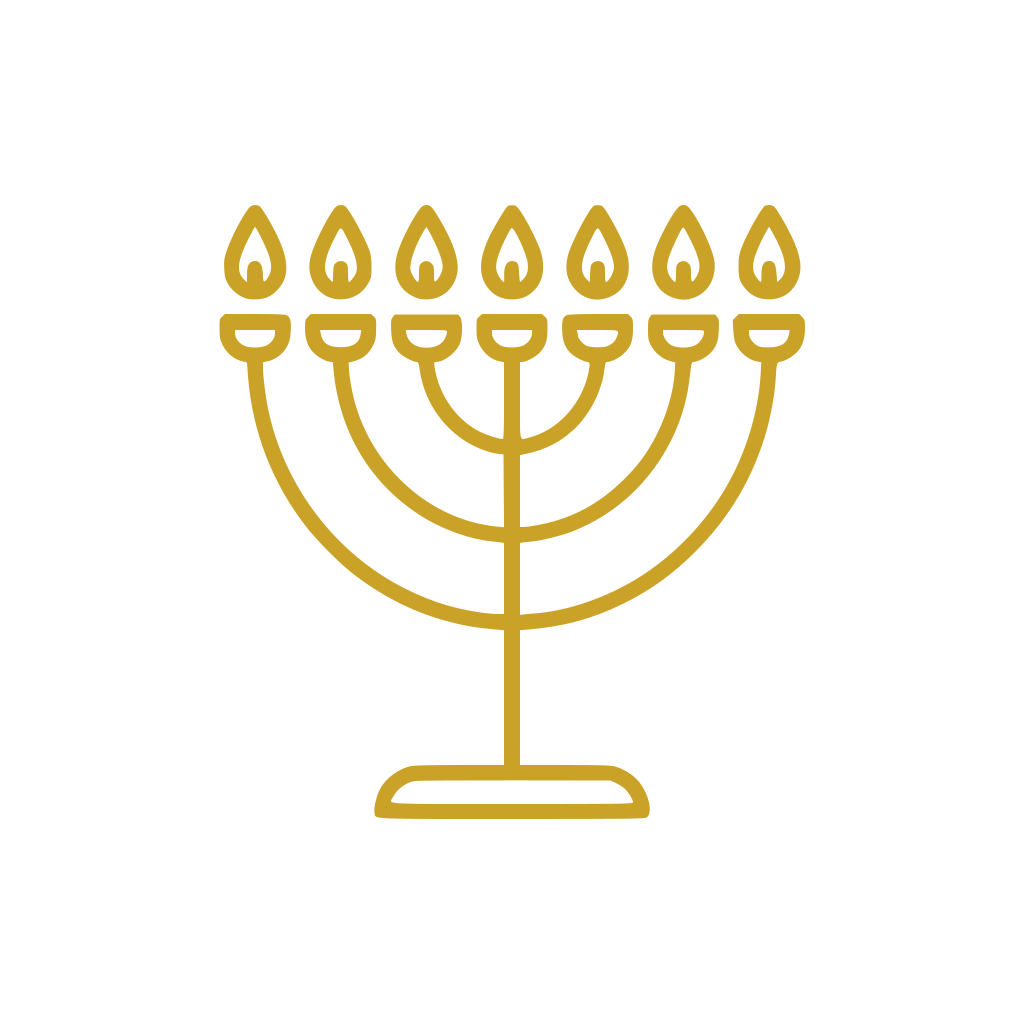
The Menorah, or Golden Lampstand, symbolized divine light and the presence of God. Its seven lamps were meant to light the Holy Place in the Tabernacle, representing the illumination of God's word. The menorah was a constant reminder of God's guidance and presence.
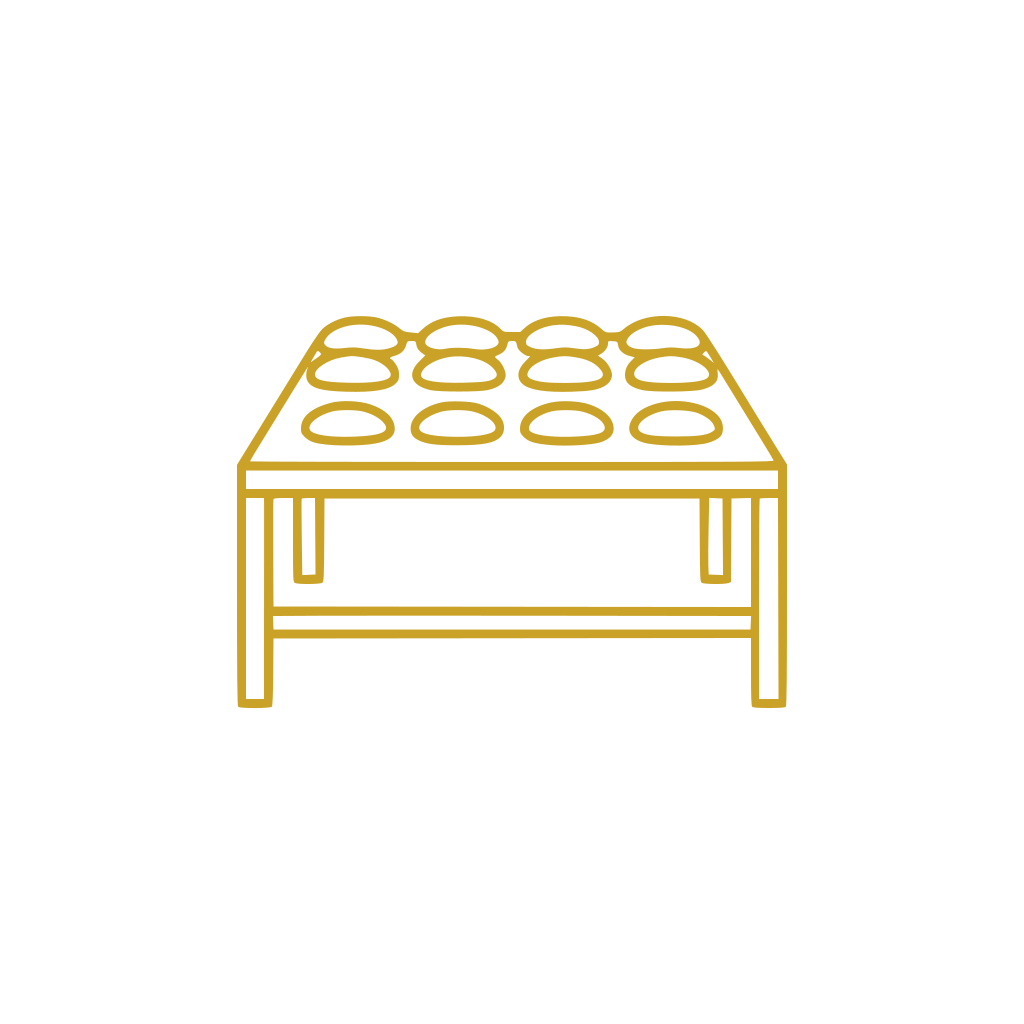
Table of Showbread
The Table of Showbread held twelve loaves of bread, representing the twelve tribes of Israel and God's provision. The bread was a symbol of God's sustenance and care for His people. It served as a reminder of God's faithfulness in providing for their needs.

Altar of Incense
The Altar of Incense represented prayer and the offering of worship to God. The priests burned incense daily on this altar, bringing coals from the altar of burnt offerings. The rising smoke symbolized the prayers of the people ascending to God.
Veil
The Veil separated the Holy Place from the Holy of Holies, symbolizing the separation between God and humanity due to sin. It represented the barrier that prevented people from directly accessing God's presence. Only the high priest could enter the Holy of Holies once a year on the Day of Atonement.

Altar of Burnt Offering
The Altar of Burnt Offering, located in the outer court, was used for animal sacrifices. These sacrifices were offered as atonement for sins, symbolizing the need for reconciliation with God. The altar was a central part of the sacrificial system in the Tabernacle.
Bronze Laver (Basin)
The Bronze Laver, or Basin, also in the outer court, was used by the priests for ritual washing. This washing symbolized purification and cleansing from sin before entering the Tabernacle. It was a reminder of the need for holiness in approaching God.
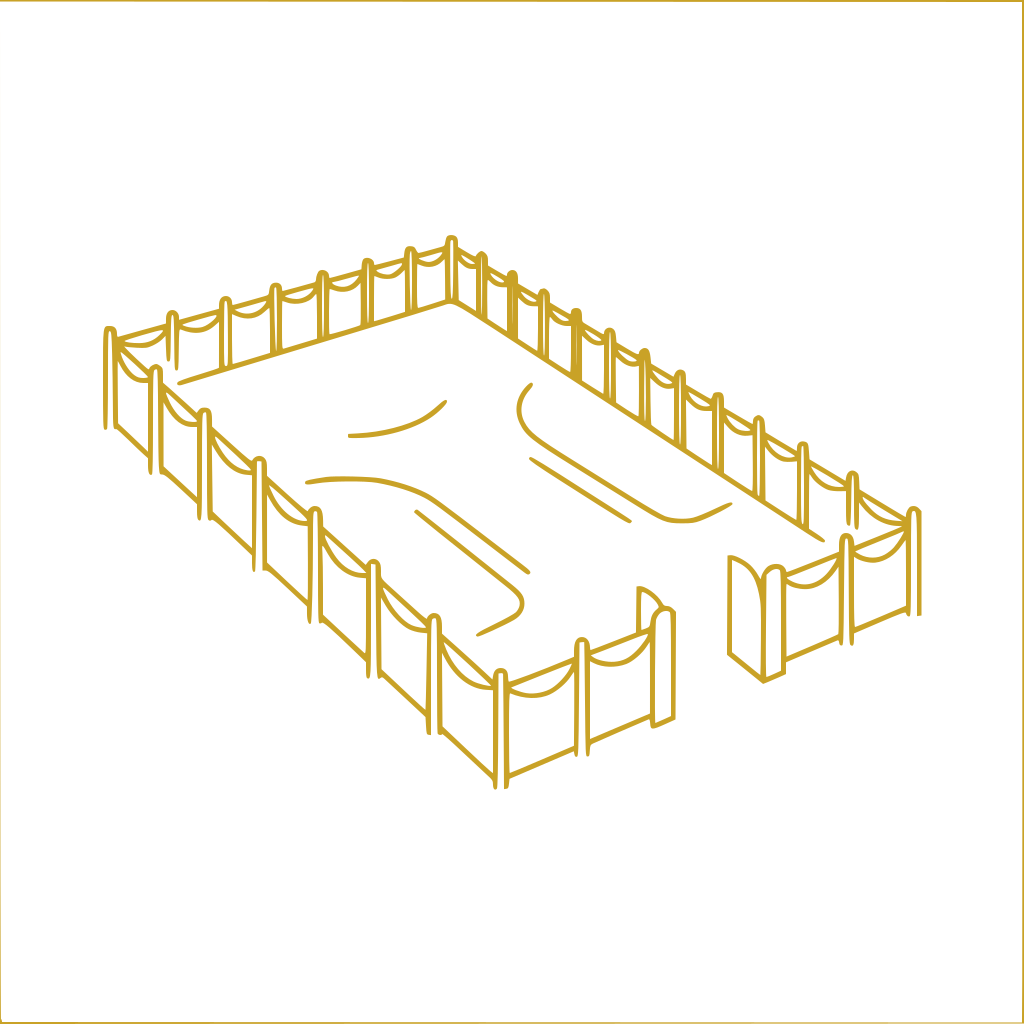
Outer Court
The Outer Court was an open area surrounded by linen curtains, serving as the entry point to the Tabernacle. It was a place for the people to gather and participate in worship. The court was enclosed by linen hangings, creating a sacred space set apart from the rest of the camp.
Interesting Facts
The word 'tabernacle' comes from the Hebrew word 'mishkan,' meaning 'dwelling place' or 'sanctuary'.
The Tabernacle was designed to be portable, reflecting the Israelites' nomadic lifestyle during their wilderness journey.
God gave Moses detailed instructions for the Tabernacle's construction, emphasizing the importance of following His divine plan.
The Tabernacle was not designed by human imagination. God gave Moses a precise heavenly pattern.
The Tabernacle was the first temple dedicated to God and the first resting place of the ark of the covenant.
The Tabernacle consisted of three divisions through which one must pass to reach the presence of God: the outer courtyard, the holy place, and the Holy of Holies.
The Israelites gave so much gold, it weighed as much as a car. The amount of bronze they gave weighed as much as a truck. They gave silver until it weighed as much as a motorhome.
Every element of the tabernacle structure is meant to draw ancient Israelites and readers back to the Eden narrative.
The Tabernacle was constructed circa 1450 b.c. at the foot of Mount Sinai.
It took about a year to build the Tabernacle.
Common Questions
What was the purpose of the Ancient Tabernacle of Moses?
The Ancient Tabernacle of Moses served as the portable sanctuary and dwelling place for God during the Israelites' 40-year journey in the wilderness after the Exodus from Egypt. It was a representation of God's presence among His people and a symbol of the relationship between God and Israel.
When was the Tabernacle constructed?
The Tabernacle was constructed circa 1450 BCE, approximately one year after the Passover and the Israelites' liberation from Egyptian slavery.
Where was the Tabernacle located?
The Tabernacle was built in the Sinai Desert and traveled with the Israelites during their 40-year journey. After the Israelites settled in the Promised Land, the Tabernacle was set up in Shiloh.
What were the key components of the Tabernacle?
The Tabernacle consisted of an outer court, the Altar of Burnt Offering, the Bronze Laver, the Tabernacle Proper, the Holy Place, and the Holy of Holies.
What symbolic significance did the Tabernacle hold?
Every element of the Tabernacle held symbolic significance, reflecting God's holiness and the means of approaching Him. The Ark of the Covenant represented God's presence, the Menorah symbolized divine light, the Table of Showbread represented God's provision, the Altar of Incense represented prayer, and the Veil symbolized the separation between God and humanity due to sin.
Where can I see a replica of the Tabernacle today?
A life-size replica of the Tabernacle is located in Timna Park, Israel, offering visitors a tangible experience of the biblical description.
Featured Stories
The Divine Blueprint
Circa 1450 BCE
The construction of the Ancient Tabernacle of Moses was no ordinary feat of engineering. God Himself provided Moses with a detailed blueprint, a precise heavenly pattern that dictated every aspect of the Tabernacle's design. This divine instruction emphasized the importance of following God's plan meticulously, ensuring that the Tabernacle would be a true reflection of His holiness and a fitting dwelling place for His presence.
The Israelites, fresh from their liberation from Egyptian slavery, poured their hearts and resources into this sacred project. They willingly offered their finest materials – gold, silver, bronze, fine linen, and acacia wood – demonstrating their devotion to God and their commitment to building a sanctuary that would honor Him.
Source: Exodus 25-31
A Portable Sanctuary
During the Exodus
The Ancient Tabernacle of Moses was not a fixed structure like the temples that would later be built in Jerusalem. It was designed to be portable, reflecting the Israelites' nomadic lifestyle during their 40-year journey in the wilderness. This portability allowed them to carry God's presence with them wherever they went, ensuring that they were never separated from His guidance and protection.
Imagine the scene: as the Israelites broke camp and prepared to move on, the Tabernacle would be carefully disassembled, its components packed and carried by the Levites. When they reached their next destination, the Tabernacle would be reassembled, ready once again to serve as the center of their worship and the dwelling place of God.
Source: Numbers 1-10
Symbol of God's Presence
Throughout the Wilderness Journey
The Ancient Tabernacle of Moses served as a powerful symbol of God's presence among the Israelites. It was a tangible reminder that He was with them, guiding them, protecting them, and providing for their needs. The Tabernacle was not just a building; it was a representation of God's covenant with His people, a promise that He would never forsake them.
As the Israelites journeyed through the harsh and unforgiving wilderness, the Tabernacle stood as a beacon of hope, a testament to God's unwavering love and faithfulness. It was a place where they could come to worship, to offer sacrifices, and to seek His guidance. The Tabernacle was the heart of their community, the center of their spiritual lives.
Source: Deuteronomy 1-11
Timeline
Tabernacle Construction
The Tabernacle is constructed at the foot of Mount Sinai, approximately one year after the Passover and the Israelites' liberation from Egyptian slavery.
MilestoneTabernacle in the Wilderness
The Tabernacle serves as the central place of worship and God's dwelling among the Israelites during their 40-year desert wanderings. The Tabernacle was in the center of the camp, and the 12 tribes of Israel would set up their tents around it according to tribe.
EventTabernacle in Shiloh
After the Israelites settled in the Promised Land, the Tabernacle was set up in Shiloh.
EventSolomon's Temple Built
Solomon's Temple is built in Jerusalem, superseding the Tabernacle as the primary place of worship. After either 480 (Masoretic version) or 440 years (Septuagint version), Solomon's Temple in Jerusalem superseded it as God's dwelling-place.
MilestoneConstruction Begins
Construction begins on the Tabernacle, following God's detailed instructions to Moses.
component.timeline.constructionTabernacle Completed
The Tabernacle is completed after about a year of construction, becoming the central place of worship for the Israelites.
DedicationPortable Sanctuary
The Tabernacle is designed to be portable, reflecting the Israelites' nomadic lifestyle during their wilderness journey.
EventGod's Presence
The Tabernacle serves as a symbol of God's presence among the Israelites, providing a place for worship and sacrifice.
EventTabernacle in Shiloh
After the Israelites settle in the Promised Land, the Tabernacle is moved to Shiloh, where it remains for several years.
EventCapture by Philistines
During a battle with the Philistines, the Ark of the Covenant is captured, and the Tabernacle loses its central importance.
EventArk Returns
The Ark of the Covenant is eventually returned to the Israelites, but the Tabernacle is no longer the primary place of worship.
EventDavid's Tent
King David brings the Ark of the Covenant to Jerusalem and places it in a tent, marking a shift in the center of worship.
EventSolomon's Temple
King Solomon builds the First Temple in Jerusalem, replacing the Tabernacle as the main sanctuary for the Israelites.
MilestoneReplicas and Models
Replicas and models of the Tabernacle are created in various locations, allowing people to experience and learn about this important historical structure.
EventSymbolic Significance
The Tabernacle continues to hold symbolic significance in Judaism and Christianity, representing God's presence, holiness, and the means of approaching Him.
EventReligious Significance
The Ancient Tabernacle of Moses holds profound religious significance within Judaism and the broader Abrahamic traditions. It represents God's presence among His people, the means of approaching Him, and the fulfillment of His covenant with Israel. The Tabernacle served as a model for later temples and continues to inspire faith and devotion.
The core spiritual purpose of the Tabernacle was to provide a place for God to dwell among the Israelites, to offer sacrifices and worship, and to receive guidance and blessings. It was a symbol of God's holiness and the means of reconciliation between God and humanity.
Sacred Ordinances
Sacrifices
Animal sacrifices were offered at the Altar of Burnt Offering as atonement for sins, symbolizing the need for reconciliation with God. These sacrifices were a central part of the Tabernacle's worship.
Incense Offering
The burning of incense on the Altar of Incense represented prayer and the offering of worship to God. The rising smoke symbolized the prayers of the people ascending to God.
Ritual Washing
The priests performed ritual washing at the Bronze Laver, symbolizing purification and cleansing from sin before entering the Tabernacle. This washing was a reminder of the need for holiness in approaching God.
The Holy of Holies
The Holy of Holies was the innermost chamber of the Tabernacle, containing the Ark of the Covenant. It represented the most sacred space, symbolizing God's direct presence. Only the high priest could enter the Holy of Holies once a year on the Day of Atonement.
The Ark of the Covenant
The Ark of the Covenant was the most sacred object in the Tabernacle, containing the tablets of the Ten Commandments, a jar of manna, and Aaron's rod. It represented God's covenant with the Israelites and His divine law.
Sources & Research
Every fact on Temples.org is backed by verified Sources & Research. Each piece of information is rated by source tier and confidence level.
View All Sources (2)
| Field | Source | Tier | Retrieved |
|---|---|---|---|
| About & Historical Background | Britannica (opens in a new tab) | B | 2024-01-02 |
| Visitor Information | BiblePlaces.com (opens in a new tab) | C | 2024-01-02 |