Visitor Insights
Visiting Dome of the Rock
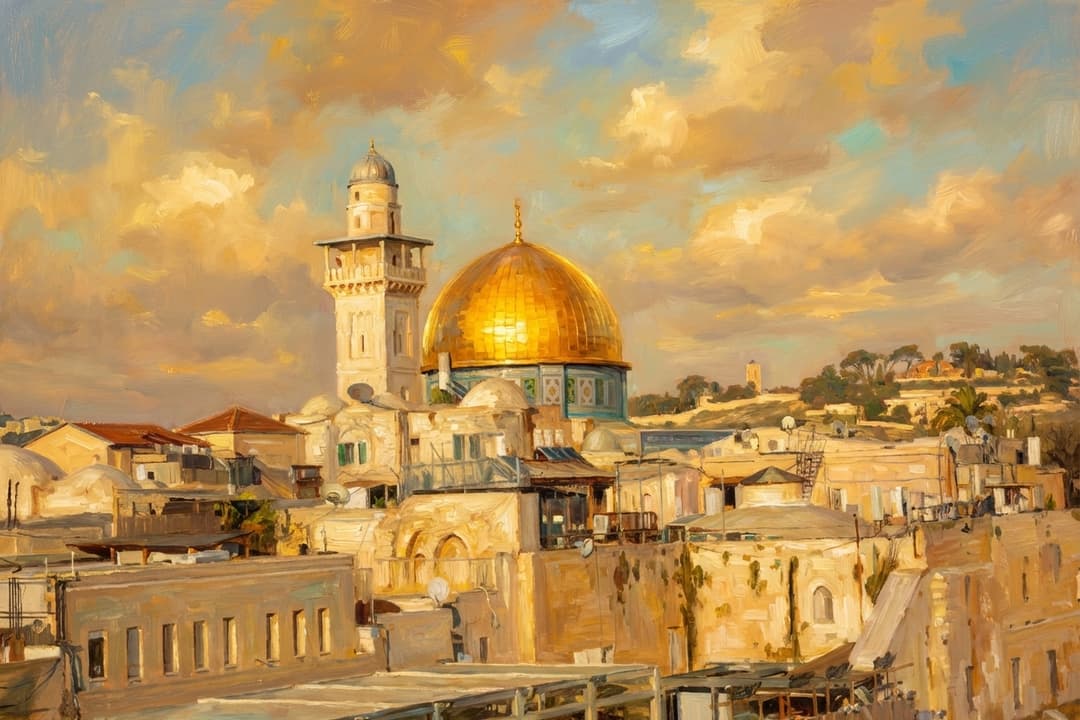
Visiting the Dome of the Rock offers a unique opportunity to witness a masterpiece of Islamic architecture and a site of immense religious significance. Located on the Temple Mount in Jerusalem's Old City, the atmosphere is one of reverence and historical depth. Visitors should be prepared for security checks and dress modestly. Non-Muslims are not permitted to enter the Dome of the Rock itself, but the exterior and surrounding Temple Mount area provide ample opportunity for observation and reflection.
Highlights
- Marvel at the stunning golden dome, a symbol of Jerusalem's skyline.
- Explore the Temple Mount, a site sacred to Judaism, Christianity, and Islam.
- Admire the intricate mosaics and Ottoman tiles adorning the Dome of the Rock's exterior.
Things to Know
- Non-Muslims can only enter through the Mughrabi Gate.
- Visiting hours vary, especially during religious holidays.
- Modest dress is required.
Location
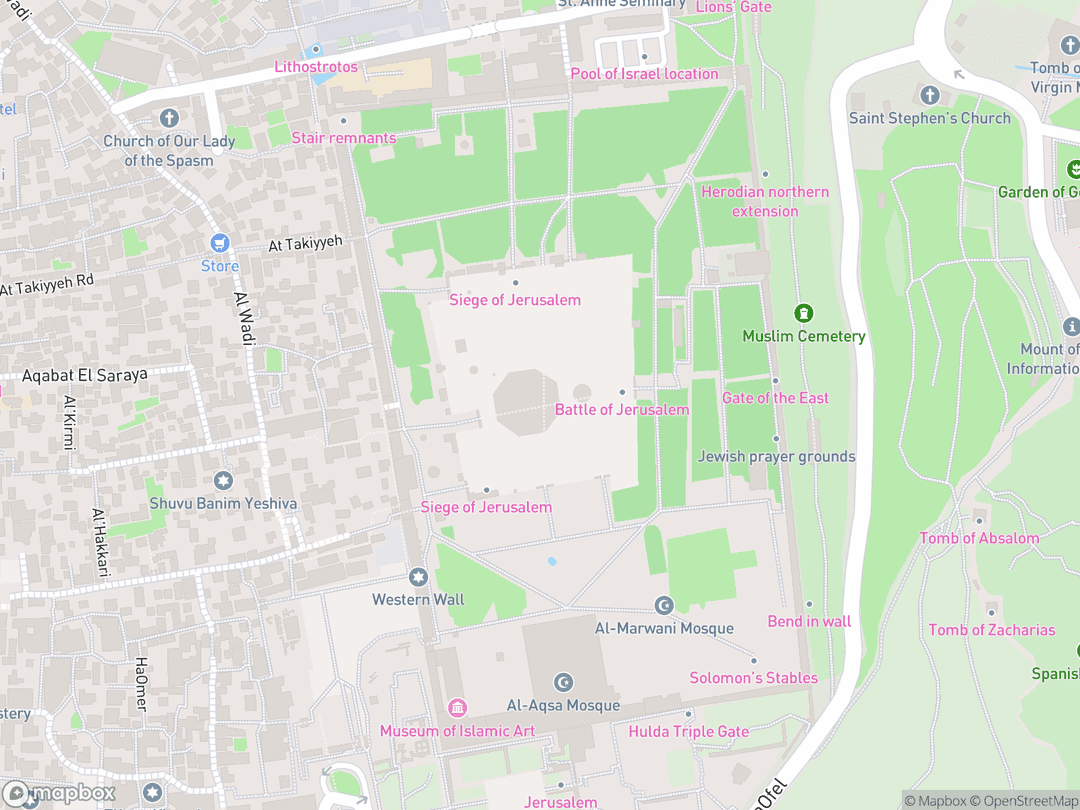
Temple Mount, Old City of Jerusalem, Israel
Hours: Visiting hours vary by season. Generally, Sunday - Thursday, with specific morning and afternoon slots. Check current schedules before visiting.
Getting There: Access to the Temple Mount is through designated gates in the Old City. Public transportation and taxis are available to reach the Old City. Be prepared for security checks.
Get DirectionsTips for Your Visit
Check Visiting Hours
Visiting hours can change, especially during religious holidays. Confirm the schedule before your visit.
Dress Modestly
Modest dress is required for entry to the Temple Mount. Ensure clothing covers shoulders and knees.
About
The Dome of the Rock, or Qubbat al-Sakhra, stands as a magnificent Islamic shrine at the heart of the Temple Mount in Jerusalem's Old City. This location, known to Muslims as al-Haram al-Sharif ("The Noble Sanctuary"), is a site of profound religious importance to Judaism, Christianity, and Islam, reflecting the interconnectedness of these Abrahamic faiths. The Dome of the Rock is celebrated as the oldest surviving work of Islamic architecture, a testament to the enduring legacy of Islamic artistic and engineering achievements.
Commissioned by the Umayyad Caliph Abd al-Malik and constructed between 685 and 691/692 CE, the Dome of the Rock was not designed as a mosque for communal worship. Instead, it serves as a shrine commemorating the Prophet Muhammad's ascent to heaven during his Night Journey (Isra and Mi'raj). The architectural design and intricate ornamentation of the Dome of the Rock reflect the rich cultural and religious context of the era, drawing inspiration from Byzantine churches and palaces while establishing a distinct Islamic aesthetic.
Throughout its history, the Dome of the Rock has undergone numerous renovations and restorations, reflecting the changing political and religious landscapes of Jerusalem. From its conversion into a church during the Crusades to its reconsecration as an Islamic shrine and subsequent Ottoman-era enhancements, the Dome of the Rock has remained a symbol of Jerusalem's complex and layered history. Today, it continues to be a revered site for Muslims worldwide, a place of pilgrimage and reflection that embodies the spiritual heritage of Islam within the broader context of Abrahamic traditions.
Gallery
Symbolic Elements
The temple's exterior features intricate carvings, each rich with spiritual meaning:

Golden Dome
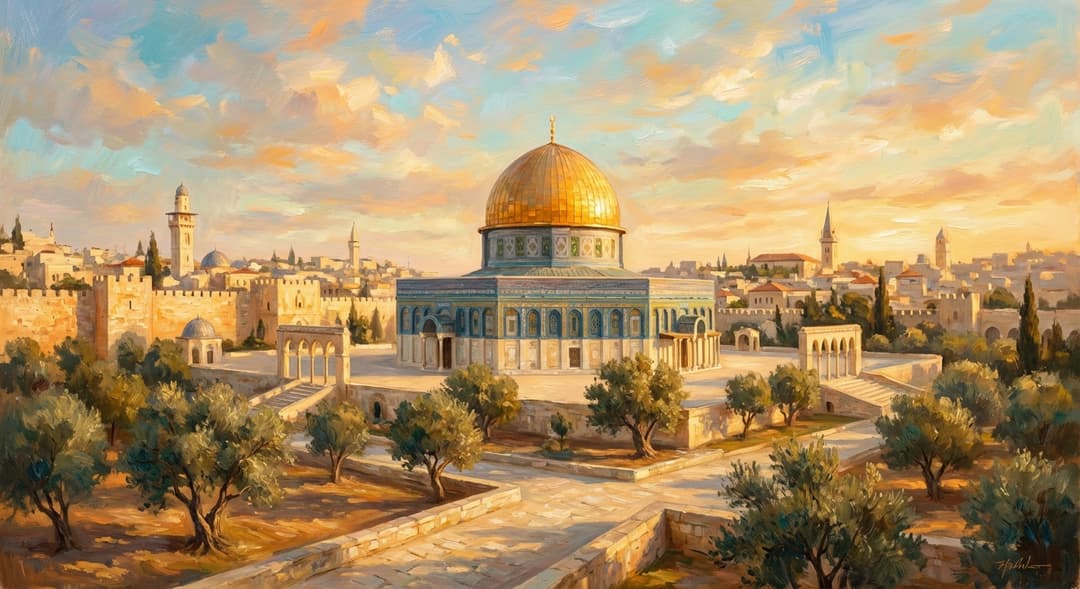
The golden dome is the most prominent feature of the shrine, symbolizing the soaring ascent to heaven and the divine presence. Its circular shape represents wholeness and balance, reflecting the harmony of the universe. The gold itself signifies the knowledge of Allah and the spiritual enlightenment attained through faith.

Foundation Stone
The Foundation Stone, located beneath the dome, is a sacred rock revered by Muslims, Jews, and Christians. In Islam, it is believed to be the spot from which the Prophet Muhammad ascended to heaven during his Night Journey. It is also considered the holiest site in Judaism, believed to be the place where God created the world.

Arabic Calligraphy
The interior and exterior of the Dome of the Rock are adorned with intricate Arabic calligraphy, featuring verses from the Quran and other religious texts. These inscriptions serve as a visual reminder of the divine word and the teachings of Islam. The elegant script and artistic arrangement reflect the importance of knowledge and wisdom in Islamic culture.

Geometric Patterns
The mosaics and tilework of the Dome of the Rock incorporate complex geometric patterns, reflecting the Islamic emphasis on order, symmetry, and mathematical precision. These patterns create a sense of harmony and balance, symbolizing the underlying unity of the universe. The intricate designs showcase the skill and artistry of Islamic craftsmen.

Ottoman Tiles
The exterior walls of the Dome of the Rock are covered with Ottoman-style tiles, which replaced the original mosaics in the 16th century. These tiles feature vibrant colors and intricate designs, reflecting the artistic traditions of the Ottoman Empire. The tiles contribute to the overall visual splendor of the shrine and its historical significance.

Octagonal Structure
The Dome of the Rock is built on an octagonal plan, a design that may have been inspired by nearby Byzantine churches. The octagon symbolizes the transition between the earthly and the divine realms, representing the connection between the physical world and the spiritual realm. The symmetrical shape also reflects the Islamic emphasis on balance and harmony.

Mihrab
The Dome of the Rock contains the oldest Mihrab in the world. A Mihrab is a niche in the wall of a mosque or building that indicates the direction of the Kaaba in Mecca, towards which Muslims pray. It is a vital element in the building and a symbol of the direction to face when praying.

Sky Blue
The use of sky blue in the Dome of the Rock's design symbolizes infinity. It is a color that represents the endlessness of the heavens and the boundless nature of Allah's knowledge and power. The sky blue color adds to the spiritual and contemplative atmosphere of the shrine.
Interesting Facts
The Dome of the Rock is the oldest existing Islamic monument, completed in 691 CE.
It is built over the Foundation Stone, which holds significance in Judaism, Christianity, and Islam.
The Dome of the Rock is not a mosque, but a shrine.
The mosaics decorating the Dome of the Rock do not contain depictions of humans or animals, but instead use Arabic script and vegetal patterns.
The shape of the dome symbolizes the soaring ascent to heaven, and its circle represents wholeness and balance.
The Dome of the Rock has no minarets.
The building is octagonal, a design possibly inspired by nearby Byzantine churches.
Muslims once faced the Temple Mount when praying, but Muhammad changed the direction to the Kaaba at Mecca after a revelation from Allah.
The Dome of the Rock is considered 'Jerusalem's most recognizable landmark'.
The Dome of the Rock contains the oldest Mihrab in the world.
Common Questions
What is the Dome of the Rock?
The Dome of the Rock is an Islamic shrine located on the Temple Mount in Jerusalem. It is one of the oldest and most significant Islamic monuments, revered for its religious and architectural importance.
Why is the Dome of the Rock important to Muslims?
The Dome of the Rock is built over the Foundation Stone, which is believed to be the spot from which the Prophet Muhammad ascended to heaven during his Night Journey (Isra and Mi'raj). It is a sacred site that commemorates this significant event in Islamic history.
Can non-Muslims visit the Dome of the Rock?
Non-Muslims can visit the Temple Mount, where the Dome of the Rock is located, but are generally not allowed to enter the Dome of the Rock itself. Access to the Temple Mount is through designated gates, and modest dress is required.
What are some of the architectural features of the Dome of the Rock?
The Dome of the Rock is an octagonal structure topped with a large, gilded dome. The interior is lavishly decorated with mosaics, faience, and marble, featuring intricate geometric and vegetal patterns, as well as Arabic calligraphy. The exterior walls are adorned with Ottoman-style tiles.
What is the significance of the Foundation Stone?
The Foundation Stone, over which the Dome of the Rock is built, is believed to be the spot from which the Prophet Muhammad ascended to heaven. It is also considered the holiest site in Judaism, believed to be the place where God created the world and the first human, Adam.
Related Stories
Explore the rich history, traditions, and people connected to this sacred site.
Featured Stories
The Night Journey (Isra and Mi'raj)
7th Century CE
The Dome of the Rock commemorates the Prophet Muhammad's Night Journey (Isra and Mi'raj), a miraculous event in Islamic tradition. According to Islamic belief, Muhammad was transported from Mecca to Jerusalem in a single night, and then ascended to heaven from the Foundation Stone on the Temple Mount. This journey is a testament to Muhammad's divine connection and the spiritual significance of Jerusalem in Islam.
During his ascent, Muhammad is said to have met with previous prophets, including Abraham, Moses, and Jesus, reaffirming the continuity of the Abrahamic traditions. He also received divine instructions from Allah, which are central to Islamic teachings. The Night Journey is a profound symbol of spiritual enlightenment and the ultimate connection between humanity and the divine.
Source: Study.com
Caliph Abd al-Malik's Vision
685–692 CE
The construction of the Dome of the Rock was commissioned by the Umayyad Caliph Abd al-Malik, who sought to create a magnificent shrine that would rival the grandeur of the Christian churches in Jerusalem. Abd al-Malik envisioned a structure that would not only commemorate the Prophet Muhammad's Night Journey but also assert the prominence of Islam in the region. His patronage and dedication to the project resulted in the creation of an architectural masterpiece that has endured for centuries.
Abd al-Malik carefully selected the site on the Temple Mount, a location already revered by Jews and Christians, to emphasize the shared heritage of the Abrahamic faiths. He employed skilled architects and craftsmen to design and construct the Dome of the Rock, incorporating elements of Byzantine and Islamic artistic traditions. The resulting shrine became a symbol of Islamic power and artistic achievement, solidifying Jerusalem's status as a holy city in Islam.
Source: Madain Project
The Dome's Enduring Symbolism
Present Day
The Dome of the Rock continues to stand as a powerful symbol of Jerusalem's complex history and the interconnectedness of the Abrahamic faiths. Its golden dome dominates the city's skyline, serving as a visual reminder of the enduring legacy of Islam in the region. The shrine's architectural beauty and religious significance attract pilgrims and visitors from around the world, fostering interfaith dialogue and cultural understanding.
Despite periods of conflict and political tension, the Dome of the Rock has remained a place of reverence and spiritual reflection. Its enduring presence on the Temple Mount serves as a testament to the resilience of faith and the shared heritage of Muslims, Jews, and Christians. The Dome of the Rock continues to inspire awe and wonder, embodying the timeless quest for spiritual enlightenment and the pursuit of peace.
Source: Confinity
Timeline
Construction of the First Temple (Solomon's Temple)
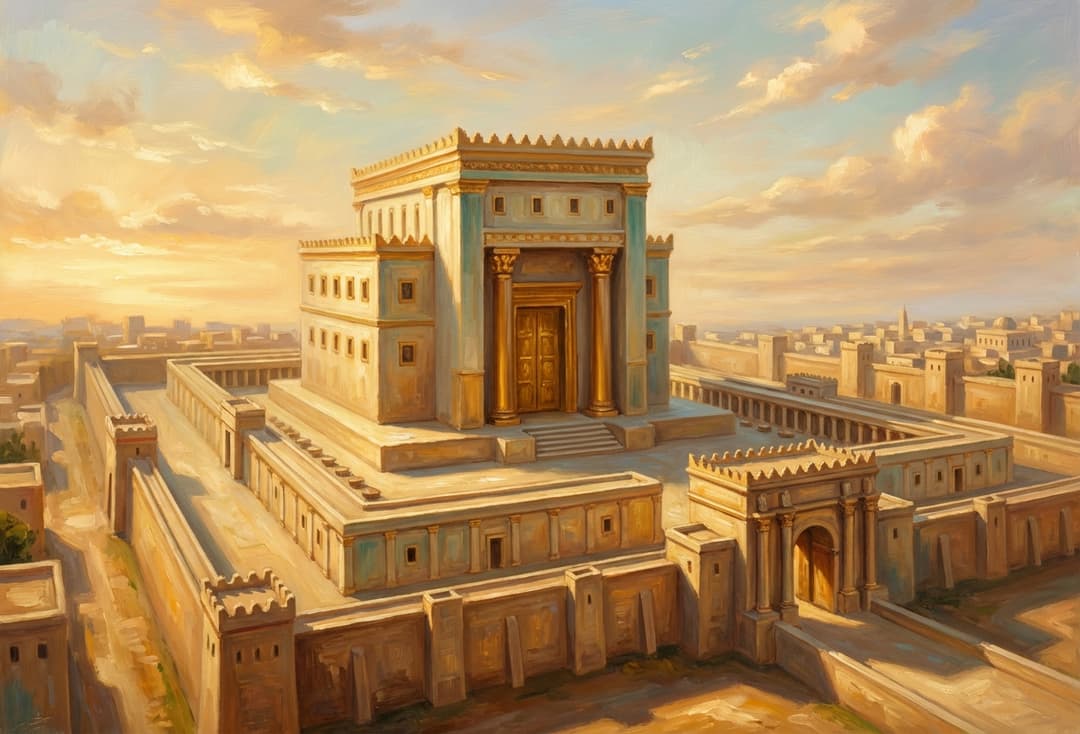
The Temple Mount becomes the site of the First Temple, a central place of worship in Judaism.
MilestoneConstruction of the Second Temple
Following the Babylonian exile, the Second Temple is constructed on the Temple Mount.
MilestoneDestruction of the Second Temple by the Romans
The Second Temple is destroyed by Roman forces, marking a significant event in Jewish history.
MilestoneByzantine Jerusalem Conquered by Arab Armies
Arab armies conquer Byzantine Jerusalem, bringing the city under Islamic rule.
MilestoneConstruction of the Dome of the Rock
The Umayyad Caliph Abd al-Malik commissions the construction of the Dome of the Rock on the Temple Mount.
MilestoneCollapse of the Original Dome
The original dome of the Dome of the Rock collapses due to structural issues.
RenovationReconstruction of the Dome
The dome is reconstructed following its collapse, restoring the shrine to its former glory.
RenovationCrusaders Capture Jerusalem
Crusaders capture Jerusalem and convert the Dome of the Rock into a church.
EventReconsecration as an Islamic Shrine
The Dome of the Rock is reconsecrated as an Islamic shrine after the Crusader period.
EventMajor Renovations by Suleiman the Magnificent
Suleiman the Magnificent initiates major renovations, including replacing exterior mosaics with Ottoman tiles.
RenovationEarthquake Damage
Parts of the Dome of the Rock collapse during an earthquake, necessitating repairs.
RenovationRe-Gilding of the Dome
The dome is re-gilded as part of restoration efforts, enhancing its visual appeal.
RenovationRenovation of the Gold-Plated Roof
The gold-plated roof undergoes renovation to maintain its structural integrity and aesthetic beauty.
RenovationKing Hussein's Donation
King Hussein of Jordan donates $8.2 million to fund 80 kg of gold for a new covering of the dome.
EventReligious Significance
The Dome of the Rock holds immense religious significance for Muslims as a site commemorating the Prophet Muhammad's ascent to heaven and the shared heritage of the Abrahamic traditions.
The primary purpose of the Dome of the Rock is to commemorate the Prophet Muhammad's Night Journey (Isra and Mi'raj) and to serve as a shrine honoring the divine connection between humanity and the divine.
Sacred Ordinances
Prayer (Salah)
While the Dome of the Rock is not a mosque, it is located on the Temple Mount, where Muslims can perform prayers (Salah) facing the Kaaba in Mecca. Prayer is a fundamental practice in Islam, and the Temple Mount is considered a sacred place for worship.
Reflection and Contemplation
The Dome of the Rock serves as a place for reflection and contemplation, where Muslims can meditate on the teachings of Islam and the significance of the Prophet Muhammad's Night Journey. The shrine's architectural beauty and spiritual atmosphere inspire reverence and devotion.
Pilgrimage (Ziyarat)
Many Muslims undertake pilgrimage (Ziyarat) to Jerusalem to visit the Dome of the Rock and other holy sites. Pilgrimage is a significant practice in Islam, and the Dome of the Rock is a revered destination for those seeking spiritual enrichment and connection to their faith.
The Foundation Stone
The Foundation Stone, located beneath the dome, is believed to be the spot from which the Prophet Muhammad ascended to heaven during his Night Journey. It is also considered the holiest site in Judaism, believed to be the place where God created the world and the first human, Adam. The Foundation Stone symbolizes the shared heritage of the Abrahamic faiths and the interconnectedness of their spiritual traditions.
The Abrahamic Connection
The Dome of the Rock's location on the Temple Mount, a site revered by Jews, Christians, and Muslims, underscores the shared heritage of the Abrahamic traditions. The shrine's construction and design reflect the influence of Byzantine and Islamic artistic traditions, creating a unique blend of cultural and religious elements. The Dome of the Rock serves as a reminder of the common roots and spiritual values that unite the followers of Abraham.
Similar Temples
Sources & Research
Every fact on Temples.org is backed by verified Sources & Research. Each piece of information is rated by source tier and confidence level.
View All Sources (7)
| Field | Source | Tier | Retrieved |
|---|---|---|---|
| Introduction & Historical Context | Encyclopedia Britannica (opens in a new tab) | B | 2024-02-29 |
| Introduction & Architectural Significance | Smarthistory (opens in a new tab) | B | 2024-02-29 |
| Basic Facts & Construction Details | Madain Project (opens in a new tab) | B | 2024-02-29 |
| Religious Significance (Islam) | Study.com (opens in a new tab) | A | 2024-02-29 |
| Architectural Description & Symbolism | Designing Buildings Wiki (opens in a new tab) | B | 2024-02-29 |
| Historical Timeline & Renovations | Biblos Foundation (opens in a new tab) | B | 2024-02-29 |
| Dome of the Rock History | History Hit (opens in a new tab) | B | 2024-02-29 |