Visitor Insights
Visiting Hurva Synagogue
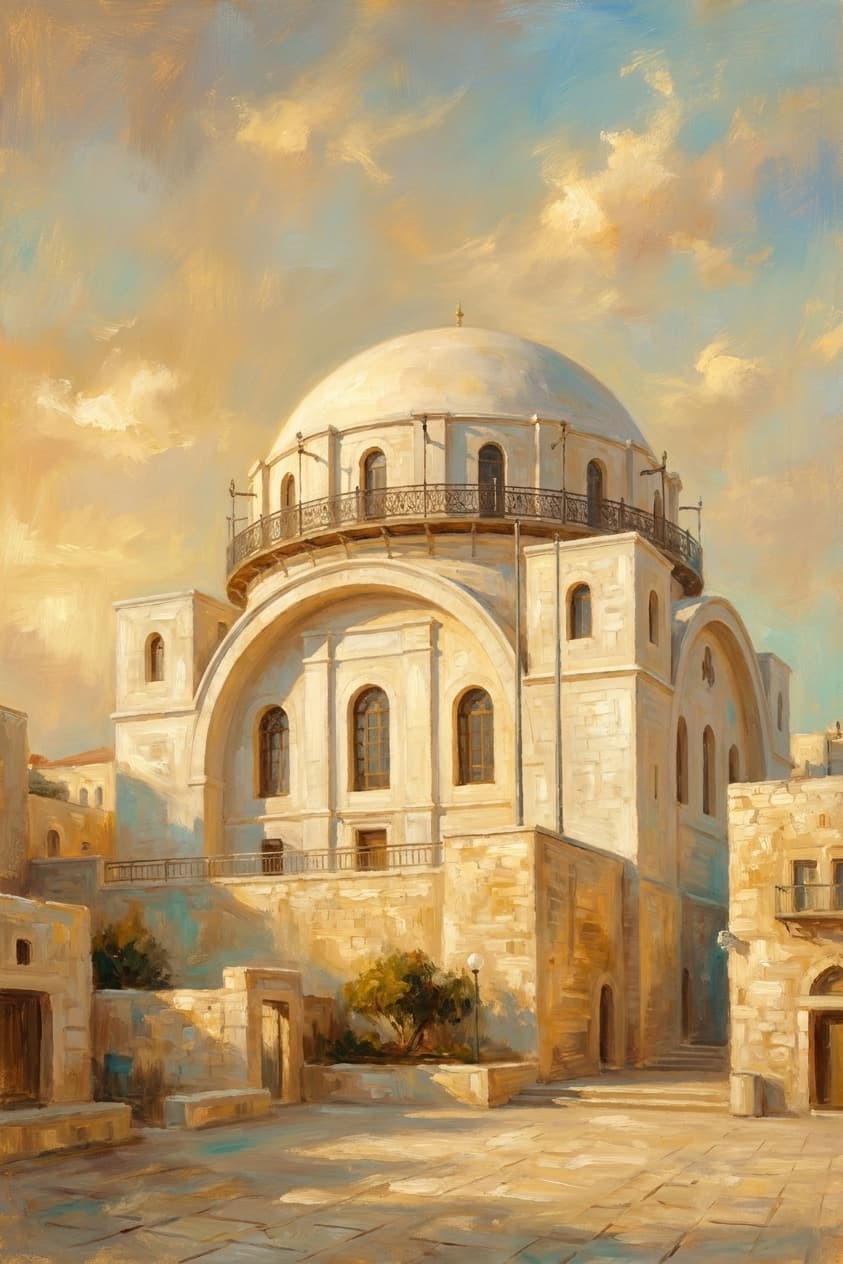
Visiting the Hurva Synagogue offers a profound experience, immersing visitors in the rich history and spiritual atmosphere of Jerusalem's Jewish Quarter. The synagogue stands as a symbol of resilience and the enduring connection of the Jewish people to the city. Visitors can explore the main sanctuary, admire the architectural grandeur, and discover archaeological remnants in the basement, gaining insight into the synagogue's storied past.
Highlights
- Explore the main sanctuary and admire the Neo-Byzantine architecture.
- Discover archaeological finds in the basement, revealing layers of history.
- Visit the rooftop for panoramic views of the Old City of Jerusalem.
Things to Know
- Reservations are required for tours.
- Modest dress is recommended when visiting the synagogue.
- Check the opening hours before planning your visit.
Location
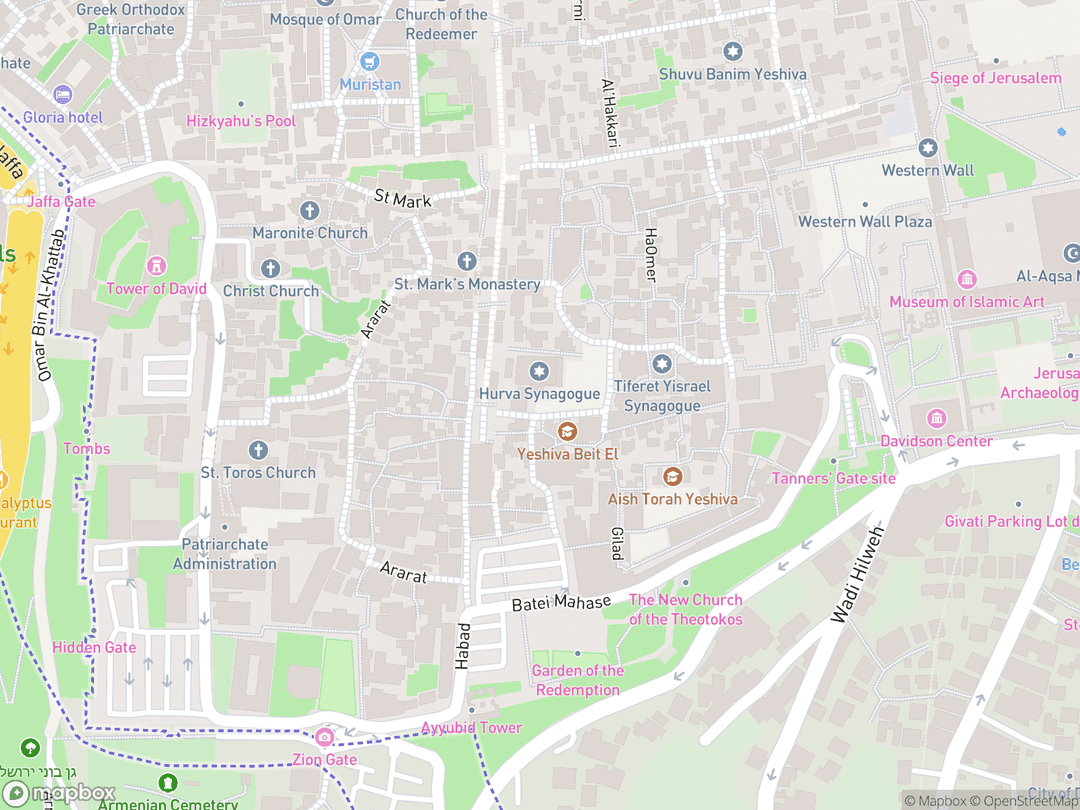
89 Ha-Yehudim Street, Jewish Quarter, Old City of Jerusalem, Israel
Hours: Tours are available from 9:00 am to 5:00 pm (Winter) and 9:00 am to 7:00 pm (Summer). On Fridays and Holiday Eves, tours are from 9:00 am to 1:00 pm. Reservations are required.
Getting There: The Hurva Synagogue is located in the Jewish Quarter of the Old City of Jerusalem. It can be reached by foot from the Jaffa Gate or the Zion Gate. Public transportation is available to the Old City.
Get DirectionsAbout
The Hurva Synagogue, also known as Hurvat Rabbi Yehudah he-Hasid, stands as a testament to the enduring spirit of Judaism in the heart of Jerusalem's Old City. Its name, meaning "The Ruin," reflects a history marked by destruction and subsequent rebuilding, embodying the resilience of the Jewish people and their unwavering connection to this sacred city. As part of the Judaic theological grouping within the Abrahamic traditions, the synagogue holds deep religious and historical significance.
Originally established in the 18th century by Rabbi Judah HeHasid and his followers, the synagogue faced early challenges, including destruction due to unpaid debts. Despite these setbacks, the vision of a prominent Ashkenazi house of worship persisted. In the mid-19th century, efforts to rebuild the synagogue gained momentum, culminating in the dedication of the Beit Yaakov Synagogue in 1864, which became the main Ashkenazi synagogue in Jerusalem.
The Hurva Synagogue served as a central point of Jewish spiritual life until its destruction during the Arab-Israeli War in 1948. After Israel captured East Jerusalem in 1967, plans were made to rebuild the synagogue, and in 2010, the newly rebuilt Hurva Synagogue was dedicated, standing as a symbol of Jewish heritage and a beacon of faith in the Old City of Jerusalem. Today, the Hurva Synagogue continues to serve as an active synagogue and a place of religious study, welcoming visitors from around the world to experience its rich history and architectural grandeur.
Gallery
Symbolic Elements
The temple's exterior features intricate carvings, each rich with spiritual meaning:
Torah Ark
The Torah Ark, also known as the Holy Ark, is the focal point of the synagogue, housing the Torah scrolls. These scrolls contain the five books of Moses and represent God's divine law, making the Ark the most sacred element within the synagogue. The Hurva Synagogue's Torah Ark is the tallest in the world, emphasizing the importance of the Torah in Jewish tradition.
Bimah
The Bimah is a raised platform from which the Torah is read and prayers are led, symbolizing the importance of communal prayer and study in Jewish worship. Located in the center of the synagogue, the Bimah serves as the focal point for religious services, emphasizing the communal aspect of Jewish prayer and the central role of Torah reading in Jewish life.
Menorah
The Menorah, a seven-branched candelabrum, represents the light of God's presence and the Temple in Jerusalem. It is a symbol of divine illumination and the enduring presence of God in Jewish life. The Menorah serves as a reminder of the ancient Temple and the spiritual light that Judaism brings to the world.
Star of David
The Star of David (Magen David) is a six-pointed star, a widely recognized symbol of Judaism and Jewish identity. It represents the connection between God and the Jewish people, as well as the harmony and balance in the universe. The Star of David is prominently displayed on the synagogue's facade and in its interior, serving as a visual reminder of Jewish heritage and identity.

Tablets with the Ten Commandments
The Tablets with the Ten Commandments represent the divine laws given to Moses on Mount Sinai, forming the foundation of Jewish law and ethics. They symbolize the covenant between God and the Jewish people, as well as the moral and ethical principles that guide Jewish life. The Tablets are often depicted above the Torah Ark, emphasizing the importance of following God's commandments.
Dome
The dome of the Hurva Synagogue is a prominent architectural feature, symbolizing the connection between heaven and earth. Its interior is painted sky-blue and adorned with golden stars, representing the celestial realm and the infinite nature of God. The dome serves as a visual reminder of the spiritual aspirations of the Jewish people and their connection to the divine.
Arched Windows
The elongated arched windows of the Hurva Synagogue are a distinctive architectural element, allowing natural light to illuminate the space. Many of these windows feature stained glass, adding color and beauty to the interior. The arched windows symbolize the openness of the synagogue to the world and the welcoming nature of Jewish worship.
Stone Facade
The facade of the Hurva Synagogue is made of finely hewn stone, reflecting the enduring nature of Jewish tradition and the connection to the land of Israel. The stone facade symbolizes the strength and resilience of the Jewish people, as well as their commitment to preserving their heritage for future generations. The use of stone also connects the synagogue to the ancient Temple in Jerusalem.
Interesting Facts
The name 'Hurva' means 'ruin' in Hebrew, reflecting the synagogue's history of destruction and rebuilding.
The Hurva Synagogue has been destroyed and rebuilt twice, symbolizing resilience.
The synagogue is considered a symbol of the Jewish people's connection to Jerusalem.
The rebuilt synagogue stands on the same spot as the original, preserving its ancient architecture.
The Hurva Synagogue was the tallest and grandest of the 58 synagogues in the Old City's Jewish Quarter before 1948.
The synagogue's design was inspired by the Byzantine-era Hagia Sophia building in Istanbul.
Louis Kahn, a renowned architect, designed plans for the reconstruction of the Hurva Synagogue in the 1960s, but they were never realized.
The Holy Ark in the Hurva Synagogue is the tallest in the world.
The Hurva Synagogue is an active synagogue and Yeshiva (religious school).
Archaeological excavations at the site have revealed evidence of settlement dating back to the First Temple period (800-600 BCE).
Common Questions
What is the significance of the name 'Hurva'?
The name 'Hurva' means 'ruin' in Hebrew, reflecting the synagogue's history of destruction and rebuilding. It symbolizes the resilience of the Jewish people and their enduring connection to Jerusalem.
When was the Hurva Synagogue originally built?
The Hurva Synagogue was originally established in the 18th century by Rabbi Judah HeHasid and his followers. However, it was destroyed in 1721 due to unpaid debts.
When was the Hurva Synagogue rebuilt and rededicated?
The Hurva Synagogue was rebuilt in the mid-19th century and dedicated as the Beit Yaakov Synagogue in 1864. It was destroyed again in 1948 and rebuilt and rededicated on March 15, 2010.
What architectural style is the Hurva Synagogue designed in?
The rebuilt Hurva Synagogue is designed in the Neo-Byzantine style, replicating the 19th-century Ottoman synagogue. It features a large dome, arched windows, and a facade made of finely hewn stone.
What are some of the key features of the Hurva Synagogue?
Key features of the Hurva Synagogue include the tallest Holy Ark (Torah cabinet) in the world, a sky-blue dome adorned with golden stars, crystal chandeliers, and delicate, pastel-shaded murals depicting Biblical scenes.
What is the Hurva Synagogue's role today?
Today, the Hurva Synagogue serves as an active synagogue and a place of religious study, welcoming visitors from around the world to experience its rich history and architectural grandeur. It stands as a symbol of Jewish heritage and a beacon of faith in the Old City of Jerusalem.
Featured Stories
The Destruction of 1948
1948
In 1948, during the Arab-Israeli War, the Hurva Synagogue, a beacon of Jewish spiritual life in Jerusalem, faced a devastating blow. As the Jordanian army advanced, the synagogue was tragically targeted, its walls crumbling under the weight of artillery fire. The destruction of the Hurva Synagogue was not merely the loss of a building; it was a profound symbol of the challenges and tribulations faced by the Jewish community in Jerusalem.
The destruction of the synagogue left a void in the heart of the Jewish Quarter, a stark reminder of the division and conflict that gripped the city. For years, the site remained a ruin, a poignant symbol of loss and displacement. Yet, even in its ruined state, the Hurva Synagogue continued to hold a special place in the hearts of Jews around the world, a testament to their enduring connection to Jerusalem.
Source: https://jewishaction.com/travel/jewish-travel/hurva-synagogue-symbol-jerusalem/
The Dream of Rebuilding
1967
Following the Six-Day War in 1967, when Israel captured East Jerusalem, the dream of rebuilding the Hurva Synagogue began to take shape. The reunification of Jerusalem sparked a renewed sense of hope and determination among the Jewish community to restore this iconic landmark. Plans were proposed for a new building, one that would not only replicate the grandeur of the original synagogue but also serve as a symbol of Jewish resilience and renewal.
Architect Louis Kahn, a renowned figure in the world of architecture, presented three plans for the reconstruction of the Hurva Synagogue. While Kahn's designs were ultimately not implemented, they reflected the deep significance of the project and the desire to create a structure that would honor the past while embracing the future. The dream of rebuilding the Hurva Synagogue became a powerful force, uniting Jews in a common cause.
Source: https://dannythedigger.com/the-hurva-synagogue/
The Rededication of 2010
March 15, 2010
On March 15, 2010, the newly rebuilt Hurva Synagogue was dedicated in a momentous ceremony that marked the culmination of decades of effort and the fulfillment of a long-cherished dream. The rededication of the Hurva Synagogue was a celebration of Jewish heritage and a testament to the enduring connection of the Jewish people to Jerusalem. The event drew dignitaries and visitors from around the world, all eager to witness the rebirth of this iconic landmark.
The rebuilt Hurva Synagogue stood as a symbol of hope and renewal, a beacon of faith in the heart of the Old City. Its Neo-Byzantine architecture, grand dome, and intricate interior details evoked the splendor of the original synagogue, while also incorporating modern elements that reflected the spirit of the 21st century. The rededication of the Hurva Synagogue was a moment of profound significance, a reminder of the enduring power of faith and the resilience of the human spirit.
Source: https://beinharimtours.com/en/hurva-synagogue/
Timeline
Early Synagogue
A small synagogue existed in the area, serving the Ashkenazi community.
MilestoneRabbi Judah HeHasid Arrives
Rabbi Judah HeHasid and approximately 500 followers arrived in Jerusalem from Poland.
MilestoneSynagogue Completed
A synagogue was completed on the remains of a 15th-century structure.
DedicationSynagogue Destroyed
The synagogue was destroyed by local lenders due to unpaid debts, and the Ashkenazi Jews were expelled from the city.
RenovationPerushim Immigration
Ascetic Jews, known as Perushim, immigrated to Jerusalem from Lithuania and attempted to resettle the area.
MilestoneOttoman Firman Issued
The Ottoman Sultan Abdulmejid I issued a firman authorizing the construction of a new synagogue.
MilestoneRestoration Sponsored
Moses Montefiore sponsored the restoration of the synagogue.
MilestoneBeit Yaakov Synagogue Dedicated
The rebuilt synagogue, officially named Beis Yaakov, was dedicated and became the main Ashkenazi synagogue in Jerusalem.
DedicationSynagogue Destroyed in War
During the Arab-Israeli War, the Jordanian army destroyed the Hurva Synagogue.
RenovationPlans for New Building Proposed
After Israel captured East Jerusalem, plans were proposed for a new building.
MilestoneLouis Kahn's Plans Presented
Architect Louis Kahn presented three plans for reconstruction, which were ultimately not implemented.
MilestoneCommemorative Arch Erected
A commemorative arch was erected at the site as a reminder of the destroyed synagogue.
MilestoneRebuilding Plan Approved
The Israeli Government approved the plan to rebuild the synagogue in its 19th-century style.
MilestoneHurva Synagogue Rededicated
The newly rebuilt Hurva Synagogue was dedicated.
DedicationRededication Protests
The rededication of the rebuilt synagogue prompted protests from Palestinians.
EventHistory by Decade
14th Century
In the 14th century, a small synagogue existed in the area of what is now the Hurva Synagogue, primarily serving the Ashkenazi community of Jerusalem. This early synagogue represents the continuous Jewish presence in Jerusalem and the enduring desire to have a dedicated space for prayer and communal gathering, even during periods of hardship and limited resources.
1700s — Foundation and Initial Destruction
In 1700, Rabbi Judah HeHasid, a prominent religious figure, arrived in Jerusalem from Poland with approximately 500 followers. They acquired land and constructed around 40 houses, forming what became known as the Ashkenazi Compound. A synagogue was completed on the remains of a 15th-century structure, marking a significant step in establishing a permanent Ashkenazi presence in Jerusalem. However, in 1721, the synagogue was tragically destroyed by local lenders due to unpaid debts, leading to the expulsion of Ashkenazi Jews from the city and the site becoming known as "The Ruin" (Hurva).
1810s-1850s — Attempts at Resettlement
During the early 19th century, from 1812 to 1837, ascetic Jews known as Perushim immigrated to Jerusalem from Lithuania and attempted to resettle the area. These efforts to rebuild and reestablish a Jewish presence in the area faced numerous challenges, reflecting the complex political and economic landscape of Jerusalem at the time. Despite these obstacles, the Perushim's determination laid the groundwork for future restoration efforts.
1850s-1860s — Reconstruction and Dedication
In 1854, a significant turning point occurred when the Ottoman Sultan Abdulmejid I issued a firman (decree) authorizing the construction of a new synagogue. This marked a crucial step in overcoming the legal and political barriers that had hindered previous attempts at rebuilding. In 1857, Moses Montefiore, a prominent Jewish philanthropist, sponsored the restoration of the synagogue, providing the necessary financial support to bring the project to fruition. The rebuilt synagogue, officially named Beis Yaakov ("House of Jacob") in memory of James Mayer de Rothschild, was dedicated in 1864, becoming the main Ashkenazi synagogue in Jerusalem.
1860s-1940s — A Center of Jewish Life
From 1864 to 1948, the Hurva Synagogue was considered the most beautiful and important synagogue in the Land of Israel, serving as a focal point of Jewish spiritual life. It stood as a testament to the resilience and creativity of the Jewish community in Jerusalem, attracting visitors and scholars from around the world. The synagogue played a vital role in shaping the religious and cultural landscape of the city, hosting key historical events and serving as a symbol of Jewish identity.
1948-1967 — Destruction and Loss
During the Arab-Israeli War in 1948, the Hurva Synagogue faced a devastating blow when it was destroyed by the Jordanian army. This act of destruction was a profound loss for the Jewish community, symbolizing the division and conflict that gripped Jerusalem. The ruined synagogue became a poignant reminder of the challenges faced by the Jewish people and their enduring connection to the city.
1967-2010 — Reconstruction and Rededication
After Israel captured East Jerusalem in 1967, plans were proposed for a new building to replace the destroyed Hurva Synagogue. Architect Louis Kahn presented three plans for reconstruction between 1968 and 1973, but these were ultimately not implemented. In 2000, the Israeli Government approved the plan to rebuild the synagogue in its 19th-century style, and on March 15, 2010, the newly rebuilt Hurva Synagogue was dedicated, marking a significant milestone in the restoration of Jewish heritage in Jerusalem.
Religious Significance
The Hurva Synagogue holds profound religious significance within Judaism, serving as a focal point for prayer, study, and communal gathering, embodying the spiritual aspirations of the Jewish people.
The core spiritual purpose of the Hurva Synagogue is to provide a sacred space for Jews to connect with God through prayer, Torah study, and the observance of Jewish traditions. It serves as a center for Jewish life, fostering a sense of community and belonging among its members.
Sacred Ordinances
Prayer (Tefillah)
Prayer is a central practice in Judaism, and the Hurva Synagogue provides a dedicated space for individual and communal prayer. Prayers are recited in Hebrew, and the congregation faces towards Jerusalem, expressing their longing for the restoration of the Temple.
Torah Reading (Kriat HaTorah)
The reading of the Torah is a central part of Jewish worship, and the Hurva Synagogue provides a platform for this sacred practice. The Torah is read aloud from the Bimah, and the congregation listens attentively, reflecting on the teachings and wisdom contained within the scriptures.
Community Worship (Tefillah B'Tzibbur)
Community worship is an essential aspect of Jewish life, and the Hurva Synagogue serves as a gathering place for Jews to pray and celebrate together. The synagogue fosters a sense of unity and belonging, strengthening the bonds between members of the community.
The Importance of Jerusalem
Jerusalem holds a special place in Jewish tradition, as the site of the ancient Temple and the spiritual center of the Jewish world. The Hurva Synagogue, located in the heart of the Old City, embodies the enduring connection of the Jewish people to Jerusalem and their longing for its complete restoration.
The Significance of the Torah
The Torah, containing the five books of Moses, is the foundation of Jewish law and ethics. The Hurva Synagogue provides a space for the study and interpretation of the Torah, fostering a deeper understanding of Jewish tradition and its relevance to contemporary life.
The Role of the Synagogue in Jewish Life
The synagogue serves as a central institution in Jewish life, providing a space for prayer, study, and community gathering. The Hurva Synagogue, with its rich history and architectural grandeur, embodies the enduring importance of the synagogue in preserving and transmitting Jewish tradition from one generation to the next.
Sources & Research
Every fact on Temples.org is backed by verified Sources & Research. Each piece of information is rated by source tier and confidence level.
View All Sources (7)
| Field | Source | Tier | Retrieved |
|---|---|---|---|
| Visitor Information & Tours | World Jewish Travel (opens in a new tab) | D | 2024-01-02 |
| Architectural Style & Historical Context | Sacred Destinations (opens in a new tab) | B | 2024-01-02 |
| Rebuilding & Dedication | Bein Harim Tours (opens in a new tab) | D | 2024-01-02 |
| Archaeological Findings & Reconstruction | Danny the Digger (opens in a new tab) | D | 2024-01-02 |
| Destruction during the Arab-Israeli War | Jewish Action (opens in a new tab) | B | 2024-01-02 |
| Interior Details & Holy Ark | Israel Tour Guide (opens in a new tab) | D | 2024-01-02 |
| Biblical Scenes | Bible Places (opens in a new tab) | D | 2024-01-02 |