Visitor Insights
Visiting Tiferet Yisrael Synagogue
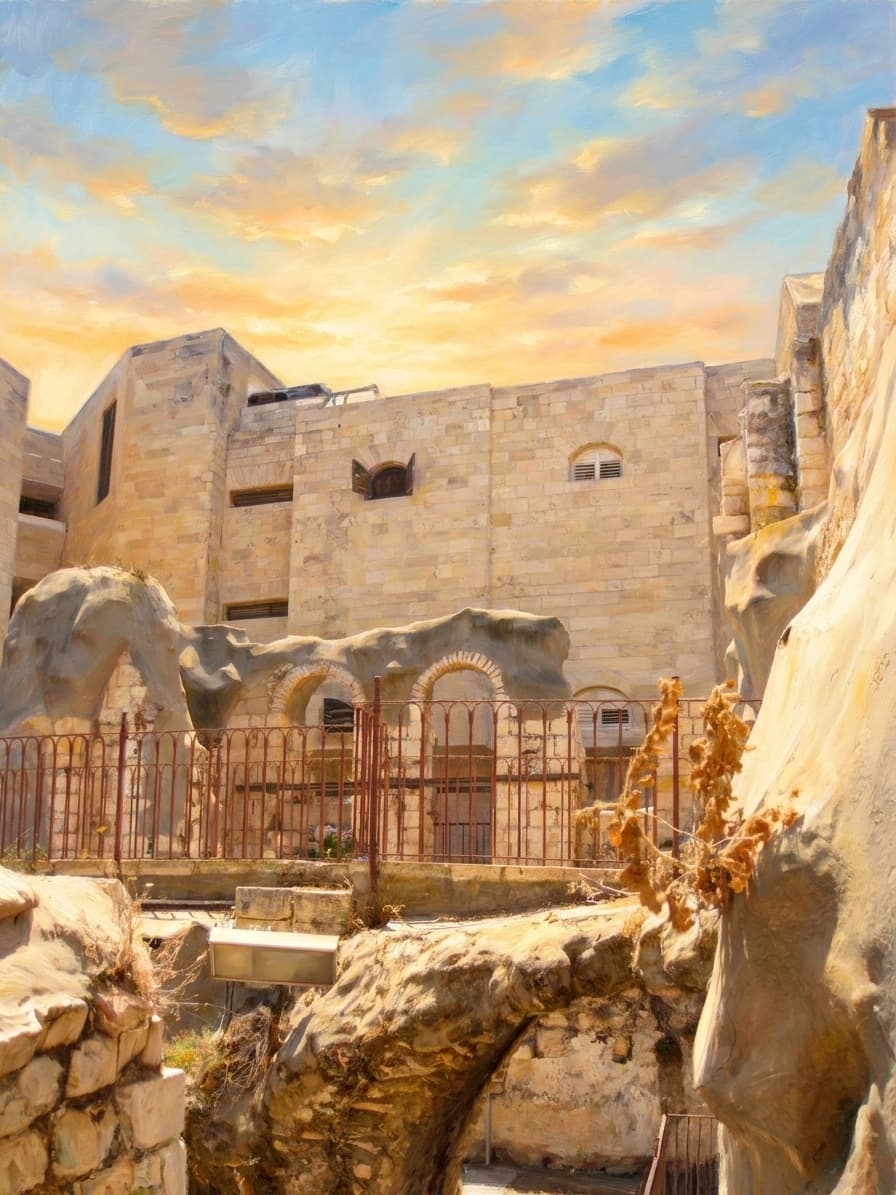
The Tiferet Yisrael Synagogue, once rebuilt, promises to be a significant landmark in Jerusalem's Old City. Visitors can anticipate a journey through Jewish history and culture, with archaeological discoveries and panoramic views. While currently under reconstruction, the future synagogue will offer a unique glimpse into the Hasidic community's heritage and the enduring spirit of Jerusalem.
Highlights
- Archaeological discoveries from various historical periods
- Panoramic views of the Old City from the rooftop
- A visitor's center showcasing the synagogue's history
Things to Know
- The synagogue is currently under reconstruction and not open to the public.
- Accessibility may be limited during the reconstruction phase.
Location
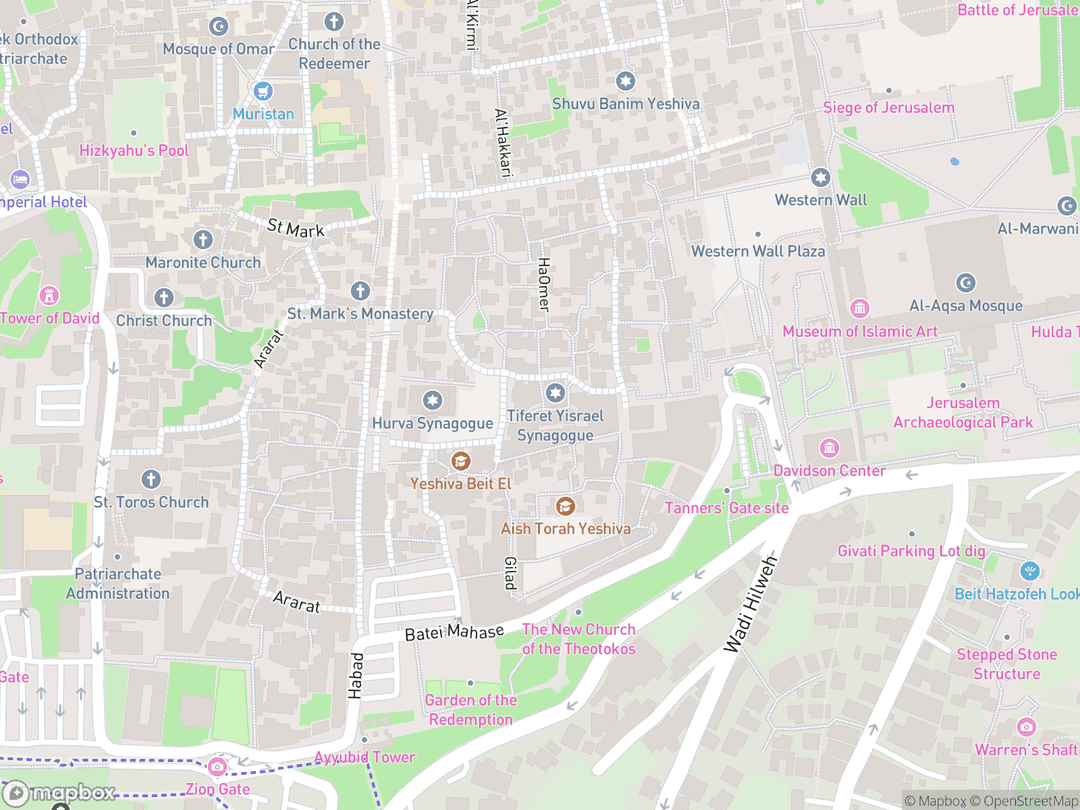
Jewish Quarter, Old City of Jerusalem, Israel
Hours: To be determined upon completion of reconstruction.
Getting There: Located in the Jewish Quarter of the Old City of Jerusalem. Access is primarily on foot through the Old City gates.
Get DirectionsAbout
The Tiferet Yisrael Synagogue, also known as the Nisan Bak Synagogue, was a prominent Hasidic Jewish synagogue located in the Jewish Quarter of the Old City of Jerusalem. Inaugurated in 1872, it served as a central hub for the Hasidic community in Jerusalem for 75 years. It was considered one of the most beautiful synagogues in Jerusalem, offering a commanding view of the Temple Mount.
As a Jewish house of worship, the synagogue held significant cultural and religious importance. Synagogues serve as houses of prayer, study, and assembly for Jewish communities, reflecting the values and traditions of the community they serve. The Tiferet Yisrael Synagogue stands as a testament to the vibrant Jewish life in Jerusalem during the 19th and 20th centuries.
The synagogue was tragically destroyed in 1948 during the Arab-Israeli War. In 2012, the Jerusalem municipality approved plans to rebuild the synagogue, and reconstruction efforts have been underway. The rebuilt synagogue is designed to include archaeological discoveries and Jewish ritual baths in the basement, and a small art gallery adjacent to the dome on the top floor. The rooftop will offer panoramic views of the Old City.
Gallery
Symbolic Elements
The temple's exterior features intricate carvings, each rich with spiritual meaning:

Dome
The dome of the Tiferet Yisrael Synagogue, often referred to as 'Franz Joseph's cap,' symbolizes heaven and the connection between the earthly and the divine. Its prominent presence in the Jerusalem skyline made it a recognizable landmark. The dome represents the aspiration to reach spiritual heights and connect with God.

Western Wall View
The synagogue's location offered a commanding view of the Temple Mount and the Western Wall, a remnant of the ancient Temple. This proximity held deep religious significance for Jews, connecting them to their historical and spiritual roots. The Western Wall serves as a site of pilgrimage and prayer, symbolizing the enduring presence of God.

Renaissance Architecture
The synagogue was built in classic Renaissance architecture, reflecting a period of cultural and artistic flourishing. This architectural style conveyed a sense of grandeur and beauty, enhancing the synagogue's role as a place of reverence and inspiration. The Renaissance style also symbolized a connection to the broader world of art and culture.

Tiferet Yisrael Name
The name 'Tiferet Yisrael' translates to 'Glory of Israel,' reflecting the desire to create a magnificent and inspiring place of worship. This name embodies the aspiration to honor and celebrate the Jewish people and their heritage. It also signifies the synagogue's role as a symbol of Jewish pride and resilience.

Jerusalem Stone
The synagogue was constructed using Jerusalem stone, a distinctive building material that is characteristic of the city. This stone connects the synagogue to the physical landscape of Jerusalem and its rich history. The use of Jerusalem stone symbolizes the enduring connection between the Jewish people and their ancestral homeland.

Synagogue as a Mikdash Me'at
In Jewish tradition, a synagogue is considered a 'Mikdash Me'at,' a miniature sanctuary, representing a smaller version of the Holy Temple in Jerusalem. This concept emphasizes the synagogue's role as a sacred space for prayer, study, and community gathering. It symbolizes the continuity of Jewish worship and the enduring connection to the Temple.

Reconstruction
The ongoing reconstruction of the Tiferet Yisrael Synagogue symbolizes the resilience and determination of the Jewish people to rebuild and restore their heritage. It represents a commitment to preserving the memory of the past while looking forward to a brighter future. The reconstruction effort is a testament to the enduring spirit of Jerusalem.

Elevator
The inclusion of an elevator in the rebuilt synagogue represents a modern adaptation to ensure accessibility for all visitors. This innovation, not present in the original structure, symbolizes a commitment to inclusivity and welcoming people of all abilities. It reflects a desire to make the synagogue a place where everyone can participate in worship and community life.
Interesting Facts
The synagogue was also known as the Nisan Bak Shul, after its co-founder, Nisan Bak.
The land for the synagogue was purchased in the 1840s, but construction was delayed due to lack of funds.
Austrian Emperor Franz Joseph's donation led to the dome being referred to as 'Franz Joseph's cap'.
The synagogue served as a stronghold for the Haganah during the 1948 Arab-Israeli War.
The Jordanian Legion deliberately demolished the synagogue in 1948 to prevent Jews from returning to the Jewish Quarter.
Archaeological discoveries from the First Temple, Second Temple, Byzantine, Mamluk, Ottoman, and modern eras were found during the restoration.
The rebuilt synagogue will include an elevator, an innovation not present in the original structure.
The Tiferet Yisrael Synagogue was 52 centimeters (about 1.7 feet) higher than the Hurva Synagogue, another ancient Jerusalem synagogue.
The reconstruction project is considered a project of historic significance.
The site is expected to include a global visitor's center as a tribute to Jerusalem's Zionist pioneers.
Common Questions
What was the Tiferet Yisrael Synagogue also known as?
The Tiferet Yisrael Synagogue was also known as the Nisan Bak Synagogue, named after its co-founder, Nisan Bak.
When was the Tiferet Yisrael Synagogue destroyed?
The synagogue was destroyed on May 21, 1948, during the Arab-Israeli War by the Jordanian Arab Legion.
What is the current status of the Tiferet Yisrael Synagogue?
As of February 2026, the Tiferet Yisrael Synagogue is under reconstruction, with plans to reopen it as a major attraction in the Old City of Jerusalem.
What will the rebuilt synagogue include?
The rebuilt synagogue will include archaeological discoveries, Jewish ritual baths in the basement, a small art gallery adjacent to the dome on the top floor, and a rooftop offering panoramic views of the Old City.
How did Austrian Emperor Franz Joseph contribute to the synagogue?
Austrian Emperor Franz Joseph donated money for the completion of the synagogue's dome, which led to the dome being referred to as 'Franz Joseph's cap'.
Featured Stories
The Inauguration of Tiferet Yisrael
August 19, 1872
After nearly three decades of planning, fundraising, and construction, the Tiferet Yisrael Synagogue finally opened its doors on August 19, 1872. The inauguration was a momentous occasion for the Hasidic community in Jerusalem, who had long dreamed of having a central place of worship. The streets of the Jewish Quarter were filled with joyous celebrations as community members gathered to witness the historic event.
The synagogue's completion was a testament to the dedication and perseverance of Nisan Bak and the many individuals who contributed to the project. The magnificent structure, with its ornate dome and commanding view of the Temple Mount, stood as a symbol of Jewish pride and resilience. The inauguration marked a new chapter in the history of the Hasidic community in Jerusalem, providing them with a spiritual home for generations to come.
Source: The Jewish Star
Emperor Franz Joseph's Generous Gift
1869
During a visit to Jerusalem in 1869, Austrian Emperor Franz Joseph toured the unfinished Tiferet Yisrael Synagogue. Upon learning that the dome was missing due to a lack of funds, the emperor was deeply moved and generously donated money for its completion. This act of kindness had a profound impact on the Jewish community in Jerusalem, who were grateful for the emperor's support.
In recognition of his contribution, the synagogue's dome became known as 'Franz Joseph's cap.' The emperor's generosity not only enabled the completion of the synagogue but also fostered a sense of goodwill and understanding between the Jewish community and the Austrian Empire. The story of Emperor Franz Joseph's gift became a cherished part of the synagogue's history, symbolizing the importance of interfaith cooperation and mutual respect.
Source: iTravelJerusalem
The Synagogue's Tragic Destruction
May 21, 1948
During the Arab-Israeli War in 1948, the Tiferet Yisrael Synagogue became a strategic stronghold for the Haganah, the Jewish defense force. Tragically, on May 21, 1948, the Jordanian Arab Legion deliberately destroyed the synagogue, reducing it to rubble. The destruction of the synagogue was a devastating blow to the Jewish community in Jerusalem, representing the loss of a cherished landmark and a symbol of their heritage.
The deliberate demolition of the synagogue was seen as an attempt to erase Jewish history and prevent Jews from returning to the Jewish Quarter. Despite the destruction, the memory of the Tiferet Yisrael Synagogue lived on in the hearts of the Jewish people. The ongoing reconstruction of the synagogue is a testament to their determination to rebuild and restore their heritage, ensuring that the story of the Tiferet Yisrael Synagogue will never be forgotten.
Source: The Jewish Star
Timeline
Initial Plans for Synagogue
Plans began when word spread that Tsar Nicolas was considering the property for a church and monastery. Rabbi Yisrael Bek sought a communal center for the Jewish community.
MilestonePermission Granted to Build
The community obtained permission from the Sultan to build the synagogue.
MilestoneConstruction Commences
Construction commenced, led by Nisan Bak, with funding from Rabbi Yisrael Friedman of Ruzhin and his son.
EventAustrian Emperor's Visit
Austrian Emperor Franz Joseph visited the unfinished synagogue and donated money for its completion, leading to the dome being known as 'Franz Joseph's cap'.
EventSynagogue Inaugurated
The synagogue was inaugurated after 29 years of land acquisition, serving as the center for the Hasidic community in Jerusalem.
DedicationSynagogue Destroyed
During the Arab-Israeli War, the Tiferet Yisrael Synagogue was used as a stronghold by the Haganah and was destroyed by the Jordanian Arab Legion on May 21.
RenovationNew Torah Center Foundations Laid
Rabbi Mordechai Shlomo Friedman laid foundations for a new Ruzhiner Torah center in the New City of Jerusalem to replace the destroyed synagogue.
MilestoneRuzhiner Yeshiva Inaugurated
The Ruzhiner yeshiva, Mesivta Tiferes Yisroel, was inaugurated, with a large synagogue built adjacent to it.
MilestoneRuins Left Untouched
Following the Six-Day War, the ruins of the synagogue were left untouched.
EventRebuilding Plans Approved
The Jerusalem municipality approved plans to rebuild the Tiferet Yisrael Synagogue.
MilestoneCornerstone Laid
The cornerstone for the rebuilt synagogue was laid.
MilestoneReconstruction Underway
Reconstruction plans were underway but incomplete.
RenovationManagement Assigned
Government approved a plan to assign the management of the synagogue to the Company for the Reconstruction and Development of the Jewish Quarter and the Western Wall Heritage Foundation.
EventSynagogue Destroyed by Jordanian Arab Legion
During the Arab-Israeli War, the Tiferet Yisrael Synagogue was used as a stronghold by the Haganah. It was destroyed by the Jordanian Arab Legion.
RenovationSynagogue Officially Completed
After 29 years of land acquisition, the synagogue was officially completed and inaugurated.
DedicationHistory by Decade
1830s — Initial Planning
The story of the Tiferet Yisrael Synagogue begins in the 1830s, when Rabbi Yisrael Bek recognized the need for a communal center for the growing Jewish community in Jerusalem. Word had spread that Tsar Nicolas was considering acquiring property in the area to build a church and monastery, prompting Rabbi Bek to seek a way to establish a Jewish presence and safeguard the community's interests. This initial vision laid the foundation for what would become one of Jerusalem's most iconic synagogues.
1840s-1850s — Land Acquisition and Fundraising
In the 1840s, efforts to acquire land for the synagogue began, but progress was slow due to limited funds. Despite these challenges, the community persevered, driven by their unwavering commitment to building a house of worship that would serve as a spiritual and cultural hub. The land acquisition process was a testament to the community's determination and resourcefulness, setting the stage for the construction phase.
1858-1860s — Construction Begins
In 1858, the community finally obtained permission from the Sultan to build the synagogue, marking a significant milestone in the project. Construction commenced in the 1860s, led by Nisan Bak, with financial support from Rabbi Yisrael Friedman of Ruzhin and his son. The construction phase was a period of intense activity and collaboration, as community members worked together to bring their vision to life.
1869 — Emperor Franz Joseph's Visit
A pivotal moment in the synagogue's history occurred in 1869, when Austrian Emperor Franz Joseph visited the unfinished structure. Upon learning that the dome was missing due to a lack of funds, the emperor generously donated money for its completion. This act of kindness had a lasting impact on the Jewish community, and the dome became known as "Franz Joseph's cap" in his honor.
1872 — Inauguration and Flourishing Community
After 29 years of land acquisition and construction, the Tiferet Yisrael Synagogue was finally inaugurated on August 19, 1872. The synagogue quickly became the center of the Hasidic community in Jerusalem, providing a space for prayer, study, and community gatherings. The synagogue flourished as a vibrant hub of Jewish life, attracting visitors and scholars from around the world.
1948 — Destruction During the Arab-Israeli War
Tragically, the Tiferet Yisrael Synagogue's story took a devastating turn during the Arab-Israeli War in 1948. The synagogue was used as a stronghold by the Haganah, and on May 21, 1948, it was deliberately destroyed by the Jordanian Arab Legion. The destruction of the synagogue was a profound loss for the Jewish community, symbolizing the destruction of their heritage and the displacement of their community.
1950s-2010s — Remembrance and Planning for Reconstruction
In the years following the destruction, the ruins of the Tiferet Yisrael Synagogue remained a poignant reminder of the past. Despite the challenges, the Jewish community never forgot the synagogue, and plans for its reconstruction began to take shape. The memory of the Tiferet Yisrael Synagogue served as a source of inspiration and hope, fueling the determination to rebuild and restore this important landmark.
2012-Present — Reconstruction Efforts
In 2012, the Jerusalem municipality approved plans to rebuild the Tiferet Yisrael Synagogue, marking a new chapter in its history. Reconstruction efforts have been underway, with the goal of restoring the synagogue to its former glory. The rebuilt synagogue will incorporate archaeological discoveries and modern amenities, ensuring that it serves as a vibrant center for Jewish life for generations to come.
Religious Significance
The Tiferet Yisrael Synagogue, as a Jewish house of worship, holds deep religious significance within the Judaic tradition, which is part of the Abrahamic theological grouping. Synagogues serve as more than just buildings; they are sacred spaces where the community gathers to connect with God, study the Torah, and celebrate Jewish life.
The core spiritual purpose of the Tiferet Yisrael Synagogue was to provide a dedicated space for prayer, study, and communal gatherings, fostering a strong sense of community and connection to Jewish heritage. It served as a 'Mikdash Me'at,' a miniature sanctuary, representing a smaller version of the Holy Temple in Jerusalem, allowing the community to experience a sense of holiness and connection to their spiritual roots.
Sacred Ordinances
Prayer (Tefillah)
Prayer is a central practice in Judaism, and the Tiferet Yisrael Synagogue provided a dedicated space for communal prayer services. These services, led by a rabbi or cantor, involve reciting specific prayers from the siddur (prayer book) and engaging in moments of personal reflection and connection with God.
Torah Reading (Kriat HaTorah)
The reading of the Torah is a fundamental part of Jewish worship, and the Tiferet Yisrael Synagogue housed a sacred Torah scroll that was read aloud during services. This practice allows the community to connect with the teachings of the Torah and reaffirm their commitment to Jewish law and tradition.
Community Gatherings (Kibbutz)
Beyond prayer and study, the Tiferet Yisrael Synagogue served as a gathering place for the Jewish community, fostering a sense of belonging and shared identity. These gatherings provided opportunities for social interaction, celebration of Jewish holidays, and mutual support, strengthening the bonds within the community.
The Synagogue as a Center of Jewish Life
The Tiferet Yisrael Synagogue was more than just a building; it was a vibrant center of Jewish life in Jerusalem. It served as a place where community members could come together to pray, study, celebrate, and support one another. The synagogue played a vital role in preserving Jewish traditions and fostering a strong sense of identity among its members.
The Importance of Remembrance and Restoration
The destruction of the Tiferet Yisrael Synagogue in 1948 was a tragic loss for the Jewish community, but the memory of the synagogue has endured. The ongoing reconstruction of the synagogue is a testament to the community's commitment to preserving their heritage and restoring a vital center of Jewish life in Jerusalem. The rebuilt synagogue will serve as a symbol of resilience and hope for future generations.
Sources & Research
Every fact on Temples.org is backed by verified Sources & Research. Each piece of information is rated by source tier and confidence level.
View All Sources (7)
| Field | Source | Tier | Retrieved |
|---|---|---|---|
| About & Historical Background | wingsch.net (opens in a new tab) | A | 2026-02-29 |
| About & Historical Background | The Jewish Star (opens in a new tab) | A | 2026-02-29 |
| Architectural Description | Jewish News Syndicate (opens in a new tab) | A | 2026-02-29 |
| Visitor Information | Old City of Jerusalem Development Corporation (opens in a new tab) | A | 2026-02-29 |
| Historical Context | The Times of Israel (opens in a new tab) | B | 2026-02-29 |
| Reconstruction Plans | The Jerusalem Post (opens in a new tab) | B | 2026-02-29 |
| Synagogue History | iTravelJerusalem (opens in a new tab) | B | 2026-02-29 |