Visitor Insights
Visiting Milan Cathedral
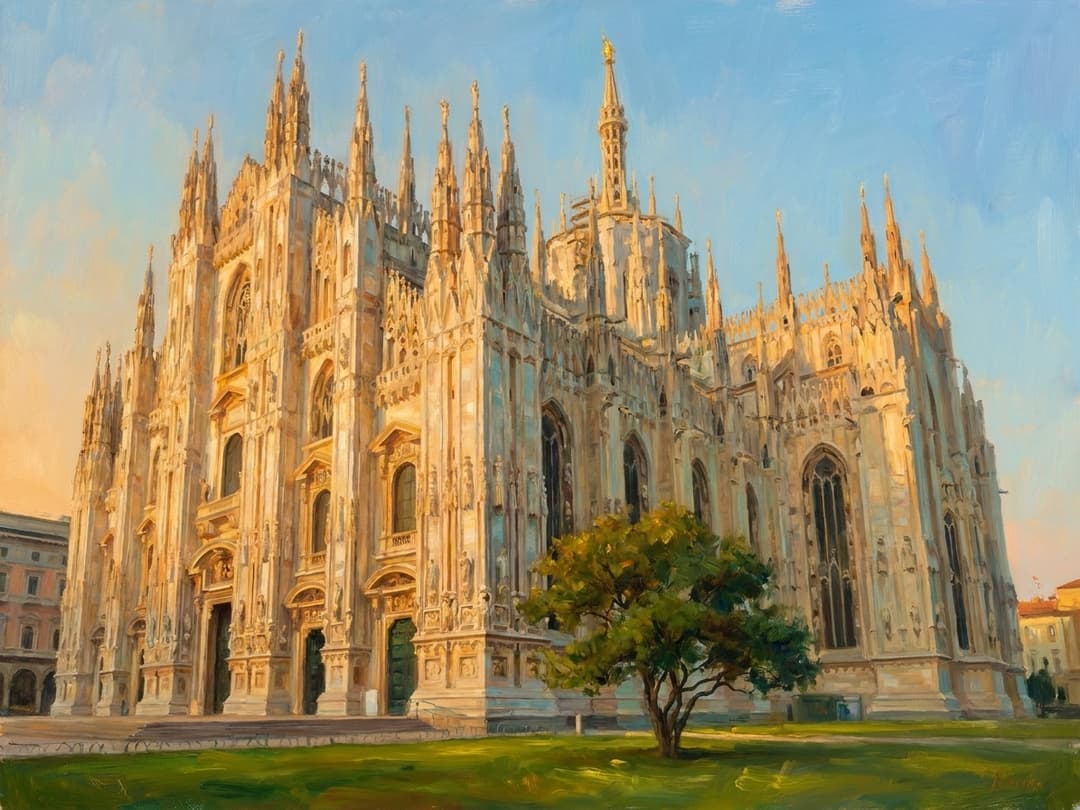
Visiting the Duomo di Milano offers an inspiring encounter with centuries of sacred art, transcendent Gothic architecture, and sweeping urban panoramas. Pilgrims can participate in regular Ambrosian Rite liturgies, examine ancient relics in the crypt, and ascend to the rooftop terraces to walk directly among hundreds of carved marble spires overlooking the city toward the Italian Alps.
Highlights
- Panoramic rooftop terraces accessible via stairs or elevators among 135 marble spires
- Saint Bartholomew Flayed, the renowned anatomical Renaissance sculpture by Marco d'Agrate
- The subterranean fourth-century Paleo-Christian baptistery where Saint Augustine was baptized
- The golden Madonnina statue standing 108.5 meters above the city skyline
Things to Know
- Strict modest church dress codes require covered knees and shoulders for all visitors
- Security screening lines at the piazza portals can be lengthy during peak midday hours
- Rooftop marble walkways can become slick during rain or winter morning frosts
Location
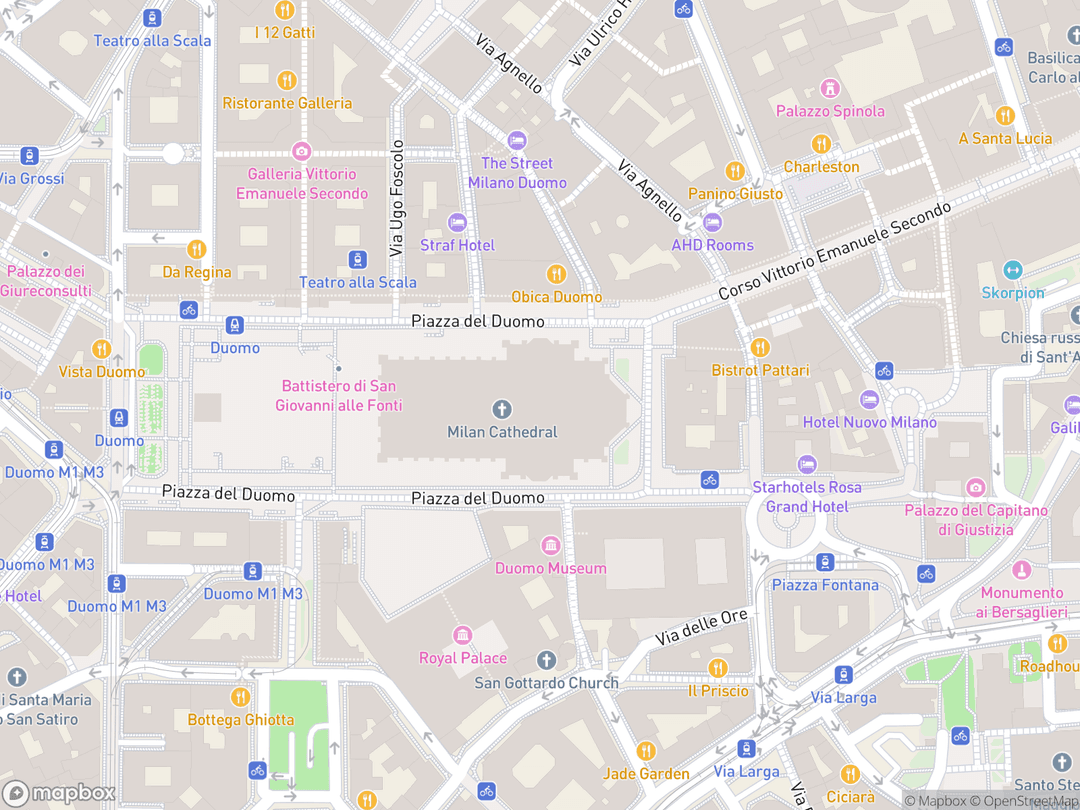
Piazza del Duomo, 20122 Milan, Metropolitan City of Milan, Lombardy, Italy
Hours: Daily 09:00 - 19:00 (Last entry 18:10; Cathedral open for personal prayer from 07:00)
Getting There: Direct access via Milan Metro lines M1 and M3 at Duomo Station, exiting into the central piazza.
Get DirectionsTips for Your Visit
Ascend to the Terraces at Sunset
Visit the rooftop terraces in the late afternoon when setting sunlight turns the Candoglia marble a luminous warm amber.
Observe the Liturgical Dress Code
Security strictly turns away guests with bare knees or exposed shoulders, so carry a light scarf or jacket.
Explore the Archeological Area
Book an integrated ticket to descend below the facade steps into the fourth-century baptistery of Saint Ambrose.
About
Milan Cathedral, known locally as the Duomo di Milano, is the monumental seat of the Archbishop of Milan and one of the largest Roman Catholic churches in the world. Commissioned in 1386 by Duke Gian Galeazzo Visconti and Archbishop Antonio da Saluzzo, the cathedral took nearly six centuries to complete, embodying the civic pride and spiritual aspirations of Lombardy across generations of master craftsmen.
Architecturally unique, the Duomo bridges Northern European Flamboyant Gothic verticality with classic Italian structural mass, crafted entirely from luminous white-and-pink Candoglia marble. Its exterior presents an intricate forest of 135 pierced spires, flying buttresses, and more than 3,400 carved statues, crowned at its summit by the beloved gilded copper figure of the Madonnina watching over the metropolis.
Beyond its architectural splendor, the cathedral serves as the mother church of the ancient Ambrosian Rite, an autonomous Western liturgical tradition established by Saint Ambrose in the fourth century. Housing sacred relics including the Holy Nail of the True Cross, the cathedral remains a vibrant center of Eucharistic piety, pilgrimage, and solemn liturgical arts.
Gallery
Symbolic Elements
The temple's exterior features intricate carvings, each rich with spiritual meaning:

The Gilded Madonnina
Standing atop the highest spire, this gilded copper statue symbolizes Mary as the motherly guardian and civic patroness of Milan.

The Holy Nail
Suspended in a lighted niche high in the apse vault, this revered relic of the True Cross embodies Christ's Passion and redemption.
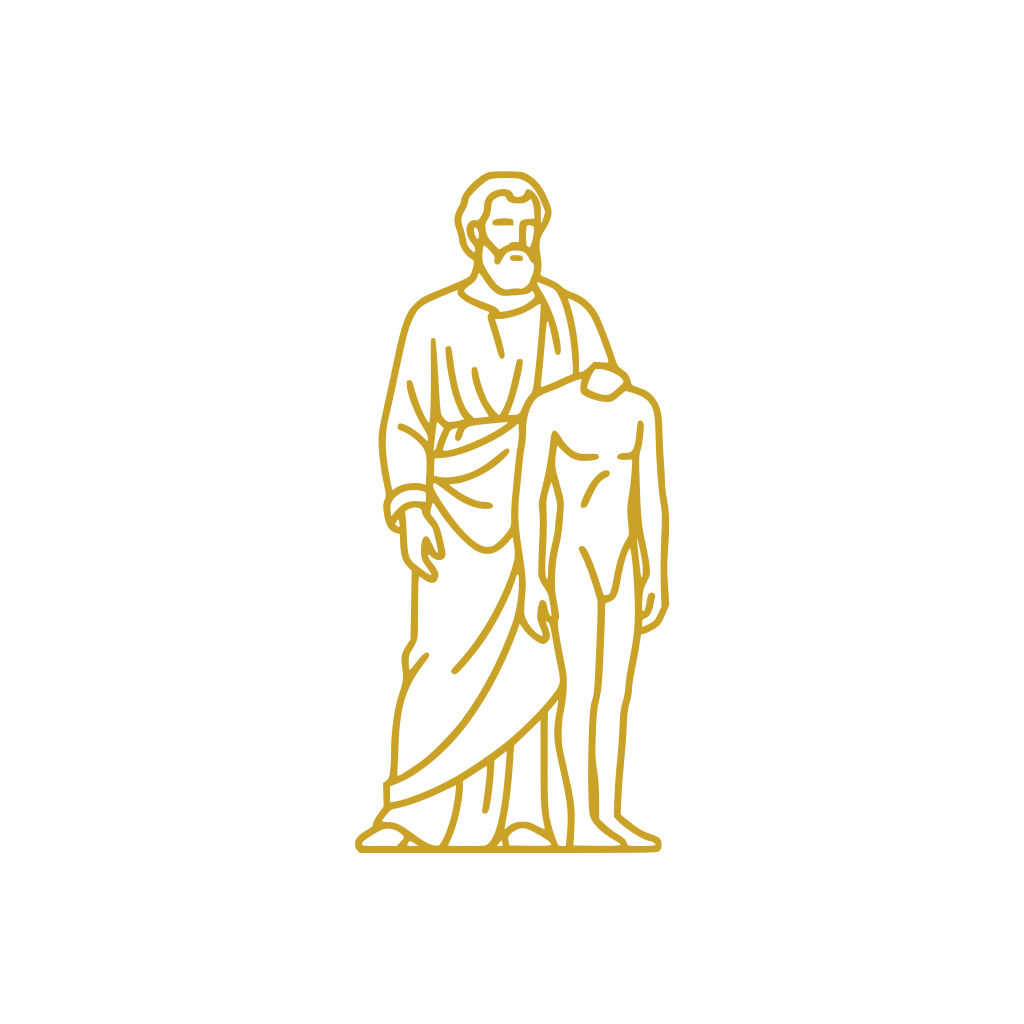
Saint Bartholomew Flayed
This striking Renaissance statue of the Apostle holding his own skin represents unwavering martyrdom and bodily resurrection.

Trivulzio Candelabrum
A monumental five-meter bronze menorah-style candelabrum adorned with Old Testament types prefiguring the light of Christ.

Astronomical Solar Meridian
A brass line embedded in the floor illuminated by sunlight, reflecting divine order within cosmic and terrestrial time.

Pier Capital Niches
Canopied rings of sculpted saints crowning each giant pillar symbolize the heavenly Church supporting the living temple of God.

The Rite of the Nivola
A historic cloud-shaped liturgical lift that carries the Archbishop upward to lower the Holy Nail for public veneration.
Interesting Facts
The acronym A.U.F. carved on marble transport barges exempted building stone from tolls and sparked the Italian idiom 'a ufo', meaning entirely free. (Tier A)
By municipal custom, no building in Milan could stand higher than the Madonnina, prompting modern skyscrapers to install replicas on their roofs to honor her precedence. (Tier B)
Napoleon Bonaparte pledged imperial treasury funds to finish the facade in 1805 before his coronation as King of Italy, though the promised money was never fully paid. (Tier B)
Sculptors across centuries carved eccentric rooftop details, including modern gargoyles shaped like boxing gloves, tennis rackets, and prehistoric reptiles. (Tier B)
The statue of Saint Bartholomew carrying his own flayed skin is sculpted with such anatomical precision that early medical students studied it as an anatomical text. (Tier A)
The 45-meter nave vault is the highest Gothic interior in Italy and ranks among the tallest stone vaults in the entire world. (Tier A)
To retrieve the suspended Holy Nail relic each September, the Archbishop ascends inside a cloud-shaped mechanical basket known as the Nivola. (Tier A)
Beneath the front entrance lies the fourth-century baptismal pool where Bishop Ambrose personally baptized Augustine of Hippo on Easter Eve in 387 AD. (Tier A)
During World War II, civic caretakers swathed the gilded Madonnina in heavy gray burlap to prevent her shine from aiding Allied aerial bombardments. (Tier A)
The 1786 interior brass solar meridian line was once so reliable that the city synchronized its noon civil cannon fire to its daily light beam. (Tier B)
Common Questions
Why did Milan Cathedral take nearly six hundred years to finish?
Complex Gothic engineering, political shifts in the Duchy of Milan, and architectural debates delayed final portal completion until 1965.
What is the Ambrosian Rite celebrated in the cathedral?
It is an ancient Western Catholic liturgical tradition established by Saint Ambrose featuring unique prayers, calendar dates, and chants.
Can visitors walk on the roof of the Duomo?
Yes, visitors can access the rooftop terraces via stairs or elevator to walk among the 135 marble spires.
What is the famous golden statue atop the highest spire?
It is the Madonnina, a gilded copper statue of the Virgin Mary erected in 1774 as the patroness of Milan.
Featured Stories
Napoleon's Coronation and the Push for the Facade
May 26, 1805
Eager to be crowned King of Italy within the historic cathedral, Napoleon Bonaparte ordered the immediate completion of the lingering west facade in 1805. He guaranteed imperial treasury backing to accelerate the stone carvers, resulting in the rapid finishing of the portal pinnacles and neoclassical pediments. Although the French treasury never fully reimbursed the costs, the emperor's ambition brought centuries of architectural debate to a swift finish.
Source: Veneranda Fabbrica del Duomo Historical Archives
The Nivola Cloud Lift of Saint Charles
October 20, 1577
During his sweeping Counter-Reformation renewal of the cathedral, Cardinal Archbishop Charles Borromeo instituted the dramatic Rite of the Nivola to honor the Holy Nail relic. Borromeo commissioned an elaborate cloud-shaped hoist adorned with painted angels that carried the prelate forty meters into the sanctuary vault. The annual ceremony continues to this day, drawing pilgrims each autumn to witness the descent of the sacred nail.
Source: Archdiocese of Milan Liturgical Office
Camouflaging the Golden Protector
1943
As Allied air campaigns intensified across northern Italy during World War II, cathedral guardians feared the radiant gold leaf of the Madonnina would serve as a navigation beacon for bomber squadrons. Volunteers scaled the dizzying central spire to envelop the four-meter statue in coarse gray burlap and canvas. Though explosions shook the square and destroyed irreplaceable stained glass, the veiled protector and the cathedral structure survived intact.
Source: Duomo Museum Curatorial Department
Timeline
Groundbreaking and Inception
Archbishop Antonio da Saluzzo and Duke Gian Galeazzo Visconti initiate construction of a grand marble cathedral.
component.timeline.groundbreakingEstablishment of Veneranda Fabbrica
Visconti charters the Veneranda Fabbrica del Duomo to manage Candoglia marble quarrying and cathedral finances.
MilestoneFirst High Altar Consecration
Pope Martin V consecrates the high altar within the partially vaulted Gothic choir while traveling from Constance.
DedicationCompletion of the Tiburio Cupola
Architects Amadeo and Dolcebuono execute the central octagonal crossing lantern following structural proposals by Leonardo da Vinci.
MilestoneCathedral Consecration by Saint Charles Borromeo
Cardinal Archbishop Charles Borromeo solemnly consecrates the completed interior during penitential rites following the Milanese plague.
DedicationErection of the Golden Madonnina
Giuseppe Perego's 4.16-meter gilded copper statue of Mary is hoisted to the apex of the central spire.
MilestoneInstallation of the Solar Meridian
Astronomers from the Brera Astronomical Observatory lay a precision brass meridian line across the cathedral floor.
MilestoneCoronation of Napoleon Bonaparte
Napoleon is crowned King of Italy within the cathedral, ordering imperial funds to accelerate facade completion.
EventWorld War II Aerial Bombardment
Allied air strikes damage roof vaults and shatter high stained-glass windows, though the core structure endures.
EventSymbolic Completion of the Cathedral
The fifth and final sculpted bronze portal gate is inaugurated, marking the ceremonial completion of the edifice.
MilestoneComprehensive Facade Restoration
The Veneranda Fabbrica finishes an extensive five-year restoration project cleaning centuries of soot from the marble exterior.
RenovationHistory by Decade
1380s–1410s — Visconti Foundations and the Quarry Vision
Ars sine scientia nihil est.
Following the collapse of the ancient bell tower of Santa Maria Maggiore, Gian Galeazzo Visconti established the Veneranda Fabbrica del Duomo in 1387. Breaking with brick Lombard traditions, he mandated Candoglia marble and imported French and German Gothic master masons. The first altar was consecrated in 1418 by Pope Martin V amidst ongoing structural debates between geometric schools.
1480s–1500s — Renaissance Engineering and the Tiburio
The challenge of spanning the massive central crossing engaged prominent Renaissance minds, including Leonardo da Vinci and Donato Bramante, who submitted wooden structural models. Giovanni Antonio Amadeo and Gian Giacomo Dolcebuono successfully erected the unique octagonal lantern cupola in 1490. This engineering feat harmonized Lombard structural stability with soaring vertical Gothic aspirations.
1560s–1580s — The Borromean Counter-Reformation
Saint Charles Borromeo transformed the cathedral interior to enforce the liturgical decrees of the Council of Trent, removing secular tombs and elevating the high altar. Appointing architect Pellegrino Tibaldi, Borromeo commissioned monumental choir stalls, an evocative subterranean crypt, and the silver chapel of Saint Charles. Borromeo consecrated the entire cathedral interior in October 1577 amidst solemn post-plague penance.
1760s–1780s — The Soaring Spire and the Madonnina
Architect Francesco Croce designed the towering central spire in 1769, pushing the cathedral apex to 108.5 meters above the city. In 1774, the golden copper statue of the Madonnina sculpted by Giuseppe Perego was hoisted into place, quickly becoming the spiritual emblem of Milan. Brera Observatory astronomers soon added the precision brass solar meridian line across the cathedral nave.
1800s–1890s — Imperial Completion and Forest of Spires
Napoleon's 1805 coronation decree catalyzed the completion of the long-contested western facade under architects Carlo Amati and Giuseppe Zanoia. Across the late nineteenth century, carvers sculpted thousands of marble statues and pinnacles, turning the expansive rooftop into a stone terrace gallery. Stained-glass studios simultaneously installed radiant narrative windows throughout the ambulatory and aisles.
1940s–Present — Wartime Survival and Modern Preservation
After surviving World War II air strikes that shattered historic glass lancets, the cathedral saw its final monumental bronze gate installed in January 1965. In the twenty-first century, the Veneranda Fabbrica completed a monumental five-year cleaning of the Candoglia marble facade and launched digital sensor arrays. Modern restoration continues to preserve the delicate marble spires against environmental weathering.
Architecture & Facilities
Milan Cathedral represents a monumental synthesis of Northern European Flamboyant and Rayonnant Gothic styles adapted to Italian structural preferences for solid mass and broad proportional breadth. Unlike French cathedrals characterized by thin skeletal masonry and soaring external flying buttresses, the Duomo features thick Candoglia marble cladding over dense Lombard brick cores, supported by forty colossal interior clustered piers that create a cavernous, unified liturgical space.
Building Materials
Candoglia Marble
Lustrous white-and-pink calcitic marble quarried near Lake Maggiore and transported by historic canals.
Lombard Masonry Brick
Dense terracotta brickwork forming the structural core beneath external marble cladding.
Wrought-Iron Tie Rods
Heavy forged iron rods spanning the nave arcades to absorb lateral vaulting thrusts without flying buttresses.
Stained Glass Lancets
Vibrant hand-blown art glass panels chronicling scriptural narratives across monumental twenty-meter windows.
Interior Features
Five-Aisle Nave
A monumental central hall flanked by double aisles and supported by forty clustered columns.
Choir and High Altar
The sanctuary designed by Pellegrino Tibaldi centered under the suspended Holy Nail relic.
Scurolo di San Carlo
An octagonal silver-and-crystal subterranean crypt preserving the relics of Saint Charles Borromeo.
Paleo-Christian Baptistery
Excavated fourth-century masonry pool where Saint Ambrose baptized Augustine of Hippo in 387 AD.
Temple Grounds
The cathedral anchors the pedestrian Piazza del Duomo, encircled by neoclassical porticoes, historic administrative palaces, and the Galleria Vittorio Emanuele II.
Additional Facilities
The adjacent Royal Palace houses the official Duomo Museum, displaying original spire statues, liturgical treasures, and the cathedral archives.
Religious Significance
As the principal cathedral of the Archdiocese of Milan, the Duomo serves as the living heart of the ancient Ambrosian Rite, an autonomous Western Catholic tradition distinct from the Roman Rite.
To serve as the seat of the Archbishop of Milan, the sanctuary for the Holy Nail of Christ, and the spiritual gathering place for the Catholic faithful of northern Italy.
Sacred Ordinances
Ambrosian Holy Mass
The daily celebration of the Eucharist featuring distinct Ambrosian liturgical prayers, lectionary readings, and ancient chants.
The Rite of the Nivola
An annual liturgical rite during the Feast of the Holy Cross where the Archbishop retrieves the Holy Nail from the ceiling vault.
Liturgy of the Hours
Daily choral recitation of the divine office by the Cathedral Chapter of Canons according to Ambrosian tradition.
Sacraments of Initiation
Solemn celebrations of Baptism and Confirmation continuing unbroken fourth-century traditions begun by Saint Ambrose.
The Ambrosian Liturgical Rite
Dating to the episcopate of Saint Ambrose in the fourth century, the Ambrosian Rite features a six-week Advent, a unique Lenten calendar beginning after Fat Saturday, distinct Eucharistic prayers, and an independent musical tradition of ancient Ambrosian chant.
Marian Patronage and the Madonnina
Dedicated to Santa Maria Nascente (the Nativity of Mary), the cathedral venerates the Virgin as Milan's celestial defender, crowned by the golden Madonnina whose presence over the skyline symbolizes perpetual maternal intercession.
Sources & Research
Every fact on Temples.org is backed by verified Sources & Research. Each piece of information is rated by source tier and confidence level.
View All Sources (5)
| Field | Source | Tier | Retrieved |
|---|---|---|---|
| About & Historical Background | Veneranda Fabbrica del Duomo di Milano (opens in a new tab) | A | 2026-02-19 |
| Religious Significance & Ambrosian Rite | Arcidiocesi di Milano (opens in a new tab) | A | 2026-02-19 |
| Architecture & Construction History | Encyclopaedia Britannica (opens in a new tab) | B | 2026-02-19 |
| Duomo Museum and Artistic Heritage | Regione Lombardia Beni Culturali (opens in a new tab) | B | 2026-02-19 |
| Structural Survey & Candoglia Marble Conservation | Journal of Cultural Heritage (opens in a new tab) | B | 2026-02-19 |