Visitor Insights
Visiting Temple of Neptune (Paestum)
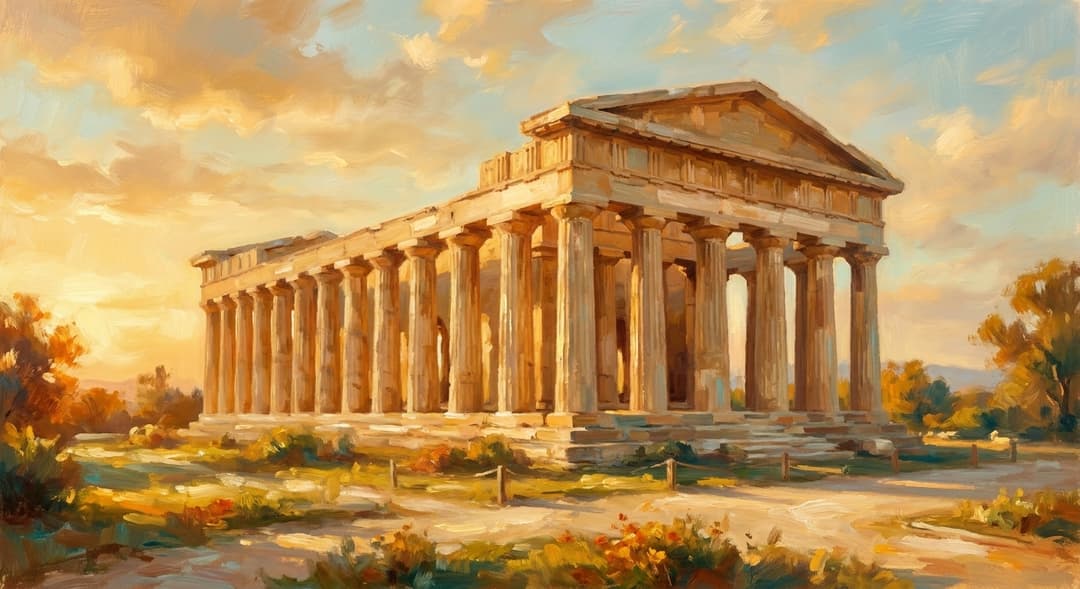
Visiting the Temple of Neptune offers a captivating glimpse into ancient Greek architecture and religious practices. Located in the archaeological park of Paestum, a UNESCO World Heritage Site, the temple stands as one of the best-preserved examples of Doric architecture. Visitors can explore the temple's impressive structure, surrounded by the serene atmosphere of the ancient city.
Highlights
- Explore the well-preserved Doric columns and architectural details.
- Learn about the temple's history and dedication to the goddess Hera.
- Wander through the archaeological park and discover other ancient ruins.
Things to Know
- Wear comfortable shoes for walking on uneven terrain.
- Bring water and sunscreen, especially during the summer months.
- Check the park's opening hours and admission fees before visiting.
Location
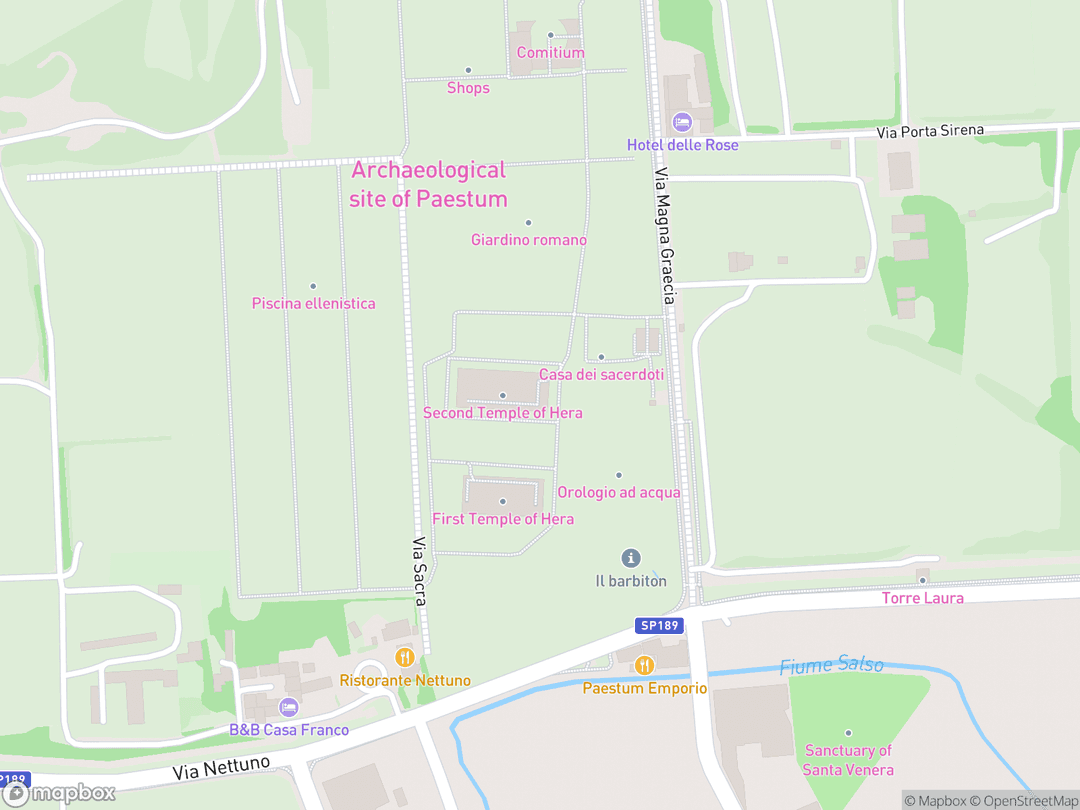
Paestum, Campania, Italy
Hours: Open daily, hours vary by season. Check the official website for current hours.
Getting There: Paestum is accessible by train and car. Parking is available near the archaeological site.
Get DirectionsTips for Your Visit
Best Time to Visit
April, May, and June offer pleasant weather for exploring the site.
Public Transport
Public transport is available for reaching the main touristic areas.
About
The Temple of Neptune, located in Paestum, Italy, is a name given in the 18th century to a well-preserved Greek temple. Constructed around 460–450 BC, it is now understood to have been dedicated to Hera, the Greek goddess of marriage, women, childbirth, and family. The temple stands as a remarkable example of Doric architecture from the ancient world.
The temple's structure features six columns along its shorter sides and fourteen columns along its longer sides, each standing at an impressive 8.88 meters high. Constructed from local porous limestone, the temple was originally covered in powdered marble stucco, enhancing its grandeur. The columns exhibit fine details, including 24 flutes on the external columns and smaller columns within the cella.
Today, the Temple of Neptune is part of the UNESCO World Heritage Site of Paestum, attracting visitors from around the globe. Its rediscovery in the 18th century sparked renewed interest in Greek architecture, influencing designs and studies for centuries to come. The temple remains a testament to the architectural prowess and religious practices of the ancient Greeks.
Gallery
Symbolic Elements
The temple's exterior features intricate carvings, each rich with spiritual meaning:

Doric Columns
The Doric columns are a defining feature of the temple, characterized by their simple, unadorned capitals and fluted shafts. These columns represent strength and stability, reflecting the architectural principles of the Doric order. The columns are a testament to the skill and precision of ancient Greek builders.

Limestone Construction
The temple is constructed from local porous limestone, a readily available material in the region. This choice of material reflects the practical considerations of the builders, who utilized local resources to create a durable and lasting structure. The limestone gives the temple a warm, earthy tone that blends with the surrounding landscape.

Fluted Columns
The external columns of the temple feature 24 flutes, vertical grooves carved into the shafts. This detail adds visual interest and a sense of refinement to the columns. The flutes also serve a structural purpose, helping to distribute weight and prevent cracking. The number of flutes is an unusual number for Doric columns of that period.

Temple Orientation
The temple's orientation is aligned with the cardinal directions, a common practice in ancient Greek temple construction. This alignment may have had religious or symbolic significance, connecting the temple to the cosmos and the natural world. The precise orientation would have been carefully calculated by the builders.

Entablature
The entablature, the horizontal structure above the columns, is a key element of the Doric order. It consists of the architrave, frieze, and cornice, each with its own distinct features. The entablature provides structural support and adds to the temple's overall aesthetic appeal. The frieze would have originally been decorated with sculptures or other ornamentation.

Cella
The cella, or inner chamber, was the most sacred space within the temple. It housed the cult statue of Hera, the goddess to whom the temple was dedicated. The cella was typically a rectangular room with a central aisle and side aisles, separated by columns. Access to the cella was restricted to priests and other authorized individuals.

Temple Platform
The temple is built on a raised platform, or stylobate, which elevates it above the surrounding landscape. This platform provides a sense of grandeur and importance to the temple. The platform also helps to protect the temple from flooding and other environmental hazards. The steps leading up to the platform would have been a significant part of the temple's design.

Original Stucco
Originally, the limestone structure of the temple was covered with a layer of powdered marble stucco. This stucco would have given the temple a bright, white appearance, resembling marble. The stucco would have also protected the limestone from weathering and erosion. Over time, the stucco has worn away, revealing the natural color of the limestone.
Interesting Facts
The temple's name 'Temple of Neptune' is a misnomer from the 18th century.
The temple was actually dedicated to the goddess Hera.
The temple is one of the best-preserved Greek temples.
The temple was built by the founders of Poseidonia, the Sybarites.
The temple is constructed of local porous limestone.
The external columns have 24 flutes, an unusual number for Doric columns of that period.
Sir John Soane was profoundly influenced by the temple's Doric order.
The temple is a UNESCO World Heritage Site.
The temple's columns taper from nearly 7 feet at the bottom to about 5 feet at the top.
The temple originally had powdered marble stucco covering the limestone.
Common Questions
What is the Temple of Neptune?
The Temple of Neptune is the name given to a well-preserved Greek temple in Paestum, Italy. It is now understood to have been dedicated to Hera, the Greek goddess of marriage, women, childbirth, and family. The name 'Temple of Neptune' is a misnomer from the 18th century.
When was the Temple of Neptune built?
The Temple of Neptune was constructed around 460–450 BC, making it one of the best-preserved Greek temples from that era.
What architectural style is the Temple of Neptune?
The Temple of Neptune is a prime example of Greek Doric architecture. It features six columns along its shorter sides and fourteen columns along its longer sides, with columns standing at 8.88 meters high.
Where is the Temple of Neptune located?
The Temple of Neptune is located in Paestum, Campania, Italy. Paestum is an archaeological site that is part of a UNESCO World Heritage Site.
Why is it called the Temple of Neptune if it was dedicated to Hera?
The name 'Temple of Neptune' is a misnomer given in the 18th century when Paestum was rediscovered. At the time, it was mistakenly believed that the temple was dedicated to the Roman god Neptune (Poseidon in Greek mythology).
Is the Temple of Neptune a UNESCO World Heritage Site?
Yes, the Temple of Neptune is part of the UNESCO World Heritage Site of Paestum, recognized for its outstanding universal value as an important archaeological site.
Featured Stories
The Rediscovery of Paestum
18th Century
The rediscovery of Paestum in the 18th century marked a turning point in the understanding and appreciation of ancient Greek architecture. For centuries, the city had been largely forgotten, its temples and other structures hidden by vegetation and neglect. The rediscovery sparked renewed interest in classical art and architecture, influencing designs and studies for centuries to come.
As explorers and scholars began to visit Paestum, they were awestruck by the scale and preservation of the temples. The Temple of Neptune, in particular, stood out as a remarkable example of Doric architecture, its columns and entablature still largely intact. The rediscovery of Paestum helped to revive interest in classical art and architecture, inspiring artists, architects, and scholars to study and emulate the achievements of the ancient Greeks.
Source: uchicago.edu
The Influence of Sir John Soane
1779
In 1779, the renowned British architect Sir John Soane visited Paestum, an experience that profoundly influenced his architectural philosophy and designs. Soane was deeply impressed by the simplicity, strength, and harmony of the Greek Doric order, as exemplified by the Temple of Neptune. He saw in these ancient structures a timeless beauty and a model for rational and functional design.
Soane's visit to Paestum inspired him to incorporate elements of Greek architecture into his own work. He admired the way the Greeks had used simple materials and forms to create buildings of great elegance and power. Soane's designs often featured clean lines, geometric shapes, and a sense of order and balance, reflecting the influence of the Temple of Neptune and other ancient Greek structures.
Source: soane.org
The Temple as a UNESCO World Heritage Site
1998
In 1998, the Temple of Neptune and the other archaeological remains of Paestum were inscribed on the UNESCO World Heritage List. This recognition acknowledged the outstanding universal value of the site as an important cultural and historical landmark. The inscription helped to raise awareness of Paestum and its significance, attracting visitors and scholars from around the world.
The UNESCO designation also provided a framework for the protection and preservation of the site. The Italian government and other organizations have worked to conserve the temples and other structures, ensuring that they will be enjoyed by future generations. The Temple of Neptune stands as a testament to the architectural genius of the ancient Greeks and a symbol of the enduring power of human creativity.
Source: www.italia.it
Timeline
Greek Colonization
Greek settlers establish colonies in Sicily and southern Italy, a region known as Magna Graecia.
MilestoneFounding of Poseidonia
The city of Poseidonia (later Paestum) is founded by the Sybarites.
MilestoneFirst Temple of Hera
The first Temple of Hera is built in Paestum.
MilestoneConstruction of the Temple of Hera II
The second Temple of Hera, misnamed the Temple of Neptune, is constructed in the Doric order.
MilestoneClosure of Pagan Temples
If still in use, the temple would have been closed during the persecution of pagans in the late Roman Empire.
EventRediscovery of Paestum
The rediscovery of Paestum leads to the misnaming of the temple as the 'Temple of Neptune'.
EventVisit by Sir John Soane
Sir John Soane visits Paestum and is profoundly influenced by the Greek Doric order of the temples.
EventUNESCO World Heritage Site
The Temple of Hera II (Temple of Neptune) is listed as a UNESCO World Heritage Site.
MilestoneTemple Completion
The Temple of Hera II is completed, showcasing the height of Doric architectural skill.
MilestoneContinued Worship
The temple served as a central place of worship for Hera, with regular rituals and offerings.
EventRoman Influence
Paestum comes under Roman control, and the temple sees some Roman influence in its upkeep.
EventTemple Maintenance
The temple undergoes minor repairs and maintenance to preserve its structure.
RenovationRoman Era
The temple continues to be a site of interest during the Roman era, though its primary religious function declines.
EventEarly Excavations
Early archaeological excavations begin at Paestum, revealing more about the temple and its surroundings.
EventModern Restoration
Significant restoration efforts are undertaken to preserve the temple for future generations.
RenovationReligious Significance
The Temple of Neptune, dedicated to Hera, served as a central place of worship in ancient Paestum. It was a site where the Greeks honored their goddess through rituals, offerings, and prayers.
The temple's primary purpose was to provide a sacred space for the worship of Hera, the queen of the Olympian gods. It was a place where the community could come together to express their devotion and seek her blessings.
Sacred Ordinances
Offerings
Offerings of food, wine, and other valuable items were made to Hera at the temple. These offerings were a way of showing respect and gratitude to the goddess.
Prayers
Prayers were recited at the temple, seeking Hera's guidance and protection. These prayers were often accompanied by gestures of reverence, such as bowing or kneeling.
Rituals
Various rituals were performed at the temple, including processions, sacrifices, and festivals. These rituals were designed to honor Hera and to ensure the well-being of the community.
The Role of Hera
Hera was the goddess of marriage, women, childbirth, and family. She was a powerful and important figure in the Greek pantheon, and her worship was widespread throughout the ancient world. The Temple of Neptune served as a focal point for her worship in Paestum.
The Temple as a Symbol
The Temple of Neptune was not only a place of worship but also a symbol of the community's identity and values. It represented their connection to the gods and their commitment to upholding the traditions of their ancestors. The temple was a source of pride and inspiration for the people of Paestum.