Visitor Insights
Visiting Basilica of Our Lady of Peace
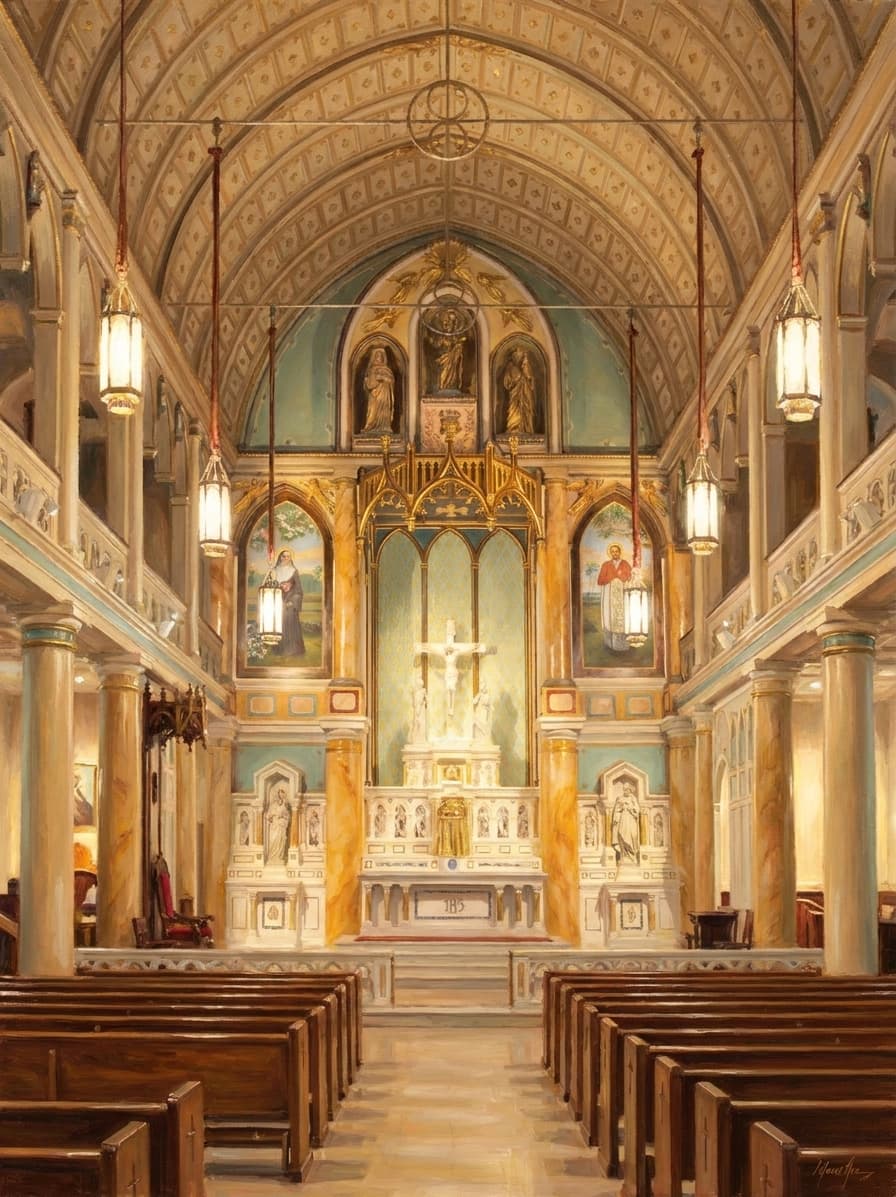
The basilica welcomes both pilgrims and architectural visitors into a vast sanctuary of tranquility framed by monumental colonnades. Morning and afternoon hours afford breathtaking natural illumination through the extensive expanses of stained glass, creating vibrant reflections across the Carrara marble.
Highlights
- Marvel at over 7,000 square meters of French stained glass illuminating the central rotunda.
- Walk the monumental Doric peristyle colonnade modeled after St. Peter's Square in Rome.
- Observe the hand-carved indigenous Iroko wood pews equipped with discreet microclimate cooling vents.
- Admire the gilded 10-meter summit cross crowning the soaring neoclassical dome.
Things to Know
- Modest attire covering shoulders and knees is strictly enforced for all visitors entering the sacred perimeter.
- Men are expected to remove hats before entering the narthex and central sanctuary space.
- Tourists may not tour the nave during scheduled Sunday Eucharistic liturgies.
- Photography is welcomed for personal use, but flash equipment and tripods remain prohibited during Mass.
Location
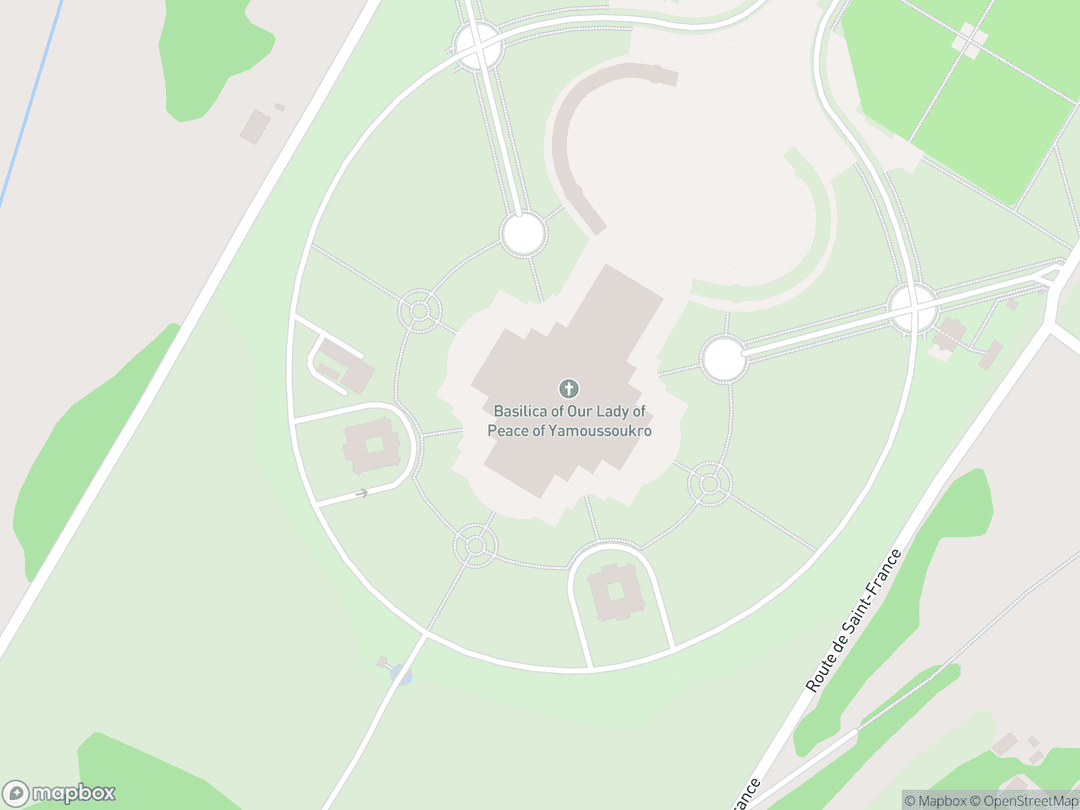
Rue de St. France, BP 1157, Yamoussoukro, Côte d'Ivoire
Hours: Monday to Saturday from 8:30 AM to 5:30 PM; Sunday open for liturgies at 7:00 AM, 9:00 AM, and 10:30 AM.
Getting There: Located in northwestern Yamoussoukro along Rue de St. France, accessible via the A3 expressway from Abidjan or local taxis.
Get DirectionsTips for Your Visit
Optimal Lighting Windows
Visit during mid-morning or mid-afternoon to experience the brightest sunbeams shining through the high clerestory windows.
Respect Sacred Liturgies
Plan non-worship explorations on weekdays or Saturday afternoons to avoid disrupting weekend parish Eucharistic celebrations.
Guided Spiritual Walkthroughs
Request an on-site docent at the narthex entrance for contextual commentary on the biblical figures illustrated in the glass.
About
Rooted in the shared Abrahamic tradition that conceives sacred sanctuaries as physical conduits of divine presence and communal shelter, the Basilica of Our Lady of Peace stands as a monumental expression of Christian worship in West Africa. Rising gracefully from the tropical plains of Yamoussoukro, the sanctuary reflects the eternal biblical aspiration for divine reconciliation and universal brotherhood.
Constructed between 1985 and 1989 under the vision of President Félix Houphouët-Boigny, the basilica honors the Virgin Mary under her titular patronage of Our Lady of Peace. Consecrated by Pope Saint John Paul II in September 1990, the minor basilica serves as an international pilgrimage destination directly deeded to the Holy See and ministered by the Society of the Catholic Apostolate.
Designed by Lebanese-Ivorian architect Pierre Fakhoury, the edifice draws direct inspiration from St. Peter's Basilica in Vatican City. Its colossal colonnades, expansive dome, and vast acreage of French stained glass form an evocative sanctuary where global architectural heritage meets African devotion, offering a place of prayer for the entire continent.
Gallery
Symbolic Elements
The temple's exterior features intricate carvings, each rich with spiritual meaning:

The Marian Glories Window
Honors the Virgin Mary as Queen of Peace, interceding for unity across the nations of the African continent.

The Gilded Summit Cross
Rising ten meters above the cupola lantern, the cross proclaims Christian redemption over the landscape.

The Presidential Donor Window
Depicts the founder and architect presenting the basilica model during Christ's entry into Jerusalem.

The Twelve Apostles Ring
Twelve towering stained-glass lancets around the drum symbolize the foundational apostolic authority of the Church.

The Dove of the Holy Spirit
A luminous stained-glass centerpiece at the dome apex radiates heavenly golden light across the interior.

The Colonnade of Arms
The semicircular outer colonnade represents the maternal arms of the Church embracing pilgrims from all lands.

The Solomonic Forecourt
The grand geometric esplanade echoes biblical gathering plazas designed to accommodate assemblies before God.
Interesting Facts
Microclimate air conditioning vents are concealed beneath each of the 7,000 Iroko timber pews to preserve aesthetic lines (Tier A).
The church is officially listed as the largest church complex in the world by footprint area at 30,000 square meters (Tier B).
The stained glass installation comprises more than 7,000 square meters crafted across fourteen studios in France (Tier B).
The apex cross measures ten meters tall, carrying the summit above St. Peter's Basilica by twenty meters (Tier A).
A stained-glass panel depicts President Félix Houphouët-Boigny offering the basilica model beside Christ (Tier A).
The basilica was completed in just over three years, contrasting with the century-long erection of Renaissance landmarks (Tier B).
Pope John Paul II conditioned his consecration on a pledge to construct a modern hospital for the impoverished (Tier A).
The entire complex is sovereign Holy See property administered on-site by the Pallottine order (Tier A).
Common Questions
Is the Basilica of Our Lady of Peace the seat of the local bishop?
No, the cathedral of the Diocese of Yamoussoukro is Cathédrale Saint-Augustin located nearby.
Who maintains legal ownership of the basilica?
The basilica is deeded in perpetuity to the Holy See and operated by the Pallottine Fathers.
Why is the basilica's cross taller than St. Peter's Basilica?
The dome structure was designed lower, but a ten-meter apex cross raised total height to 158 meters.
Is the basilica open to non-Catholic visitors?
Yes, respectful visitors of all faiths are welcome to tour the grounds outside scheduled Masses.
Featured Stories
The Apostolic Consecration and Hospital Covenant
September 10, 1990
Before consenting to consecrate such a monumental project, Pope Saint John Paul II engaged in serious pastoral dialogue regarding local poverty. He secured a formal presidential commitment that a comprehensive charity medical facility would rise alongside the shrine, establishing the Saint Joseph Moscati Hospital as the enduring moral balance to the basilica's architectural splendor.
Source: Holy See Press Office
The Transcontinental Crafting of Sacred Light
1987
Master artisan Patrick Lesage mobilized fourteen artisanal ateliers throughout France to blow, dye, and assemble more than seven thousand square meters of faceted glass. Transported in careful ocean freight to Yamoussoukro, the panels were fitted into soaring stone arches to create the twentieth century's largest luminous stained-glass program.
Source: France Vitrail International Archives
Sanctuary of Peace Amidst National Crisis
September 19, 2002
When internal political conflicts bifurcated the nation during the first decade of the millennium, Yamoussoukro lay directly adjacent to volatile buffer territory. The basilica became a venerated oasis of neutrality and safety where divided citizens gathered jointly to pray before Our Lady of Peace for continental healing.
Source: Diocese of Yamoussoukro Historical Records
Timeline
Capital Designation
President Félix Houphouët-Boigny names Yamoussoukro the nation's political capital and initiates monumental civic planning.
MilestonePapal Stone Blessing
Pope Saint John Paul II blesses the foundation stone during his apostolic pastoral voyage to Côte d'Ivoire.
component.timeline.groundbreakingActive Structural Erection
French contractor Dumez commences continuous construction with an international workforce of 1,500 builders.
EventDome Framework Enclosure
Engineers complete the massive 90-meter outer cupola and lift the monumental summit lantern into place.
MilestoneCivil Construction Completion
Primary construction wraps up after three intensive years of architectural labor and imported marble masonry.
MilestoneSolemn Consecration
Pope Saint John Paul II consecrates the Minor Basilica following formal covenants establishing adjacent charitable healthcare facilities.
DedicationPallottine Custody
The Holy See entrusts daily pastoral leadership and site administration to the Society of the Catholic Apostolate.
EventPresidential Obsequies
The basilica hosts the solemn state funeral of founder Félix Houphouët-Boigny following his passing.
EventSanctuary of Reconciliation
During civil strife across the country, the basilica remains unblemished as a neutral sanctuary of peace.
MilestoneHealthcare Covenant Fulfilled
The Saint Joseph Moscati International Catholic Hospital opens adjacent to the grounds, fulfilling the 1990 papal pledge.
MilestoneConsecration Jubilee
The church commemorates thirty years of active liturgical ministry and international Marian pilgrimage.
EventHistory by Decade
1980s — Conception and Rapid Erection
This sanctuary rises to witness to divine peace and provide a beacon of prayer for the peoples of Africa.
Following the designation of Yamoussoukro as the nation's political capital, President Houphouët-Boigny conceived a colossal minor basilica dedicated to continental peace. Architect Pierre Fakhoury and European construction contractor Dumez spearheaded continuous round-the-clock labor with 1,500 artisans, finishing primary structural masonry in a record three years.
1990s — Papal Consecration and National Transition
May this Basilica of Our Lady of Peace be a place where hearts discover the path of reconciliation.
Pope Saint John Paul II consecrated the minor basilica in September 1990 after deeding the monument directly to the Holy See. Pastoral stewardship was formally assigned to the Pallottine Fathers, and in 1994 the basilica served as the monumental venue for the state obsequies of its founding patron.
2000s — Beacon of Sanctuary During Conflict
Throughout the regional tensions of the First Ivorian Civil War, the basilica complex stood completely unharmed and respected by all factions. Thousands of citizens made annual Marian pilgrimages across territorial lines, validating the shrine's vocational calling as a sanctuary of unity.
2010s to Present — Fulfilling Covenants and Living Heritage
The opening of the Saint Joseph Moscati International Catholic Hospital in 2015 fully materialized the historic charitable pledge made during the 1990 papal consecration. Celebrating more than three decades of daily Eucharistic liturgies, the basilica remains a thriving international center of Catholic spiritual life.
Architecture & Facilities
The Basilica of Our Lady of Peace represents an ambitious expression of Renaissance Revival and Baroque Revival architecture, consciously echoing the monumental geometry, axial forecourts, and harmonious column rhythms of St. Peter's Basilica in Rome while incorporating modern tropical engineering and indigenous craftsmanship.
Building Materials
Carrara Marble
Over thirty thousand square meters of Italian marble pave the sanctuary floor and clad interior wall facings.
Iroko Hardwood
Native West African Iroko timber was seasoned and carved into seven thousand individual congregational pews.
Blown Architectural Glass
More than seven thousand square meters of hand-colored mouth-blown glass were produced by French artisanal ateliers.
Architectural Concrete
High-grade reinforced concrete forms the massive load-bearing drum, peristyle pillars, and exterior colonnades.
Interior Features
Central Rotunda
A vast circular congregational space accommodating seven thousand seated worshipers beneath the soaring cupola.
Sanctuary High Altar
The primary marble Eucharistic altar positioned beneath the dome apex for papal and solemn diocesan liturgies.
Apostolic Clerestory
Soaring vertical gallery walls framed by twelve towering lancet windows depicting the twelve Apostles of Christ.
Narthex Vestibule
A monumental entry hall featuring narrative stained glass depicting the triumphal biblical entry into Jerusalem.
Temple Grounds
The complex spans thirty hectares framed by sweeping French formal gardens, axial walking avenues, and a dual Doric colonnade encompassing 128 monumental columns capable of hosting several hundred thousand outdoor assembly pilgrims.
Additional Facilities
The complex incorporates an official papal villa, separate administrative rectories for the Pallottine custodians, and the adjacent Saint Joseph Moscati International Catholic Hospital.
Religious Significance
Operating within the historic Christian and Abrahamic understanding of sacred sanctuaries, the Basilica of Our Lady of Peace offers a physical dwelling for divine communion, liturgical assembly, and the pursuit of peace.
To serve as a continental shrine honoring the Blessed Virgin Mary and gathering worshipers to pray for peace, reconciliation, and divine grace.
Sacred Ordinances
The Holy Sacrifice of the Mass
Daily and solemn Eucharistic liturgies celebrating the memorial of Christ's passion, death, and resurrection.
Marian Intercessory Devotions
Pilgrimage prayers and recitations of the Holy Rosary pleading for national harmony and continental protection.
Sacrament of Reconciliation
The confessional rite through which penitents receive sacramental absolution and divine forgiveness.
Theology of Minor Basilicas
As an international minor basilica deeded in perpetuity to the Vatican, the church maintains direct spiritual and juridical union with the Bishop of Rome, symbolizing universal Catholic communion within the heart of West Africa.
Marian Title of Queen of Peace
Dedicated to Mary as Regina Pacis, the basilica invites believers across all ethnic, national, and religious divisions to seek that divine peace which transcends human understanding.
Sources & Research
Every fact on Temples.org is backed by verified Sources & Research. Each piece of information is rated by source tier and confidence level.
View All Sources (7)
| Field | Source | Tier | Retrieved |
|---|---|---|---|
| Ecclesial Governance & Minor Basilica Consecration | Holy See (Libreria Editrice Vaticana) (opens in a new tab) | A | 2026-02-18 |
| Diocesan Shrines and Regional Administration | Diocese of Yamoussoukro (opens in a new tab) | A | 2026-02-18 |
| Architectural Construction Records and Engineering Oversight | VINCI Construction (Dumez) (opens in a new tab) | A | 2026-02-18 |
| Stained Glass Artistry and Monumental Fabrication | France Vitrail International (opens in a new tab) | B | 2026-02-18 |
| Pallottine Custodianship and Pastoral Ministry | Society of the Catholic Apostolate (opens in a new tab) | B | 2026-02-18 |
| Architectural Dossier and Physical Scale | Aga Khan Documentation Center (ArchNet) (opens in a new tab) | B | 2026-02-18 |
| Hospital Covenant and Social Ministry | Saint Joseph Moscati Hospital Foundation (opens in a new tab) | B | 2026-02-18 |