Visitor Insights
Visiting Hōryū-ji
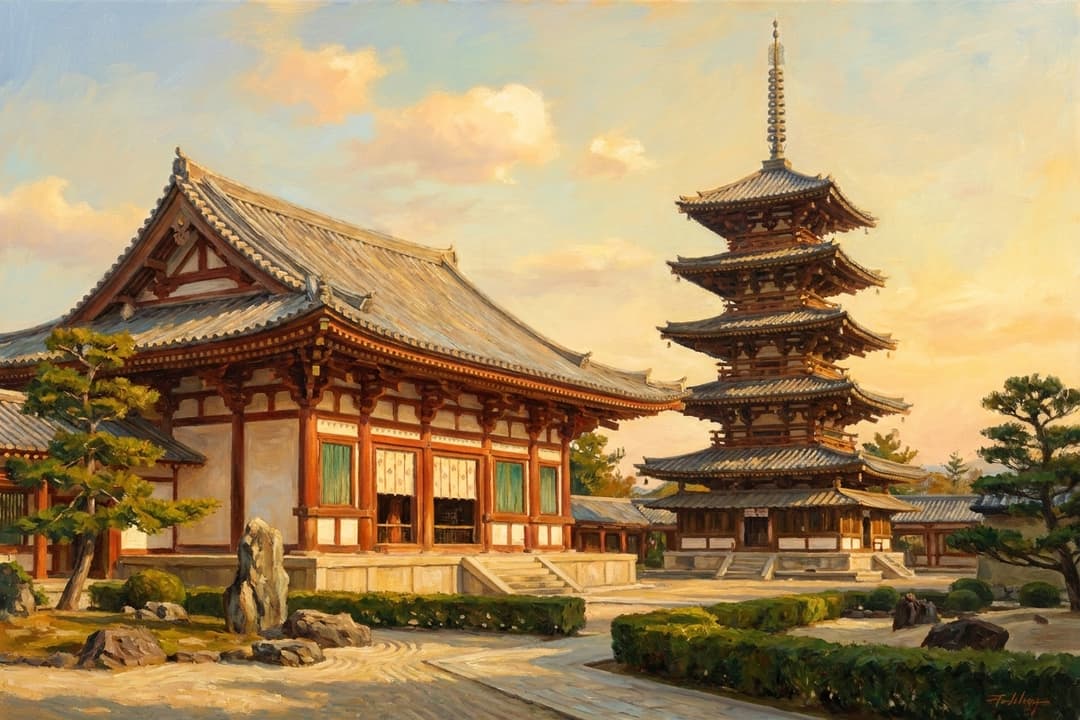
Visiting Hōryū-ji offers an immersive encounter with Japan's earliest Buddhist heritage across sprawling, gravel courtyards. The Western Precinct houses the world's oldest wooden structures, while the tranquil Eastern Precinct enshrines the legendary Hall of Dreams. Visitors should plan at least two hours to wander the precincts and inspect the priceless early sculptures.
Highlights
- Marvel at the world's oldest standing wooden architecture in the Kondō and Five-Story Pagoda.
- Contemplate the archaic smiles and bronze drapery of the Tori Busshi Shaka Triad cast in 623 CE.
- Explore the octagonal Yumedono, built upon the archaeological foundation of Prince Shōtoku's palace.
- View the intricate 8th-century clay dioramas staged within the base of the five-story pagoda.
Things to Know
- A single joint ticket grants entry to the Western Precinct, Daihōzōin Treasure Gallery, and Eastern Precinct.
- The sacred Guze Kannon inside Yumedono is unveiled only during limited weeks in spring and autumn.
- Extensive walking across wide gravel courtyards makes comfortable footwear essential.
- Photography is strictly forbidden inside temple interiors and museum exhibition halls.
Location
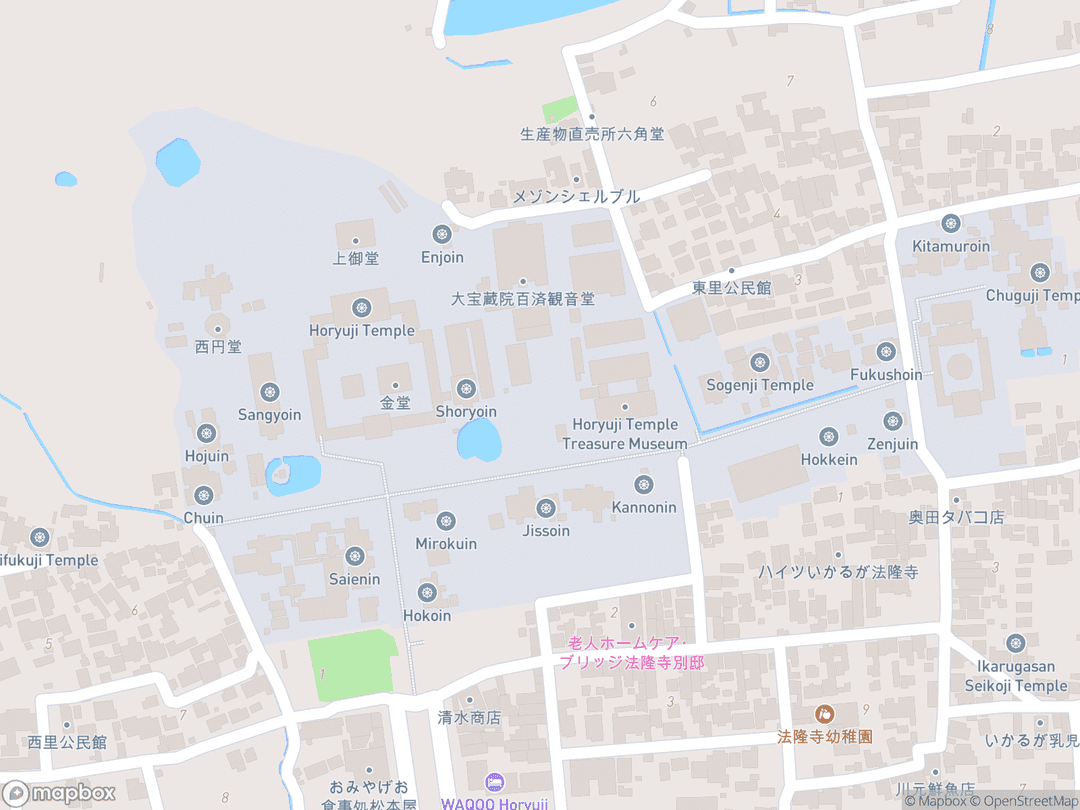
1-1-1 Hōryūji Sannai, Ikaruga-chō, Ikoma-gun, Nara Prefecture 636-0115, Japan
Hours: 8:00 AM – 5:00 PM (Feb 22 – Nov 3); 8:00 AM – 4:30 PM (Nov 4 – Feb 21)
Getting There: From JR Hōryūji Station, walk 20 minutes north or board the Nara Kōtō bus to the Hōryūji-mae stop.
Get DirectionsTips for Your Visit
Arrive at Opening
Arrive at 8:00 AM to experience the silent courtyards and morning light on the Kondō before tour groups arrive.
Seasonal Foliage
Visit in mid-autumn or late March when vibrant foliage and cherry blossoms frame the ancient Asuka woodwork.
Treasure Gallery
Do not skip the Daihōzōin museum pavilion, which safely displays the historic Tamamushi Shrine and Kudara Kannon.
About
Hōryū-ji, originally consecrated in 607 CE by Prince Shōtoku and Empress Suiko, stands as the spiritual dawn of Japanese Buddhism. Conceived as both a devotional sanctuary and an academic monastery, it rooted continental Buddhist metaphysics firmly into the cultural landscape of Asuka-era Japan.
As part of the ancient Dharmic continuum, the temple bridges cosmic liberation and the physical world through sacred architecture. Following a cataclysmic fire in 670 CE, the Western Precinct was rebuilt in an unprecedented asymmetrical arrangement that perfectly balanced the transcendent pagoda reliquary against the grounded Golden Hall.
Centuries of continuous devotion, scholarly inquiry, and preservation have kept Hōryū-ji alive as the headquarters of the independent Shōtoku sect. Today, its surviving seventh-century hinoki timber structures endure as the oldest standing wooden architecture on Earth and an invaluable UNESCO World Heritage Site.
Gallery
Symbolic Elements
The temple's exterior features intricate carvings, each rich with spiritual meaning:

The Shinbashira Central Mast
Suspended central hinoki pillar functioning as the cosmic Axis Mundi connecting earth with the Buddhist heavens.

Five Pagoda Roof Tiers
Descending roof planes symbolizing the five Dharmic elements of Earth, Water, Fire, Wind, and Void.

The Bronze Sōrin Spire
Nine-ringed pagoda pinnacle derived from Indian stupa parasols, topped by the jewel of spiritual liberation.
Shaka Triad Bronze Ensemble
Masterwork by Tori Busshi capturing Gautama Buddha displaying mudrās that dispel fear and grant spiritual gifts.

Pagoda Clay Tableaux
Earthenware dioramas depicting pivotal moments including the Buddha's Parinirvāṇa and relic distributions.
Guze Kannon Camphor Statue
Sacred image of Avalokiteśvara carved from camphor wood, embodying Prince Shōtoku's compassionate spiritual presence.

Manji-kuzushi Balustrades
Interlocking geometric key carvings representing auspicious cosmic rotation and the perpetual wheel of Dharma.

Carved Eave Dragons
Momoyama-era sculpted dragon braces installed on the Kondō to spiritually guard the timber halls against fire.
Interesting Facts
The Kondō and Five-Story Pagoda are universally recognized as the world's oldest standing wooden buildings. (Tier A)
Centuries of builders from Kongō Gumi, the world's oldest continuously operating construction company, trace their origins to Hōryū-ji's founding. (Tier B)
The pagoda's central timber acts as a seismic pendulum, inspiring dynamic engineering principles used in modern skyscrapers like Tokyo Skytree. (Tier B)
For centuries the Guze Kannon was an unseen hidden Buddha, wrapped in 500 meters of cloth until unveiled in 1884. (Tier A)
The 1949 restoration fire in the Kondō shocked Japan into creating its foundational Cultural Properties Protection Law. (Tier A)
Ancient lore claims no spiders spin webs in the halls and no birds nest beneath the eaves, thanks to aromatic hinoki oils. (Tier C)
The seventh-century Tamamushi Shrine in the treasury was originally adorned with the iridescent wings of thousands of jewel beetles. (Tier B)
In 1878, the temple saved itself from Meiji anti-Buddhist financial ruin by gifting over 300 ancient masterpieces to the Emperor. (Tier A)
Before modern saws existed in Japan, craftsmen split and hewed every massive pillar using wedge splitting and hand adzes. (Tier B)
Common Questions
Are the buildings at Hōryū-ji really the oldest wooden structures on Earth?
Yes, modern dendrochronology confirms the hinoki timbers of the Kondō and Pagoda were felled in the late seventh century.
Why are the Pagoda and Golden Hall arranged side-by-side rather than in a line?
Asuka architects broke from strict Chinese axial layouts to forge an asymmetrical visual harmony between spiritual relics and public worship.
When can visitors view the famous Guze Kannon statue?
The mystical camphor-wood image is unveiled to the public only during special exhibition weeks in spring and autumn.
Can visitors enter the interior of the Five-Story Pagoda?
Visitors cannot walk inside the tower, but open grilled bays allow clear views of the 8th-century clay tableaux.
How does the Five-Story Pagoda survive powerful earthquakes?
Its central suspended shinbashira timber acts as an independent pendulum that dissipates kinetic seismic energy during tremors.
Featured Stories
The Unveiling of the Secret Dream Buddha
1884
For hundreds of years, the Guze Kannon statue of the Yumedono remained wrapped in extensive layers of white cloth, sealed as a hidden deity that monks feared to gaze upon. In 1884, American philosopher Ernest Fenollosa and scholar Okakura Kakuzō received imperial authority to cut the seals despite warnings of divine retribution. When the final shroud dropped, they uncovered a radiant seventh-century camphor-wood sculpture with its original leaf gold glistening as if newly cast.
Source: Tokyo National Museum Historical Records
The Blaze That Changed Japan's Heritage Laws
January 26, 1949
During the comprehensive Shōwa restoration of the Kondō, an accidental fire erupted within the hall, scorching the world-renowned seventh-century wall frescoes. The cultural catastrophe devastated the post-war Japanese public and triggered urgent political action. Within sixteen months, the Diet passed the landmark Law for the Protection of Cultural Properties, establishing January 26 as National Cultural Heritage Disaster Prevention Day.
Source: Agency for Cultural Affairs Historical Archives
The Master Artisans of Baekje and Kongō Gumi
607
To realize Prince Shōtoku's vision of an imperial Buddhist sanctuary, skilled craftsmen and carpenters crossed the sea from the ancient Korean kingdom of Baekje. Among these master guild artisans was Shigemitsu Kongō, who founded the construction firm Kongō Gumi to erect the first monumental temple halls. His familial company went on to protect and restore Hōryū-ji across fourteen centuries, enduring as the oldest business in recorded history.
Source: Ikaruga Municipal Cultural Ledger
Timeline
Palace at Ikaruga
Prince Shōtoku initiates construction of his administrative and residential estate at Ikaruga.
MilestoneInitial Temple Consecration
Prince Shōtoku and Empress Suiko dedicate Ikaruga-dera in honor of the deceased Emperor Yōmei.
DedicationShaka Triad Cast
Master sculptor Tori Busshi casts the historic gilded bronze Shaka Triad in memory of Prince Shōtoku.
MilestoneCatastrophic Fire
A sudden conflagration recorded in the Nihon Shoki destroys the original Wakakusa Garan compound.
EventReconstruction Begins
Builders begin erecting the new Sai-in complex northwest of the original footprint using Asuka framing techniques.
MilestoneWestern Precinct Completed
The Five-Story Pagoda and Kondō are finalized alongside the installation of dramatic clay tableaux.
DedicationYumedono Consecrated
Priest Gyōshin Sōzu oversees the completion of the octagonal Hall of Dreams on the palace ruins.
DedicationDaikōdō Rebuilt
The Great Lecture Hall is reconstructed after a severe lightning strike destroyed the original Heian structure.
RenovationMomoyama Restorations
Toyotomi Hideyori finances major structural supports, adding sculpted dragon braces beneath the Kondō eaves.
RenovationImperial Treasure Donation
The temple donates over 300 sacred artifacts to the Imperial Household to secure long-term preservation funding.
EventKondō Fire
A restoration fire damages the seventh-century murals, prompting Japan to enact its Cultural Properties Protection Law.
EventUNESCO Inscription
Hōryū-ji and surrounding Buddhist monuments are designated Japan's inaugural UNESCO World Heritage Site.
MilestoneHistory by Decade
600s–620s — Prince Shōtoku's Original Foundation
Harmony is to be valued, and an avoidance of wanton opposition is to be honored.
Prince Shōtoku founded Ikaruga-dera in 607 CE alongside Empress Suiko to fulfill an imperial vow to his father. The initial complex, now identified as the Wakakusa Garan, stood south of the modern precinct and was staffed by continental scholars. Following Shōtoku's death in 622 CE, Tori Busshi cast the monumental bronze Shaka Triad to memorialize his spiritual leadership.
670s–710s — Cataclysm and Asymmetrical Rebirth
On April 30, 670 CE, a catastrophic fire devastated the original temple compound, burning every structure to ash. Rather than abandoning the site, imperial patrons initiated an ambitious reconstruction slightly northwest using an innovative side-by-side plan. By 711 CE, master carpenters completed the extant Five-Story Pagoda and Kondō, inaugurating the world's most enduring wooden structures.
730s–790s — Consecration of the Hall of Dreams
In 739 CE, high priest Gyōshin Sōzu lamented the abandoned state of Prince Shōtoku's former residential palace ruins. Rallying court support, he established the Eastern Precinct centered upon the octagonal Yumedono, enshrining the mystical Guze Kannon. Hōryū-ji expanded its prominence as an elite center of scholastic study for the Sanron and Hossō philosophical schools.
920s–990s — Heian Devotion and Structural Renewal
The cult of Prince Shōtoku deepened significantly during the middle Heian period as court aristocrats made regular pilgrimages to Ikaruga. When lightning destroyed the Great Lecture Hall in 925 CE, the imperial court financed its expansive reconstruction in 990 CE. The expanded hall enclosed the northern perimeter of the Sai-in, completing the balanced temple precinct visible today.
1590s–1600s — Momoyama Patronage and Seismic Reinforcement
Centuries of typhoons and earthquakes placed immense stress upon the cantilevered eaves of the main halls by the late sixteenth century. General Toyotomi Hideyori and his mother Yodo-dono sponsored comprehensive restorations, stabilizing stone bases and reinforcing brackets. Master carvers installed dramatic ascending and descending dragon braces at the Kondō's corners to spiritually ward against lightning.
1870s–1880s — Meiji Crisis and Preservation via Imperial Gift
The anti-Buddhist fervor of the 1868 Meiji Restoration deprived Hōryū-ji of its feudal land revenues, threatening catastrophic decay. In 1878, temple leadership made the decisive move to gift over three hundred masterworks to the Imperial Household in exchange for perpetual state support. This historic endowment secured the compound's preservation while establishing the foundational collection of the Tokyo National Museum.
1930s–1950s — The Shōwa Restoration and Cultural Legislation
In 1934, engineers initiated the Shōwa Great Restoration, systematically dismantling the ancient timber joinery for scientific conservation. The tragic Kondō fire of 1949 devastated its original wall murals but catalyzed the enactment of Japan's Cultural Properties Protection Law in 1950. That same year, Hōryū-ji became an independent ecumenical headquarters by establishing the Shōtoku Sect.
1990s–Present — World Heritage Inscription and Modern Stewardship
Hōryū-ji made history in December 1993 by becoming one of Japan's inaugural UNESCO World Heritage Sites. Modern custodians combine non-invasive laser monitoring, microclimate data logging, and traditional carpentry skills to preserve the Asuka timbers. The complex remains a vibrant locus of daily liturgical prayer and a global monument to early Dharmic transmission.
Architecture & Facilities
Hōryū-ji represents the pinnacle of Asuka-period Buddhist architecture, reflecting the profound synthesis of continental Chinese and Korean timber framing adapted to Japan's seismic environment. Departing from classical continental axial alignment, the Western Precinct balances the vertical spire of its five-story pagoda against the broad mass of its Golden Hall. The complex features organic entasis on its structural pillars, distinctive cloud-shaped bracket complexes, and monumental hipped-gabled tile roofs.
Building Materials
Hinoki Cypress
Aromatic, rot-resistant cypress hewn by hand using axes and adzes before modern saws existed in Japan.
Granite Plinth Boulders
Hand-dressed natural granite boulders resting atop rammed earth to isolate timber pillars from subsoil moisture.
Ceramic Hongawarabuki Tiles
Interlocking flat and semi-cylindrical baked clay tiles engineered to shed heavy monsoon rainfall.
Natural Mineral Pigments
Iron-oxide red bengara and malachite green mineral washes applied to exterior timber frames and window grilles.
Interior Features
Kondō Main Sanctuary
Sacred inner hall enshrining the 623 CE bronze Shaka Triad surrounded by ancient scorched wall frescoes.
Pagoda Grotto Bays
Four ground-tier alcoves sheltering dynamic 711 CE clay tableaux illustrating the life and Parinirvāṇa of the Buddha.
Daikōdō Lecture Chamber
Expansive monastic hall rebuilt in 990 CE, designed for scholarly discourse and housing Yakushi Buddha triads.
Yumedono Dream Sanctuary
Octagonal memorial hall enshrining the gilded camphor-wood Guze Kannon upon Prince Shōtoku's former palace.
Temple Grounds
The temple grounds encompass extensive gravel courtyards framed by low plaster walls and ancient cloister corridors. Towering historic black pines line the southern approach avenue leading through the Nandaimon gate, while the Eastern Precinct features tranquil gardens, moss beds, and secluded residential quarters that isolate the sacred structures from modern urban intrusion.
Additional Facilities
The Daihōzōin Great Treasure Gallery houses world-renowned masterpieces including the Kudara Kannon statue and the jewel-beetle adorned Tamamushi Shrine.
Religious Significance
Rooted in the Mahāyāna Buddhist tradition and shared Dharmic heritage, Hōryū-ji was designed as an earthly mandala where spiritual seekers encounter the Three Jewels: the Buddha, the Dharma, and the Sangha. Prince Shōtoku established the temple to anchor Buddhist ethics into Japanese governance, viewing the monastic community as a sanctuary of cosmic order and moral enlightenment.
To serve as a national center for Buddhist study, liturgical meditation, and relic veneration that harmonizes society through cosmic Dharma.
Sacred Ordinances
Shari-kuyō (Relic Veneration)
Devotional contemplation of the historical Buddha's sacred physical relics sheltered beneath the pagoda's central pillar.
Hōe Academic Debates
Scholastic Buddhist assemblies where monks debate scriptural doctrine from the Lotus, Vimalakīrti, and Queen Śrīmālā sutras.
Taishi-kō (Memorial Liturgy)
Annual liturgical rites celebrating the spiritual virtues and compassionate leadership of Prince Shōtoku.
The Pagoda as Cosmic Stupa
In the Dharmic worldview, the stupa embodies the living body and enlightened mind of the Buddha. At Hōryū-ji, the five-story pagoda transforms the ancient Indian mound into an architectural tower. Its five roof levels correspond to the Mahābhūta elements of Earth, Water, Fire, Wind, and Void, reminding pilgrims that all phenomena arise from and dissolve into transcendent emptiness.
Devotion to Prince Shōtoku
Prince Shōtoku is revered in Japanese Buddhism as an incarnation of Avalokiteśvara, the Bodhisattva of Infinite Compassion. Following his death, Hōryū-ji became the epicenter of the Taishi Shinkō devotion. The octagonal Yumedono and the daily services of the Shōryō-in maintain this unbroken lineage of revering the prince as the father of Japanese spiritual civilization.
Sources & Research
Every fact on Temples.org is backed by verified Sources & Research. Each piece of information is rated by source tier and confidence level.
View All Sources (8)
| Field | Source | Tier | Retrieved |
|---|---|---|---|
| About & Historical Background | Hōryū-ji Religious Administrative Office (opens in a new tab) | A | 2026-03-31 |
| Architecture & Preservation | UNESCO World Heritage Centre (opens in a new tab) | B | 2026-03-31 |
| Timeline & Artifact Collections | Tokyo National Museum - Gallery of Hōryū-ji Treasures (opens in a new tab) | A | 2026-03-31 |
| Heritage Legislation & Kondō Fire | Agency for Cultural Affairs, Government of Japan (opens in a new tab) | A | 2026-03-31 |
| Visitor Insights & Access | Nara Prefectural Government Tourism Division (opens in a new tab) | A | 2026-03-31 |
| Regional Context & Geography | Ikaruga Town Official Municipal Office (opens in a new tab) | A | 2026-03-31 |
| Architectural History & Craft Lineages | Encyclopaedia Britannica (opens in a new tab) | B | 2026-03-31 |
| Carpentry Heritage & Structural Systems | Takenaka Carpentry Tools Museum (opens in a new tab) | B | 2026-03-31 |