Visitor Insights
Visiting Izumo Grand Shrine
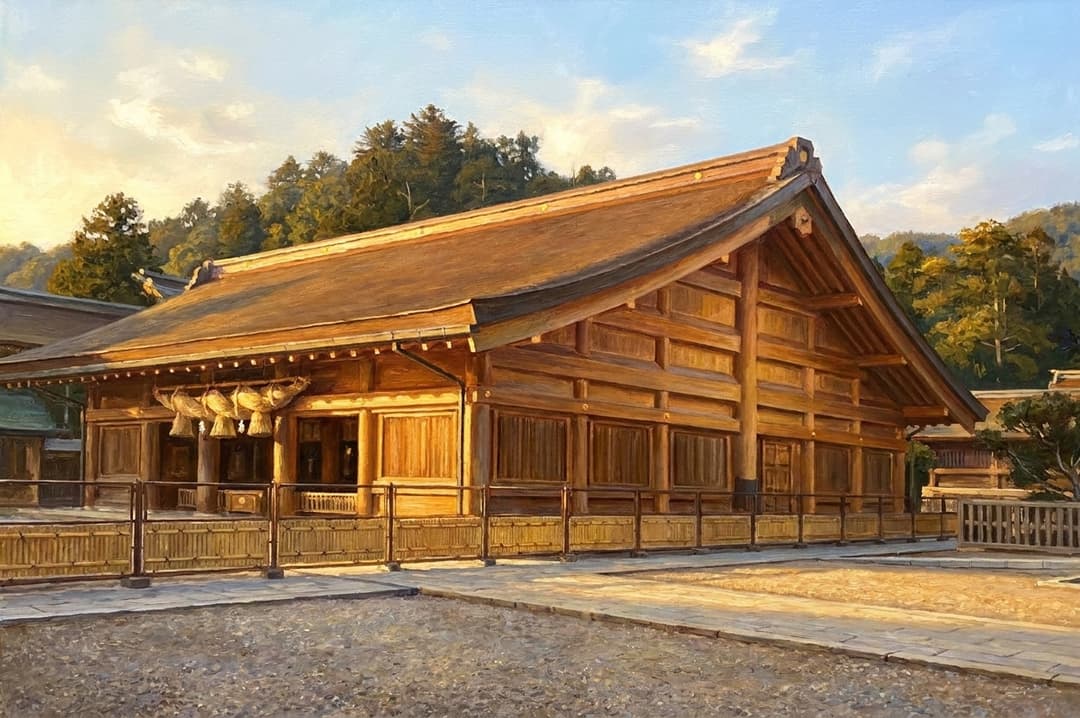
Visiting Izumo Grand Shrine offers an immersive journey into primordial Japanese spirituality and timber craftsmanship. The shrine approach descends gently through sacred black pines into peaceful courtyards framed by forested mountains. Visitors experience distinctive ritual practices, including four deliberate claps instead of the customary two.
Highlights
- Marvel at the colossal 5.2-ton straw rope hanging from the Kaguraden oratory portico.
- Walk the western sanctuary perimeter to offer quiet prayers facing Ōkuninushi's hidden western gaze.
- Observe the charming bronze sculptures of the Hare of Inaba placed across the wooded grounds.
- Explore the Jūkyūsha timber halls built to accommodate all visiting kami during autumn councils.
Things to Know
- The inner sanctum of the National Treasure Honden is closed to the general public to preserve its sacred sanctity.
- Remember to perform four reverent claps during prayer rather than the conventional two claps.
- Do not throw coins into the sacred Kaguraden rope fibers, as protective netting is now strictly installed.
Location
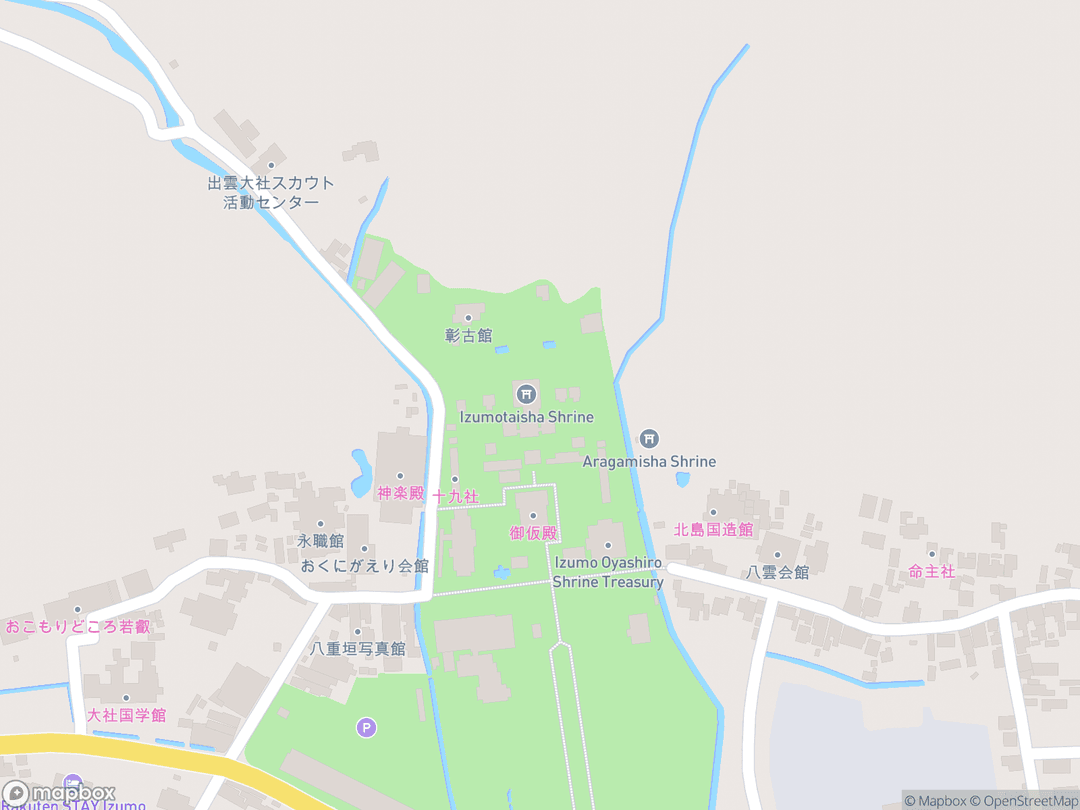
195 Kitsukihigashi, Taisha-machi, Izumo-shi, Shimane-ken 699-0701, Japan
Hours: Precinct grounds open daily 6:00 AM to 8:00 PM; Treasure Hall open 8:30 AM to 4:30 PM
Getting There: Ichibata Bus runs directly from JR Izumoshi Station in 25 minutes, or take the Ichibata Electric Railway to Izumo Taisha-mae Station followed by a 7-minute walk.
Get DirectionsTips for Your Visit
Prayer Etiquette
Follow the traditional Izumo protocol: bow twice deeply, clap four distinct times, recite your prayer silently, and conclude with a final deep bow.
West Wall Veneration
Because Ōkuninushi internally faces west within the main hall, visit the western outer fence to pray directly toward the deity's sacred profile.
About
Izumo Grand Shrine (Izumo Ōyashiro) stands as one of Japan's most ancient and revered Shinto sanctuaries. Rooted in the sacred traditions of Shinto and the veneration of the kami, the sanctuary honors the natural rhythms, unseen spiritual realities, and ancestral forces that bind human life to divine order.
According to early classical chronicles, the earthly sovereign deity Ōkuninushi no Ōkami ceded visible temporal authority during the primordial compact of Kuniyuzuri. In return, an immense elevated sanctuary was constructed where Ōkuninushi governs the invisible realm of spirits, fortune, and human destinies.
Unlike shrines dedicated to imperial administrative governance, Izumo serves as the heart of en-musubi, the divine intertwining of relationships and fate. Every autumn, millions of deities depart their regional domains across Japan to convene within Izumo's sacred pine-shrouded precincts.
Gallery
Symbolic Elements
The temple's exterior features intricate carvings, each rich with spiritual meaning:
Kaguraden Ōshimenawa
This 5.2-ton hand-twisted straw rope marks the threshold of the sacred dance hall with sovereign divine authority.

Four Ritual Claps
The distinctive four claps express deep reverence for the seasons, directions, and the spiritual union of destiny.

Rabbits of Inaba
Bronze hares scattered throughout the grounds honor the mythical animal rescued by Ōkuninushi as an emblem of mercy.

The Jūkyūsha Sanctuaries
Twin nineteen-door wooden lodging halls flank the Honden to house all visiting deities during their annual autumn assembly.

Matsu no Sandō
A three-lane avenue shaded by black pines reserves its elevated central path solely for the passage of the kami.
Copper Torii Gate
Consecrated in 1666, this metal gate delineates the boundary between secular human existence and the divine presence.

Heart Pillar
The massive central cedar column structurally anchors the sanctuary while representing the cosmic world axis.

Crossed Chigi Finials
Vertically sliced roof beams projecting into the sky symbolize masculine divine authority atop the sacred gables.
Interesting Facts
While the rest of Japan calls the tenth lunar month Kannazuki ('the month without gods'), Izumo names it Kamiarizuki ('the month where the gods are present') (Tier A).
The giant Kaguraden shimenawa is deliberately twisted from left to right, reversing the standard direction found at all other Shinto shrines (Tier A).
During the autumn divine council, eight million kami convene to deliberate en-musubi, determining every human relationship and partnership for the coming year (Tier B).
Unlike most Japanese shrines built atop hills, visitors approach Izumo by walking downward into a lush, mystical forested hollow (Tier C).
Chief Priests of the Senge lineage trace their genealogy back over eighty unbroken generations, a family tree second in antiquity only to Japan's Imperial Family (Tier B).
Archaeologists in 2000 unearthed massive thirteenth-century tripartite cedar pillar bases that validated Heian-era manuscripts describing a forty-eight-meter elevated hall (Tier A).
The shrine flies one of Japan's largest national flags atop a forty-seven-meter pole engineered to match the height of its ancient sanctuary (Tier C).
Within the Main Sanctuary, the enshrined deity sits facing due west, prompting seasoned pilgrims to pray before a special window at the western outer fence (Tier A).
Common Questions
Why do worshippers clap four times at Izumo Taisha?
The four claps honor the four seasons, cardinal directions, and the intertwining of destinies within unseen cosmic order.
What is the meaning of Kamiarizuki?
It designates the tenth lunar month when Japan's eight million deities leave local shrines to gather at Izumo.
Can regular visitors enter the Main Sanctuary?
Public visitors view the National Treasure Honden from the outer gates while only priests enter the inner court.
Why does the giant straw rope twist to the left?
The rope is woven in reverse from standard shrines to signify Izumo's unique, autonomous cosmological sovereignty.
Featured Stories
The Primordial Compact of Kuniyuzuri
712
According to ancient Shinto scriptures, the benevolent deity Ōkuninushi relinquished rule over earthly Japan to the celestial lineage of the sun goddess Amaterasu. In recognition of this noble surrender, the heavenly realm pledged to construct an incomparable sanctuary where Ōkuninushi would forever oversee the spiritual fate of humanity. This sacred covenant established Izumo as the ultimate guardian of unseen connections and cosmic harmony.
Source: Izumo Shrine Office
Unearthing the Ancient Colossal Columns
2000
For centuries, historians doubted ancient Heian-period manuscripts that claimed Izumo once towered forty-eight meters high on immense timber stilts. During routine precinct utility work in 2000, excavators discovered three ancient cedar trunks bound together by thick bronze bands to form a single three-meter pillar base. This monumental archaeological discovery validated ancient architectural records and demonstrated the brilliant engineering prowess of medieval craftsmen.
Source: Izumo Ōyashiro Archaeological Research
The Annual Divine Council of Destinies
November 2013
Each autumn during Kamiarizuki, priests light sacred bonfires at Inasa Beach to welcome the eight million deities of Japan as they arrive across the waves. The deities reside in the nineteen-door flanking halls and convene the sacred Kamuhakari council to weave the threads of human relationships for the coming year. Pilgrims from across the nation gather in reverent silence, hoping the divine council will bless their marriages, friendships, and life journeys.
Source: Izumo Cultural Heritage Foundation
Timeline
Codification in the Kojiki
Imperial scribes record the Kuniyuzuri myth detailing the construction of Izumo's celestial sanctuary.
MilestoneDocumented in the Kuchizusami
Scholar Minamoto no Tamenori ranks Izumo as Japan's largest timber structure at forty-eight meters.
MilestoneKamakura Sengū Construction
Carpenters erect the massive elevated Honden anchored by tripartite cedar foundation columns.
MilestoneDivision of Hereditary Priestly Clans
The ancient Kokuso lineage splits into the Senge and Kitajima families to co-manage ritual duties.
MilestoneKanbun Era Reconstruction
The Matsue Domain and Tokugawa Shogunate complete the twenty-fourth major rebuilding cycle.
RenovationCompletion of the Current Honden
Master carpenters finish the present twenty-four-meter sanctuary in classic Taisha-zukuri style.
DedicationImperial Shrine Reorganization
The government officially renames Kizuki no Ōyashiro as Izumo Ōyashiro under the modern ranking system.
EventNational Treasure Designation
The Japanese government designates the 1744 Main Sanctuary as a National Treasure.
MilestoneReconstruction of the Haiden
Craftsmen consecrate the rebuilt cypress Oratory following a tragic fire in 1953.
RenovationCompletion of the Kaguraden
The Sacred Dance Hall opens featuring Japan's largest hand-twisted rice-straw shimenawa.
MilestoneDiscovery of Ancient Foundation Pillars
Archaeologists unearth bundled three-meter cedar trunks confirming Heian-era architectural dimensions.
MilestoneHeisei Periodic Sengū Consecration
Priests re-enshrine Ōkuninushi after a five-year restoration using 640,000 cypress bark layers.
DedicationHistory by Decade
Antiquity to 720 — The Mythological Foundations
During Japan's prehistoric transition from the Yayoi to Kofun periods, the Izumo basin flourished as an independent cultural power renowned for bronze metallurgy. The compilation of the Kojiki and Nihon Shoki formalized the theological treaty of Kuniyuzuri, establishing Izumo's sacred obligation to minister to the spiritual realm.
970s to 1240s — Era of the Sky-Piercing Sanctuary
Educational primers of the Heian period ranked the soaring timber pavilion of Izumo as the largest wooden building in the Japanese archipelago. Fierce maritime storms caused structural collapses throughout the eleventh and twelfth centuries, demanding repeated heroic reconstructions by regional master carpenters.
1248 to 1390s — Medieval Sengū and Priestly Division
Carpenters completed a colossal Kamakura-era rebuilding that set timber joinery benchmarks for centuries. During the Nanboku-chō period, the hereditary lineage of high priests divided amicably into the Senge and Kitajima families, ensuring the uninterrupted continuation of ancient liturgical rites.
1609 to 1744 — Edo Period Renewal and Current Honden
Under the patronage of the Matsue Domain and Tokugawa Shogunate, master builder Abe Seibei oversaw the comprehensive 1744 reconstruction of the Honden. This magnificent twenty-four-meter structure preserved primordial Taisha-zukuri aesthetics and survives today as an enduring National Treasure.
1871 to 1959 — Modern Reorganization and Postwar Rebuilding
The Meiji Restoration formally renamed the sanctuary Izumo Ōyashiro and designated it among the preeminent shrines of the nation. Following an accidental fire in 1953, master artisans rebuilt the beloved cypress Haiden with traditional joinery, rededicating it in 1959.
1980s to Present — The Heisei Grand Repair
The completion of the Kaguraden in 1981 added the iconic multi-ton rice-straw rope to the grounds. Between 2008 and 2013, the extensive Heisei no Dai-Sengū restored the Honden roof with 640,000 layers of cypress bark, culminating in the joyous return of the deity's spirit.
Architecture & Facilities
Izumo Grand Shrine exemplifies Taisha-zukuri, the oldest recognized style of Japanese shrine architecture, derived from prehistoric raised granaries and elevated chieftain palaces. Characterized by a square two-bay floor plan, an entrance located on the gabled facade, and a steeply pitched cedar bark roof, the building represents an unadorned expression of natural organic harmony.
Building Materials
Japanese Cypress
Unpainted natural hinoki timber forms the entire load-bearing frame through interlocking mortise-and-tenon joints.
Layered Cypress Bark
Thick hiwadabuki thatch crafted from hundreds of thousands of bark sheets covers the gabled roofs.
Sacred Cedar
Ancient sugi trunks provide colossal structural columns including the historic tri-pillar foundations.
Braided Rice Straw
Locally harvested agricultural straw is hand-twisted into monumental boundary ropes to demarcate sacred thresholds.
Interior Features
Inner Sanctum (Gyokuza)
The secluded holy of holies houses the sacred shintai positioned facing westward toward the coast.
Heart Pillar Chamber
A monumental central cedar trunk divides the rectangular sanctum into four symbolic quadrant spaces.
Haiden Oratory
The spacious outer hall provides room for ceremonial prayers and classical music performances.
Kaguraden Dance Hall
A ceremonial pavilion designed for sacred dances, traditional wedding celebrations, and musical offerings.
Temple Grounds
The shrine precincts span vast forested grounds organized along a central stone path flanked by ancient Japanese black pines, tranquil moss gardens, mountain streams, and multiple subsidiary shrines.
Additional Facilities
The complex includes the Hōmotsuden treasure museum displaying archaeological artifacts, the Senge and Kitajima administrative halls, and visitor reception centers.
Religious Significance
Within Shinto theology and sacred tradition, Izumo Grand Shrine serves as a living threshold where human society realigns with the divine order of the kami, spiritual providence, and the ancestral covenant between heaven and earth.
To serve as the primary seat of Ōkuninushi no Ōkami in governing the unseen realm of spirits, presiding over en-musubi, and harmonizing human relationships with divine providence.
Sacred Ordinances
En-musubi Invocations
Petitions offered to intertwine favorable destinies, romantic unions, successful business ventures, and personal harmony.
Four-Fold Clapping Rites
A prayer gesture consisting of two bows, four claps, and one bow to attune the worshipper to cosmic balance.
Kami-mukae Welcoming Rituals
Coastal bonfire ceremonies at Inasa Beach welcoming the eight million spirits into the shrine precincts.
The Concept of Yūkei (The Unseen Realm)
While conventional shrines attend to temporal matters and worldly governance, Izumo operates within the theological dimension of yūkei, the unseen metaphysical forces that govern causality, fate, and spiritual truth.
The Sovereign Covenant
The compact between Ōkuninushi and Amaterasu demonstrates a complementary balance between earthly nature spirits and celestial solar order, establishing an enduring framework of spiritual coexistence.
Sources & Research
Every fact on Temples.org is backed by verified Sources & Research. Each piece of information is rated by source tier and confidence level.
View All Sources (6)
| Field | Source | Tier | Retrieved |
|---|---|---|---|
| About & Historical Background | Izumo Ōyashiro Official Shrine Administration (opens in a new tab) | A | 2026-03-30 |
| Architecture & Structural Framework | Kokugakuin University Research Institute (opens in a new tab) | B | 2026-03-30 |
| Ancient Height & Historical Records | World History Encyclopedia (opens in a new tab) | B | 2026-03-30 |
| Visitor Insights & Access | Japan-Guide (opens in a new tab) | C | 2026-03-30 |
| Folklore & Kaguraden Rope | Atlas Obscura (opens in a new tab) | C | 2026-03-30 |
| Festivals & Regional Traditions | Japan Travel Centre (opens in a new tab) | D | 2026-03-30 |